ICC exam 2
 View linked note
 Call Kai
 Learn
Learn Practice Test
 Spaced Repetition
 Match
Match Flashcards
 Knowt Play
1/78

There's no tags or description
Looks like no tags are added yet.
Name | Mastery | Learn | Test | Matching | Spaced | Call with Kai |
|---|
No analytics yet
Send a link to your students to track their progress
79 Terms
Intercultural acculturation process
the degree of identity change that occurs when an individual moves from a familiar environment to an unfamiliar one
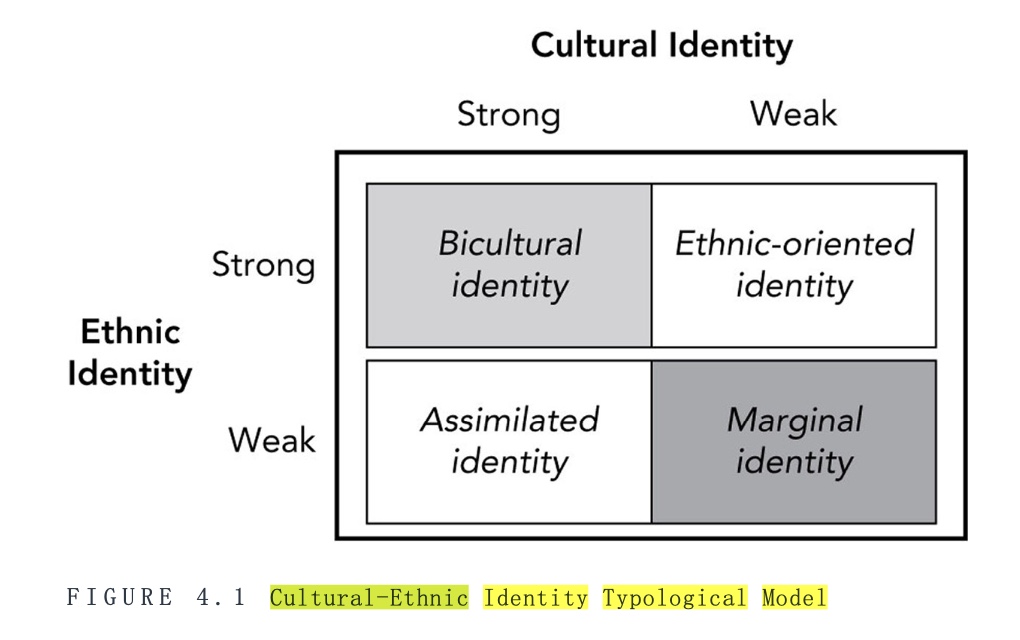
Cultural-ethnic identity typological model
Multiracial identities
discuss identity challenges and family dynamic issues, realizing that they are not alone
Systems-level factors
socioeconomic conditions
local resources
host countries attitudes
Individual-level factors
push + pull motivations
knowledge + preparation
intergenerational communication
ability to communicate
demographic variables
Interpersonal face-to-face and relational network factors
ethnic enclaves or online groups connecting people
Assimilated identity
use social mobility strategies, acculturate linguistically + culturally
Enculturation
sustained, primary socialization process of individuals in their original home (or natal) culture wherein they have internalized their primary heritage values
in your own culture
Intercultural acculturation process
the degree of identity change that occurs when an individual moves from a familiar environment to an unfamiliar one
Acculturation
the long-term incremental identity-related change process of immigrants and refugees in a new environment
Intergenerational communication
generation-based age differences
Contact network
a combination of personal and social ties in the new culture in which
Affective resources
identity support and relational empathic messages
Instrumental resources
support with task- related goals, practical assistance
Informational resources
sharing knowledge and keeping up with important host country and country-of-origin news
Mass media
plays a critical role during the initial stages of adaptation
Social media
tool in the acculturation process to aid and assist immigrants to remain in contact with family, friends, and relatives in their hometowns.
Social mobility strategy
strategic “passing” and “self- empowering” strategy that individuals use to fit into the dominant group for identity and status upgrades
Social creativity strategy
used to improve their status and group identity by redefining a negative aspect, changing a comparison referent, highlighting specific and positive aspects, or creating a new dimension of comparison
social competition strategy
used to fight for the rights of a group and identity recognition through protest movements
Culture shock
a stressful transitional period when individuals move from a familiar environment into an unfamiliar one
Third Culture Kids / Global nomads
individuals who have been raised internationally, usually due to a parent’s overseas occupation
Cultural distance
differences in cultural values, language, verbal styles, nonverbal gestures, learning styles, decision-making styles, conflict negotiation styles, as well as differences in religion, political, and economic systems
Psychological adjustment approach
the use of psychological/internal strategies to boost sojourners’ own feelings of well-being and satisfaction during cross-cultural transitions
Positive situational appraisal
changing perceptions and interpretations of the stressful event or situation
Sociocultural adjustment approach
the ability to socially reach out and try to fit in and execute appropriate and effective interactions in a new cultural setting
W-shaped adjustment model
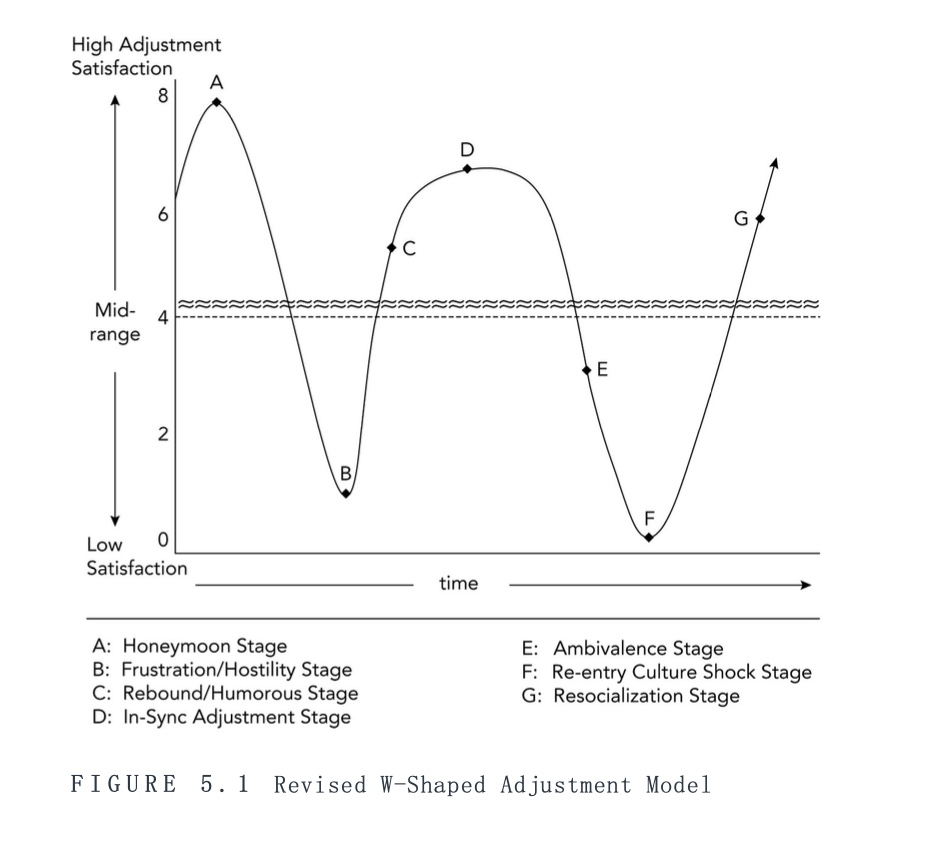
honeymoon stage
individuals are excited about their new cultural environment
frustration/hostility stage
sojourners experience major emotional upheavals
the early returnees, the time servers, the participators
rebounding/humorous stage
sojourners with strong motivation to adapt successfully pull themselves out of the frustration/hostility stage
in-sync adjustment stage
sojourners start to realize that there are pros and cons in each culture
ambivalence stage
sojourners experience grief, nostalgia, and pride, with a mixed sense of relief and heartache that they are going home
reentry culture shock stage
sojourners face an unexpected jolt
resocialization stage
resocializers (quietly reassimilate)
alienators (don’t fit back in)
transformers ( active agents of change in their home culture)
Cross-cultural empathy
being able to participate in another person’s experience in your imagination, thinking it intellectually and feeling it emotionally
Positive self-talk
create a more resilient mindset
Describe the attitudes towards migrants in the US and abroad
US, contributions immigrants make to the country, concerns about illegal immigration + impact on job competition and social services
Abroad, in emerging economies positive view towards diversity and immigrants, concerns about economic competition + cultural differences
Who has more positive views of diversity?
emerging economies tend to have positive views of diversity (India, Mexico, and the Philippines) European countries don’t
How can we improve views of diversity?
Education and Awareness
Community Engagement
Positive Media Representation
Policy Interventions
Proportion of immigrants of the US population
immigrants make up 13.8% of the US population
How have immigration patterns changed (e.g., number and regions)
shift towards immigrants from Latin America and Asia. In 2022, about 23% of all US immigrants were born in Mexico
recent rise in immigrants from countries like China and India
According to the PEW (2020) and Ting-Toomey and Chung (2022), generally, more contact is related to more positive opinions of other racial, ethnic and religious groups within a given society.
true
Most immigrants living in the U.S. are unauthorized
false
Language on the Internet
The Internet allows users to develop relationships across the barriers of time, space, geography, and across cultural–ethnic boundaries
Temporal zone dialectics - monotract focus
present-in-the- moment enet’er philosophy means the monotrack enet’er’s prefer to use separate channels or platforms to initiate and complete one task at a time
Temporal zone dialectics - multitract focus
being-in-doing enet’er philosophy means that the multitrack enet’er’s can fuse the “being mode” relationship dimension with the “doing mode” instrumental dimension
Local and global identities
local individual privacy and expression, global belonging and connection
transcends traditional ethnic-cultural boundaries
Pop culture
cultural interdependence on the global economy, e-commerce, mass media, and social network platforms
Enet’er
individuals around the globe, from any age group, who are connected to each other across time and space via the Internet, which influences aspects of their identity.
Morphing
implies individuals who embrace their local values, the function of individual privacy and expression, but who also long for global belonging and connection that transcends traditional ethnic-cultural boundaries (enet’er middle ground)
Fixator
always online, expressing their daily lives via a multitude of social media platforms (full enet’er)
Cultural product
transfer of such a product is likely to have an influence on the recipient’s culture ex. media
Homogenization
the local culture becomes more like the culture of the United States
Heterogenization
aspects of U.S. culture come to exist alongside local culture, causing the culture to become more diverse
Globalization
describes how trade + technology have made the world into a more connected + interdependent place
Glocalization
the adaptation of global products and strategies to local markets and cultures
Cultural imperialism
one culture / nation asserts its power over another, US superpower today
Cultural hegemony
domination or cultural rule maintained through ideological or cultural means
culture / media has powerful influence + can make workers buy into system not beneficial for them
Technology adoption life cycle
Innovators - experimentalists interested in technology
Early adopters - technically sophisticated, use tech for solving professional + acaemic problems
Early majority - 1st part of mainstream, bring tech to common use
Late majority - less comfortable w/ tech + skeptical
laggards - resistant + critical of its use
Cultural diffusion
how many different parts of cultures are adopted by other cultures
McDonaldization
key danger of cultural imperialism, idea that American’s tastes will crowd out local cultures around the globe
efficiency, calculability, predictability to the extreme
Ethics / ethical mindset
a community’s perspective on “what is good and bad in human conduct
Parallel thinking
substituting any problematic global or local news event with ingroups or intimate networks, and cross-checking whether you would still arrive at a similar attribution process or a similar emotional reaction
Cultural empathy
Cultural empathetic understanding - learned ability to understand the self-other identity experiences in different situational contexts through our willingness to listen mindfully, dialogue, and reframe the situation from projecting and imagining how the other really feels
Cultural empathetic responsiveness
O-D-I-S
When entering a new culture, learn and practice (Observation—Description—Interpretation—Suspend ethnocentric judgment)
Ethical decision-making schema
problem recognition, information search, construction of alternatives, decision-making choice, and implementation
Ethical absolutism
emphasizes the principles of right and wrong in accordance with a set of universally fixed (and ethnocentric) standards regardless of cultural differences
Ethical relativism
understanding the importance of the cultural context where the problematic conduct is taking place
Meta-ethics
cultivating an ethical way of thinking and living in our daily lives that transcends any particular ideological position
Moral reality
about distinctive traditions and divergent value orientation issues
Conflict reality
about how different membership factions view the meaning of conflict, the perceived conflict story, and how conflict should be addressed and managed
Justice reality
connotes the development of criteria or standards of what constitutes a just or right solution to all parties involved or in a power-imbalance case, the disenfranchised groups
Derived ethical-universalism position
highlights an integrative, culture-universal and culture-specific ethical framework
Perspective thinking
stepping into the mindset and “heartset” of the other cultural person in viewing the same event
Social justice action
create a more inclusive and equitable world for all disenfranchised groups to have equal access and opportunities to utilize all the societal resources available to them
Moral inclusion
an inclusive moral stance that promotes social justice and others’ well-being based on humanity and on an equal basis regardless of sociocultural membership differences
Moral exclusion
when individuals or groups are perceived as outside the boundary where moral values, rules, and considerations of fairness apply
Dynamic flexibility
expanding our adventurous spirit and risk- taking abilities and moving forward to communicate respectfully, connectively, and ethically with culturally unique others
Colonial ethnocentrism
the rights and privileges of countries or groups who are in a dominant power position and these groups can impose their ethical standards on other non-dominant countries or groups due to their privileged position and resource control power