Biological Bases of Behavior Part 2 (Structures and Functions of the Brain + Scans)
 Studied by 1 person
 Call Kai
 Learn
Learn Practice Test
 Spaced Repetition
 Match
Match Flashcards
 Knowt Play
1/40

There's no tags or description
Looks like no tags are added yet.
Name | Mastery | Learn | Test | Matching | Spaced | Call with Kai |
|---|
No analytics yet
Send a link to your students to track their progress
41 Terms
Neuroplasticity
The brain's ability to change and recognize new pathways based on experience after damage
MEG
A brain-imaging method that measures magnetic fields created by natural electrical activity
EEG
A recording of electrical activity across the brain's surface using scalp electrodes (epilepsy, brain damage (strokes, tumors, drugs, and alcohol), can diagnose mental disorders, sleep disorders, degenerative diseases → brain activity
CT Scan
series of x-ray images combined into cross-sectional views of brain structure
good for bleeding, brain injuries, skull fractures, blood clots, brain tumors → structure
PET Scan
shows brain activity by tracking where radioactive glucose travels during a task heat-map looking thing
MRI
Uses magnetic fields and radioactive to create detailed images of soft tissue anatomy
fMRI
reveals brain activity and structure by detecting changes in blood flow over time
Brainstem
controls automatic survival functions
connecting cerebrum to spinal cord
Medulla
controls heartbeat, vomiting, and breathing (involuntary actions)
autonomic functions
Thalamus
sensory “switchboard” directing sensory signals to somatosensory cortex, every sense except smell
Reticular formation
Filters sensory information, regulates consciousness and sleep wake cycles, also controls arousal
Cerebellum
Coordinates movement, balance, nonverbal learning
Amygdala
part of the limbic system, fear center → triggers fight or flight, responsible for formation of emotionally-charged memories
hypothalamus
Regulates hunger, thirst, hormones, temperature, 4Fs: Feed, fight, flee, “reproduction”
Left hemisphere
controls the right side of the body and specializes in language (speech, reading, writing), logic, math, and analytical thinking
Cerebral Cortex
ultimate control and information-processing center
Broca’s area
produces speech (verbal)
Right hemisphere
controls the left side of the body and is crucial for creativity, intuition, spatial awareness, visual processing, emotional expression, imagination, music, body language, and holistic (big picture) thinking, handling non-verbal cues and social context
Corpus Callosum
massive group of neural fibers that connect the hemispheres of the brain and allow them to communicate with one another
frontal lobe
regulates planning (decision making), thinking, speaking, movement
Parietal lobes
Spatial awareness and processing temperature, touch, size, texture, etc.
Occipital lobes
responsible for visual processing
Temporal lobes
hearing and language processing
Wernicke’s area
responsible for comprehension of language
Language is on what side of the brain?
left
pons
responsible for balance + involuntary functions
part of the brainstem
midbrain
processes visual and auditory information, responsible for eye movement
brain lateralization
due to epilepsy, corpus callous is severed through a split-brain operation
limbic system
neural system consisting of emotions and drives
Phineas Gage
one of the earliest known cases of brain trauma, injured by tamping rod → personality was altered due to damage to frontal lobe
Lesions
tissue destruction within the brain, (can show damage, injury, or even disease)
hippocampus
shaped like a seahorse, vital for forming new long-term memories (especially spatial ones) and learning, memory retention
What makes up the limbic system?
hypothalamus, thalamus, amygdala, hippocampus
Neurogenesis
creation of new neurons from STEM cells in the brain
motor cortex
located in the brain's frontal lobe, plans, initiates, and controls voluntary movements by sending signals to muscles
somatosensory cortex
at the front of the parietal lobes, parallel to and just behind the motor cortex — that specializes in receiving information from the skin senses, such as touch and temperature, and from the movement of body parts
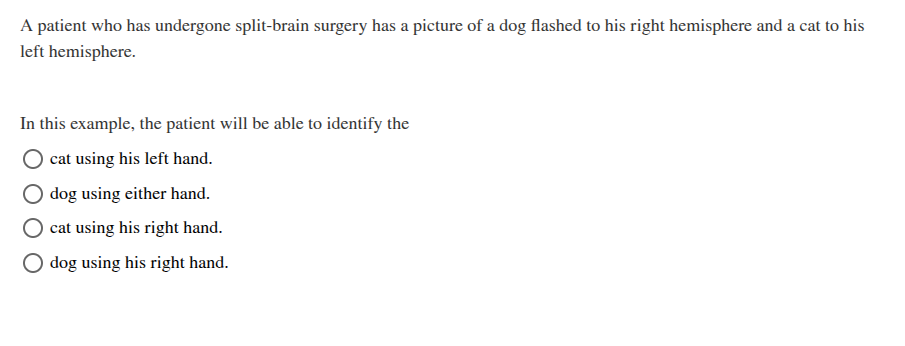
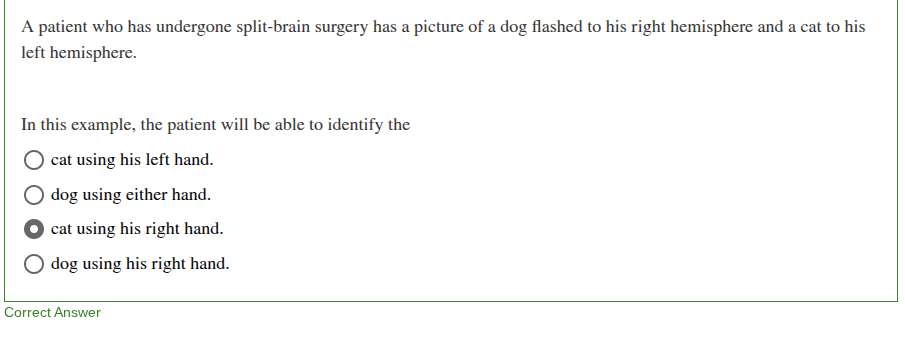
In this example, the patient will be able to identify the
cat using his right hand
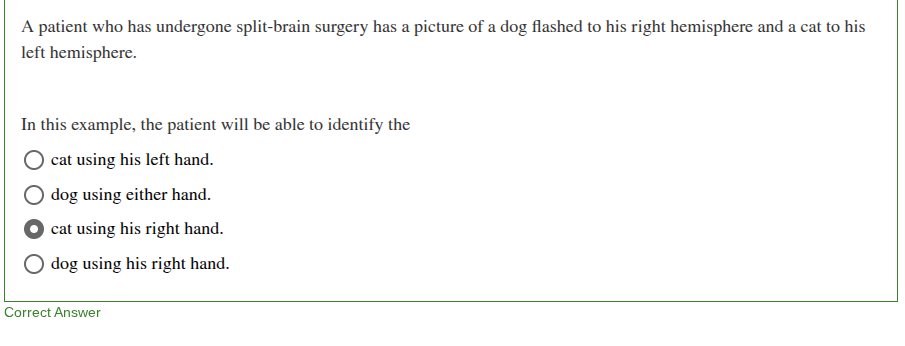
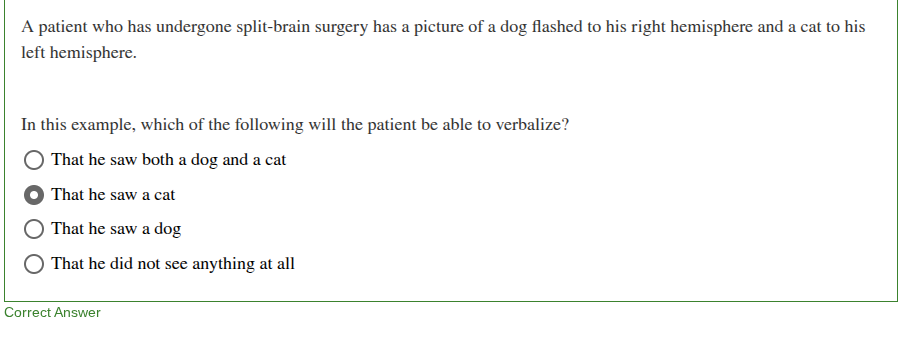
In this example, the patient will be able to verbalize
that he saw a cat
basal ganglia (in textbook, COULD be on the test)
a group of interconnected deep brain structures crucial for motor control
association areas (in textbook, COULD be on the test)
integrate sensory input, connect different brain regions, and handle complex cognitive functions like thinking, learning, memory, language, and decision-making
glial cells (in textbook, COULD be on the test)
crucial non-neuron cells in the nervous system that provide support, protection, and nourishment for neurons, forming myelin, maintaining homeostasis, and even helping with immune defense
 Note
Note  Flashcards (105)