BSCI201 Lab Practical 2
 Call Kai
 Learn
Learn Practice Test
 Spaced Repetition
 Match
Match Flashcards
 Knowt Play
1/13

There's no tags or description
Looks like no tags are added yet.
Name | Mastery | Learn | Test | Matching | Spaced | Call with Kai |
|---|
No analytics yet
Send a link to your students to track their progress
14 Terms
Functions of Skeletal System
Internal Framework
Movement
Hematopoiesis (blood cell formation)
Storage of lipids and minerals (calcium and phosphate)
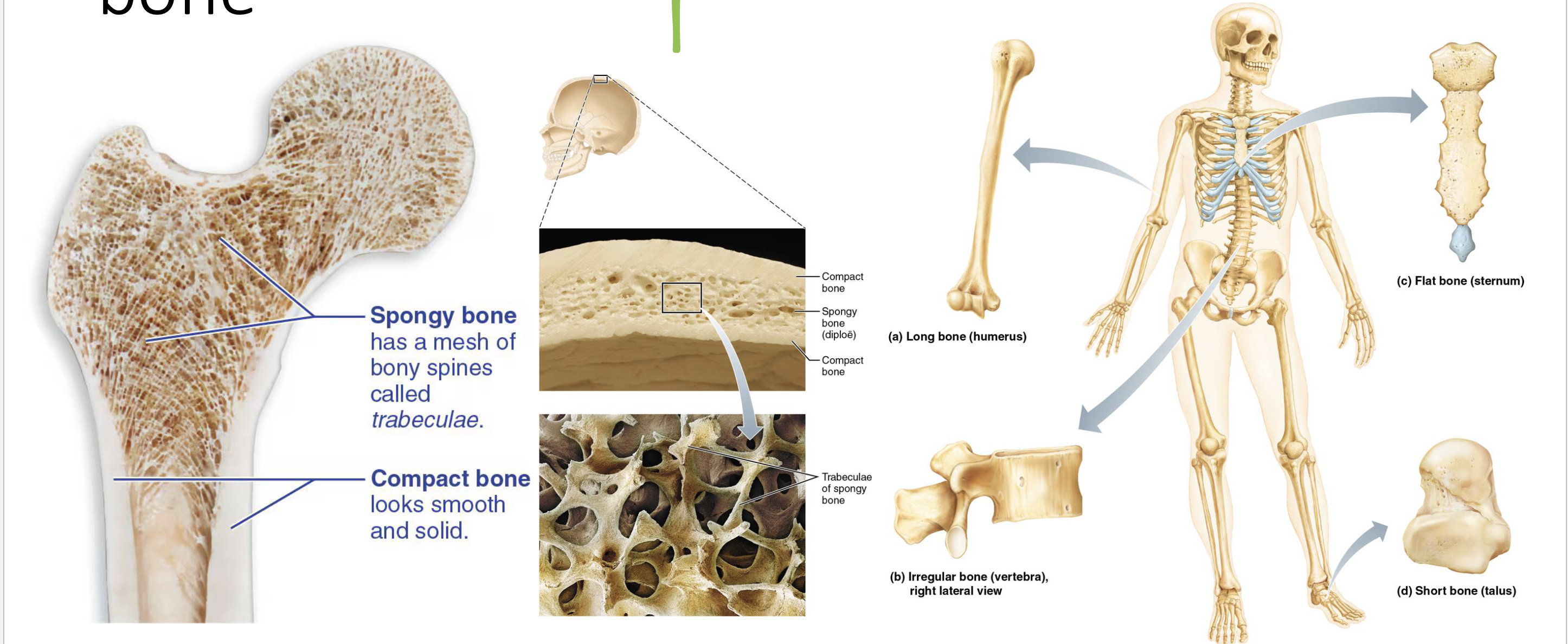
Classification of Bones
Texture → compact or spongy
Gross Anatomy → long, short, flat, irregular
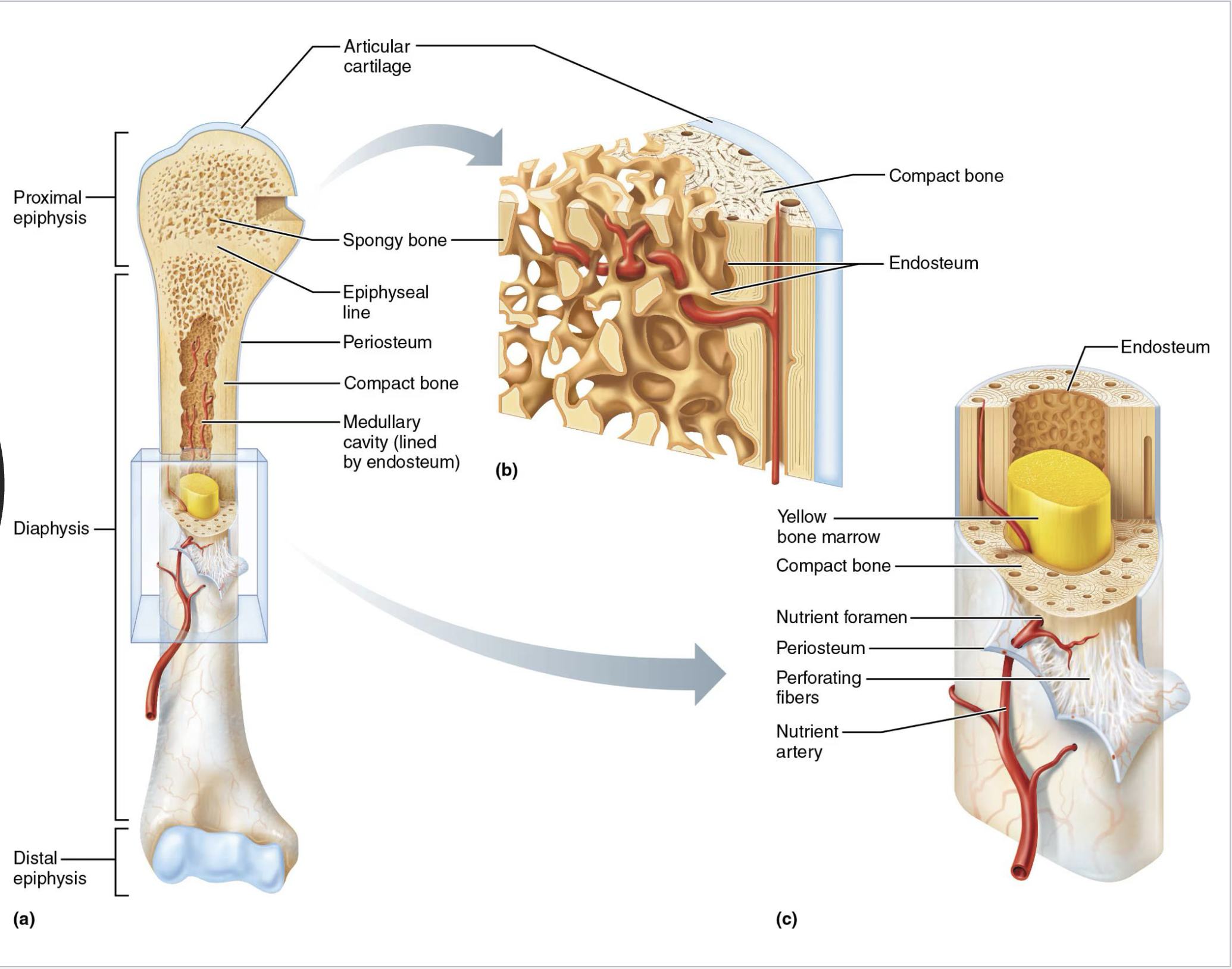
Gross Anatomy of Long Bones
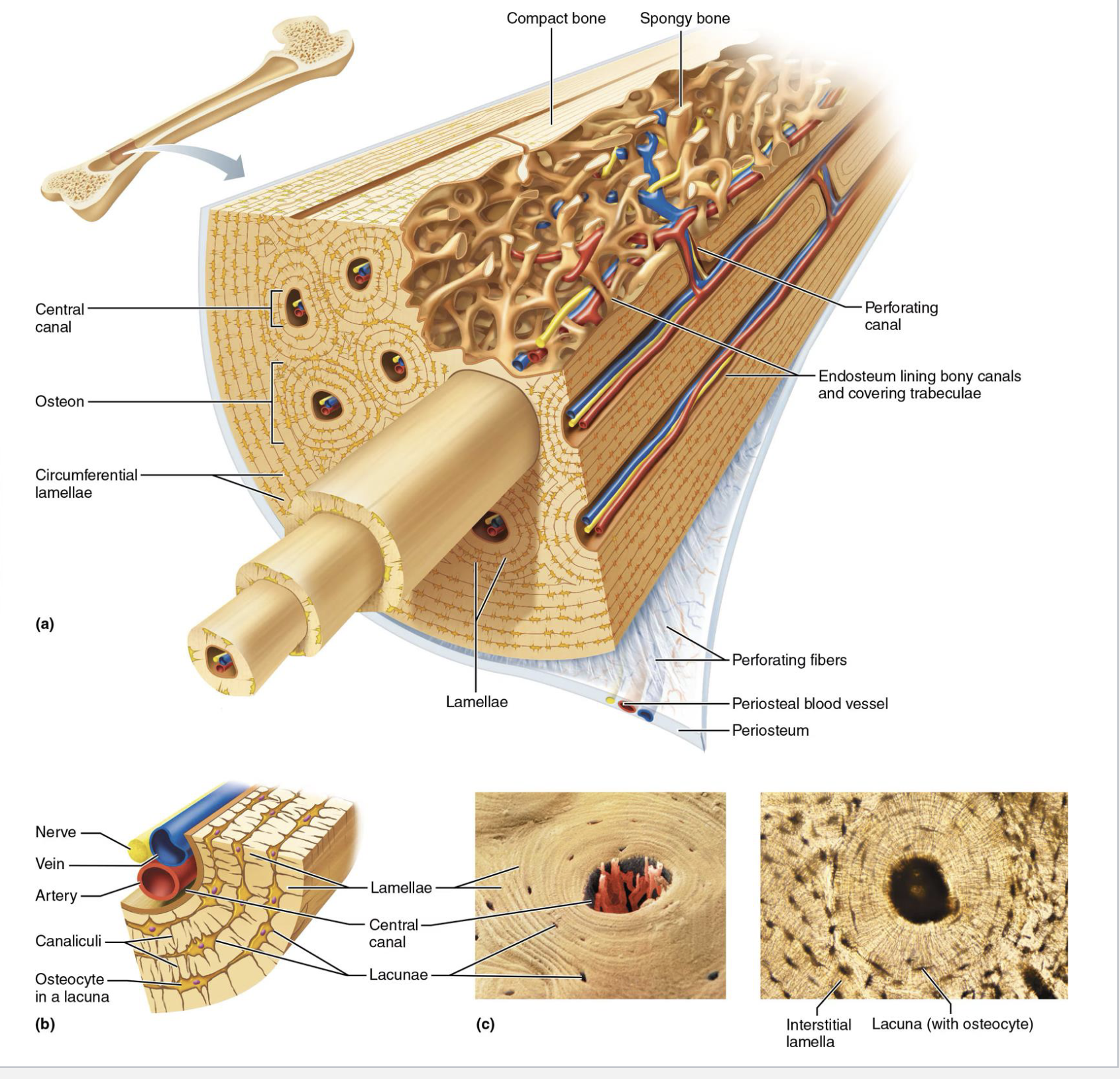
Microscopic Anatomy of Compact Bone
Axial vs Appendicular Skeleton
Axial Skeleton → forms longitudinal axis of the body
includes bones of the head, neck, and trunk
protects the brain, spinal cord, and thoracic organs
Appendicular Skeleton → enables mobility
includes bones of the limbs and their girdles
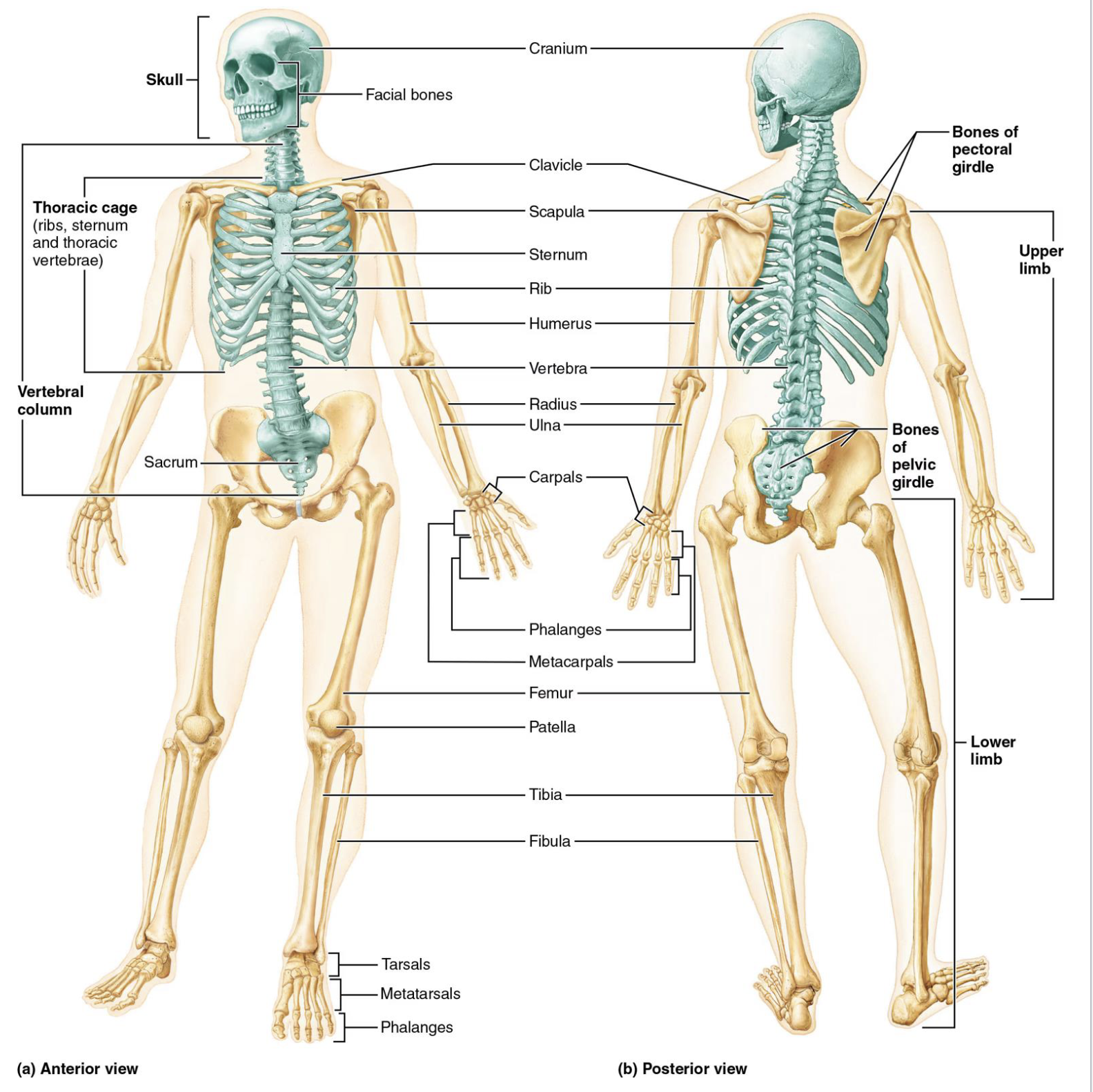
Axial Skeleton
Skull: cranial and facial bones
Auditory ossicles: middle ear bones
Hyoid Bone: point of attachment of the tongue and many neck muscles
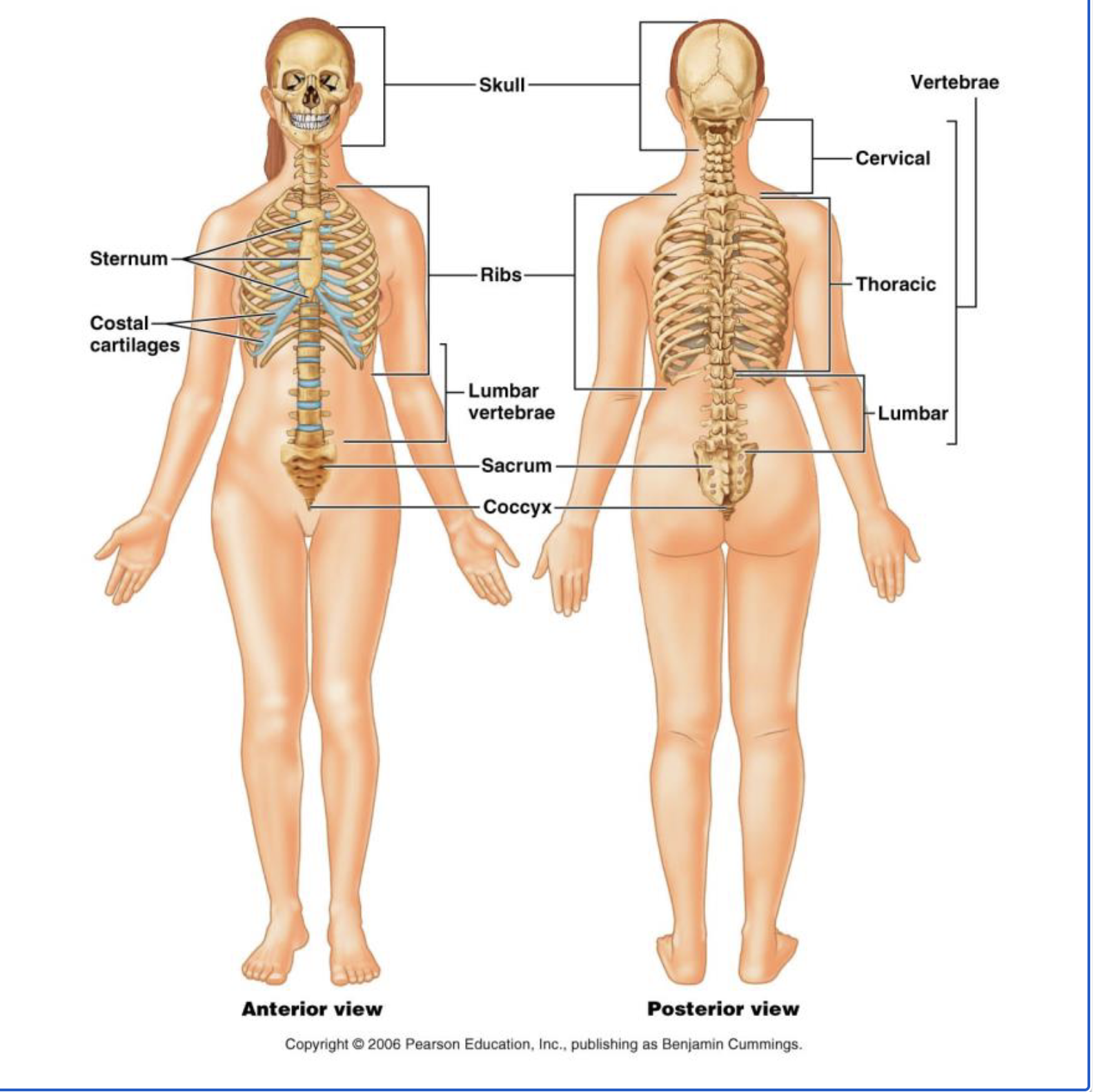
Vertebral Column: cervical, thoracic, and lumbar vertebrae; intervertebral discs, sacrum, coccyx
Bony Thorax: 12 pairs of ribs, sternum, costal cartilage
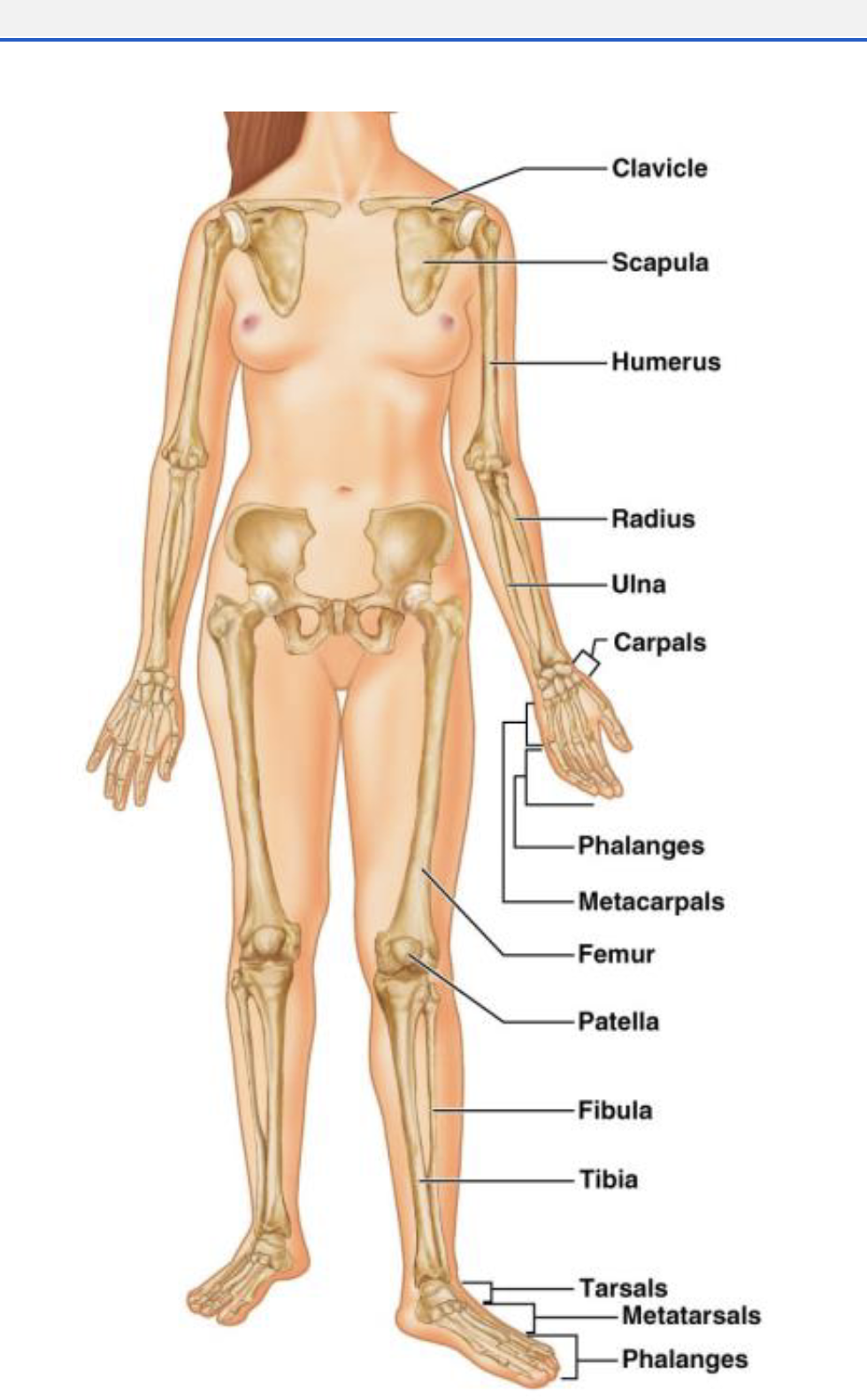
Appendicular Skeleton
Pectoral Girdle: clavicle and scapula
Upper Extremities: humerus, radius, ulna, carpals, metacarpals, and phalanges
Pelvic Girdle: coxal bones
Lower Extremities: femur, patella, tibia, fibula, tarsals, metatarsals, and phalanges
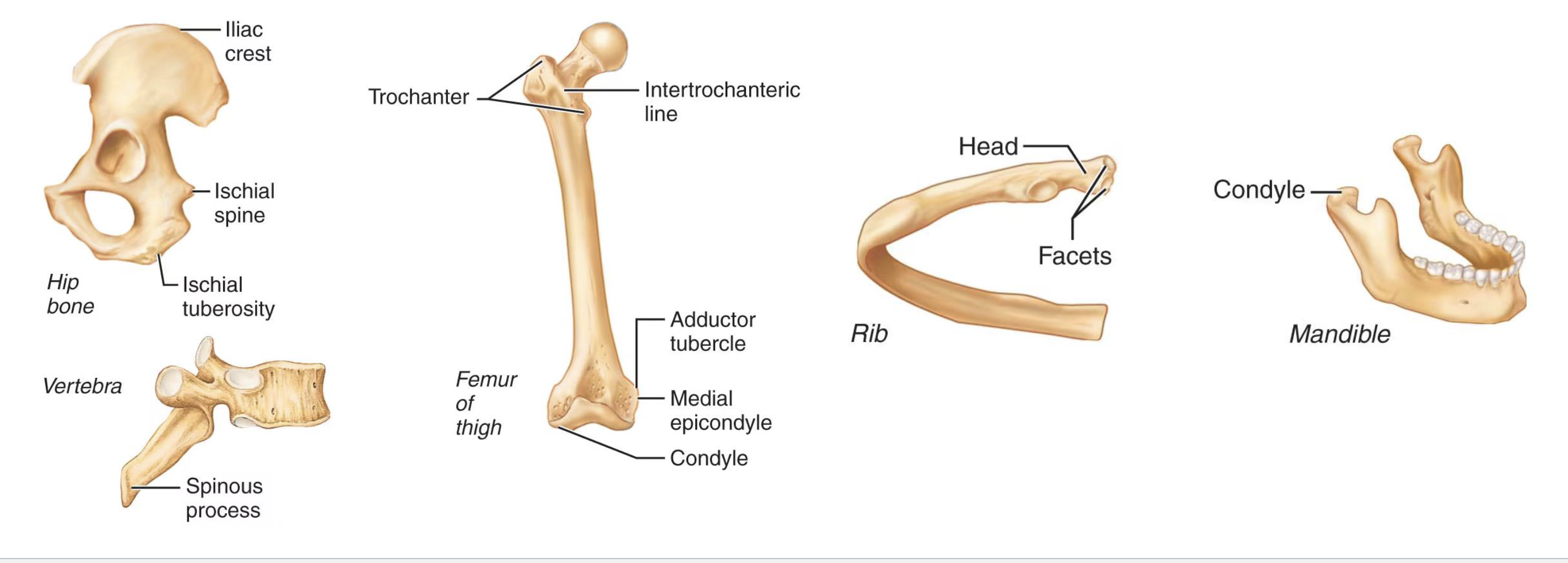
Bone Markings: Projections
Sites of muscle and ligament attachment
Tuberosity, crest, trochanter, line, tubercle, epicondyle, spine, process
Help form joints
Head, facet, condyle, ramus
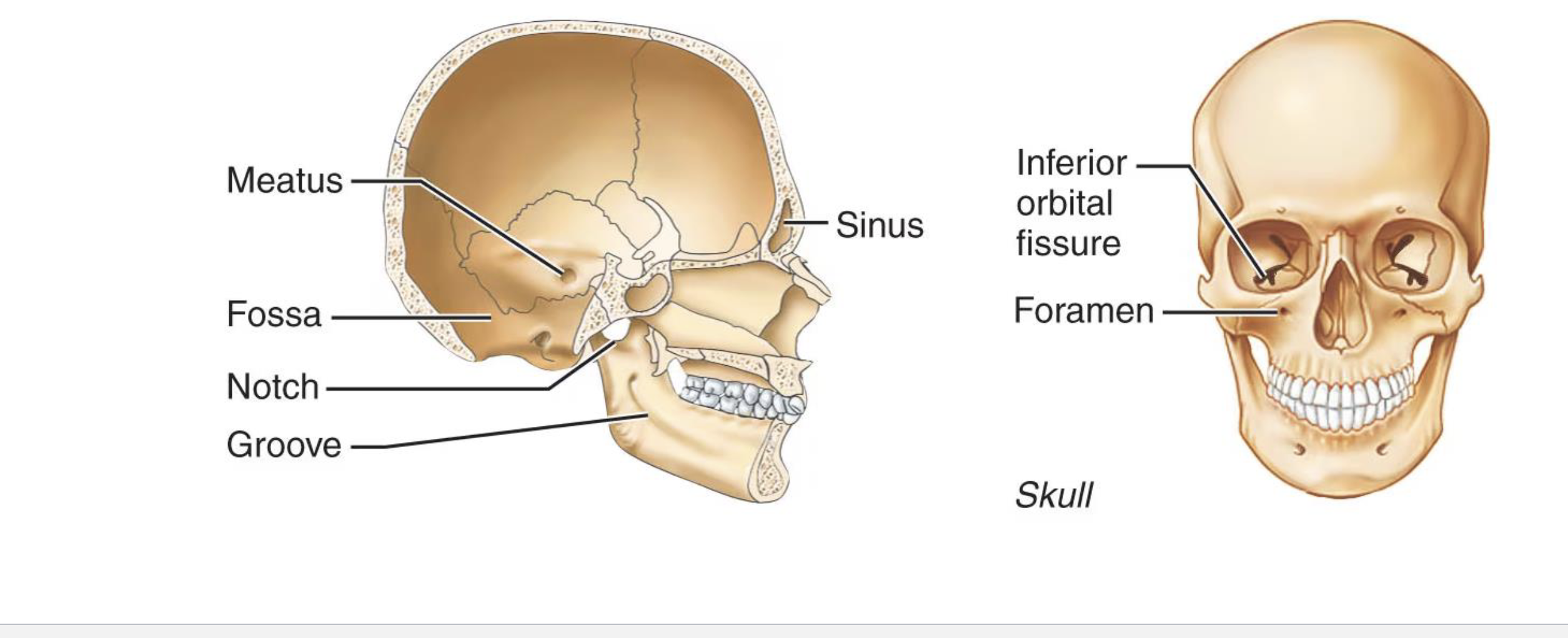
Bone Markings: Depressions and Openings
For passage of vessels and nerves
Fissure, foramen, notch, and groove
Other depressions and openings
Meatus, sinus, fossa
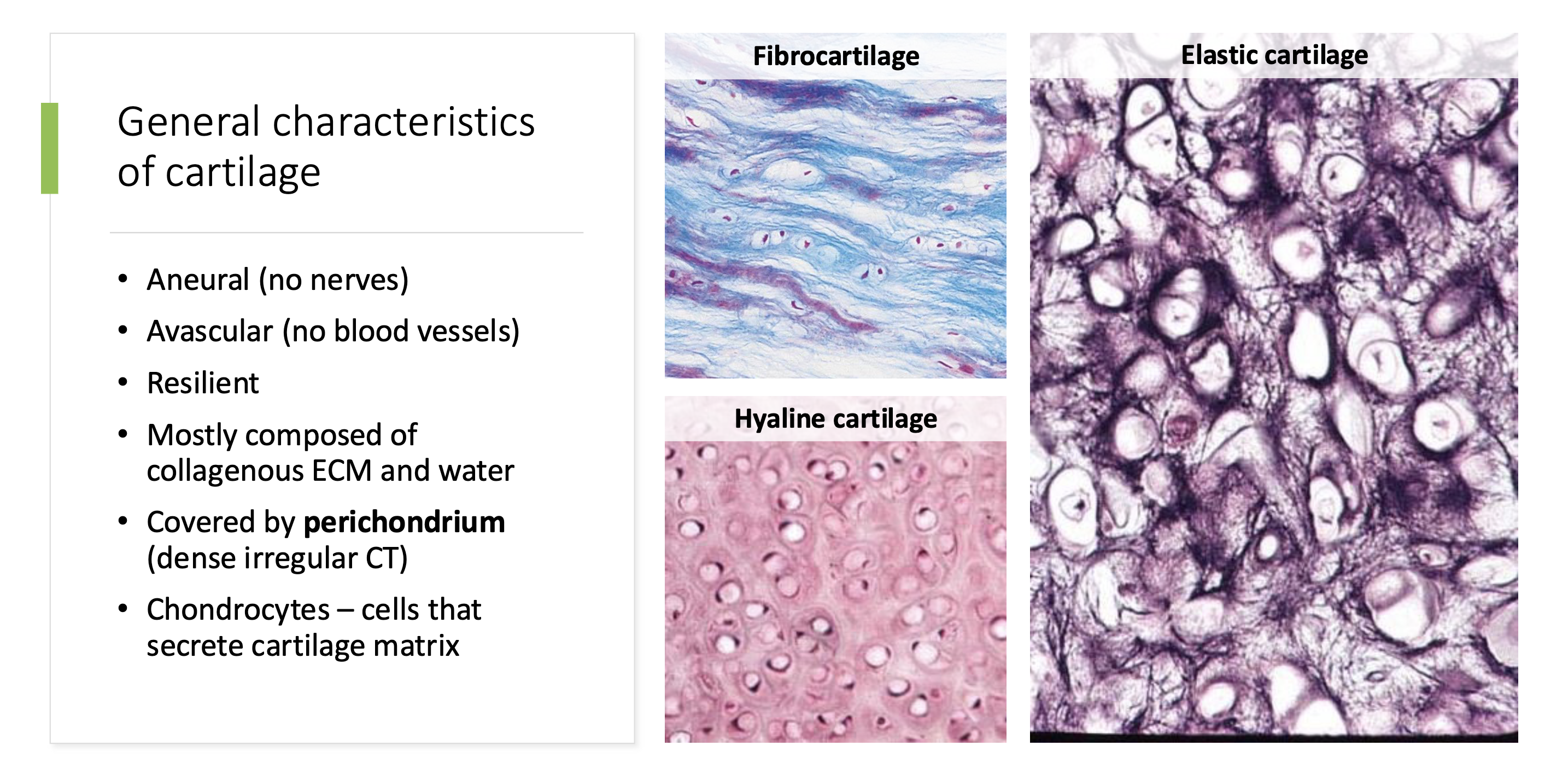
General Cartilage Characteristics
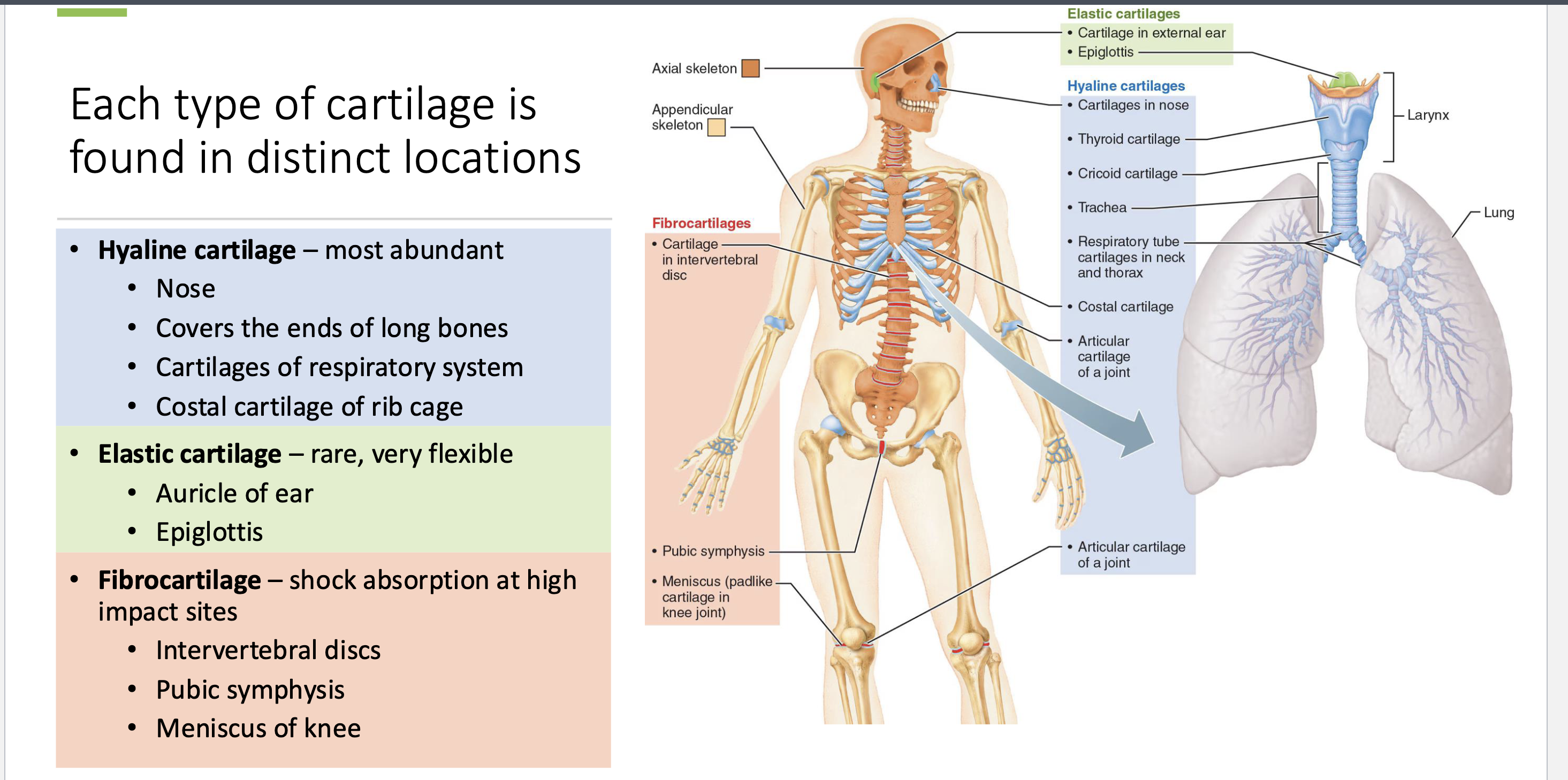
Locations of Cartilage