contemporary chinese art exam 2
 Call Kai
 Learn
Learn Practice Test
 Spaced Repetition
 Match
Match Flashcards
 Knowt Play
1/13

There's no tags or description
Looks like no tags are added yet.
Name | Mastery | Learn | Test | Matching | Spaced | Call with Kai |
|---|
No analytics yet
Send a link to your students to track their progress
14 Terms
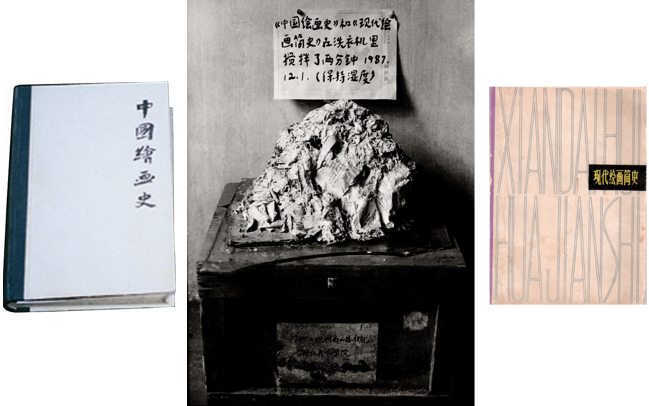
Huang Yong Ping, The History of Chinese Painting and the History of Modern Western Art Washed in a Washing Machine for Two Minutes, 1987
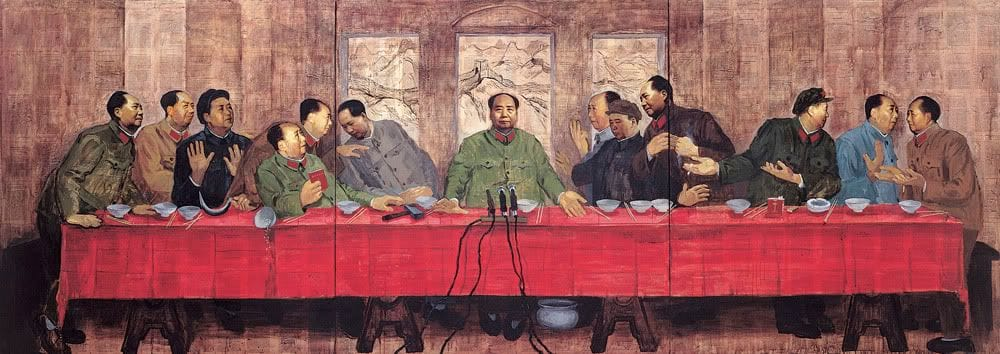
Zhang Hongtu, The Last Banquet, 1989
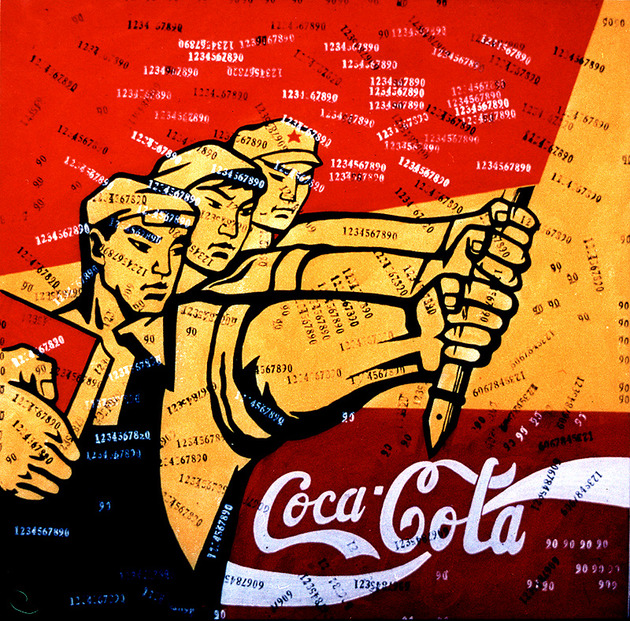
Wang Guangyi, The Great Criticism— Coca Cola, 1993
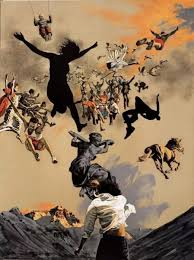
Zhong Biao, Holy Book, 2008
Absurdist acrylic on canvas painting filled with references to other works by old Western masters. Elements are placed in such a way that makes very little visual sense, as they all seem to exist in different physical planes and perhaps times of day.
Its vertical, crowded composition mimics old renaissance works as well.
The commentary surrounding this piece expresses the idea that the reality which exists around us is as seemingly unrelated as the events in this painting. It conveys the feeling of being all over the place and establishes it as a common part of the human experience.
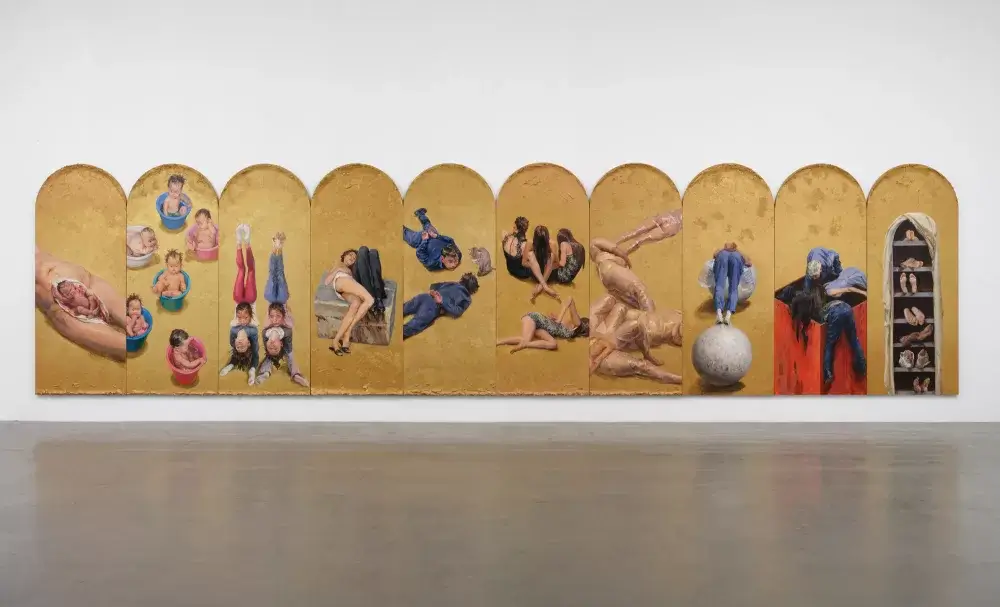
Yu Hong, Walking through Life, 2019-2022
Part of her exhibition titled “Another One Bites the Dust”
Yu Hong’s artwork has been greatly influenced by religious paintings and their subject matter as they pertain to her life and the lives of those around her. This work is divided into multiple gold-painted panels, drawing inspiration from aforementioned religious artworks.
The imagery present in the work features scenes such as birth, childhood, and aging. The figures are notably constrained in each scene, whether it’s the newborn squeezed between their mother or the babies in the water buckets. We are moving through this journey of life in containment.
The increasing anonymity of the figures is something to note on the right half of the panels, where each figure is turned away from the viewer and essentially stripped of their individuality. This is an idea which reaches its conclusion in the last panel, where the figures appear to be stacked in some sort of morgue, no longer people and merely bodies on shelves.
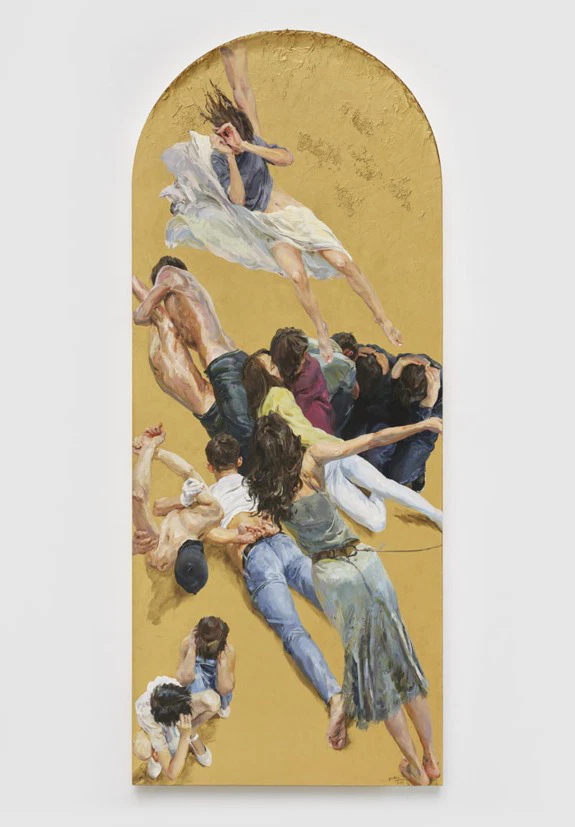
Yu Hong, Make a Wish, 2023
Part of her exhibition titled “Another One Bites the Dust”
Her Venetian inspiration is clear in this artwork’s composition. Very similar to the work Assumption of the Virgin, (1516-18), with elements such as the floating, ascending figures and accented colors present in clothing.
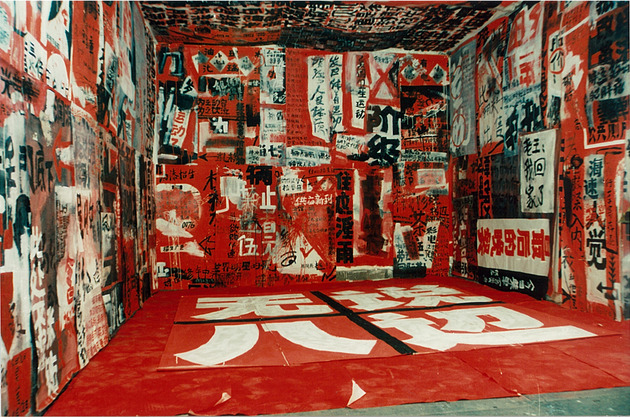
Wu Shanzhuan, Red Humor, No. 1 Today No Water, 1986
This work features an overload of information in a way that seems to resist interpretation. Its composition is so inundated with text and busywork that it becomes hard to pinpoint exactly what it is trying to say, if anything at all
The secondary title exists as a reference to messages often given out in poorer areas, warning citizens about a lack of water.
The red, white, and black color palette alludes to propagandist works and the inherent association they have with these colors. Wu uses these colors to suggest that there is a message while keeping it unclear.
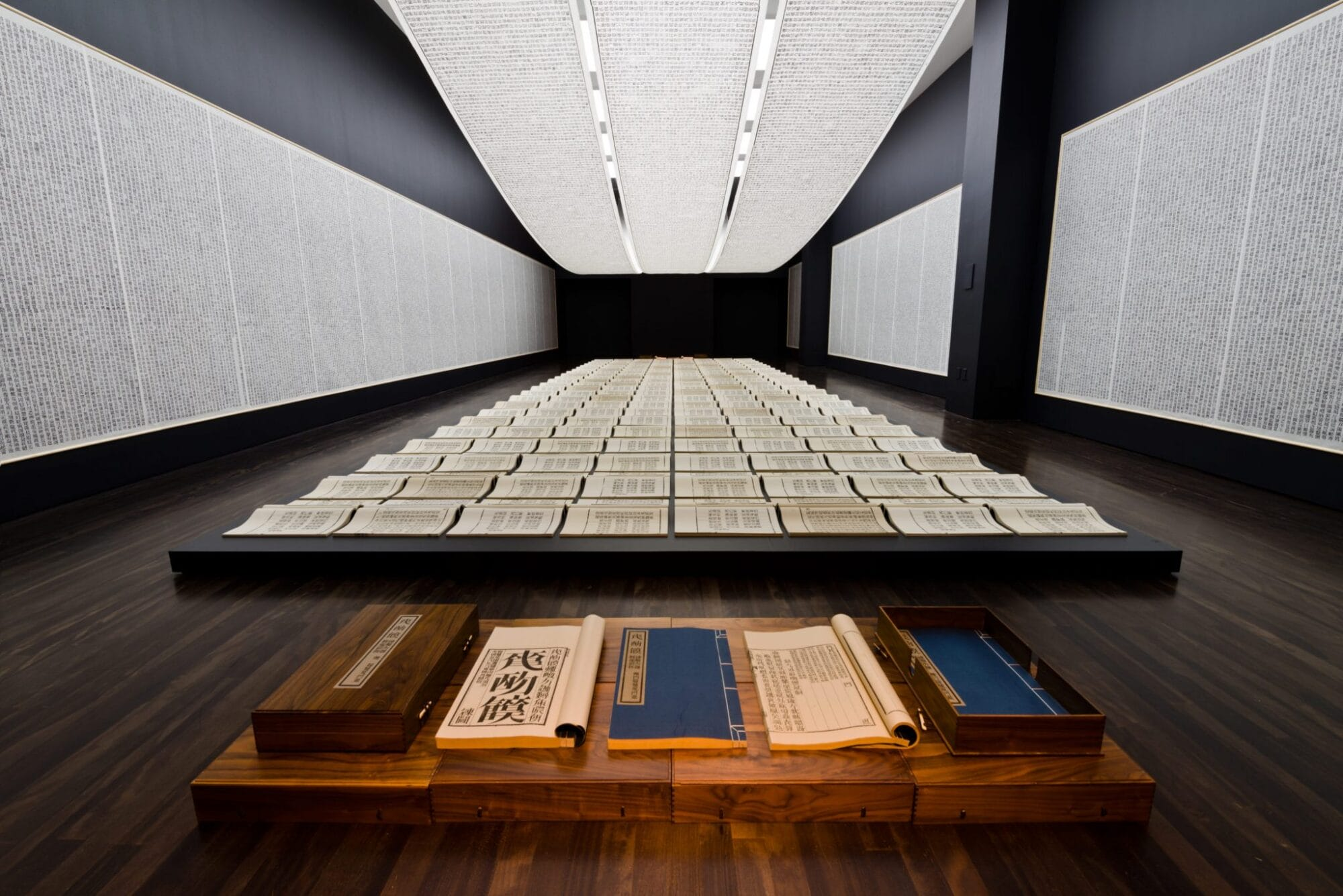
Xu Bing, A Book from the Sky, 1987-91
Xu Bing created thousands of unreadable characters, referred to as pseudocharacters by Hajime Nakatani, and compiled them into long paper scrolls which drape from the ceilings, falling in an almost ethereal manner.
Art scholars have often referred to the characters invented by Xu as nonsense, likely due to the fact that they largely have no meaning, however there is a real basis within Chinese calligraphy which Xu applied during the creation process for each character.
The title itself, a book from the sky, is a play on the contents of the work, the pseudocharacters, are writings from higher beings which are incomprehensible to humans.
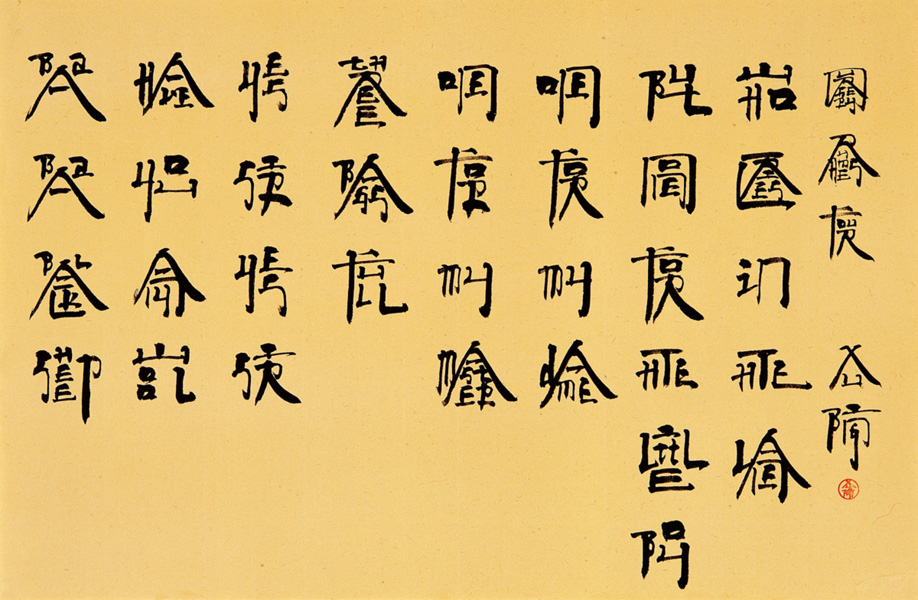
Xu Bing, Square Word Calligraphy, 1994-1996
Plays further into the themes/experience of A Book from the Sky by applying the conventions and shapes of Chinese characters and writing to words in the English language.
This work is completely legible to an English-speaker, though it wouldn’t seem that way at first glance
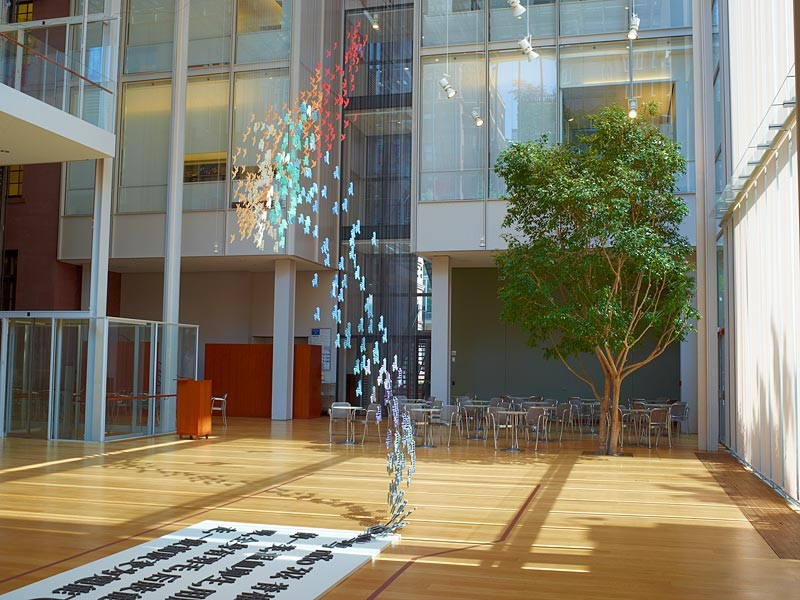
Xu Bing, The Living World, 2011
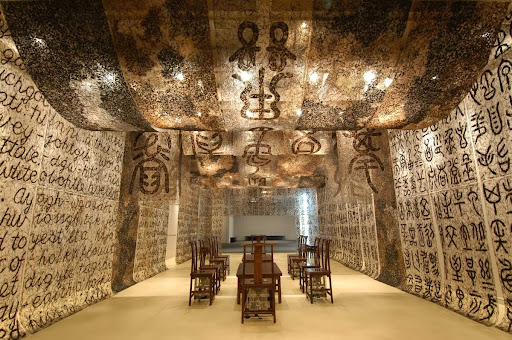
Gu Wenda, United Nations– China Monument: Temple of Heaven, 1997-8
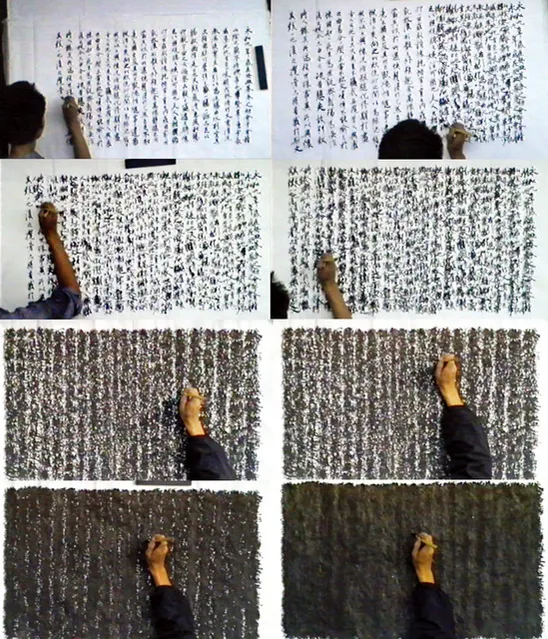
Qiu Zhijie, Copying the Lanting Xu 1000 Times, Writing the Orchard Pavilion Preface One Thousand Times, 1992
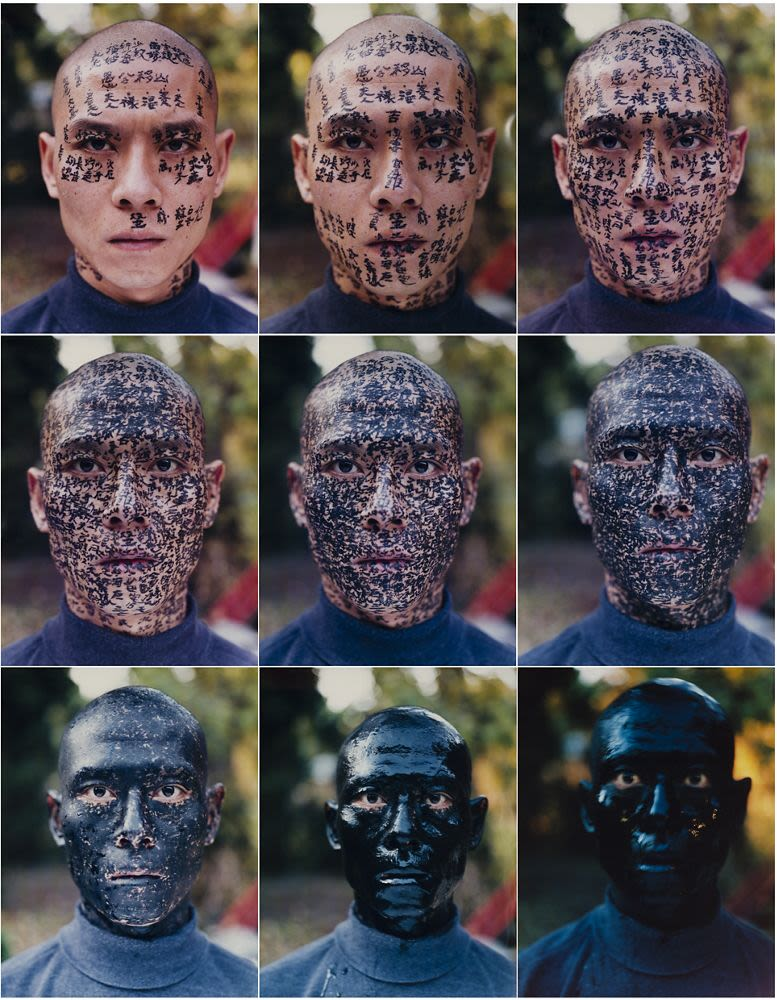
Zhang Huan, Family Tree, 2000
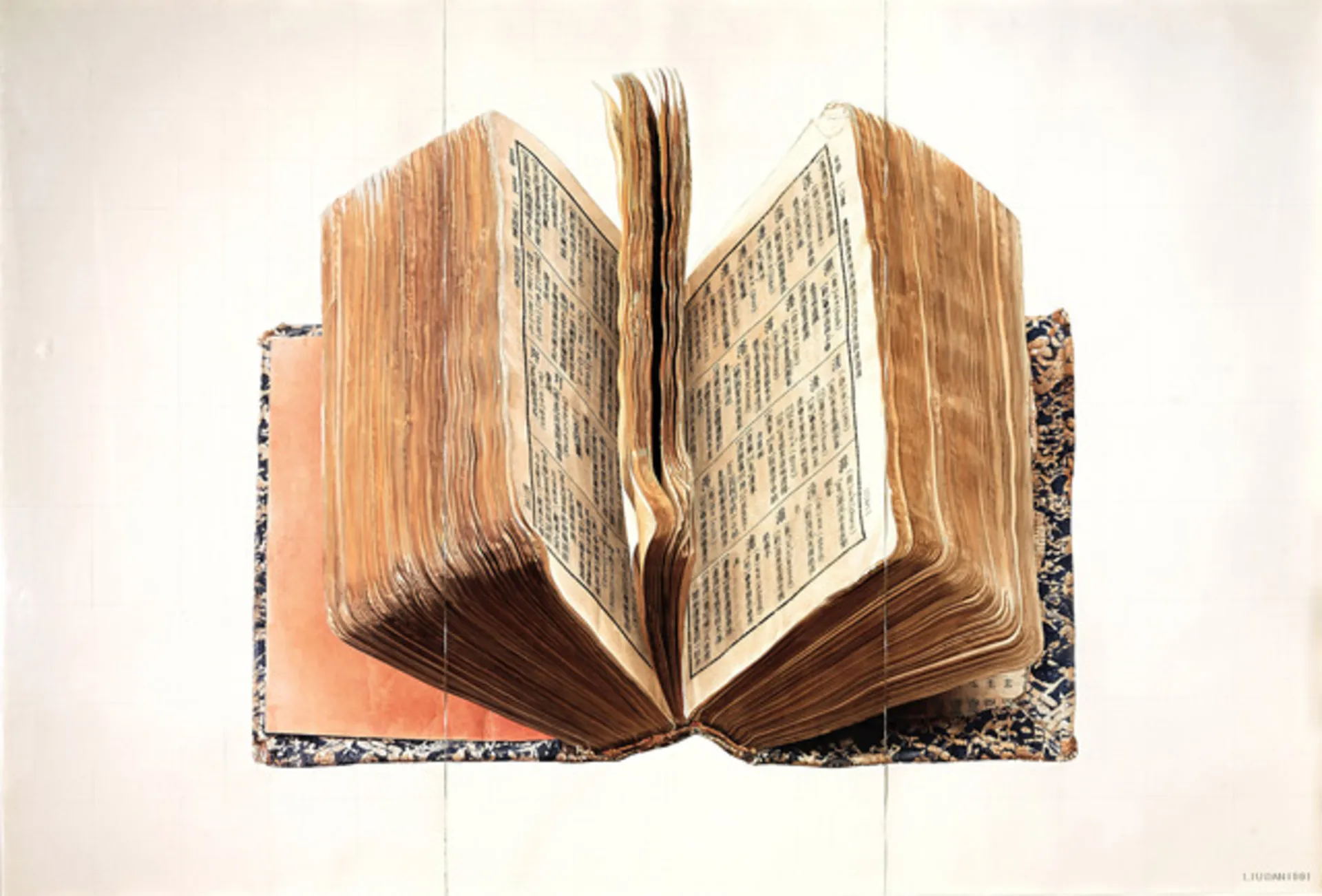
Liu Dan, Dictionary, 1991

