FMR - Carpet (ppt w/ pics)
 Call Kai
 Learn
Learn Practice Test
 Spaced Repetition
 Match
Match Flashcards
 Knowt Play
1/132

There's no tags or description
Looks like no tags are added yet.
Name | Mastery | Learn | Test | Matching | Spaced | Call with Kai |
|---|
No analytics yet
Send a link to your students to track their progress
133 Terms
carpet
general designation for a fabric used as floor covering
carpets or carpeting
incorrect plural form of carpet
carpet
the preferred term used for both singular and plural form
carpeted floors
used as an adjective term
3 basic forms
rug
sheet carpet
carpet tiles
rug
soft floor covering laid on the floor but not fastened to it
does not cover the entire floor
sheet carpet
come in big sizes
can cover an entire space and fastened to the floor
carpet tiles
an individual piece of carpet
typically 19–20 inches square
applied to the floor with pressure-sensitive adhesive
bet
Considerations in the selection of a carpet
beauty or aesthetic appeal
comfort
sound absorption and quietness
warmth
tractive safety
durability
maintenance
flame resistance
dirt retention
textural varieties
room size
traffic
furniture style
lighting
color
type/click “bet” to move forward
beauty or aesthetic appeal
immense choice in colors, texture, and design
comfort
reduces floor fatigue
sound absorption and quietness
carpets and rugs provide valuable interior acoustic quality
airborne sound absorption
the sound is defined as noise that radiates directly from machines, voices, radios, and other sources
impact noise reduction or impact insulation class
result of objects having impact on structural surface of the building
ex. footsteps from the floor above or furniture being dragged across the floor
surface noise reduction
generated within the same room by objects scraping against the surface of a desk or the floor
warmth
efficient insulator against cold
tractive safety
minimizes chances of slipping due to friction caused by carpet
ok
When choosing a carpet,
choose color first (warm or cool colors)
choose texture (loop or cut pile)
choose desirable quality (strength of fiber, density of the construction, amount of traffic involved)
type/click “ok” to move forward
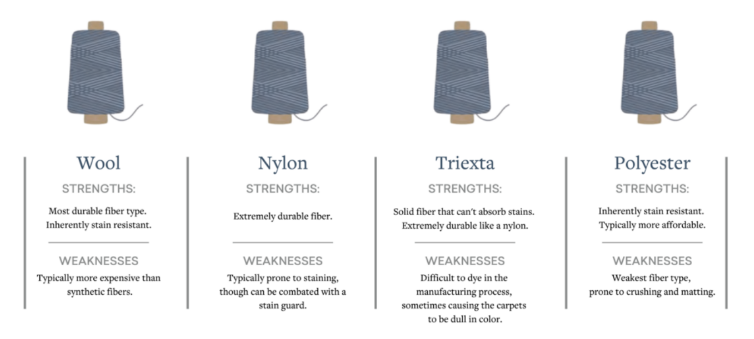
wool
premium carpet fiber
strong, durable, yet feels soft and comes in beautiful colors
cleans well and is naturally stain- and soil-resistant
much more expensive than synthetic fibers
new zealand wool
wool that absorbs dye easily
colors with great clarity and uniformity
staple is lustrous and tough
color is almost white
New Zealand
world’s largest producer of crossbred (strong wool)
crossbred
has strong wool, ideal for carpeting
ex. romney and Drysdale breeds
Argentinian wool
noted for its gloss and sheen and its natural resistance to soiling
not as white as New Zealand wool
indian wool
crush resistant wool
iraqi wool
among the most luxurious and costly of wool
high abrasion resistance and durability
scottish wool
Scottish back face sheep bear finest of a carpet wool
high abrasion resistance and durability
jute
natural fiber with soft, silky luster
best suited to areas of the house such as sitting rooms and bedrooms rather than the more heavily used areas such as halls and passageways
very versatile, adaptable yarn that can also be mixed with wool and linen, enabling more color variations
abaca
worldwide known as manila hemp
obtained from the leafsheath of the abaca
the length of the fibers varies from three to nine feet or more, depending on the height of the plant and the age of the leafsheath
color ranges from ivory white to light and dark brown
sea grass
grass and sea water play a part in its production
after harvesting and drying, it is spun into strong yarns
suitable for weaving
sisal
agave sisilana species belonging to the cactus family
consists of a rosette of sword-shaped leaves about 1.5-2 meters tall
maize
a natural fiber made from corn husks
coir
a natural fiber
course fiber extracted from the fibrous outer shell of a coconut
generally spun to make yarn that is used in mats or ropes
cotton
natural fiber; soft fiber that grows around the seeds of the cotton plant
has limited durability, is inexpensive, and is often used for informal areas or scatter rugs
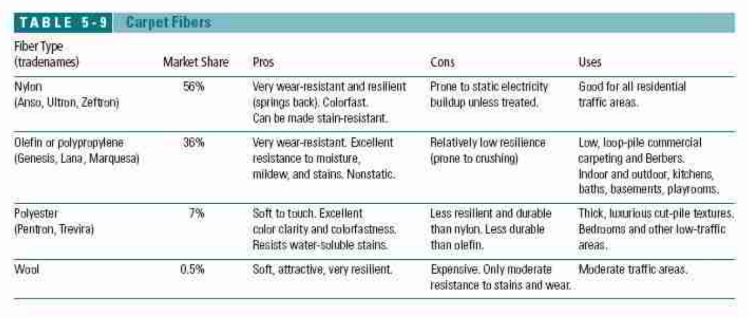
nylon
synthetic fiber
can be printed and has excellent wear quality
tends to stain easily because it possesses dye sites on the fiber
acrylic
synthetic fiber
lightweight, soft, and warm, with wool-like feel
has outstanding wickability and quick drying
resistant to moths, oil, and chemicals
dyeable to bright shades with excellent resistance to sunlight degradation
has moderate abrasion resistance but has more wool-like appearance compared to nylon
modacrylic
synthetic fiber
soft, resilient, easy to dye bright shades, abrasion resistant, quick drying
resistant to acid and alkalis and shape-retentive
can produce natural fur when mixed
polyester
synthetic fiber
offers excellent color clarity and retention
extreme fade resistance
provides excellent resistance to stains
olefins
synthetic fiber
used to introduce carpet yarns because it is cheap
is difficult and does not wear well as wool
resists static electricity
ppt polymer/sorona
synthetic fiber
makes fiber more crush-resistant, resilient, and easy to clean
dry quickly and resistant to mold
PLA - poly lactic acid polymer
synthetic fibers
biodegradable fabric
alr
type “alr”
ror
type “ror”
blends
combination of two or more fibers into a single carpet yarn
ex. 70% wool and 30% nylon for more benefits
its objective are performance standards, improved economics, and better aesthetics due to prolonged durability of the carpet
dyeing
process of coloring materials
pre-dyed
dye stuffs are added to the fibers or yarn PRIOR to the tufting process
post-dyed
yarn was undyed when tufted and then the unfinished carpet is dyed
pre-spinning
solution dyeing
raw stock dyeing
fibers are dyed before spinning
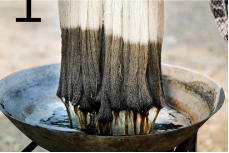
skein or yarn dyeing
the yarn is dyed, then made into carpet
very color fast, fade resistant, and keeps side-match problems to a minimum
solution dyeing
pigment is added to the molten polymer before extrusion into a colored filament
filament is impregnated with the color pigment throughout
only way to dye olefins
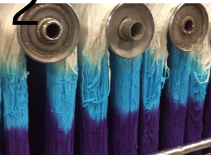
piece dyeing
carpet is dyed in one piece after tufting or weaving
before finishing process like latexing and foaming
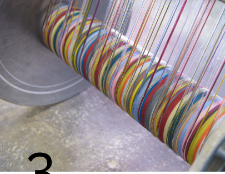
kuster dyeing
running the carpet along a conveyor belt under a row of jets that apply computer-controlled color
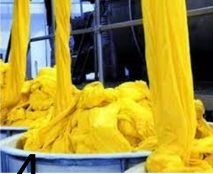
jet-beck
carpet and dye are placed in a vat, then placed under pressure
does not take long for the dye to penetrate the fibers
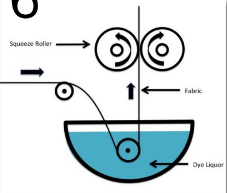
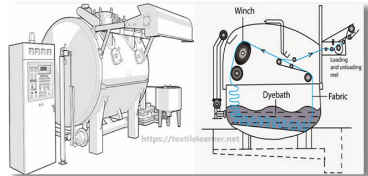
atmospheric or beck dyeing
placing the carpet in a giant vat of hot dye and cooking it for a few hours
puts color evenly throughout the carpet and is the best way to eliminate side-match problems
cost a little more because they take longer to make
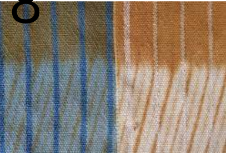
cross dyeing
dyeing fabrics with dyestuffs which have different affinities for different types of yarn
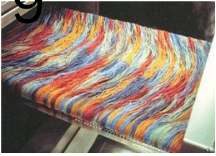
space-dyeing
different colors are “printed” along the length of yarn before it is manufactured into the carpet
print-dyeing
roller printing employing embossed cylinders to deposit the design on the face of the carpet
several rollers with different colors, producing multi-colored patterns
employs flat templates/screens through which dyes are forced on the carpet pile
each color requires different screens
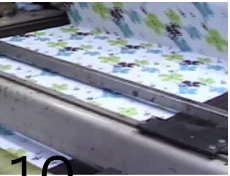
random multicolor dyeing
achieved with a random dye applicator or a tak random pattern machine
the tak machine disperses regulated amounts of dye on the carpet already
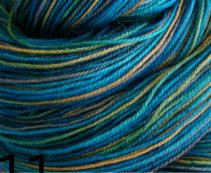
fade
Fade Resistance
When specifying a carpet that will be exposed to direct sunlight, it is important to require that a test be performed to determine the colorfastness under the following conditions:
intense sunlight
atmospheric fading
wet cleaning
abrasion fading
type “fade”
weaving
traditional way of making a carpet by interlacing warp and weft
pile and the backing are woven simultaneously.
producing a very attractive, durable carpet, most expensive manufacturing carpet by machine
many colored yarns are used
capable of producing intricate patterns from pre-determined designs
wilton carpet
produced on jacquard loom that was developed in England
uses preprogrammed pattern cards that are perforated and used to regulate the feeding of the colored yarn into the carpet surface that allow complex pattern to be woven to the carpet, allowing several types of surface textures, from level cut pile to multilevel loop construction with limited ranges of color
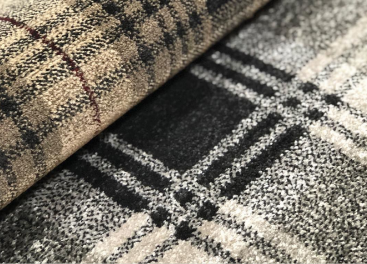
axminster
requires a very sophisticated loom
entails long spools of various colored yarns carefully preset to the desired sequence and delivered to the weaving section of the loom at the precise moment in the pattern design sequence
changing patterns is very costly and time-consuming
has a smooth cut-pile surface and can be woven in limitless colors and patterns
heavy ribbed backing that only allows the carpet to be tolled lengthwise
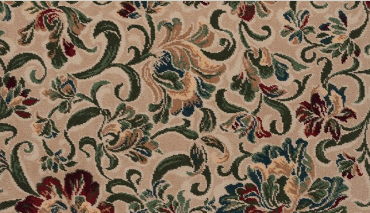
velvets
relatively uncomplicated loom
available in many color combination and textures
simplicity of the loom does not allow for patterned designs
can have beautiful color combinations used to produce tweed effects that are frequently used in commercial installations
tufting
pile yarn is punched through the premade backing with rows a of needles, like a sewing machine
as the needle do through the backing, the yarn is caught and held while the needle makes the next pass
loop of yarn can be left as for loop carpet or cut for cup-pile carpet
needle punching
Fibers, usually acrylic or polypropylene, are punched into web of synthetic fiber to form a homogenized layer of fiber
when put under heavy compression to form a characteristic felt-like fabric
it produces a carpet of limited variation in texture and accounts for a very small percentage
kniting
uses 3 sets of needles to loop together the pile backing yarn and the stitching yarns
similar to woven carpet because pile and backing are make in a single operation
superior to tufting in durability
inferior to weaving
fusion bonding
embeds the pile yarn in backing of liquid vinyl
when vinyl hardens the bond is permanently locked
used for carpet tile
flocked
short fibers are stood one end electrostatically and adhered to a backing
surface resembles cut-pile velvets
pattern may be printed on flocked carpet
an economy construction producing carpet of interior wearing qualities
felted
matting of fibers together with moisture heat and pressure
braided
fabric scraps or strands of yarn are braided and sewn together to desired shape and size
hooked
made by pulling lengths of yarn through a heavy canvas mesh and knotting them in the back
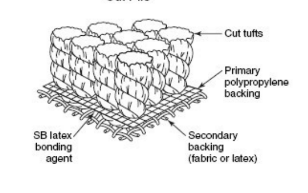
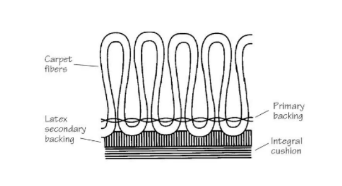
tufted carpet
made by inserting tufts of yarn into a primary backing
fast and inexpensive construction used for commercial purposes
tufted carpet
what is in the drawing/picture
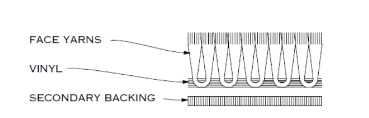
fusion bonded carpets
constructed in facing pairs with the pile embedded in the backing on each side
then cut apart to create a cut pile
used for heavy traffic, such as airport terminals
fusion bonded carpets
what is in the pic
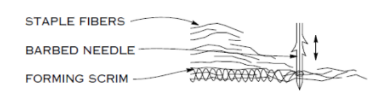
needle punched
formed by hundreds of pointed needles punching through webs or blankets of fiber to mesh them together permanently
needle punched
what is in the pic
knitted
produced on a machine similar to that for textile knitting
they use more face yarn than tufting
knitted
what is this
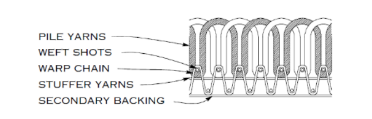
woven carpets
made on looms
original construction method
much slower and expensive process
long wearing and most dimensionally stable than other types
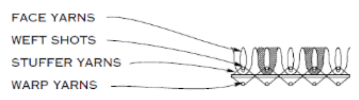
velvet construction
what is this
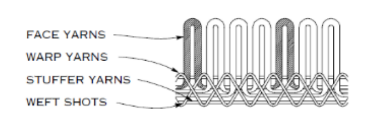
wilton construction
wat is dis
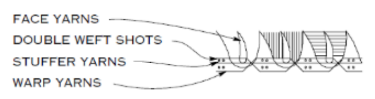
axminster construction
wat is dis
density
the amount of pile packed into a given volume of carpet
measured in ounces of pile yarn per until volume
stitches or tufts
per square inch
number of tufts within 1 sq. inch (6.5 sq cm.) of carpet
the more stitches per square inch, the more denser the carpet
gauge
distance between rows or tufts across the width of a tufted carpet
gauges of 5/64 inch, 1/10 inch and 1/8 inch are common for contract carpet
pitch (wrap)
the method used to determine the density factor in woven carpet
refers to the distance between rows and tufts
counted on 27-inch width of a finished carpet
pile height
important consideration in the overall evaluation of carpet construction
distance from the top of the yarn to the backing
when having a multilevel carpet, overall height is averaged
lower pile height requires an increase in the stitches per inch
wire size
pile height in woven carpets
flat
0.0 in - 0.01 in
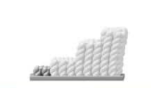
low
0.1 in - 0.25 in
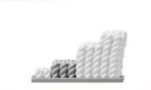
medium
.0251 in - 0.5 in
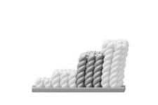
high/plush
0.51 in +
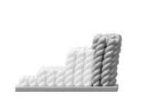
yarn weight
expressed as count
indicates the fineness or coarseness of the finished yarn using two systems
woolen count
number of running yard in one ounce of finished yarn
applies to any yarn, whether woolen or not
ex. “2 ply 50” count indicates 50 yards of 2 ply yarn per ounce
denier count
makes use of metric measurements
It is the measurement of weight in grams of a standard 9,000-meter length of yarn
ex. 2,500-denier yarn means that yarn of 9,000 meters weighs 2,500 grams
ply
number of strands of single yarn plied or twisted together to form one pile yarn
broadloom
carpet woven on a wide loom to prevent the need for seams
measures 6-19 feet (1.8-5.7 meters)
most common in the market are 12-13 feet in width
pile
upright end of the yarn, whether cup or looped, that from the wearing surface of the carpet of rugs
visible surface of the carpet consisting of yarn tufts in cut or loop
sometimes called “face” or “nap”
cut pile
nani kore