Virology Exam 4
0.0(0)
 Studied by 90 people
 Call Kai
 Learn
Learn Practice Test
 Spaced Repetition
 Match
Match Flashcards
 Knowt Play
Card Sorting
1/138

Earn XP
Description and Tags
Last updated 6:26 AM on 11/21/22
Name | Mastery | Learn | Test | Matching | Spaced | Call with Kai |
|---|
No analytics yet
Send a link to your students to track their progress
139 Terms
1
New cards
Emerging Virus
A new recently identified virus to humans that has not been observed before. Usually zoonotic
2
New cards
Emerging Viruses (examples)
HIV, Zika, SARS, MERS-CoV, West Nile, SARS-CoV-2, Noroviruses
3
New cards
Reemerging Virus
A virus under control from a public health perspective but is making a comeback or reappearance, and is increasing in incidence and geographical range of exposed human populations.
4
New cards
Reemerging Viruses (ex)
Measles, mumps, Ebola, rubella, polio, enterovirus
5
New cards
Human factors that leave us susceptible to new viruses
Human demographics drive viral disease emergence more than virus evolution or ecological factors. Increasing human population, which leads to urbanization which leads to higher population densities which favors the spread of diseases. Travel
6
New cards
Mechanisms of exposure to emerging viruses?
crowding, sanitation, contamination of drinking water, healthcare facilities, air travel
7
New cards
Where has mortality shifted from and to in recent years
Mortality has shifted from infectious diseases to cardiovascular/cancer
8
New cards
Where and when was SARS first discovered
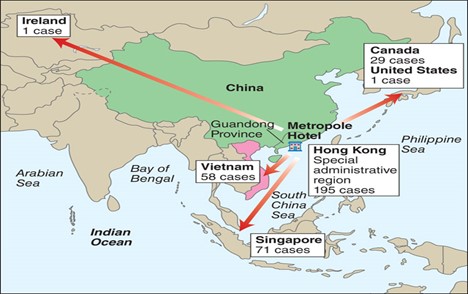
Hong Kong as of March 28, 2003. Patient zero of the SARS pandemic stayed at the Metropole Hotel.
Eventually spread to about 20 countries
Eventually spread to about 20 countries
9
New cards
How quickly did COVID travel the world?
Three months
10
New cards
What type of genomes are the majority of problematic emerging and remerging viruses?
RNA genomes
11
New cards
Reassortment
Gene swapping. Occurs with segmented viruses and coinfection of the same cell- antigenic shift.
12
New cards
Recombination
Can occur in segmented or non segmented genomes. The polymerase complex switches, mid replication from one RNA molecule to the next. Coronavirus (SARS and MERS) do this frequently.
13
New cards
Mutation rate of RNA viruses
Evolve approximately 1 million times faster than human DNA
14
New cards
What type of viral evolution happens with influenza?
Antigenic drift, antigenic shift, reassortment
15
New cards
Why can influenza be transmitted and mutate so rapidly?
Influenza has a reservoir that is capable of producing major genetic variants. The reservoir is then introduced into the human population (H5N1 and H5N2)
Reservoir is found wild waterfowl and shorebirds (as well as a range of domesticated animals who maintain their own influenza A viruses. Spillover events occur from wild birds (such as waterfowl). These birds have flyways and migration patterns over the world or regions of the US that can cause them to spread the disease to different areas. Genetic shift occurs when genes are passed within the same species while genetic shift happens when these birds pass these viruses to different species.
Reservoir is found wild waterfowl and shorebirds (as well as a range of domesticated animals who maintain their own influenza A viruses. Spillover events occur from wild birds (such as waterfowl). These birds have flyways and migration patterns over the world or regions of the US that can cause them to spread the disease to different areas. Genetic shift occurs when genes are passed within the same species while genetic shift happens when these birds pass these viruses to different species.
16
New cards
Norovirus' RNA-dependent RNA pol
High error rate and high rate of mutation
17
New cards
Why does norovirus have a high rate of transmission?
Highly contagious and spreads through contaminated food and water
healthcare facilities, restaurants and catering, schools and childcare centers, cruise ships
healthcare facilities, restaurants and catering, schools and childcare centers, cruise ships
18
New cards
West Nile Transmission
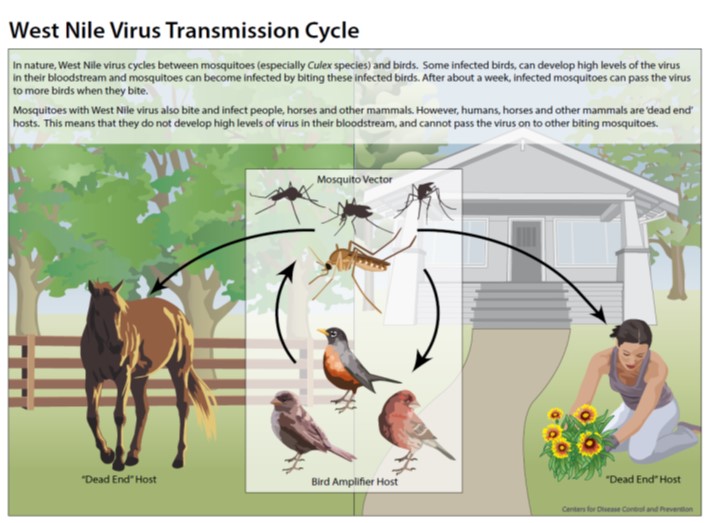
Main reservoir is birds, mosquitos pick up WN from feeding birds and give it to humans and horses, who are dead-end hosts (cannot transmit due to low viremia)
19
New cards
How did the West Nile come to the US
Came to the US by mosquitoes flying across the Atlantic ocean on an aircraft
20
New cards
How did Zika spread to the US
From Brazil to Puerto Rico to Mexico to the US
21
New cards
How is Zika transmitted
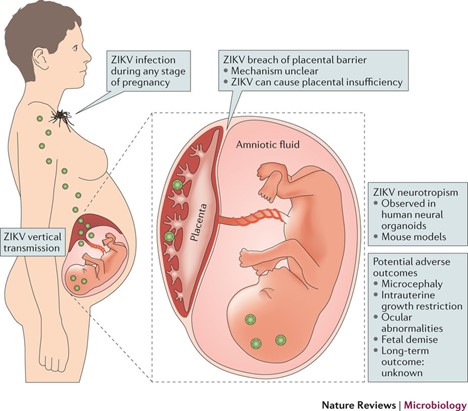
Mosquito bites by Aedes spp. and vertical transmission
22
New cards
Why is Zika virus no longer relevant?
Immunity
23
New cards
Zoonosis
Infectious diseases transmissible from animals to humans or from humans to animals
24
New cards
What caused zoonosis in monkeypox
US exotic pet trading
25
New cards
What caused zoonosis in SARS
Open-Markets, horseshoe bat
26
New cards
Why coronavirus can be both transmitted and mutate so rapidly?
Highly transmissible because it is an aerosol. Mutates as it is zoonotic and infects many organisms quickly.
27
New cards
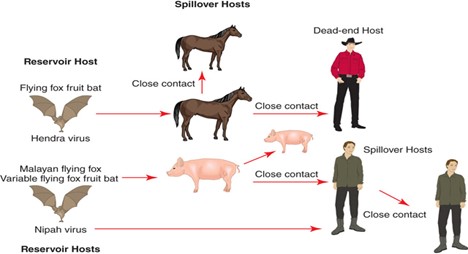
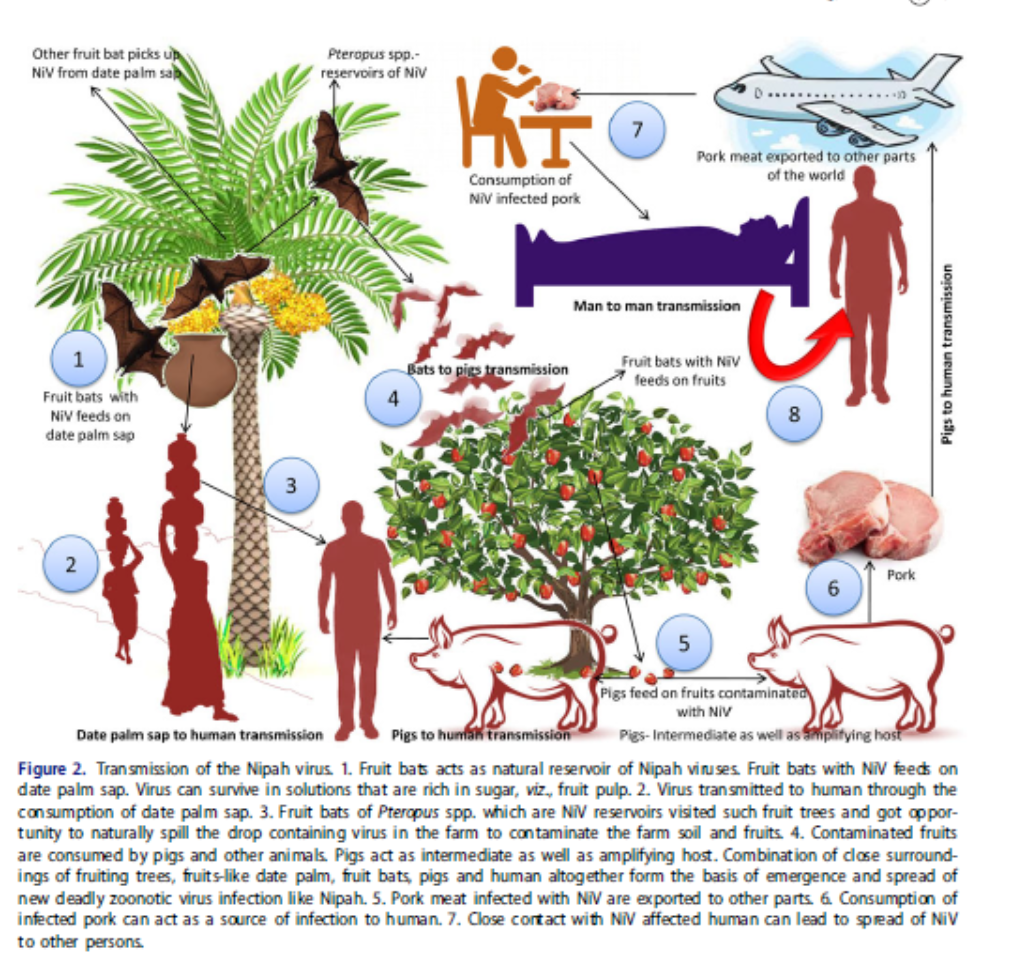
Nipah and Hendra Viruses Transmission
28
New cards
Nipah Virus Transmission
Bats can also contaminate fruit leading to human and pig infection
29
New cards
What environmental factors lead to outbreaks
Many outbreaks occur after environmental disruptions (hurricanes, floods, droughts)
Global climate changes are expected to increase
- Broadens the range of vector borne diseases
- Expands mosquito range
Global climate changes are expected to increase
- Broadens the range of vector borne diseases
- Expands mosquito range
30
New cards
Arbovirus
Group of viruses that are transmitted by mosquitoes, ticks,
or other arthropods. They include encephalitis, dengue, and yellow fever. Heterogenous group of mainly RNA viruses
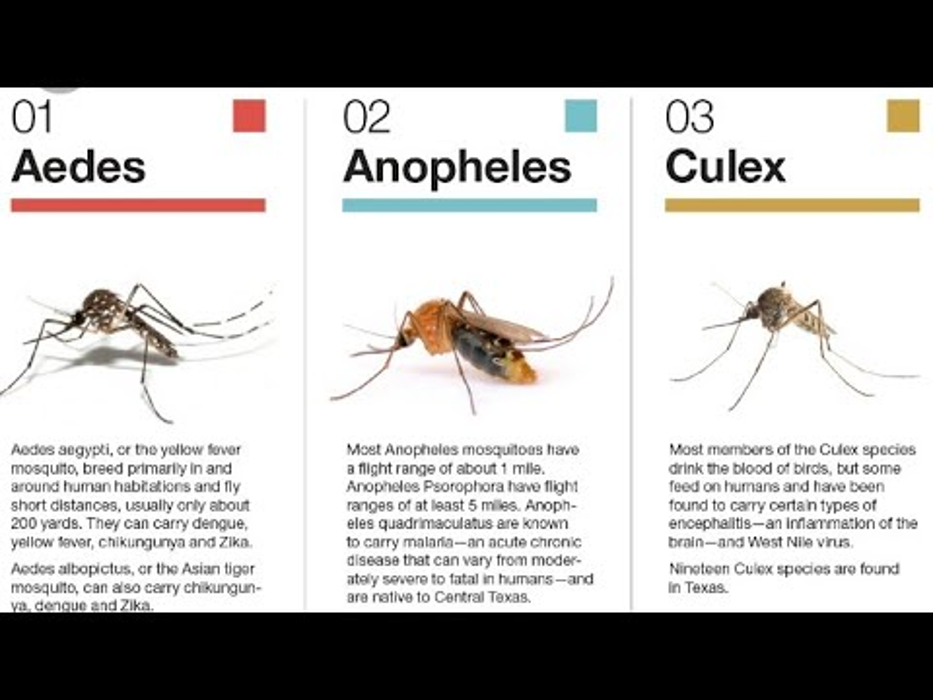
Aedes and Culex spp. are the dominant arthropod vectors for numerous arboviruses
togaviridae and flaviviradae
or other arthropods. They include encephalitis, dengue, and yellow fever. Heterogenous group of mainly RNA viruses
Aedes and Culex spp. are the dominant arthropod vectors for numerous arboviruses
togaviridae and flaviviradae
31
New cards
Togaviridae (alpha)
chikungunya, equine encephalitis, +ssRNA
Enveloped, non-segmented
Enveloped, non-segmented
32
New cards
Flaviviridae
Dengue, Zika, West Nile, Yellow Fever
Enveloped viruses containing a single-stranded positive-sense RNA gnome
Enveloped viruses containing a single-stranded positive-sense RNA gnome
33
New cards
Mosquitos that mainly spread disease
34
New cards
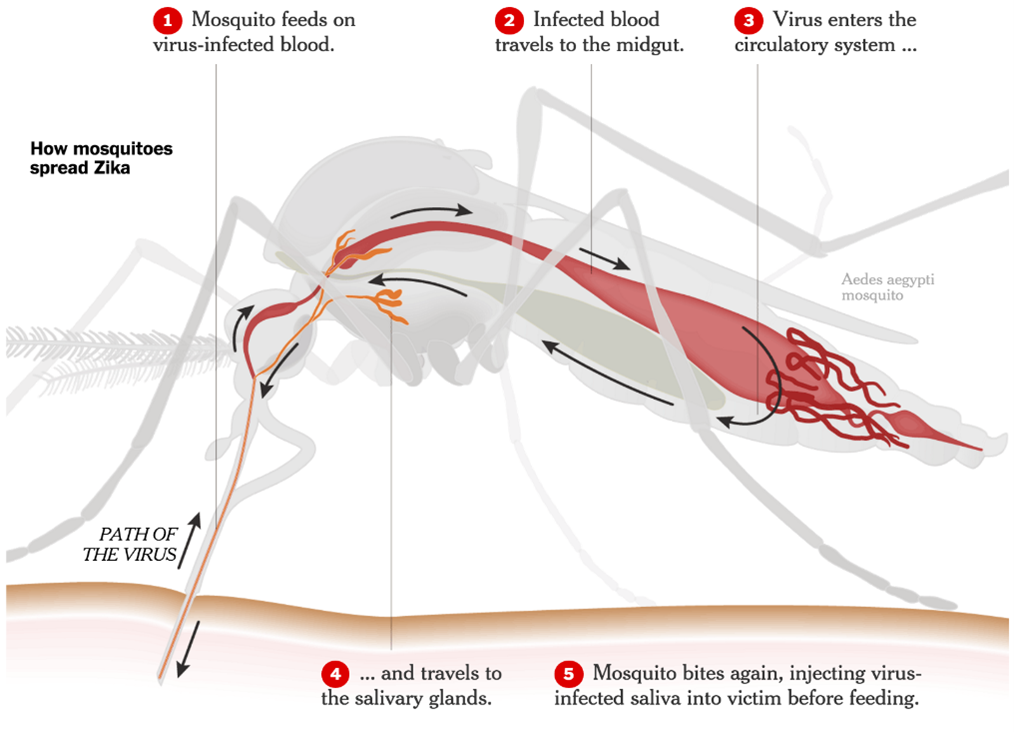
Viral transmission via mosquito
Mosquito incidentally feeds on a virus infected host to acquire viruses circulating in the host blood
Viruses infect epithelial cells in the mosquito gut and then spread into the mosquito
10^4 plaque-forming units (PFU) of viruses are required to achieve productive mosquito infection
Tissues in the mosquito such as haemolymph, salivary glands, and fat body are highly permissive to arboviral propagation
Viruses subsequently disseminate into salivary glands, thus enabling viral transmission by the infected mosquito to naïve hosts through blood feeding
Viruses infect epithelial cells in the mosquito gut and then spread into the mosquito
10^4 plaque-forming units (PFU) of viruses are required to achieve productive mosquito infection
Tissues in the mosquito such as haemolymph, salivary glands, and fat body are highly permissive to arboviral propagation
Viruses subsequently disseminate into salivary glands, thus enabling viral transmission by the infected mosquito to naïve hosts through blood feeding
35
New cards
Which vaccine preventable diseases are remerging?
Measles- -ssRNA virus- “highly contagious”, R nought 12-18 (per every infected person, how many people will it infect)
Mumps- -ssRNA virus- “look like a chipmunk” - lymphatic build up in parotid salivary glands
Rubella- +ssRNA- “Rubella was eliminated from the United States in 2004”
Amish community:
Poliomyelitis (+ssRNA)
Mumps- -ssRNA virus- “look like a chipmunk” - lymphatic build up in parotid salivary glands
Rubella- +ssRNA- “Rubella was eliminated from the United States in 2004”
Amish community:
Poliomyelitis (+ssRNA)
36
New cards
Why do vaccine preventable diseases reemerge in general?
Decrease in vaccination compliance and immigration of unvaccinated
37
New cards
Telltale signs of measles
Facial rash and bad cough
38
New cards
Telltale sign of mumps
swelling of jaw
39
New cards
Telltale sign of Rubella
Rash that lasts 2-3 days
40
New cards
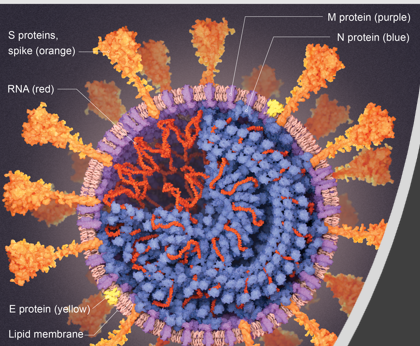
Structure of COVID-19
-Enveloped
-Helical
-Very large +RNA genome (cat IV)
- Nonseg
an Rdrp that has exonuclease activity (some proofreading ability)
-Helical
-Very large +RNA genome (cat IV)
- Nonseg
an Rdrp that has exonuclease activity (some proofreading ability)
41
New cards
COVID transmission
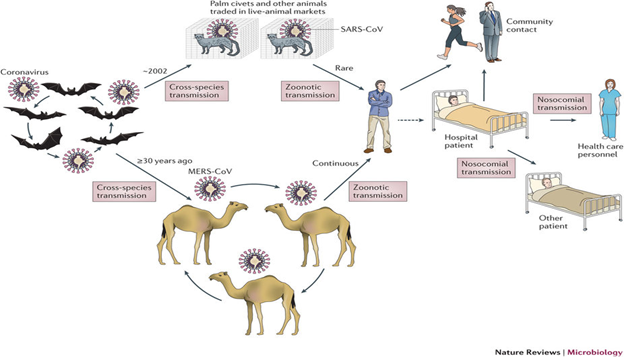
42
New cards
Origin of SARS-CoV-2
Horshoe bat
43
New cards
How many known coronaviruses
7
4 common circulating
3 emerging
4 common circulating
3 emerging
44
New cards
Common ancestors of COVID are in which animals
bats and birds
45
New cards
Bats produce which coronaviruses
alphacoronavirus, groups a-d betacoronaviruses
can infect humans
can infect humans
46
New cards
Birds produce which coronaviruses
gammacoronaviruses and deltacoronaviruses
47
New cards
The seven types of human coronaviruses
Alpha:
- HCOV-NL63
- HCOV-229E (common cold cov)
Beta:
- HCOV-OC43 (common cold cov)
- HCOV-HKU1
- SARS
-MERS
- SARS-COV-2 (common cold cov)
- HCOV-NL63
- HCOV-229E (common cold cov)
Beta:
- HCOV-OC43 (common cold cov)
- HCOV-HKU1
- SARS
-MERS
- SARS-COV-2 (common cold cov)
48
New cards
What receptor do problematic covs (sars cov 1-2) tend to use
ACE2
49
New cards
Transmission route of coronaviruses
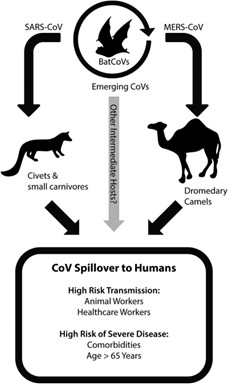
50
New cards
Why are bats good reservoirs for diseases
Bats are known to carry many different strain of viruses but do not get sick from them
-Live around 30 years
-Shed in saliva, feces and aerosol
-Immune system tolerates and sustains high concentration of viruses
-A lot of contact with humans
-Bats are the only flying mammal
-Typically have high levels of IFNs and ISGS
-They can control their damage by increased HSP’s (heat shock proteins)
-Enhanced autophagy
- Dampened intracellular viral response
-Unique balance between host defense and immune tolerance allows them to be well while transmitting the virus
-Live around 30 years
-Shed in saliva, feces and aerosol
-Immune system tolerates and sustains high concentration of viruses
-A lot of contact with humans
-Bats are the only flying mammal
-Typically have high levels of IFNs and ISGS
-They can control their damage by increased HSP’s (heat shock proteins)
-Enhanced autophagy
- Dampened intracellular viral response
-Unique balance between host defense and immune tolerance allows them to be well while transmitting the virus
51
New cards
Possible origins of COVID-19 into humans
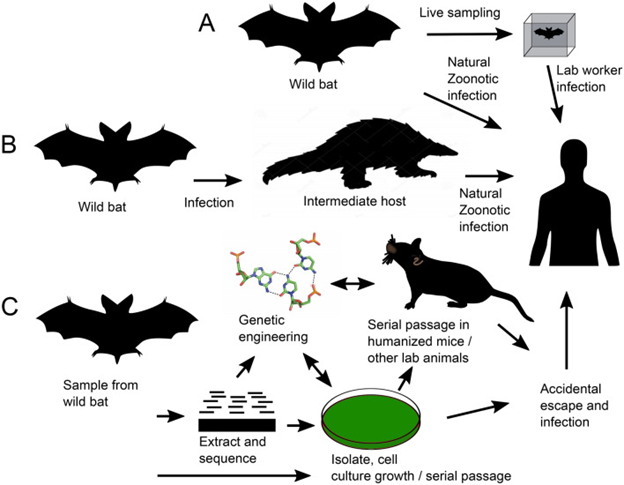
52
New cards
Two possibilities of COVID origin
natural origin (more plausable) or lab leak (no evidence)
53
New cards
Where was the early epicenter of COVID
Huanan Seafood Market
- live sars-cov-2 susceptible animals being sold
SARS-CoV-2-positive environmental samples were spatially associated with vendors selling live mammals
- live sars-cov-2 susceptible animals being sold
SARS-CoV-2-positive environmental samples were spatially associated with vendors selling live mammals
54
New cards
Why is COVID-19 so hard to control? (as compared to sars cov)
More transmissible, less pathogenic
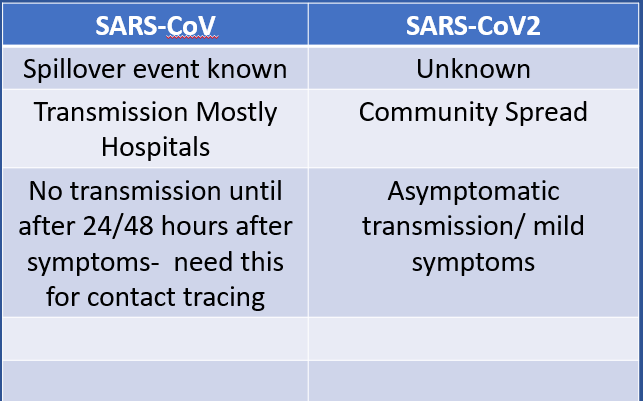
55
New cards
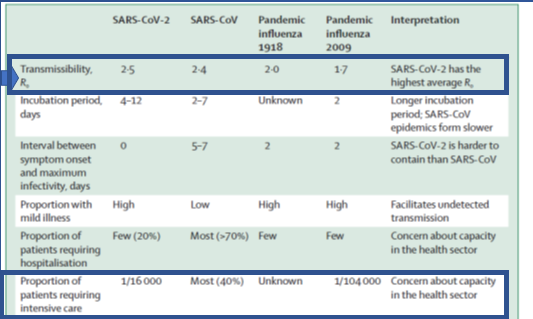
What is R naught
R0 is defined as the average number of secondary transmissions from one infected person; when R0 is greater than 1, the epidemic is growing
56
New cards
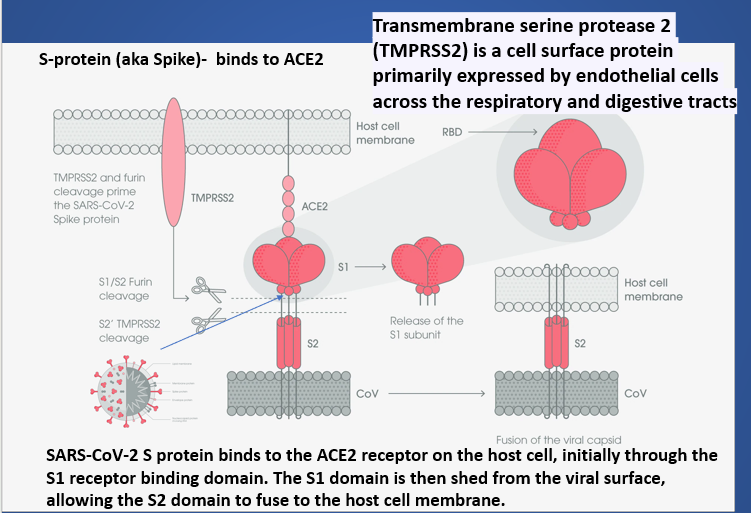
Viral Entry of SARS-CoV-2
57
New cards
ACE2
Angiotensin-converting enzyme 2
-Present in many cell types and tissues including the lungs, heart, blood vessels, kidneys, livers and gastrointestinal tract
-ACE2 is present in epithelium in the nose, mouth and lungs as well as many other tissues including brain tissue. In the lungs, ACE2 is highly abundant in type 2 pneumocytes
-Type 1 pneumocytes responsible for the gas (oxygen and carbon dioxide) exchange that takes place in the alveoli
-Type 2 pneumocytes produce surfactant and promotes elastic properties of the lungs
-Also, Type 1 progenitors
-Present in many cell types and tissues including the lungs, heart, blood vessels, kidneys, livers and gastrointestinal tract
-ACE2 is present in epithelium in the nose, mouth and lungs as well as many other tissues including brain tissue. In the lungs, ACE2 is highly abundant in type 2 pneumocytes
-Type 1 pneumocytes responsible for the gas (oxygen and carbon dioxide) exchange that takes place in the alveoli
-Type 2 pneumocytes produce surfactant and promotes elastic properties of the lungs
-Also, Type 1 progenitors
58
New cards
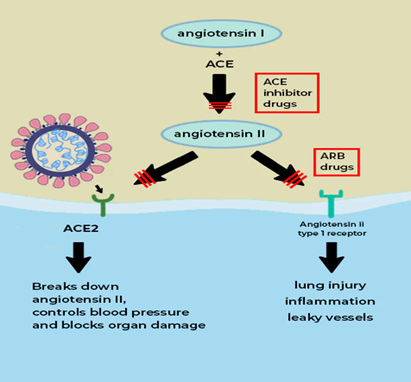
ACE2 function
Sars binding to ACEII causes activation of angiotensin II (regulates bp, etc), when SARS inhibits this it leads to inflammation, lung injury and leaky vessels
59
New cards
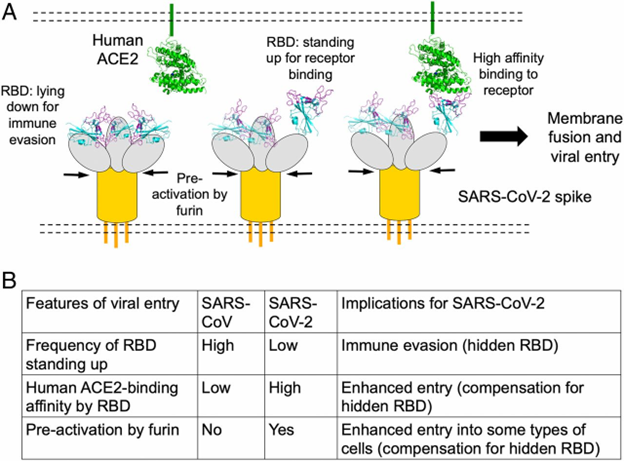
Entrance in sarscov2 vs sarscov1
CoV-2’s RBD hides more frequently instead of remaining standing up most of the time as CoV’s does. This allows for less immunological evasion and CoV-2 has an enhanced entry mechanism as well as being pre-activated by furin given more enhanced entry.
60
New cards
Sars-CoV-2 binding process
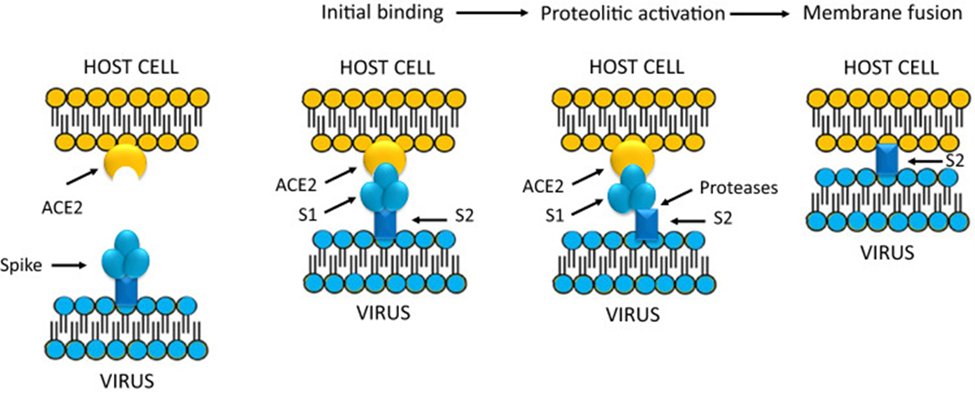
61
New cards
Stages of COVID
Asymptomatic State
Upper airway and conducting airway response
Hypoxia, ground class infiltrates, and progression to ARDS
Upper airway and conducting airway response
Hypoxia, ground class infiltrates, and progression to ARDS
62
New cards
Stage 1: Asymptomatic state (initial 1-2 days) COVID
Inhaled virus SARS-CoV-2 likely binds to epithelial cells in the nasal cavity and starts replicating. ACE2 is the main receptor for both SARS-CoV2 and SARS-CoV.
63
New cards
Stage 2: Upper airway and conducting airway response (next few days)
The virus propagates and migrates down the respiratory tract along the conducting airways, and a more robust innate immune response is triggered.
64
New cards
Stage #3 Hypoxia, ground glass infiltrates, and progression to ARDS
ARDS
The virus now reaches the gas exchange units of the lung and infects alveolar type II cells. Both SARS-CoV and influenza preferentially infect type II cells compared to type I cells .
SARS-CoV propagates within type II cells, a large number of viral particles are released, and the cells undergo apoptosis and die.
The virus now reaches the gas exchange units of the lung and infects alveolar type II cells. Both SARS-CoV and influenza preferentially infect type II cells compared to type I cells .
SARS-CoV propagates within type II cells, a large number of viral particles are released, and the cells undergo apoptosis and die.
65
New cards
ARDS
(Acute respiratory distress syndrome (ARDS) is a serious lung condition that causes low blood oxygen. People who develop ARDS are usually ill due to another disease or a major injury. In ARDS, fluid builds up inside the tiny air sacs of the lungs, and surfactant breaks down. You can get pulmonary edema
66
New cards
COVID Pathogenesis
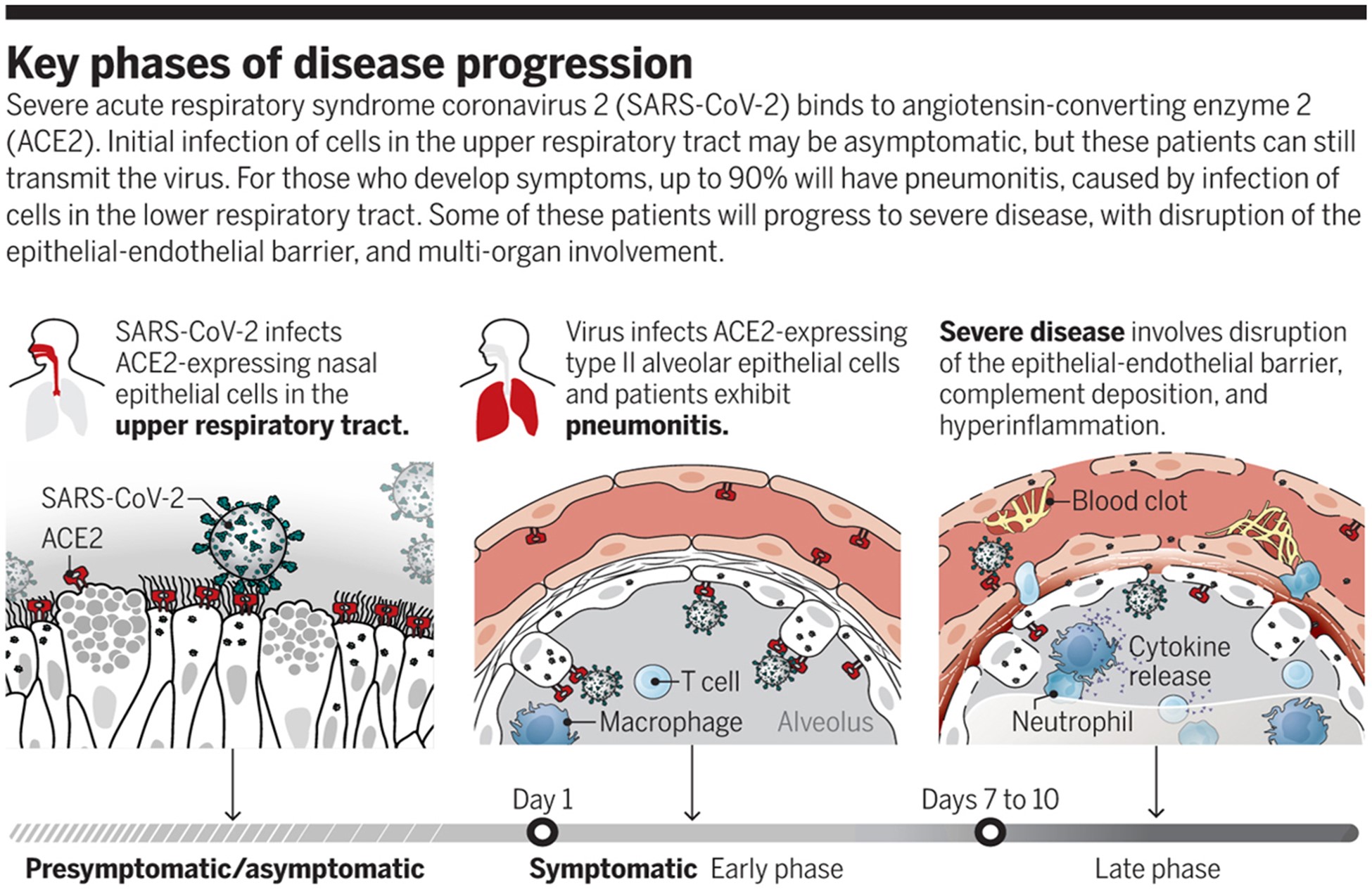
67
New cards
Affect of COVID on alveoli
loss of vascular integrity (1), activation of the coagulation pathway (2) and inflammation (3)
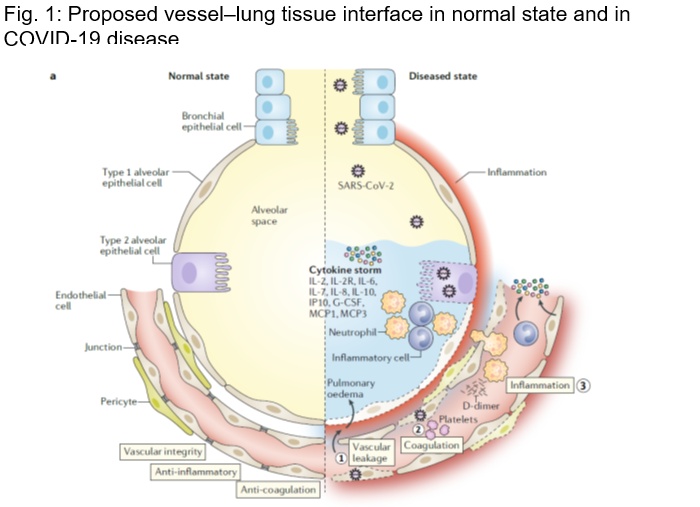
68
New cards
COVID Pathogenesis compared to other diseases
covid infects lower lungs
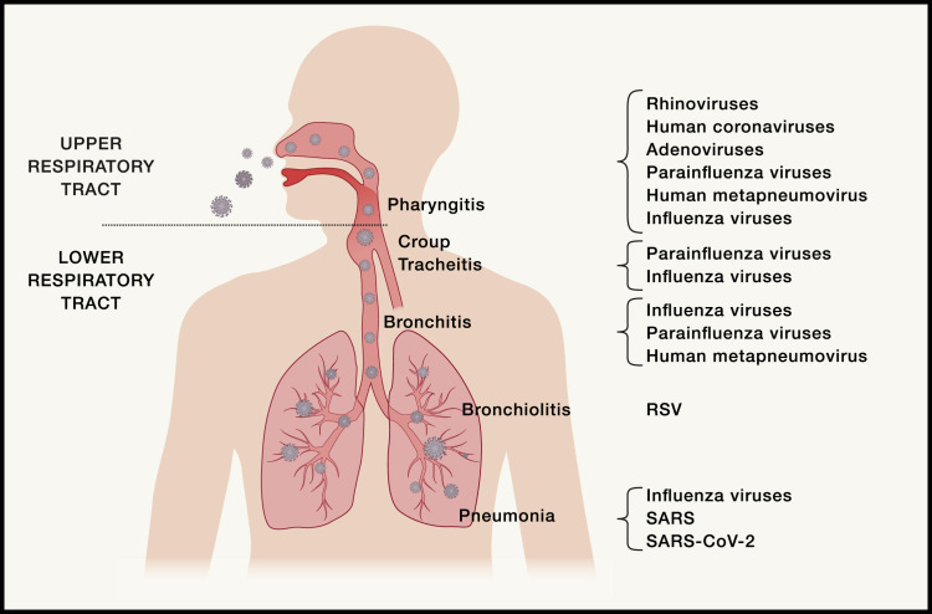
69
New cards
What causes multi-organ damage observed in COVID-19 patients
The widespread presence of injury and the ability of the virus to infect endothelial cells in the microcirculation of many organs may account for the multi-organ damage observed in late stage COVID-19 patients.
70
New cards
Five main genes of COVID
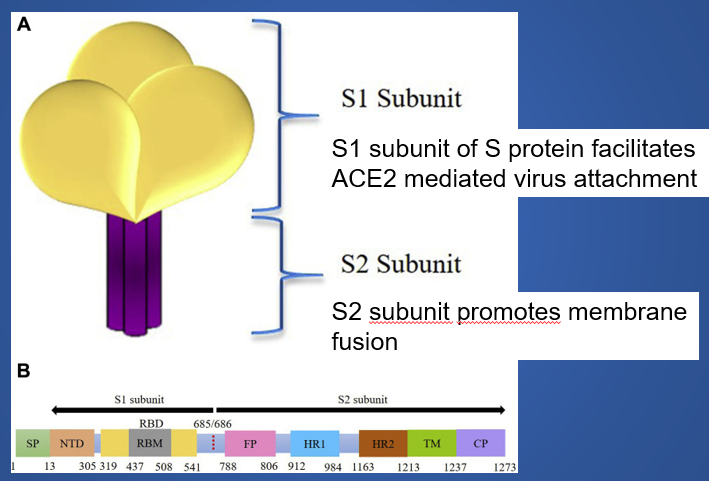
S - Spike (receptor binding protein for ACE2)
E - Envelope
N - Nucleocapsid
M - Membrane
ORF - Open Reading Frame (2/3 of the genome)
E - Envelope
N - Nucleocapsid
M - Membrane
ORF - Open Reading Frame (2/3 of the genome)
71
New cards
What do ORF1a and ORF1b produce?
Two polyproteins pp1a and pp1ab
72
New cards
What non-structural proteins are made from pp1a
Nsp1-11
73
New cards
What non-structural proteins are made from pp1ab
Nsp1-10 and Nsp12-16
74
New cards
What is included in the NSPS
proteases, pols and endonucleases
75
New cards
Nucleocapsid
protein coat that contains RNA genome and appears to have other functions in immune inhibition.
76
New cards
Membrane
function to stabilize and maintain the viral envelope
77
New cards
Envelope
Not the standard envelope
E is abundantly expressed inside the infected cell, but only a small portion is incorporated into the virion envelope. Role in viral assembly, release and pathogenesis.
E is abundantly expressed inside the infected cell, but only a small portion is incorporated into the virion envelope. Role in viral assembly, release and pathogenesis.
78
New cards
Spike Protein Structure
79
New cards
Accessory proteins of COVID
3a, 3c, 6, 7a, 7b, 8 and 9b
80
New cards
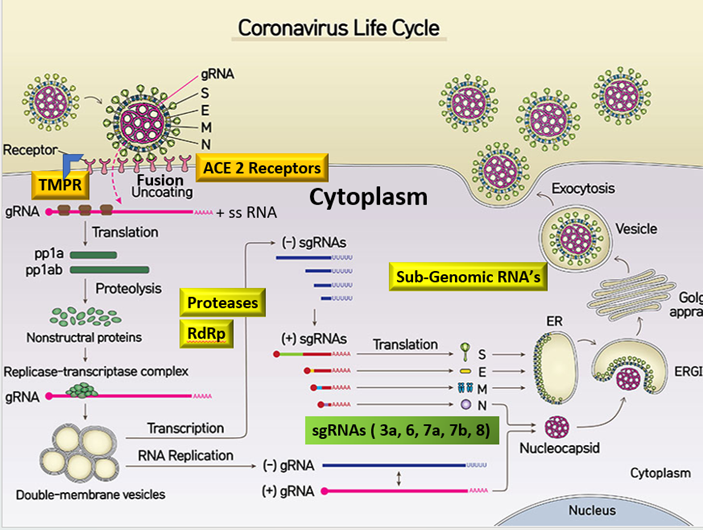
Where does the SARS lifecycle occur?
In the cytoplasm
81
New cards
What happens at/to the 5' end of the genome?
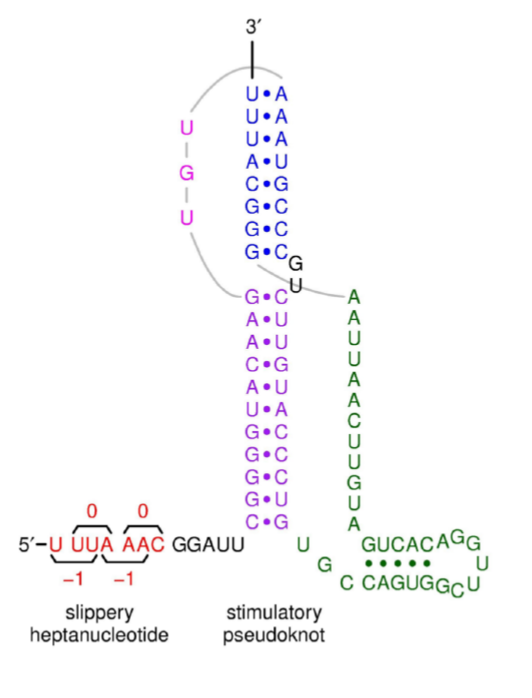
This is where the ORFs are.
Programmed ribosomal frameshifting generates 2 polyproteins encoding the replicase proteins.
- Slippery heptanucleotide make ribosome read thru past stop codon
- Pseudoknot can cause ribosome to pause and frameshift (moves back the reading frame by one and then continues reading, bypasses one stop codon)
Programmed ribosomal frameshifting generates 2 polyproteins encoding the replicase proteins.
- Slippery heptanucleotide make ribosome read thru past stop codon
- Pseudoknot can cause ribosome to pause and frameshift (moves back the reading frame by one and then continues reading, bypasses one stop codon)
82
New cards
What happens to the 3' end of the genome
As rdrp is reading through the genome it comes across TRS-B (preceding each gene) and jumps to synthesize TRS-L sequence so that each genome has a 5’ cap and 3’ poly-A tail
83
New cards
Subgenomic RNA step by step
RdRp is transcribing the negative strand and encounters transcriptional regulatory sequences (TRS) preceding each gene called the body TRS (TRS-B)
• The TRS-B site has a 7–8-nt conserved core sequence (CS) which is thought to enhance the likelihood of RdRp template switching by hybridizing with leader TRS (TRS-L)
• The occurrence of this programmed template switching leads to the generation of sgmRNAs with identical 5′ and 3′ sequences,
• The TRS-B site has a 7–8-nt conserved core sequence (CS) which is thought to enhance the likelihood of RdRp template switching by hybridizing with leader TRS (TRS-L)
• The occurrence of this programmed template switching leads to the generation of sgmRNAs with identical 5′ and 3′ sequences,
84
New cards
RTCS
Replication and Transcription Complexes (RTC’s)
- Double membrane vesicles
- Delivered from ER
- Induced by Coronavirus nsp 3, 4, and 6
- Role could be hiding in genome and concentrating factors for replication and transcription
- Elaborate network with RER
- Transcription and replication of covid genome
- Not assembly of virion
- Contains many NSPs
- Double membrane vesicles
- Delivered from ER
- Induced by Coronavirus nsp 3, 4, and 6
- Role could be hiding in genome and concentrating factors for replication and transcription
- Elaborate network with RER
- Transcription and replication of covid genome
- Not assembly of virion
- Contains many NSPs
85
New cards
COVID Replication Cycle
When the spike protein of SARS-CoV-2 binds to the receptor of the host cell, the virus enters the cell, and then the envelope is peeled off, which lets genomic RNA be present in the cytoplasm. The ORF1a and ORF1b RNAs are made by genomic RNA, and then translated into pp1a and pp1ab proteins, respectively. Protein pp1a and ppa1b are cleaved by protease to make a total of 16 nonstructural proteins. Some nonstructural proteins form a replication/transcription complex (RNA-dependent RNA polymerase, RdRp), which use the (+) strand genomic RNA as a template. The (+) strand genomic RNA produced through the replication process becomes the genome of the new virus particle. Subgenomic RNAs produced through the transcription are translated into structural proteins (S: spike protein, E: envelope protein, M: membrane protein, and N: nucleocapsid protein), which form a viral particle. Spike, envelope, and membrane proteins enter the endoplasmic reticulum, and the nucleocapsid protein is combined with the (+) strand genomic RNA to become a nucleoprotein complex. They merge into the complete virus particle in the endoplasmic reticulum-Golgi apparatus compartment and are excreted to extracellular region through the Golgi apparatus and the vesicle.
86
New cards
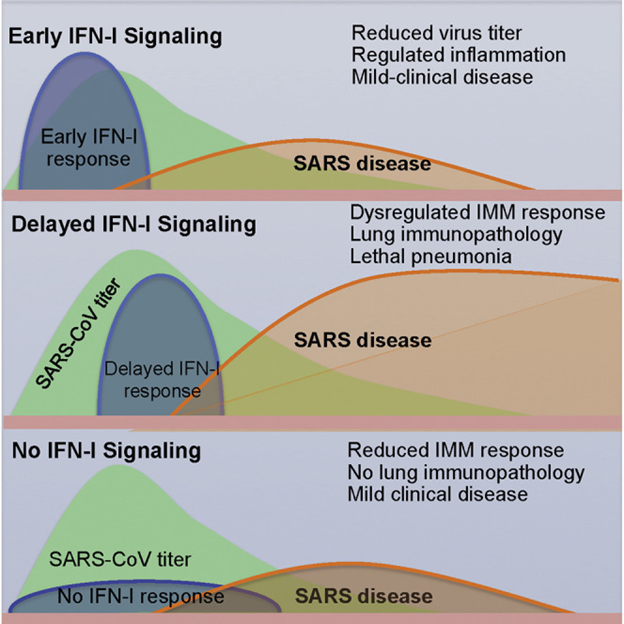
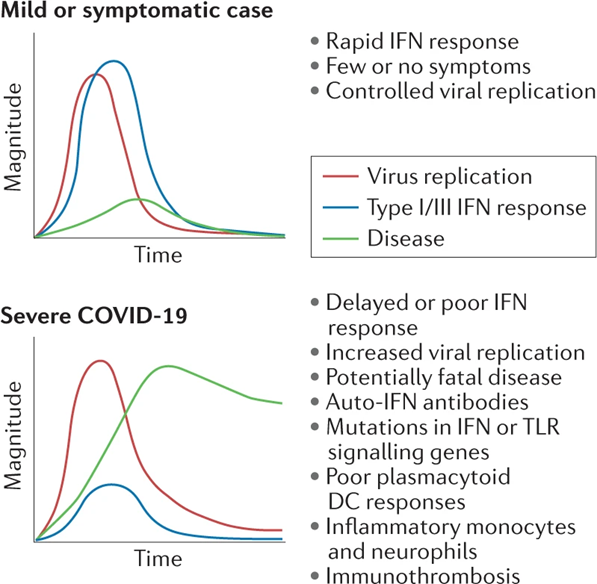
Early v. Late v. No IFN-I signaling
87
New cards
How does SARS evade the immune system?
SARS-CoV2 is very efficient at blocking immune response. NSP13 blunts intracellular signaling such as rig1 or the nucleocapsid itself. Other proteins are involved in blocking various downstream signals in the immune system which inhibits the immune system from recognizing SARS-CoV-2.
88
New cards
What antivirals exist
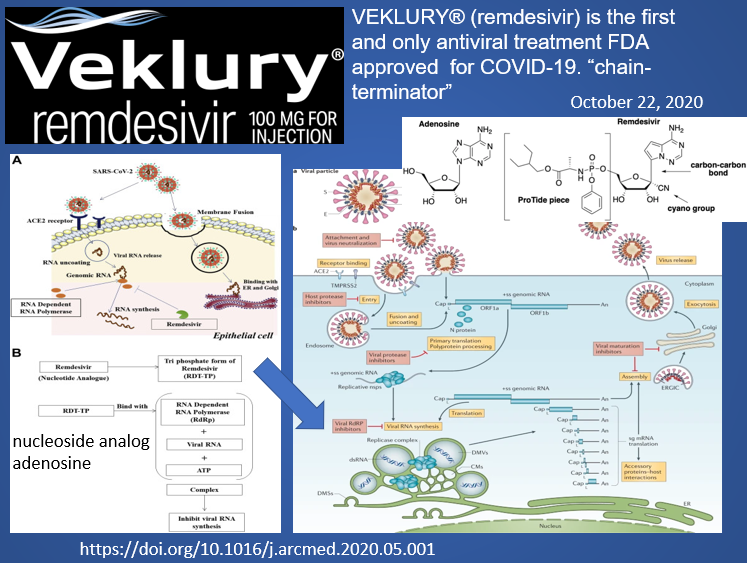
Nucleoside analogs: remdesivir and molnupiravir
Protease inhibitor: nirmatrelvir/ritonavir
Protease inhibitor: nirmatrelvir/ritonavir
89
New cards
How does remdesivir work?
it is a nucleoside analog
90
New cards
Molnupiravir
gets incorporated into burgeoning RNA strands and induces errors. The compound can shift its configuration, sometimes mimicking the nucleoside cytidine and sometimes mimicking uridine
91
New cards
Nirmatrelvir/Paxlovid
Nirmatrelvir is an oral viral protease inhibitor that is active against MPRO, a viral protease that plays an essential role in viral replication by cleaving the 2 viral polyproteins. Nirmatrelvir is packaged with ritonavir (as Paxlovid), a strong cytochrome inhibitor and pharmacokinetic boosting agent that has been used to boost HIV protease inhibitors. Coadministration of ritonavir is required to increase nirmatrelvir concentrations to the target therapeutic range
92
New cards
Positives of mRNA vaccines
mRNA vaccines can be manufactured in a cell-free manner
Rapid, scalable and cost-effective production
a 5 liter bioreactor can produce almost a million mRNA vaccine doses in a single reaction
a single mRNA vaccine can encode multiple antigens
mRNA is three to four orders of magnitude larger than molecules that readily diffuse into cells;
Rapid, scalable and cost-effective production
a 5 liter bioreactor can produce almost a million mRNA vaccine doses in a single reaction
a single mRNA vaccine can encode multiple antigens
mRNA is three to four orders of magnitude larger than molecules that readily diffuse into cells;
93
New cards
Why do mRNA vaccines require lipid membranes?
the dense negative charge of mRNA electrostatically repulses the anionic cell membrane, preventing its uptake.
Therefore, mRNA vaccines require a delivery vehicle that not only protects the nucleic acid from degradation but allows the mRNA to get into cells.
Therefore, mRNA vaccines require a delivery vehicle that not only protects the nucleic acid from degradation but allows the mRNA to get into cells.
94
New cards
Available vaccines and their type
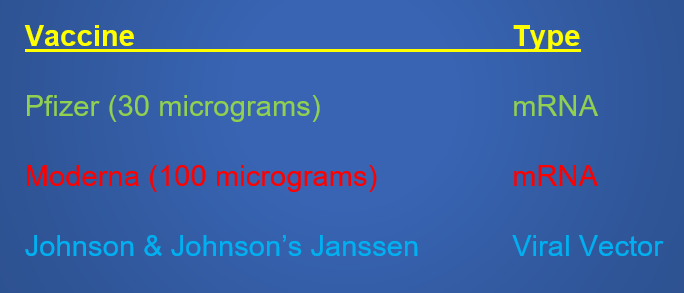
95
New cards
mRNA vaccines consist of...
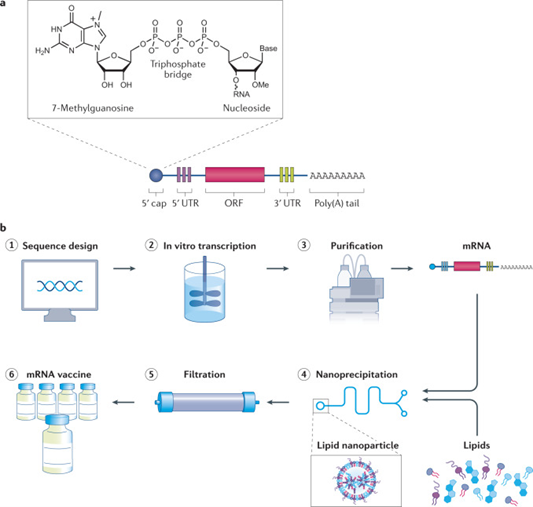
In vitro-transcribed (IVT) mRNA contains five structural elements: a 5′ cap containing 7-methylguanosine linked through a triphosphate bridge to a 2′-O-methylated nucleoside, flanking 5′ and 3′ untranslated regions (UTRs), an open reading frame (ORF) and a poly(A) tail.
96
New cards
How are mRNA vaccines put into lipids
(1) Once the genome of a pathogen has been sequenced, a sequence for the target antigen is designed and inserted into a plasmid DNA construct. (2) Plasmid DNA is transcribed into mRNA by bacteriophage polymerases in vitro and (3) mRNA transcripts are purified by high performance liquid chromatography (HPLC) to remove contaminants and reactants. (4) Purified mRNA is mixed with lipids in a microfluidic mixer to form lipid nanoparticles. Rapid mixing causes the lipids to encapsulate mRNA instantaneously and precipitate as self-assembled nanoparticles. (5) The nanoparticle solution is dialysed or filtered to remove non-aqueous solvents and any unencapsulated mRNA and (6) the filtered mRNA vaccine solution is stored in sterilized vials.
97
New cards
How do LNP Vaccines work
•lipid nanoparticles are taken up by cells via endocytosis,
•and the ionizability of the lipids at low pH enables endosomal escape, which allows release of the cargo into the cytoplasm.
•In addition, lipid nanoparticles usually contain a helper lipid to promote cell binding, cholesterol to fill the gaps between the lipids, and a polyethylene glycol (PEG) to reduce opsonization by serum proteins and reticuloendothelial clearance.
•Together encapsulate and protect the fragile mRNA core
•and the ionizability of the lipids at low pH enables endosomal escape, which allows release of the cargo into the cytoplasm.
•In addition, lipid nanoparticles usually contain a helper lipid to promote cell binding, cholesterol to fill the gaps between the lipids, and a polyethylene glycol (PEG) to reduce opsonization by serum proteins and reticuloendothelial clearance.
•Together encapsulate and protect the fragile mRNA core
98
New cards
how do mRNA vaccines work
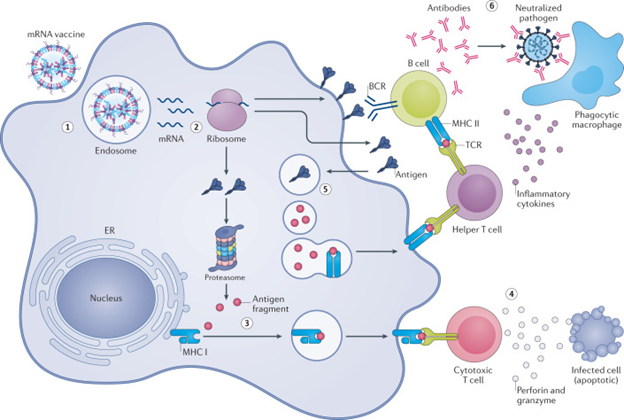
(1) Injected mRNA vaccines are endocytosed by antigen-presenting cells. (2) After escaping the endosome and entering the cytosol, mRNA is translated into protein by the ribosome. The translated antigenic protein can stimulate the immune system in several ways. (3) Intracellular antigen is broken down into smaller fragments by the proteasome complex, and the fragments are displayed on the cell surface to cytotoxic T cells by major histocompatibility complex (MHC) class I proteins. (4) Activated cytotoxic T cells kill infected cells by secreting cytolytic molecules, such as perforin and granzyme. (5) Additionally, secreted antigens can be taken up by cells, degraded inside endosomes and presented on the cell surface to helper T cells by MHC class II proteins. (6) Helper T cells facilitate the clearance of circulating pathogens by stimulating B cells to produce neutralizing antibodies, and by activating phagocytes, such as macrophages, through inflammatory cytokines. BCR, B cell receptor; ER, endoplasmic reticulum; TCR, T cell receptor.
99
New cards
How do viral vector vaccines work
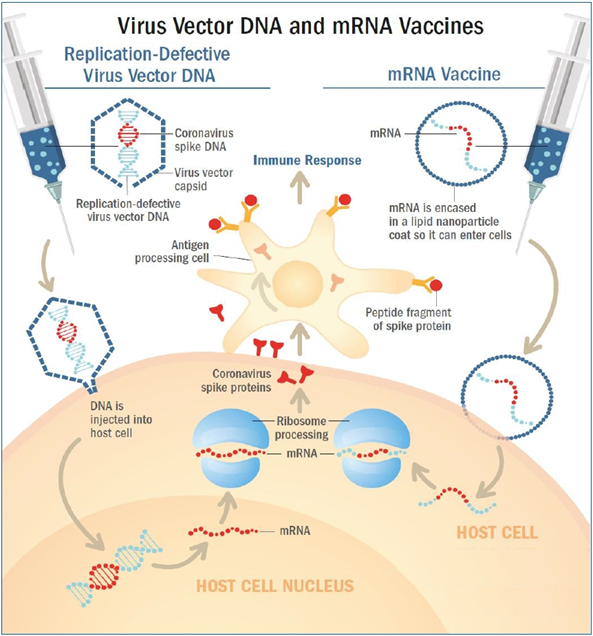
Human adenovirus (harmless) has spike protein
100
New cards
Regen-Cov process of creation
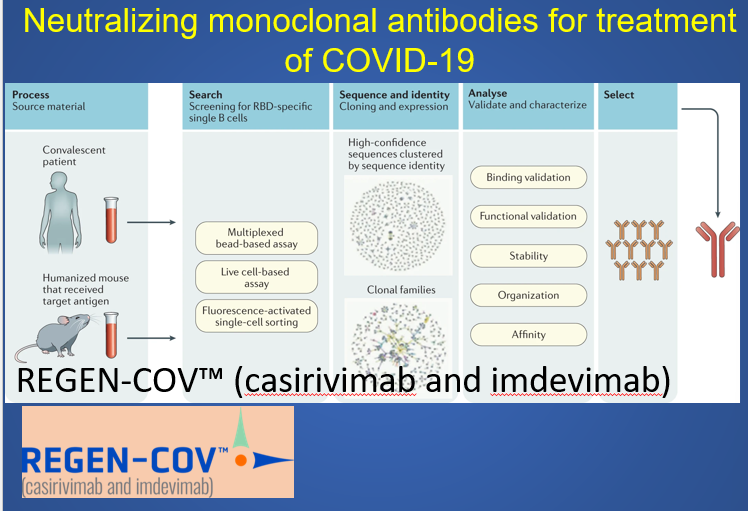
•IgG1 mAbs with unmodified Fc regions.
•These two mAbs were chosen from a pool of more than 200 neutralizing mAbs present in the initial isolation of thousands of antibodies and were derived from parallel efforts using humanized mice and the sera of patients recovering from COVID-19.
•Bind two distinct and non-overlapping sites on the RBD
•The rationale for this antibody combination is that it is unlikely that a mutation in the S protein of SAR-CoV-2 will simultaneously render both antibodies ineffective.
•These two mAbs were chosen from a pool of more than 200 neutralizing mAbs present in the initial isolation of thousands of antibodies and were derived from parallel efforts using humanized mice and the sera of patients recovering from COVID-19.
•Bind two distinct and non-overlapping sites on the RBD
•The rationale for this antibody combination is that it is unlikely that a mutation in the S protein of SAR-CoV-2 will simultaneously render both antibodies ineffective.
 Note
Note  Flashcards (27)