AP Statistics Ch 2.3 Experimental Design
0.0(0)
Studied by 0 people0%Exam Mastery
Build your Mastery score
 AP Practice
Supplemental Materials Call Kai
Call KaiCard Sorting
1/14

Earn XP
Description and Tags
Last updated 6:44 AM on 11/2/22
Name | Mastery | Learn | Test | Matching | Spaced | Call with Kai | Chat |
|---|
No analytics yet
Send a link to your students to track their progress
15 Terms
1
New cards
treatment
conditions assigned by experimenter, also called explanatory variables or factors
2
New cards
response variable
measured at the end of an experiment, used to compare treatments
3
New cards
experimental units
smallest unit to which a treatment is applied
4
New cards
confounding (extraneous) variable
could impact the results, not an explanatory variable
5
New cards
blocking
splitting experimental units into groups based on a common characteristic, often an extraneous variable
6
New cards
randomization
treatments are randomly assigned to experimental units
7
New cards
replication
having multiple experimental units per experiment
8
New cards
control group
a group that receives no treatment or a placebo treatment
9
New cards
placebo treatment
a treatment that looks like other treatments, but has no active ingredient
10
New cards
single blind
whether either the experimental unit or the person analyzing the data does not know which treatment was assigned to the experimental unit
11
New cards
double blind
when both the experimental unit or the person analyzing the data does not know which treatment was assigned to the experimental unit
12
New cards
direct control
keeping certain conditions or extraneous variables the same across all treatment groups to minimize the impact of those conditions
13
New cards
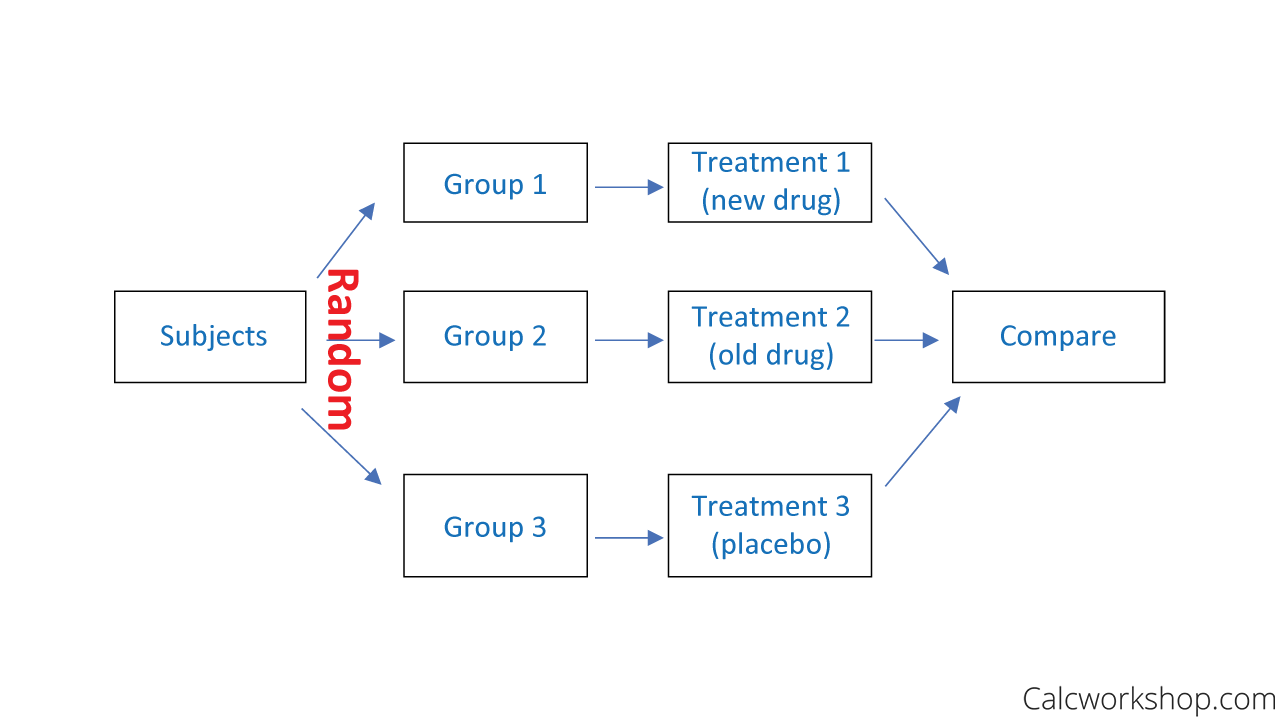
completely randomized design
NO blocking is involved. subjects are immediately randomly assigned to treatments, or treatments are randomly assigned to subjects
14
New cards
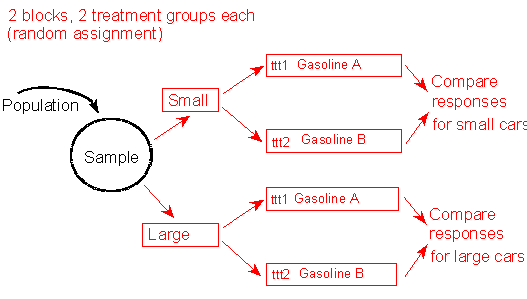
blocked design
create homogenous blocks first to directly control extraneous variables, then randomly assign subjects to treatments or treatments to subjects
15
New cards
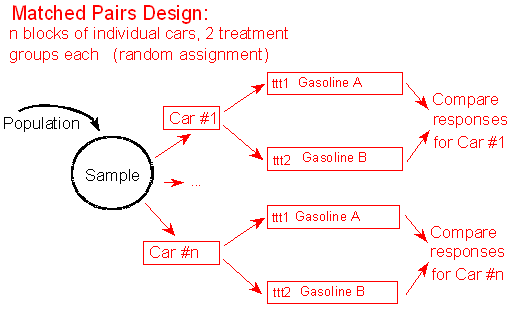
matched pairs design
a special type of blocked design. Consists of subjects that are assigned BOTH treatments in random order, or 2 subjects that are similar or homogenous with each being randomly assigned to a SEPARATE treatment