Kin 432 week 9 strength power intermittent sports
 Call Kai
 Learn
Learn Practice Test
 Spaced Repetition
 Match
Match Flashcards
 Knowt Play
1/49

There's no tags or description
Looks like no tags are added yet.
Name | Mastery | Learn | Test | Matching | Spaced | Call with Kai |
|---|
No analytics yet
Send a link to your students to track their progress
50 Terms
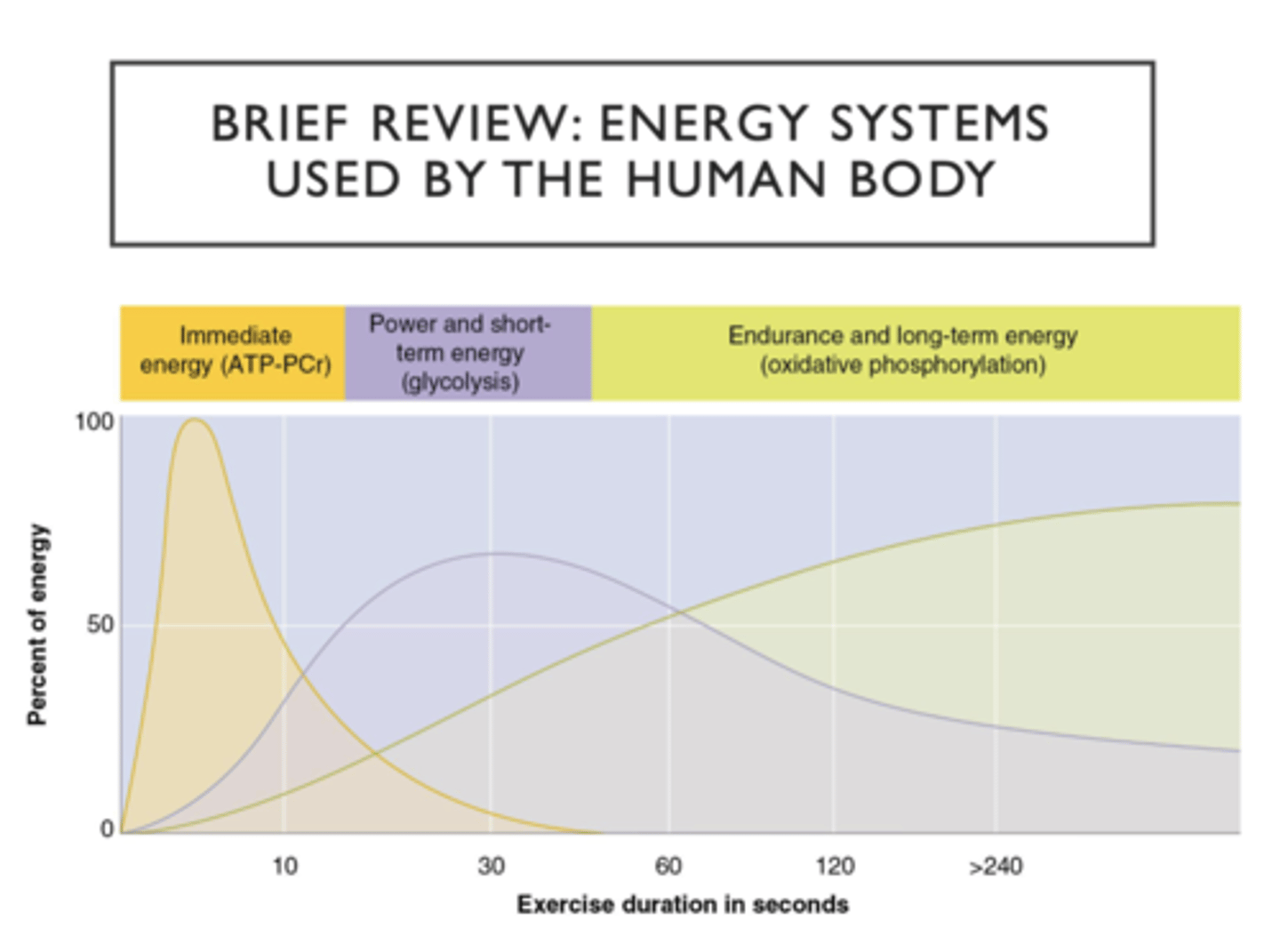
brief overview of energy systems used by human body. how long do they last...
immediate energy (ATP-PCr) 0-30s
Power and short-term energy (glycolysis) 15s - 2 mins
STRENGTH/POWER SPORTSCONSIDERATIONS
what energy systems are used
• mainly phosphocreatine (ATP-PCr) for short, explosive efforts
• Anaerobic glycolysis more as duration increases
• Aerobic fitness supports recovery between bouts and higher training volumes
STRENGTH/POWER SPORTSCONSIDERATIONS
body composition and health.
what is the aim
aim to increase lean mass while maintaining power-to-weight ratio
e.g. for judo
STRENGTH/POWER SPORTSCONSIDERATIONS
what do we need to monitor
Monitor REDs risk, especially in weight-sensitive or aesthetic sports
STRENGTH/POWER SPORTSCONSIDERATIONS
what do macro requirements depend on?
Depending on what the athlete has going on in the training cycle, macros will change
protein requirement for strength/power athletes
towards the higher end of the range (1.2 - 2g.kg) due to the hypertrophic nature of training
carb requirement for strength/power athletes
Carbohydrate is important, but are likely not as high as the needs of endurance athletes (4-7g/kg)
fat requirement of strength/power athlete
Fat: Typically ~20-35% of energy intake; supports hormones, recovery, and energy balance.
supplements for strength/power sports with strong evidence
• Creatine monohydrate
• Caffeine (for power and sprint performance)
• Beta-alanine (for repeated high-intensity efforts)
What are strength and power athletes at higher risk of regarding supplements?
Higher risk for supplement and abuse
now onto high intensity/intermittent sports
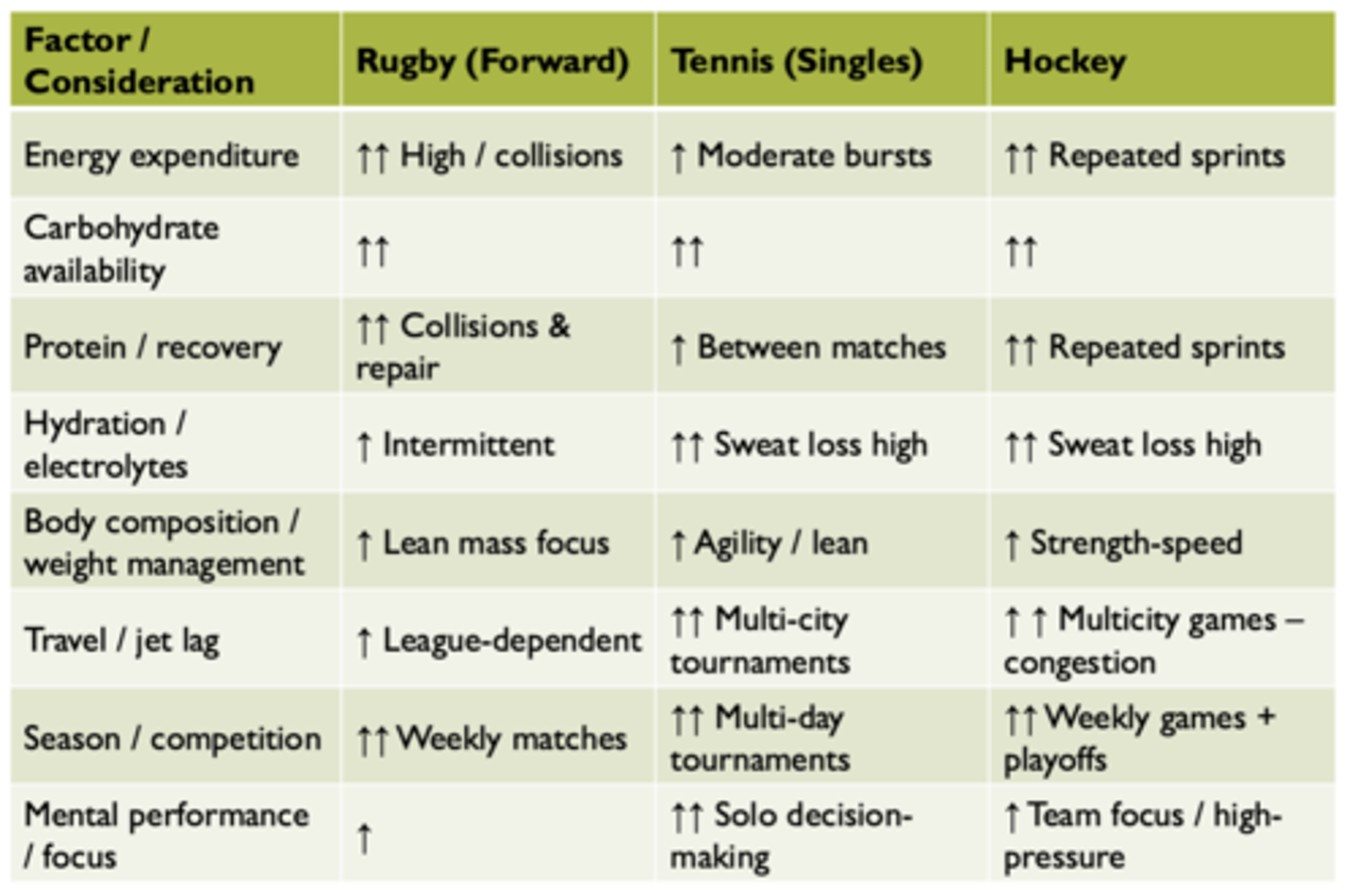
what are 9 factors/considerations
Primary physical demand
Dominant energy system: Very important
CHO availability
PRO/recovery needs
Hydration/electrolyte loss
Body composition priorities
Competition structure
Travel disruption
Mental/cognitive demand
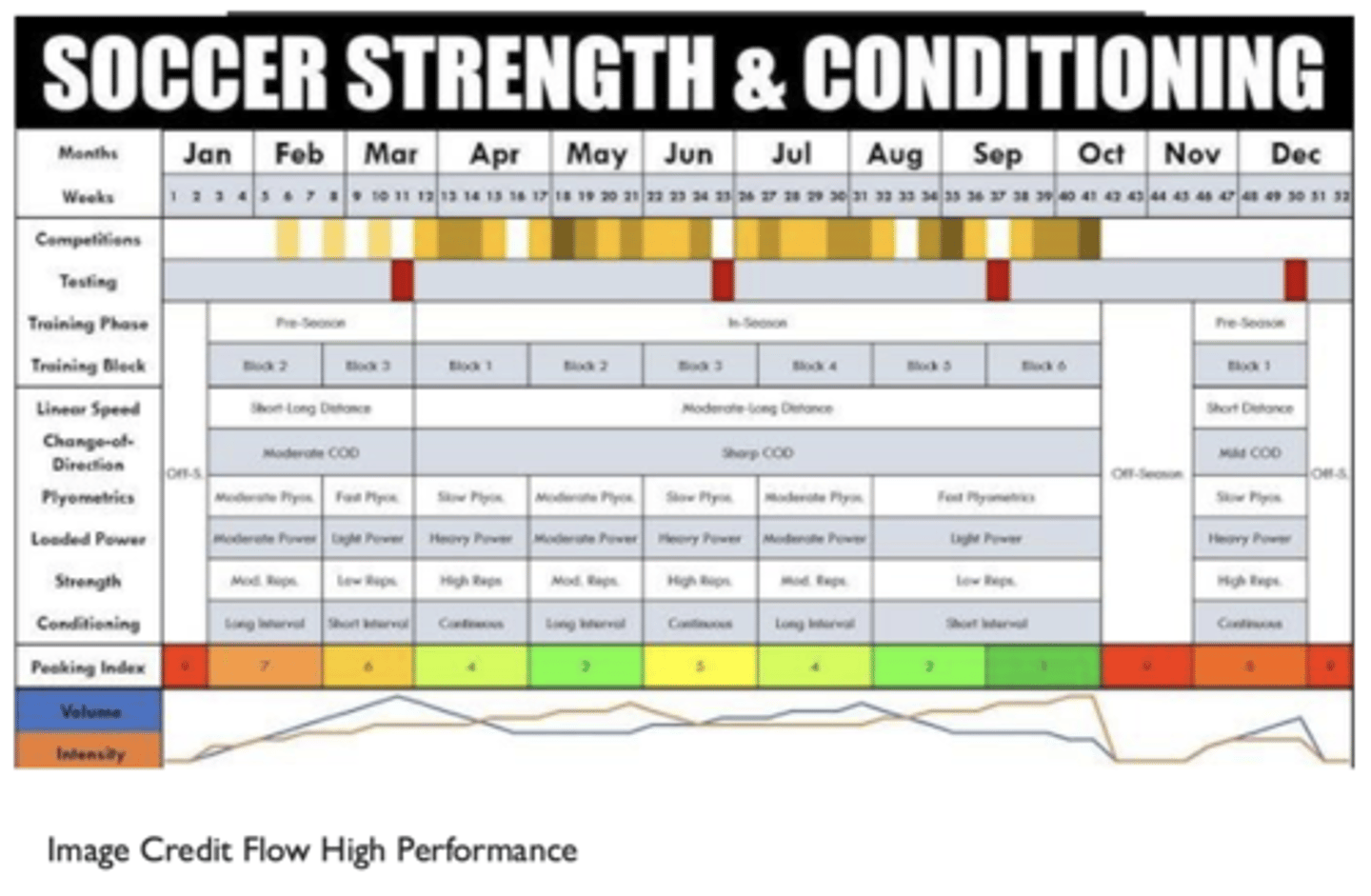
When can you work with soccer players with nutrition?
During off-season and pre-season is the only time you can work with them because during season their volume of games
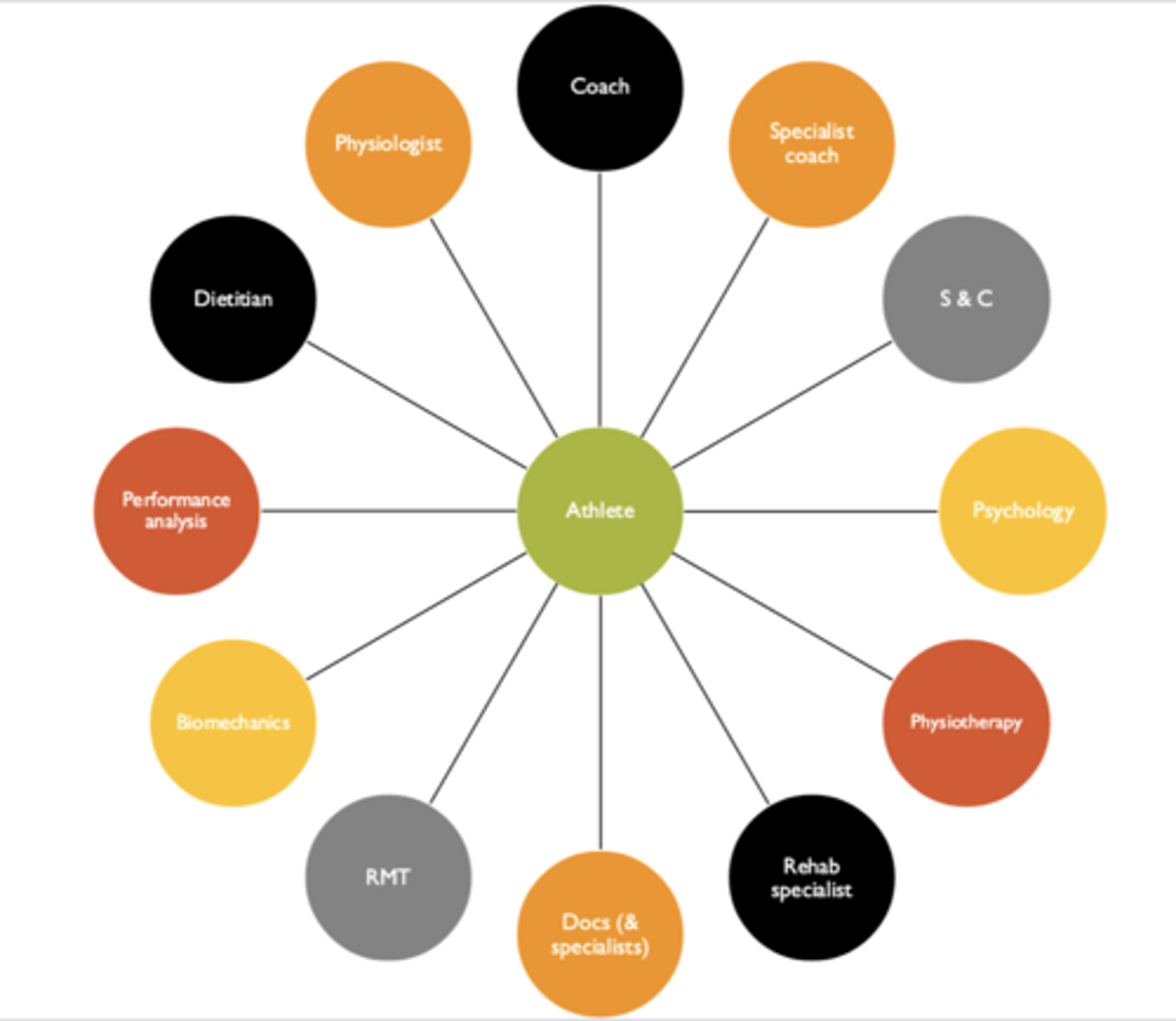
There are many people vying for athletes attention. what do you do with that info?
Keep your information brief!
working with high performance soccer
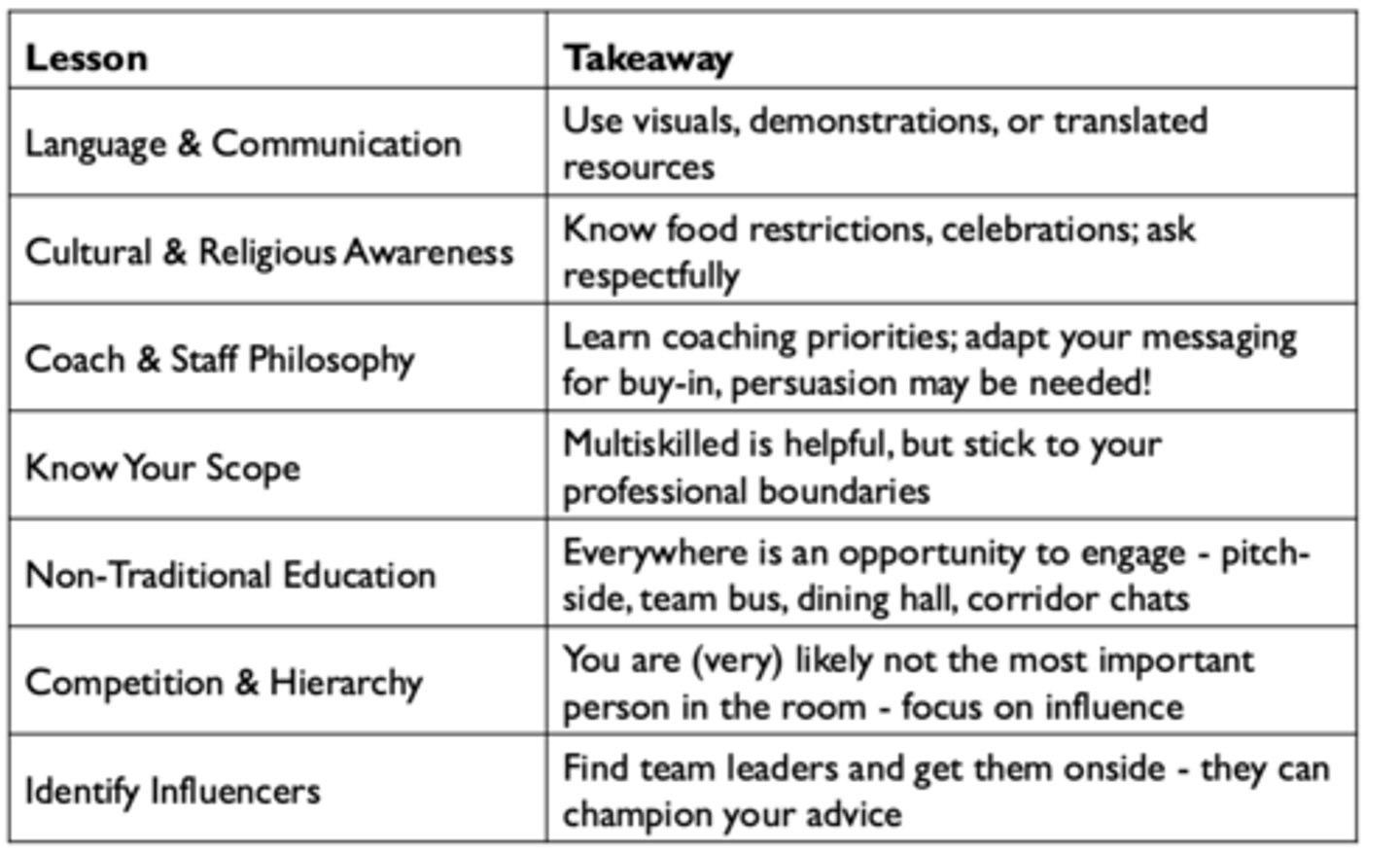
Language and communication: knowing spanish
Cultural and religious awareness: Ramadan
Coach and staff philosophy: learn coach priorities
Know your scope: stay in your lane
Non traditional education: catching athlete attention when in unconventional places
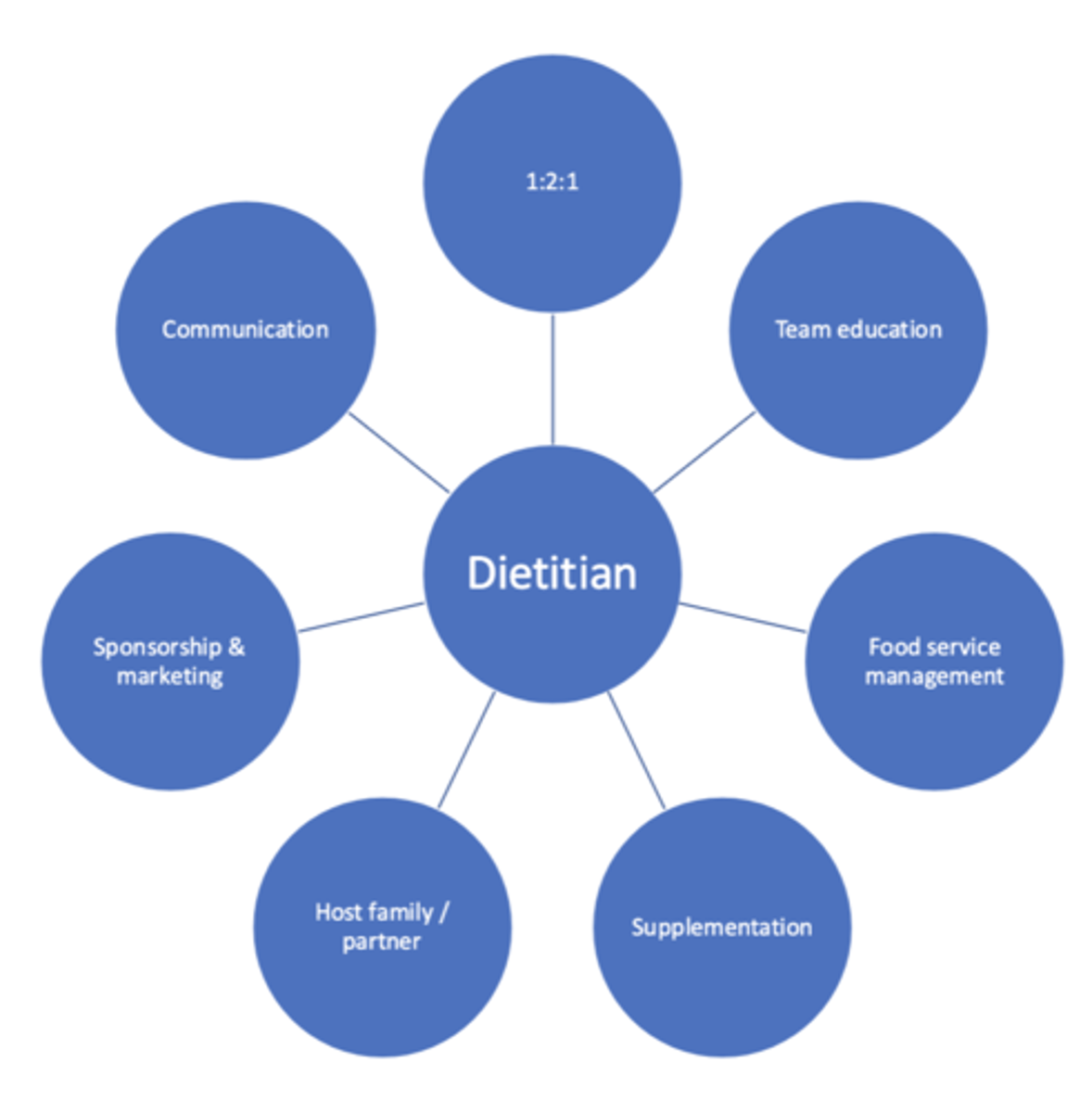
dietitian roles image...
*
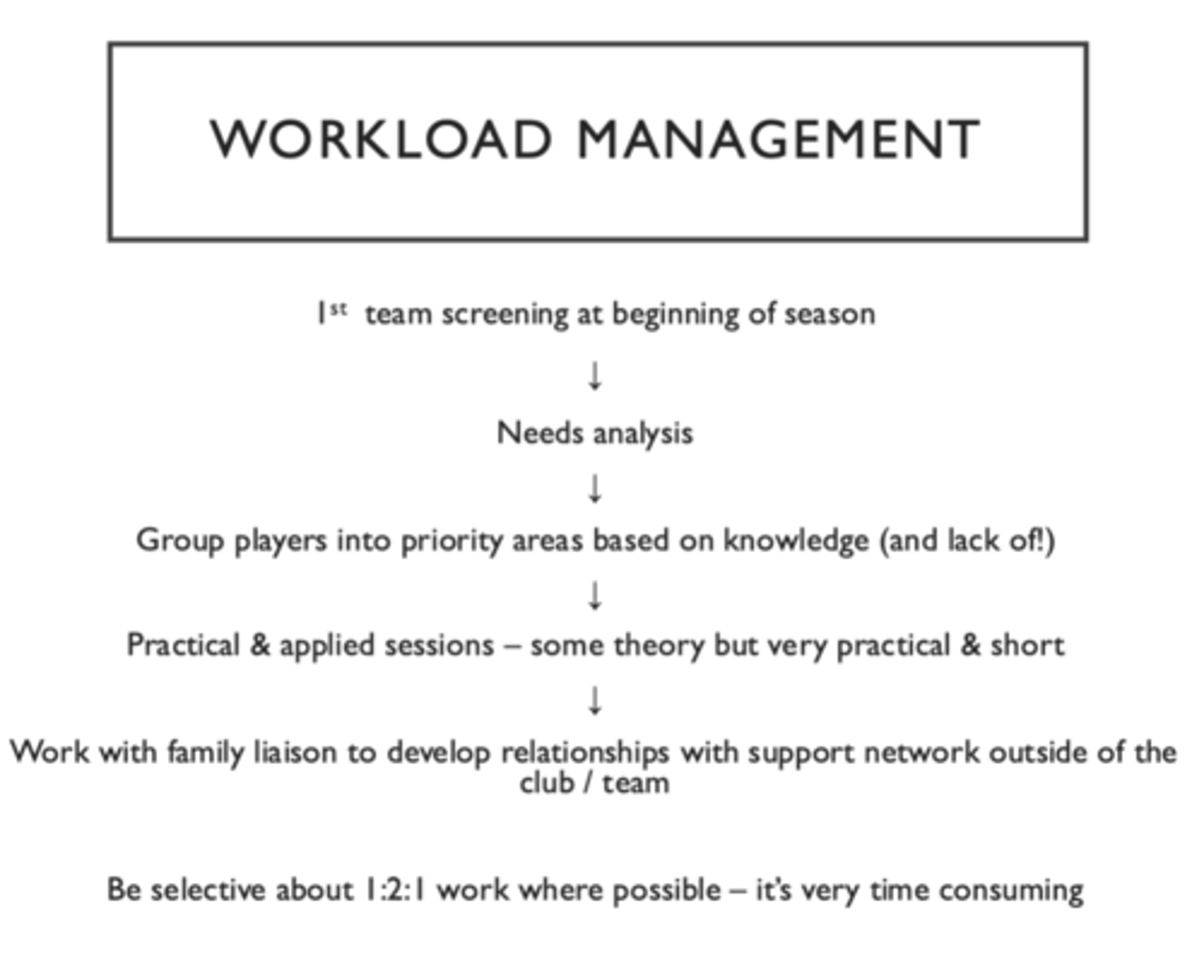
workload management.
start with what
1st team screening at beginning of season.
1st team screening at beginning of season.
Pre screening questionnaires
Day of
• Multiple stations - docs, nutrition, physio, mental performance etc.
Nutrition
• Body composition testing
• Check over prescreen - red flags, issues last season, changes in diet etc.
Debrief + prioritize player needs
workload management.
start with 1st team screening at beginning of season. then what (flow chart on image)
1st team screening at beginning of season needs analysis
then group players into priority areas based on knowledge (and lack of)
keep session practical and applied. some theory but short and practical
work with family liaison to develop relationships with support network outside of club/team
be selective about 1:2:1 work where possible. it's very time consuming*
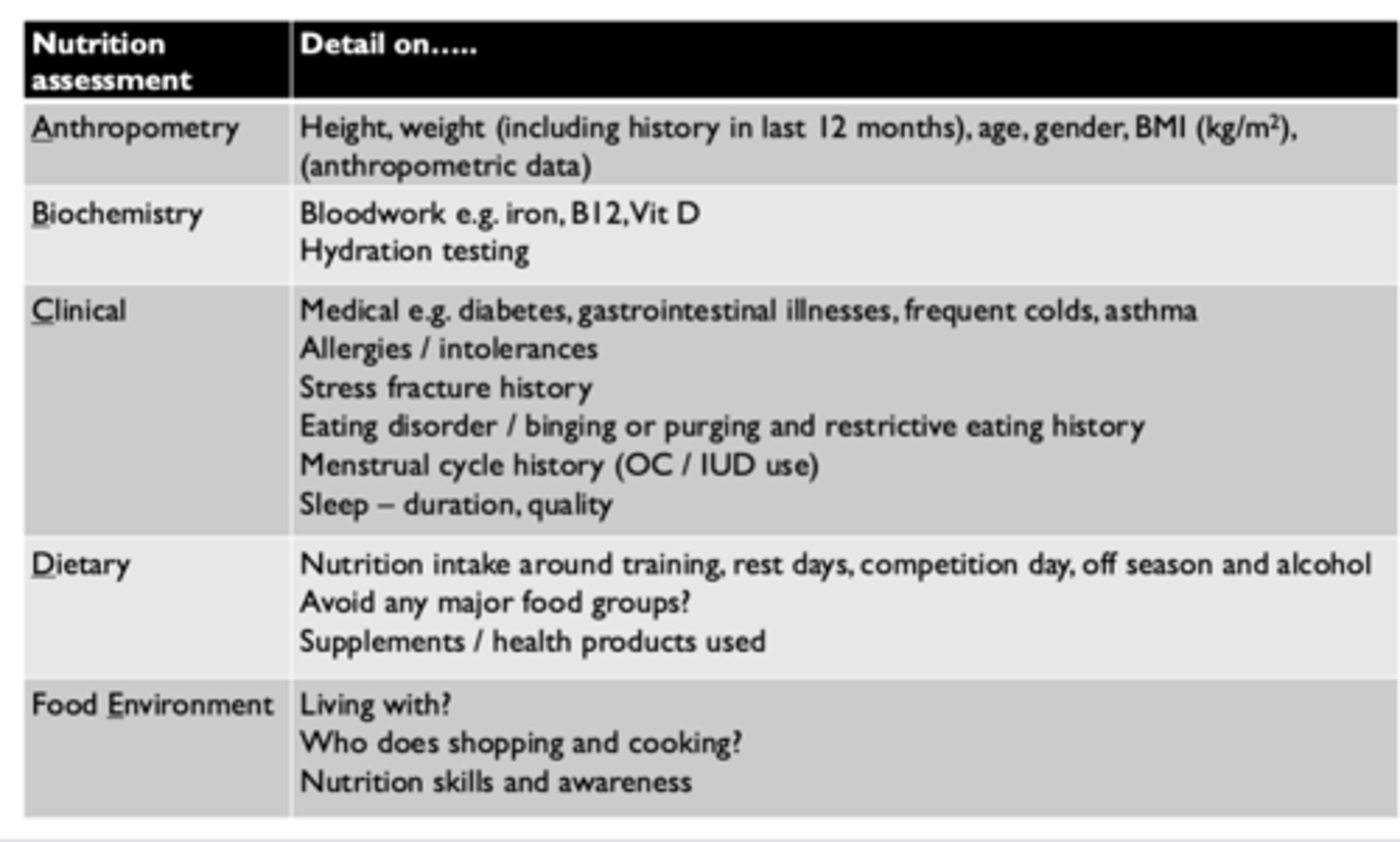
ABCDE assessment screening. Give 2 examples of each category
Anthropometry: height, weight
Biochemistry: Bloodwork, hydration testing
Clinical: Eating disorder, allergies/intolerances
Dietary: Nutrition intake (spectrum of days)
Food Environment: Living with partner? nutrition skills
What 3 things do you do once you set a nutrtion goal for them?
1. Give athlete the nutrition parameters: they let them set how they’re gonna get their macros
2. Limit changes: 3 - 5 requests since they’re busy and getting lots of
Manage expectations: what is realistic change / good progress given timeframe
3. Timely review + next steps
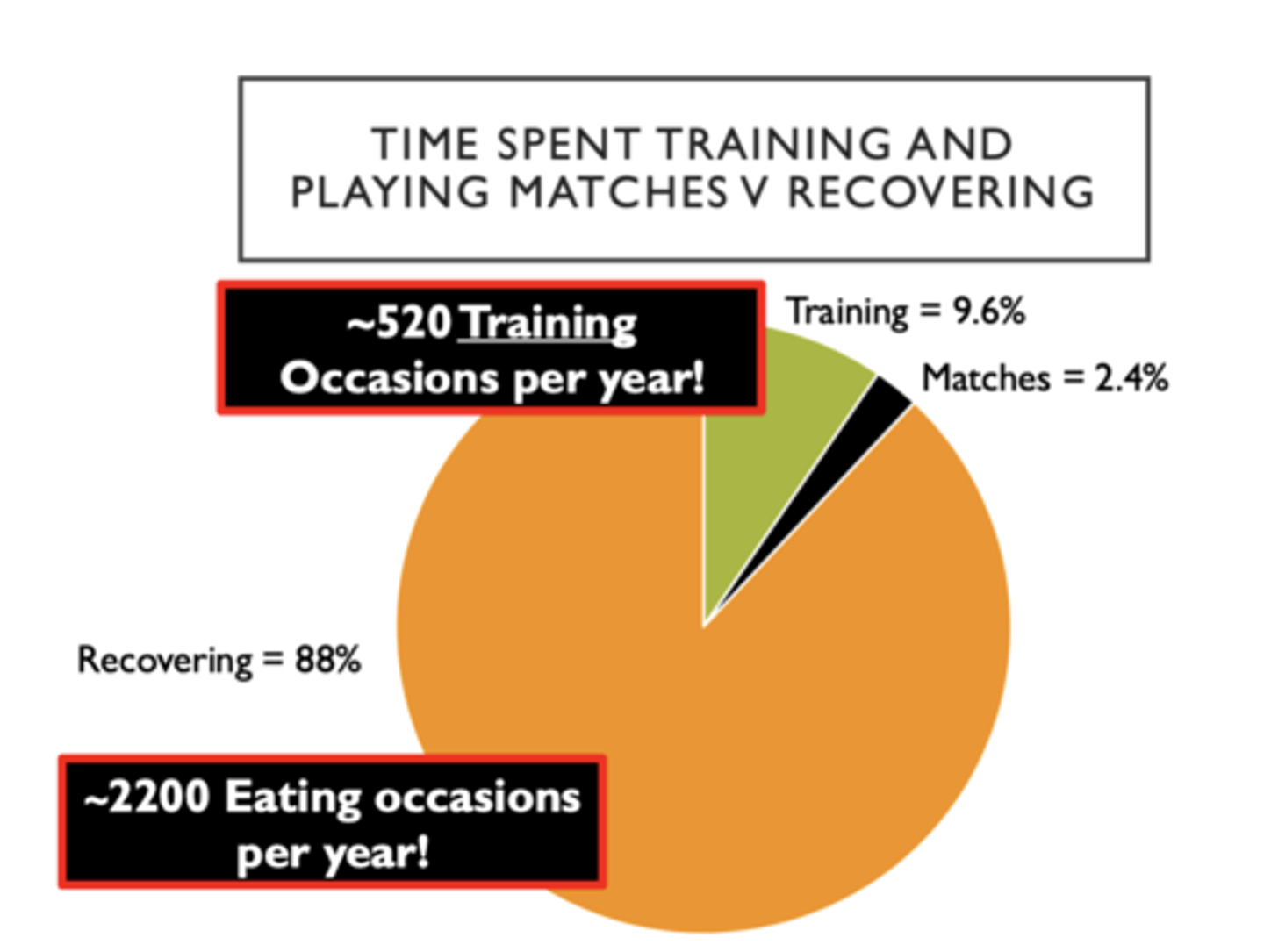
what do athletes spend most of their time in
Recovery.
88% recovery.
9.6% training
2.4% matches.
about 520 training occasions per year, but 2200 eating occasions
What are some KPI we should look at for individual sports?
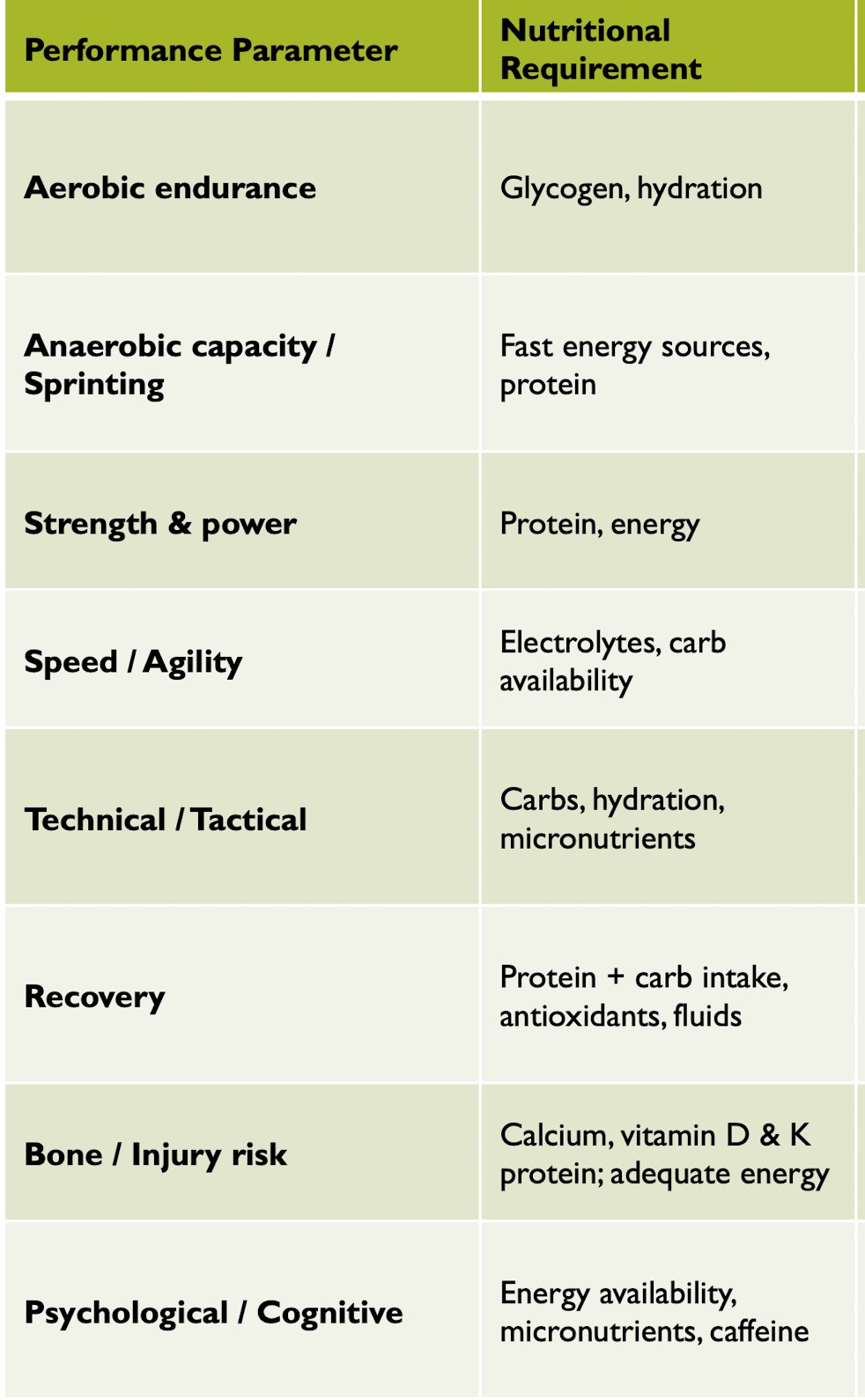
performance parameters → nutritional requirements
Aerobic endurance: glycogen, hydration
Anaerobic capacity: fast energy sources, protein
Strength/power: Protein for muscle repair, sufficient energy
Concussion management: creatine, omegas, hydration, energy, ocular health
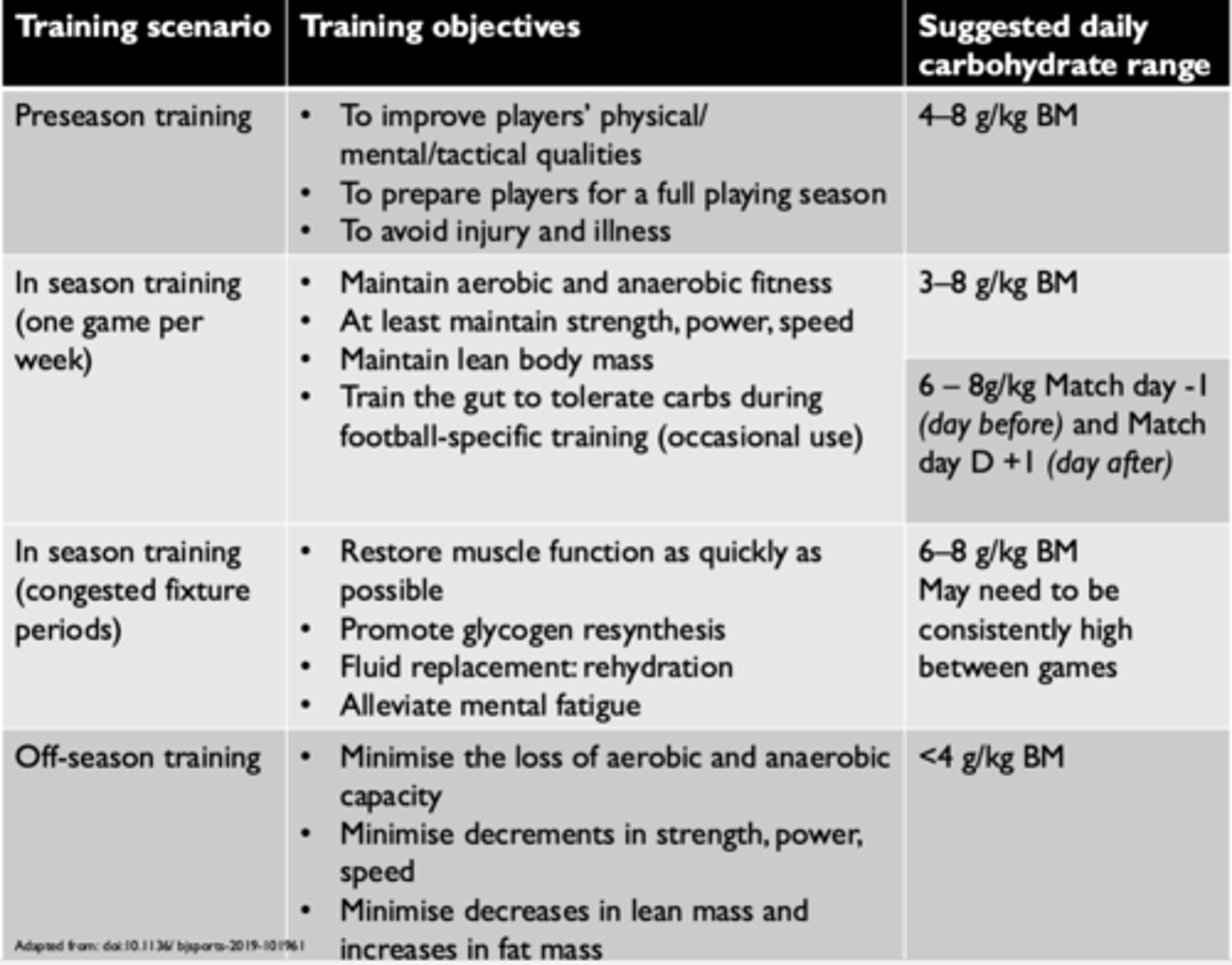
carb suggestion during different stages for soccer
In general it is 5-7g/kg/d of CHO for intermittent sports but for soccer
Pre-season training: 4-8 g/kg BM
In season (one game per week): 3-8g/kg BM to allow for bench players the range is high
Increase intake to 6-8 g/kg BM a day before and a day after match day
In season (congested fixture): 6-8 g/kg BM
May need to be consistently high between games
Offseaason:
<4 g/kg BM
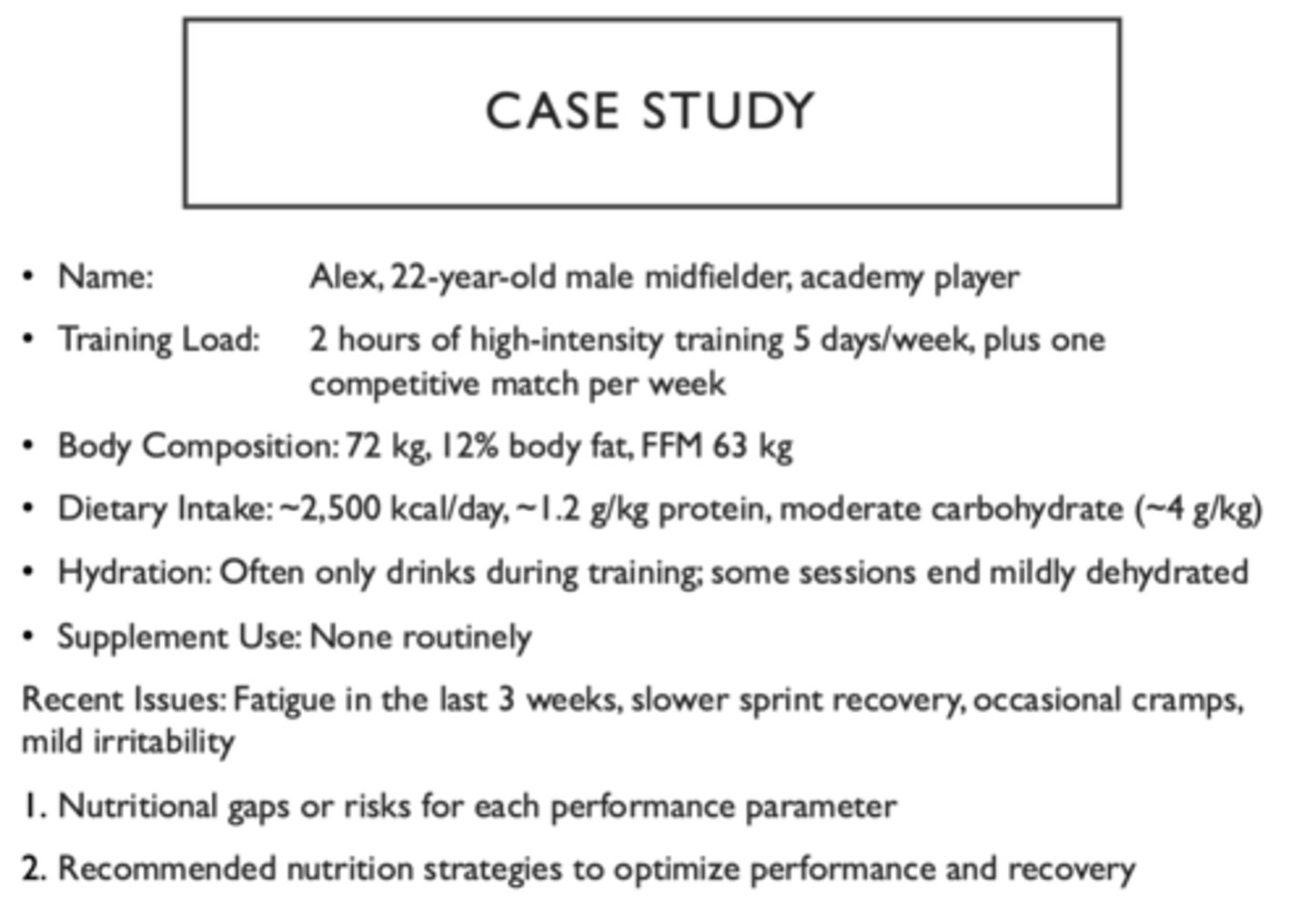
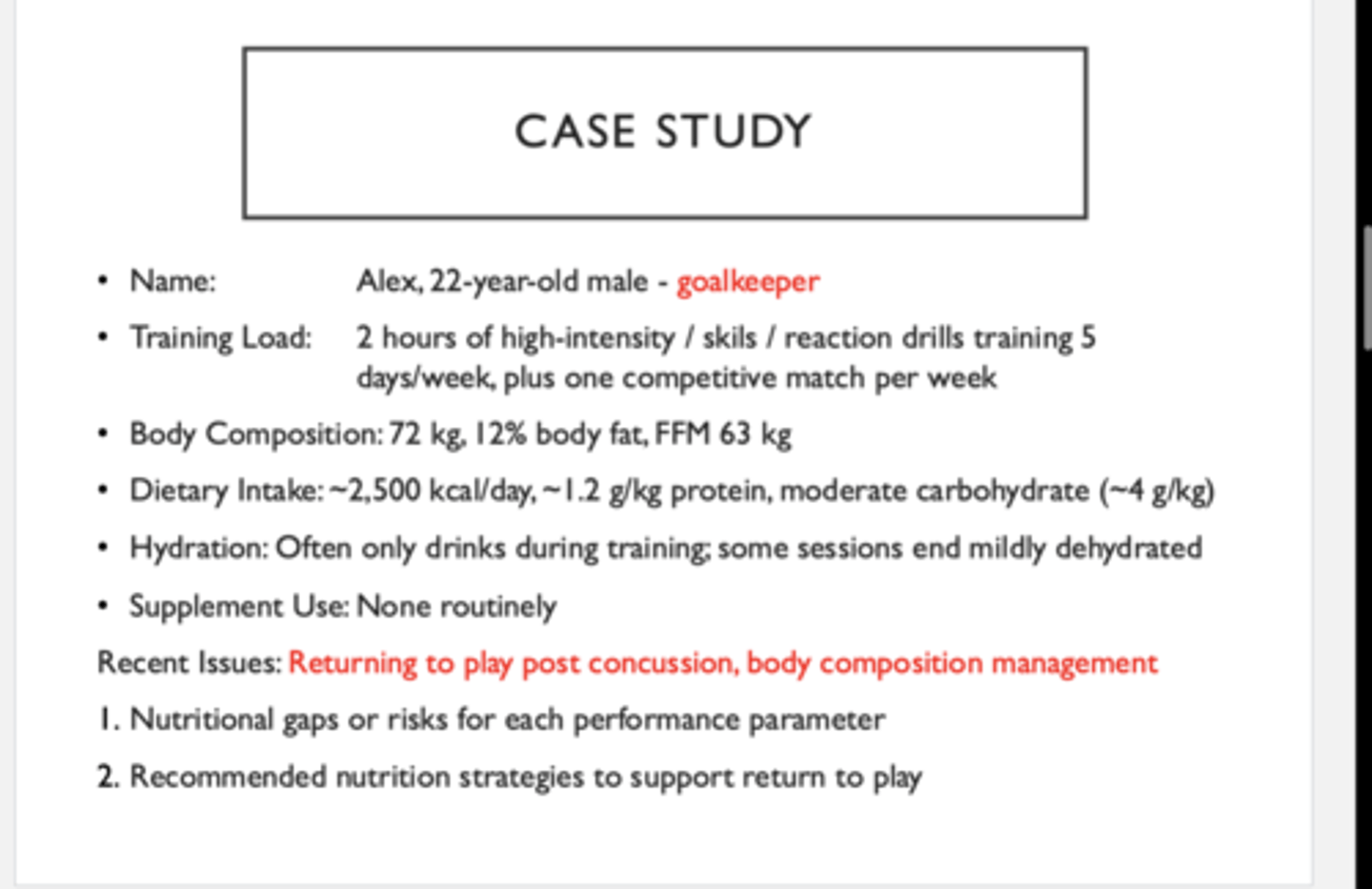
case study image
Protein is low → move up to 1.6g/kg
CHO is low → move to 5-7g/kg CHO, match days 6-8g/kg
Hydration: ensure hydration and electrolyte
What should someone have if they’re returning to play post concussion?
For concussion management focus nutrition on:
Creatine
Omegas
Hydration
Energy
Ocular health
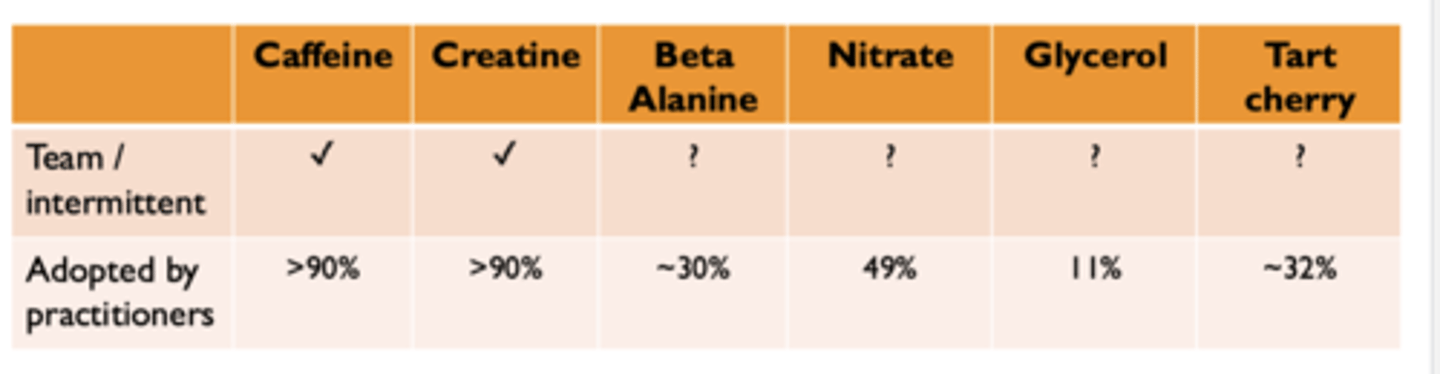
Dietary supplements fo elite soccer performance.
Definitely need? Unsure?
Definitely need:
Caffeine
Creatine
Unsure:
Beta alanine
Nitrate: high adoption by practitioners!
Glycerol
Tart cherry: Use during congested fixtures
now onto game day.
outfield player...
how much is total match day energy expenditure?
around 3500 kcal
How is soccer game day different from endurance running?
You spend most of the time low speed running
You don’t run continuously for 90 minutes
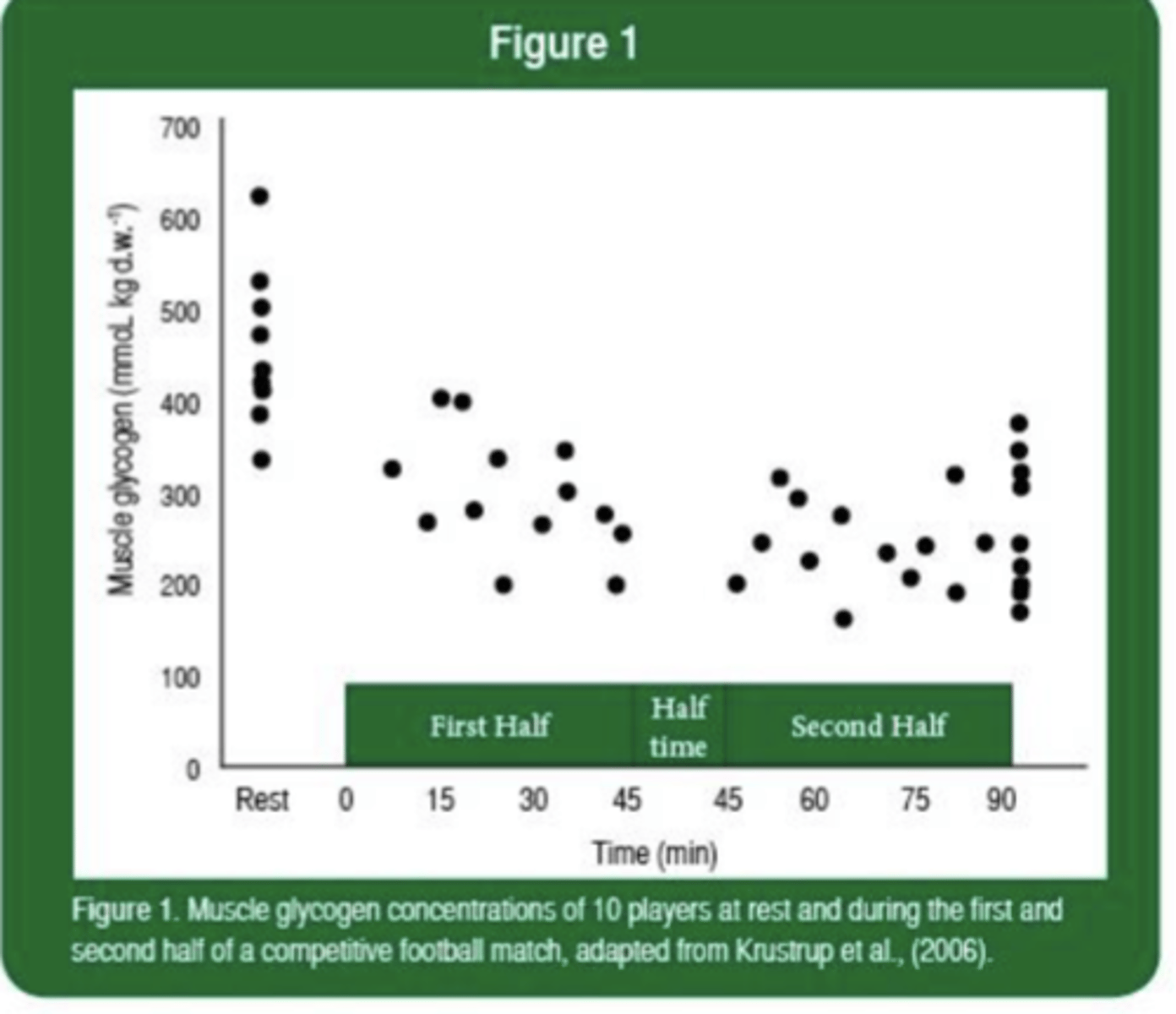
how does glycogen relate to performance in soccer...
Players with greater starting muscle glycogen covered greater distance
topping up during half time didn’t have the same effect
impacts ability to do high intensity sprints later in the game cuz they’re depleted
pre game priorities.
Pre game priorities
1. Carbohydrate Availability
2. Hydration & Electrolytes
3. Caffeine
What’s not a priority on game for soccer?
Protein and fats are not a priority, especially if it makes them feel too full
post game priorities
Antioxidants & Recovery Support:
Tart Cherries, protein & carbs)
no alcohol
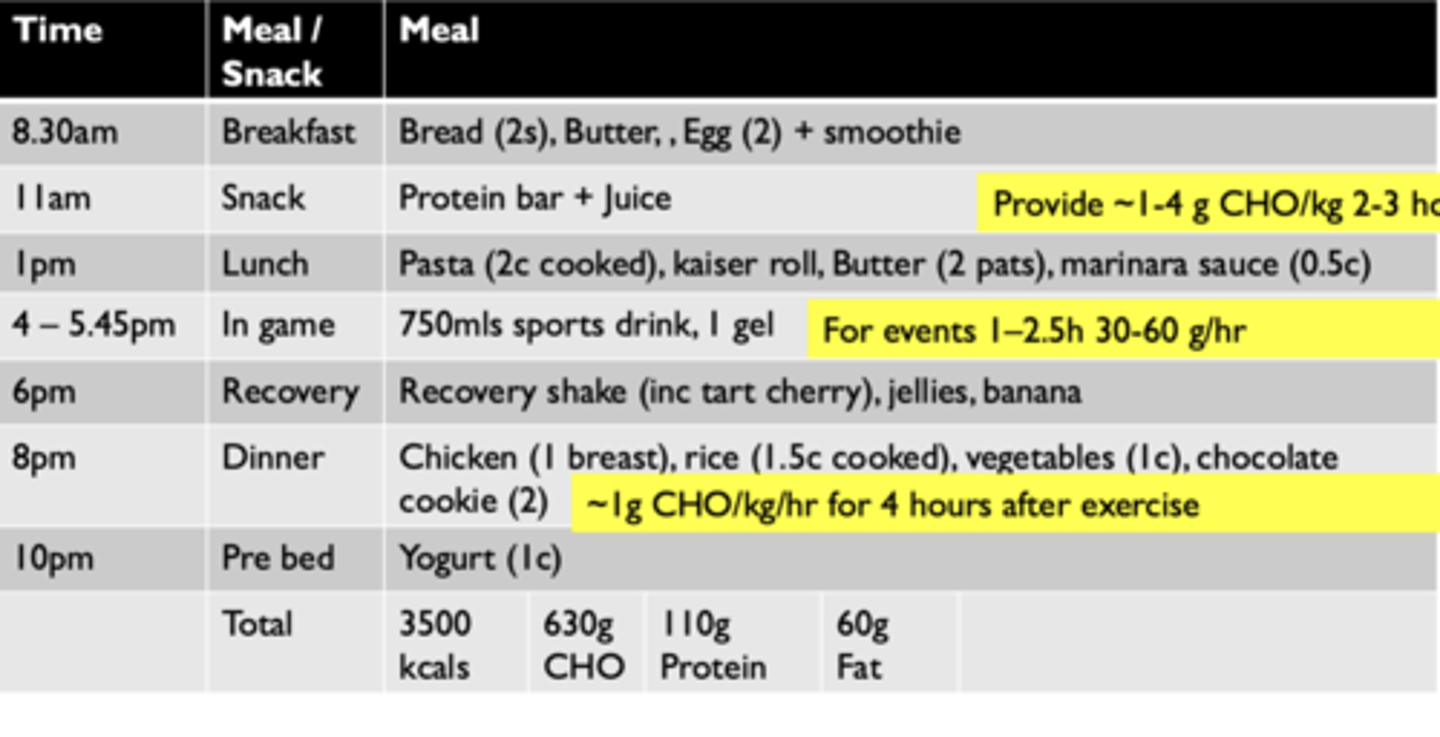
Meal plan for game day. How setup macros for a game at 4pm?
2-3 hours pre game: 11 AM
1-4g/kg BM CHO
Events 1-2.5 hours long:
30-60g/hr
4 hours after game for recovery: 8 PM
1g/kg/hour
alcohol in sports.
what are the results
Results:
• >10 Standard Drinks = sleep loss due to REM interruption
• Lower body power output ↓ 1 day post
alcohol in sports
what effects does it have (5)
• High in energy - implications for higher body fat if energy surplus
• Affect appetite: need to eat day after event to recover but it reduces appetite next day
• In recovery - affect Muscle Protein Synthesis after exercise
• ↓ ADH = ↑ urine output = dehydration risk = possible cramps / delayed recovery
• ↓ REM Sleep
alcohol in sport key takeaways
Moderation & only at certain times
When should you not drink alcohol at all?
Changing body composition
Injury
Congested schedule
Ramadan 4 key consideration
a) maintaining energy balance - many lose muscle and gain fat during this period
b) meeting athletes requirements for training + health via supplements
c) euhydration
d) Sleep hygiene / naps to aid recovery and implications for meal timing
Ramadan strategies: what to eat for suhoor? iftar? in between iftar and sleep
High fiber CHO
Protein
hydration
Iftar:
Post training protein shake → start with fluids + electrolytes
Faster digesting CHO
Limit fried foods
Between iftar and sleep:
snack on high fiber + high protein foods
Ramadan supplementation
Omega 3, multi, creatine
Jet lag/travel
when does jet lag occurs. why.
• Jet lag occurs due to a mismatch between the body's circadian rhythms and the external 24-hr light / dark cycle
• Caused by the number of time zones crossed and the direction of travel
How is travel fatigue different than jet lag?
extra load from prolonged travel even without time zone change
goal of strategies with jet lag and travel
to realign the circadian system as quickly as possible and minimize the symptoms outlined
Nutrition checklist to when traveling
plan for travel challenges: pack snacks, melatonin
Know local food culture
check catering and access
hygiene: don’t drink bad water, avoid risky foods
on-site evaluation: food safety check
Special dietary needs: allergies, halal
Summary
important part of building a nutrition program
ABCDE Nutrition assessment and developing rapport with a client is an important part of building a nutrition program
summary
what are intermittent sports. what energy systems
Intermittent sports e.g. soccer use a multitude of energy systems (ATP-PCr and anerobic glycolysis) but with significantly greater muscle glycogen depletion
summary
carb recommendations for team sports
Carbohydrate recommendations for team sport athletes are 5-7g/kg/d
but each sport may have it's ownguidelines with greater specificity e.g. soccer
summary
protein recommendation for team sports
Protein requirements for team sport athletes will depend on:
the optimal weight for the athlete and their sport: may need to experiment
summary
To meet athletes needs on game / competition day, start with
the event time and consider what nutrition they need pre, during and post event
summary
unique challenges
Cultural events, long seasons and frequent travel also create unique challenges for athletes which require nutrition support and advance planning

