H5 Jarvis- Medical and agricultural applications of gene technology
 Call Kai
 Learn
Learn Practice Test
 Spaced Repetition
 Match
Match Flashcards
 Knowt Play
1/9

There's no tags or description
Looks like no tags are added yet.
Name | Mastery | Learn | Test | Matching | Spaced | Call with Kai |
|---|
No analytics yet
Send a link to your students to track their progress
10 Terms
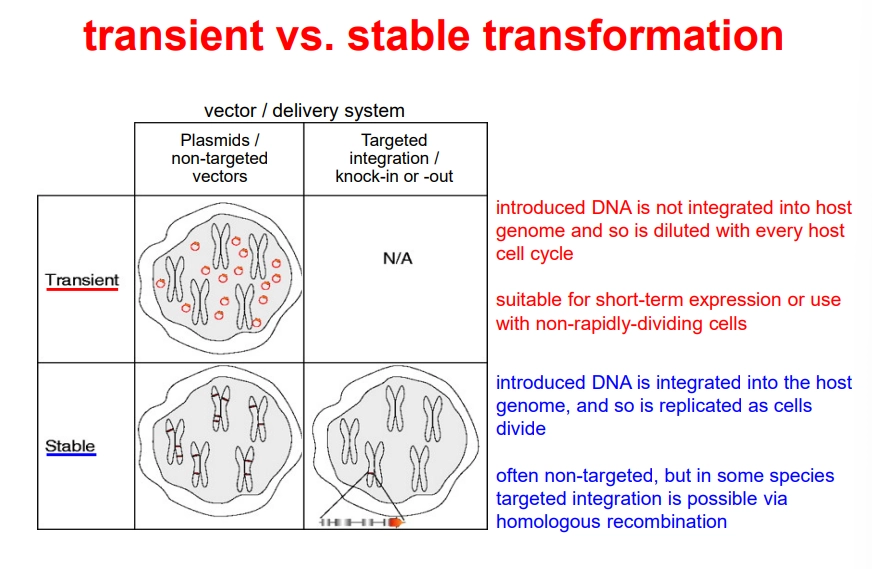
what is the difference between transient and stable transformation?
what are the methods of gene transformation?
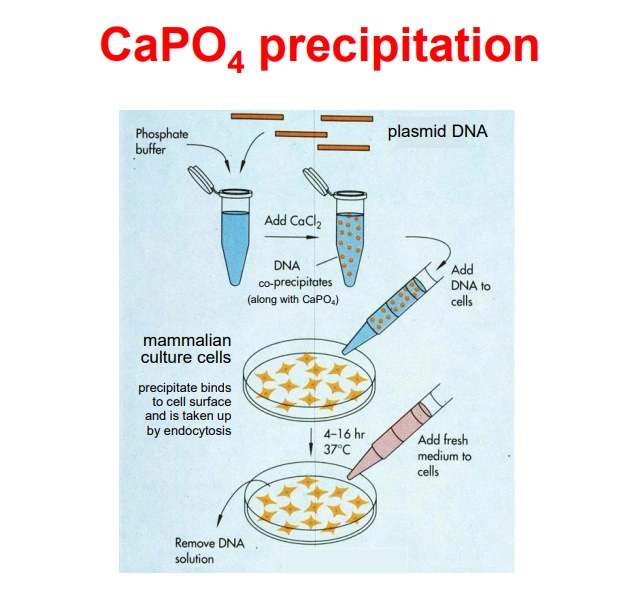
CaPO4 precipitation
electroporation
microinjection
microprojectile bombardment
viral vectors (for mammals)
agrobacterium-mediated (for plants)
what is the process, pros and cons of CaPO4 precipitation as a method of gene transformation?
advantages
quick, cheap and simple
not vector dependent
can be used for transient or stable expression (this requires a selectable marker, to select for cells where the plasmid DNA has integrated)
limitations
essentially only used for mammalian cell lines
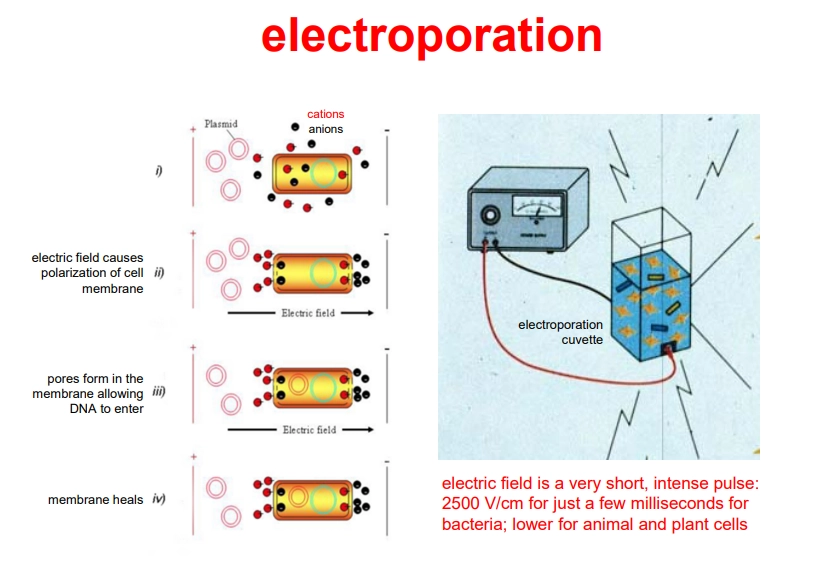
what is the process, pros and cons of electroporation as a method of gene transformation?
advantages
quick
not vector dependent
used for bacteria, yeast, plant protoplasts, and mammalian cells (e.g. embryonic stem cells used when making knockout mice)
can be used for transient or stable expression (random or specific)
limitations
equipment is quite expensive
can only be used for single cells (so to study a multicellular organisms it must be able to regenerate from a single cell, e.g. when making knockout mice, transformed stem cells are injected into a blastocyst, which is implanted into a surrogate mother)
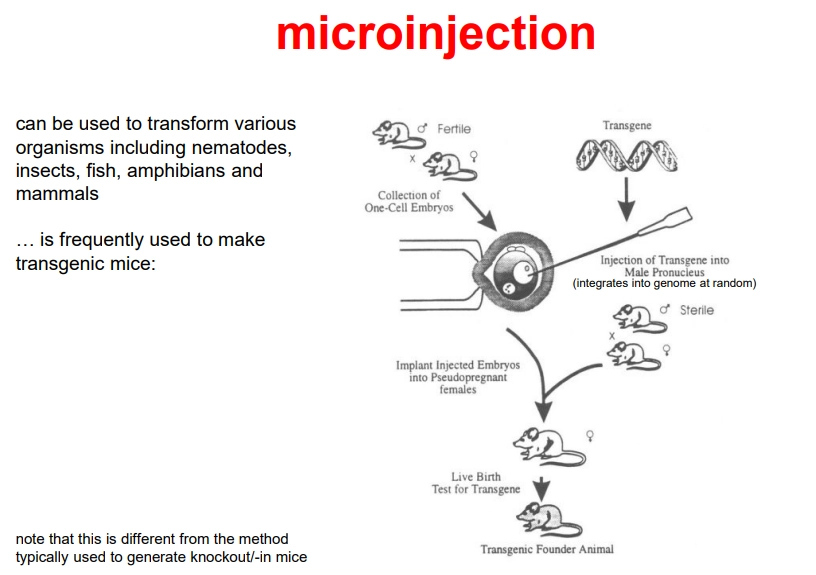
what is the process, pros and cons of microinjection as a method of gene transformation?
advantages
not vector dependent
allows stable integration (but usually random)
limitations
expensive + requires skill
very labour-intensive
random stable insertion point (can’t be used for knockout mice)
not very useful for plant cells
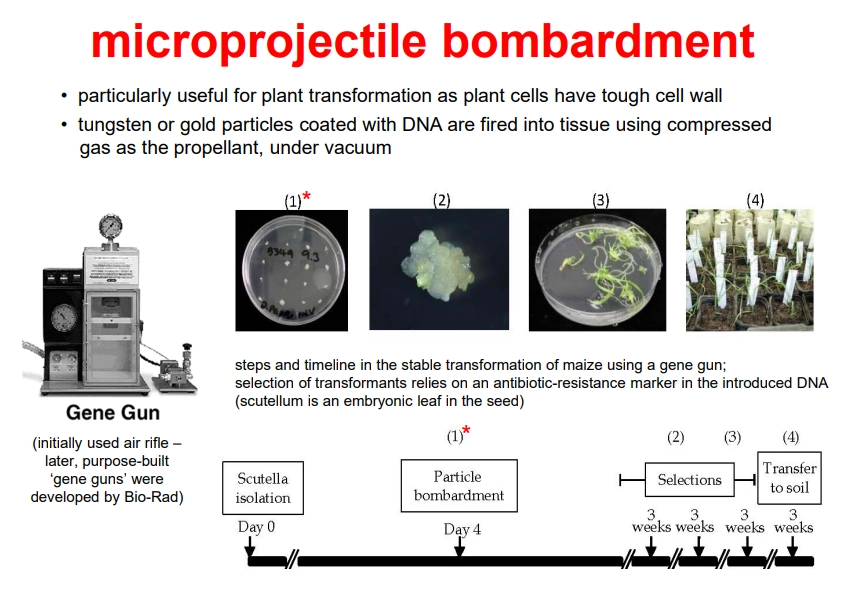
what is the process, pros and cons of microprojectile bombardment as a method of gene transformation?
advantages
quick
can in principle be used on any tissue, including plants
not vector dependent
can be used for transient or stable expression
can deliver DNA to organelles (usually chloroplasts)
limitations
equipment is expensive
best suited for use with ‘robust’ cells (usually plants)
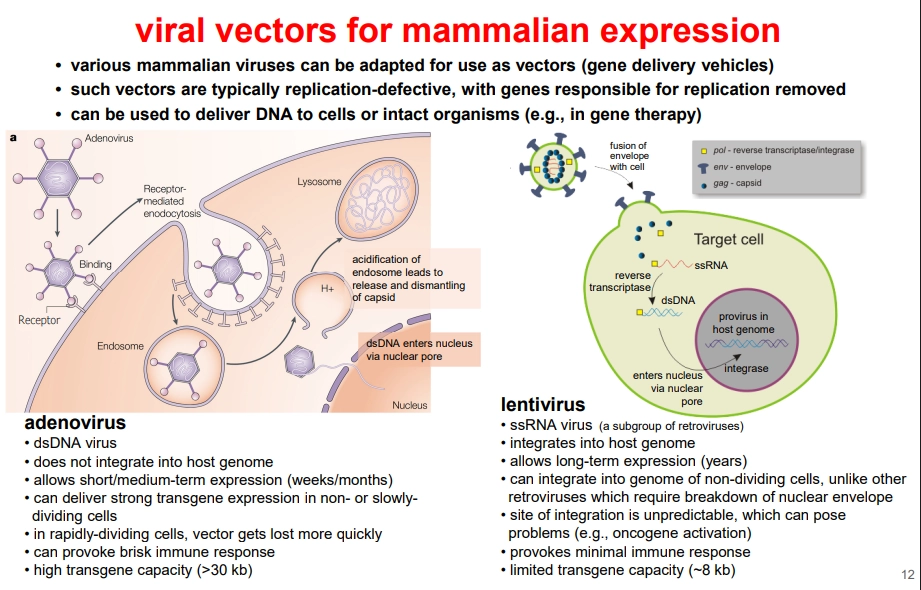
what is the process, pros and cons of viral vectors (for mammals) as a method of gene transformation?
advantages
effective delivery of DNA to cells or intact organisms
applicable to many systems owing to diversity of viruses
can be used for transient (e.g. adenovirus) or stable expression (e.g. lentivirus)
limitations
highly vector dependent
integrating vectors may activate cellular oncogenes due to random integration
non-integrating vectors offer less stable expression, particularly in dividing cells
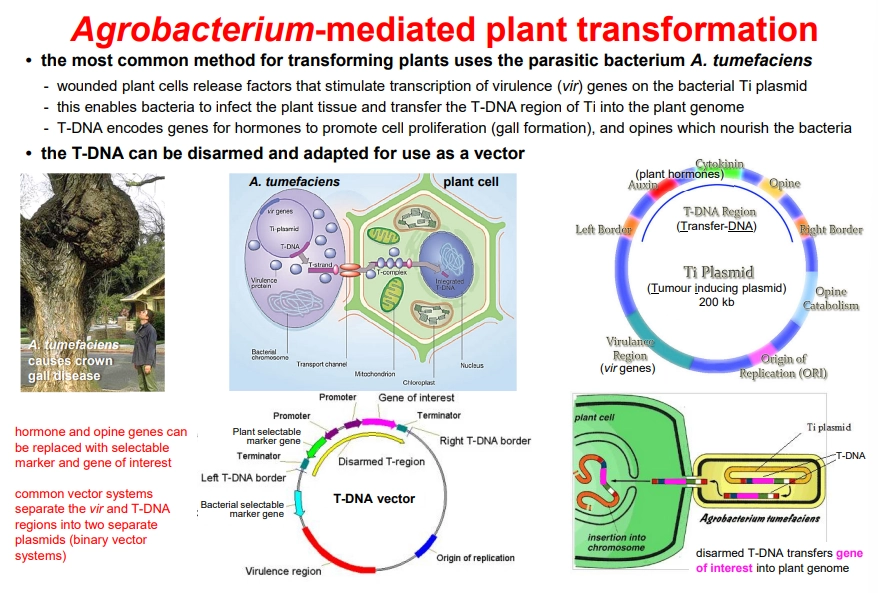
what is the process, pros and cons of agrobacterium (for plants) as a method of gene transformation?
advantages
widely and routinely used- many vector options available
enables stable integration (needs a selectable marker)
limitations
limited host range (good for dicots, less for gymnosperms and monocots)
can be time-consuming (depending on species)
site of integration in genome is random
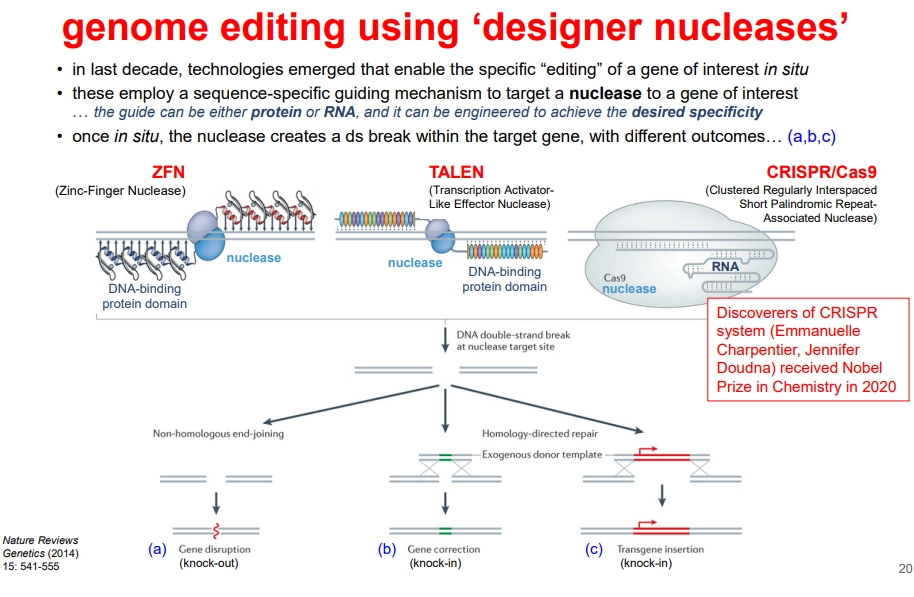
how can designer nucleases be used for genome editing?
what are some examples of agricultural and medicinal applications of gene modification?
agricultural:
deactivation of polygalacturonase (degrades pectin, so tomatoes must be harvested earlier = less flavourful) by RNAi
glyphosphate herbicide resistant crops (to use bacterial version of amino acid synthesis enzyme that is targeted by glyphosphate)
insect resistant crops by expressing Bt toxin
golden rice producing vitamin A to combact deficiencies
medicinal:
hormone production eg. insulin/human growth hormone using bacteria
vaccine production eg. Hep B using yeast
gene therapy- somatic vs germline eg. SCID, cystic fibrosis, sickle cell disease

