Introduction to Art History: Europe Midterm - Fordham University
 Studied by 0 people
 Call Kai
 Learn
Learn Practice Test
 Spaced Repetition
 Match
Match Flashcards
 Knowt Play
1/58

There's no tags or description
Looks like no tags are added yet.
Name | Mastery | Learn | Test | Matching | Spaced | Call with Kai |
|---|
No analytics yet
Send a link to your students to track their progress
59 Terms
Name:
Time Period:
Medium:
Maker:
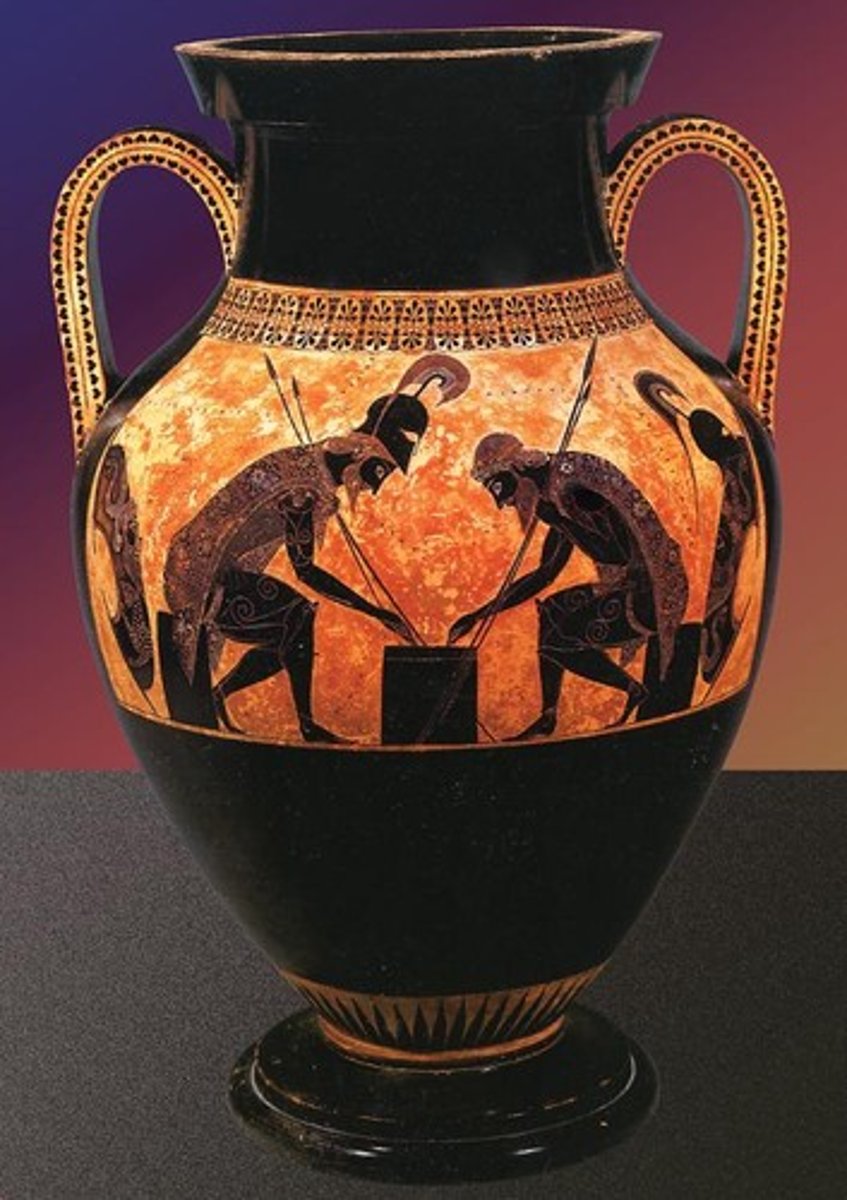
Name: Ajax and Achilles Playing a Game
Time Period: 540-530 BCE
Medium: Black-figure painting on ceramic amphora
Maker: Exekias
Name:
Time Period:
Material:
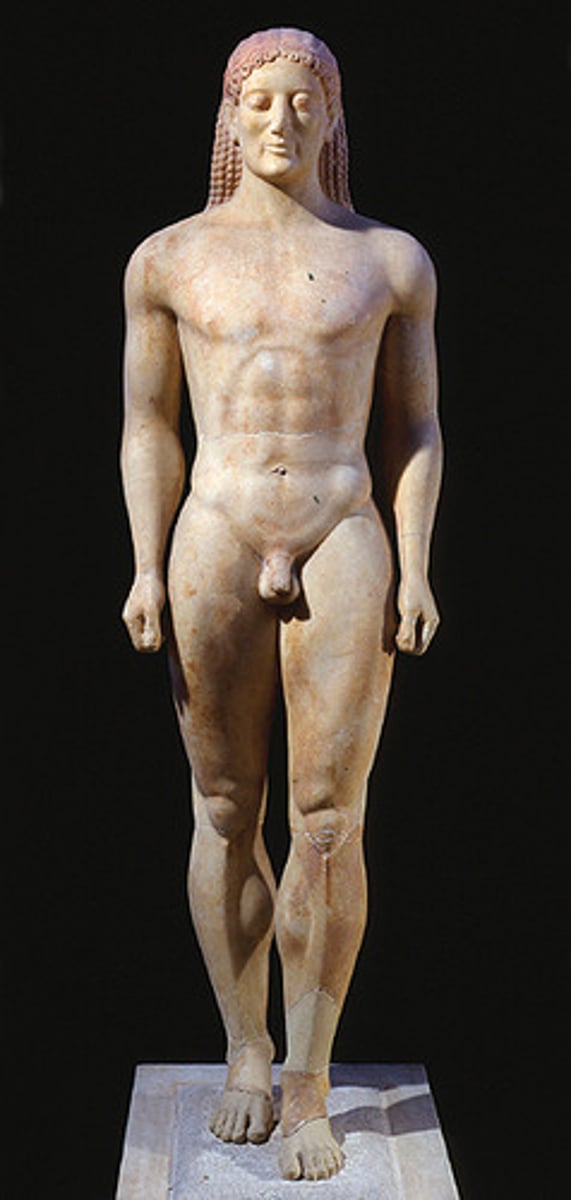
Name: Kroisos Kouros from Anavysos (near Athens)
Time Period: 530 BCE
Material: Marble originally polychromed
Significance of Ajax and Achilles Playing a Game
2 warriors from homer's iliad take a rest from battle to play a game with dice
heros in trojan war not gods
achilles on left ajax on right
friends - both die in end
Name:
Time Period:
Medium:
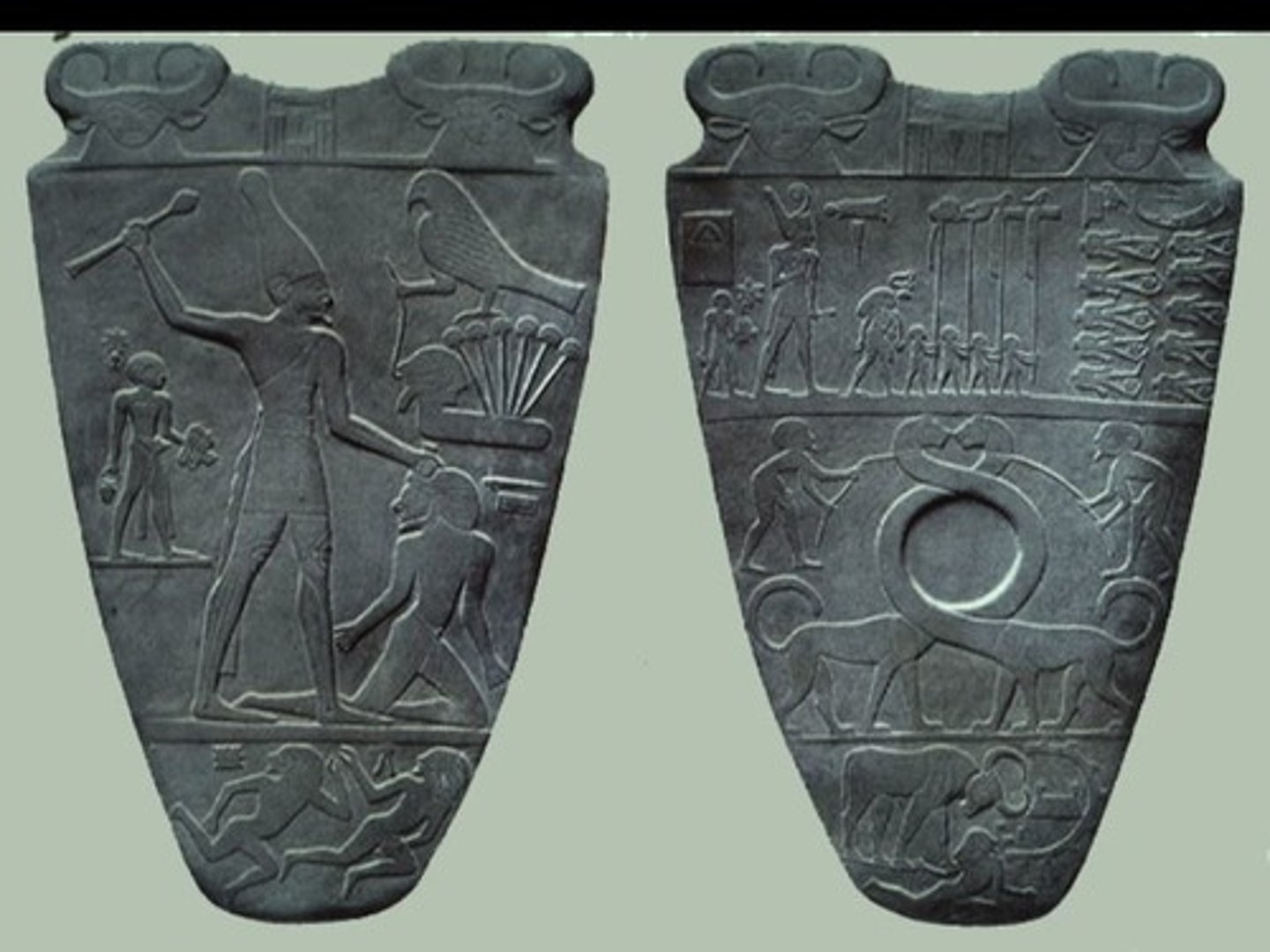
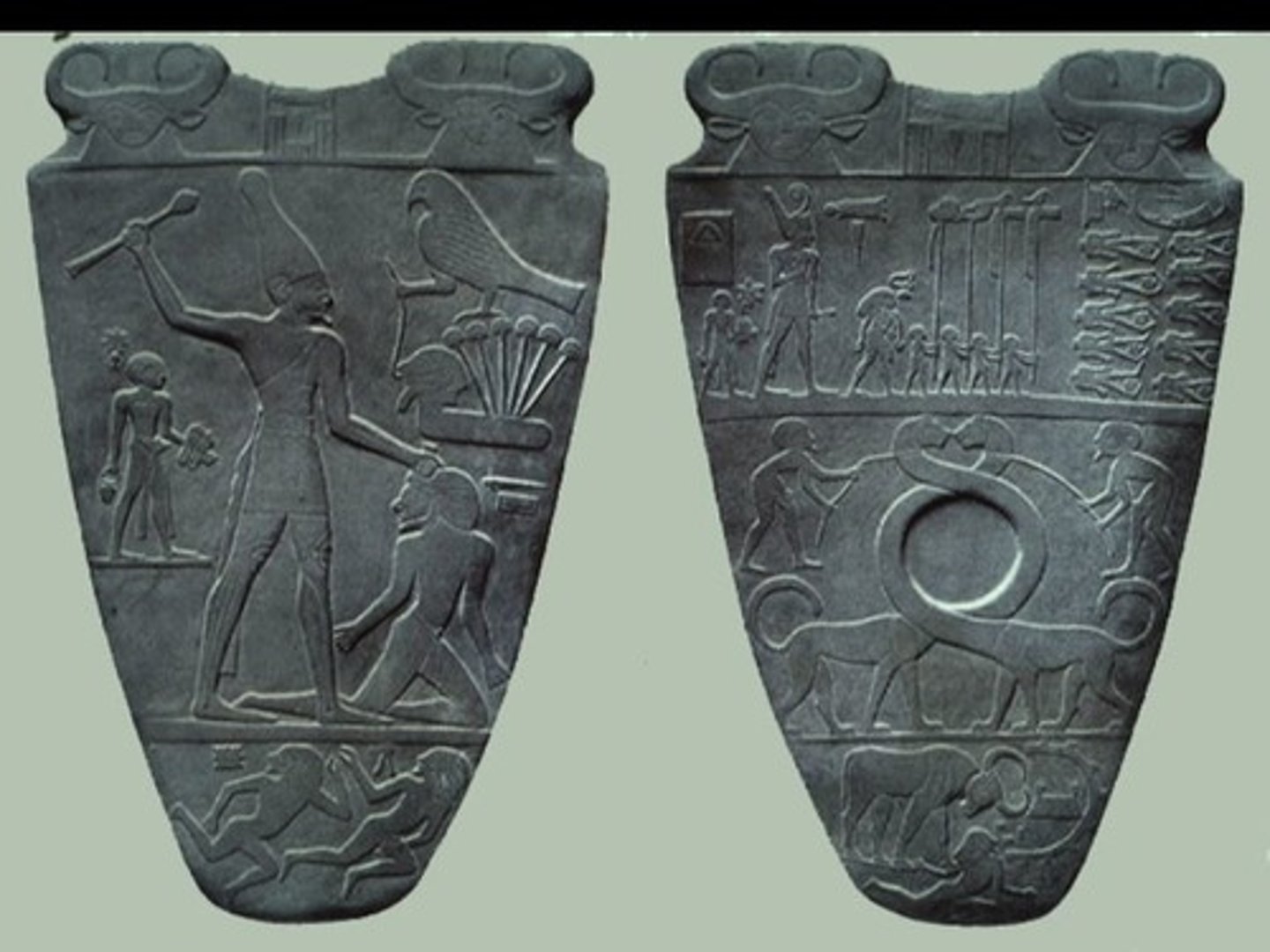
Name: Pallette of Narmer
Time Period: Early Dynastic Period, 2950 BCE
Medium: Green Schist
Significance of the Kroisos Kouros
- The left leg is out, both knees are locked, the and weight is evenly distributed on both legs.
- The hair is braided in a traditional style (curls) with a traditional headband.
- Archaic Smile: half smile which speaks of a figure that transcends this world, that has a sense of aristocratic nobility.
- This was a grave marker set up by an aristocratic family as a grave marker to their son who died in a war.
- Not of a specific individual, but of an idealized perfect body.
Name:
Time Period:
Material:
Architetcs:
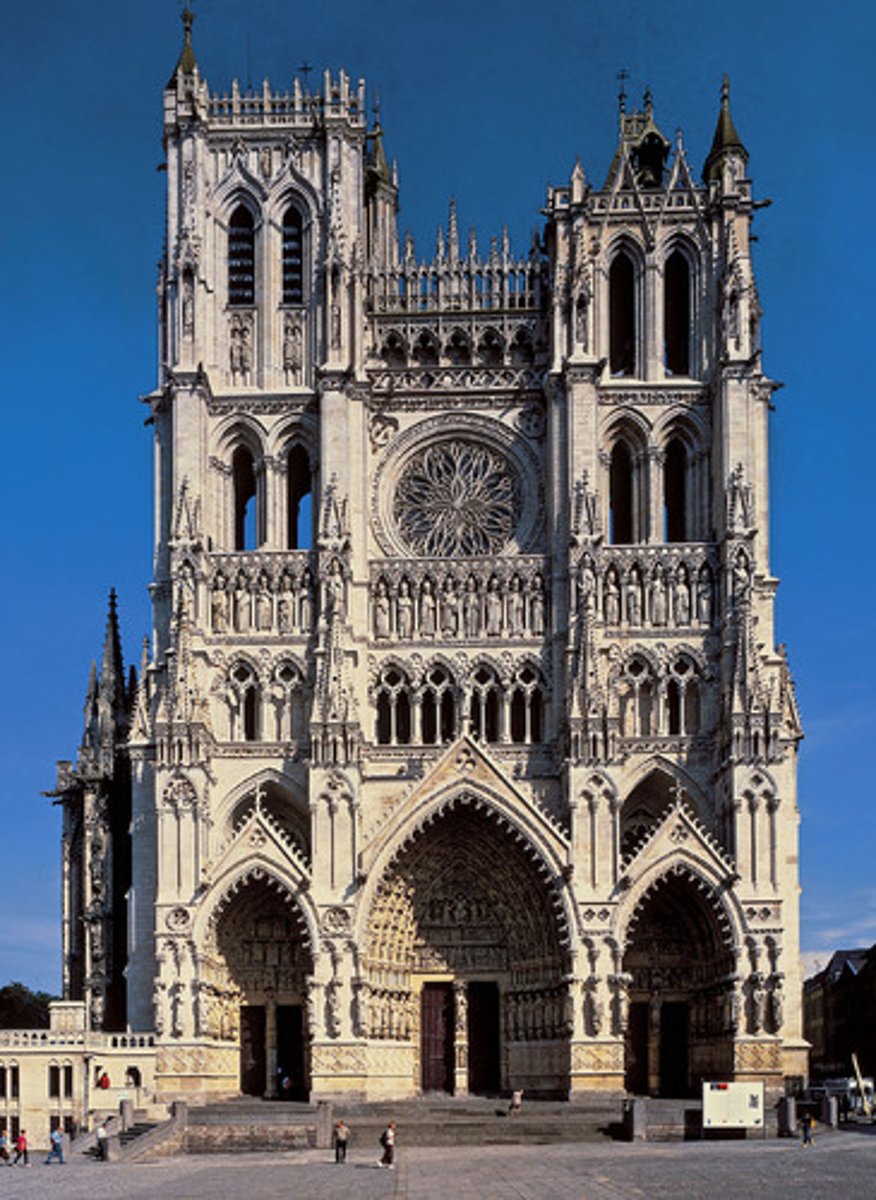
Name: Amiens Cathedral
Time Period: 1220-1269
Material: Limestone
Architects: Robert de Luzarches, Thomas de Cormont, Renaud de Cormont
What is the significance of this artifact?
Hierarchy:
Depicted in the size and scale of the figures, which are not relative to their actual size. In their comical size however, they signify the importance of each figure
Example of Hierarchy:
The sandal-bearer, the king's servant, is significantly SMALLER than the king and the opponent he defeated.
The COMPARABLE size of the two combative figures ACCENTUATES the TRIUMPH the king has over a formidable OPPONENT, most likely the RULER OF LOWER EGYPT
Utility:
Despite the paramount DECORATIVE NATURE, it does have utility. The LATTER SIDE on the GROUND LINE are TWO ANIMALS their necks exorbitantly OUTSTRETCHED AND INTERTWINED forming NEGATIVE SPACE in which a depression for the preparing of EYE MAKEUP is created
Name:
Time Period:
Location:
Material:
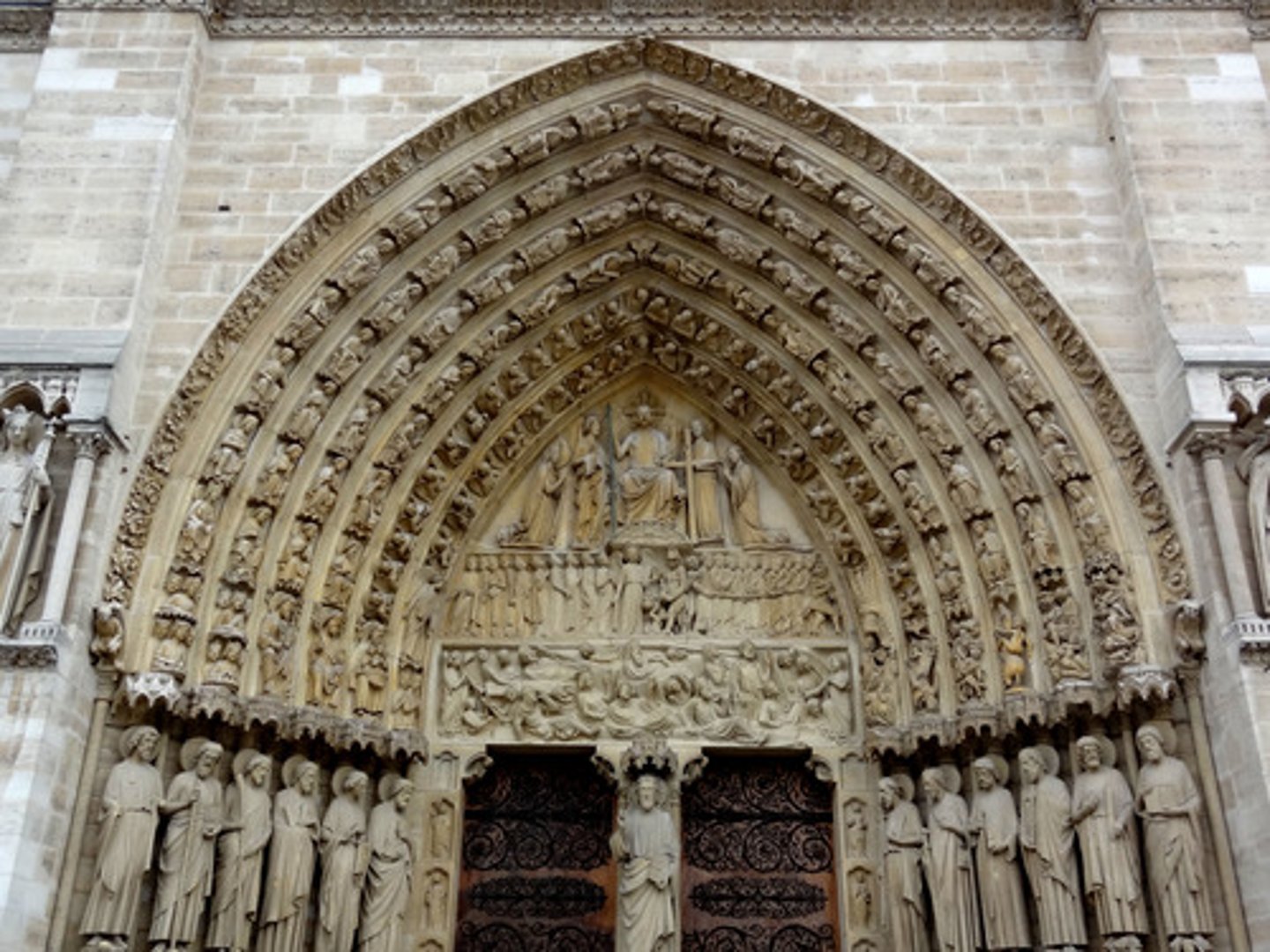
Name: Last Judgement tympanum, Central portal
Time Period: 1220-69
Location: Amiens
Material:Limestone
Name:
Time Period:
Medium:
Location:
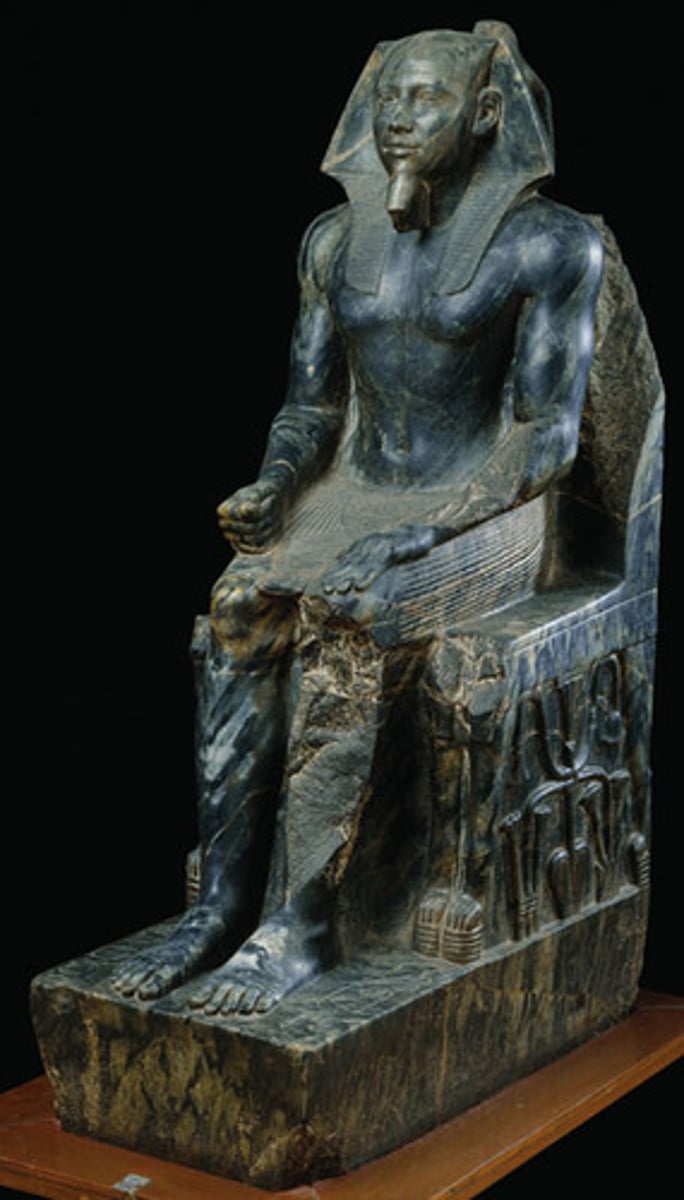
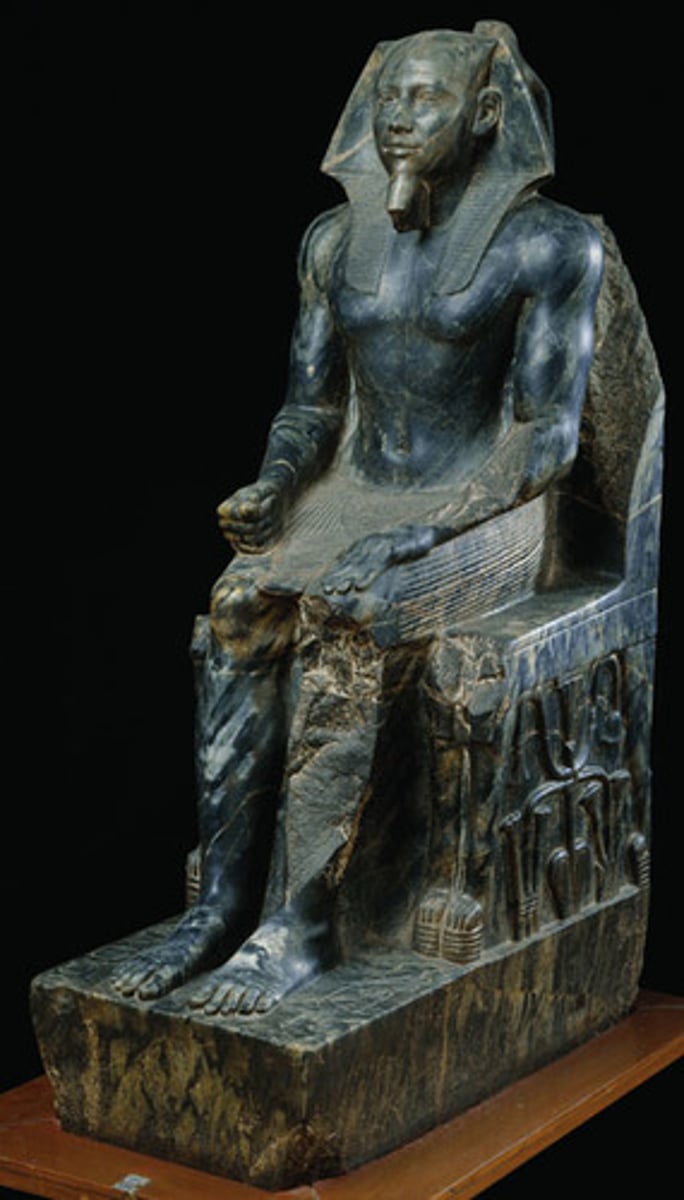
Name: Khafre
Time Period: 2520-2494 BCE
Medium: Diorite
Location: Pyramids at Giza
Significance of Amiens Cathedral
1220-1269
- Gothic cathedral as a civic/religious monument - towers over the rest of the town, becomes iconic image. Dominates the landscape
- Cruciform plan of cathedral (basilica plan)
- Constructed after old cathedral is destroyed
- Use of geometric proportions - (central crossing has Noah's ark proportions --> cathedral as a vehicle to salvation (height + light bring you closure to heaven)
- Enter in west facade (bottom of cross), idea of processing to something (apse), movement
- Altar = in east, where the sun rises, sun rises (Jesus rises)
-use of buttresses and pointed arches
What is the significance of this artifact?
Unique Attributes:
Khafre differs from many other Ancient works in that its very RIGID and RECTILINEAR as opposed to the
CYLINDRIQUE design of MESOPOTAMIAN SCULPTURE.
Evocations:
The DRIVE TO DIFFERENTIATE Khafre from past ancient works may come from a DESIRE for the art to RADIATE STRENGTH and PERMANENCE
Significance of Central portal Amiens
- Portals show suffering and death --> entry leads to resurrection
- Tympanum shows the last judgment, resurrection
- Jesus = in center, left = hell, right = heaven
- St. Michael below Jesus = weighing souls
- Moralizing message: model life like Jesus and your soul will be weighed favorably
- Church as vehicle to salvation
Name:
Time Period:
Medium:
Location:
Name: King Menkaure and Queen
Time Period: Old Kingdom, 2490-2472 BCE
Medium: Greywacke
Location: Pyramids of Giza
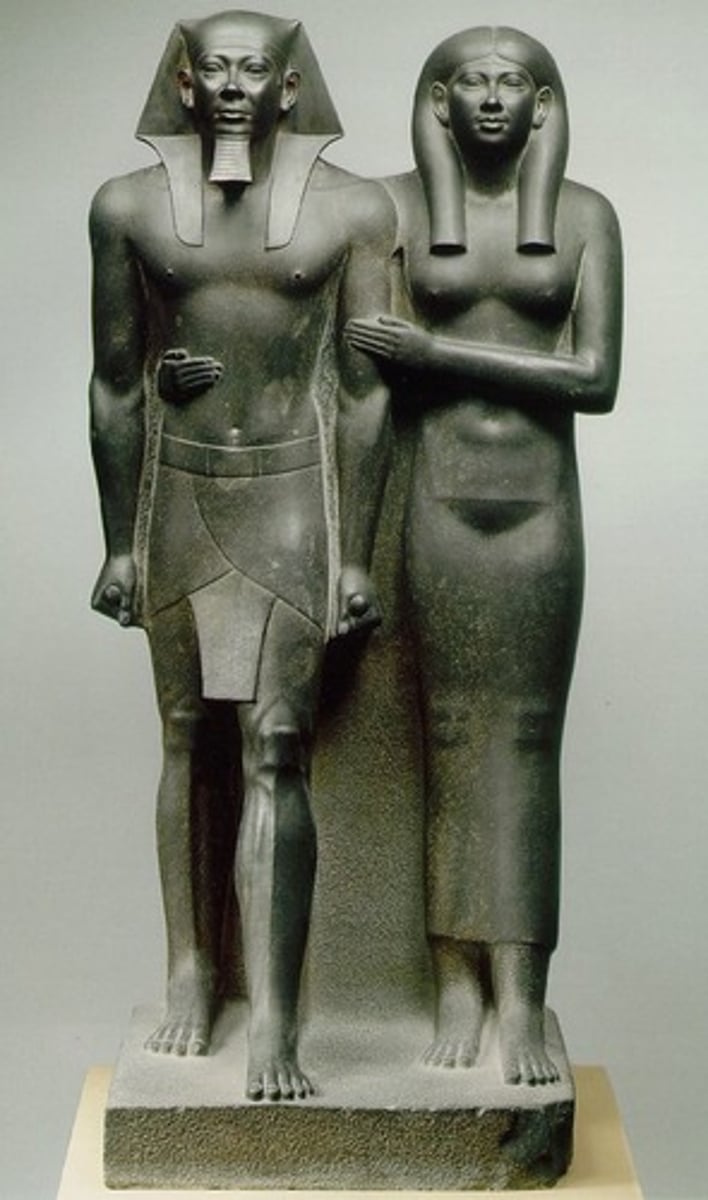
What is the significance of this piece?
Similarity to Khafre:
Menkaure and Queen share the same FORMAL AND EXPRESSIVE FEATURES, indicating the SHARED LINEAGE Menkaure and Khafre have.
Social Implications:
The king's anatomy aligns with the IDEAL IMAGE OF AN EGYPTIAN MAN as he is ATHLETIQUE.
Ideological Balance:
The figure display a contrapposto stance (Menkaure's is more dramatic than the Queen's) The king's stride forward ACCENTUATES his STRENGTH, impearative physically and politically in Egyptian culture.
The king's strength and imposition is FOILED by the QUEEN'S SIMILAR SIZE and CURVY ANATOMY
Name:
Time Period:
Medium:
Name: Seated Scribe
Time Period: Fifth Dynasty, 2450-2325 BCE
Medium: Painted Limestone with Stone Inlays
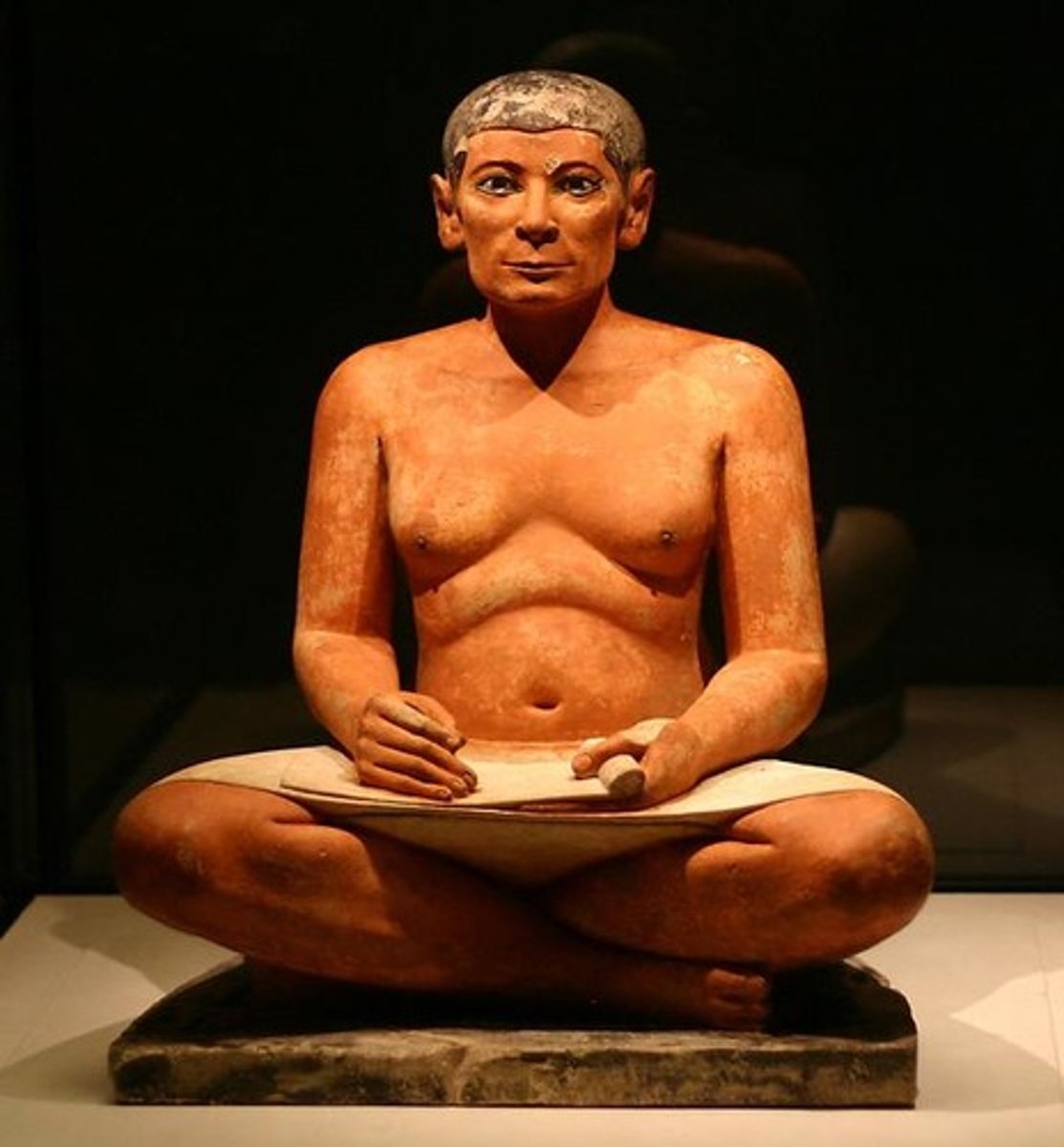
What is the significance of this piece?
Hierarchy in Anatomy:
The hierarchy of EGYPTIAN SOCIETY is shown in the ANATOMY of the scribe as it DOES NOT
meet the STANDARDS for the IDEAL Egyptian Male.
The anatomy indicates that his life is FREE FROM HARD LABOUR
Occupation in Body Language:
The papyrus SCROLL he is holding delicately, with his HAND UNDER the scroll indicate that he is unraveling it.
The ALERT expression the figure displays evokes INTELLIGENCE and ATTENTION as his PUPILS
are slightly OFF-CENTER
The POLISHED CRYSTAL INLAY gives the eyes the illusion of LIQUIDITY, ATTRACTING the observers eyes as they may initially think the figure is a real person
Name:
Time Period:
Medium:
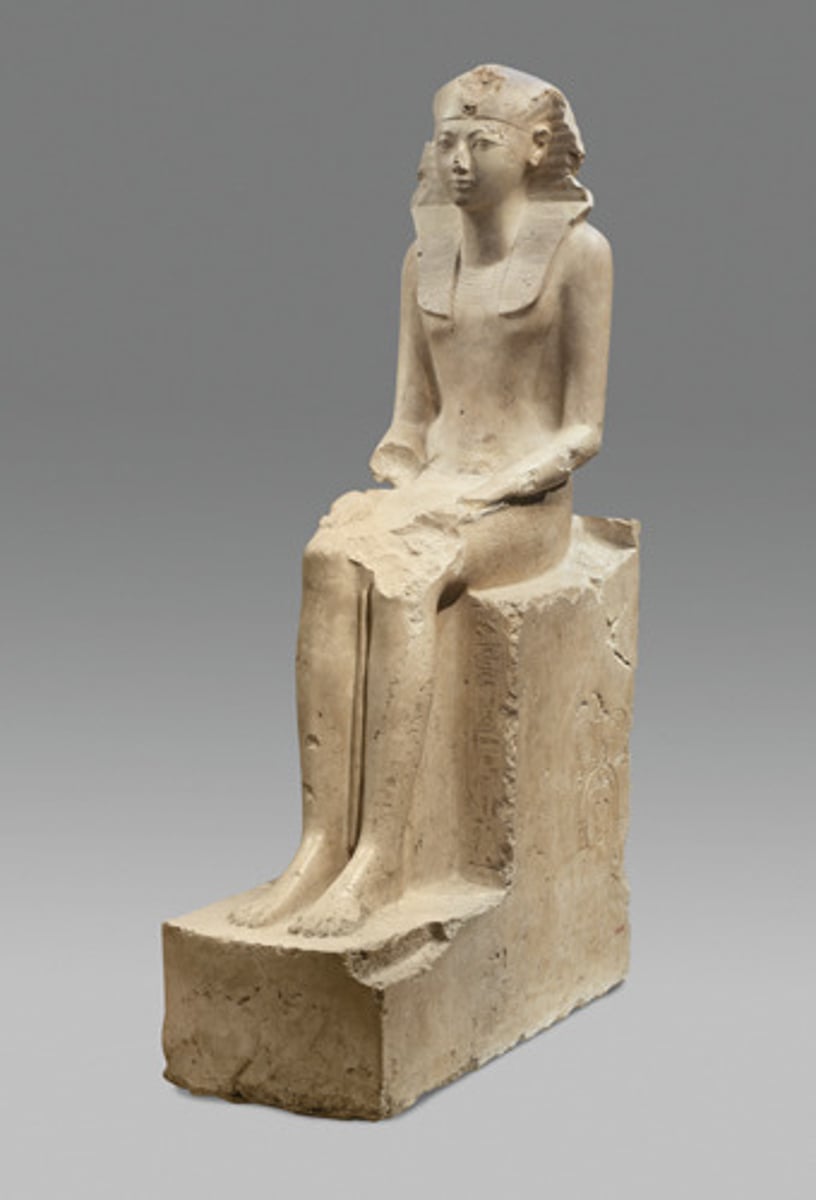
Name: Seated Statue of Hatshepsut
Time Period: New Kingdom, 1479-1459 BCE
Medium: limestone and paint
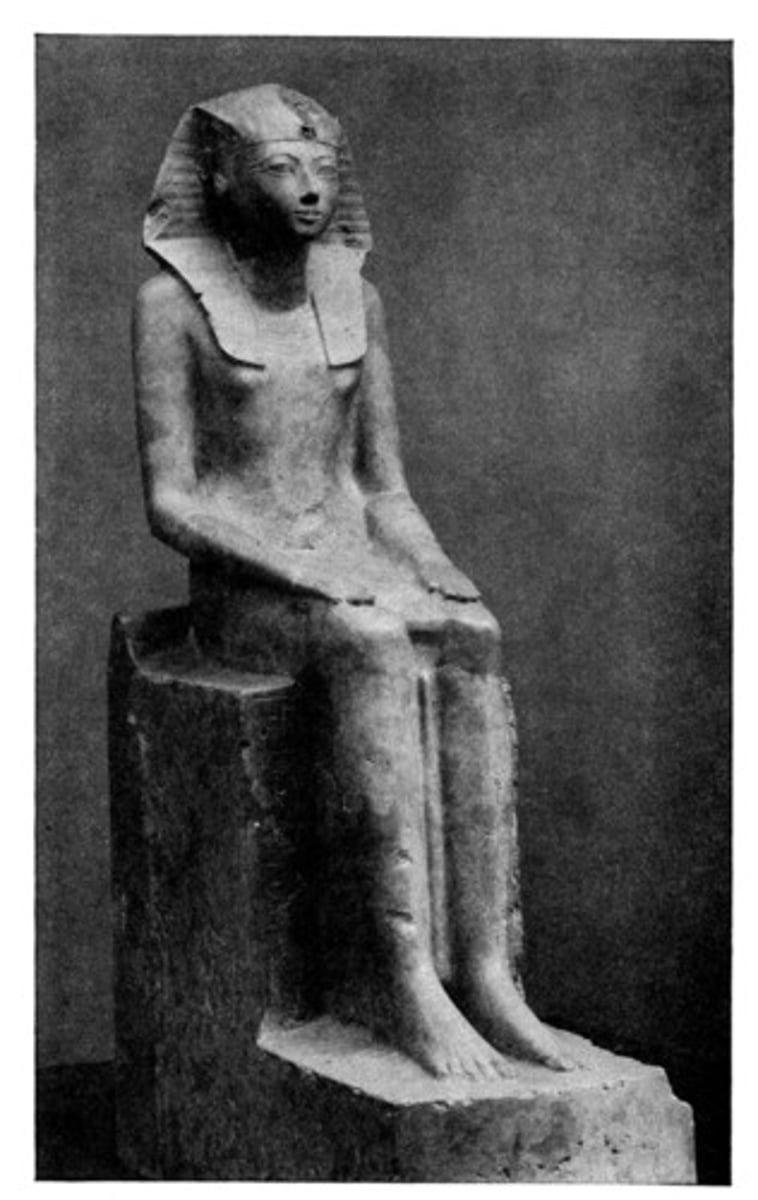
What is the significance of this figure?
Gender-roles Broken:
The depiction of Hatshepsut echoes that of Khafre, showing the blurred line gender roles had relative to many other societies successive to Ancient Egypt.
Her similar attributes to Khafre can be attributed to her ascension to kingship, her role as king was not differentiated by gender, and that is displayed in the work of art.
Name:
Time Period:
Medium:
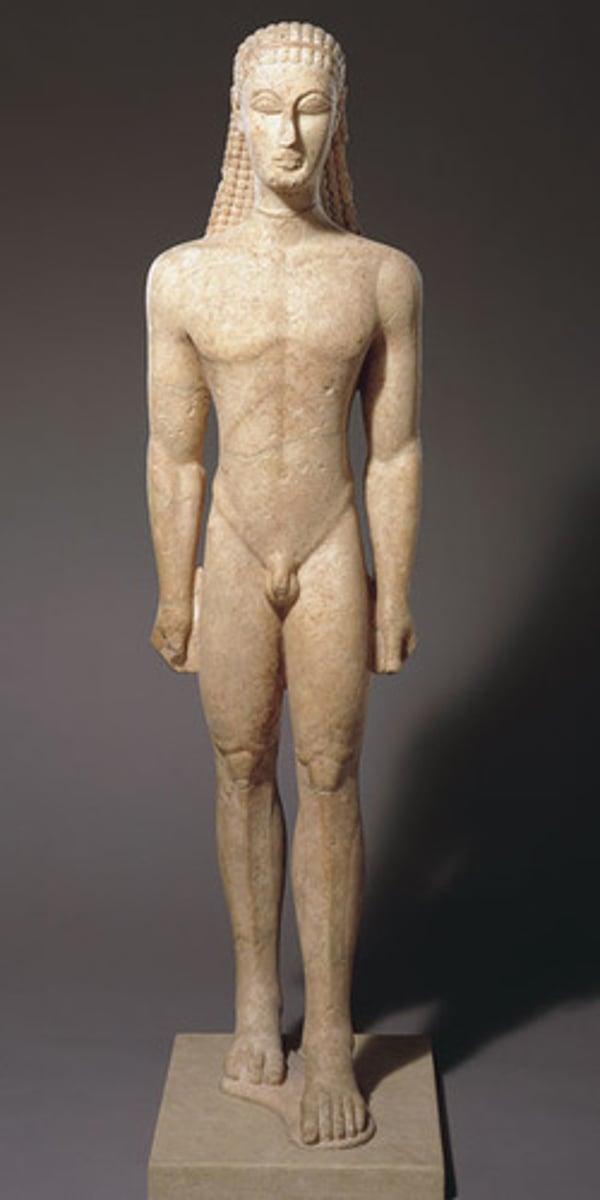
Name: Kouros
Time Period: 590-580 BCE
Medium: Marble
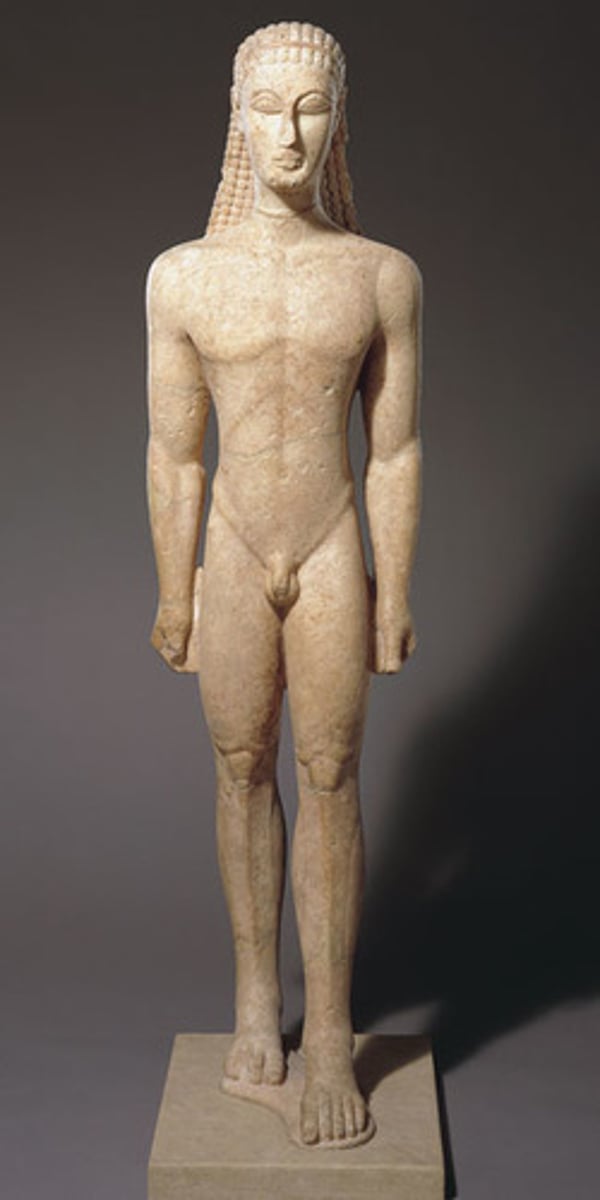
What is the significance of this figure?
Egyptian Influence:
Influence of Egyptian Art is evident in the CONTRAPPOSTO STANCE of Kouros
ATHLETIC BUILD - KOUROS literally means YOUNG MAN
Egyptian Difference:
The figure is EVOKES more ENERGY and LIVELINESS since its arms and legs are more autonomous from the building materials
Name:
Time Period:
Medium:
Location:
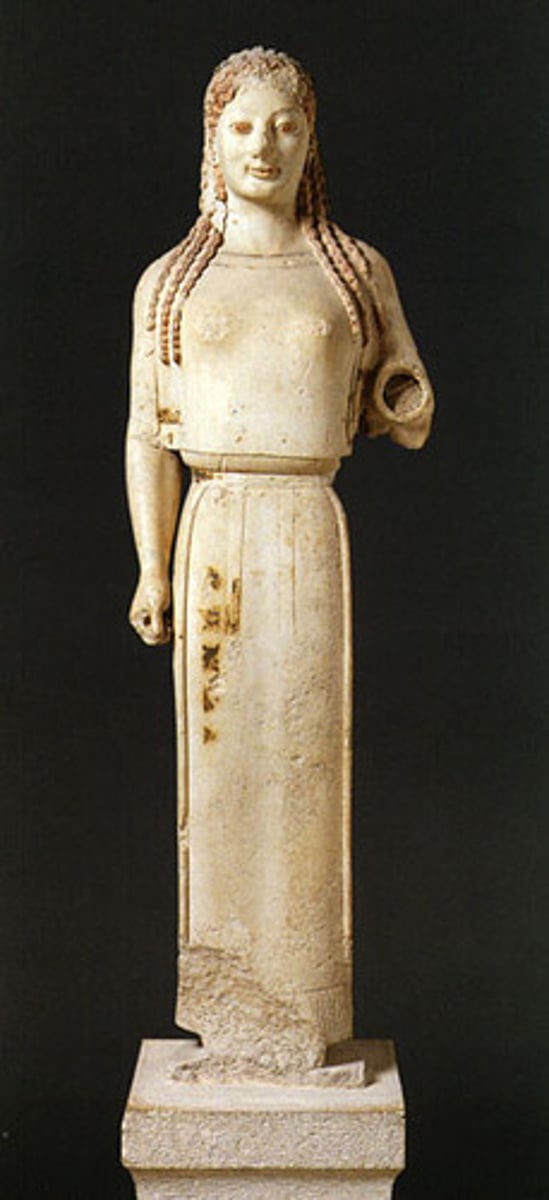
Name: Peplos Kore
Time Period: 6th Century BCE
Medium: Marble
Location: The Acropolis at Athens
**NOT ON SLIDES
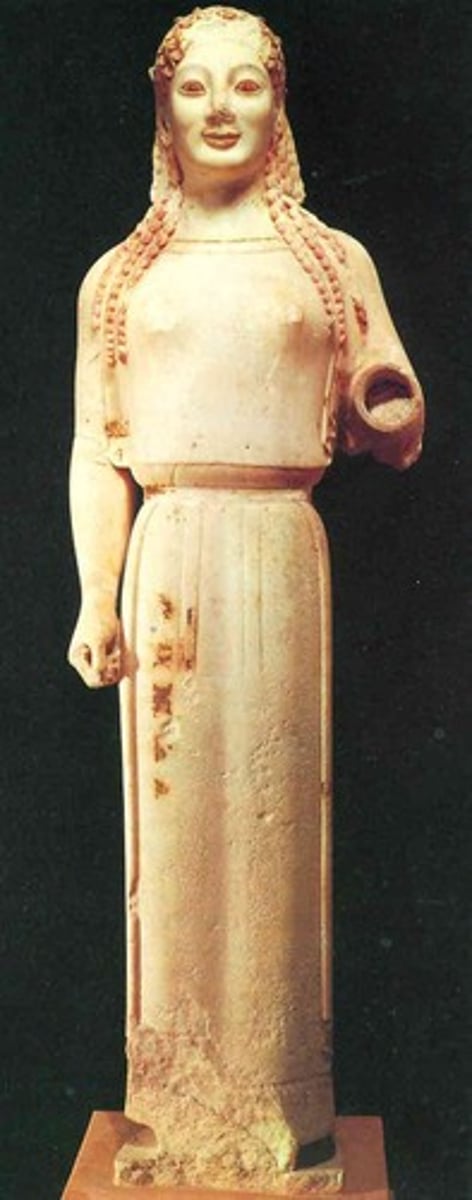
What is the significance of this figure?
Femininity:
Depicted in the SOFT DELICATE FLESH of the statue, rounded body, CURVY
The Lively Goddess:
The figure was ORIGINALLY adorned in a SHEATH OF PAINT
Once wore a METAL CROWN AND JEWELERY, signifying her importance, and making her even more life-like
The statue was ORIGINALLY THOUGHT to be wearing the garment of a young girl, the garment is only a thin sheath originally presented a FRIEZE OF ANIMALS, which are typical of depictions of Hellenic deities, possibly ATHENA OR ARTEMIS
*NOT ON SLIDES
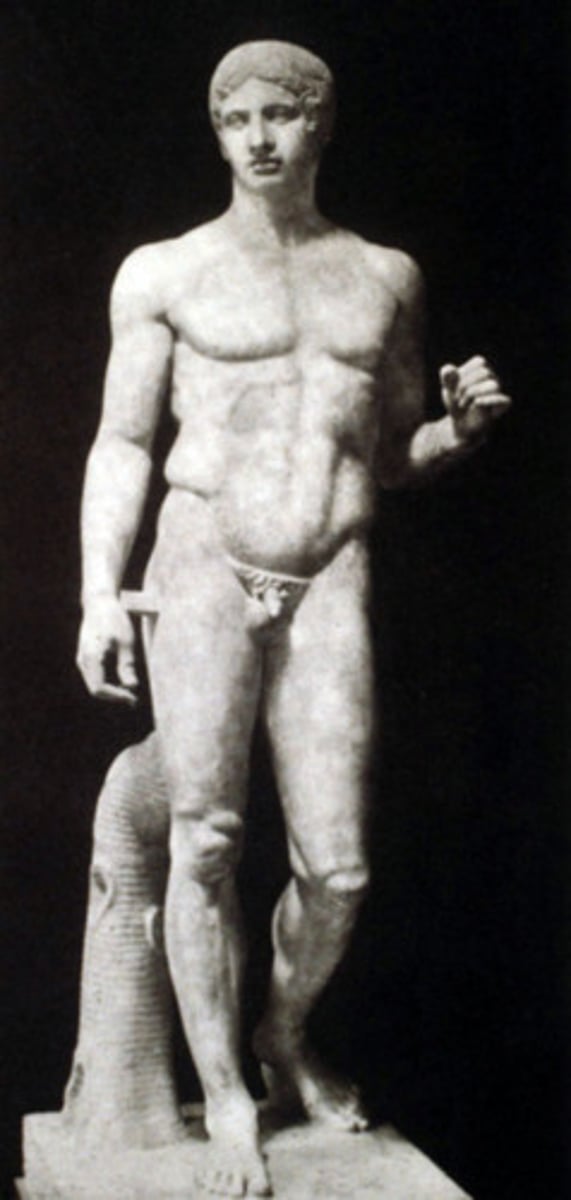
Name: Polykleitos, Spear Bearer (Doryphoros)
Time Period: 450-440 BCE
Medium: ORIGINALLY BRONZE. The figure shown is a ROMAN COPY in MARBLE
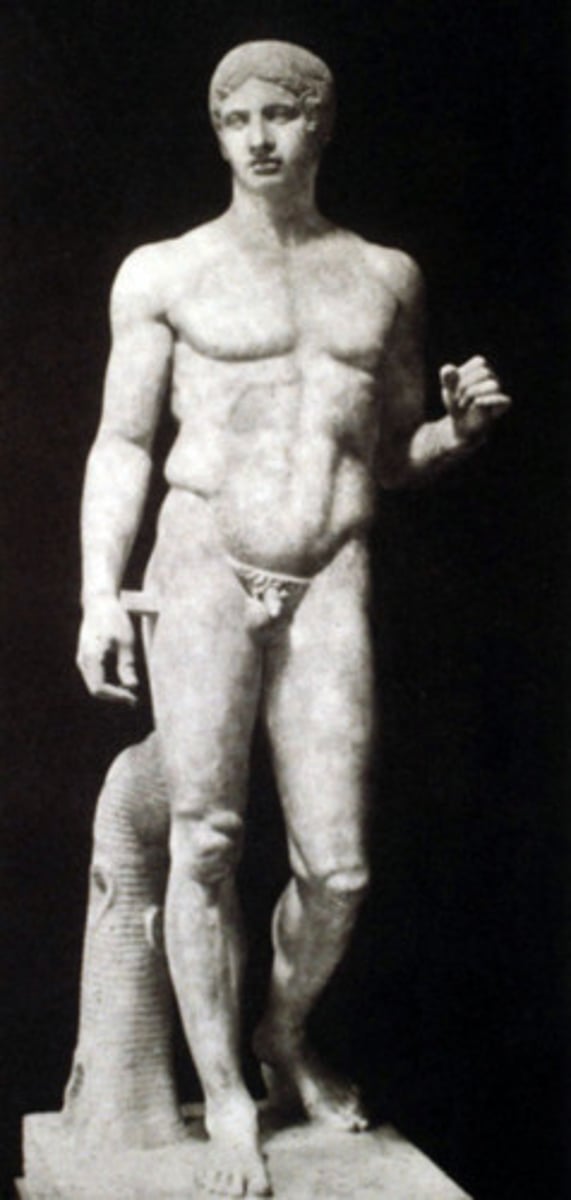
What is the significance of this figure?
Culmination of Study:
POLYKLEITOS represents this culmination of extensive SRIDES OF SCULPTORS to UNIFY DESIRABLE human anatomy and features into ONE WORK
The Ideal Hellenic Male:
What the sculptors found PARAMOUNT to beauty were SYMMETRICAL, DEFINED facial features, SMOOTH SKIN , LARGE and EVEN body proportions and ratios
Polyleitos became the CANON of the HUMAN MALE but those seeking to suppress foreign cultures saw only the colour of the medium used.
Name:
Time Period:
Medium:
Location:
Architects:
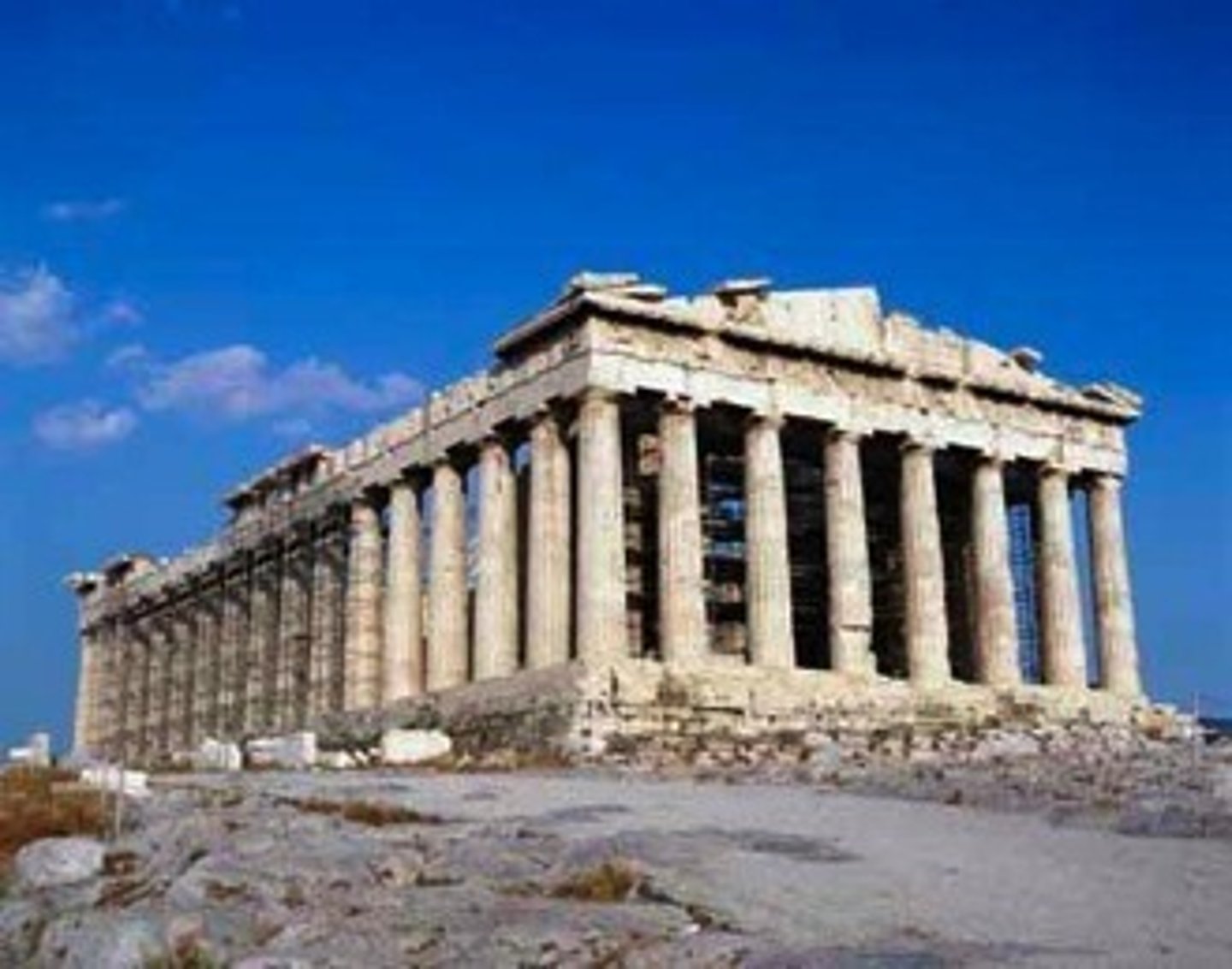
Name: Parthenon, NW Angle
Time Period: 447-432 BCE High Classical Period
Medium: Pantalique Marble
Location: Athens
Architects: Iktinos and Kallikrates
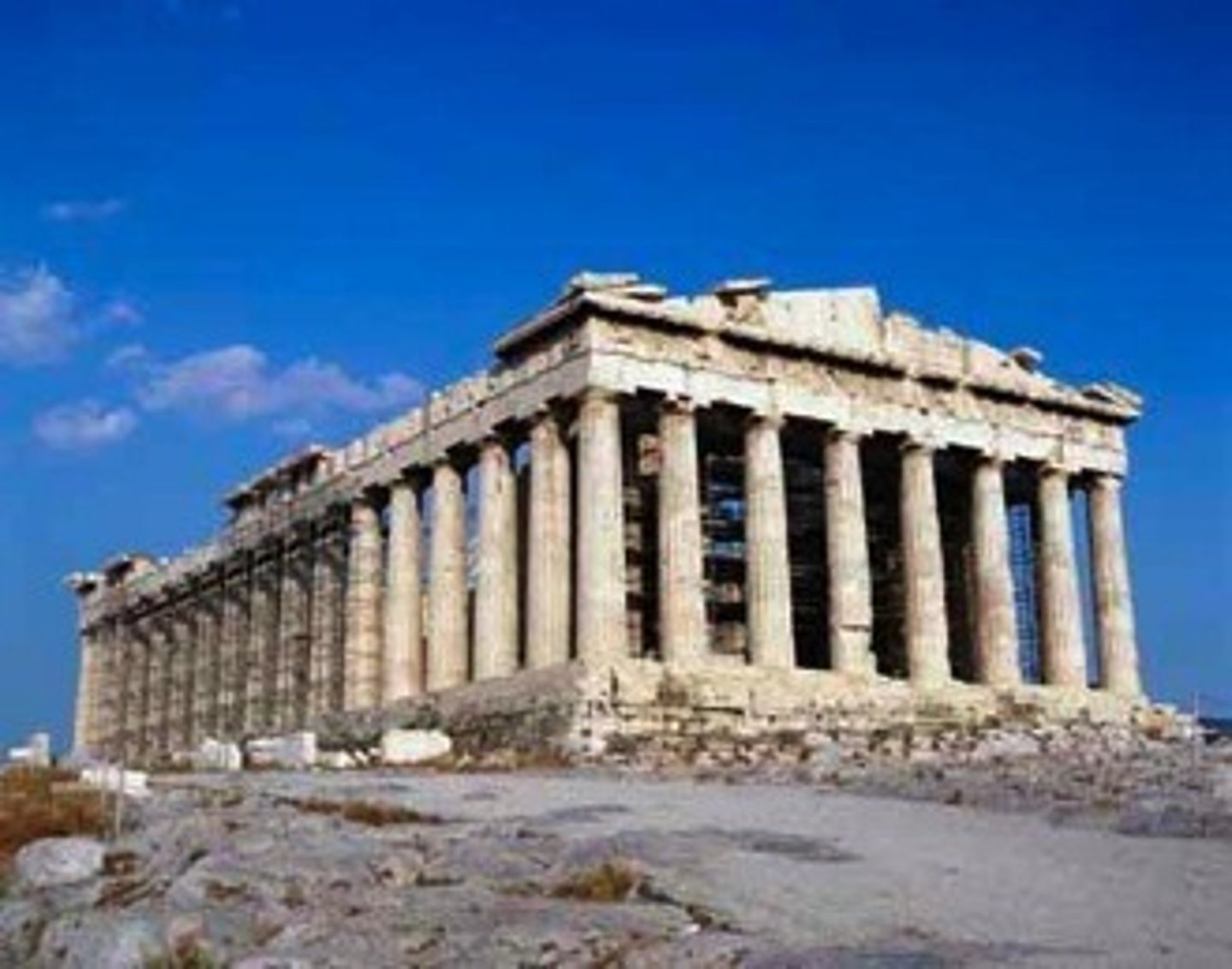
What is the significance of this structure?
Historical Longevity:
The classification of the Parthenon under the "High Classical Period" reflect the judgements of art historians of the art being at the magnum opus of artwork.
Symbol of Liberal Democracy:
The Parthenon has historically been a symbol for free societies, especially in the West, as the construction of the sculpture coinsides with the rule of Perkiles, who is famous for his Oration which espoused liberal democratic values free societies hold paramount today
Structure and Design:
Because long columns of strucutures seem to concentrate at the center from a distance, due to optical illusions the architects show their expertise in the ENTASIS of the columns which combat this optical illusions as well as reducing space between the columns at the extremities of each side.
Name:
Time Period:
Medium:
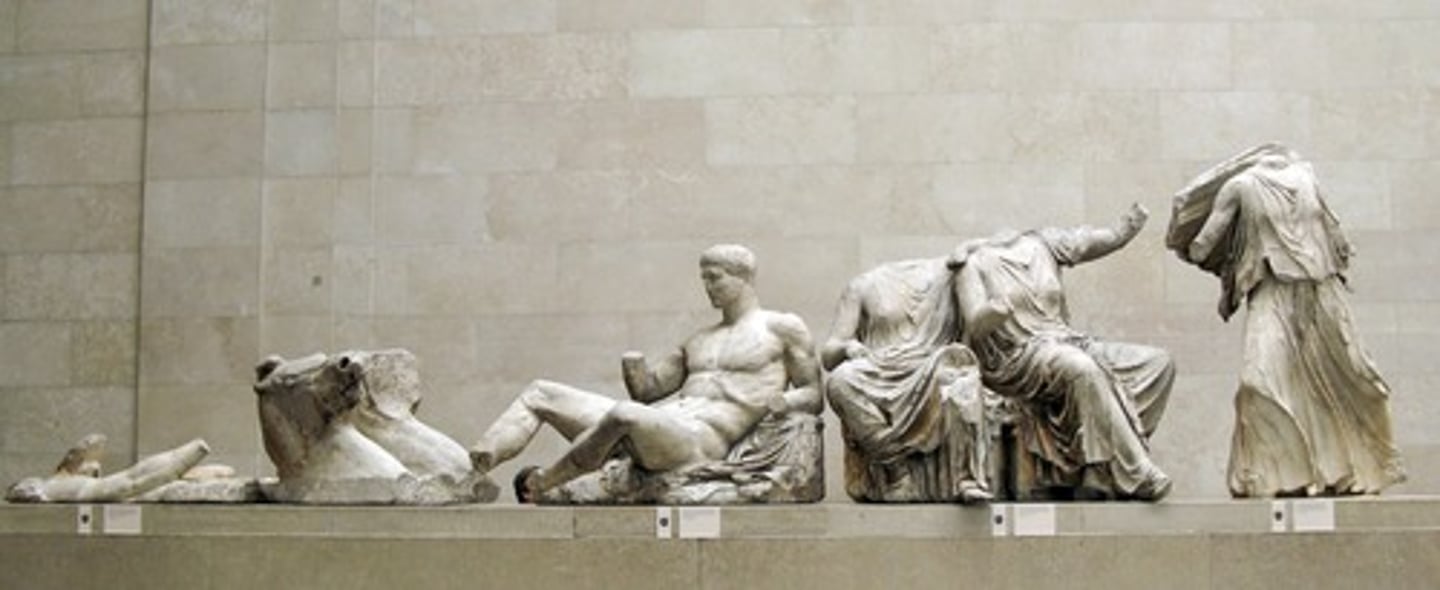
Name: Reclining male figure (possibly Dionysos or Herakles) from the east pediment of the Parthenon
Time Period: 438-432 BCE
Medium: Marble
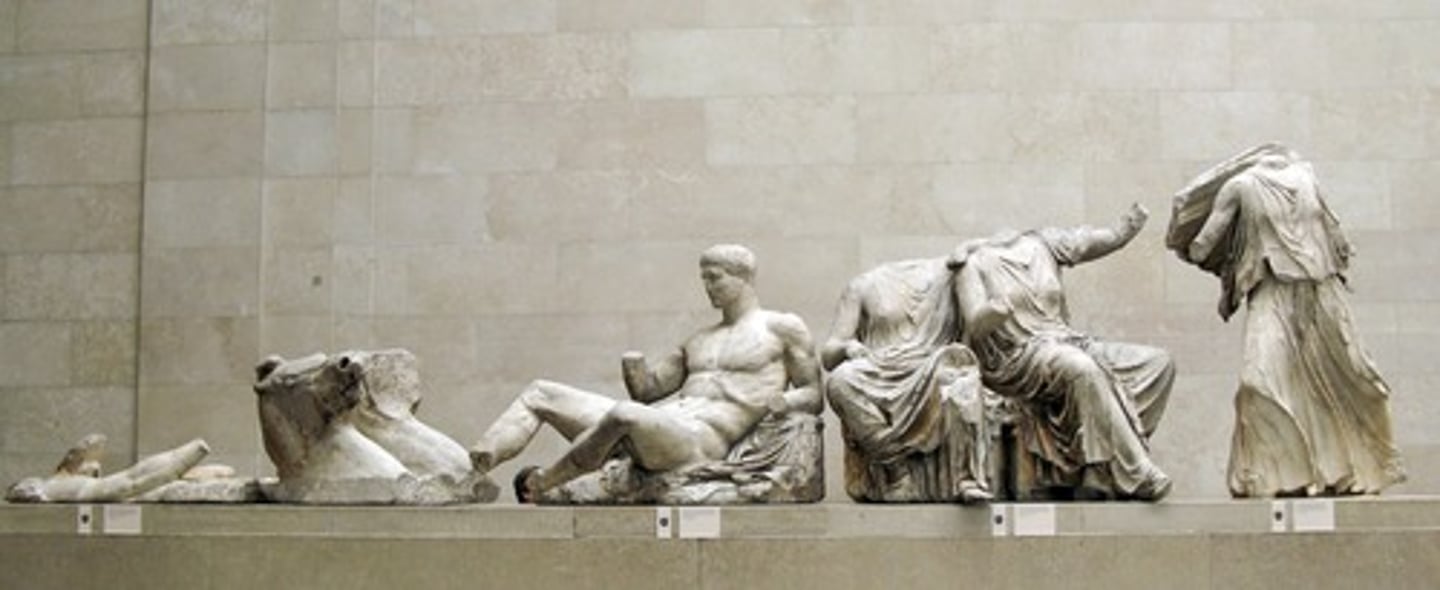
What is the significance of this series?
Politics of Repatriation:
In modern times, Sculptures of the East Pediment have become ground zero for the politics of repatriation, as they were acquired by the British Ambassador to the Ottoman Empire.
The sculptures are a reminder of Turkish and British oppression and political meddling in the early Greek state, after its independence in 1821
Politics of Religious Suppression:
The central portion of the pediment is missing because for Christian appropriation of the Parthenon and their building of an apse at the end.
Name:
Time Period:
Medium:
Name: Lapith and Centaur metope from the Parthenon
Time Period: 447-432 BCE
Medium: Marble, Ionic frieze
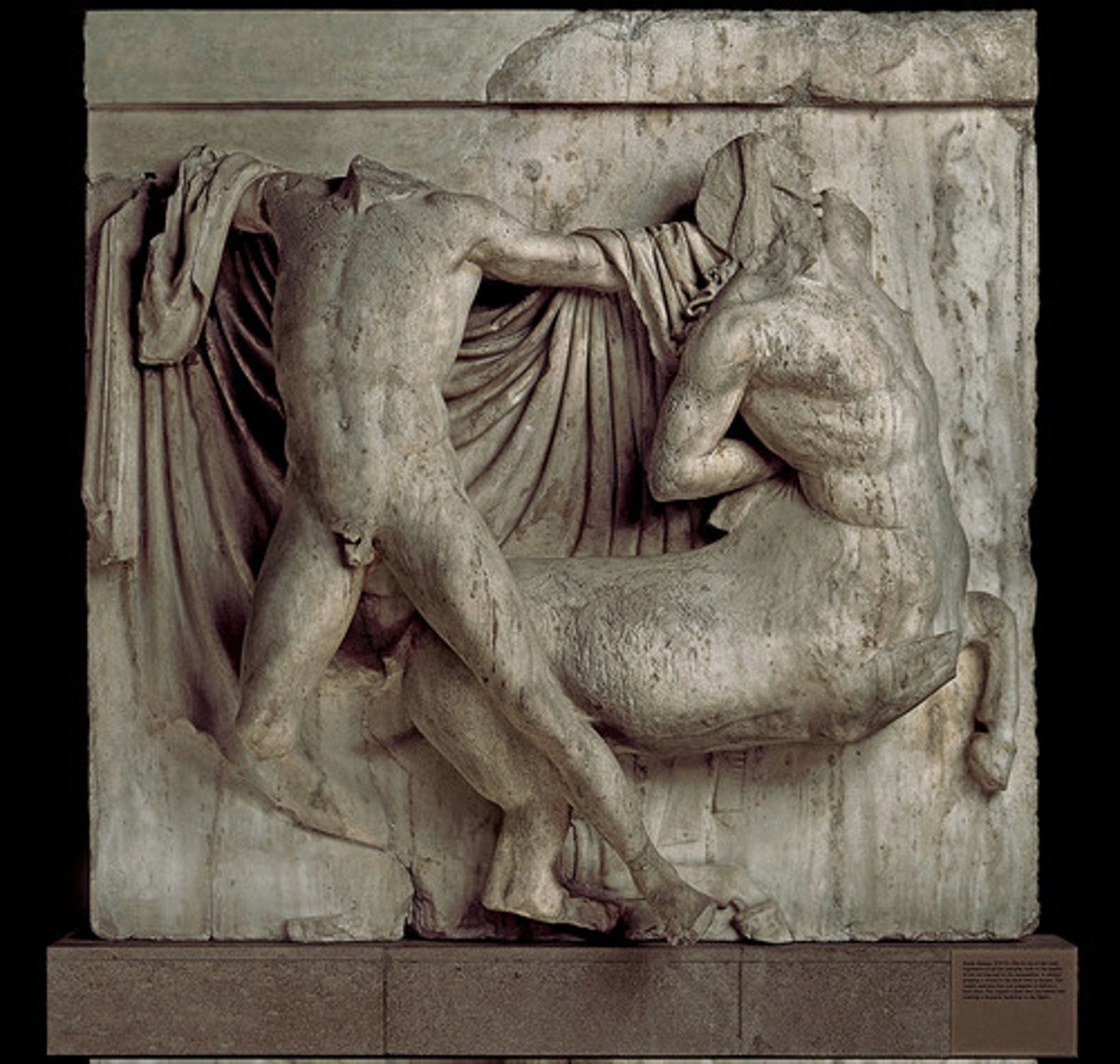
What is the significance of this Ionic frieze?
Beauty Depicted in Battle:
The movements of both the man and centaur evoke notions of choreography.
Wider Vision:
Represents a triumph over animal passions, depicting the long struggle between man and nature.
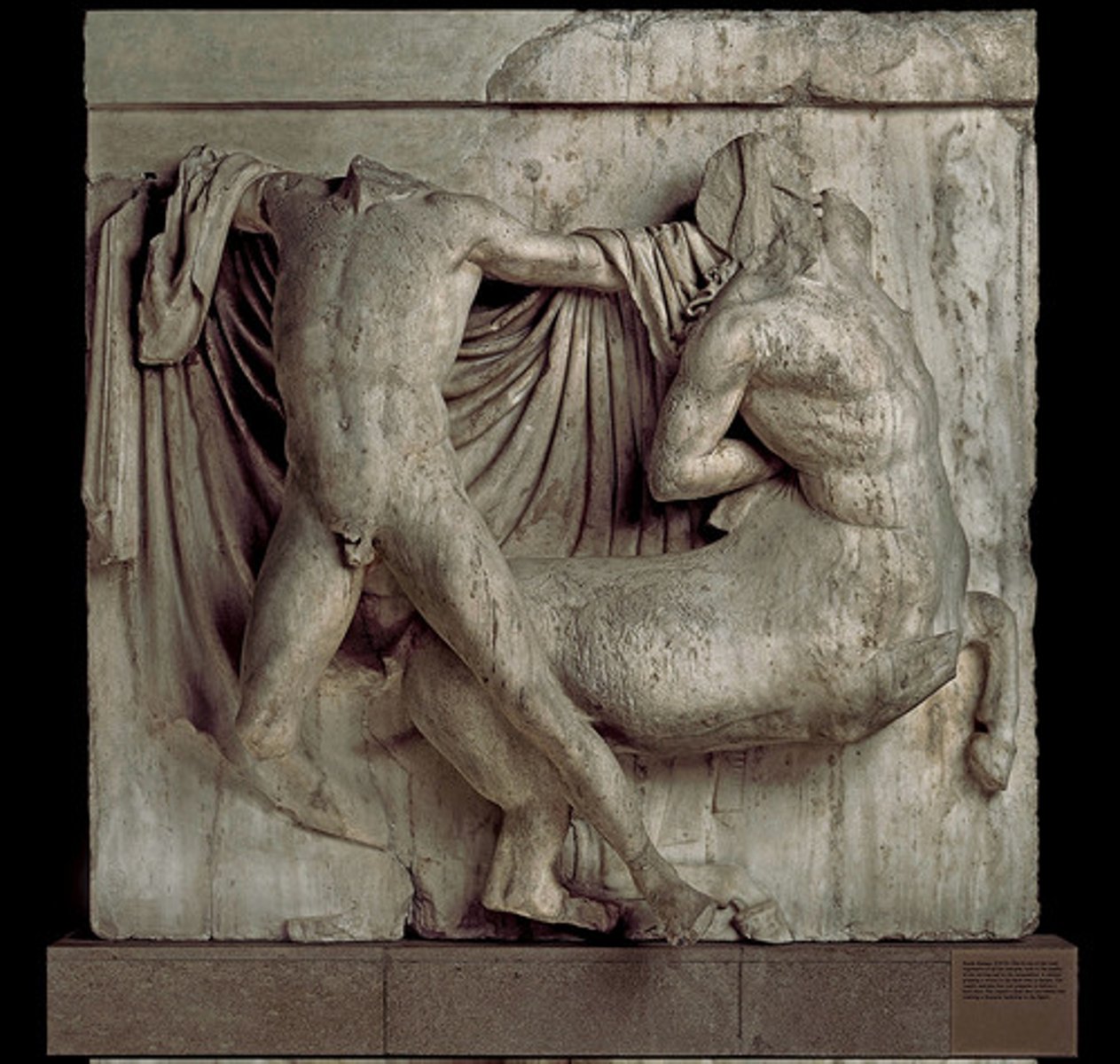
New British Museum
New Acropolis Museum
Significance:
Politics of Repatriation
Ottoman Occupation of Greece
British Influence of Greece and the Ottoman Empire
Political Power
Social Power
Worldly Power
Name:
Time Period:
Medium:
Location:
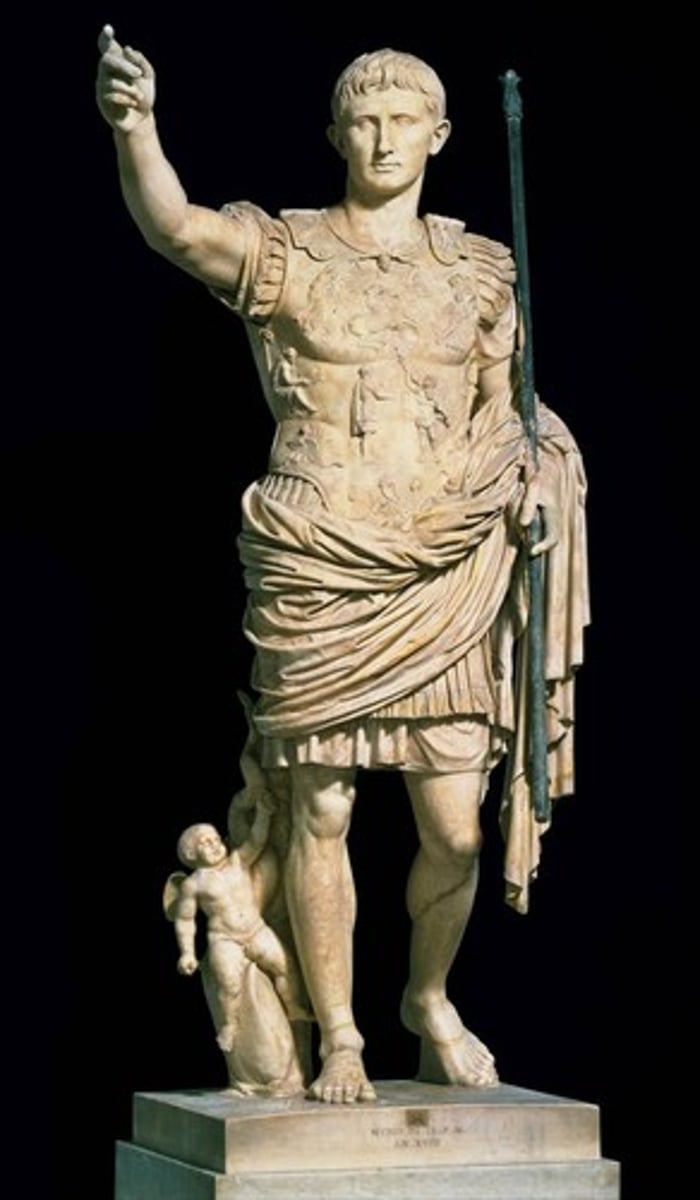
Name: Augustus of Primaporta
Time Period: Early First Century CE
Medium: Marble, (originally POLYCHROMED)
Location: Musei Vaticani
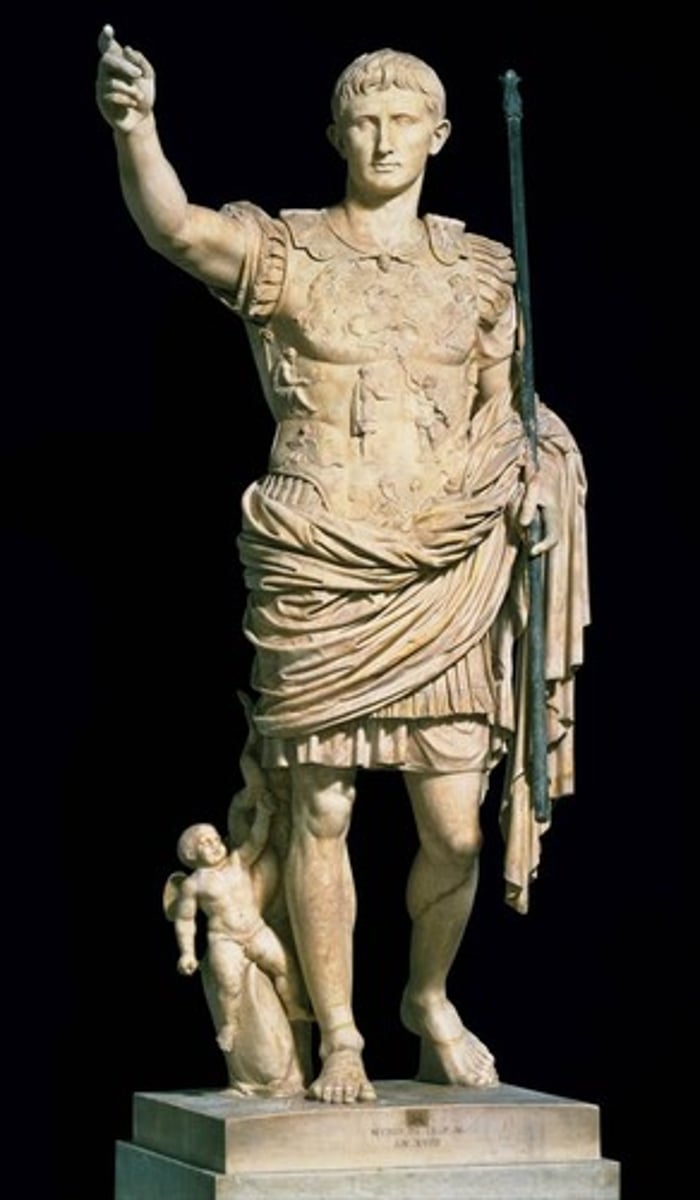
What is the significance of this statue?
Political Implications:
Exemplifies the end of Rome's Republican Age and the concentration of authoritative power
Authority bled into the making of the sculpture as it was made in the image of how Augustus wanted to be presented
Echoes heroic elements of Polykleitos, and portrays Augustus in his youth instead of at the old age he had at the time
Augustinian power is displayed in the detail of the BODY ARMOR which displays the defeat of barbarians with religious overtones
The bare feet has led some scholars to believe the sculpture was made after his death, and commemorated his apotheosis and elevation to divinity.
Name:
Time Period:
Medium:
Location:
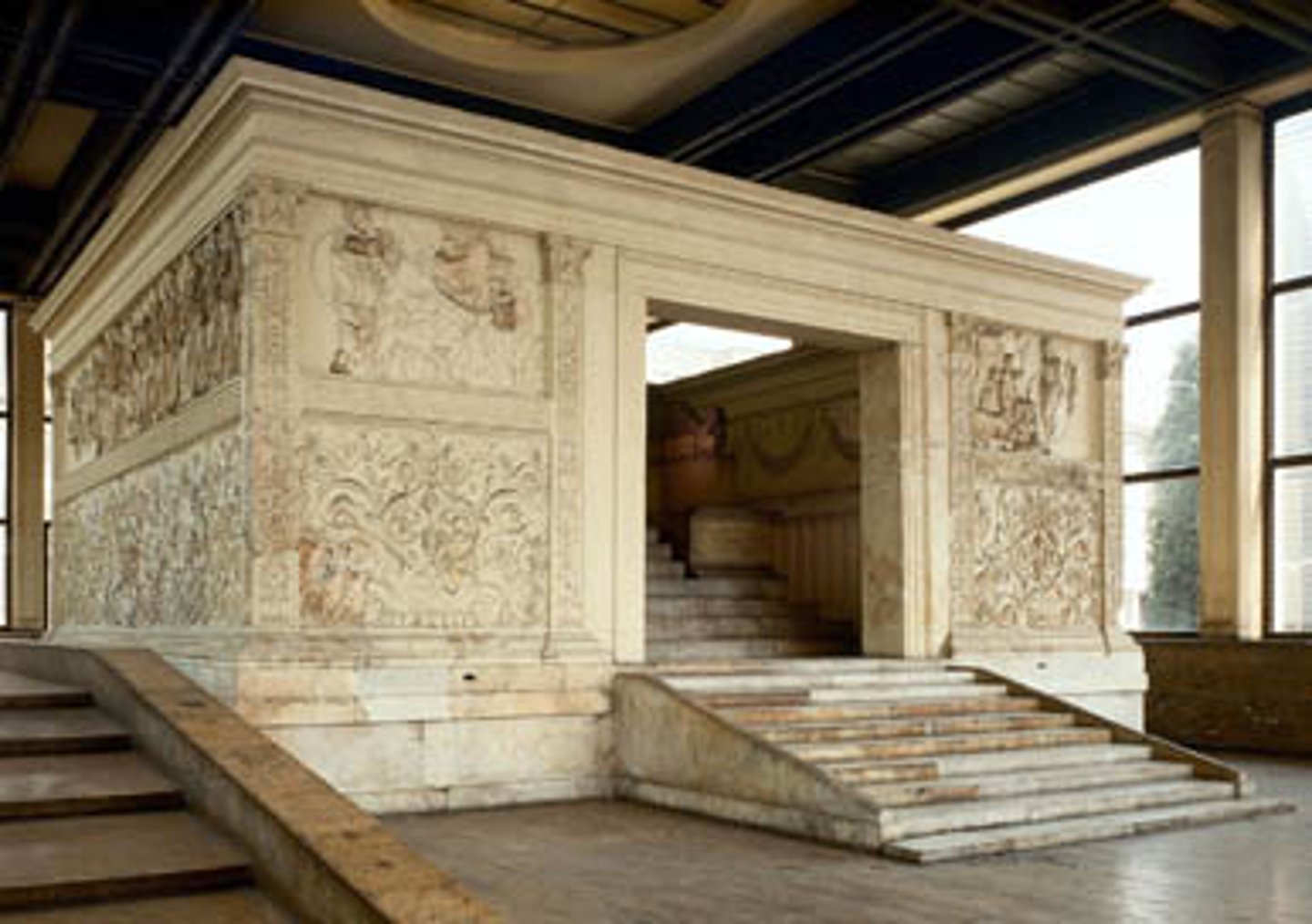
Name: Alter of Augustinian Peace / Ara Pacis Augustae
Time Period: 13-9 BCE On the precipice of the Common Era
Medium: Marble (originally polychromed)
Location: Rome
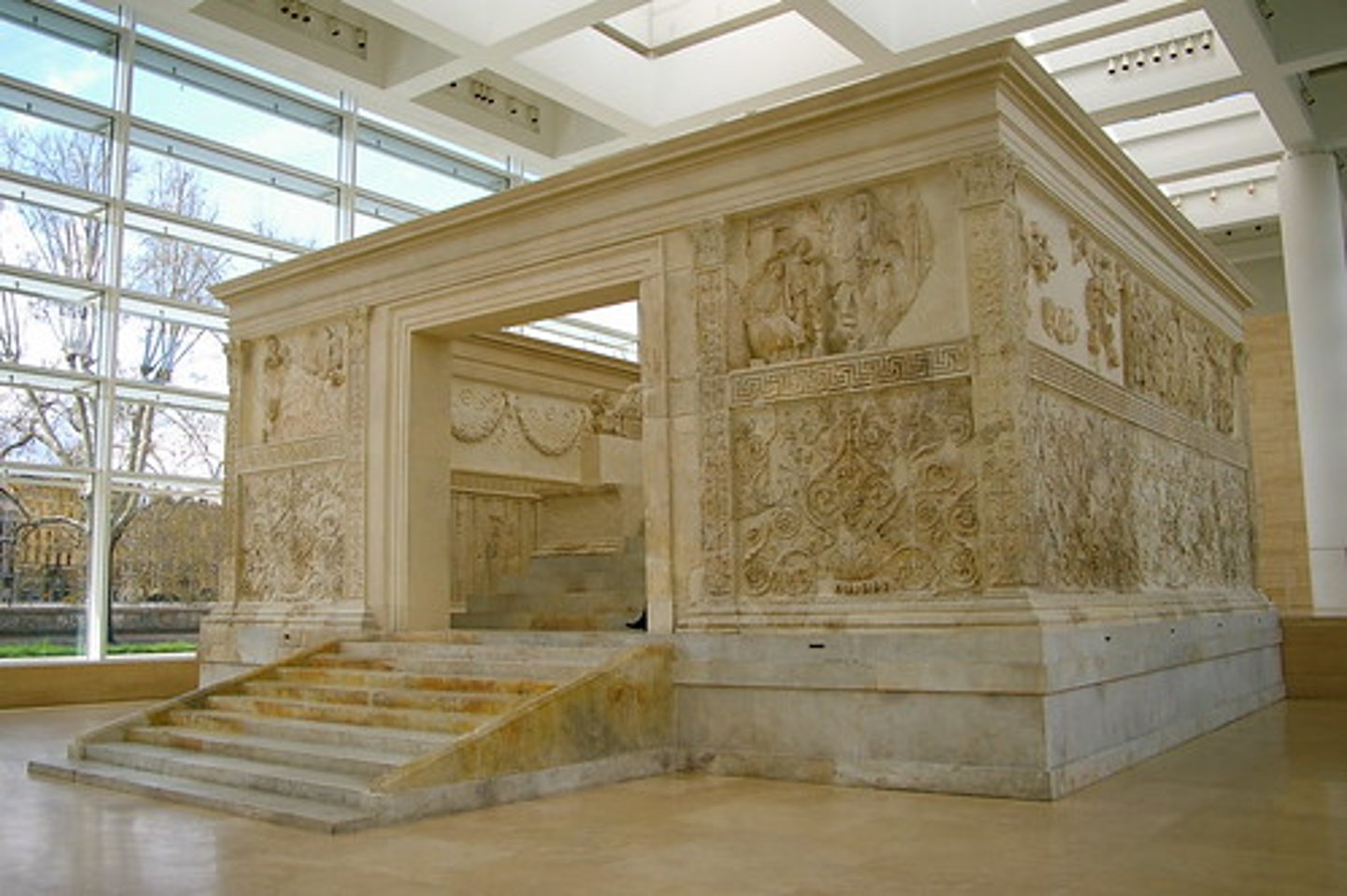
What is the significance of this piece ?
Greco-Roman Synthesis:
Synthesizes ROMAN TRADITIONS and HELLENIC CLASSICISM
Greco-Roman Difference:
Hellenic sculptors created an ideal procession for the Parthenon frieze
Roman sculptors depicted real people at a real event
War and Peace:
Commemorates Augustus's return to Rome after the conquering of Gaul, (modern day France) making the message the altar depicts contradictory
Unity:
Beyond war and peace, the sculpture ultimately unifies religion, politics, publicity, and seclusion.
Name:
Time Period:
Medium:
Location:
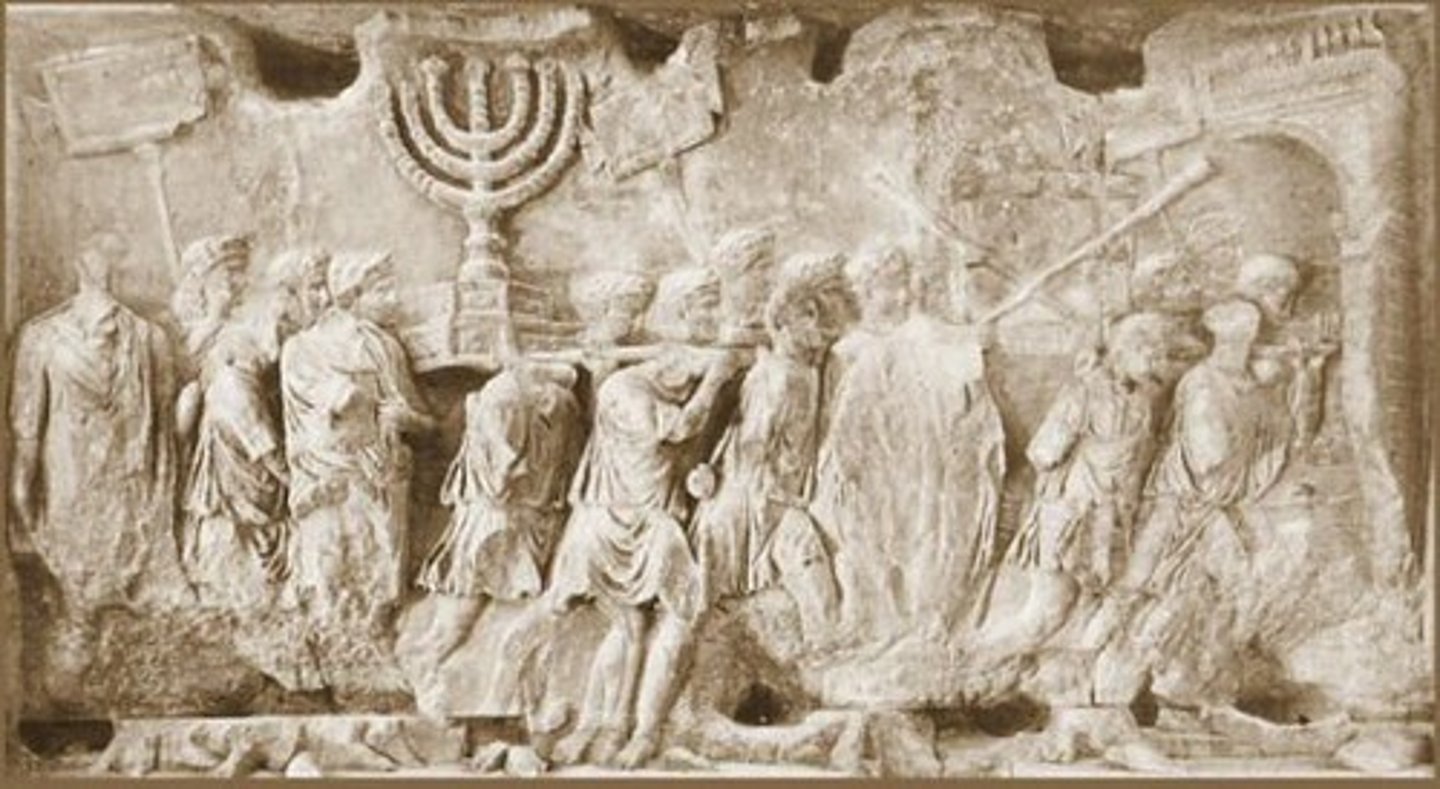
Name: Arch of Titus and Relief of the Interior
Time Period: 81 CE
Medium: Concrete and Marble
Location: Rome, Jerusalem Depicted
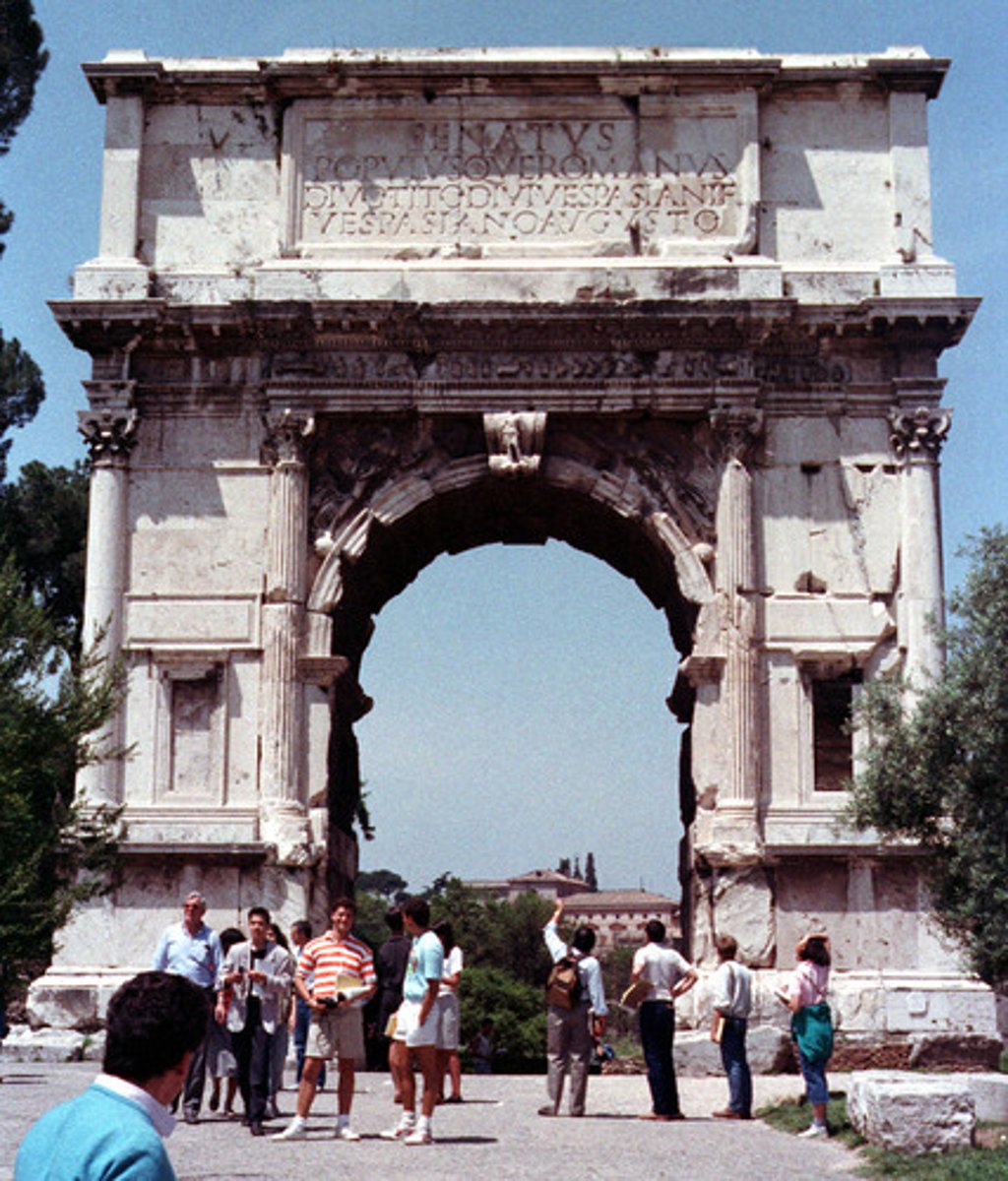
What is the significance of the Arch and its interior?
Dedication of Triumph:
The arch was one of the first triumphal arches which became characteristic of Roman architecture and a staple of the architecture of authoritarian or worldly dominant powers
Military History:
Depicts the capture of Jerusalem by Roman forces in the same century
The relief depicts the drama of the event in military history, and the appropriation of a menorah, which characterizes Roman rule from then on.
Architronics and Public Space:
The Arch of Titus in its monumentality reminded Jerusalemers of where power lies in their city.
The interior relief depicts spoils from the Temple of Solomon in Jerusalem
Name:
Time Period:
Medium:
Location:
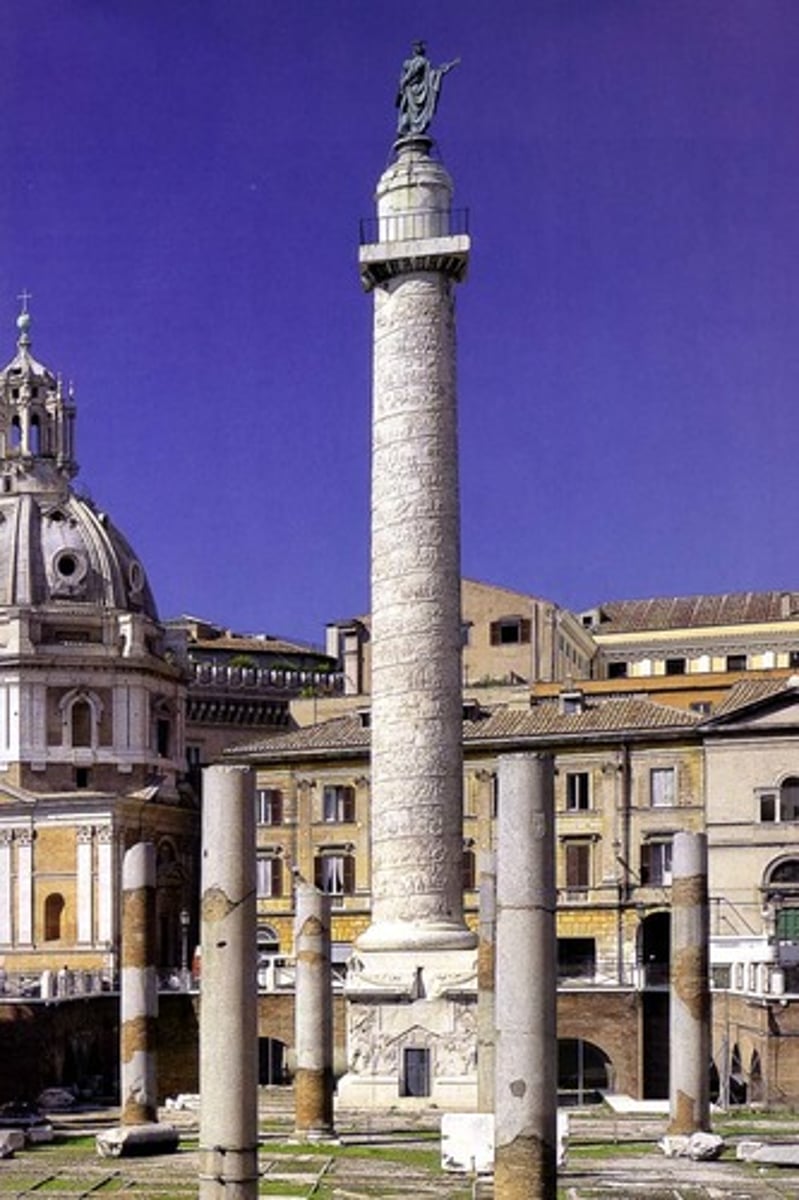
Name: Column of Trajan
Time Period: 113-116 CE
Medium: Marble
Location: Rome
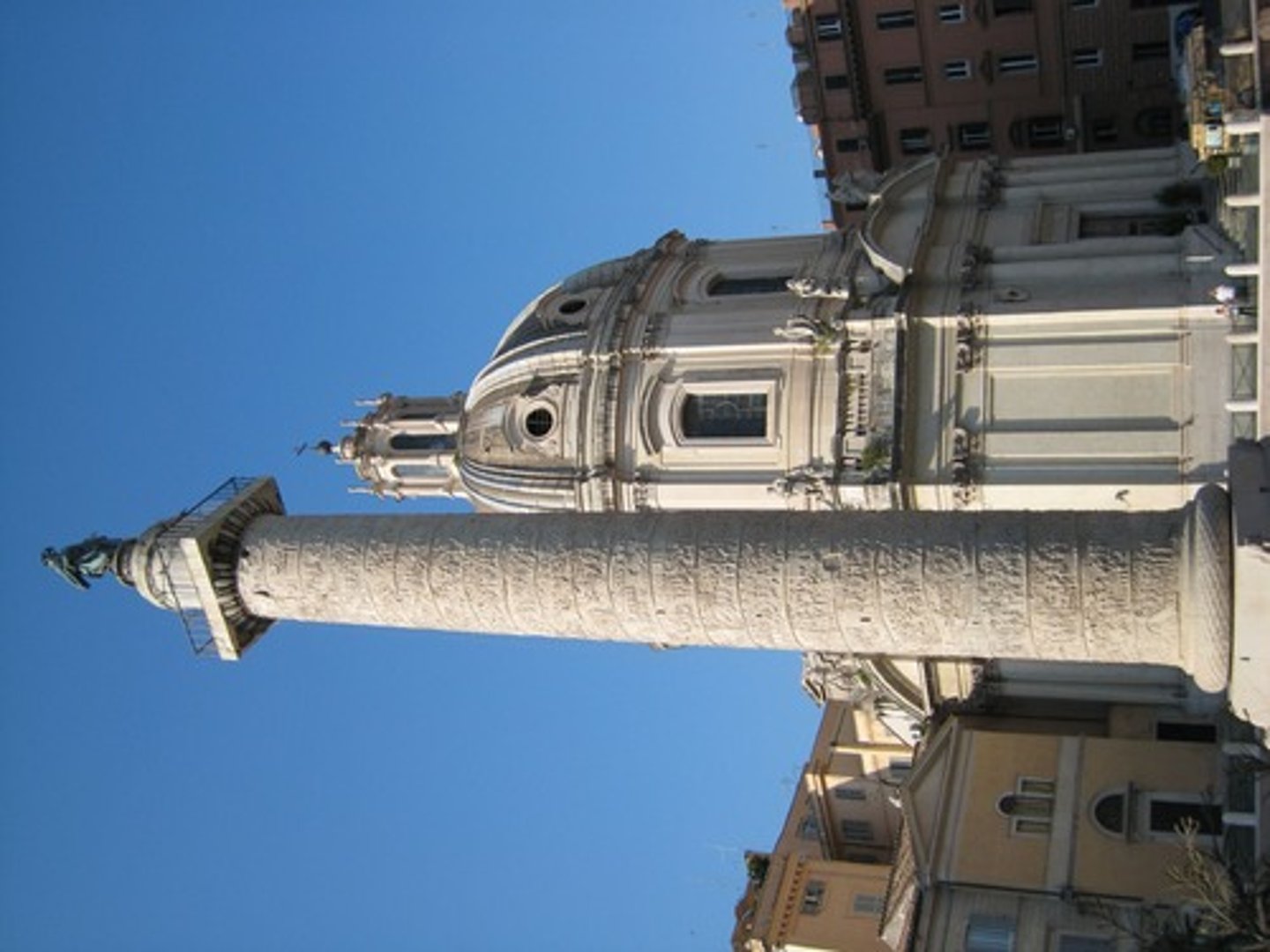
What is the significance of this monument?
Theme of War:
The theme of war is prevelent once again, the monument is dedicated to the conquer of Daçia, (modern day Romania)
Attributes:
Characterized by a high density of relief
Each figure is individual
The only recurring figure is Emperor Trajan
Propagandous:
The scene begins at the bottom of the spiral with soldiers crossing the Danube lead by Trajan.
The column is placed at the center of gravity of the public forum as to spread the propaganda most effectively.
Name:
Time Period:
Medium:
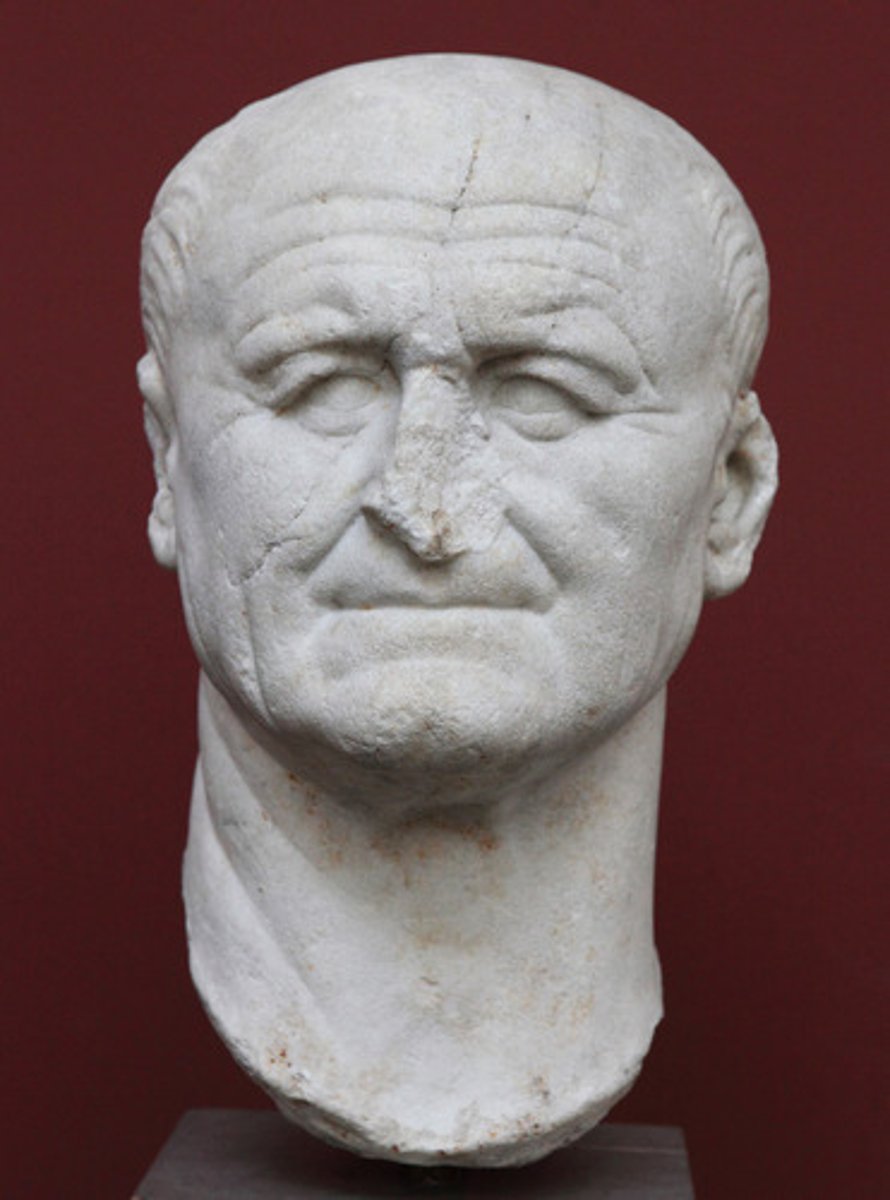
Name: Portrait Head of the Emperor Vespasian, perhaps carved from a portrait of Nero
Time Period: 70-90 CE
Medium: Marble
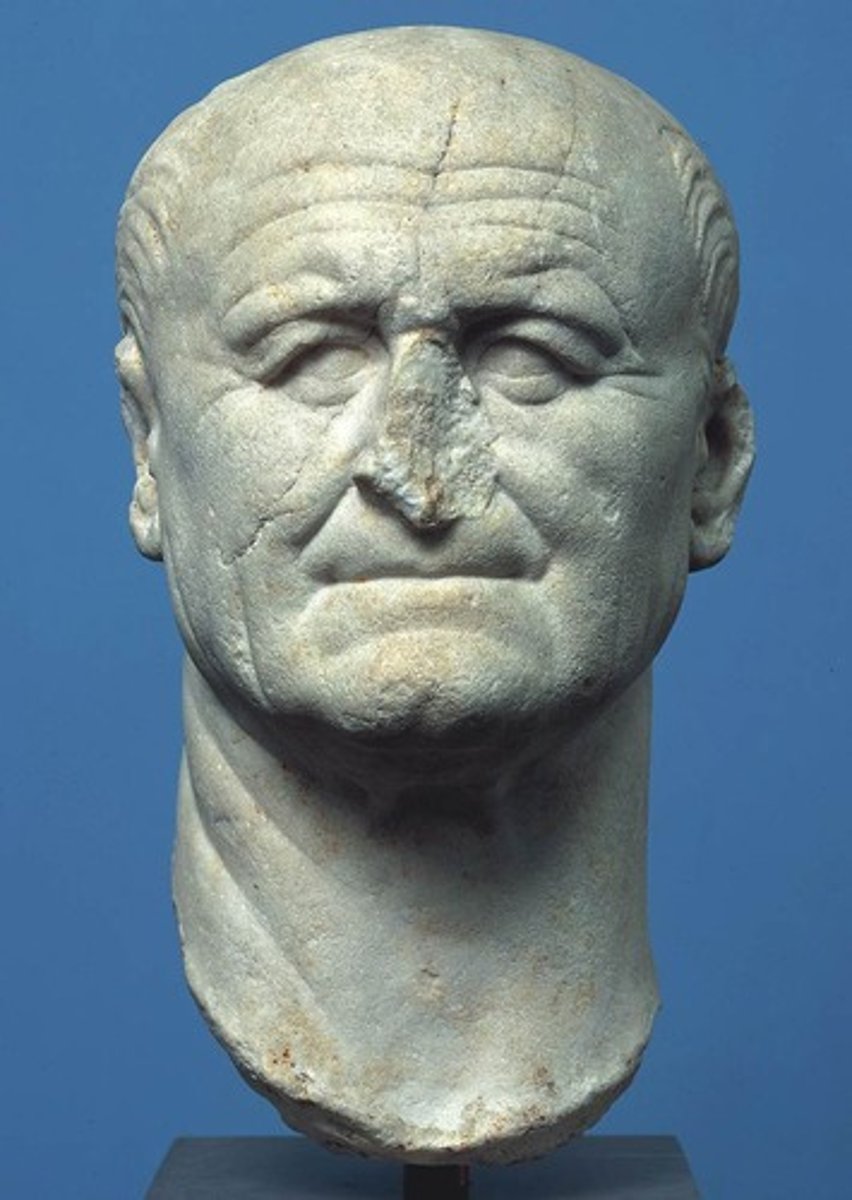
What is the significance of this sculpted portrait?
Wow, not photoshopped:
- The portraiture depicts the emperor aged, wrinkles, an extended nose, slight towel, and a slight frown signify his age and wisdom.
The End of an Era:
Vespasian was the fourth and last emperor of the Four Emperors Dynasty, and the depiction of age might indicate the troubled times the Roman Empire found itself, socially, militarily, and politically.
Name:
Time Period:
Medium:
Location:
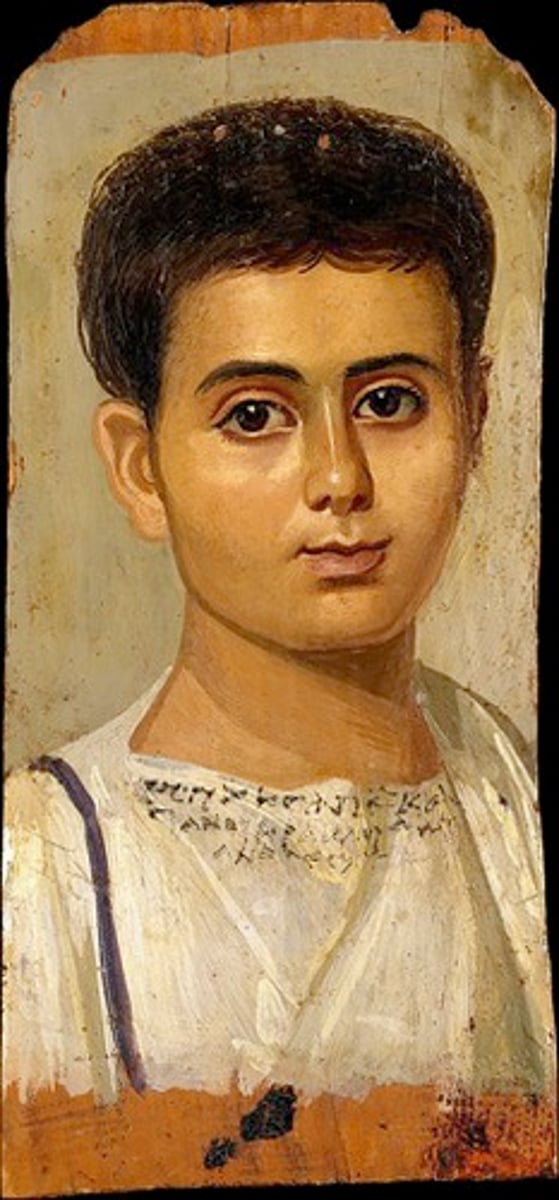
Name: Portrait of the boy Eutyches
Time Period: 100-50 CE
Medium: Encaustic and paint on wood
Location: originally from Egypt. now at the Metropolitan Museum of Art
Name:
Time Period:
Medium:
Location:
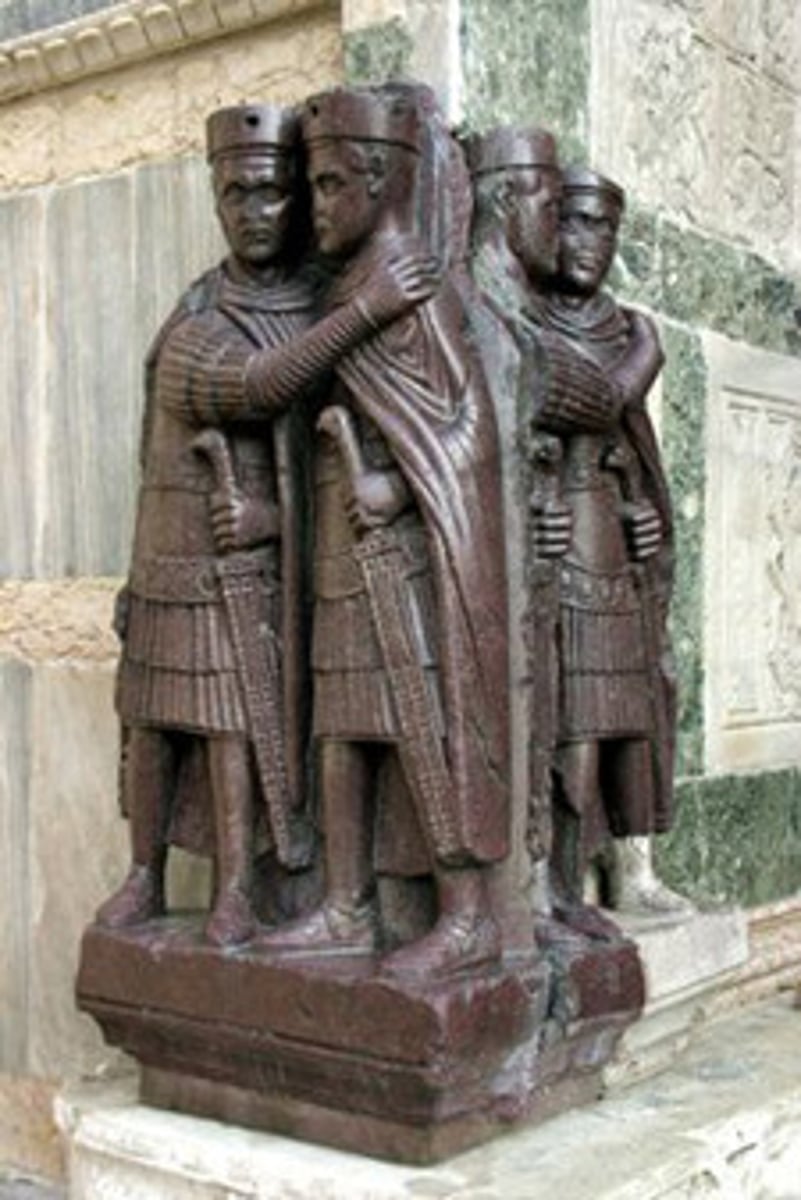
Name: The Tetrarchs
Time Period: 300 CE
Medium: Poryphry
Location: originally from Constantinople, now on facade of Cathedrale San Marco, Venice
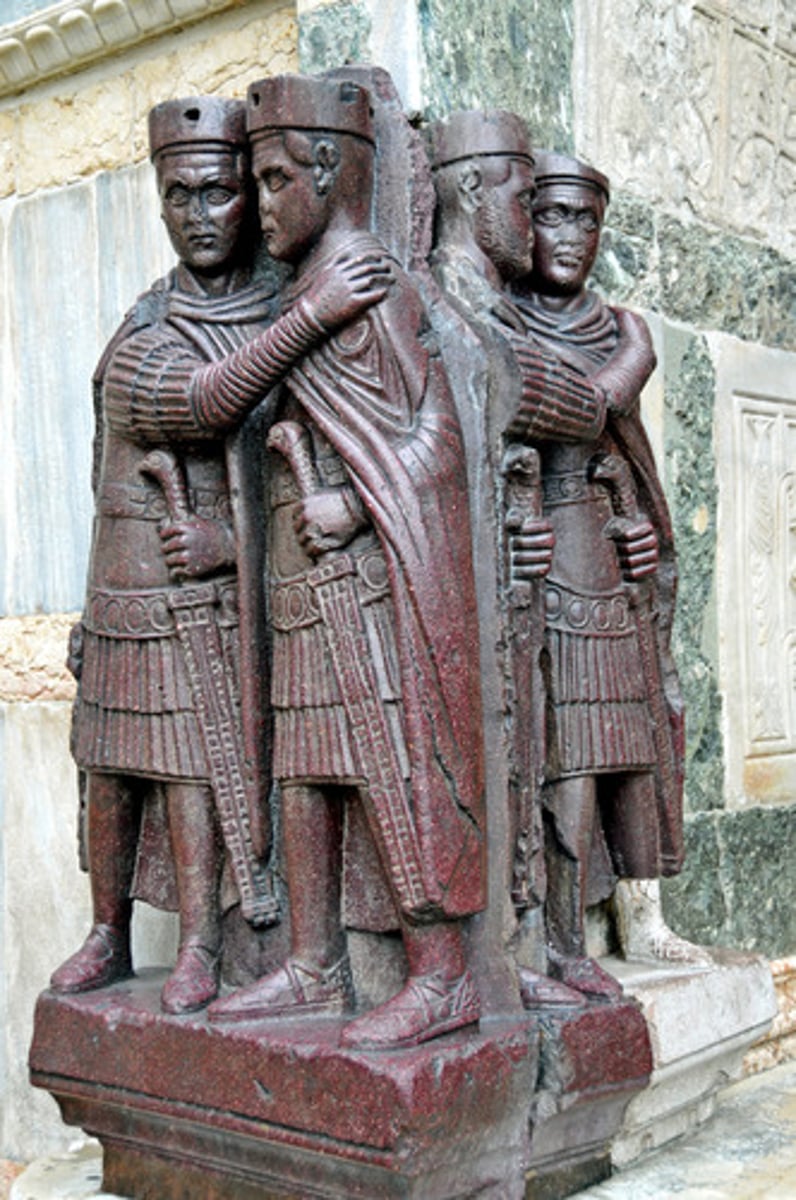
What is the significance of this Trifecta?
Historical Context:
The sculpture is from the Swan Song of the Roman Empire
Imperial rule devolved from autocratic to dictatorial, and dissolving the empire between four rulers known as the Tetrarchs
Ambiguity:
The ambiguous nature of the figures, which don't appear to depict anyone in particular indicate how far the rift between the people and leadership has separated
The figures also evoke a sense of alertness with hostile overtures, perhaps alluding to the uncomfortability of a new government structure, and the people that they theoretically serve
Name:
Location:
Time Period:
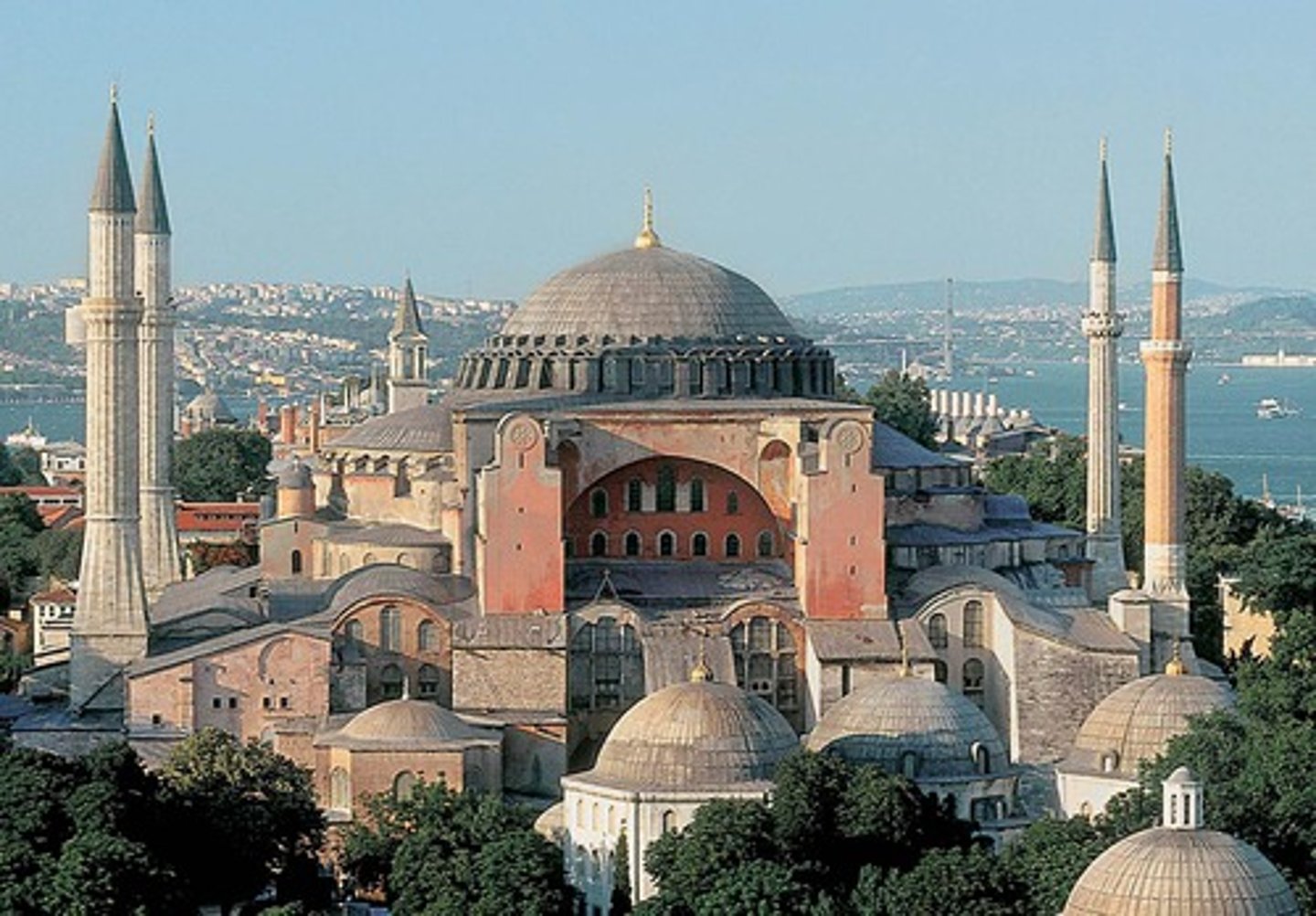
Name: interior of the Hagia Sofia
Location: Istanbul
Built: 532-537CE
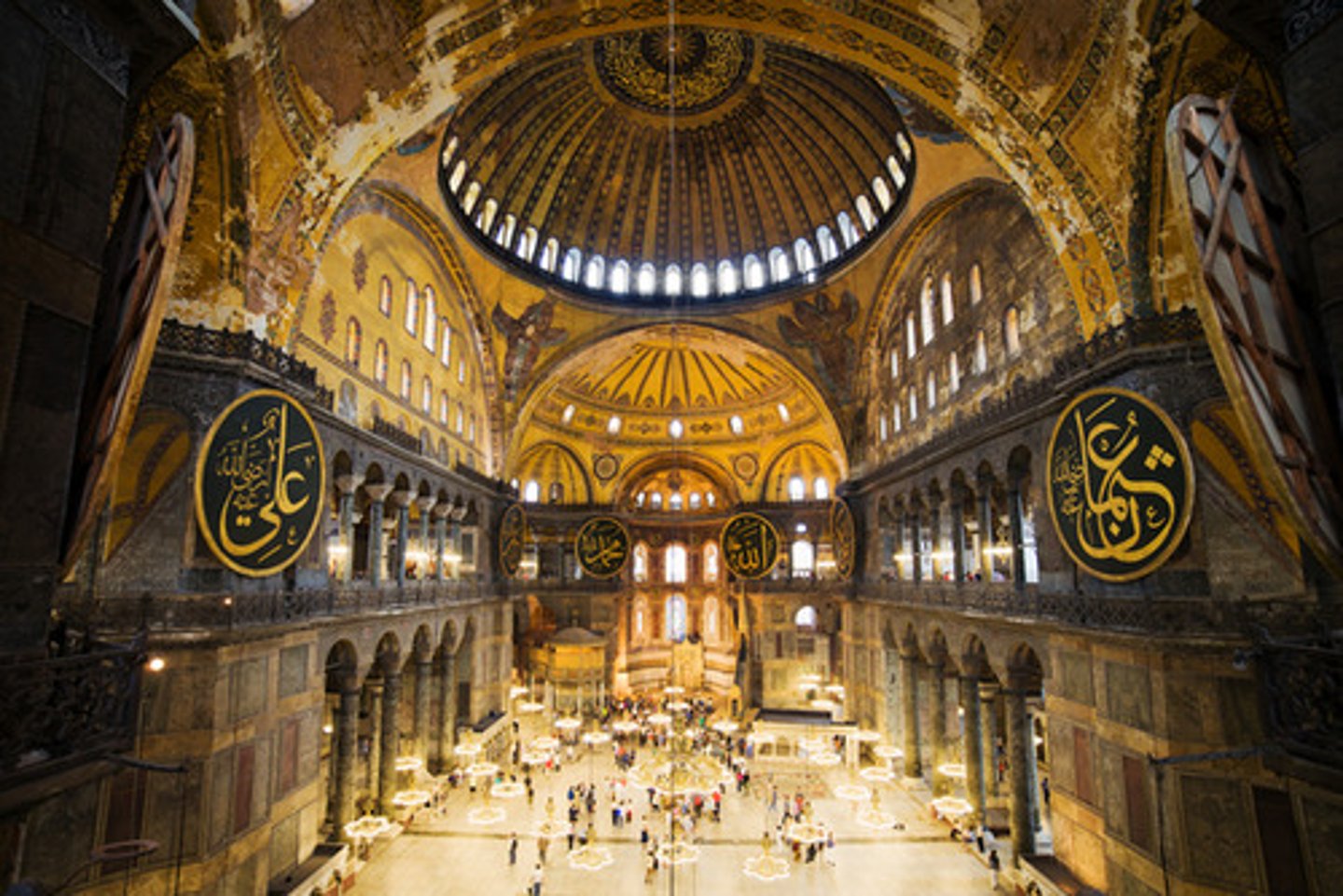
What is the significance of this structure?
Politico-Religiousity
- Embodies both Imperial power and Christian glory
Architronics:
- Tested the bounds of architecture with its vaulted construction on an unprecedented scale
- The pinnacle of the structure is the iconic dome which allowed light to elegantly flow into the processional space
Name:
Time Period:
Medium:
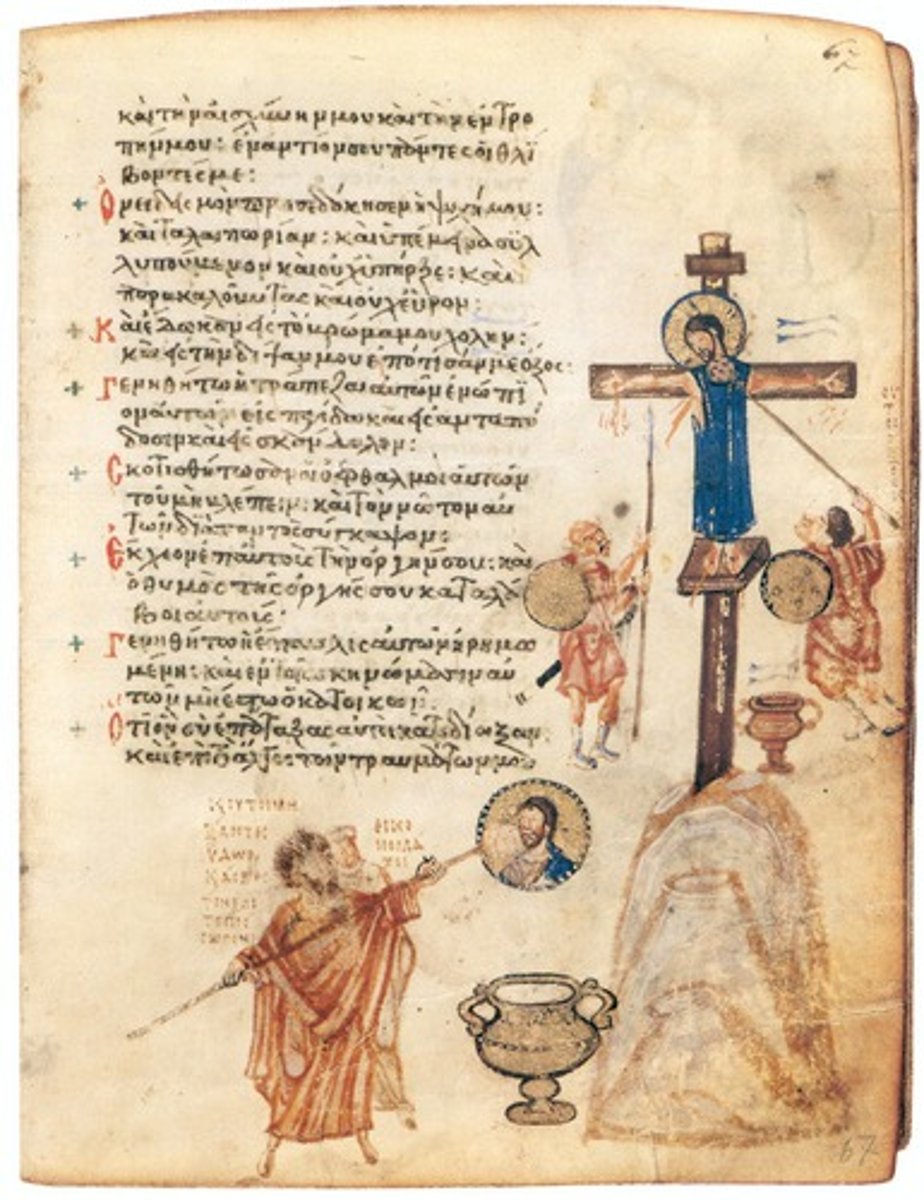
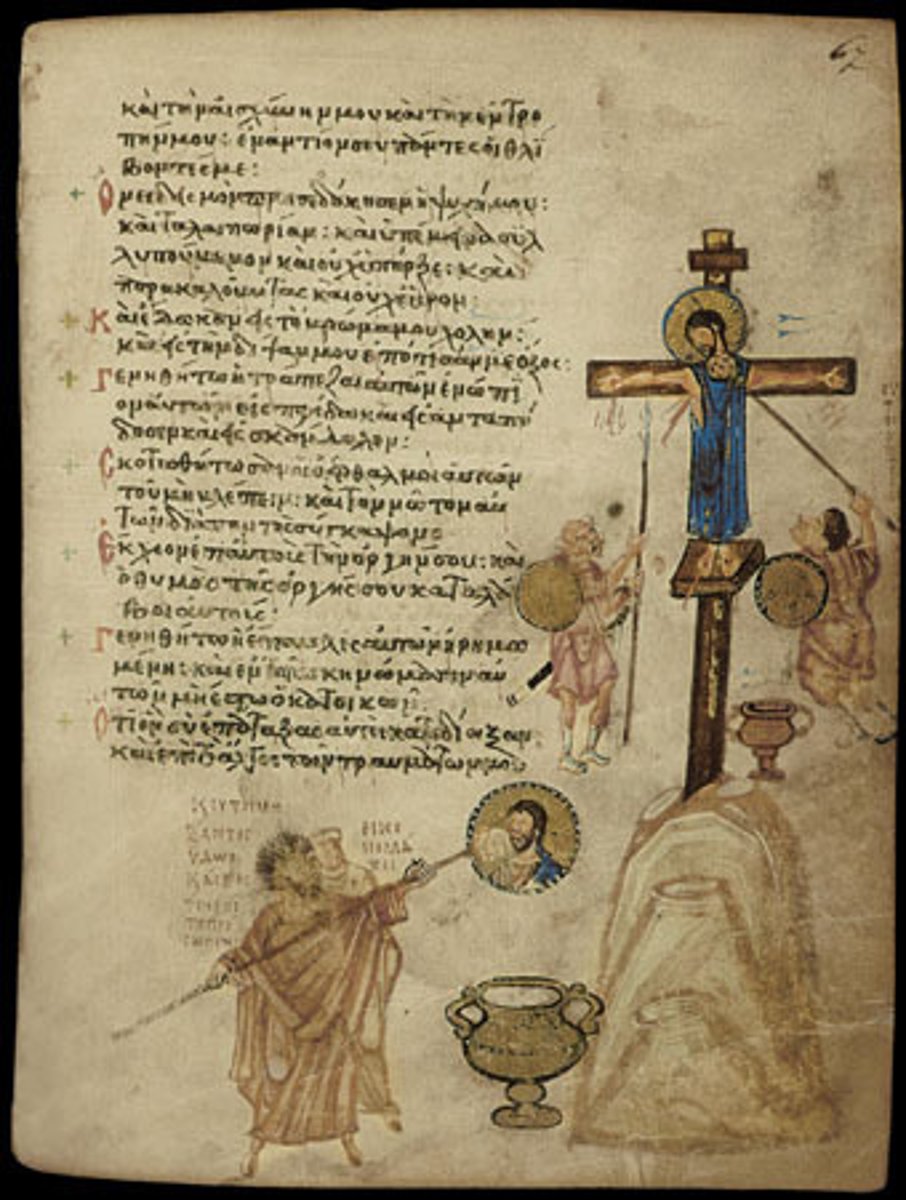
Name: The Crucifixion and Iconoclasts
Time Period: Mid 9th Century
Medium: Tempera on Vellum
What is the significance of this image?
Iconoclasm:
- The image depicts the period of iconoclasm that defined the 8th and early 9th centuries
- Iconoclasm is defined as the destruction of religious imagery, and designating such imagery as heresy
- The iconoclasm of religious imagery in a Christian context may come from Islam's increasing influence in the region, of which its religious doctrine holds paramount depictions of Mohammed should not be produced and displayed
- Iconoclasm is usually in response to a fear that worship will transfer to an icon and an image rather than the deity itself
Name: Overall and 3 different mosaics
Time Period:
Location:
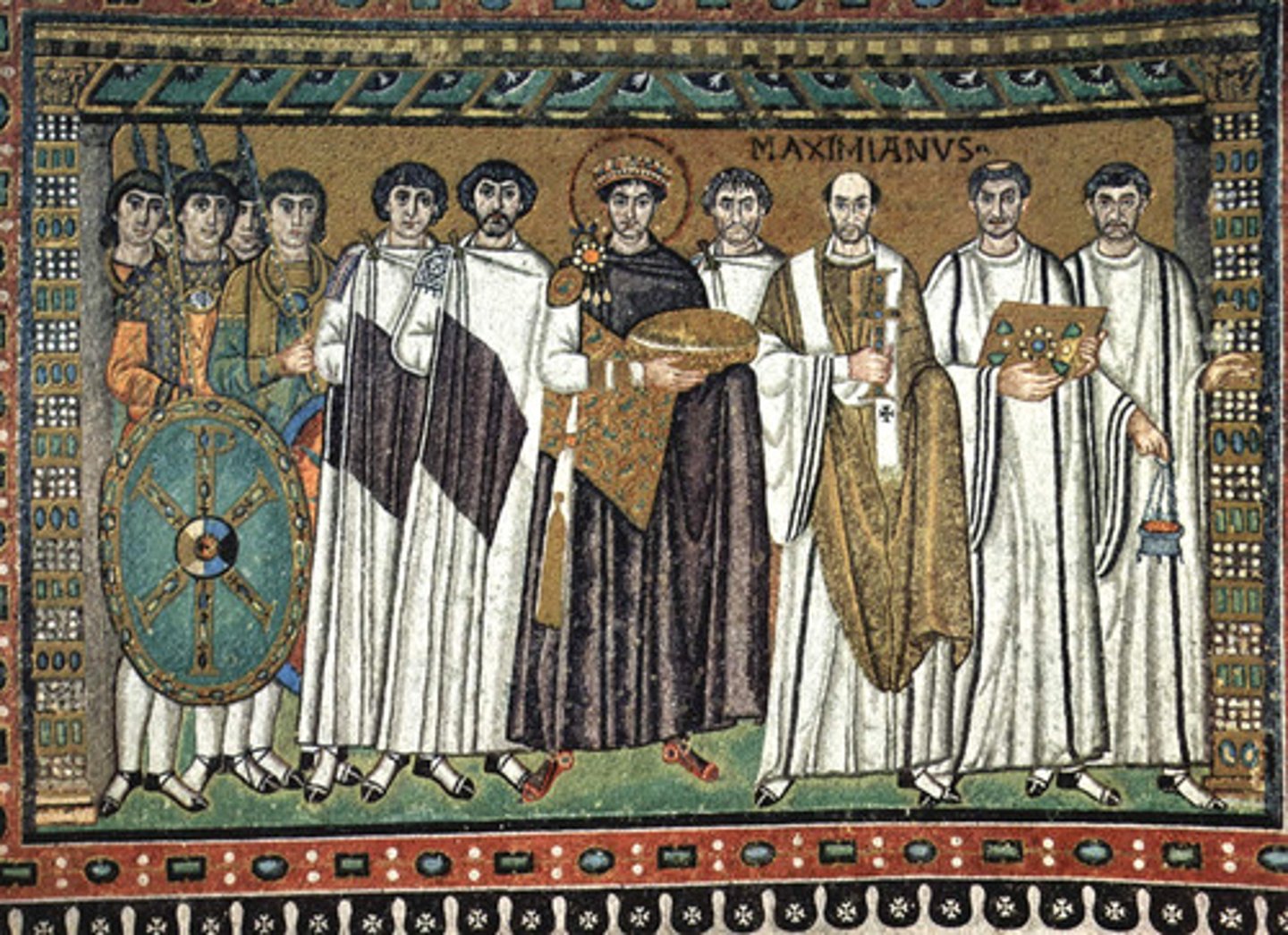
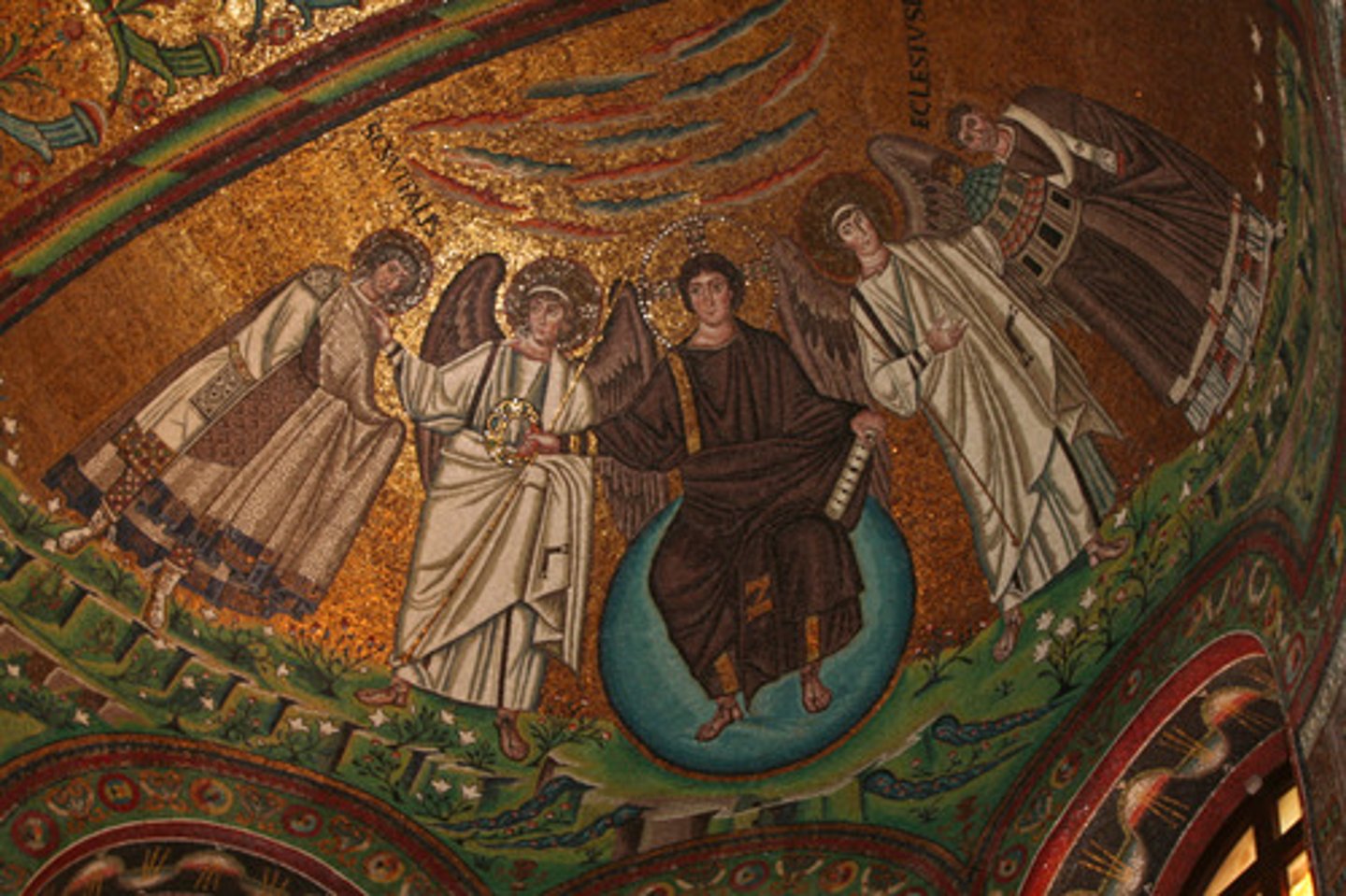
Name: Glass Mosaics of Saint Vitale
Christ Enthroned, Emperor Justinian and his Attendants, and Empress Theodora and her attendants
Time Period: 547 CE
Location: Ravenna
What is significant about this Mosaic?
- Christ Enthroned
- Justinian and his attendants
- Theodora and her attendants
Represent gift-giving to Christ upon his ascension
they're ****ing icons okay
Name:
Time Period:
Location:
Medium:
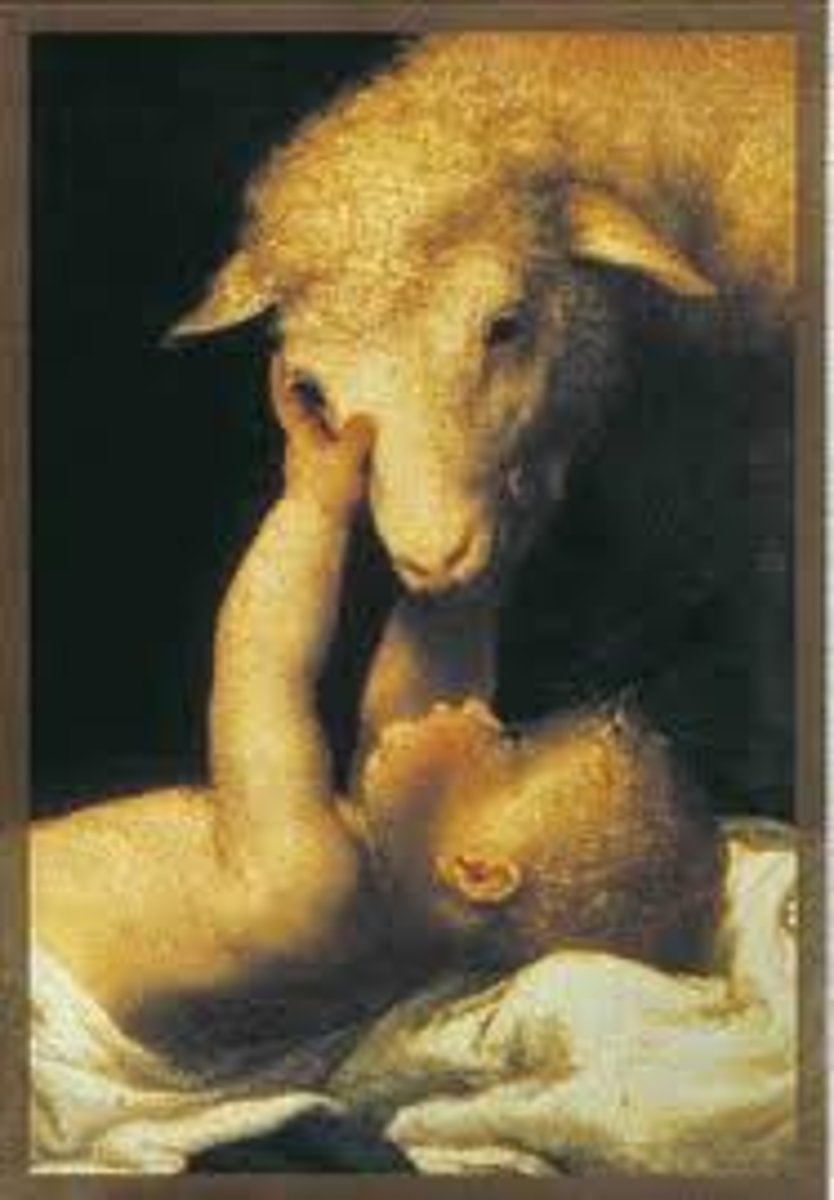
Name: Lamb of God
Time Period: 520-547 BCE
Location: Church of San Vitale Ravenna
Medium: Glass Mosaic
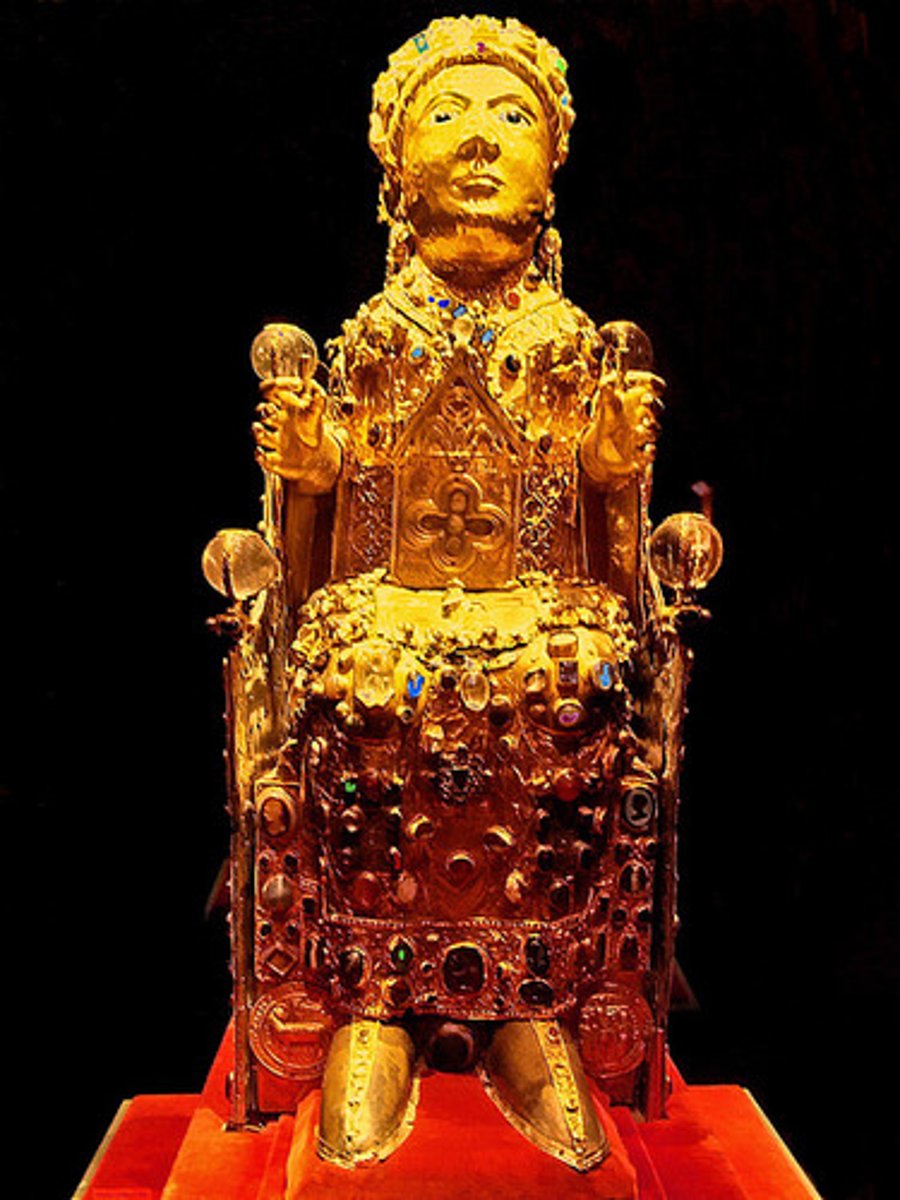
What is the significance of the Reliquary of Sainte-Foy?
Charactature of Iconoclast's fear
Name: Time Period:
Location:
Medium:
Name: Reliquary of Sainte-Foy Time Period: c. 1000 Location: Conques Medium: Silver gilt over wood core with gems and cameos
Name:
Time Period:
Medium:
Location:
Name: Virgin and Child
Time Period: Late 12th Century
Medium: oak with polychromy
Location: Metropolitan Museum of Art
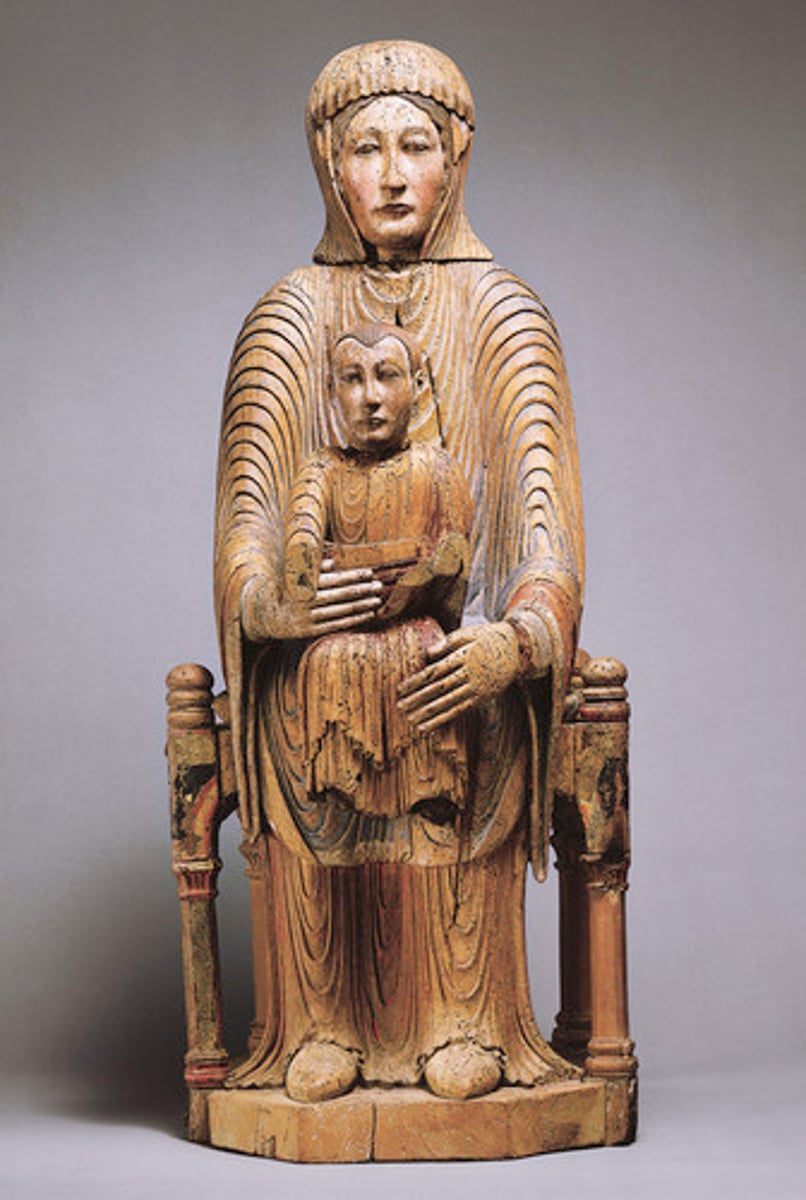
What is the significance of Virgin and Child?
Insights into an Old-Joe Church
- only wealthy and popular churches could afford works made of precious materials adorned in jewels, smaller churches usually had wood to satisfy their devotional needs
Gaia's Cancelled:
Mary was known as the earthly mother who gave Jesus his human nature, and therefore the culmination of his suffering depicted in her facial expression
Name:
Time Period:
Location:
Medium:
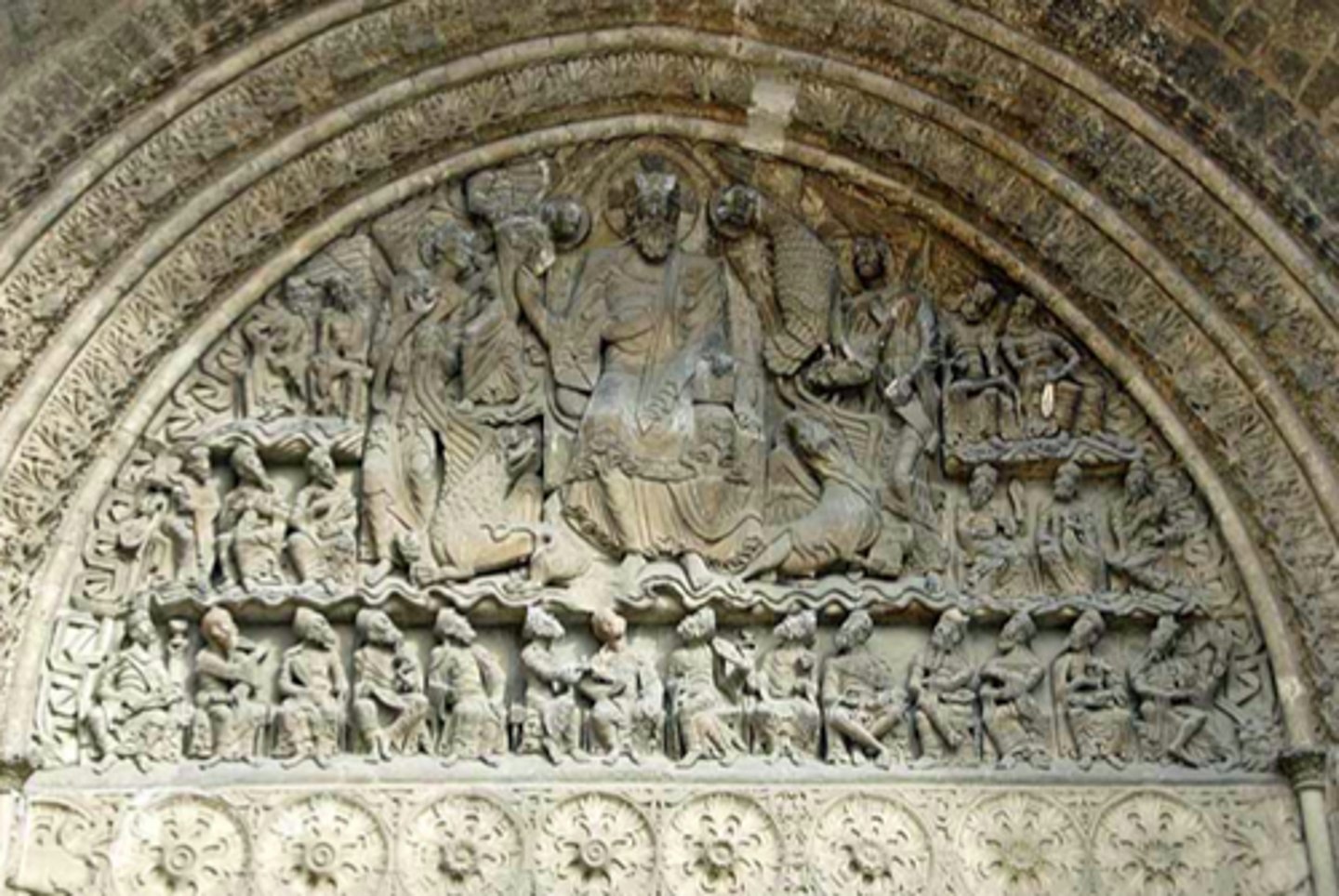
Name: South Portal, TYMPANUM showing Christ in Majesty
Time Period: 1115 CE
Location: Priory Church of Saint-Pierre, Moissac
Medium: Marble Relief
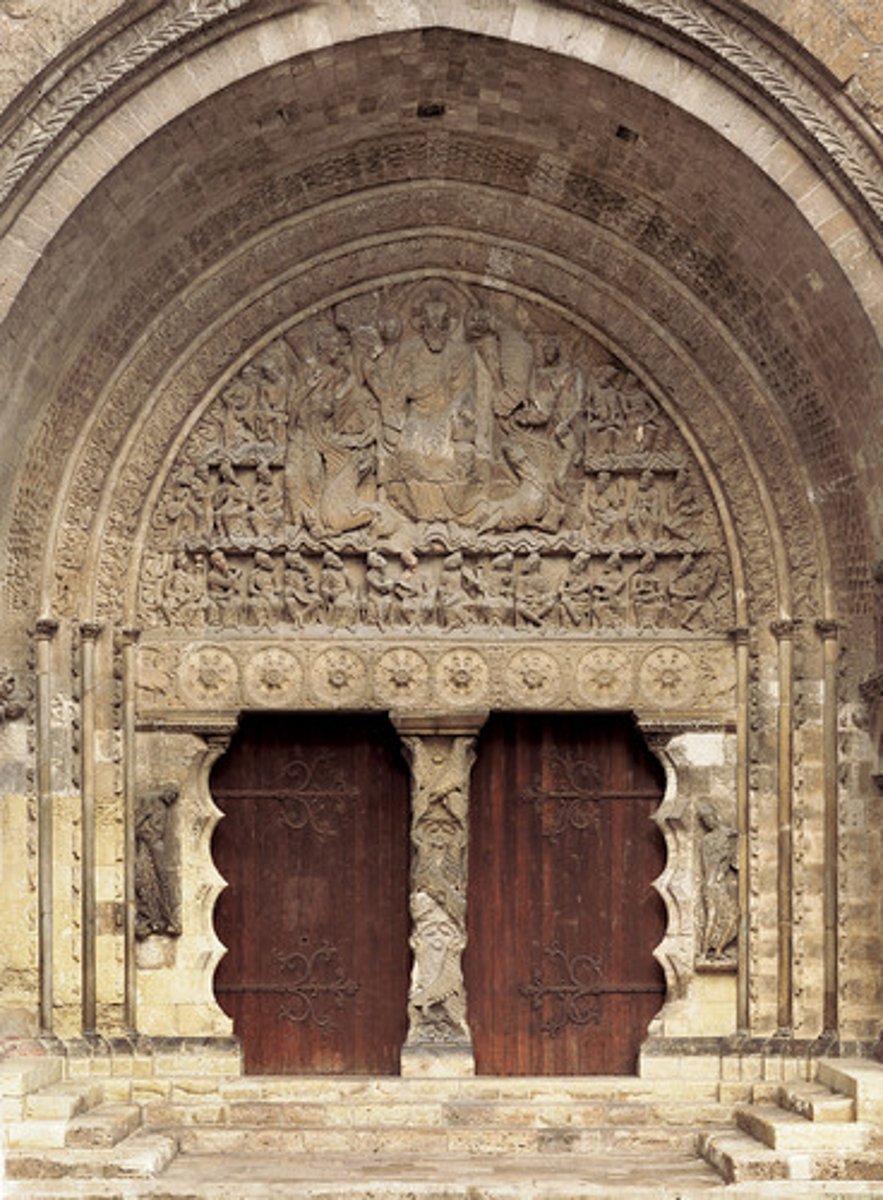
What is the significance of this tympanum
Instapilgrim:
Artwork located at a major site for pilgrimage
Hierarchy:
figure it out
Name:
Location:
Time Period:
Medium:
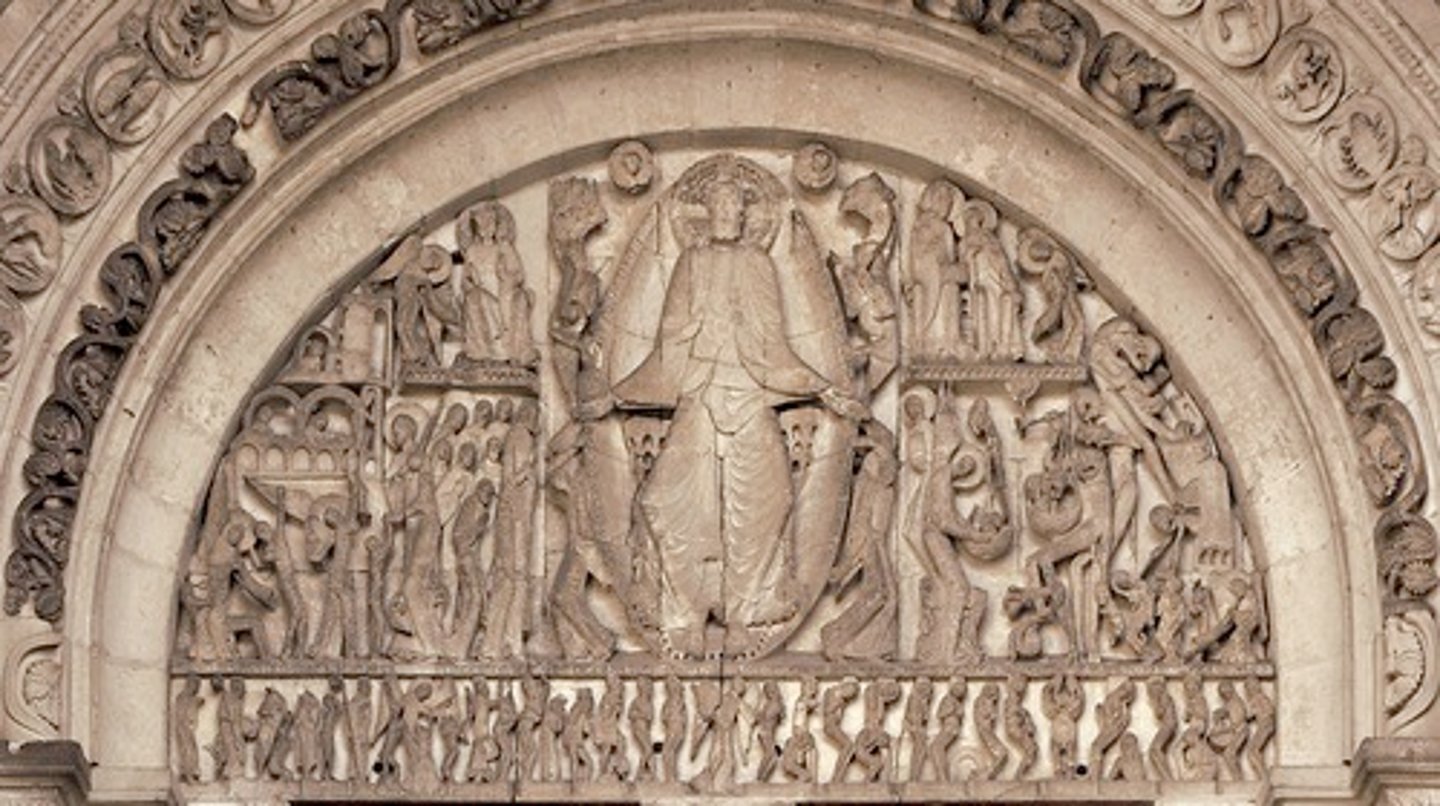
Name: Gislebertus (?) Last Judgement Tympanum
Location: Autun, France
Time Period: 1120-30 CE
Medium: Marble
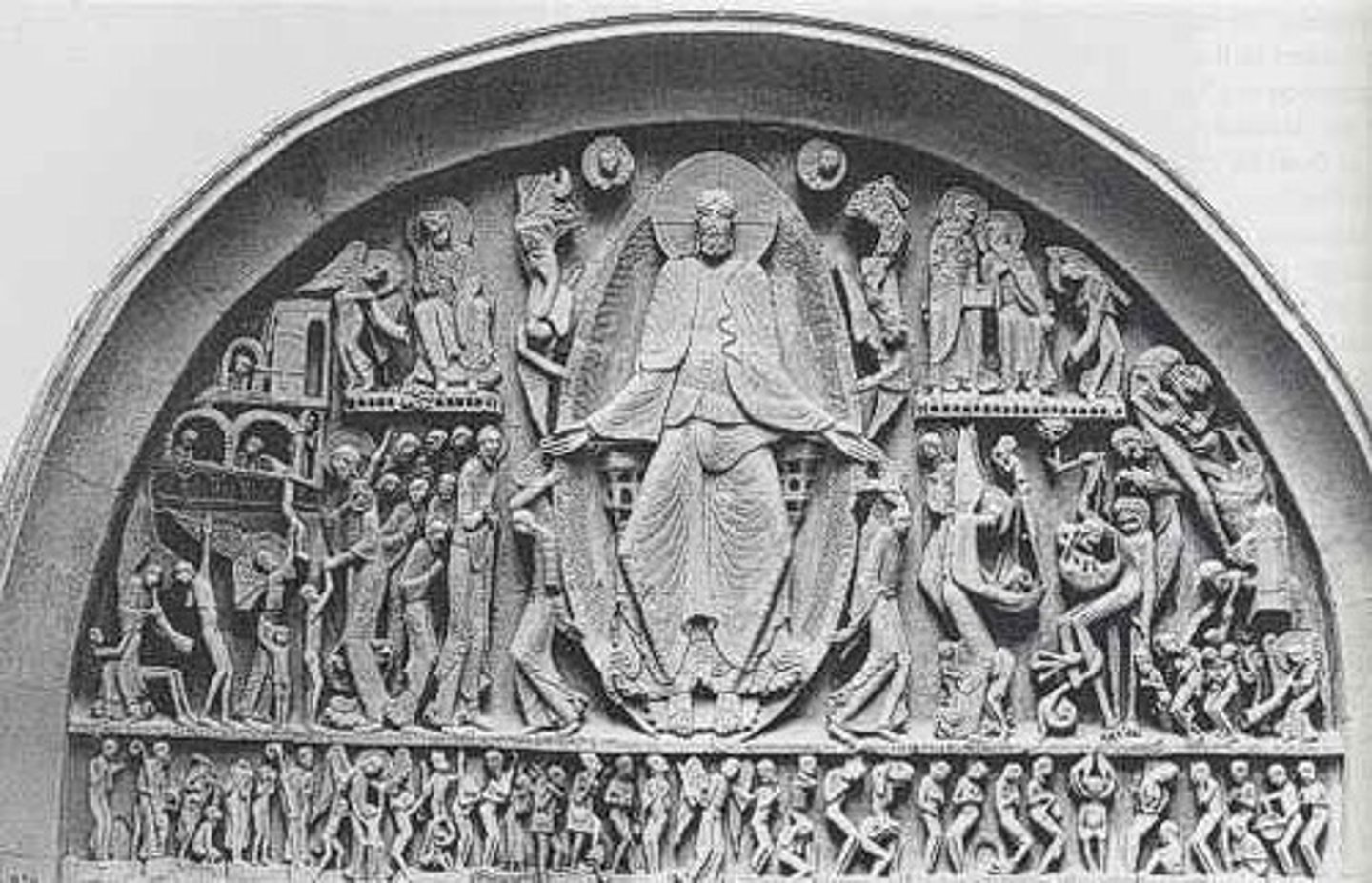
What is the significance of this relief?
On the pilgrimage south
A reminder for those who won't complete it????
Look at the shit you'll experience y'all
 Note
Note  Flashcards (77)