Endocrine System and Signal Transduction
 Studied by 0 people
 Call Kai
 Learn
Learn Practice Test
 Spaced Repetition
 Match
Match Flashcards
 Knowt Play
1/38

There's no tags or description
Looks like no tags are added yet.
Name | Mastery | Learn | Test | Matching | Spaced | Call with Kai |
|---|
No analytics yet
Send a link to your students to track their progress
39 Terms
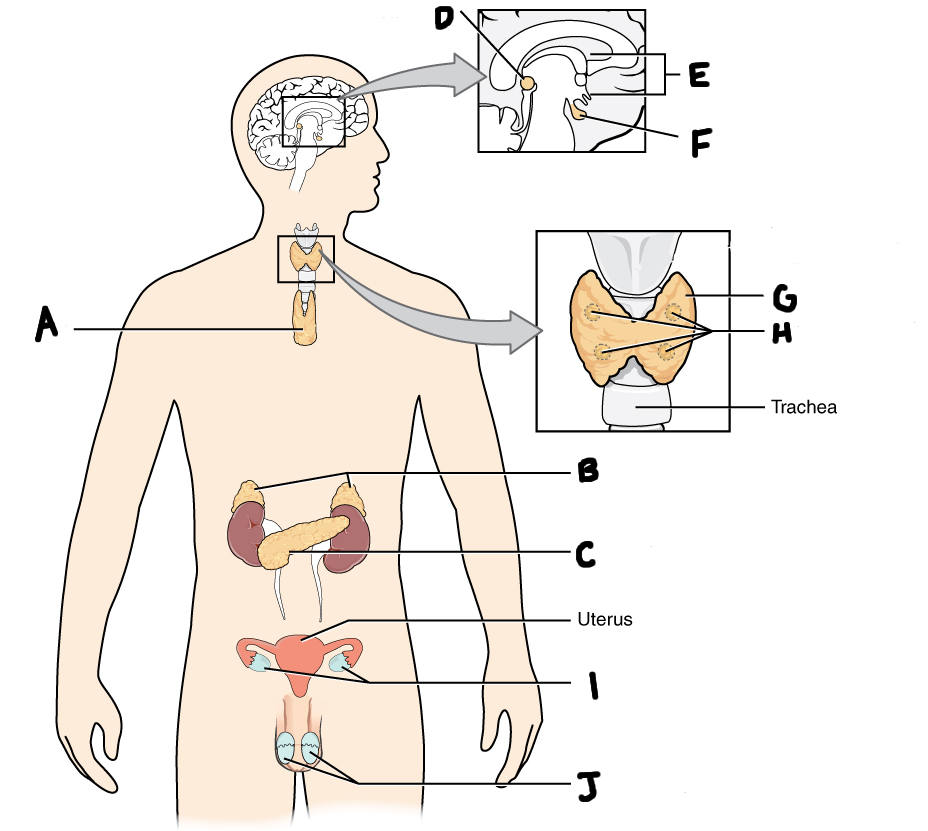
Identify A
Thymus
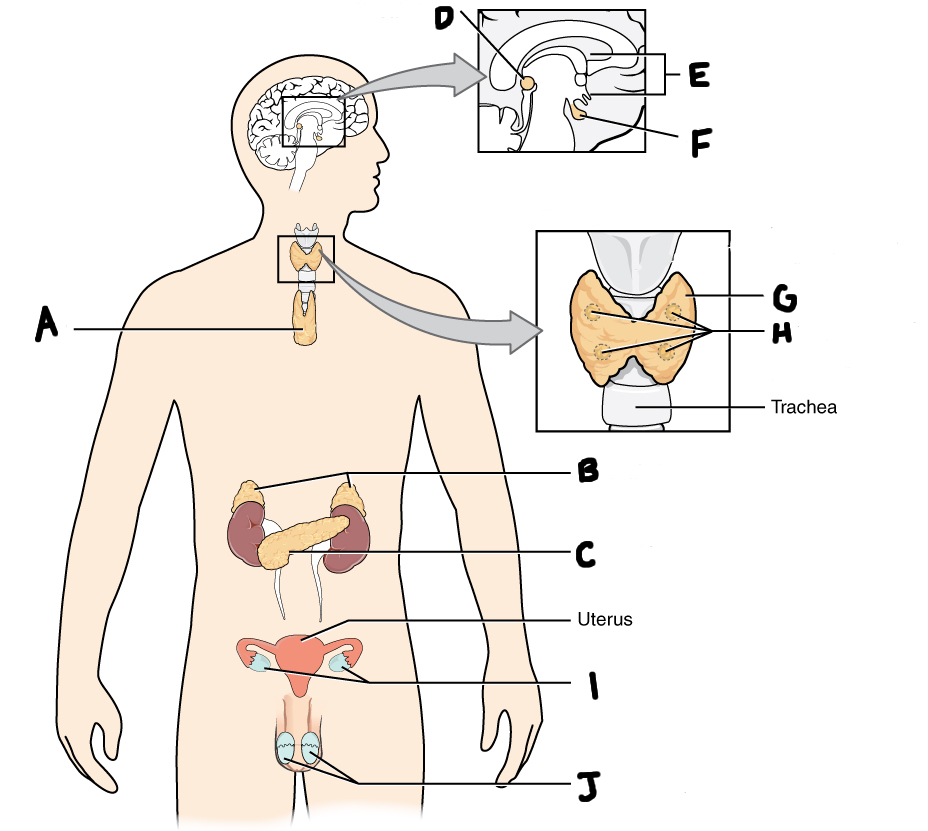
Identify B; what does it produce?
Adrenal gland makes adrenaline
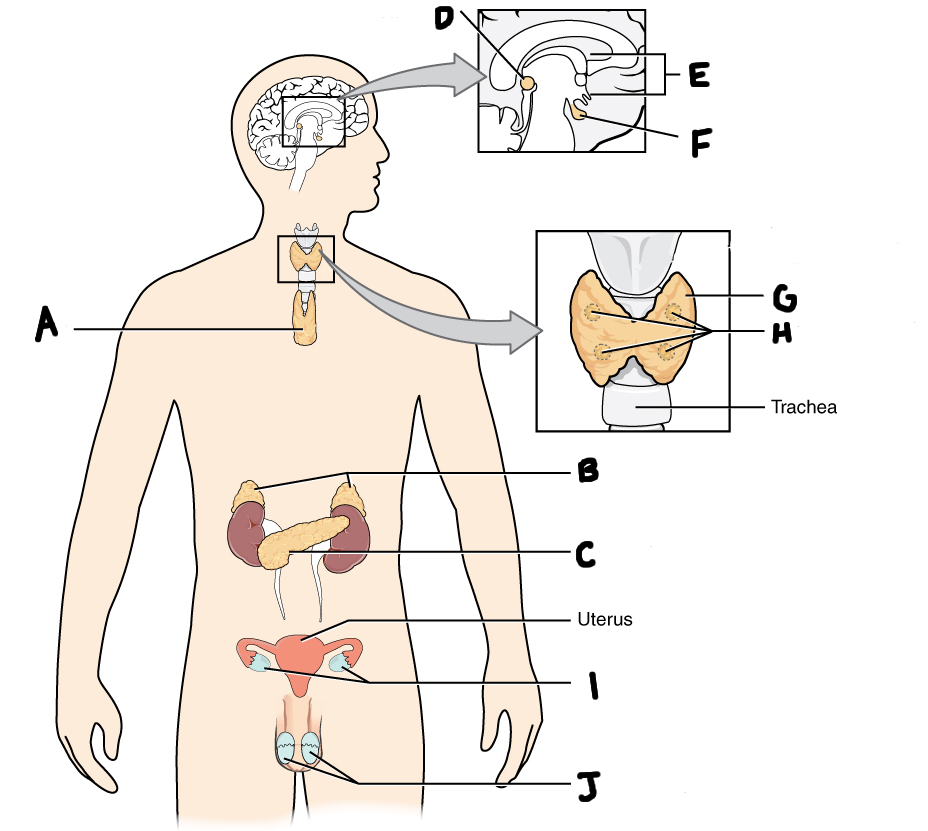
Identify C
Pancreas
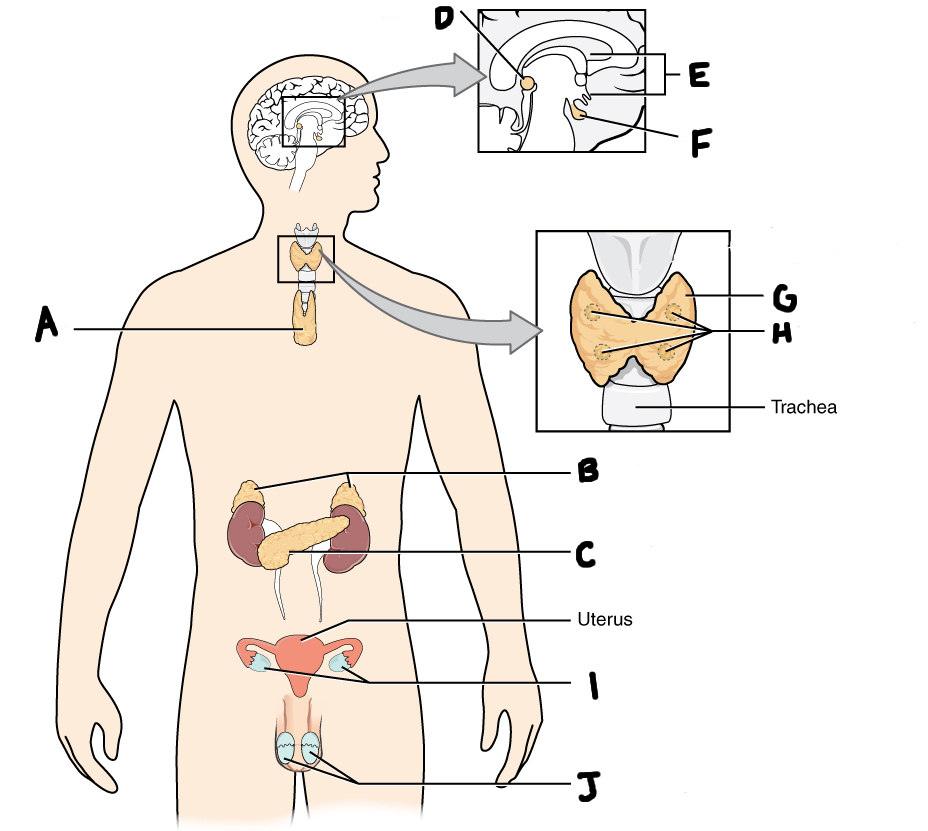
Identify D; what does it produce?
Pineal gland; produces melatonin
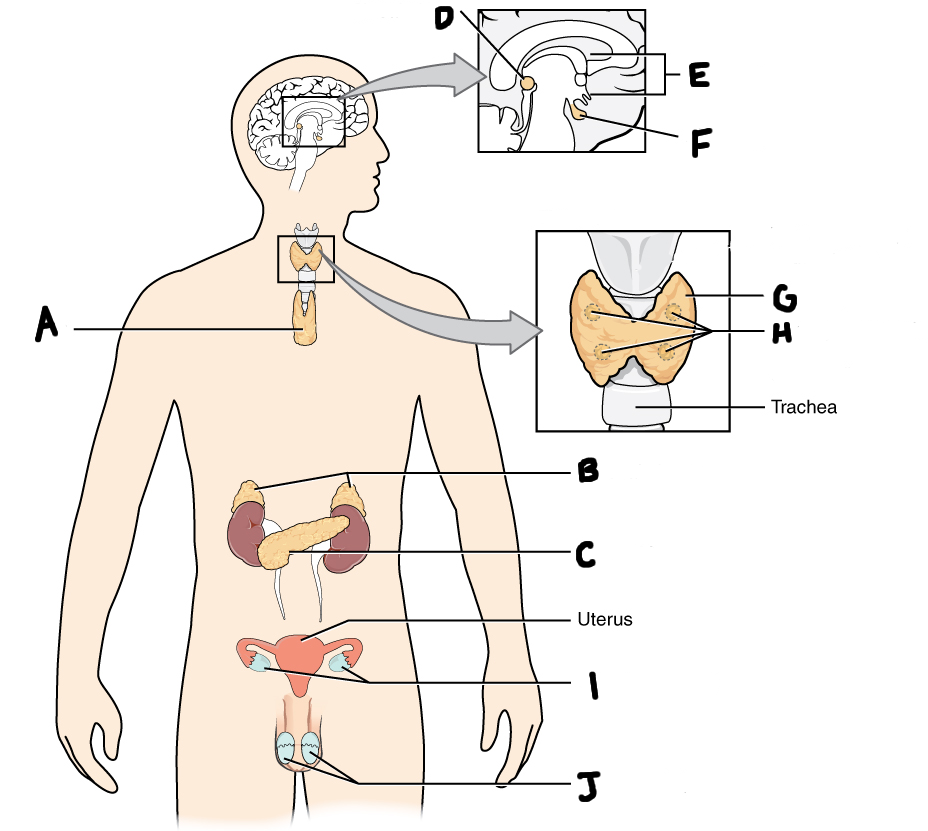
Identify E
Hypothalamus
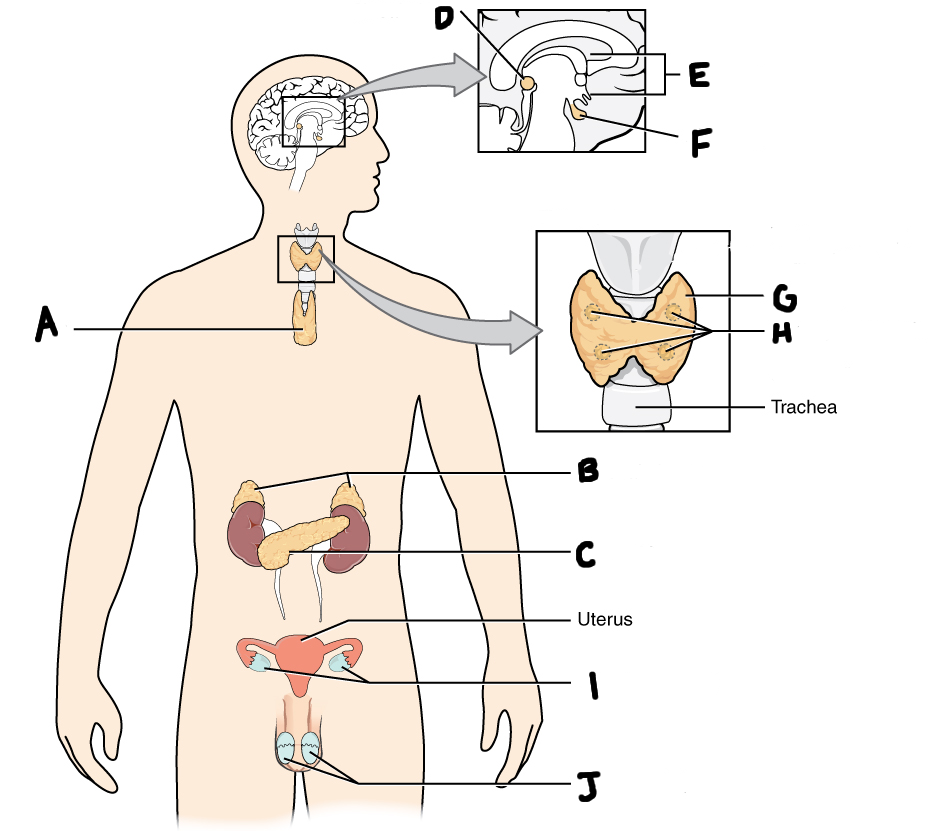
Identify F
Pituitary gland
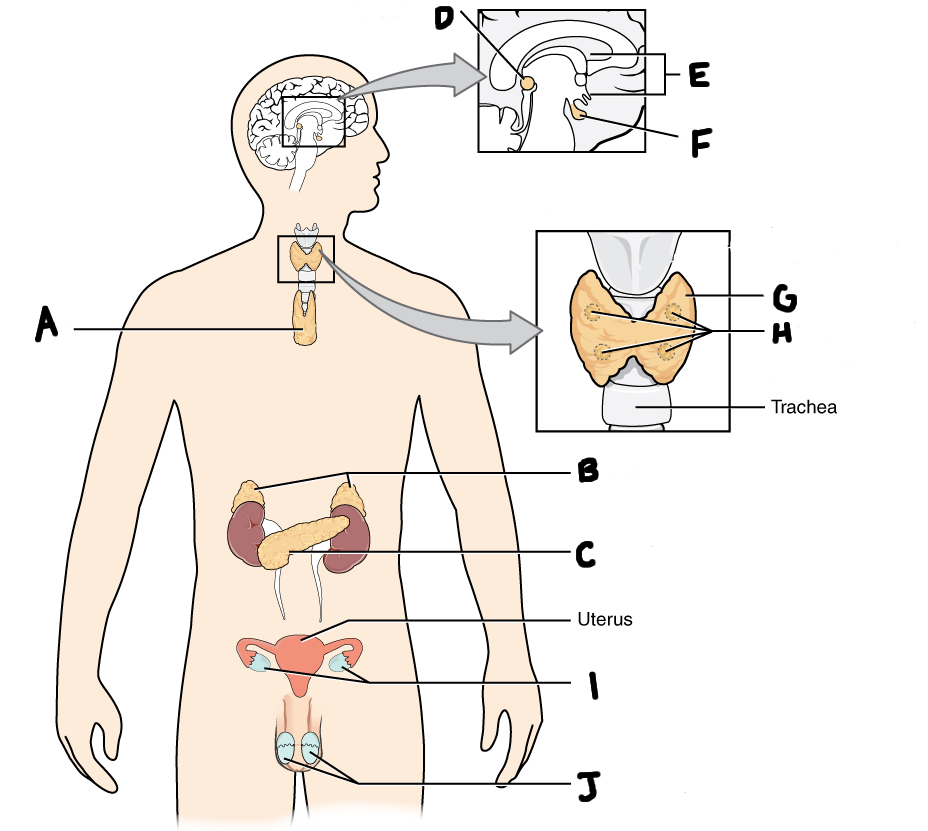
Identify G
Thyroid
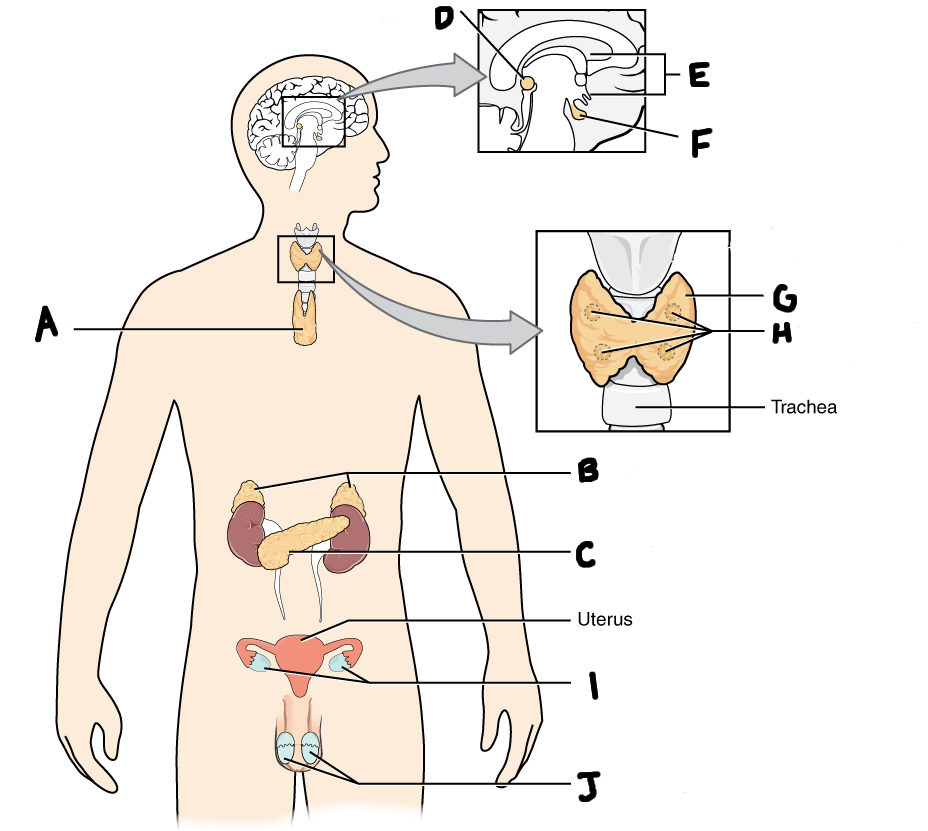
Identify H
Parathyroid
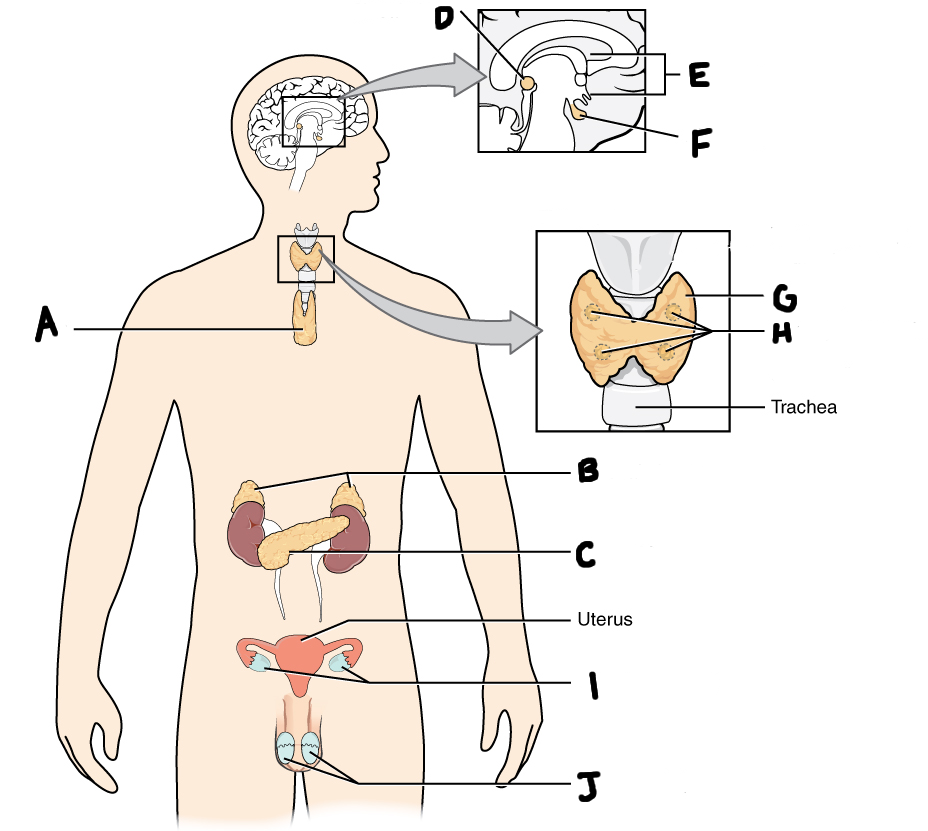
Identify I
Ovary
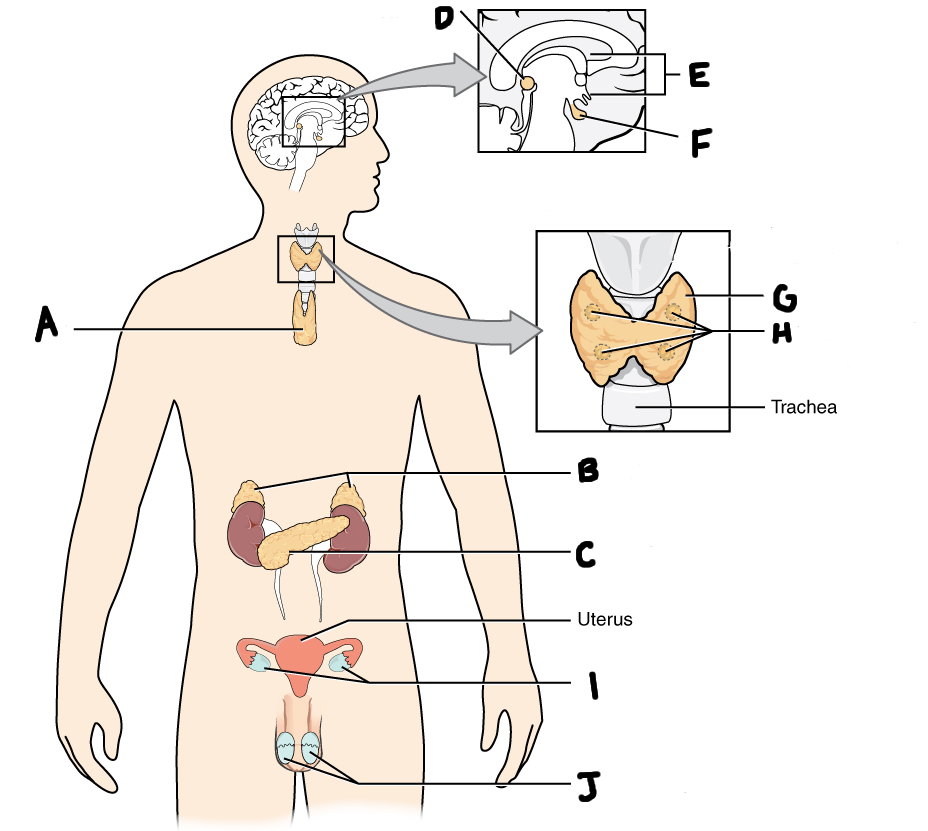
Identify J
Testes
What is the first step of signal transduction of cell-surface (transmembrane) receptors?
ligand approaches cell and binds to transmembrane receptor
What is the second step of signal transduction of cell-surface (transmembrane) receptors?
Secondary messenger is produced inside cell (cAMP)
cAMP
cyclic adenosine monophosphate
What is the third final step of signal transduction of cell-surface (transmembrane) receptors?
secondary messenger binds and trigger response in effectors
What is the first step of signal transduction of intracellular receptors?
ligand approaches cell and passes through cell membrane into cell
What is the second step of signal transduction of intracellular receptors?
ligand binds to an intracellular receptor
What is the third final step of signal transduction of intracellular receptors?
ligand-receptor complex regulates gene expression
Positive feedback
speeds up production of chemical signaling
Negative feedback
slows/stops production of chemical singaling
What are four examples of transmembrane receptors?
acetylcholine receptors
G protein-coupled receptors (GPCRs)
epinephrine receptors
tyrosine kinase receptors
What are three examples of intracellular receptors
oestradiol
progesterone
testosterone
What do intracellular receptors affect?
They affect gene expression
What does the binding to a acetylcholine receptor cause?
Causes the opening of an ion channel in receptor→ causes sodium ions to diffuse into cell
What is the affect of sodium ions in terms of electricity?
Changes the voltage across the plasma membrane
What type of substance is acetylcholine and what does it move between?
a neurotransmitter
moves between neuron and muscle fibers
What does the signal transduction of acetylcholine receptors ultimately cause?
depolarization and an action potential between 2 neurons
What type of receptor on the cell membrane is involved with G protein-coupled receptors (GPCRs)
involves a G-receptor protein in the cell membrane
When is the alpha subunit involved in with GPCRs inactive?
when GDP (guanosine diphosphate) is bound
What is the result of the ligand binding to receptor in terms of GPCRs?
It moves GDP to allow GTP to bind
What does the activated G-protein do because of GPCRs? What is the effect?
It splits into 3 subunits (alpha, beta, gamma)→ allows a signal to effectors in the cell
What do epinephrine receptors bind to and what is the result?
binds to a transmembrane protein→ causes the rapid release of glucose into bloodstream
What does the activation of G protein with epinephrine receptors cause?
Causes adenylyl cyclase to become activated
As ____ is activated, ____ is then broken down into ___ (think about glucose utilization)
Glycogen phosphorylase; glycogen→ glucose-1 phosphate
Kinases
enzymes that add a phosphate group from ATP to another specific molecule
Describe where tyrosine kinase receptors are located when insulin attempt to bind to them?
Located in the plasma membrane
Where does the phosphorylation of tyrosine occur?
Occurs inside a cell
What is the “ultimate” result of tyrosine kinase receptors in terms of glucose?
Vesicles containing glucose moves to the plasma membrane
What type of hormones are intracellular receptors?
Steroid receptors
What are the intracellular receptors responsible for?
the development and regulation of sex characteristics (male or female)
 Note
Note  Flashcards (26)