Anatomy OSPE 2025-2026 Lvl 1
 Studied by 69 people
 Call Kai
 Learn
Learn Practice Test
 Spaced Repetition
 Match
Match Flashcards
 Knowt Play
1/52

There's no tags or description
Looks like no tags are added yet.
Name | Mastery | Learn | Test | Matching | Spaced | Call with Kai |
|---|
No analytics yet
Send a link to your students to track their progress
53 Terms
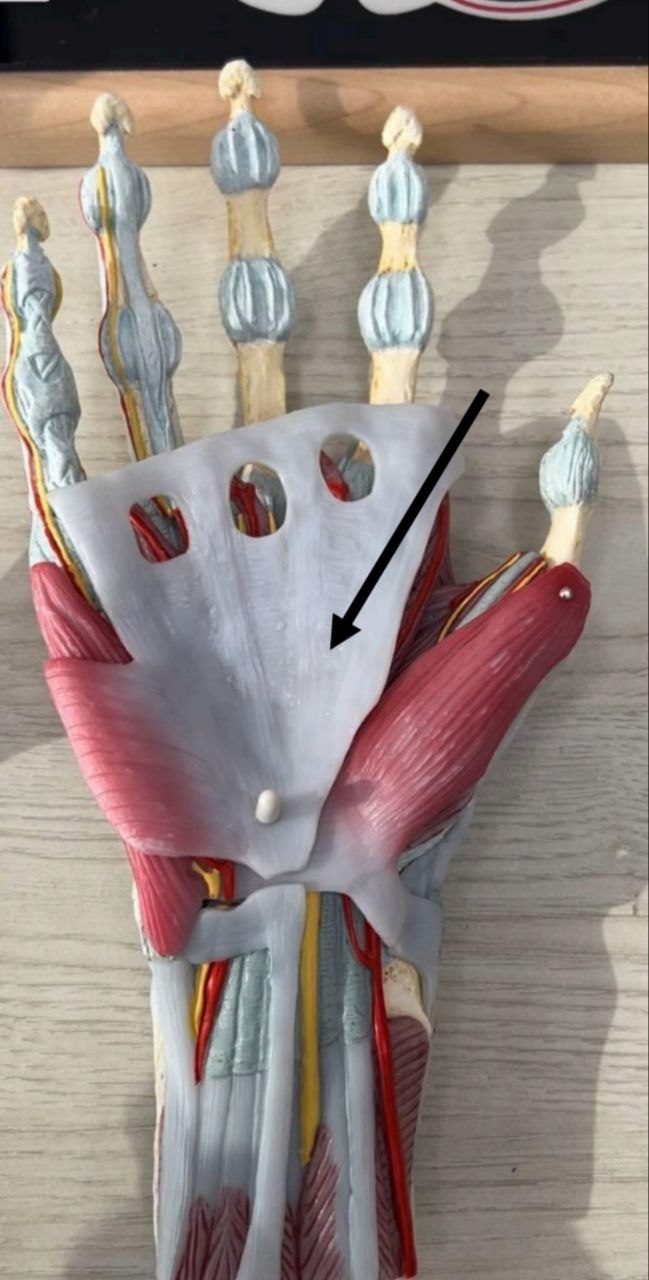
Identify
Aponeurosis
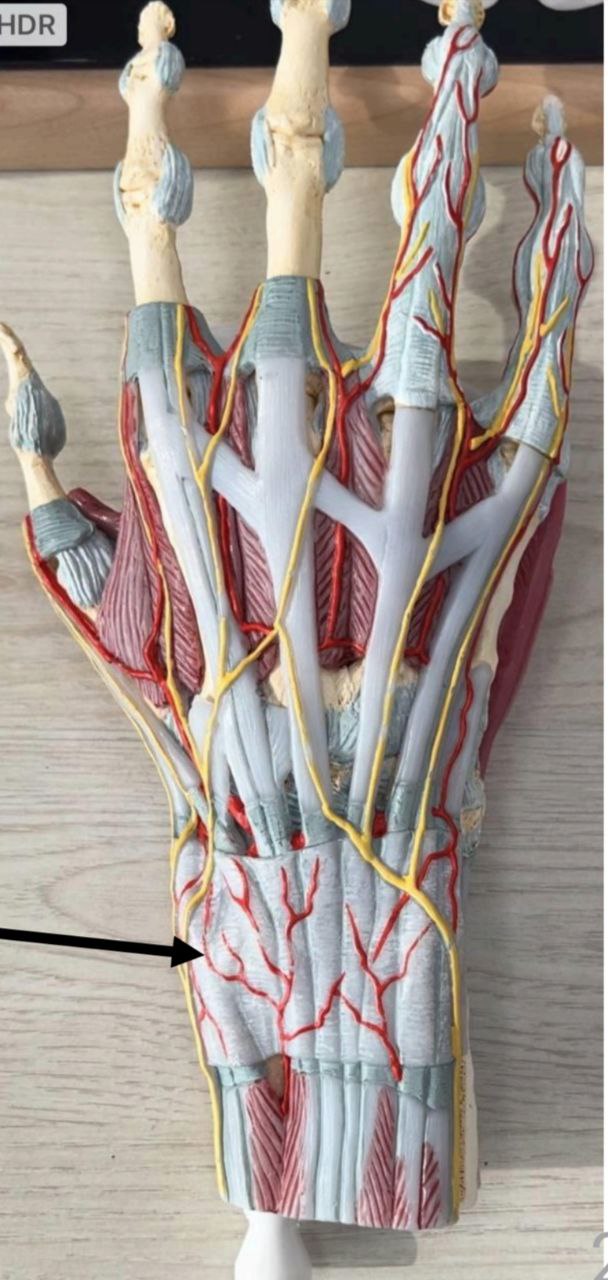
Identify
Retinaculum
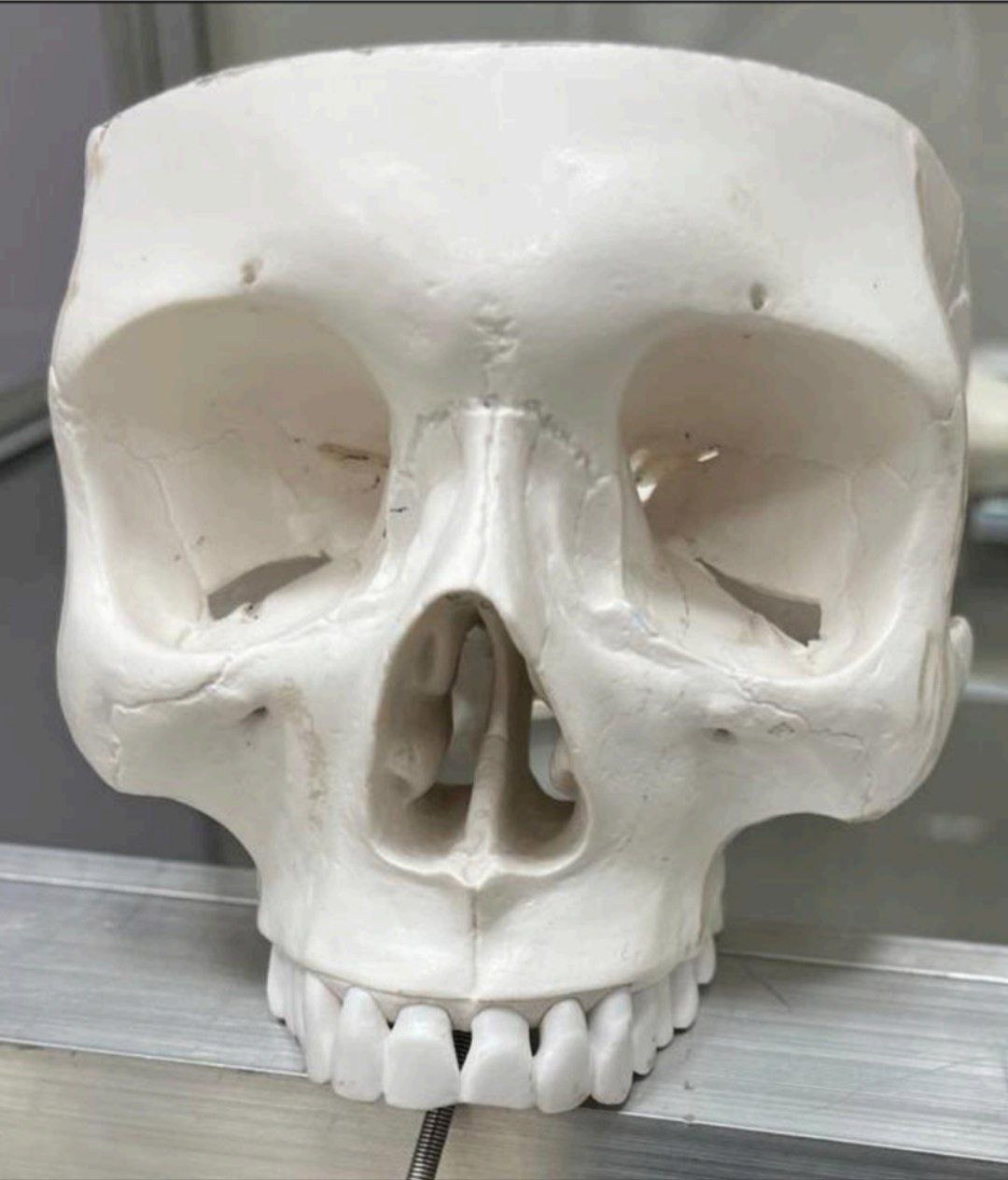
Identify the bone, and classify it according to position and shape.
Bone: Skull / cranium bones
Position: axial
Shape: pneumatic
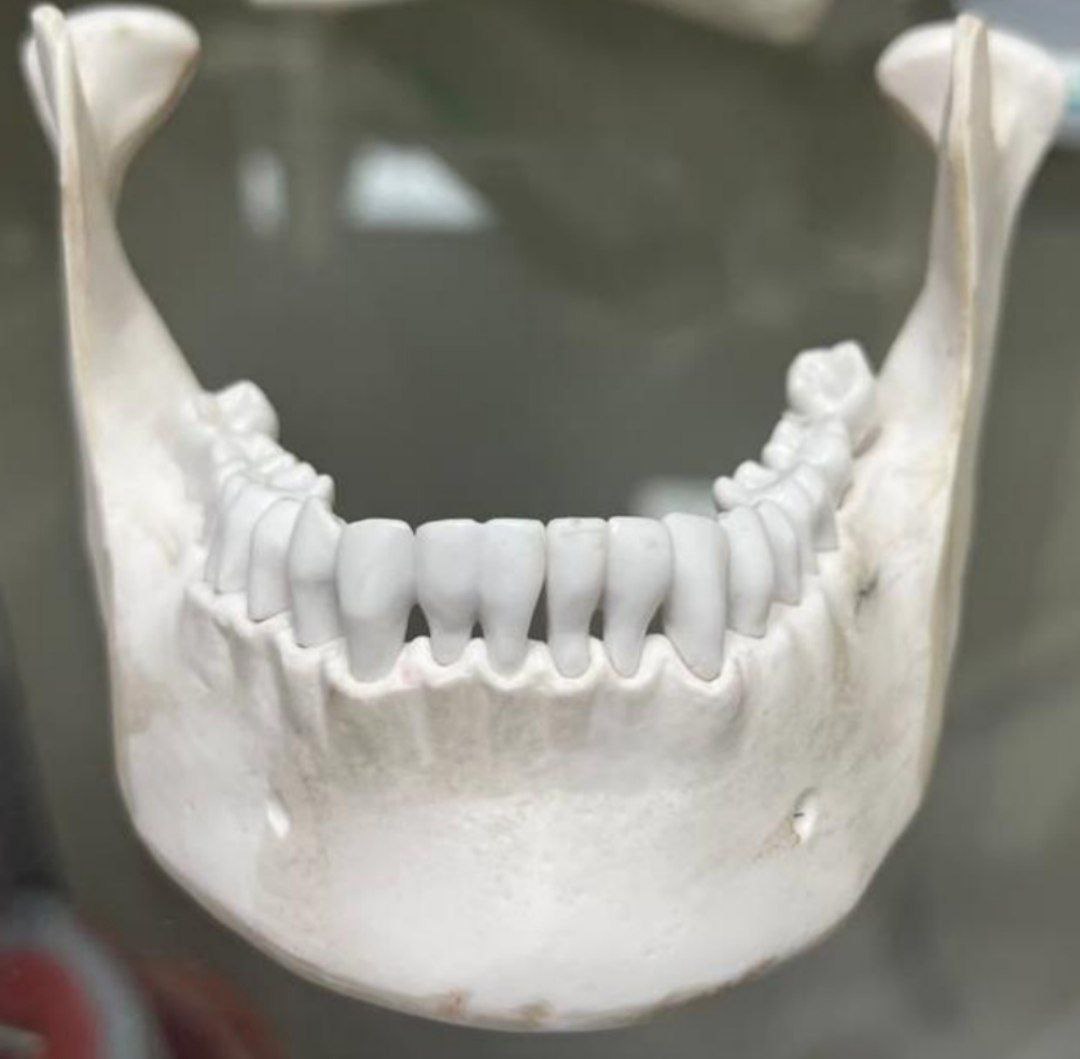
Identify the bone, and classify it according to position
Bone: mandible
Position : axial
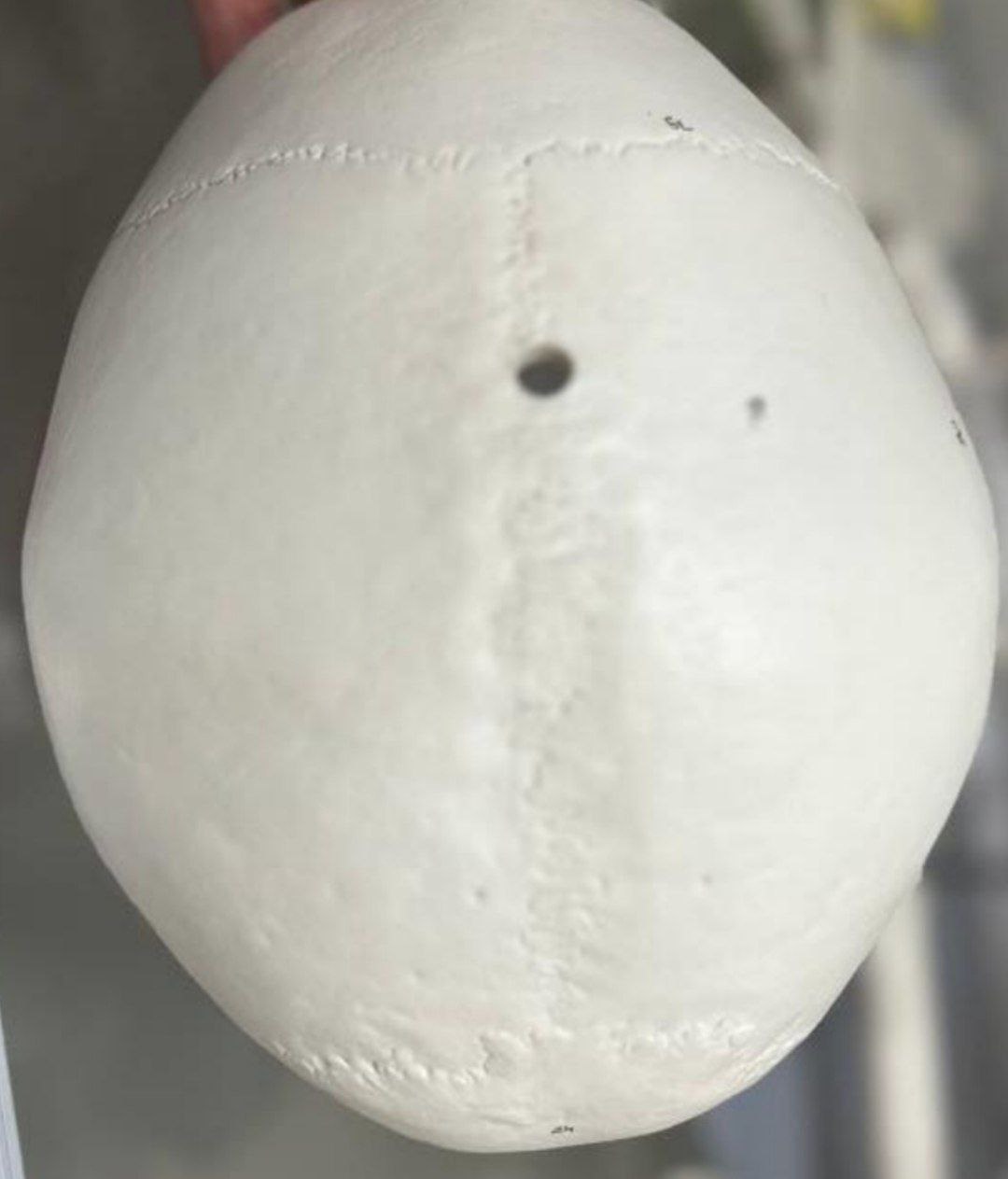
Identify the bone and classify according to position and shape
Bone: skull cap
Position: axial
Shape: flat
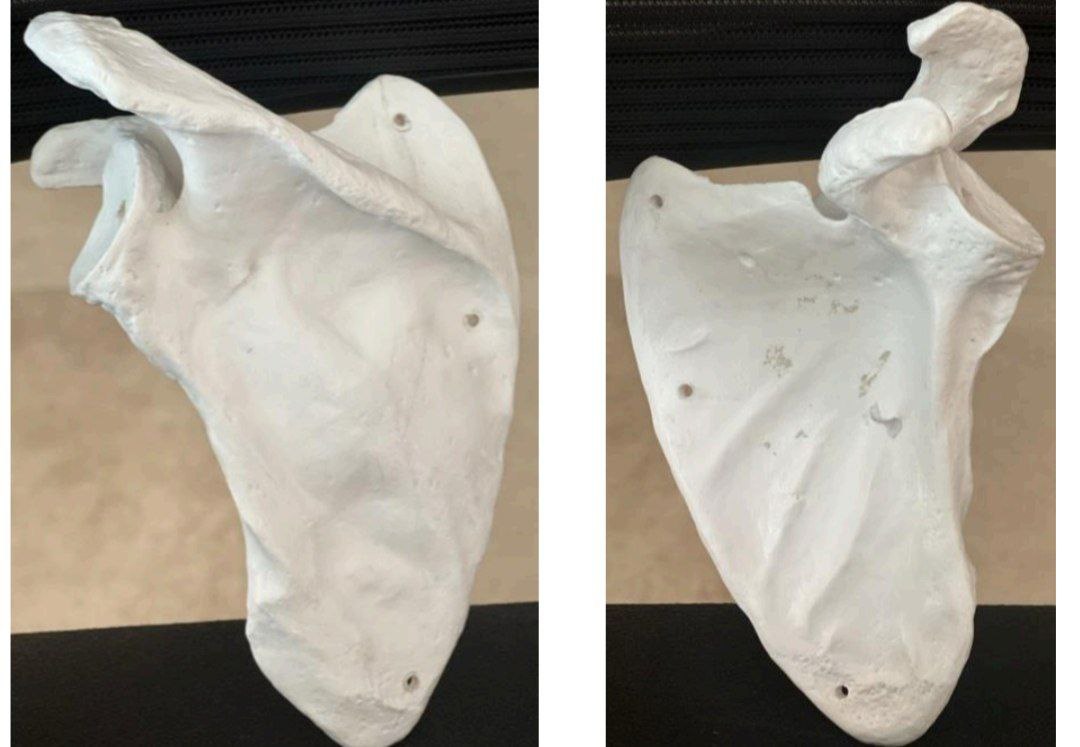
Identify the bone and classify according to position and shape.
Bone: scapulae
Position: appenidicular
Shape: flat
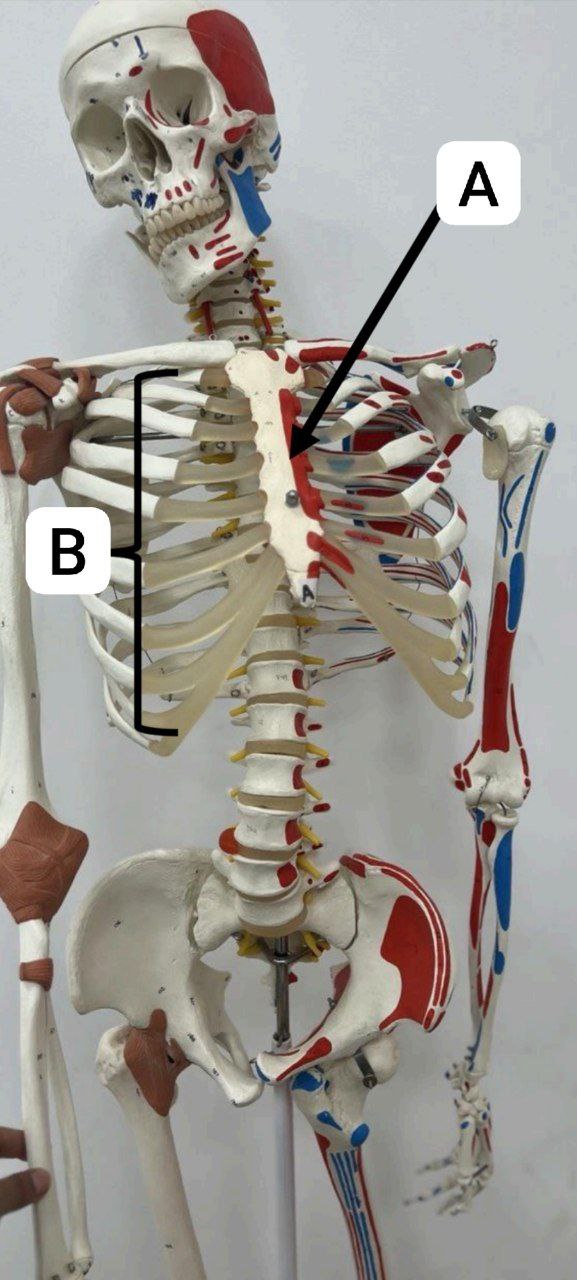
Identify the bone, and classify according to position and shape
A- sternum
B-Ribs
Position: axial
Shape: flat
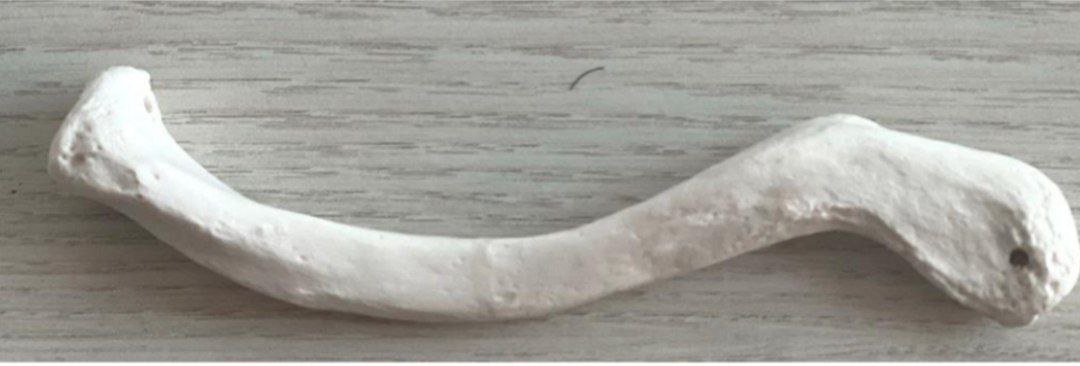
Identify the bone and classify according to position and shape
Bone: clavicle
Position: appendicular
Shape: long bone
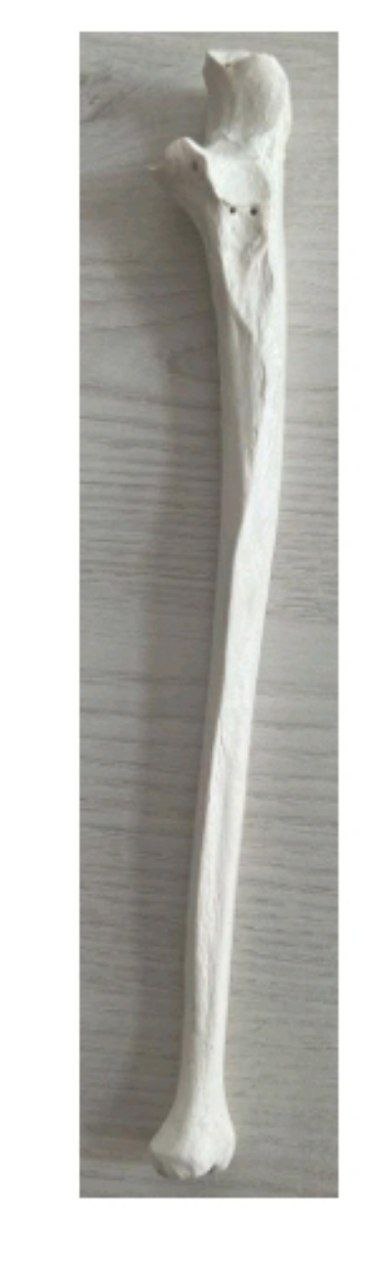
Identify the bone and classify according to position and shape
Bone: Ulna
Position: appendicular
Shape: long bone
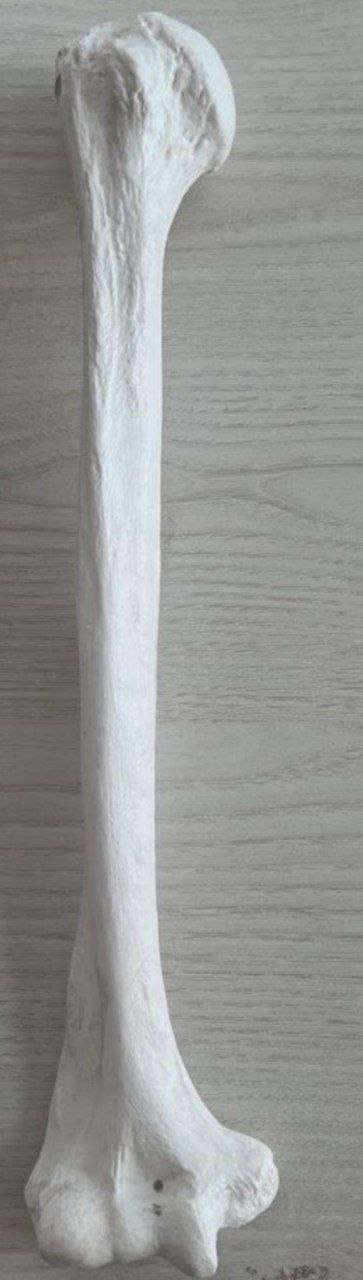
Identify the bone and classify according to position and shape
Bone: Humerus
Position: Appendicular
Shape : long bone
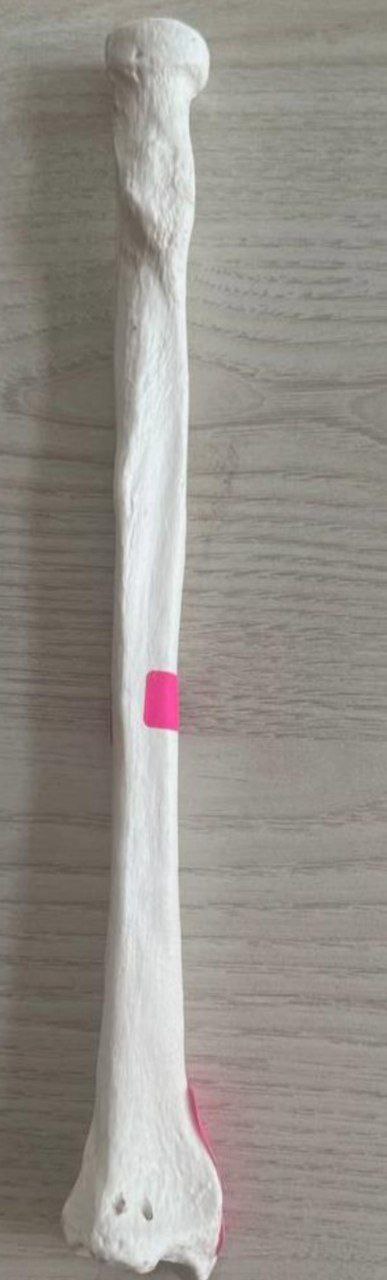
Identify the bone and classify according to position and shape
Bone: Radius
Position: appendicular
Shape: long bone
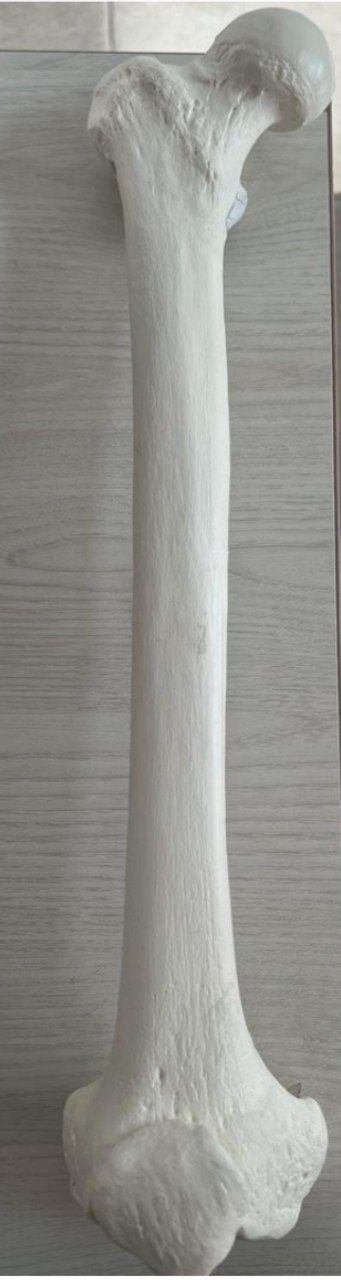
Identify the bone and classify according to position and shape
Bone: Femur
Position: appendicular
Shape: long bone
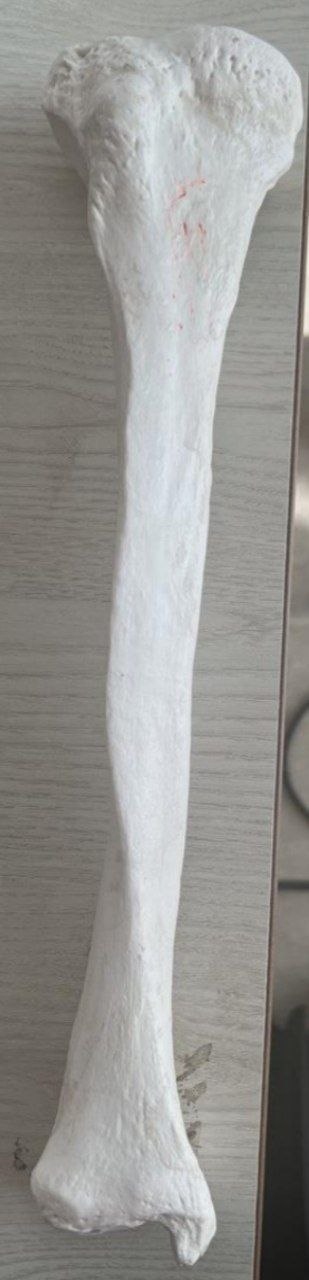
Identify the bone and classify according to position and shape
Bone: tibia
Position: appendicular
Shape: long bone
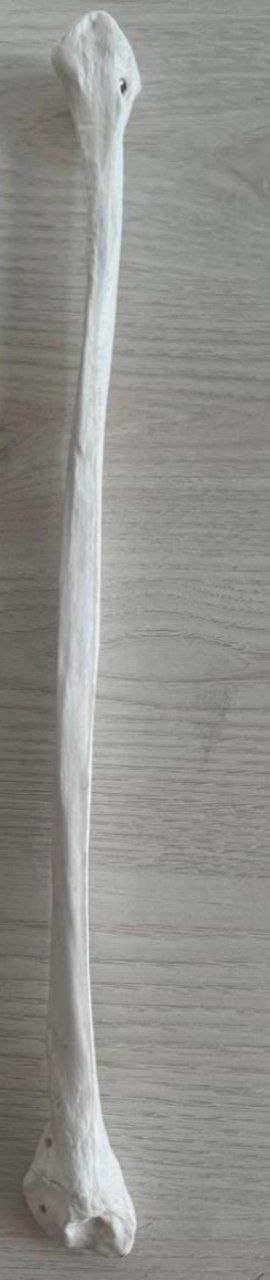
Identify the bone and classify according to position and shape
Bone: fibula
Position: appendicular
Shape: long bone
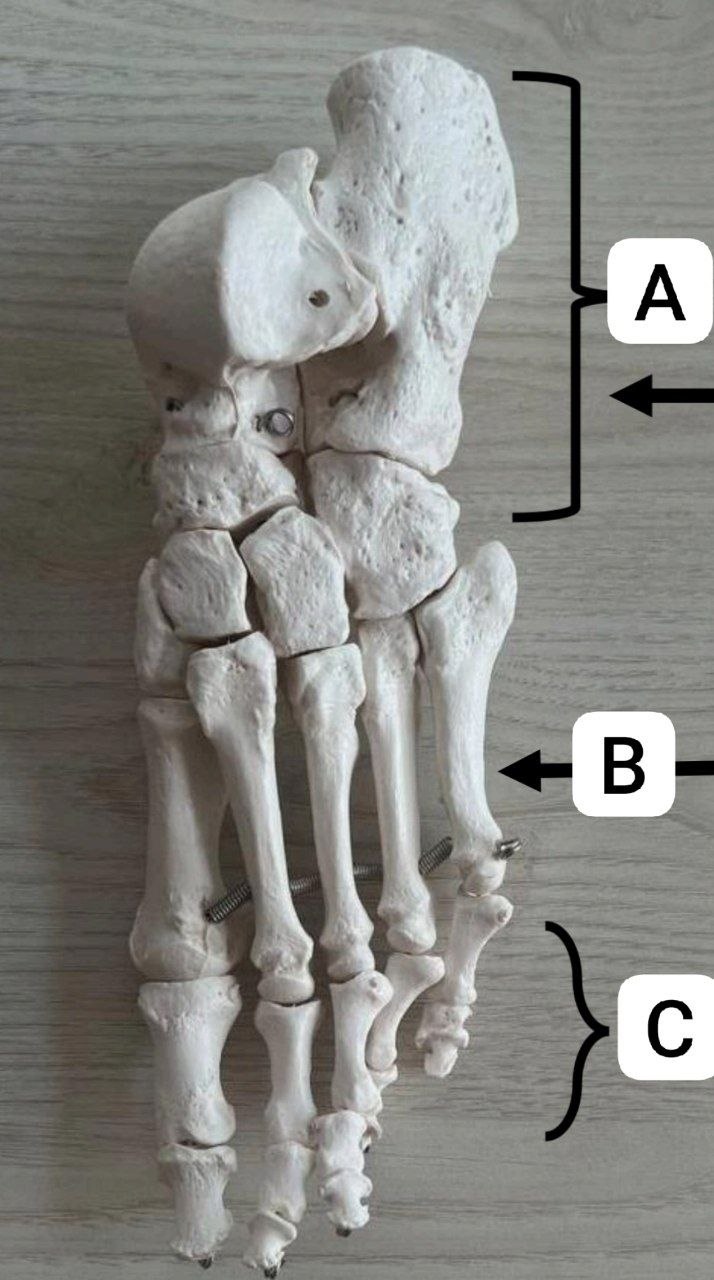
Identify the following
A- Tarsal
B- Metatarsal
C-Phalanges
Position:appendicular
Shape: A- short bone
B and C long bones
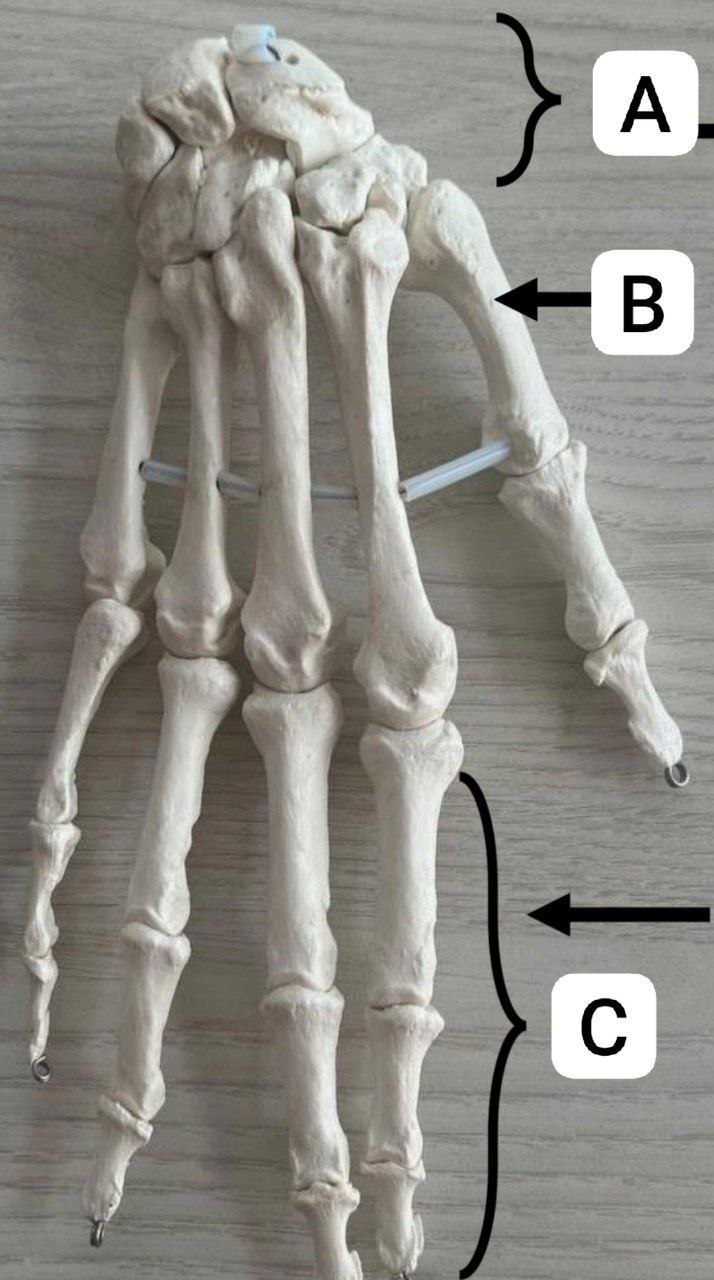
Identify the following and classify according to position and shape
A- Carpal
B- metacarpal
C- Phalanges
Position: appendicular
Shape: A- short
B and C Long bones
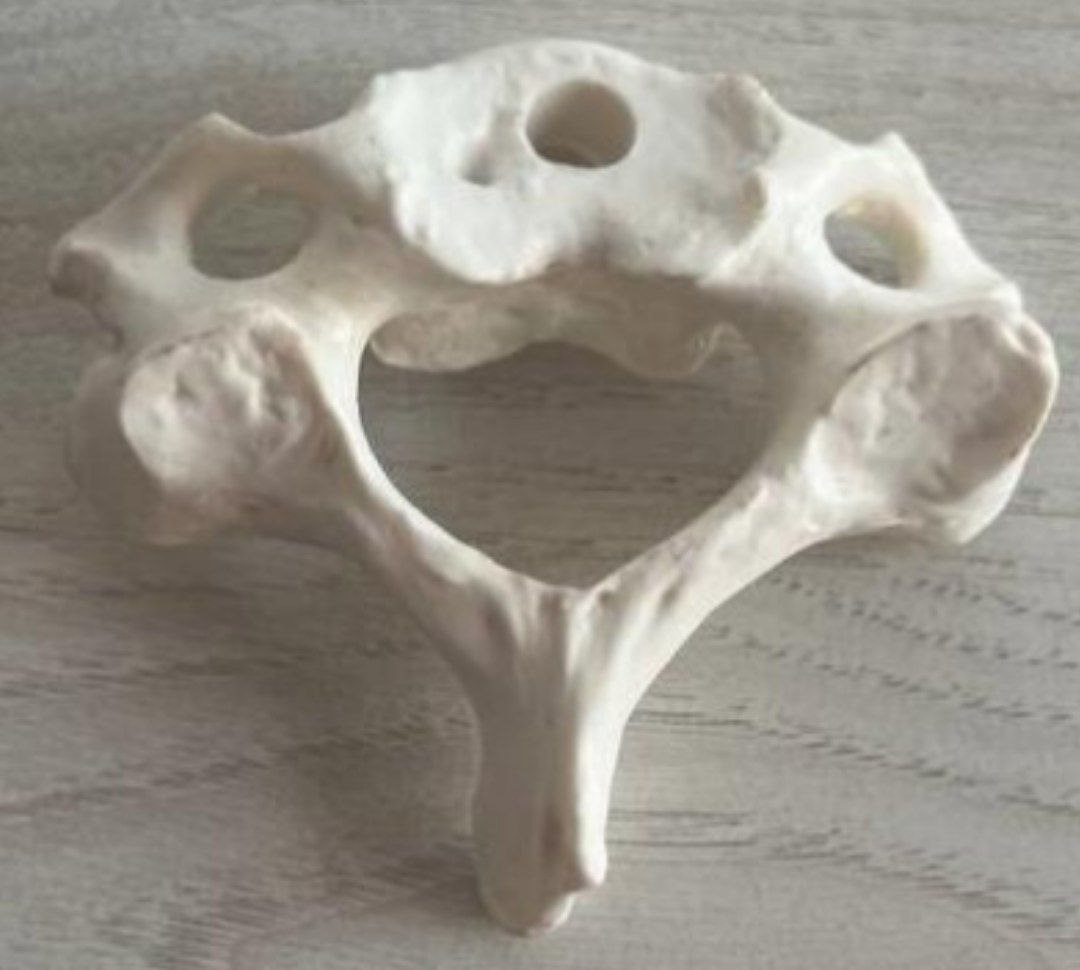
Identify the bone and classify according to position and shape
Bone: vertebra
Position: axial
Shape: irregular
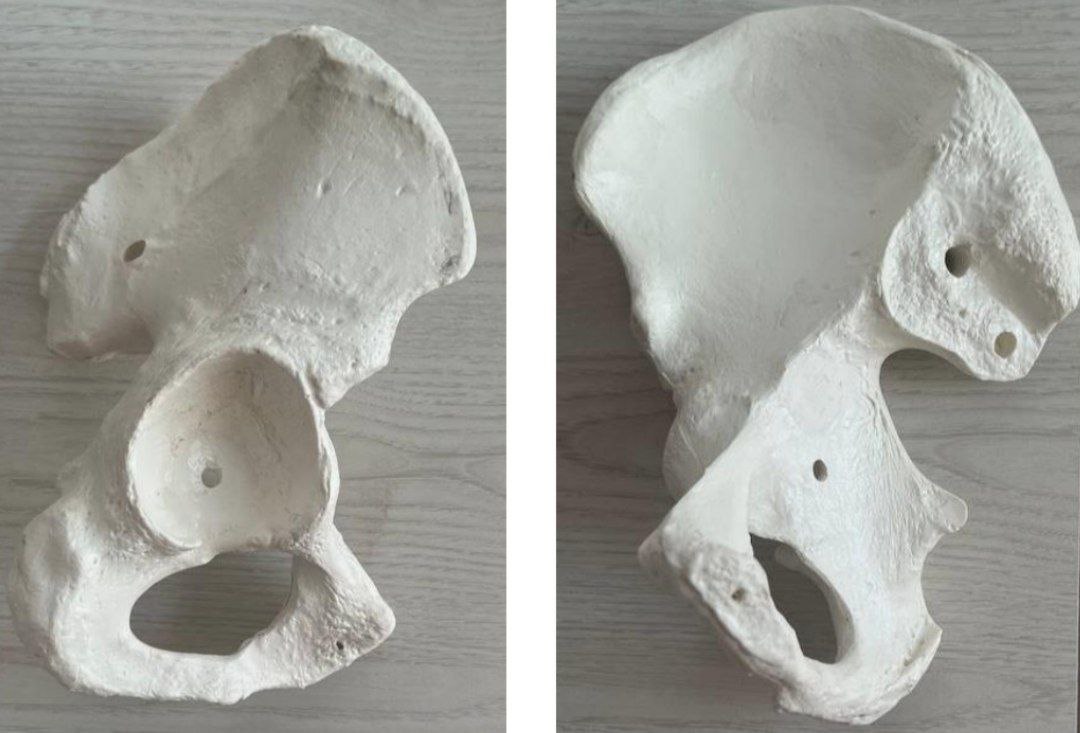
Identify the bone and classify according to position and shape
Bone: Hip bone
Position appendicular
Shape : irregular
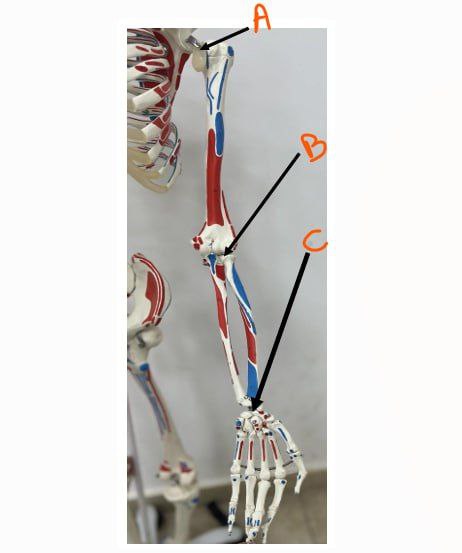
Identify the joints in this picture and classify them
Joints A-shoulder joint
B- elbow joint
C-wrist joint
Classification:
A- synovial ball and socket (polyaxial joint)
B- synovial hinge (uniaxial joint )
C-Synovial ellipsoid (biaxial joint)
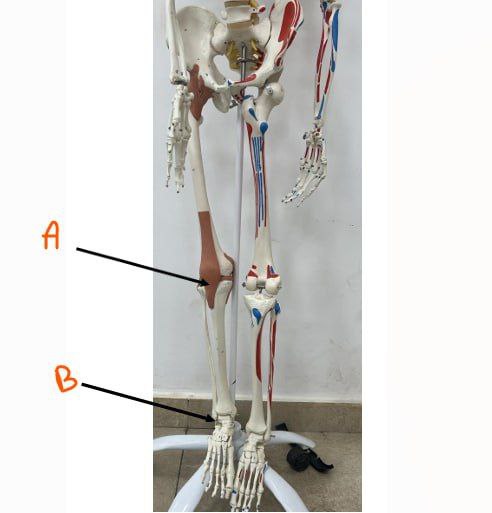
Identify the joints in these picures and classify them
Joints: A-knee joint
B-Ankle joint
Classification: A- Bicondylar joint (condyloid joint)
B-Synovial hinge (Biaxial joint)
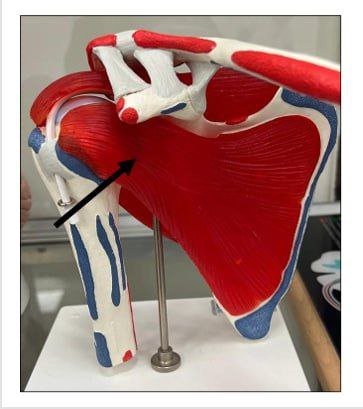
Identify the joints in this picture and classify them
Joint: shoulder joint
Classification Synovial ball and socket (Polyaxial)
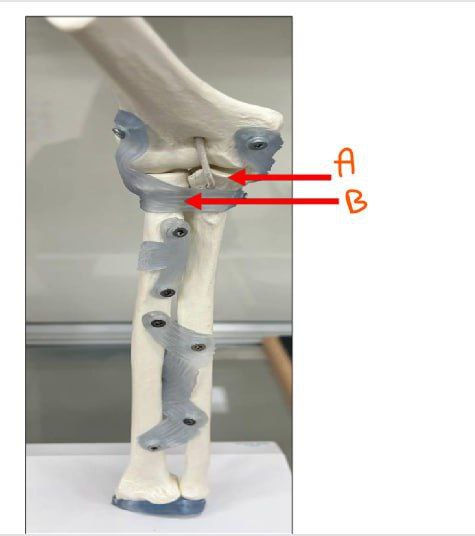
Identify the joints in this picture and classify them
Joints: A- elbow joint
B- superior radio-ulnar joint
Classification: A- synovial hinge (uniaxial)
B- synovial pivot (uniaxial)
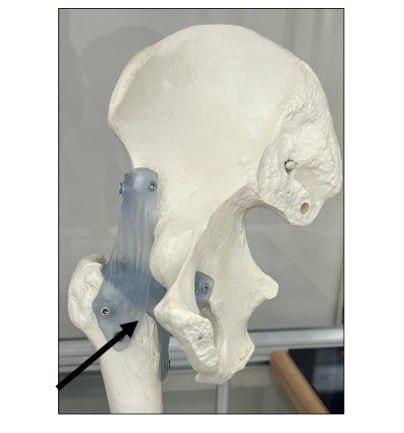
Identify the joints in this picture and classify them
Joint: hip joint
Classification: synovial Ball and socket(polyaxial)
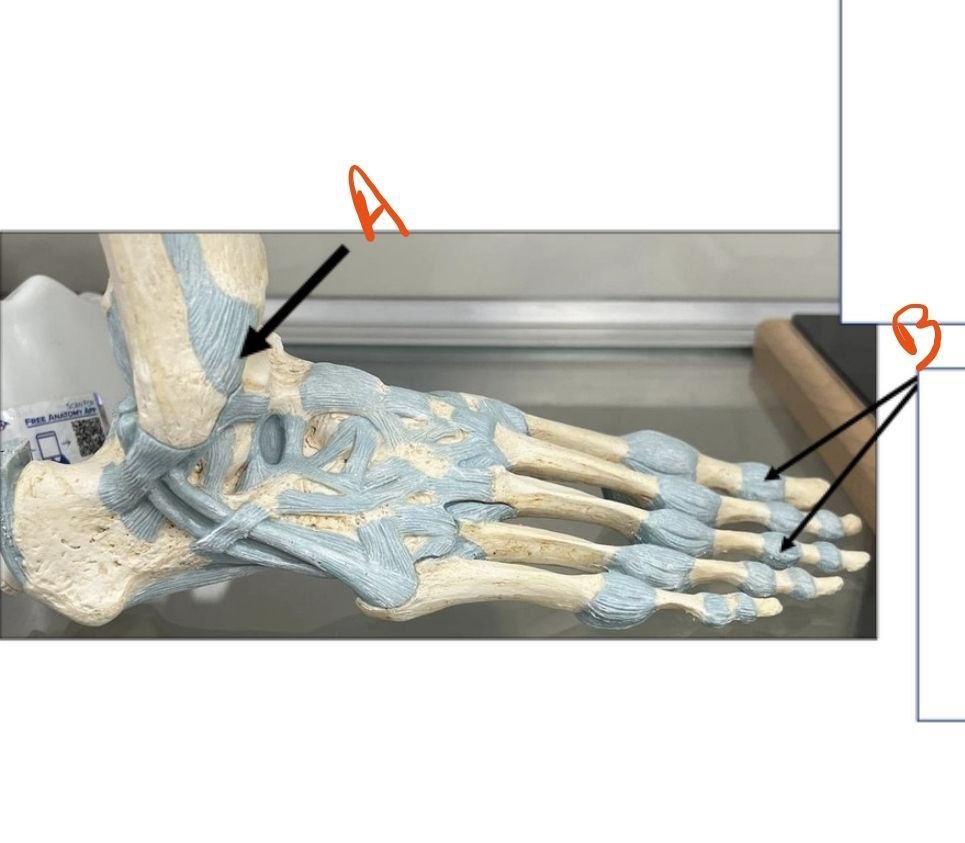
Identify the joints in this picture and classify them
Joint: A-Ankle joint
B- Interphalangeal joint
Classification: Both are synovial hinge (uniaxial)
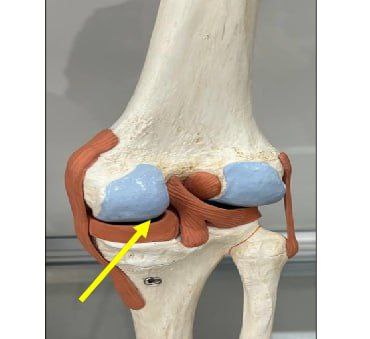
Identify the joints in this picture and classify them
Joint: knee joint
Classification: Synovial bicondyloid (Biaxial joint)
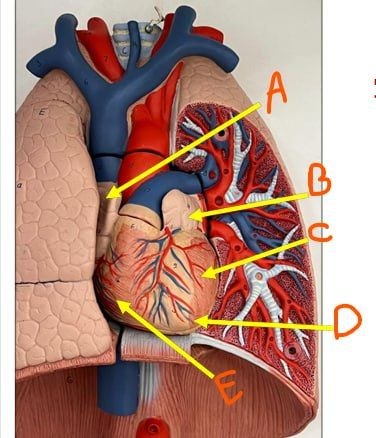
Identify the chambers and mention which chamber forms (D)
A-Right atrium
B-Left atrium
C-Left ventricle
D-Apex of heart
E-Right ventricle
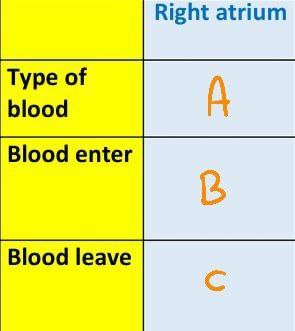
Answer the following questions
A- Non oxygenated blood
B-Superior and inferior venae cavae
C-Tricuspid valve
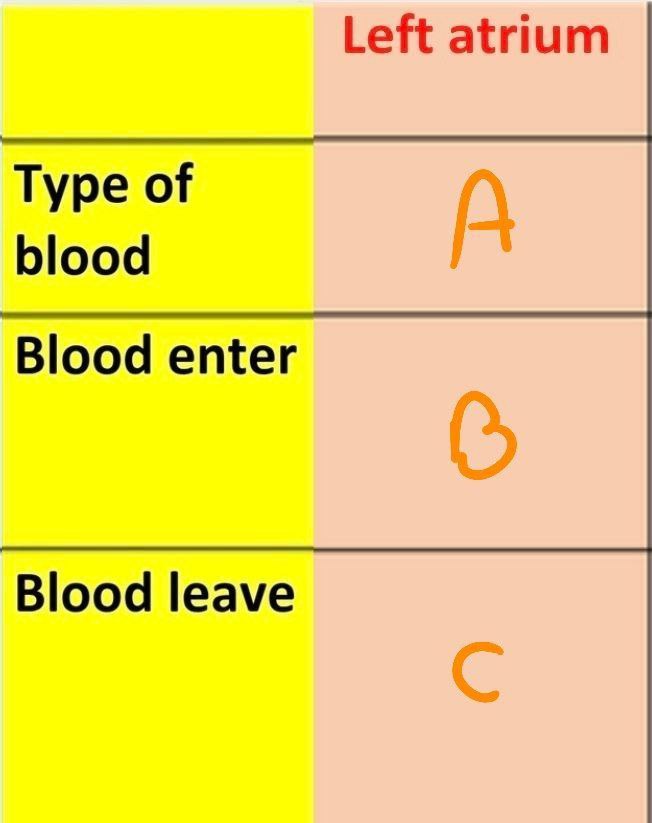
Answer the following questions
A- oxygenated
B- 4 pulmonary veins
C-Mitral valve to left ventricle
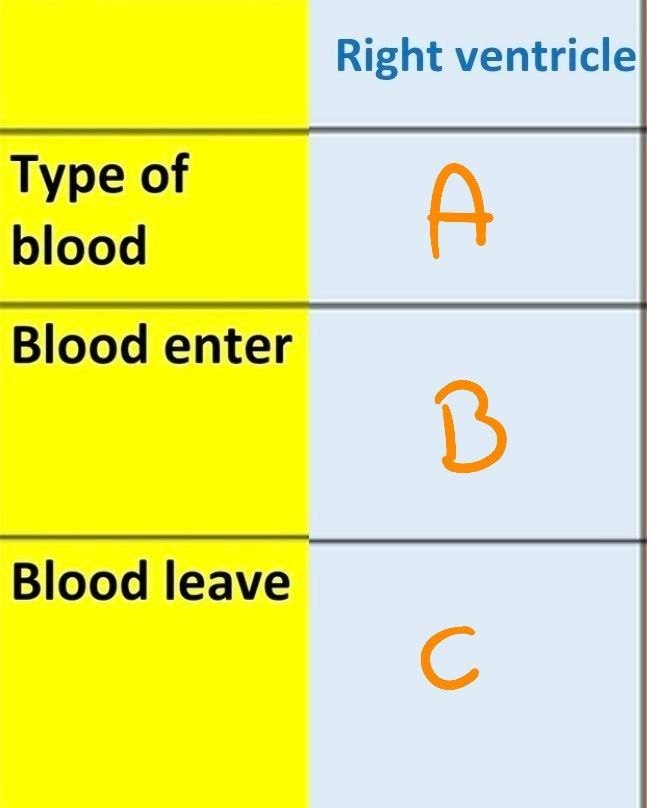
Answer the following questions
A-Non oxygenated
B-tricuspid valve from right atrium
C-pulmonary trunk to both lungs
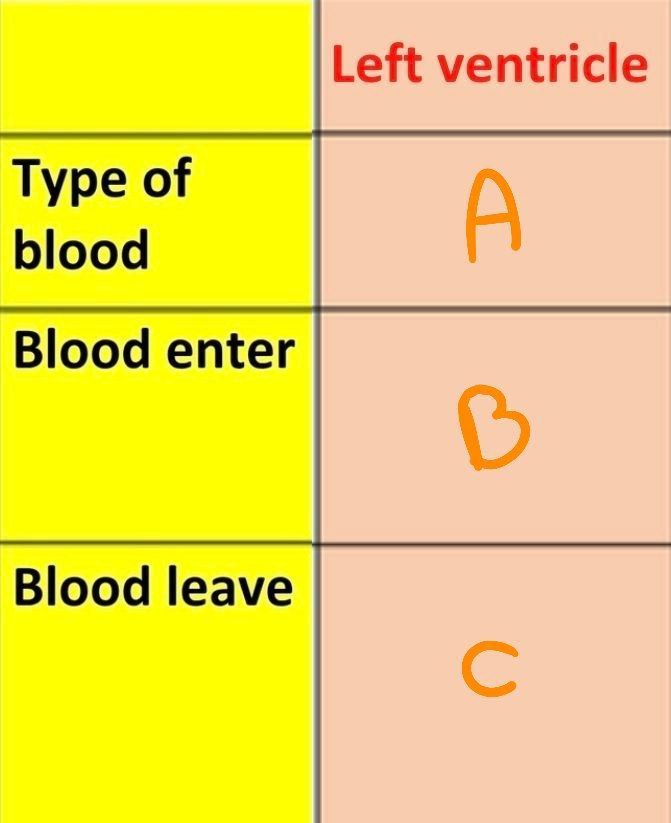
Answer the following questions
A-oxygenated
B-Mitral valve form left atrium
C- Aorta to Body
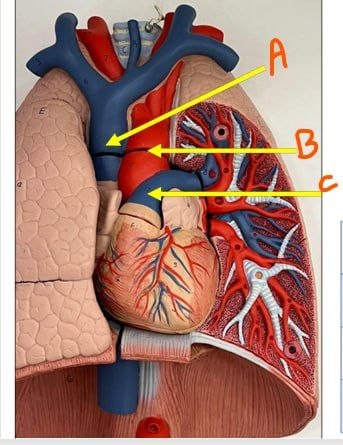
Identify the following
A-Superior vena cava
B- Aorta
C-pulmonary trunk
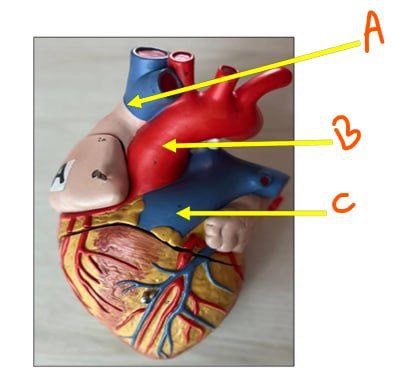
Identify the following
A- superior vena cava
B- Aorta
C-Pulmonary trunk
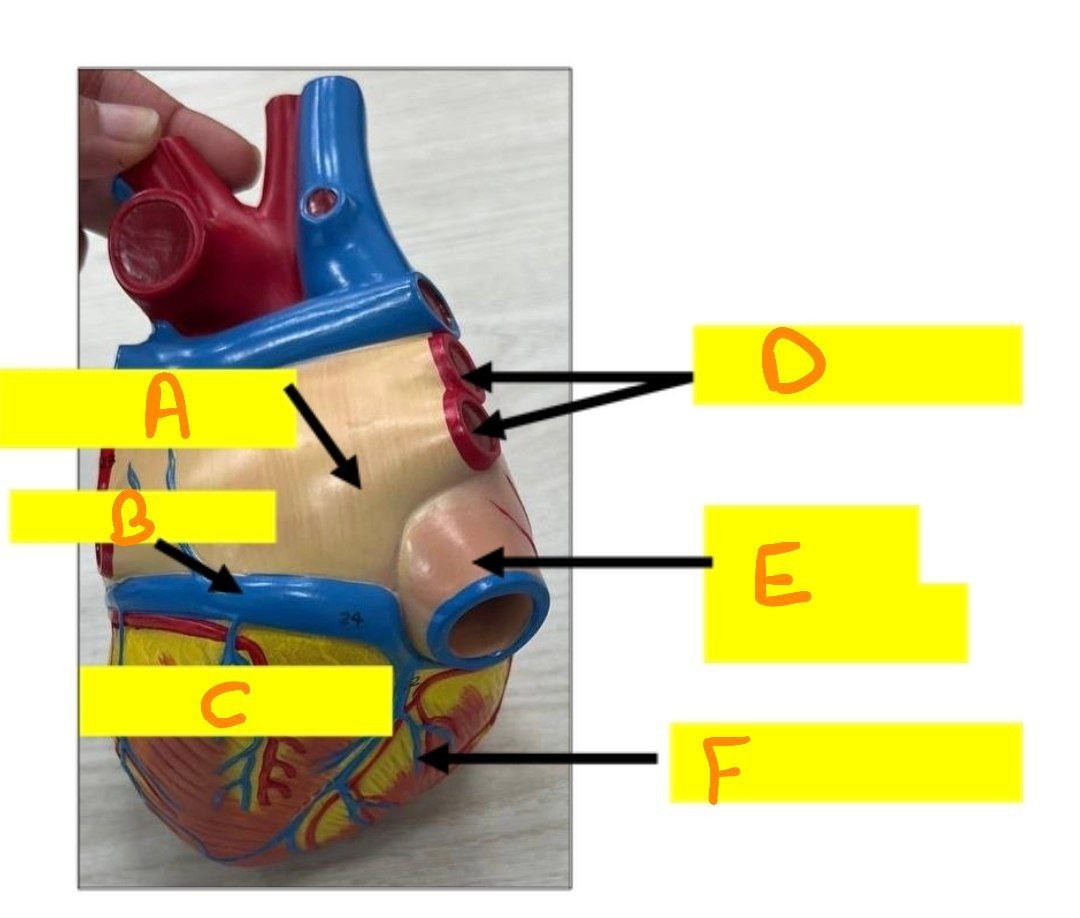
Identify the following blood vessels/ chambers then answer these questions
Where does the vessel (B) terminate?
Type of blood in vessel (D)?
A- left atrium
B- Coronary sinus
C-Left ventricle
D-pulmonary veins
E-Inferior vena cava
F- right ventricle
into the right atrium
Oxygenated blood
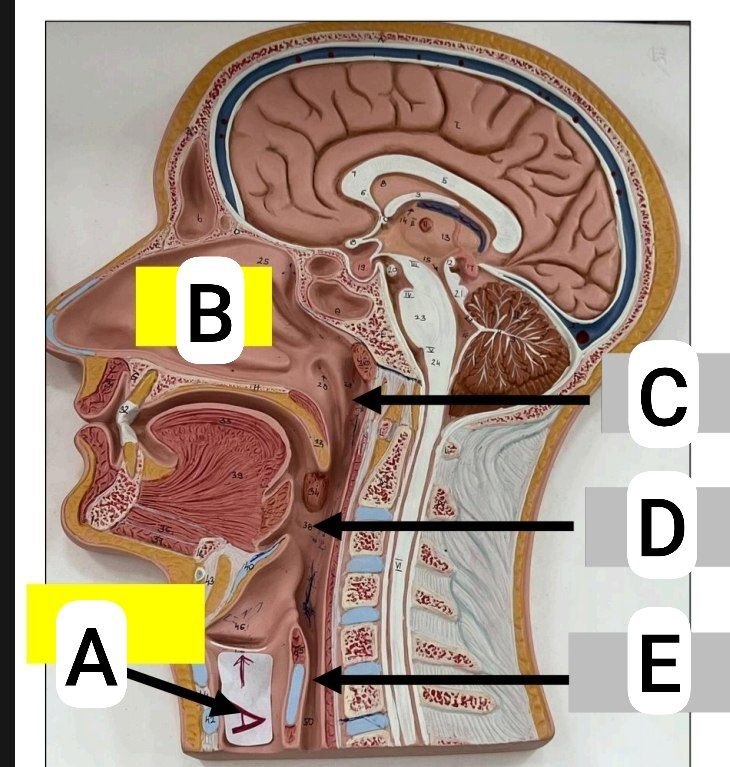
Identify the following and then answer these questions
Where does this tube begin ?
Level of termination of this tube
continuation of this tube?
A- Larynx
B- Nose
C- nasopharynx
D-Oropharynx
E- Oesophagus
At the pharynx at the base of the skull
C6
Oesophagus
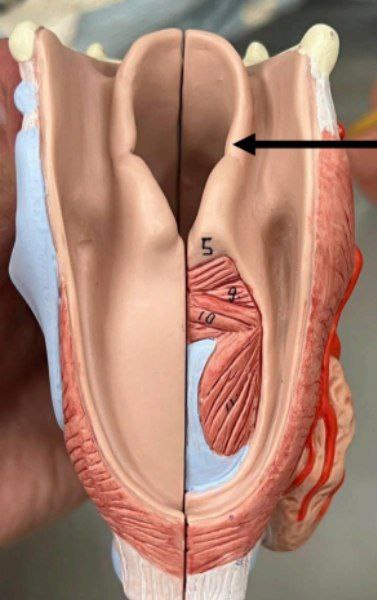
Identify the following
Larynx (poterior view)
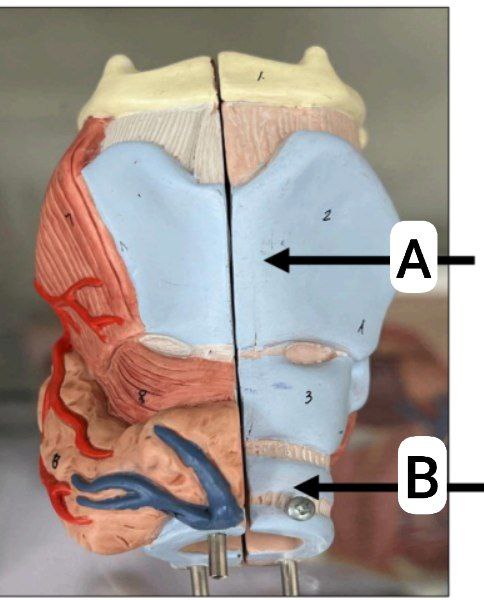
Identify the following and answer these questions
Identify the tube
Identify its beginning
Where does it end
identify the mode of termination
A- Larynx
B- Trachea
Larynx
C3
C6
Continue as trachea
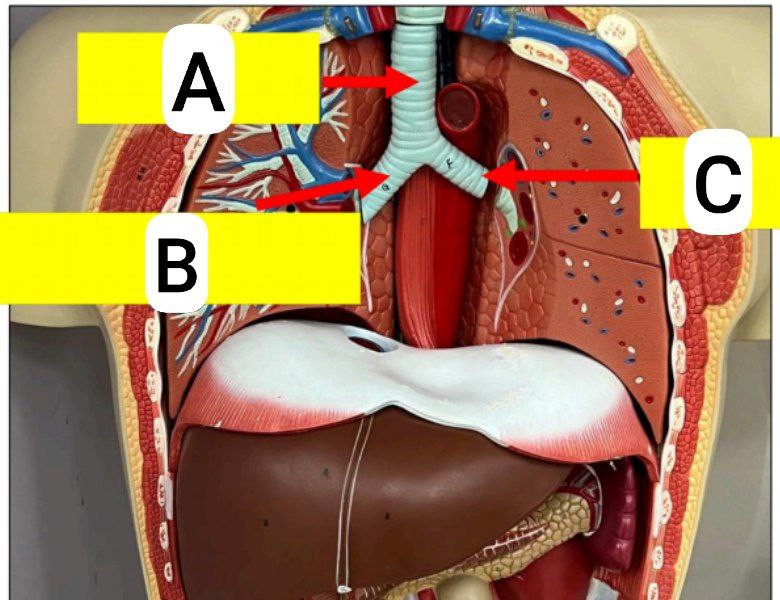
Identify the following and identify the beginning and end/ termination of these tubes
A- trachea begins at C6 and ends T4
B- right bronchi begins at lower border of T4
C- left bronchi begins at lower border of T4
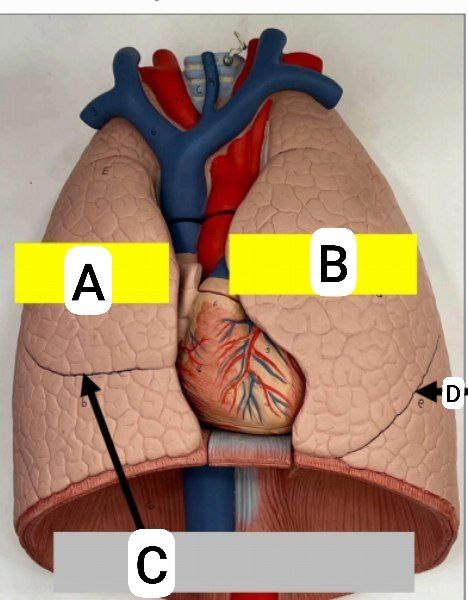
Identify the following and answer these questions
How many lobes are in each lung
****Other questions that can’t be put as flash cards but are important****
Identification of the lung side
Naming the fissures in each lung
Naming the lobes of each lung
A- Right lung
B- Left lung
C- Horizontal fissure
D- Oblique fissure
2 in the left and 3 in the right
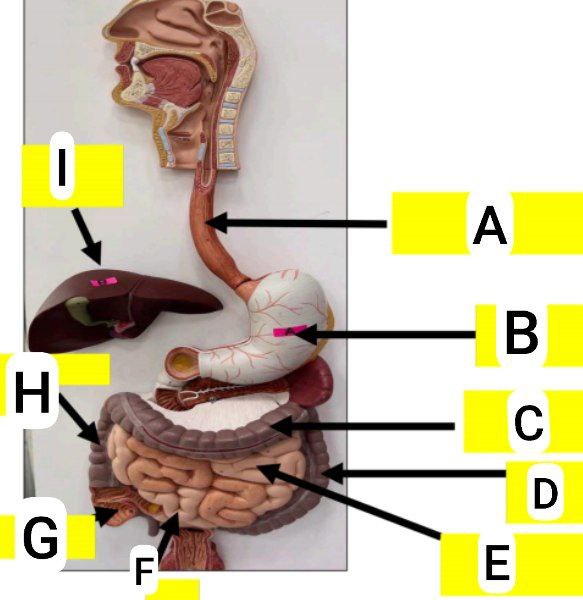
Identify the following and answer these questions
identify tube A
Mention its length
Mention its beginning
A-Oesophagus
B-Stomach
C-Transverse colon
D-Descending colon
E-Jejunum
F-ileum
G-Cecum
H-ascending colon
I-Liver
Oesophagus
25cm
At C6
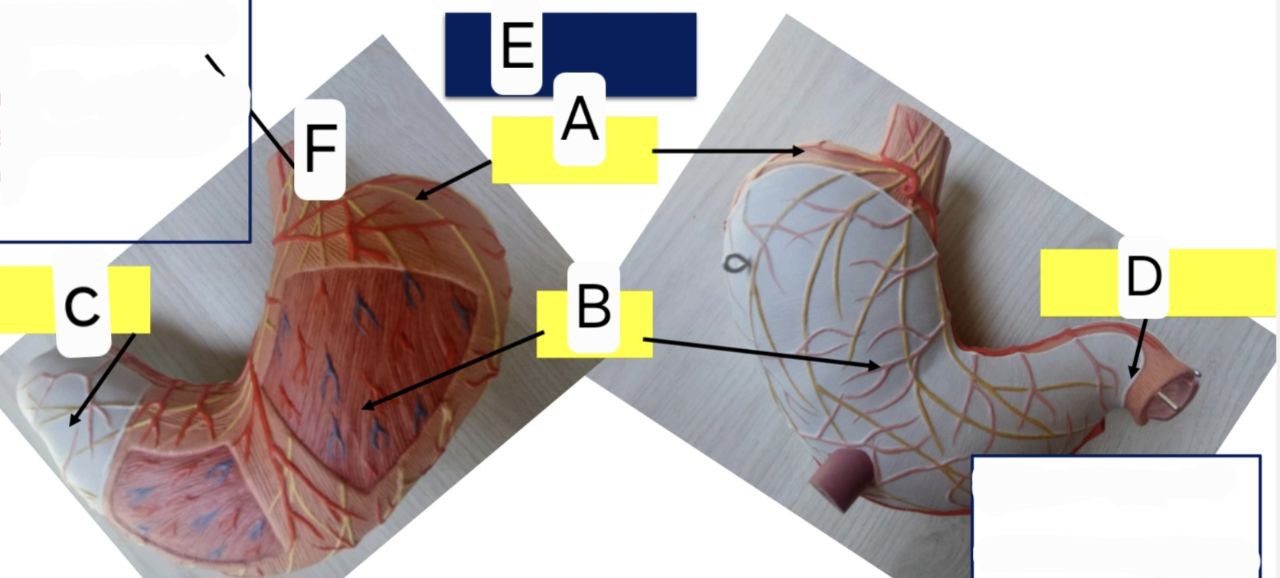
Identify the following and answer these questions
which organ does part C connect to
Which organ does part F connect to
A-Fundus
B-Body
C-Plyorus
D-Plyoric end
E-Stomach
F-Cardiac end
Duodenum
Esophagus
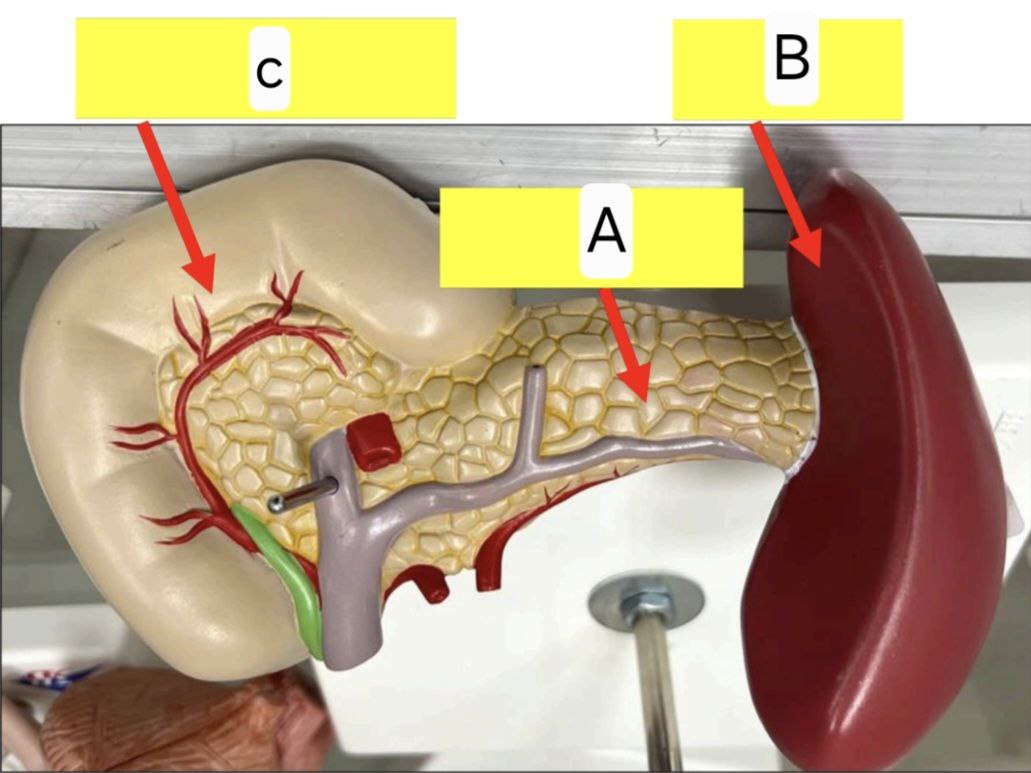
Identify the following and answer these questions
What’s the length of C
Mention the function of A and where its duct opens
Mention the function of B
A- Pancreas
B- Spleen
C- duodenum
25cm
Mixed endo and exocrine functions, opens into the duodenum
Part of the lymphatic tissue
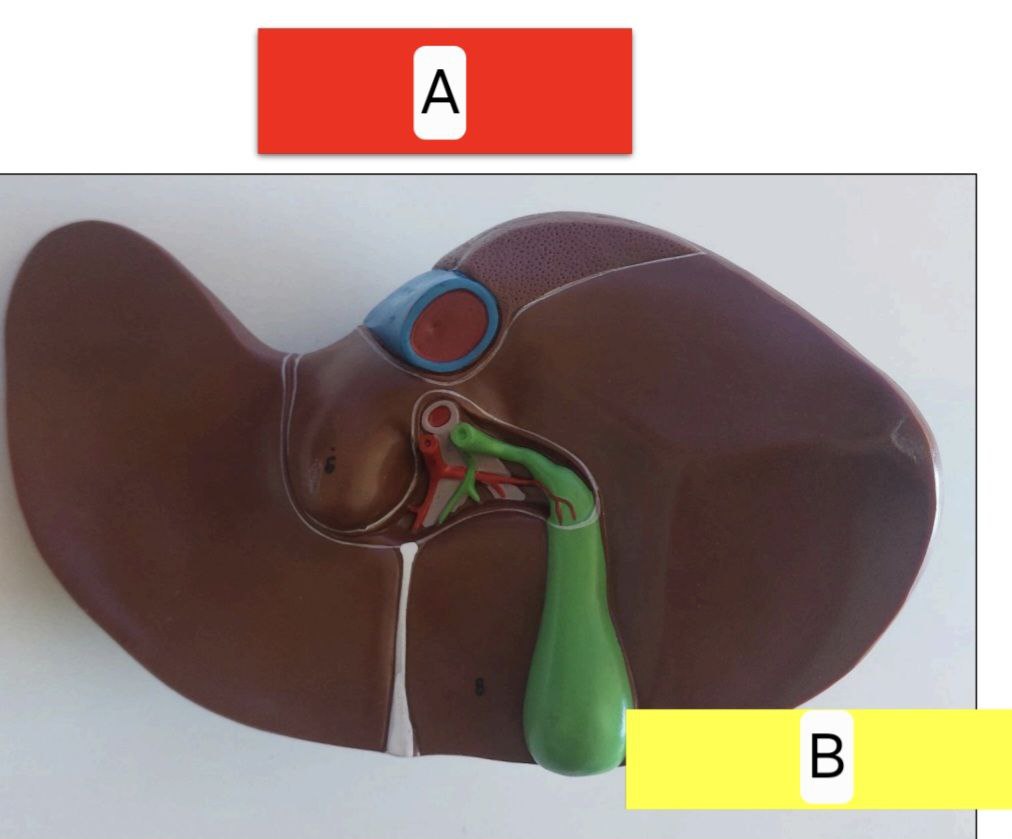
Identify the following and answer these questions
Mention the function of A and where its tube opens
Mention the function of B and where its tube opens
A-Liver
B-Gall bladder
Synthesis of bile/ Synthesis of albumin and clotting factors and detoxification of metabolites, Duodenum
Storage and concentration of bile, Duodenum
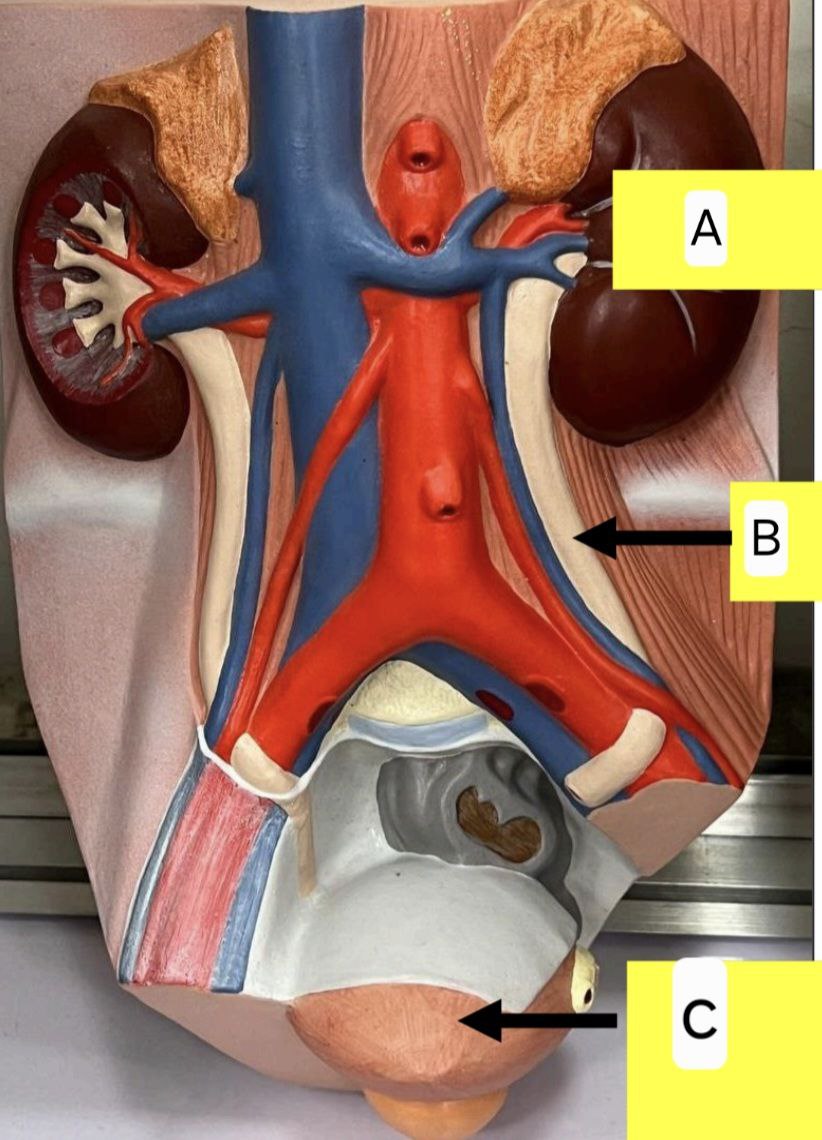
Identify the following and answer these questions following questions
Mention the function of A
Mention the function and length of B
Mention the function of C
A- Kidney
B-Ureter
C-Urinary bladder
Removal of waste product from blood, maintaining fluid and electrolyte balance,Production of erythropoietin hormone
Transmit urine from kidney to urinary bladder, 25cm
storage of urine
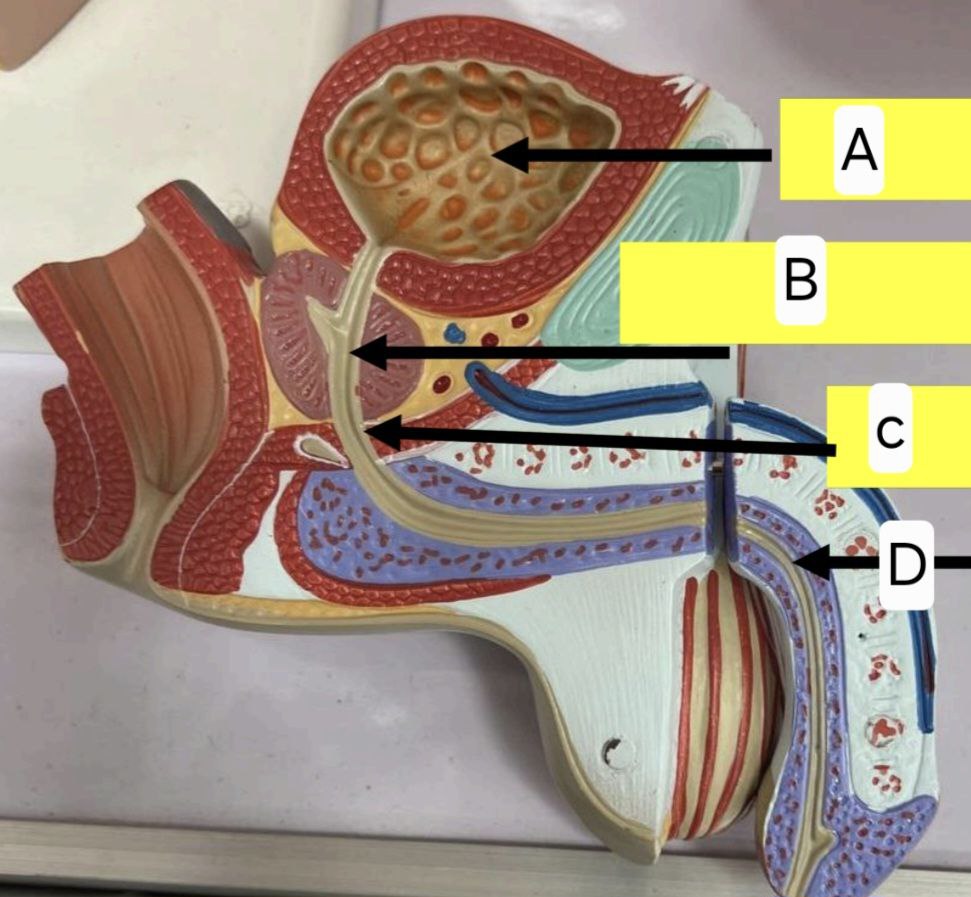
Identify the following and answer these questions
mention the length of the urethra
A question asking to enumerate urethra parts can be asked with this model
A- Urinary bladder
B-Prostatic urethra
C-membranous urethra
D-Spongy (penile) Urethra
20cm
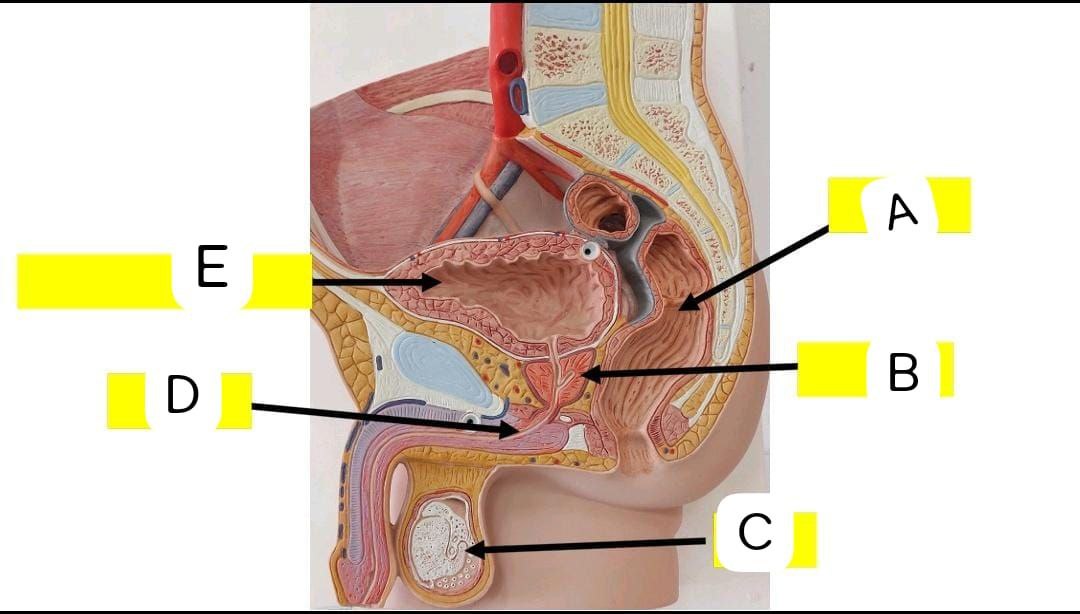
Identify the following
A-Rectum
B-Prostate
C- Testis
D-Urethra
E-Urinary bladder
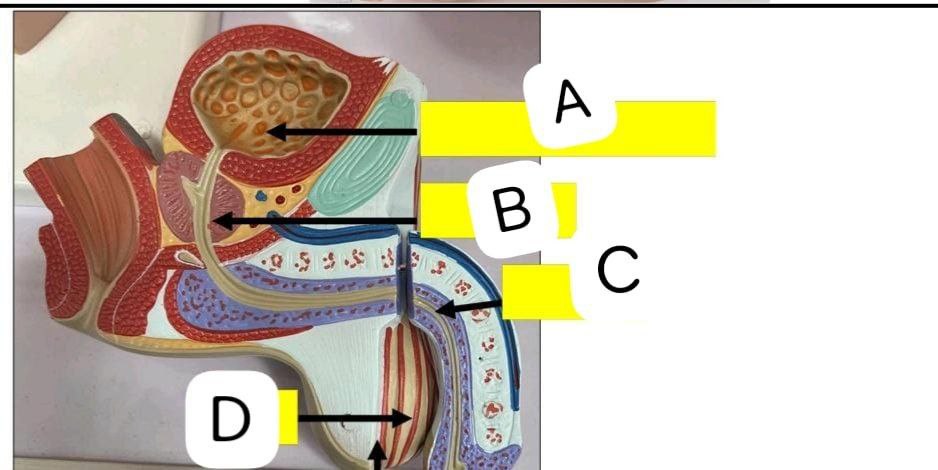
Identify the following and mention the functions of (D)
A-Urinary bladder
B-Prostatic Urethra
C-Membranous urethra
D-Penile urethra
Production of sperm and secretion of male sex hormones (Testosterone)
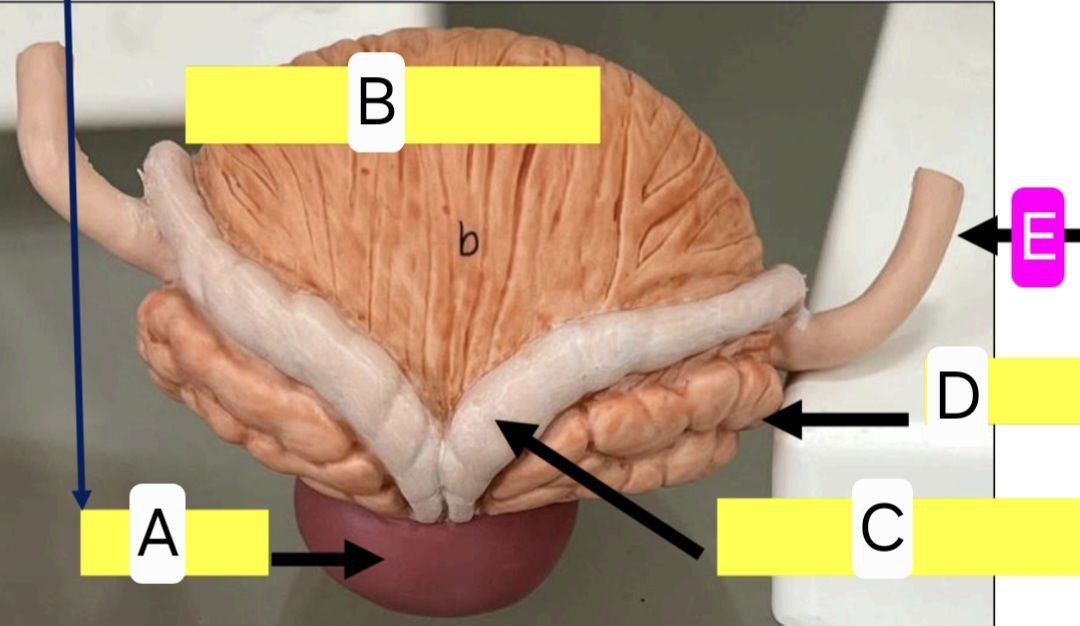
Identify the following and answer these questions
Function of A
Termination of C and D
termination of E
A-Prostate
B-Urinary bladder
C- Vas deferens
D-Seminal vesicle
E-Ureter
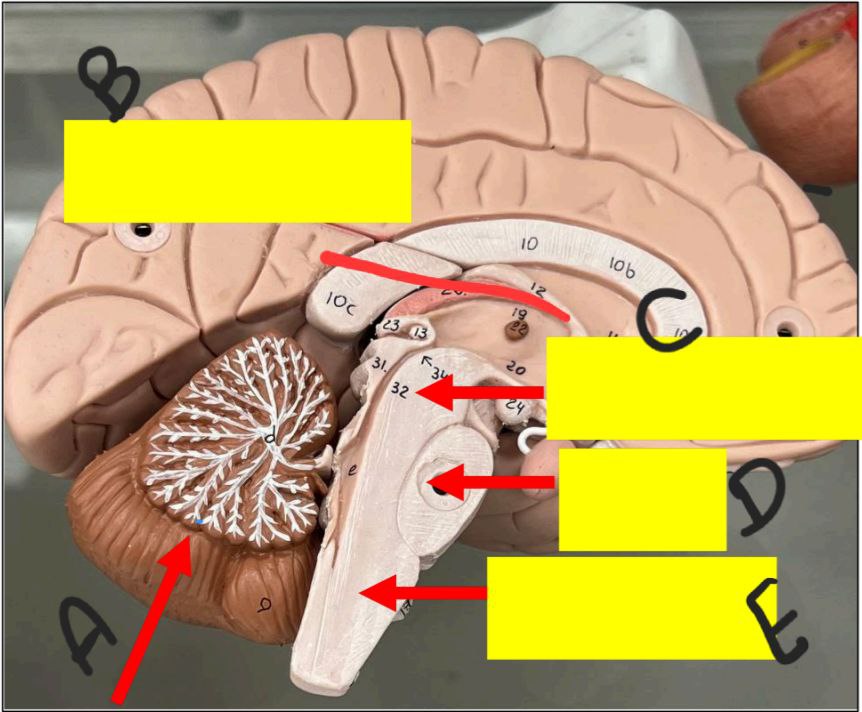
Identify the following and answer these questions
Mention the number of lobes in this structure, and enumerate the names of them
Mention the function of number E
A-Cerebellum
B-Cerebrum
C-Midbrain
D-Pons
E-Medulla oblongata
4 (frontal, parietal, temporal, occipital lobes)
Equilibrium, muscle tone, and coordination of movement
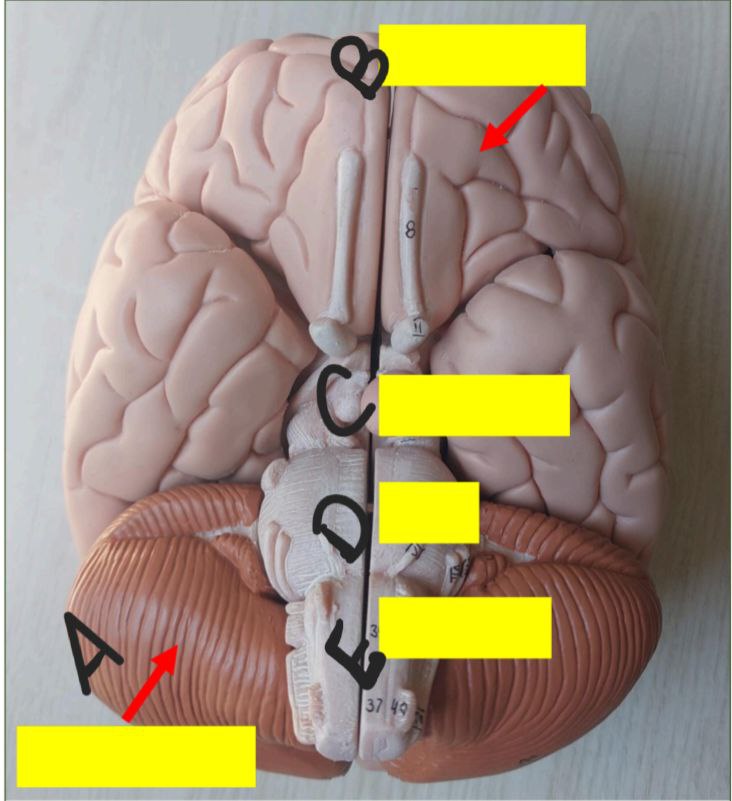
Identify the following
A-Cerebellum
B-Cerebrum
C-Midbrain
D-Pons
E-Medulla oblongata
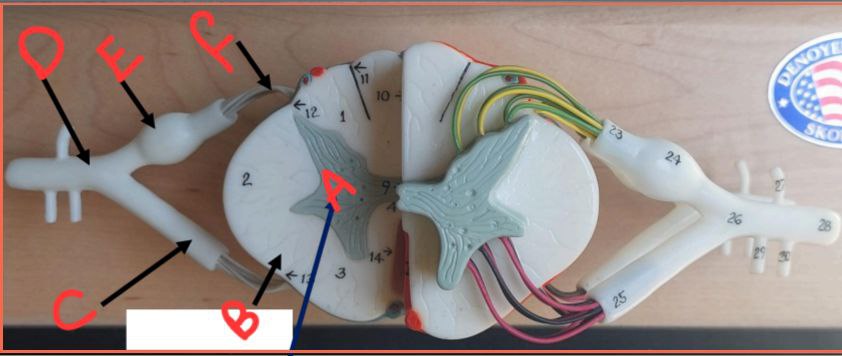
Identify the structure then the following blanks
Structure: Spinal cord
A-Gray matter
B- white matter
C-ventral root
D- spinal nerve
E-Dorsal root ganglia
F- dorsal. Root
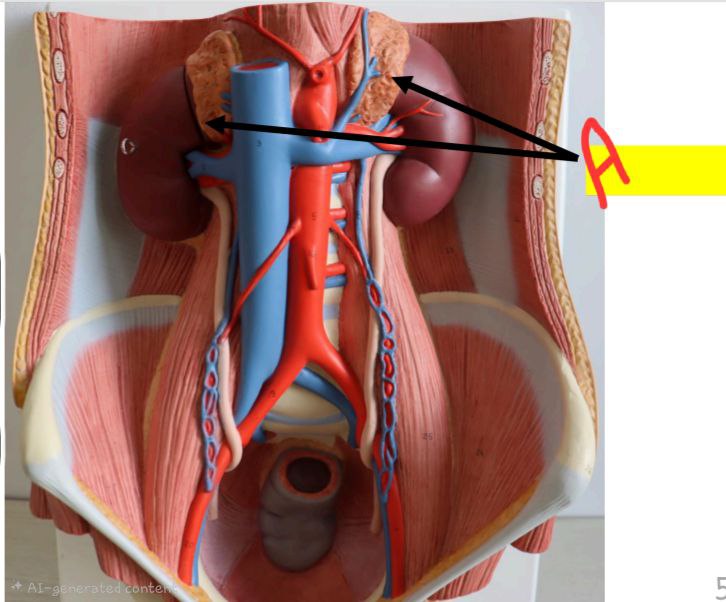
Identify the gland and mention the names of its 4 secretions
The gland: Suprarenal gland
1- epinephrine and Nor epinephrine
2- Sex hormones
3-Gluco-corticoid
4-Mineralo-corticoid
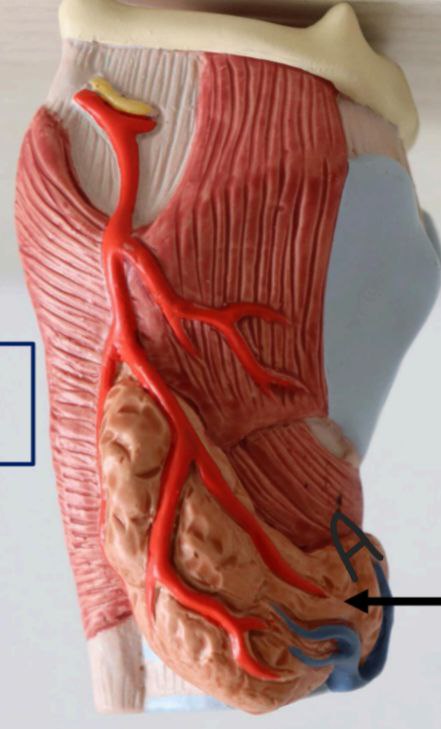
Identify the gland, its secretion and it its site
The gland : thyroid gland
Secretion: Thyroxin
Site: Beside the trachea
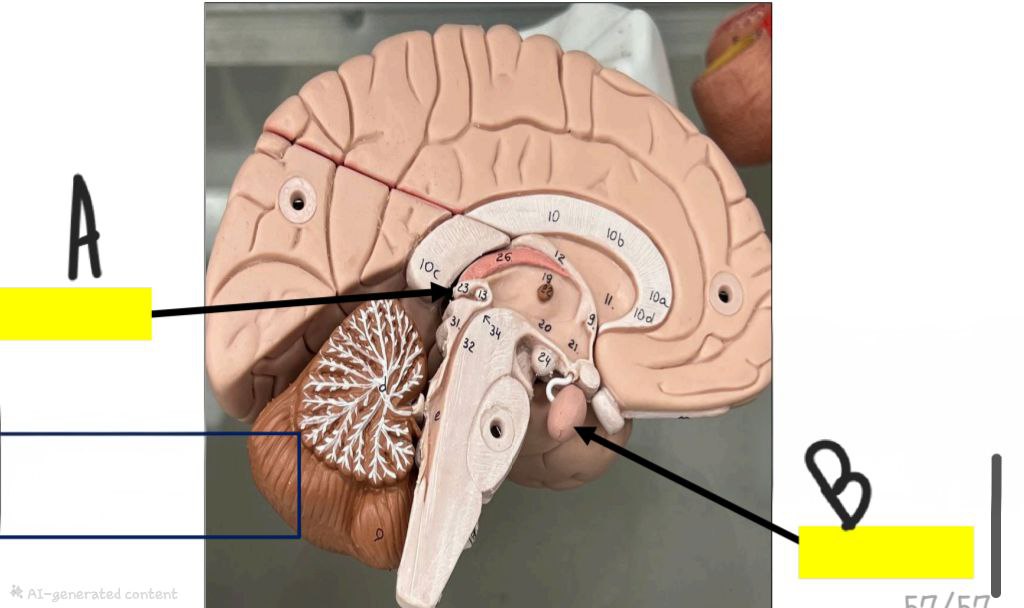
Identify the glands in this picture and specify their secretions and site
Glands : A-Pinneal gland
B- pituitary gland
Site: In the cranial cavity on the inferior surface of the brain
Secretion: Melatonin
 Note
Note  Flashcards (27)