Chapter 3 - The Development of Doctrine and the Decline of the Empire- Church History, Klemm, SJA
0.0(0)
Studied by 1 person Call Kai
 Learn
Learn Practice Test
 Spaced Repetition
 Match
Match Flashcards
 Knowt Play
Card Sorting
1/93

Last updated 1:14 PM on 10/25/22
Name | Mastery | Learn | Test | Matching | Spaced | Call with Kai | Chat |
|---|
No analytics yet
Send a link to your students to track their progress
94 Terms
1
New cards
Arianism
a heresy developed in the late 3rd century that denied Christ's full divinity, stating that Christ was a created being who was superior to human beings but inferior to God
2
New cards
Edict of Milan
A joint declaration by the Roman emperor Constantine and Licinius in the East in 313 that legalized the practice of Christianity and other religions throughout the Roman Empire.
3
New cards
Fathers of the Church
canonized, well-educated men, mostly bishops, during the 2nd-6th centuries, who formulated writings, teachings for the Church
4
New cards
Doctors of the Church
a title officially bestowed by the Church to those canonized men and women who defend the teachings of the Church.
5
New cards
Apologists
men and women who defend the teachings of the Church; do not need to be canonized
6
New cards
Vulgate
the version of the Bible translated from Hebrew and Greek into Latin by St. Jerome and which became the definitive version and officially promulgated by the Church
7
New cards
Ecumenical Council
A gathering of the Church's bishops from around the world convened by the Pope or approved by him to addressing pressing issues in the Church
8
New cards
Consubstantial
Having gthe same nature or essence
9
New cards
Theotokos
A Greek title for Mary meaning "God bearer"
10
New cards
Logos
A Greek word meaning "word." Logos is a title of Jesus Christ found in the Gospel of John that illuminates the relationship between the three Divine Persons of the Holy Trinity
11
New cards
Patristic Period
Another name for the "Age of the Fathers," from the 2nd to the 6th Centuries
12
New cards
Pontifex Maximus
means "greatest bridge builder." Title Constantine gave himself as he saw himself as the bridge between the earthly and spiritually. Subsequent emperors used the title and later popes used it.
13
New cards
Church of the Holy Sepulcher
Church Constantine built on the site where his mother allegedly discovered the cross Christ was crucified on
14
New cards
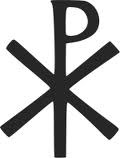
Chi Rho
The symbol Constantine saw in a dream and had added to his soldiers' uniforms. It's the first two letters of Christ's name in Greek
15
New cards
Constantinople
present day Istanbul, Turkey. Where Constantine moved the capital of the empire.
16
New cards
Licinius
emperor of Eastern Empire who signed the Edict of Milan with Constantine; He chose not to follow it and continued persecution of the Christians which caused his eventual demise
17
New cards
As a result of the Edict of Milan
Clergy were exempt from paying taxes and property that had been previously confiscated was returned; Constantine commissioned the building of churches
18
New cards
living in isolation
Christians who wanted to give their all for Christ sacrificed comforts of life in Christ's name by going out in the desert or other place of solitude since they were no longer called to be martyrs
19
New cards
Sts. Catherine of Siena, Teresa of Avila, Therese of Lisieux, & Hildegard of Bingen
four female Saints named Doctors of the Church in the 20th century
20
New cards
Hildegard of Bingen
Most recent female Doctor of the Church named by Pope Benedict in 2012
21
New cards
36
Number of recognized Doctors of the Church today
22
New cards
39 from the Western Church and 51 from the Eastern Church
Number of recognized Fathers of the Church
23
New cards
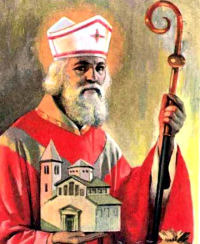
St. Ambrose
converted to Christianity, was baptized, confirmed, became a priest and bishop all in one week; opposed Arianism and promoted authority of Church over the emperor. Best known writings included "On the Duties of the Clergy" and "On the Sacraments." He is known for influencing St. Augustine and leading to his conversion; father and doctor of the Church
24
New cards
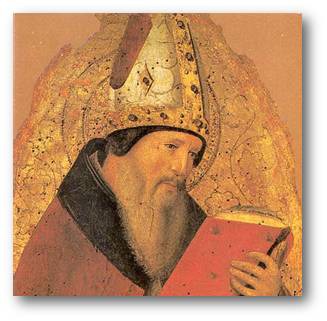
St. Augustine
Both a father and doctor of the Church. Known as one of the greatest theologians of the Western Church. Led a wild life as a young man and fathered a child out of wedlock. His mother was St. Monica. After his conversion, he became a priest and later a Bishop. Best known works include "Confessions," "Trinity" and "City of God."
25
New cards
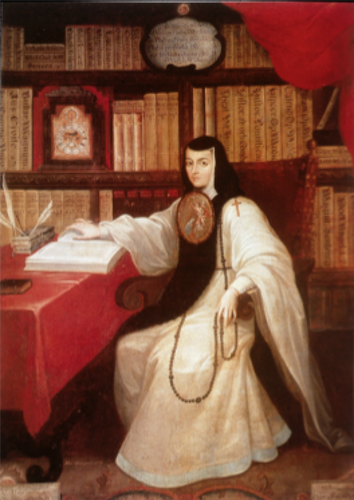
St. Jerome
Monk who preferred to live in isolation. Well educated and knowledgeable about languages. Greatest contribution was translating bible from Greek/Hebrew to Latin; father and doctor of the Church
26
New cards
Three popes given the title of "great" during age of Fathers
Leo, Gregory, Basil
27
New cards
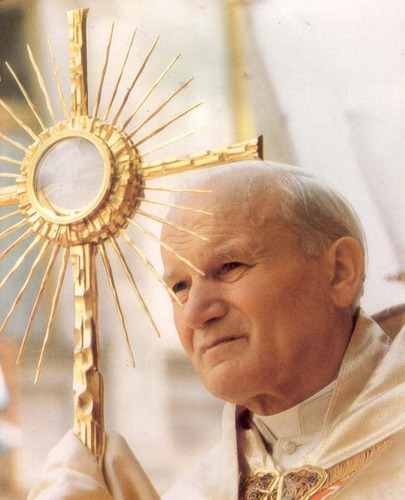
St. John Paul, II
most recent pope to receive the distinction of being called "the great" for his contributions to the Church and world
28
New cards
St. Leo the Great
defined Apostolic Succession and increased authority of the Church during his reign
29
New cards
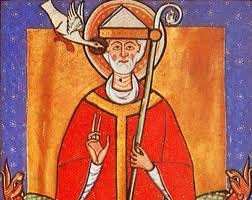
St. Gregory the Great
established papal authority in the temporal realm, developed a system of providing charitable relief for the poor, established seminaries.
30
New cards
St. Basil the Great
Known for his care of the poor and contributions to the development of monasticism in the east. Said to bring presents to the children on January 1st in the Eastern Church
31
New cards
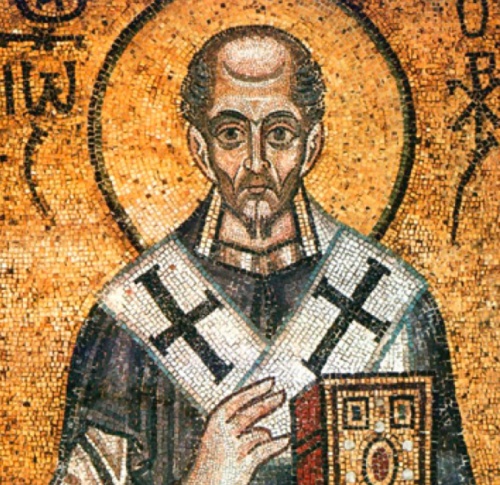
John Chrysostom
Archbishop of Constantinople known for his desire for reform and denunciation of abuse of authority by both political and religious leaders; his outstanding preaching earned him the title of a word that means "golden mouthed"
32
New cards
chrysostomos
golden mouthed
33
New cards
Issues the Church clarified in the 4th & 5th centuries
Beliefs about Jesus' divinity and humanity, Holy Trinity, and Blessed Virgin Mary
34
New cards
Council of Jerusalem
FIRST Church Council called to address issue of allowing Gentiles into the Church without first becoming Jews (circumcised)
35
New cards
First Council of Constantinople
called to address more heresies that were not ended at Council of Nicaea. It was called to confirm teachings of Nicaea, complete the Nicene Creed, and addressed controversy of Divinity of Holy Spirit
36
New cards
Council of Ephesus
denied teachings of Nestorius (Nestorianism) which said that Mary was not the Theotokos
37
New cards
Council of Chalcedon
affected relations between East and West Churches by declaring the Bishop of Rome as preeminent authority of the Church and the patriarch of Constantinople was the second in command. This council began the fissure between the Eastern and Western Church
38
New cards
5 Major Patriarchates Cities of the Roman Empire
Rome, Alexandria, Antioch, Constantinople, Jerusalem
39
New cards
Two
How many ecumenical councils needed to produce the Nicene Creed: Started at Council of Nicaea and completed at Council of Constantinople
40
New cards
21
Number of Church councils called throughout history
41
New cards
Vatican II
Last Church Council called
42
New cards
How Church Councils are named
after the city in which they are held
43
New cards
A.D. 476
Fall of the Roman Empire in the West
44
New cards
Hagia Sophia
literally means "Holy Wisdom" ; Church built in Constantinople by Emperor Justinian in A.D. 537. Modeled after the finest public buildings in the empire at the time and said to rival King Solomon's temple in Jerusalem. It was a church first, than a mosque, then a museum, and back to a mosque today. Served as the center of Christianity for over 900 years.
45
New cards
In the East
- spoke Greek
- strong politically, religiously, militarily, and economically
- well educated, wealthier
- architecture reflected power, prestige and was more elaborate than the west
- strong politically, religiously, militarily, and economically
- well educated, wealthier
- architecture reflected power, prestige and was more elaborate than the west
46
New cards
In the West
- spoke Latin
- religious leaders served as political leaders too
- weak economically, politically
- architecture was simple, plain
- susceptible to invasion by nomadic tribes; weak militarily
- religious leaders served as political leaders too
- weak economically, politically
- architecture was simple, plain
- susceptible to invasion by nomadic tribes; weak militarily
47
New cards
patriarch (Eastern)
the father of a group or tribe; spiritual father. The title is given to the highest-ranking bishops in the Church.
48
New cards
iconoclasm
The deliberate destruction of religious icons and symbols.
49
New cards
Year when Patriarch Athenagoras I and Pope Saint Paul VI met to lift mutual excommunications
1964
50
New cards
Iconoclast controversy
A dispute during the 700s in the Eastern Church over the use of icons in liturgy. Emperor Leo III condemned the veneration of sacred images, claimed it was idolatry. He attempted to impose a policy against the use of icons and sacred images on the world-wide Church.
51
New cards
Pope's response to Iconoclast Controversy
The Pope defended the veneration of icons as an important part of Christian piety.
52
New cards
Many events led to the Eastern Schism, one of them was about the rejection of Mary's role as Mother of God
disagreements over the Nestorian heresy
53
New cards
Many events led to the Eastern Schism, one of them was supremacy and primacy
The See of Constantinople second to the See of Rome in authority and importance, but also ahead of the Sees of Alexandria and Antioch, historically second only to Rome
54
New cards
Many events led to the Eastern Schism, one of them was about the differing views of Church and State
the Eastern Church accepted the emperor's authority, whereas the Pope asserted primacy in the West
55
New cards
Many events led to the Eastern Schism, one of them was disagreement over the scope of the Pope's authority over the Church, especially in relation to the authority of the patriarch of Constantinople. What did the lead to?
mutual excommunications of 1054
56
New cards
Characteristics of the West (Roman Catholics)
The Pope had primacy over the Church. Only the Pope could call a council. The Pope had authority over government and society.
57
New cards
Characteristics of the East (Eastern Orthodox Church)
Church accepted the Emperor's domination over the Church, the Emperor is seen as "The Vicar of Christ"-a title usually reserved for the Roman Pope. The Emperor would call church councils and assist them in settling doctrinal disputes and name the patriarch of Constantinople.
58
New cards
What did both churches agree on in relation to the Pope?
The 2 Churches accepted the Pope, the Bishop of Rome as the successor of Peter
59
New cards
Arianism
A heresy of the fourth century that took its name from Arius, a priest from Alexandria. The heresy denied the divinity of Jesus, claiming that he was like the Father except that he was created by the Father.
60
New cards
caesaropapism
The political theory often practiced when Christianity was legalized that held that a secular ruler could also have authority over the Church, including in matters of doctrine.
61
New cards
canon
The official list of inspired books in the Bible. The Catholic canon lists forty-six Old Testament books and twenty-seven New Testament books.
62
New cards
Christology
The study of Jesus Christ; the academic effort to understand who he is.
63
New cards
Codex Vaticanus
From the early fourth century, the oldest complete copy of the Bible in existence; it features the forty-six books of the Old Testament and the twenty-seven books of the New Testament.
64
New cards
Desert Fathers
Christians of about the fourth century who withdrew into the desert to live an ascetic life of prayer, fasting, and abstinence. Their teachings had a profound impact on the theology and spirituality of the Church and the development of monasticism.
65
New cards
deuterocanonical
From the Greek for "second measuring rod," a designation for sacred writings that remain in the Catholic Bible, but have been removed from some other Christian Bibles because they were not originally written in Hebrew. In canonical order, these texts (also known as the Apocrypha) are: Tobit, Judith, portions of Esther, 1 Maccabees, 2 Maccabees, Wisdom, Sirach, Baruch, and portions of Daniel.
66
New cards
ecumenical councils
Meetings of Catholic bishops from around the world, typically convened in order to discuss and resolve pressing theological topics.
67
New cards
Filioque
Latin for "and from the Son"; a phrase added to the Nicene Creed by the Western Church without the agreement of the Eastern Church to specify that the Holy Spirit proceeds from both the Father and the Son; one of the theological differences between East and West leading to the Great Schism.
68
New cards
First Council of Nicaea
The first ecumenical council called to address heresies spreading at this time, namely Arianism; a meeting of three hundred bishops that took place in 325, it spelled out Church doctrine including on who Jesus is and started writing Nicene Creed; defined Jesus' divinity
69
New cards
hypostatic union
From a Greek term (hypostasis) employed to describe the union of the human and divine natures of Jesus Christ, the Son of God, in one Divine Person. The First Council of Ephesus used this term and affirmed this teaching.
70
New cards
Justinian Code of Law
A collection of laws written in Latin that were instituted by the Byzantine emperor Justinian (527-565) and became the basis of European law. Its Christian orientation gave women and children more protection than earlier law, but it still reflected the customs of its times, like bodily mutilation for some crimes and repressive measures against non-Christians, including Jews.
71
New cards
Liturgy of the Word
The part of the Mass that includes the "writings of the prophets" (the Old Testament readings and psalms) and the "memoirs of the Apostles" (the Gospels and the New Testament epistles), the homily, the profession of faith (Creed), and the intercessions for the world.
72
New cards
monasticism
Religious life in which men or women leave the world and enter a monastery or convent to devote themselves to solitary prayer, contemplation, and self- denial. After martyrdom became rare, monasticism became the most demanding way to live out a Christian vocation.
73
New cards
Monophysitism
The heresy taught in the fifth century that asserted that there is only one nature in the Person of Christ—his divine nature.
74
New cards
Monothelitism
The heresy taught in the seventh century that claimed that Jesus has two natures but only one will—his divine will.
75
New cards
Nestorianism
The heresy spread by Nestorius, a fifth-century patriarch of Constantinople, that asserted that there is a disunity rather than a unity between Jesus' divine and human natures.
76
New cards
Nicene Creed
The foundational statement of Christian belief that was produced by the Church leaders gathered at the First Council of Nicaea in 325.
77
New cards
patriarchs
Bishops of one of the five episcopal sees, the name for the places of residence of bishops: the Eastern patriarchates of Jerusalem, Antioch, Constantinople, and Alexandria; and the Latin patriarchate of Rome. In the early Church, the bishop of Rome (the pope) was acknowledged the principal patriarch.
78
New cards
Patres
Latin term meaning "Father"
79
New cards
Pateres
Greek term meaning "Father"
80
New cards
St. Athanasius
Bishop of Alexandria, best known for his defense against Arianism
Some of his writings included On the Incarnation of the Word and The Life of Anthony.
Some of his writings included On the Incarnation of the Word and The Life of Anthony.
81
New cards
3 Criteria for Book to be Canonical
1. Apostolic Origin
2. Orthodox Content
3. Universal Appeal
(know what these things mean)
2. Orthodox Content
3. Universal Appeal
(know what these things mean)
82
New cards
Apostolic Origin
A book had to have come from the Apostles, either directly or through those who had known them.
83
New cards
Orthodox Content
A book had to portray Jesus in a way that was compatible with the faith as they themselves received it from the Apostles and as articulated in creeds.
84
New cards
Universal Appeal
A book had to enjoy widespread and frequent use in the worship and teaching of the Church—in other words, it had to be genuinely universal.
85
New cards
Old Testament books in Catholic Bible
are inherited from Judaism
86
New cards
The Gospels
Matthew, Mark, Luke, John; they recount the life, teaching, death and resurrection of Jesus Christ
87
New cards
Acts of the Apostles
tells the story of the early Church, especially ministries and missionary trips of Peter and Paul
88
New cards
13 Epistles
written by or attributed to Paul
89
New cards
Book of Revelation
an apocalyptic symbolic book about Jesus' self-sacrificing love
90
New cards
Letter to the Hebrews & 7 Catholic epistles (1 & 2 Peter, 1-3 John, James, and Jude)
Theological reflections on Christ and instructions on a Christian life
91
New cards
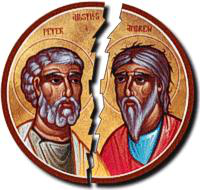
1054 AD
East-West Schism or The Great Schism; the final break between the Church in the East and the Church in the West; those in the West recognize supremacy of the Pope while Church in East recognized Patriarchs
92
New cards
Church in the West
Roman Catholic Church
93
New cards
Church in the East
Eastern Orthodox Church
94
New cards
Eastern Rite Catholic Churches
Catholic Churches whose origins were in the Eastern Roman Empire that are in union with the pope and Church centered in Rome; they are considered to be in full communion with the Roman Catholic Church, recognize the Pope as their supreme leader but their liturgical rites and ceremonies may differ slightly from how they are celebrated in the Western Church