Architecture of the Enlightenment: Neoclassicism
 Studied by 3 people
 Call Kai
 Learn
Learn Practice Test
 Spaced Repetition
 Match
Match Flashcards
 Knowt Play
1/11

There's no tags or description
Looks like no tags are added yet.
Name | Mastery | Learn | Test | Matching | Spaced | Call with Kai |
|---|
No analytics yet
Send a link to your students to track their progress
12 Terms
Introduction to the Enlightenment
An 18th-century intellectual movement centered on reason, science, education, and progress, opposing superstition, absolute monarchy, and unquestioned religious authority.
Emphasis on individual rights and civic responsibility
Joseph Wright of Derby: A Lecture at the Orrery & An Experiment on a Bird in an Air Pump
Paintings that visualize Enlightenment ideals through scientific demonstrations, replacing divine light with human knowledge.
Dramatic chiaroscuro centered on artificial light
Science as modern “religion”
Emotional responses to knowledge (wonder, fear, curiosity)
Ordinary people engaged in learning
Thinkers of the Enlightenment
Jean-Jacques Rousseau
Views:
Advocated for equality
Valued emotion, nature, and moral sincerity
Denis Diderot
Views:
Art should educate and improve society
Political Revolutions: France & America
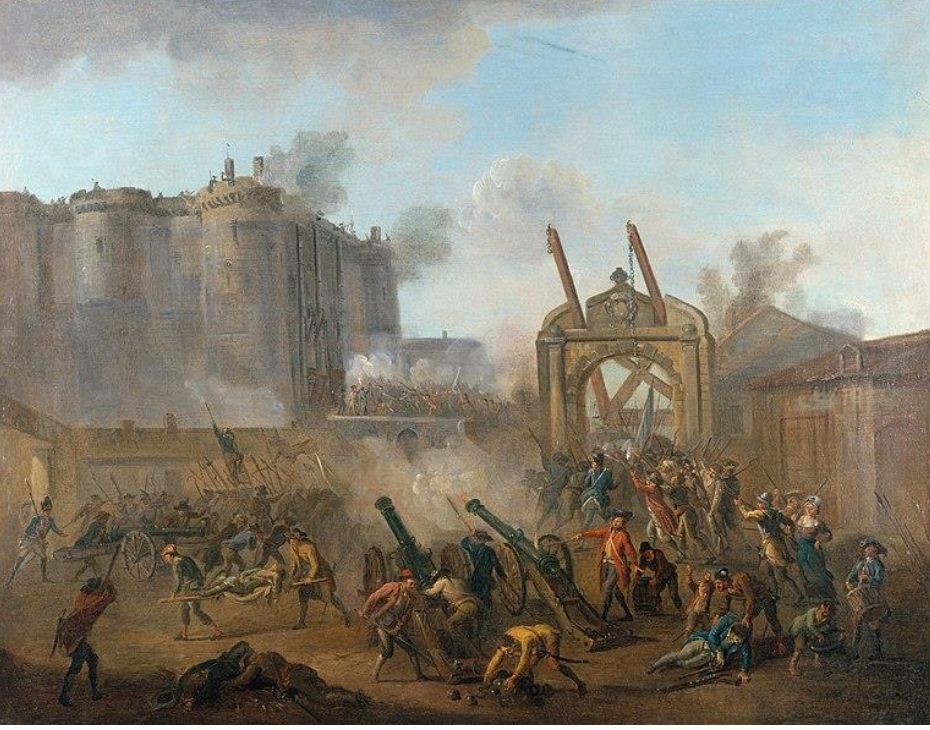
Art documenting revolutionary events, turning history into visual evidence of political change. Ex. Jean-Pierre Houël / Lallemand – The Storming of the Bastille
Characteristics:
Focus on collective action
Collapse of absolutist symbols
Emphasis on civic struggle
Art as historical documentation
Roots of Neoclassicism
Johann Joachim Winckelmann
Founder of modern art history; promoted Ancient Greece as the ideal model for art.
Views:
The only way for us to become great, or even inimitable if possible, is to imitate the Greeks.
Colour should have a minor part in the consideration of beauty, because it is not colour but the structure that constitutes its essence.
Neoclassical Painting Style
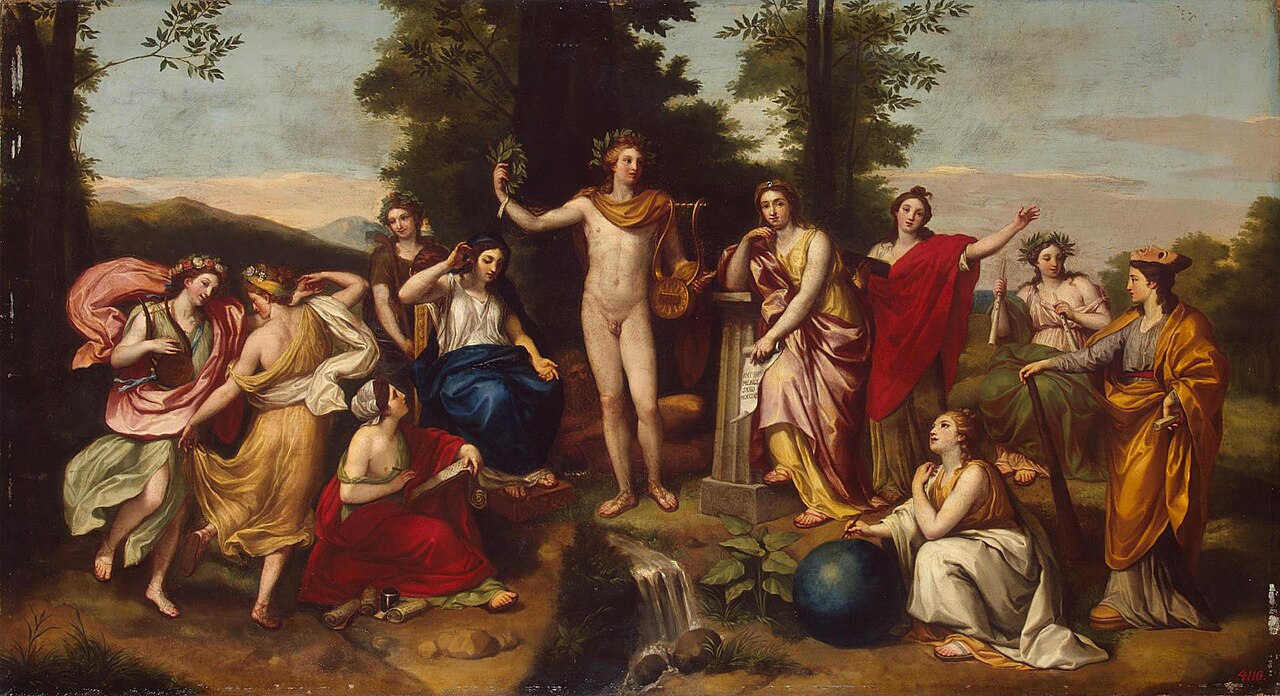
Anton Raphael Mengs – Parnassus
A manifesto of Neoclassicism.
Balanced, symmetrical composition
Idealized classical figures
Calm, restrained emotion
Clear outlines and structure
Intellectual over sensual appeal
Pompeii & Herculaneum
Archaeological discoveries that provided direct access to ancient Roman life, deeply influencing Neoclassical art.
The Grand Tour
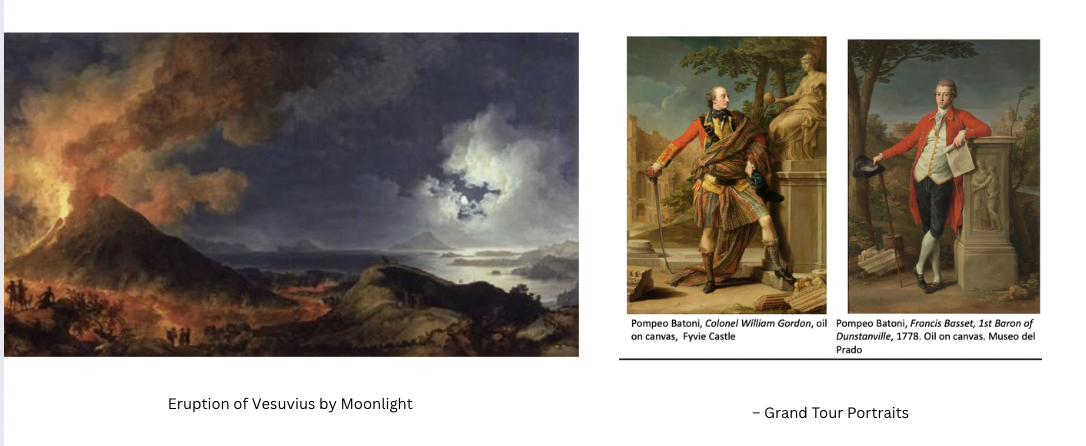
Pompeo Batoni – Grand Tour Portraits
Description:
Travel experience for elite Europeans; Italy as cultural classroom.
Key Characteristics:
Classical ruins as backdrops symbolizing history and time
Education through travel
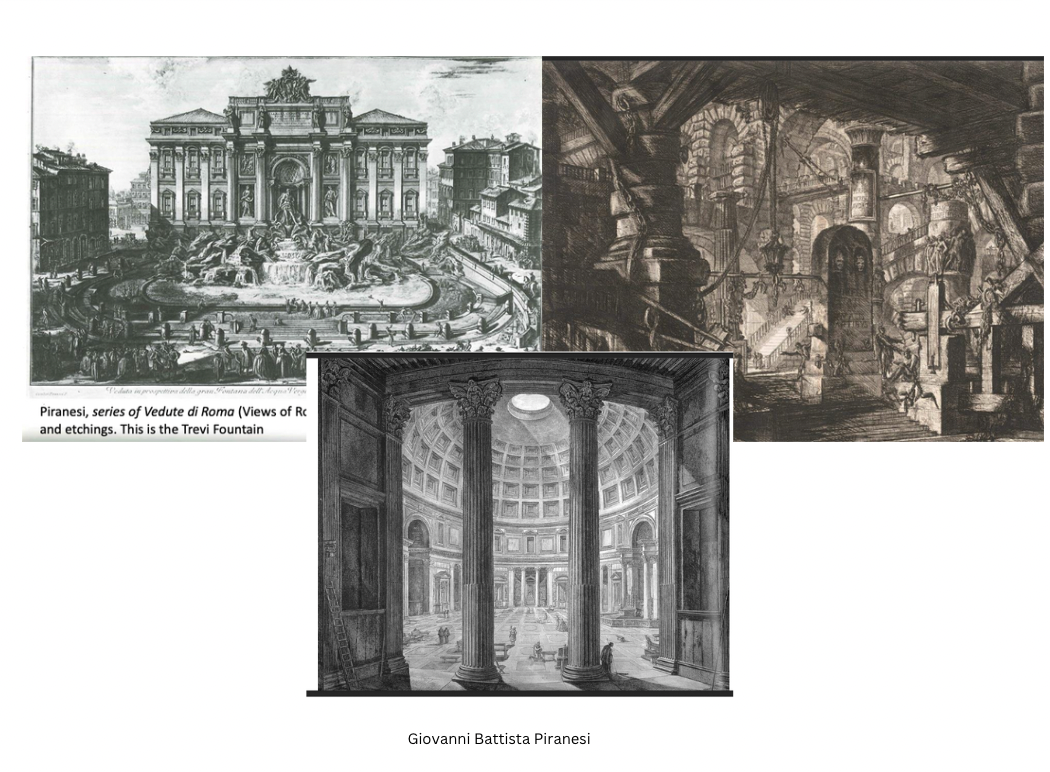
Giovanni Battista Piranesi
Artist-archaeologist who documented and reimagined ancient Rome with dramatic intensity.
Monumental ruins
Dramatic scale and perspective
Blend of archaeology and imagination
The Sublime
A concept first introduced by the philosopher Edmund Burke in the eighteenth century to describe art that is truly extraordinary, invoking a powerful mix of awe, wonder and terror
Awe, terror, vastness
Emotional intensity
Influences ruins, landscapes, and architecture
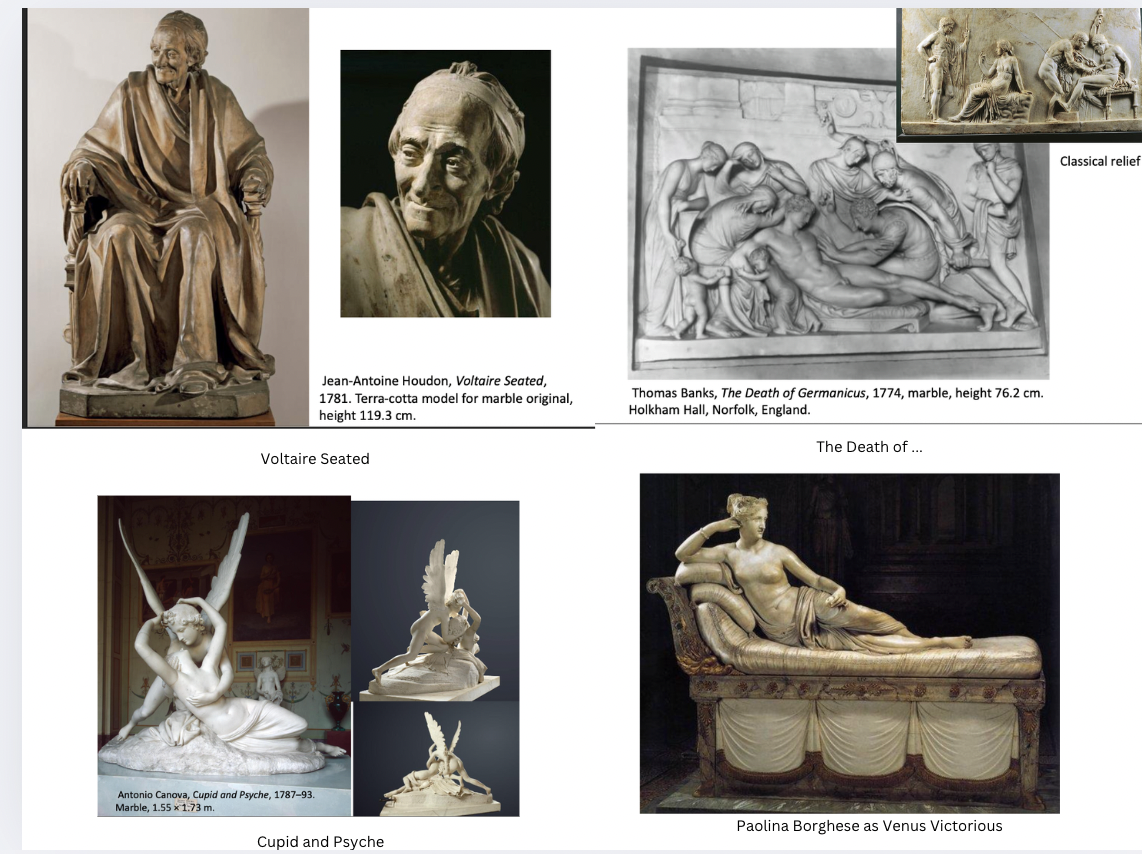
Neoclassical Sculpture
Jean-Antoine Houdon – Voltaire / Voltaire Seated
Intellectual realism
Enlightenment hero as philosopher
Calm dignity and realism
Thomas Banks – The Death of Germanicus
Classical heroism
Controlled emotion
Antonio Canova, Cupid and Psycho, Paolina Borghese as Venus Victorious
Idealized beauty
Classical mythology
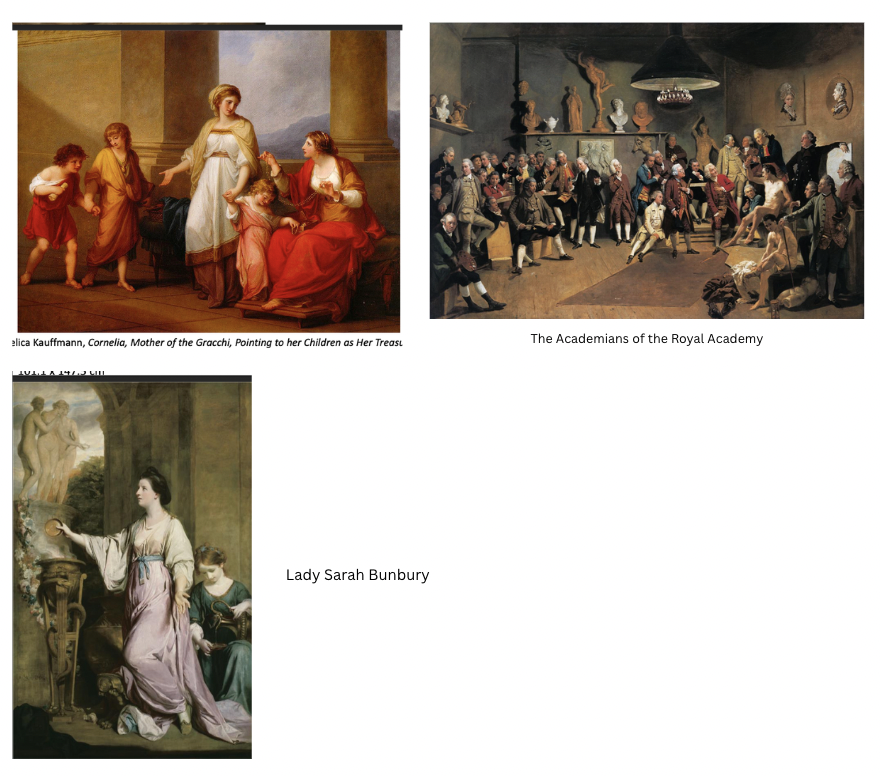
Neoclassical Painting
Angelica Kauffman – Cornelia, Mother of the Gracchi
Moral motherhood
Simplicity over luxury
Johan Zoffany – The Academicians of the Royal Academy
Art institutions
Enlightenment professionalism
Group portrait as intellectual identity
Joshua Reynolds – Lady Sarah Bunbury
Idealized portraiture
Classical elegance
Moral refinement
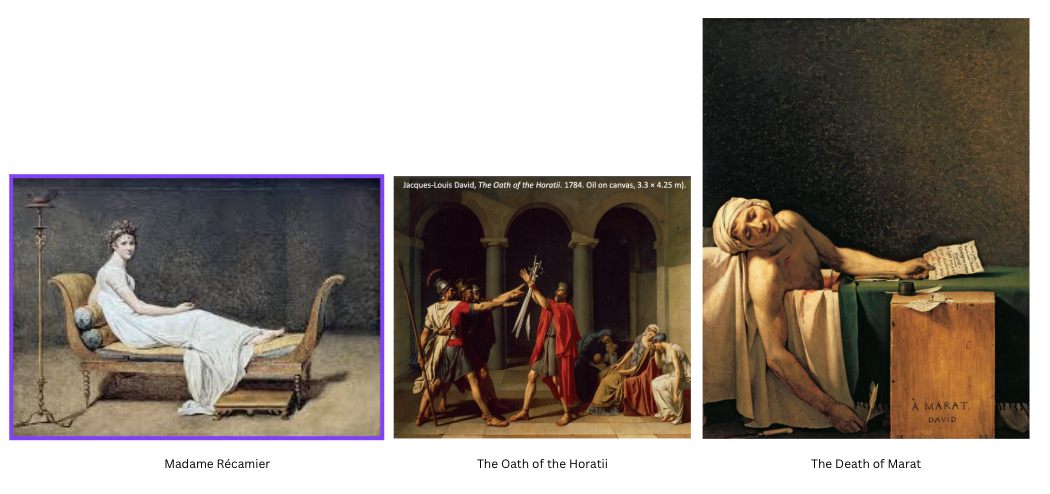
Jacques-Louis David
Madame Récamier
The Oath of the Horatii
The Death of Marat
Key Characteristics:
Moral seriousness
Political engagement
Clear composition and sharp outlines
Classical sacrifice and civic duty
 Note
Note  Flashcards (21)