BIOL 2153: Gymnosperms
 Studied by 0 people
 Call Kai
 Learn
Learn Practice Test
 Spaced Repetition
 Match
Match Flashcards
 Knowt Play
1/19

There's no tags or description
Looks like no tags are added yet.
Name | Mastery | Learn | Test | Matching | Spaced | Call with Kai |
|---|
No analytics yet
Send a link to your students to track their progress
20 Terms
What was the key evolutionary advancement of Gymnosperms?
Bifacial Vascular Cambium: a lateral meristem that produces secondary tissues on both its inner and outer sides of the vascular cambium.
Eutele formation is also important to their advancement
What are two extinct gymnosperms that were discussed in class?
Pteridospermales: seed fern and incredibly diverse
Cordaitales: priminitive and conifer-like
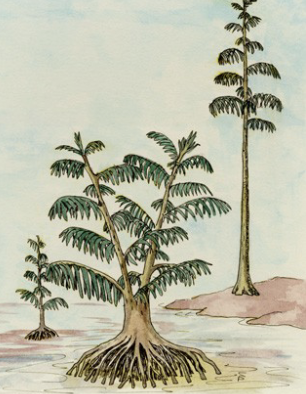
What does “Gymnosperm” mean
Naked Seeds
What are the PHYLAs of Gymnosperms?
Four Phylas
Coniferophyta
Cycadophyta
Ginkgophyta
Gnetophyta
What is the first occurence of Pollination?
Through pollengrains of Gymnosperms where the pollen grain produces a tubular outgrowth called pollen tube.
What is the function of the Pinus Pollen Grain
(The Microgametophyte) has three cell types:
Generative cell (produces sperm cells by mitosis
Tube Cell: grows through megasproangial wall to make a pathway for the sperm cell to get to the egg
Prothallial Cellss: doesn’t do anything (leftovers from evolution)
Polyembryo is?
Where the megagametophytes of gymnosperms produce several archegonia
What is the most numerous Gymnosperms?
Phylum Coniferophyta, and its also the most ecologically important. This phylum contains the tallest vascular plant (the red wood)
what is a fascicle?
they are the leaves of pines in bundles of 1-8 where they are wrapped by small scale-like leaves.
What is an important characteristic of Pinus Leaves
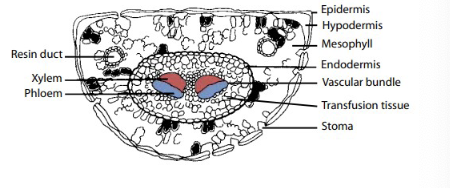
They have characteristics that are well adapted to dry environements like a thick cuticle, hypodermis, sunken stomata, resin ducts with a compact mesophyll. These needle-lioke leaves made them very successful in the Permian Period.
What is the transfusion tissue?
Specialized tissue in Conifer leaves that surround the vascular bundles, facilitating the radial transport of water and sugars between the xylem and phloem.
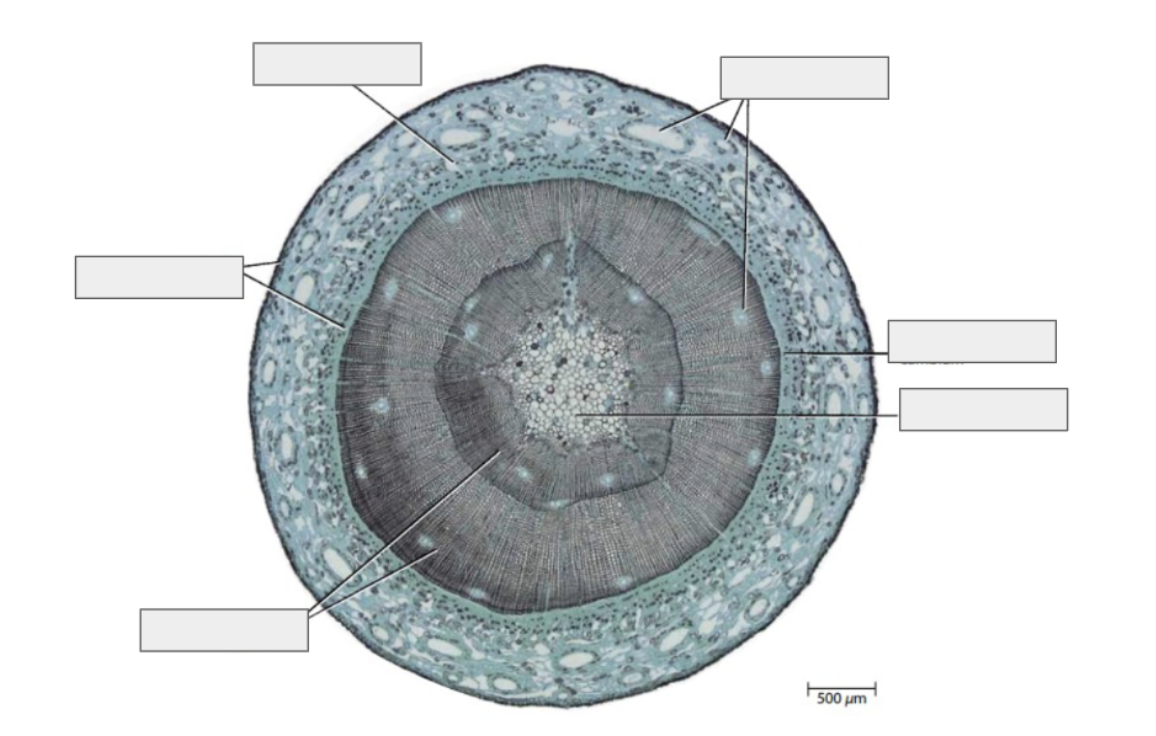
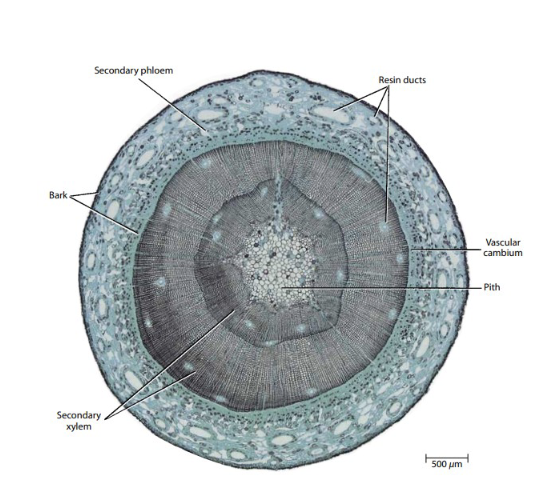
what is this?
Pinus Stem
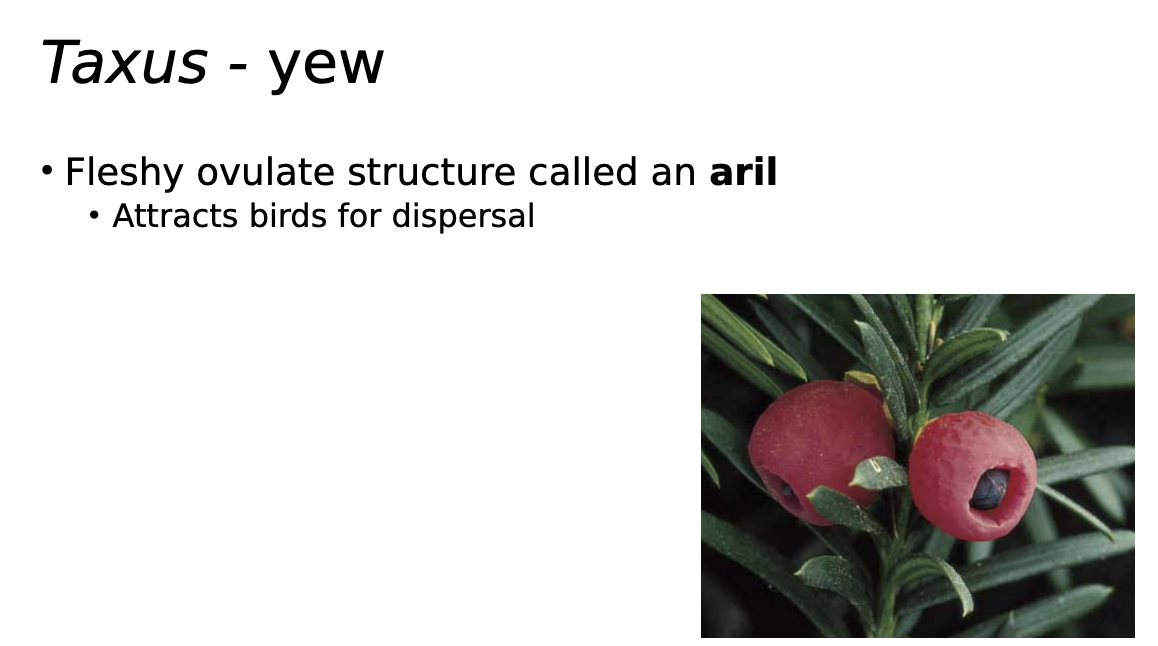
What are the fleshy ovulate structure on Taxus - yew trees?
What are the palm-like gymnosperm plants found in the tropics and subtropic regions?
Phylum Cycadophyta: today 11 genera with approx. 300 species.
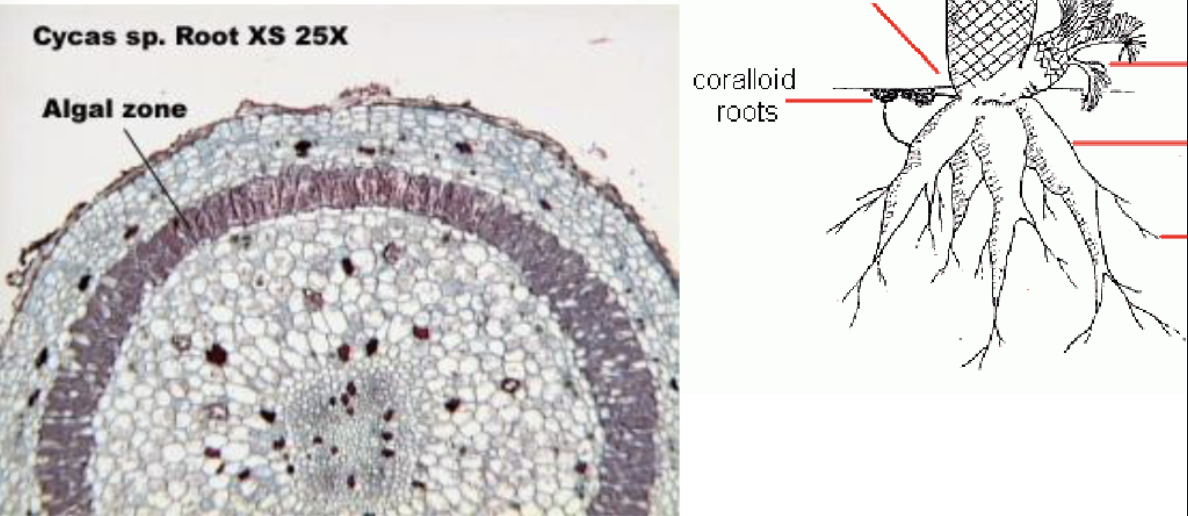
What are Corraloid Roots?
Example on Cycads, they are roots that grow upwardds and have a ring of symbiotic cyanobacteria in the “algal zone” that fixes Nitrogen for the plant.
how are cycads pollinated?
mostly by insects particularly beetles (some of which are pollen-consuming).
are Cycads heterosporous?
They contain male and female plants so yes
In Phylum Ginkgophyta, what is the only living species of this phylum?
Ginkgo Biloba also called the maiden hair tree
Most gymnosperms are Evergreen but one gymnosperm
Ginkgo: they lose their leaves seasonally
 Note
Note  Flashcards (34)