PBS Unit 2
 Studied by 13 people
 Call Kai
 Learn
Learn Practice Test
 Spaced Repetition
 Match
Match Flashcards
 Knowt Play
1/122

Earn XP
Description and Tags
Name | Mastery | Learn | Test | Matching | Spaced | Call with Kai |
|---|
No analytics yet
Send a link to your students to track their progress
123 Terms
medical student
person who studies to be a doctor
medical assistant
helps physicians examine and treat patients and performs tasks to keep offices running smoothly
nurse
licensed health care professional who is skilled in promoting and maintaining health
medical technician
Uses sophisticated equipment and has different responsibilities. Some work directly with patients (a phlebotomist draws blood) while others work in a lab (a histotechnician analyzes tissue)
patient liason
works with patients and their families to address needs and concerns. Acts as an intermediary between patients, thier families and the hospital admin.
non physician practitioners
clinical professionals who practice in many of the areas similar to those in which physicians practice, but do not have an MD or DO degree
primary care physician
a regular doctor who provides checkups, screenings, treatments, and prescriptions
pediatrician
physician specializing in the treatment of babies and children
medical history
a record of past health problems and illnesses
chief complaint
the main reason for the patient's visit
physical signs
Pieces of evidence that indicate an illness that can be observed externally, such as a rash, coughing, or elevated temperature.
symptoms
Any subjective evidence of disease a patient perceives, such as aches, nausea, or fatigue. Symptoms allow the health care provider to narrow down the possible conditions that may be affecting the patient and then run tests to make a diagnosis.
diagnosis
The process of determining which disease or condition explains a person's symptoms and signs.
demeanor
outward behavior or bearing
Tact
Discretion and sensitivity in dealing with others.
Empathy
The ability to understand and share the feelings of another person.
vital signs
Measurements—specifically pulse rate, temperature, respiration rate, and blood pressure—that indicate the state of a patient's essential body functions.
homeostasis
The maintenance of stable internal physiological conditions (like body temperature or the pH of blood), which enables the optimal functioning of an organism.
pulse
The rhythmic expansion and recoil of arteries resulting from heart contraction.
respiratory rate
The number of breaths an organism takes per minute.
blood pressure
The pressure that blood exerts upon the walls of blood vessels, especially arteries, usually measured with a sphygmomanometer and expressed in millimeters of mercury.
triage
The sorting and prioritization of patients based on the urgency of their need for care.
Body Mass Index (BMI)
a measure of body weight relative to height
oxygen saturation
a clinical measurement of the percentage of hemoglobin that is bound with oxygen in the blood
Palpatate
touching
ophthalmoscope
instrument used to examine the interior of the eye
otoscope
instrument used for visual examination of the ear
tonsils
masses of lymphatic tissue in the back of the oropharynx
lymph
watery fluid
cancer
a disease caused when cells divide uncontrollably and spread into surrounding tissue.
Dermatologist
medical doctors who specialize in the diagnosis and treatment of skin conditions
stethoscope
a medical instrument for listening to the sounds generated inside the body
clear breath sounds
A clear woosh of air with each inhalation and exhalation
Wheezing
High pitched sound heard in the lungs
Crackles (rales)
Short and intermittent clicking, rattling, or popping sounds heard during inhalation when air is forced through an airway narrowed by fluid
stridor
Harsh, shrill sound, similar to wheezing, usually heard closest to the back of the neck, as it is caused by a partially obstructed windpipe.
Rhonchi
A snore-like sound heard when airways are partially obstructed.
erythrocyte
Hemoglobin-rich, red blood cells that transport oxygen through a body. Erythrocytes give the red color to vertebrate blood and do not have nuclei.
leukocyte
One of the many cells in the blood that lack hemoglobin but have a nucleus and are active in the immune response. Lymphocytes, monocytes, neutrophils, eosinophils, and basophils are leucocytes.
thrombocyte
A minute, colorless, anucleate disk-like body of mammalian blood that assists in blood clotting by adhering to other platelets and damaged epithelium.
blood plasma
The pale yellow, liquid portion of blood that consists of water and dissolved substances, including sugars, lipids, metabolic waste products, amino acids, hormones, and vitamins.
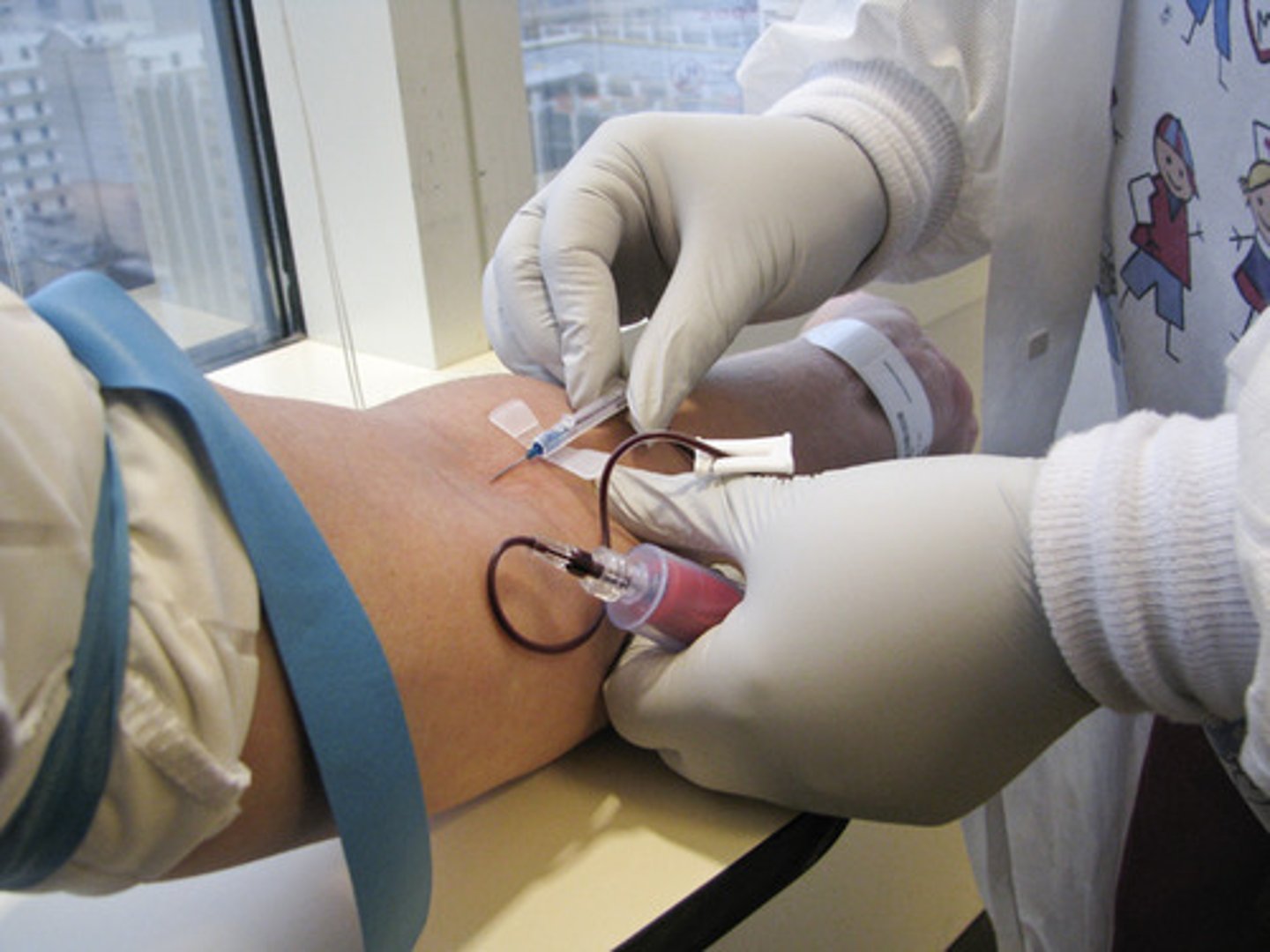
phlebotomy
incision of a vein
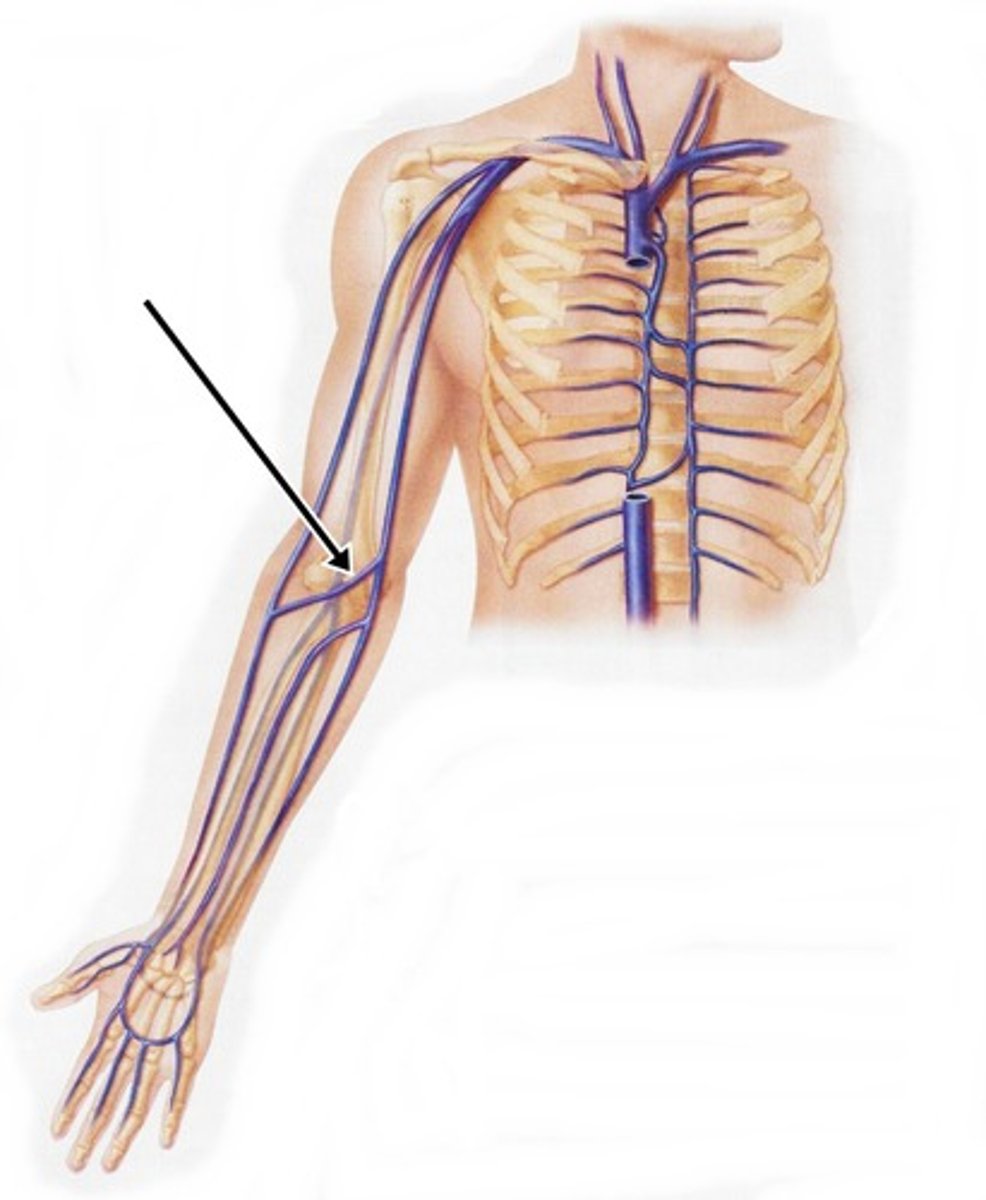
median cubital vein
the first choice for venipuncture
Phlebotomist
specialist in drawing blood
Hemogobin (HB/Hgb)
The oxygen-carrying protein in red blood cells.
Hematocrit (HCT)
The proportion of red blood cells to plasma, the fluid component, in blood.
Cholesterol
A lipid that is an essential component of animal cell membranes and acts as a precursor molecule for the synthesis of other biologically important steroids.
risk factor
A behavioral, environmental, genetic, psychological, or demographic attribute that increases risk or susceptibility.
LDL
Type of lipoprotein responsible for transporting cholesterol to the cells.
HDL
Type of lipoprotein responsible for removing excess cholesterol from the blood stream and transporting it to the liver.
Metabolism
The chemical reaction processes of breaking down molecules for energy and of using simple building blocks to build up more complex molecules needed for growth and repair.
hormone
A signaling molecule produced by glands. A hormone induces a specific effect on the activity of cells.
basal metabolic panel
blood test that moniters glucose, electrolytes, and blood urea nitrogen
Biomarkers
signals in the blood that may indicate risk for disease or the presence of disease or injury
referral
Transfer of patient care from one physician to another.
Telehealth
Use of technology to deliver health-related services and information, including telemedicine
Type 1 diabetes
A form of diabetes that usually develops during childhood or adolescence. Type 1 is characterized by a severe deficiency of insulin, leading to high blood glucose levels.
Biomolecule/Macromolecule
A large organic molecule found in living organisms; examples are carbohydrates, lipids, proteins, and nucleic acids.
chemical reaction
the process by which one or more substances change to produce one or more different substances
cellular respiration
the process by which cells use oxygen to produce energy from food
ATP
(adenosine triphosphate) main energy source that cells use for most of their work
Carbohydrates
A compound, such as sugar, starch and cellulose, found in foods and living tissues that can be broken down and used for energy.
metabolism
The chemical reaction processes of breaking down molecules for energy and of using simple building blocks to build up more complex molecules needed for growth and repair.
Lipids
Energy-rich organic compounds, such as fats, oils, and waxes, that are made of carbon, hydrogen, and oxygen.
Protein
An organic compound that is made of one or more chains of amino acids and that is a principal component of all cells
nucleic acids
macromolecules containing hydrogen, oxygen, nitrogen, carbon, and phosphorus
insulin
A protein hormone secreted by the pancreas; essential for the metabolism of carbohydrates and the regulation of glucose levels in the blood.
type 2 diabetes
A form of diabetes that develops especially in adults, most often obese individuals. Type 2 is characterized by high blood glucose resulting from impaired insulin use coupled with the body's inability to compensate with increased insulin production.
Pancreas
An organs in the abdominal cavity with two roles. The first is an exocrine role: to produce digestive enzymes and bicarbonate, which are delivered to the small intestine via the pancreatic duct. The second is an endocrine role: to secrete insulin and glucagon into the bloodstream to help regulate blood glucose levels.
negative feedback
Causes the system to stop doing the original action and to either take no action or to perform an opposite action.
positive feeback
Causes a reinforcement of the original action. The input causes the reaction to increase
glucagon
A hormone secreted by pancreatic endocrine cells that raises blood glucose levels; an antagonistic hormone to insulin.
Health Insurance Portability and Accountability Act (HIPAA)
A set of U.S. national standards that protect an individual's privacy rights related to their personal medical information.
Chronic conditions
characterized by a slow progression of seriousness over a duration of time longer than three months, but they could persist over the rest of a person's life.
Acute conditions
sudden onset and a short duration
Magnetic Resonance Imaging (MRI)
A medical imaging technique that uses magnetic fields and radio waves to take pictures of the soft tissues of the body.
differential diagnosis
a list of potential diagnoses compiled early in the assessment of the patient
eukaryote
Organisms that have membrane-bound organelles.
somatic cell
Any cell in the human body that is not a sex cell (egg or sperm).
mitosis
A process that takes place in the nucleus of a dividing cell. Mitosis involves the doubling and separation of genetic material and results in the formation of two new nuclei, which each have the same number of chromosomes as the parent nucleus.
DNA
A type of nucleic acid consisting of nucleotide monomers with a ribose sugar and the nitrogenous bases adenine (A), cytosine (C), guanine (G), and thymine (T). DNA is double-stranded and helical and functions in protein synthesis and as the genome of some viruses.
chromosome
Tightly coiled DNA that is found in the nuclei of cells.
homologous
Chromosome pairs, one from each parent, having similar gene composition, size, and structure.
chromatid
One half of a chromosome.
centromere
The centralized region joining two sister chromatids.
tumor
A lump or mass of cells caused by uncontrolled cell division; categorized as benign or malignant.
benign
A tumor that is not cancerous; benign tumors are generally considered harmless.
malignant
A cancerous tumor which will grow and spread to invade other tissues or parts of the body.
metastasis
The spread of cancer cells beyond their original site
biopsy
the removal of living tissue from the body for diagnostic examination
pathologist
specialist in the study of disease
Cytopathologist
examines cells under a microscope to look for signs of cancer
gene
A sequence of nucleotides that codes for a protein, resulting in a specific phenotype.
mutation
A rare change in genetic material, which ultimately creates genetic diversity within a species.
protein synthesis
The creation of a protein from a DNA template.
nucleotide
A building block of DNA that consists of a five-carbon sugar covalently bonded to a nitrogenous base and a phosphate group.
RNA
A type of nucleic acid consisting of nucleotide monomers with a ribose sugar and the nitrogenous bases adenine (A), cytosine (C), guanine (G), and uracil (U). RNA is usually single stranded and functions in protein synthesis and as the genome of some viruses.
Messenger RNA (mRNA)
A type of RNA that is transcribed from DNA and translated by ribosomes in the cytoplasm to produce proteins.
Transcription
The synthesis of RNA from a DNA template.
Translation
The synthesis of protein using the genetic information encoded in mRNA.
 Note
Note  Flashcards (21)