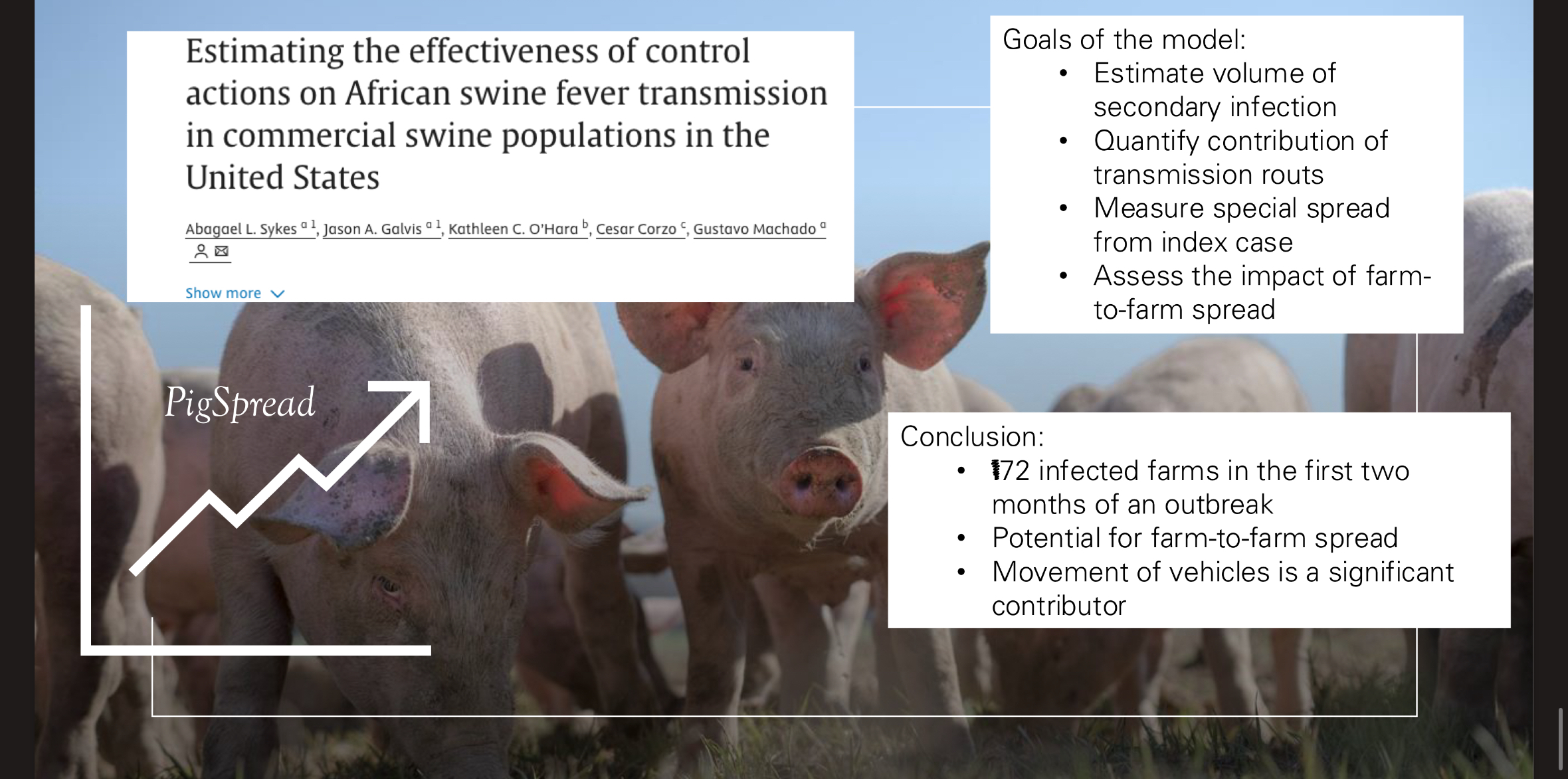
African Swine Fever in Pigs
 Call Kai
 Learn
Learn Practice Test
 Spaced Repetition
 Match
Match Flashcards
 Knowt Play
1/15

There's no tags or description
Looks like no tags are added yet.
Name | Mastery | Learn | Test | Matching | Spaced | Call with Kai |
|---|
No analytics yet
Send a link to your students to track their progress
16 Terms
Epidemiology
Contributing factors:
infected swill is likely culprit
scraps (meat products, plant products that you would give to animals)
pigs
movement of infected individuals across borders

Etiology
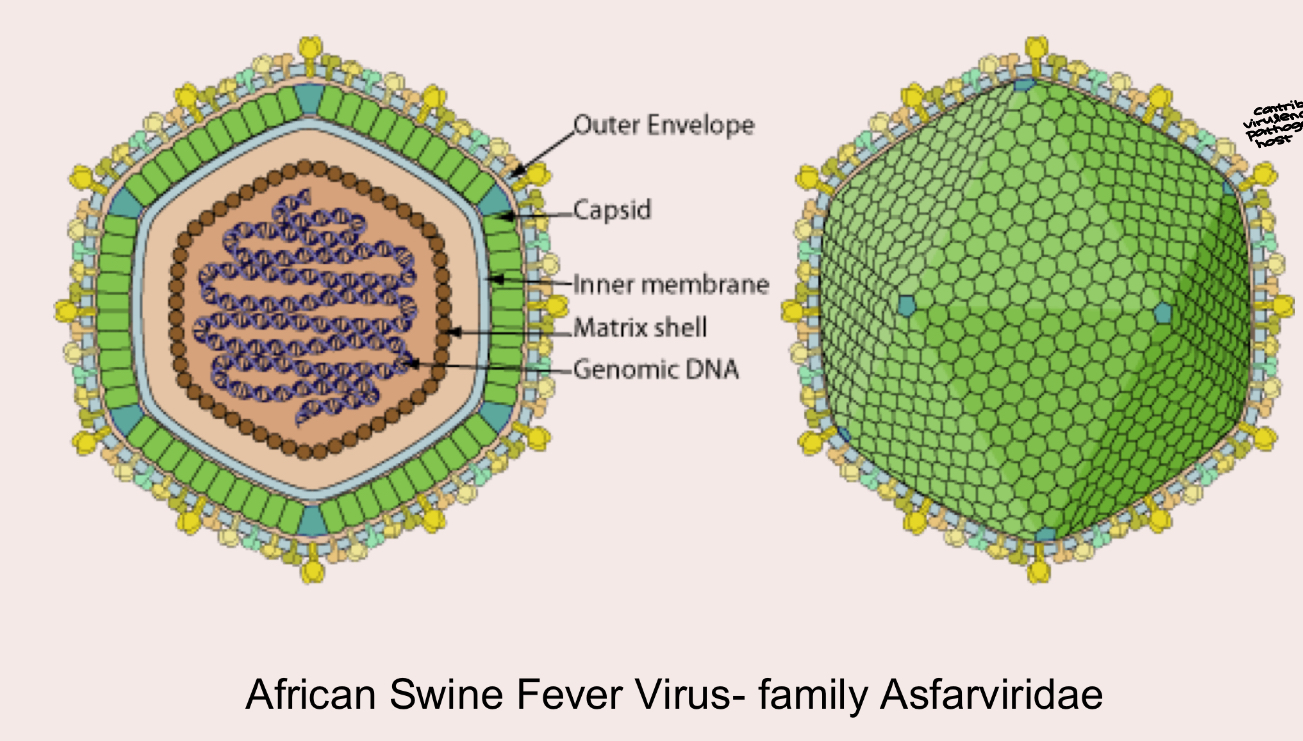
large virus
capsid contains genetic material (dsDNA) for immune system evasion, cell process modulation and virulence
contributes to virulence of pathogen within host
23 genotypes (versions)
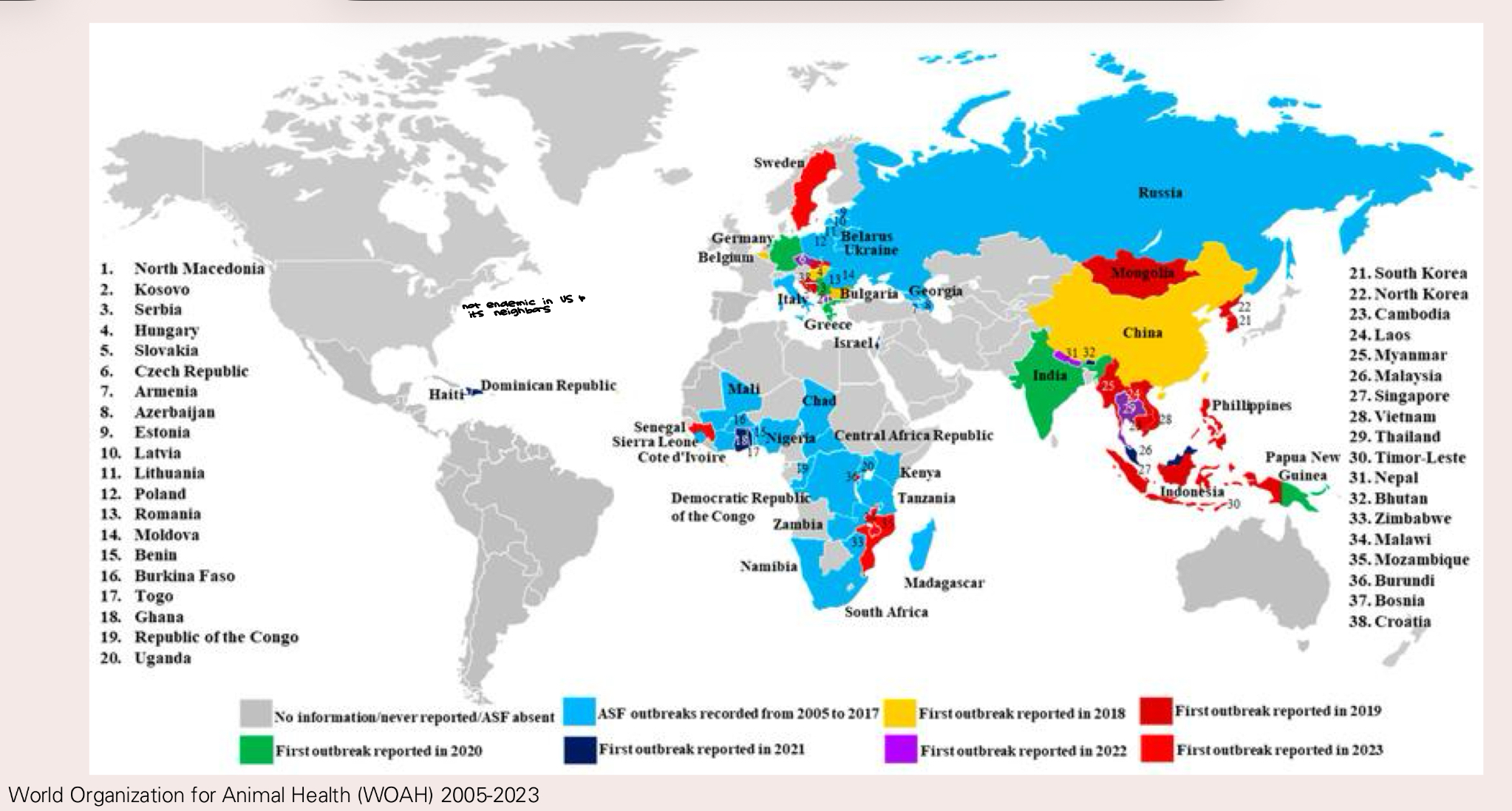
all 23 are present in Africa (endemic)
I and II are present in other parts of the world
Cytoplasmic virus
causes huge macrophage loss within host, dampening its ability to fight off any pathogen
Current endemic areas
Transmission
direct contact with infected individual
virus can be found in all fluids, especially oronasal (lungs, nose, tracts, cough, sneeze) secretions and excretions
airborne virus
persistent in the blood and lymph
head, face, neck
persistent in tissues after death
necropsy
indirect contact with contaminated fomites
highly stable in proteinaceous (meat) resources
consumption or handling of infected meat that has not been cooked properly is a key factor in transmission)
can persist stably on surfaces
things we use to handle/transport pigs
infected tick bite (Ornithodoros spp. → soft tick)
competent vectors of ASFV can be found globally
ticks can maintain the virus transstadially (virus can be passed through each stage, egg → larva → nymph → adult), transovarially (female tick → eggs), and sexually (mating on host)
Vector role- ornithodoros ticks
nidicolous
hand out with host
their bedding, nesting, burrowing areas
not found on the host like hard ticks
feed often and frequently
maintain virus across generations
Host- family suidae (come down with clinical signs/are reservoirs)
Warthog
Phacochoerus africanus
resistant to clinical signs
Bush pig
Potamochoerus larvatus
resistant to clinical signs
Wild Boar & Domestic Pig
Sus scrofa
Sus scrofa (domestical)
come down with clinical disease the worst
Host- warthog, bush pig
Warthog
young develop significant viremia and show no clinical disease
reservoir host
if a tick were to bite, warthogs would most definitely take in the virus
adults show no clinical signs and are infected/tive for life
-ed: containing virus
-tive: having the virus & being able to give it to a tick
only ticks contribute to transmission
Bush pig
resistant to clinical disease despite high viremia for extended time
capable of transmission to other swine
more readily transmit pathogen
Host- peccary (family teyassuidae)
not true pigs
resistant to infection
peccary macrophages are not compatible to the virus
Clinical disease- wild pig, domestic pig
Acute Hemorrhagic Fever
caused by highly virulent strains
almost always 100% mortality
signs: high fever, lethargy, weakness, diarrhea, hemorrhagic signs
death occurs 1-4 days post signs
most common in disease free regions (areas where it is not endemic)
Chronic Infection
caused by lesser virulent strains
low mortality
signs: intermittent fever, loss of appetite, depression and fatality (if prolonged)
domestic pigs are MOST infectious during incubation period and can shed virus up to one month after clearing signs
period b/w acquiring pathogen and showing signs
prolonged infected = disease persistence
Diagnosis
Best tissues: spleen, kidney, and lymph nodes
organ/tissues involved in clearing a pathogen

Vaccine
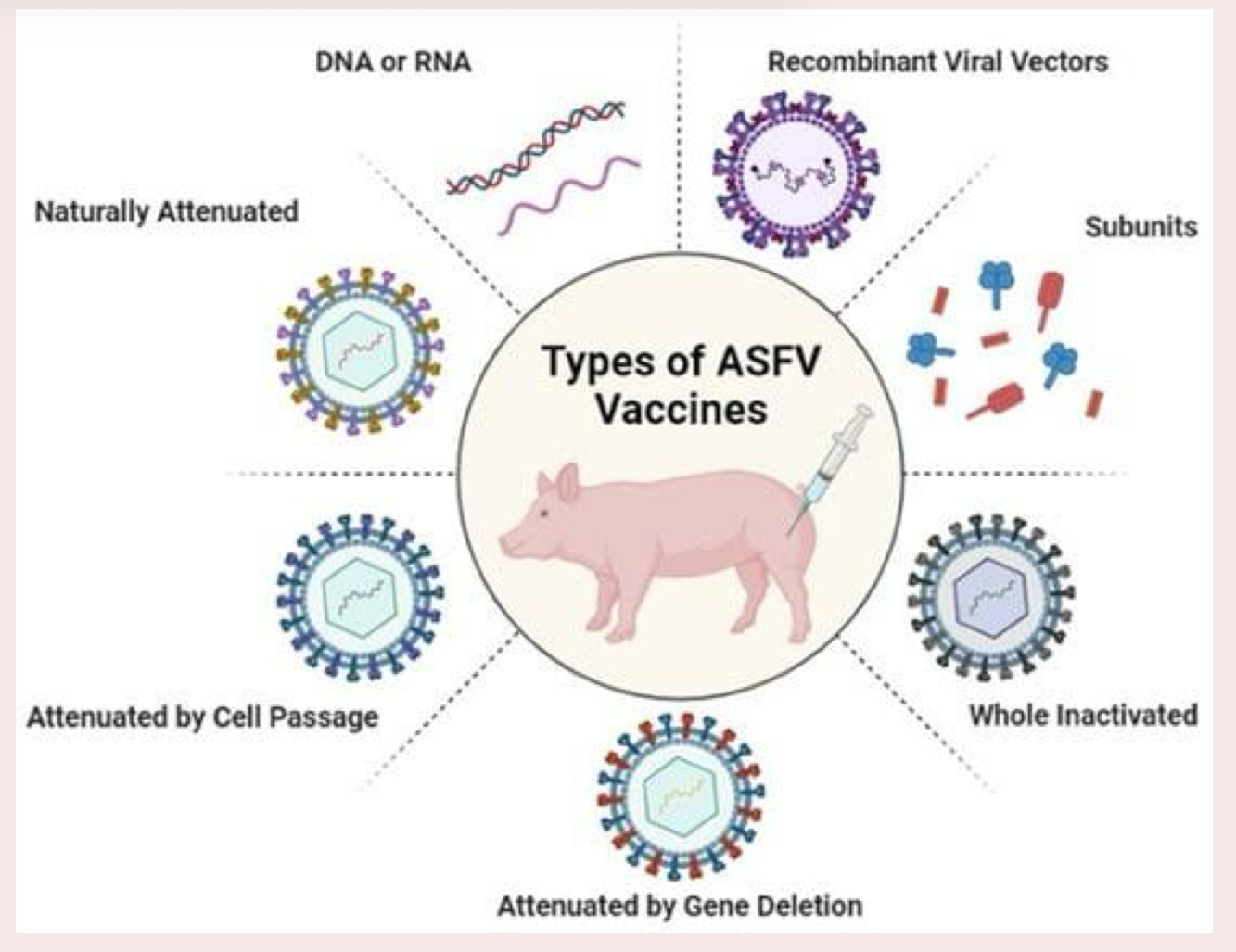
currently no vaccine available
WHY??? It’s complicated!!
diversity of viral strains (23 genotypes)
inadequate understanding of virus-host-cell interaction
inadequate understanding of protective antigens
genetic diversity of the host (diff. genuses)
Housing domestic swine in the U.S. (not endemic)
maintenance is a highly regulated closed system
housed indoors
high biosecurity measures from birth to slaughter
frequent sanitation of slaughter materials, feed and transportation devices
Contributing factors to geographic spread
Legal
movement of domestic swine from neighboring countries
imported animals, animal biproducts, and feed from endemic areas that were poorly treated… required permit upon entry
Illegal
improper border security
into non-endemic areas
bioterrorism
pathogen is stable in frozen products
major consequences?
crippling economic loss!
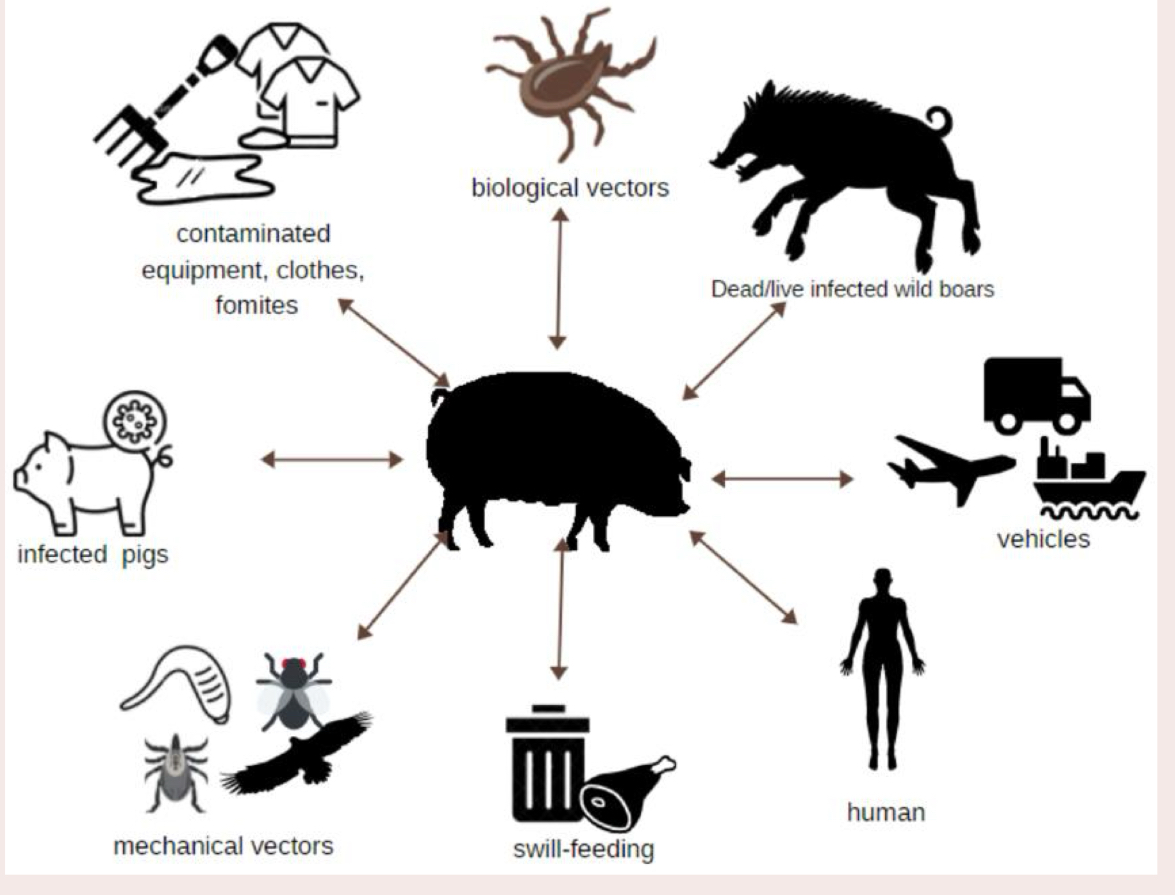
Complications if introduced to US
role of soft ticks species is generally unknown (10 to 12 known species)
virus can persist in a range of climates (flexible, cold/hot)
backyard and feral swine could contribute to short term outbreaks
wild hogs susceptible to disease in same way as domestic
The problem with feral hogs
feral hogs are free roaming and can contribute to disease spread
>6 million in US (3-4 million in Texas)
males are free roaming
reproductive females live in small communities (sounders)
contact rate study (US 2012): Sounder interaction is reduced by at least 2km which reduced transmission
using bait stations to study behavior
home range studies are necessary
Texas study in 2012 found range up to 22.23 square km
culling events are most effective (prophylactic culling as well)
eliminate threats
Estimations