Panic disorder / GAD
0.0(0)
Studied by 7 people Call Kai
 Learn
Learn Practice Test
 Spaced Repetition
 Match
Match Flashcards
 Knowt Play
Card Sorting
1/9

Earn XP
Description and Tags
Last updated 2:54 AM on 11/8/22
Name | Mastery | Learn | Test | Matching | Spaced | Call with Kai | Chat |
|---|
No analytics yet
Send a link to your students to track their progress
10 Terms
1
New cards
Panic disorder DSM criteria
- recurrent, unexpected panic attacks
- worry about another attack, or consequences of an attack
- not due to substance abuse or medical condition
- not explained by social/specific phobia
* consider comorbid diagnosis of agoraphobia
- worry about another attack, or consequences of an attack
- not due to substance abuse or medical condition
- not explained by social/specific phobia
* consider comorbid diagnosis of agoraphobia
2
New cards
causal factors panic disorder (biological)
- genetic predisposition
- abnormal brain activity--> amygdala= more active, panic circuit (amygdala, locus Cornelius, hippocampus, central grey matter) overactive
- abnormal ntm activity--> norepinephrine=more active=greater cardiovascular activity
- abnormal brain activity--> amygdala= more active, panic circuit (amygdala, locus Cornelius, hippocampus, central grey matter) overactive
- abnormal ntm activity--> norepinephrine=more active=greater cardiovascular activity
3
New cards
causal factors panic disorder
(psych)
(psych)
- classical conditioning--> settings of previous panic attacks and later trigger anxiety
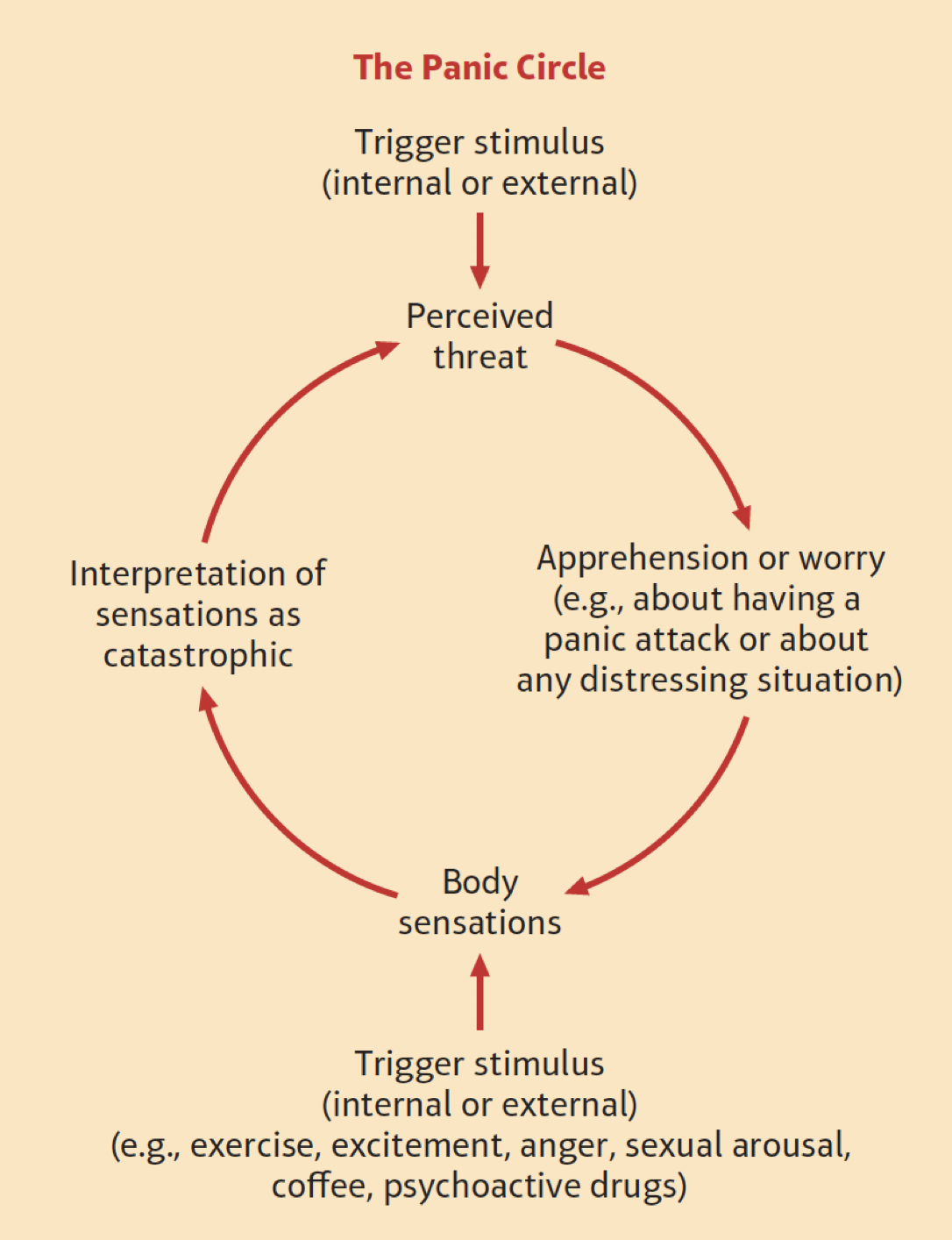
-panic cycle-->perceived threat, apprehension or worry, bodily physiological sensations, interpretation of sensations as catastrophic
-panic cycle-->perceived threat, apprehension or worry, bodily physiological sensations, interpretation of sensations as catastrophic
4
New cards
CBT for panic disorder
- 12-15 sessions
- psychoeducation
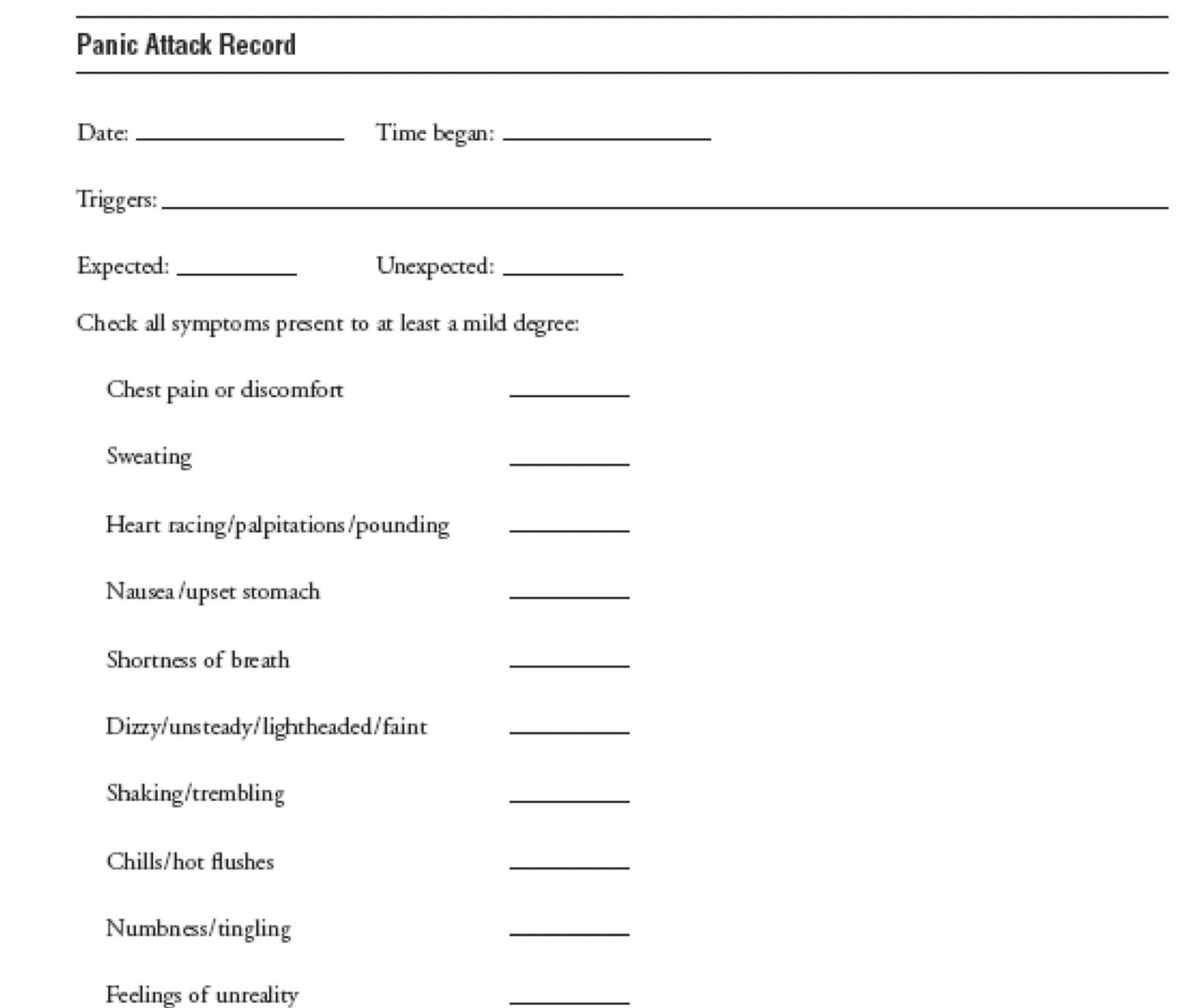
- self monitoring of panic attack and thoughts
- exposure therapy (interceptive exposure: expose to feared sensations through caffeine--> habituate clients to feared sensations)
- psychoeducation
- self monitoring of panic attack and thoughts
- exposure therapy (interceptive exposure: expose to feared sensations through caffeine--> habituate clients to feared sensations)
5
New cards
exposure therapy for panic/agoraphobia (CBT)
-Interoceptive exposure (e.g., caffeine ingestion exposes clients to internal sensations they fear)
- habituate clients feared situations
- habituate clients feared situations
6
New cards
medications used for panic disorder
- benzodiazepines and antidepressants
- concern for long term use (rids symptoms but wont habituate to situations that produce anxiety)
- concern for how people are using benzodiazepines
- concern for long term use (rids symptoms but wont habituate to situations that produce anxiety)
- concern for how people are using benzodiazepines
7
New cards
best chance of lasting recovering in panic disorder=
CBT+ drug
8
New cards
panic cycle
perceived threat>apprehension/worry>body sensations> interpretations of sensations as catastrophic
9
New cards
medications for panic disorder
antidepressants
benzodiazepines
benzodiazepines
10
New cards
generalized anxiety disorder symptoms
chronic excessive worry about a number of events/activities with no specific threat present
- more days than not for 6 months, 3+ symptoms
- restlessness
- fatigue
- difficulty concentrating
- irritability
- muscle tension
- sleep disturbance
- more days than not for 6 months, 3+ symptoms
- restlessness
- fatigue
- difficulty concentrating
- irritability
- muscle tension
- sleep disturbance