110A - Electricity, Magnetism, and Optics (copy)
 Call Kai
 Learn
Learn Practice Test
 Spaced Repetition
 Match
Match Flashcards
 Knowt Play
1/46

Earn XP
Description and Tags
UCSC 110A Fall 2023 -Reading Quizzes + i
Name | Mastery | Learn | Test | Matching | Spaced | Call with Kai | Chat |
|---|
No analytics yet
Send a link to your students to track their progress
47 Terms
Which of the following statements is correct?
a)The electric field is a scalar quantity that varies from point to point.
b)The electric field is a scalar quantity that is constant everywhere in space.
c)The electric field is a vector quantity that is in general constant everywhere in space.
d)The electric field is a vector quantity that can vary from point to point.
d)The electric field is a vector quantity that can vary from point to point.
Coulomb's Law states that the magnitude of the force between two point charges at rest:
a)decreases as the distance between them increases.
b)increases as the distance between them decreases.
c)is independent of the distance between the two charges.
d)is always zero because charges do not interact with each other.
a)decreases as the distance between them increases.

A) 0 everywhere
B) 0 everywhere except exactly at r = 0
C) infinity everywhere
D) a constant, non zero value everywhere
B) 0 everywhere except exactly at r = 0
The statement "Gauss' law applies only because Coulomb's law is spherically symmetric and goes as 1/r²" is:
A) True
B) False
C) could be true or false, depends on the position of the charges
A) True
For charge distributions at rest, calculating the electric field using Gauss' law
A) is valid as long as the charges are negative
B) is valid as long as the charges are positive
C) is always valid, but not always useful, depending on the symmetry of the charge distribution
C) is always valid, but not always useful, depending on the symmetry of the charge distribution
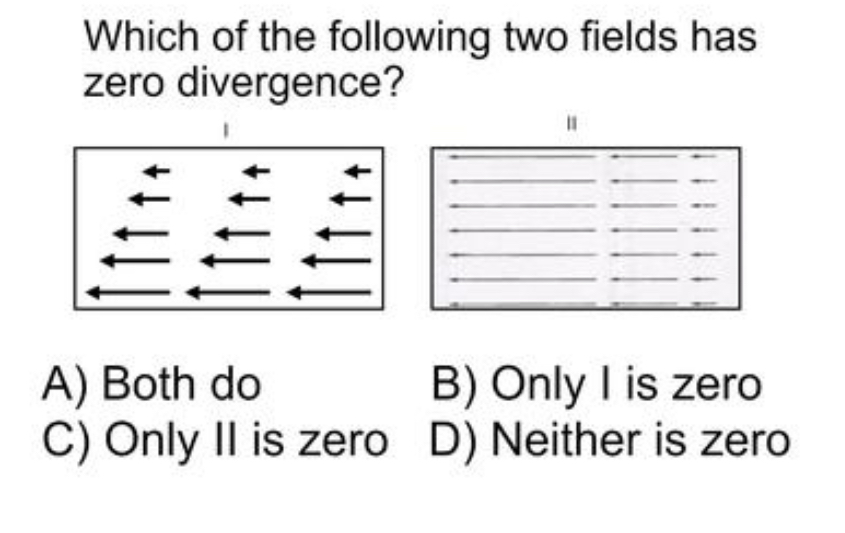
B) Only I is zero
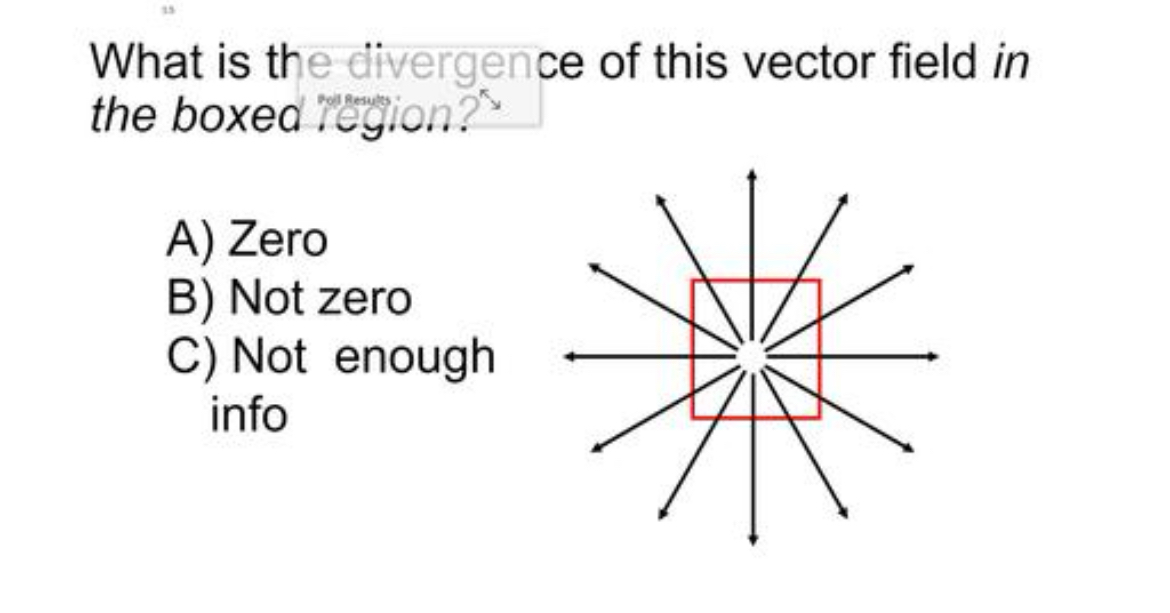
B) Not zero
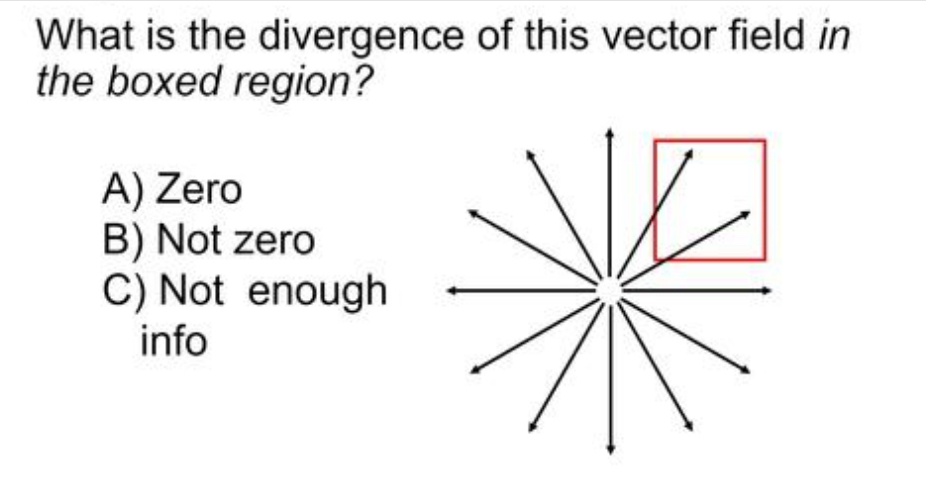
A) zero
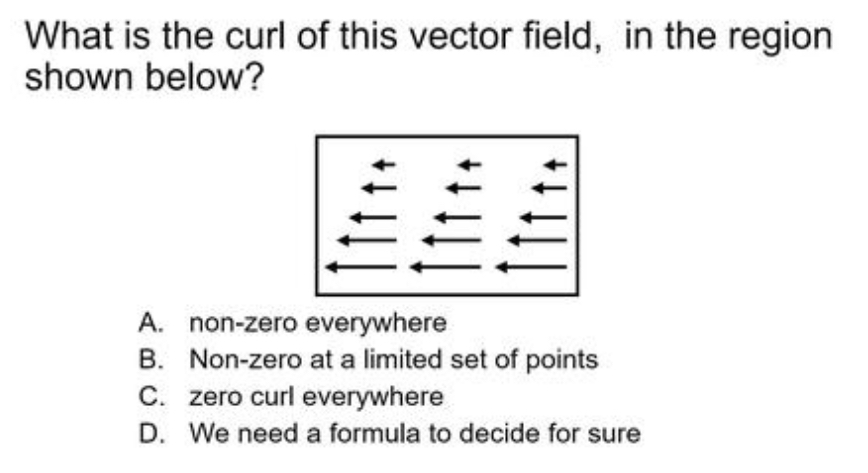
A) non zero everywhere
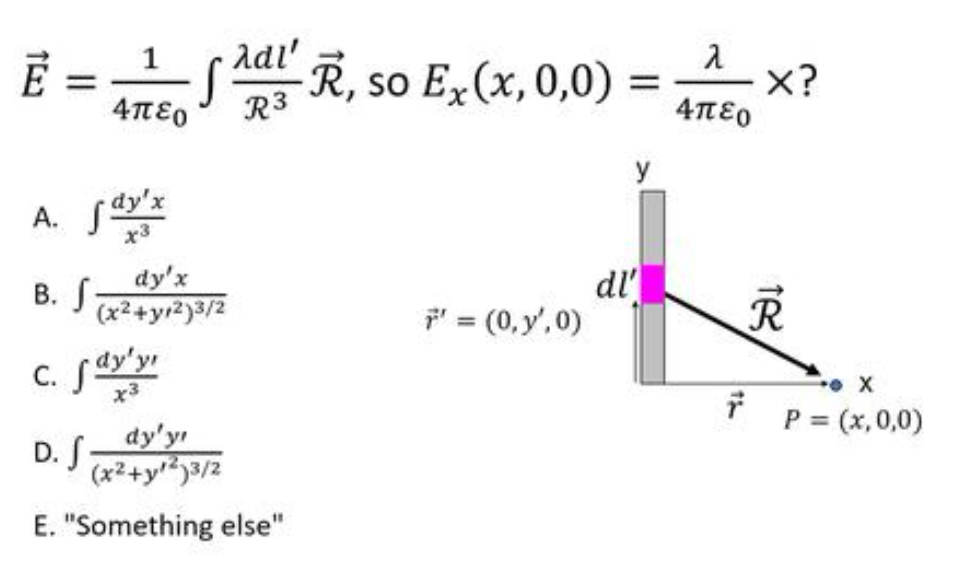
B)
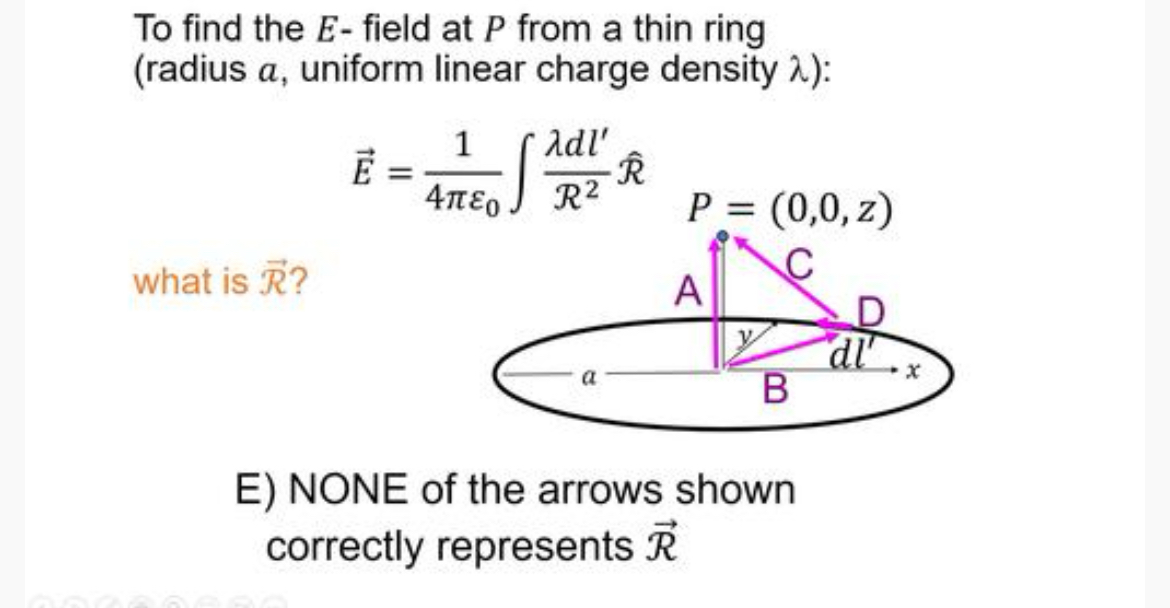
C
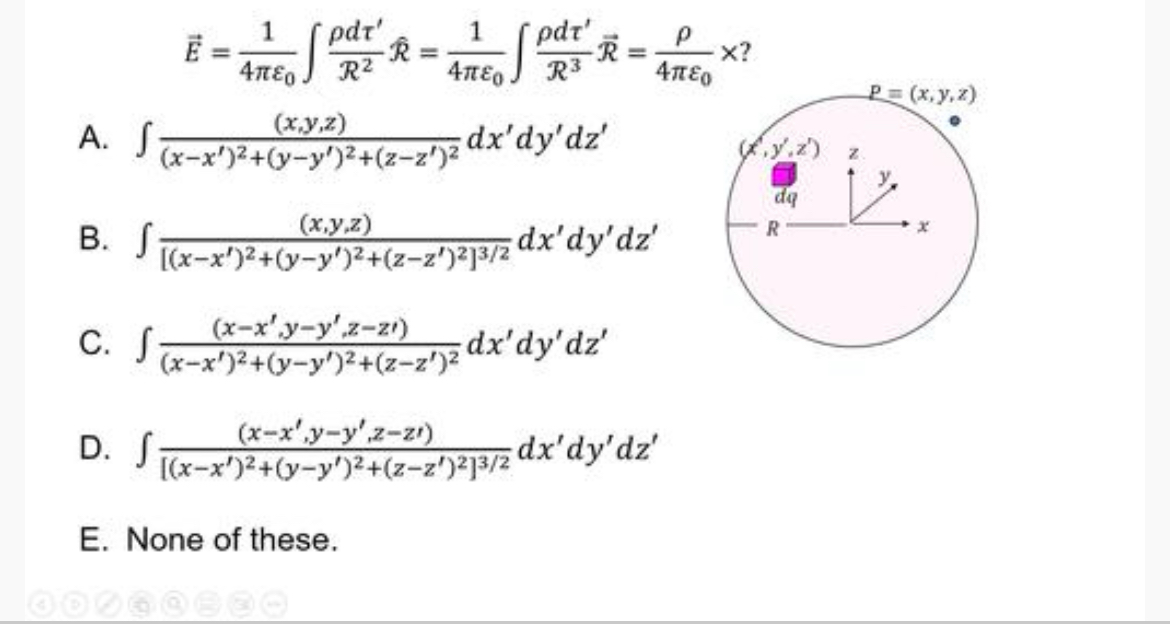
D
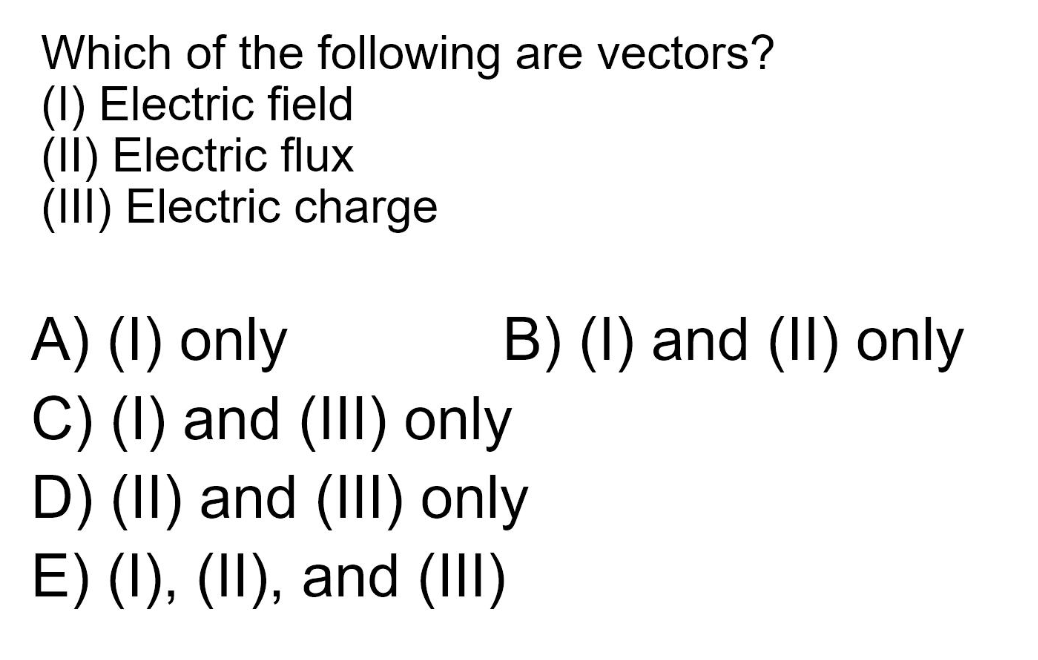
A) (I) only
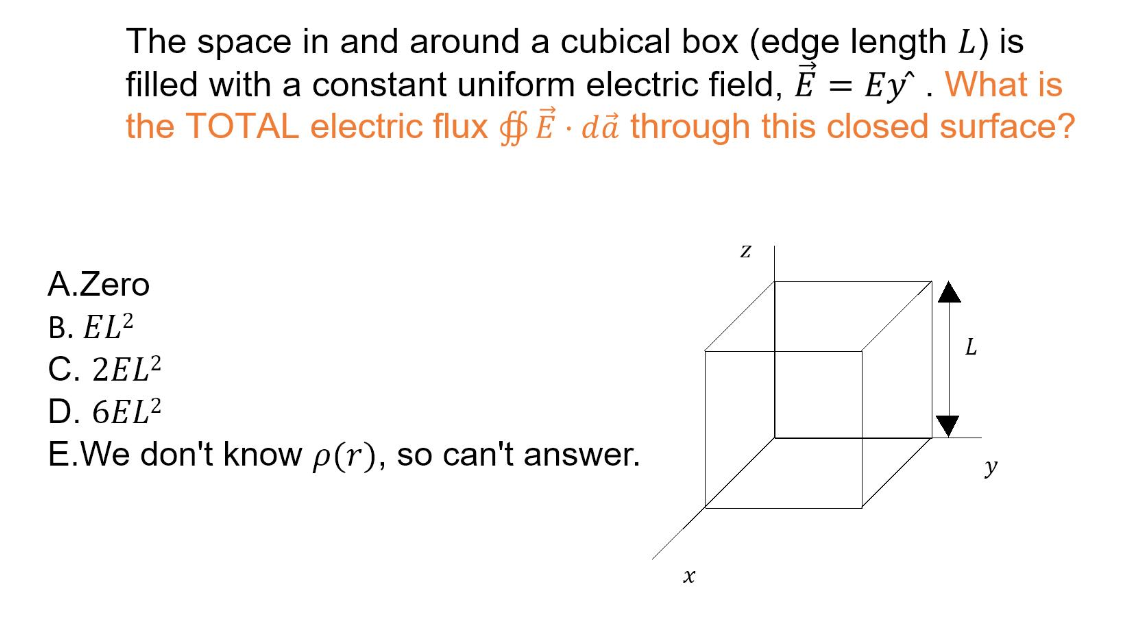
A) Zero
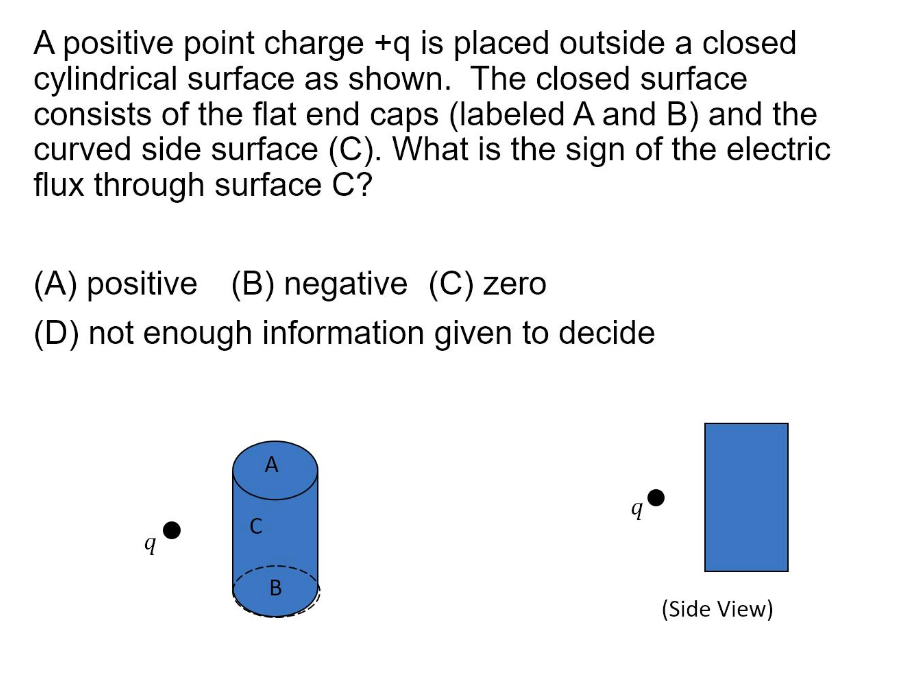
B) negative
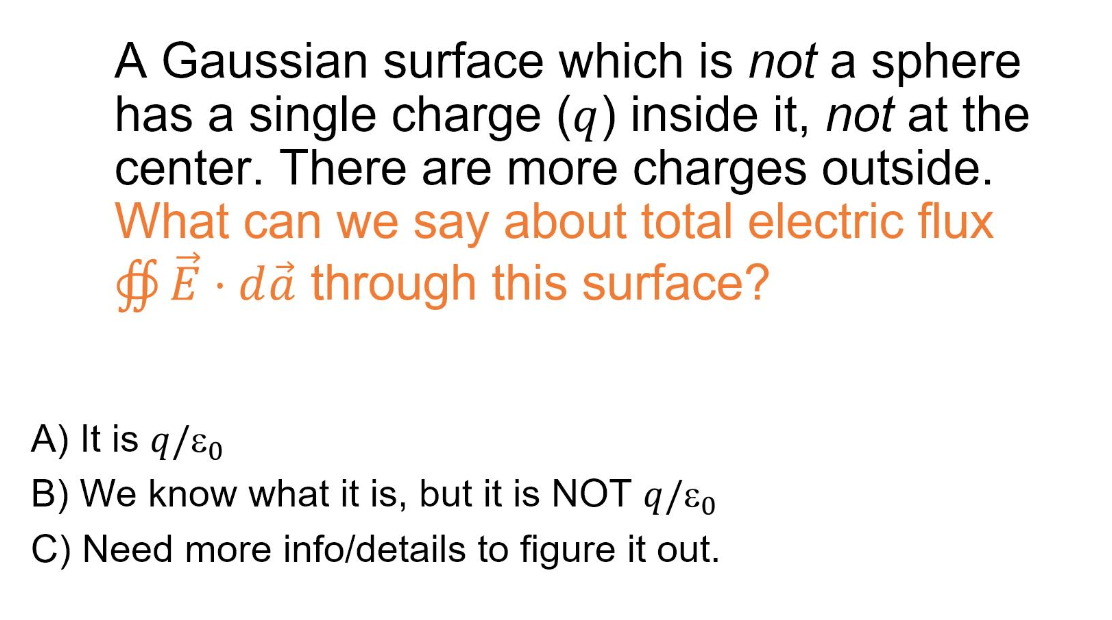
A) zero
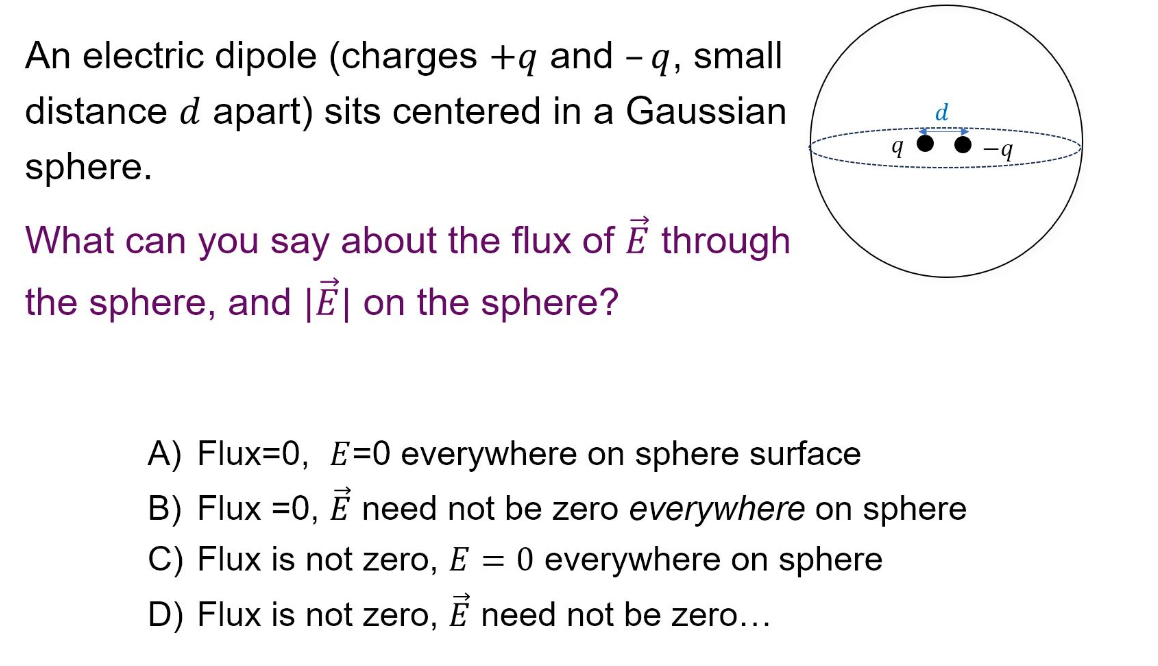
B) Fluex = 0, E need not be zero everywhere on sphere
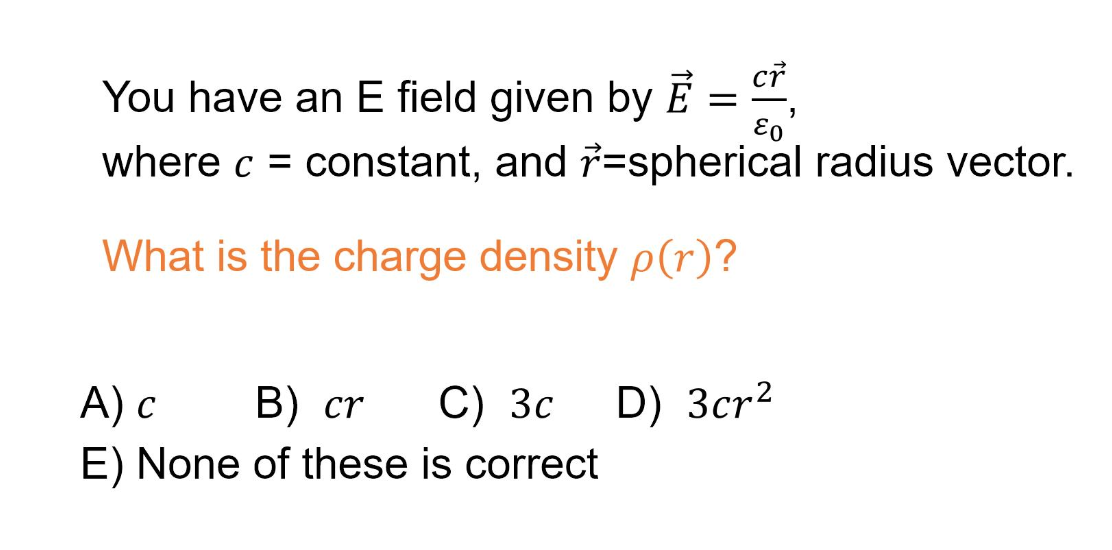
B)
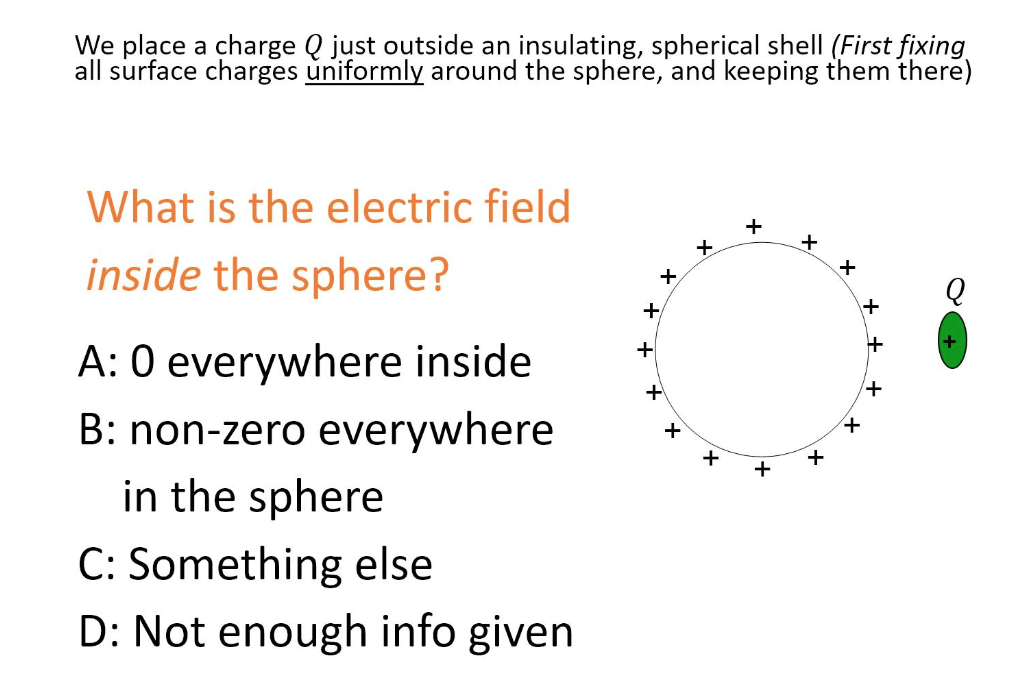
A) 0 everywhere inside
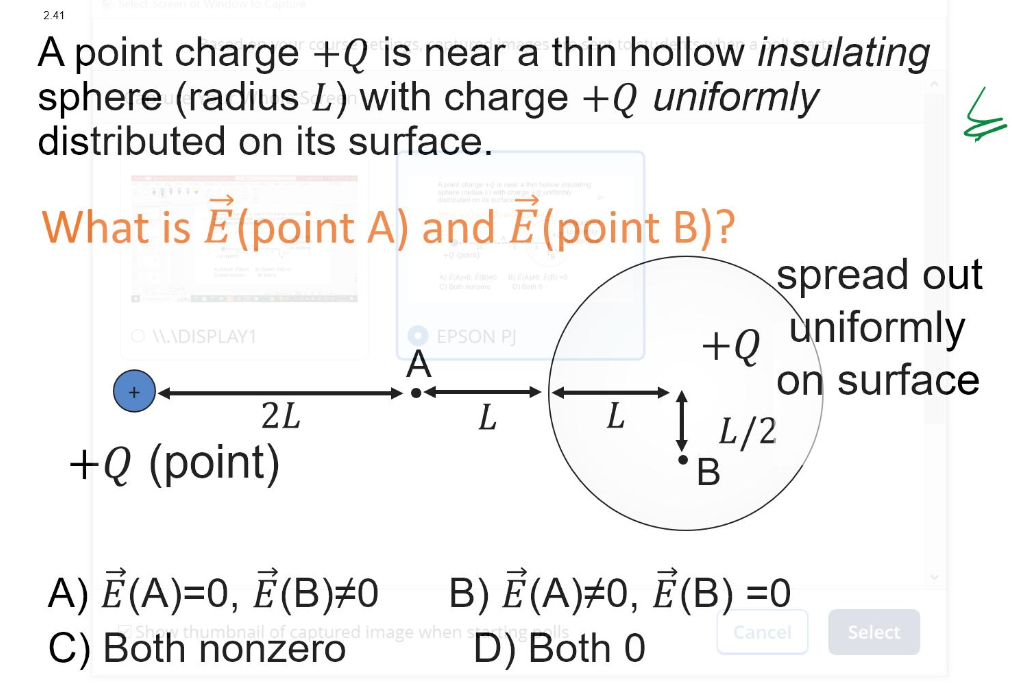
A) E(A)=0, E(B) not equal to 0
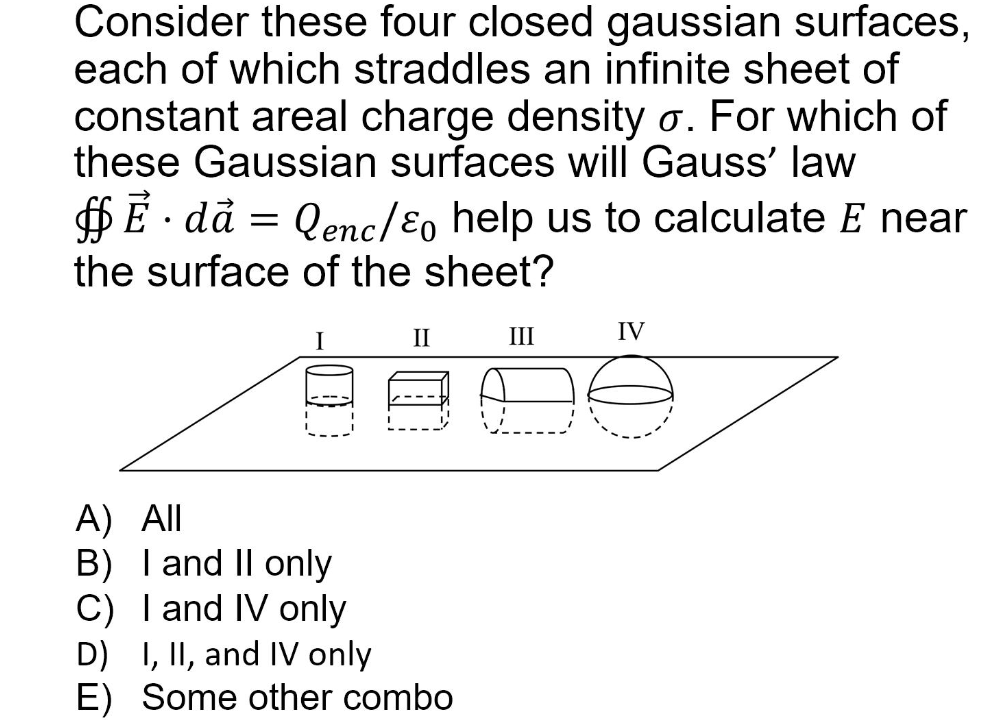
B) I and II only
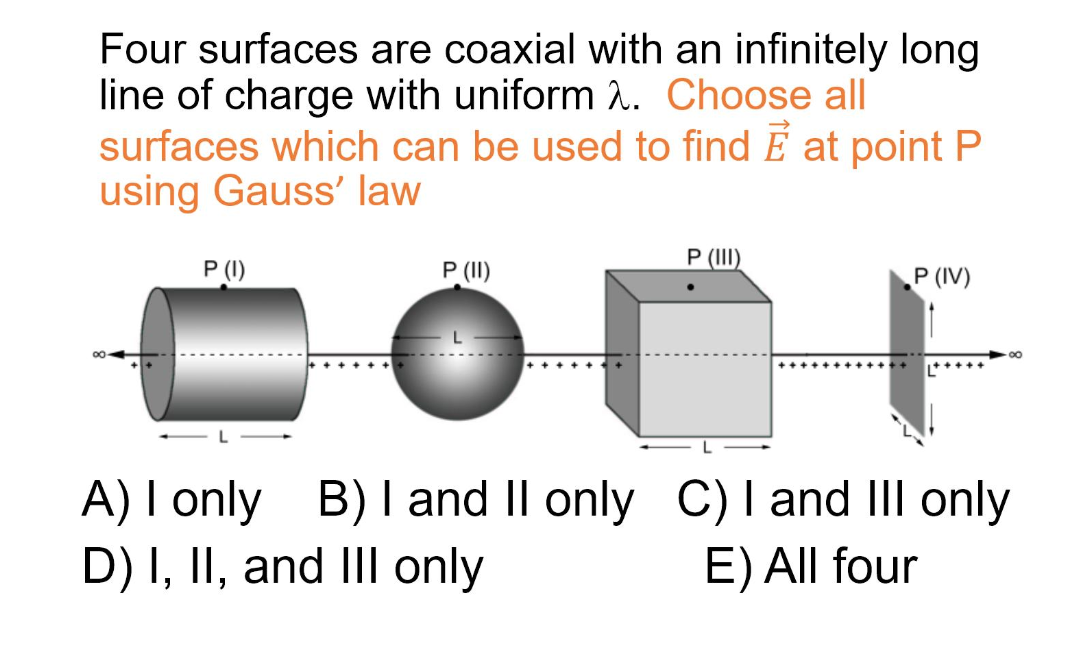
A) I only
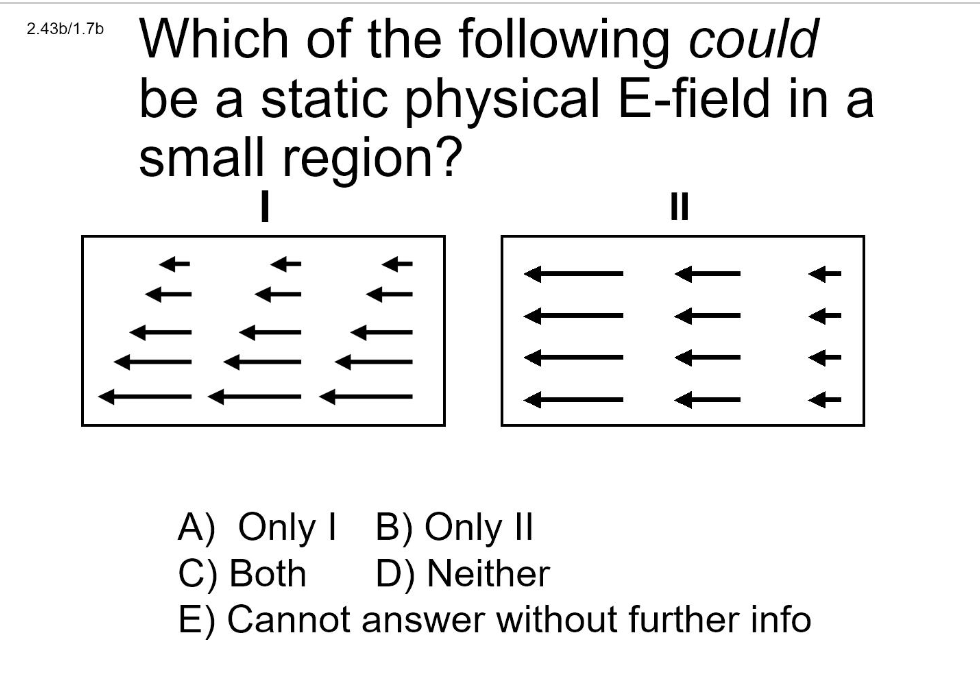
B) Only II
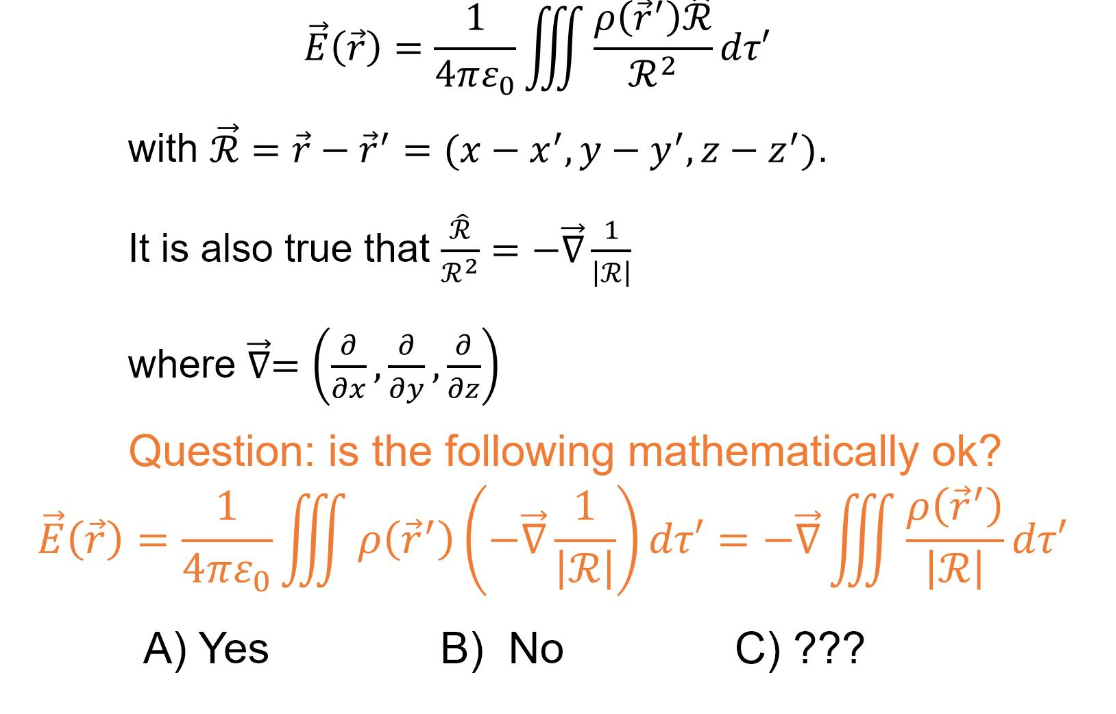
A) Yes
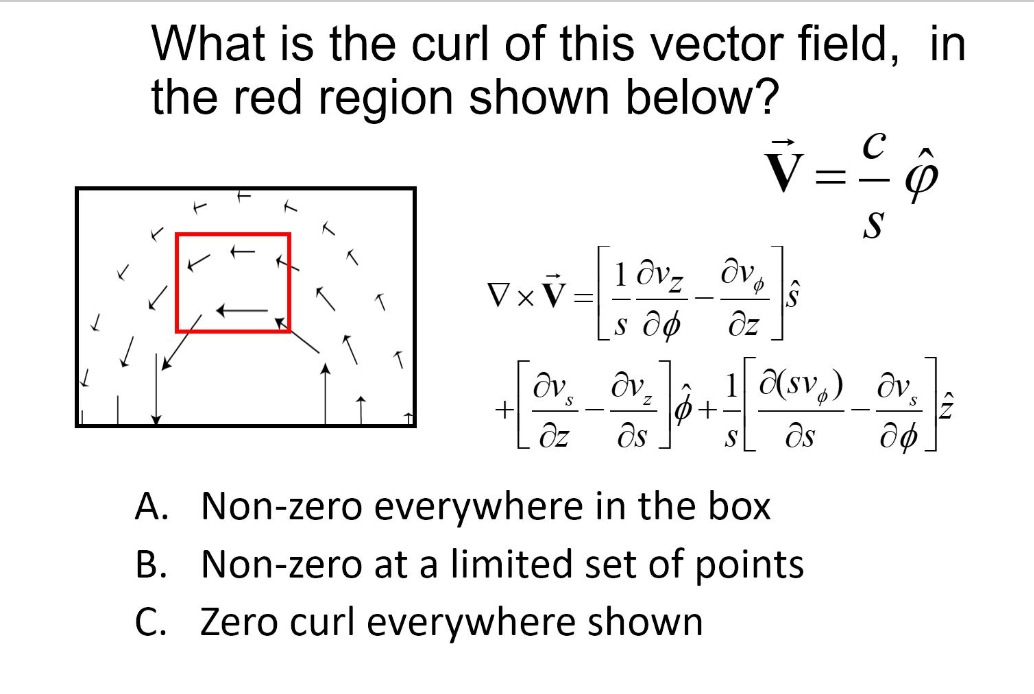
C) Zero curl everywhere shown
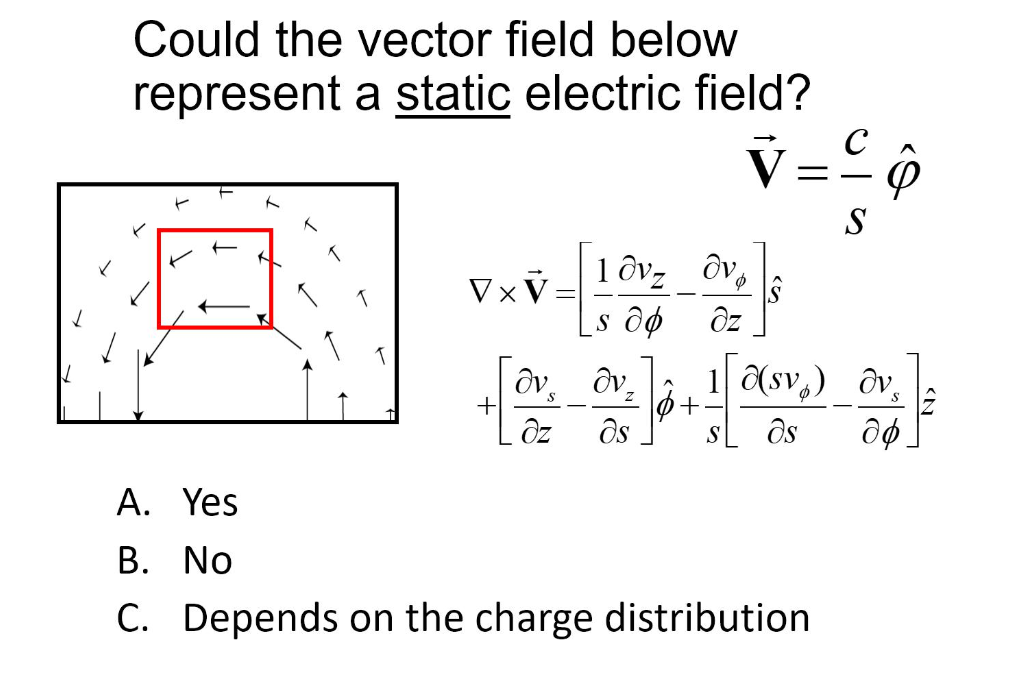
A) Yes
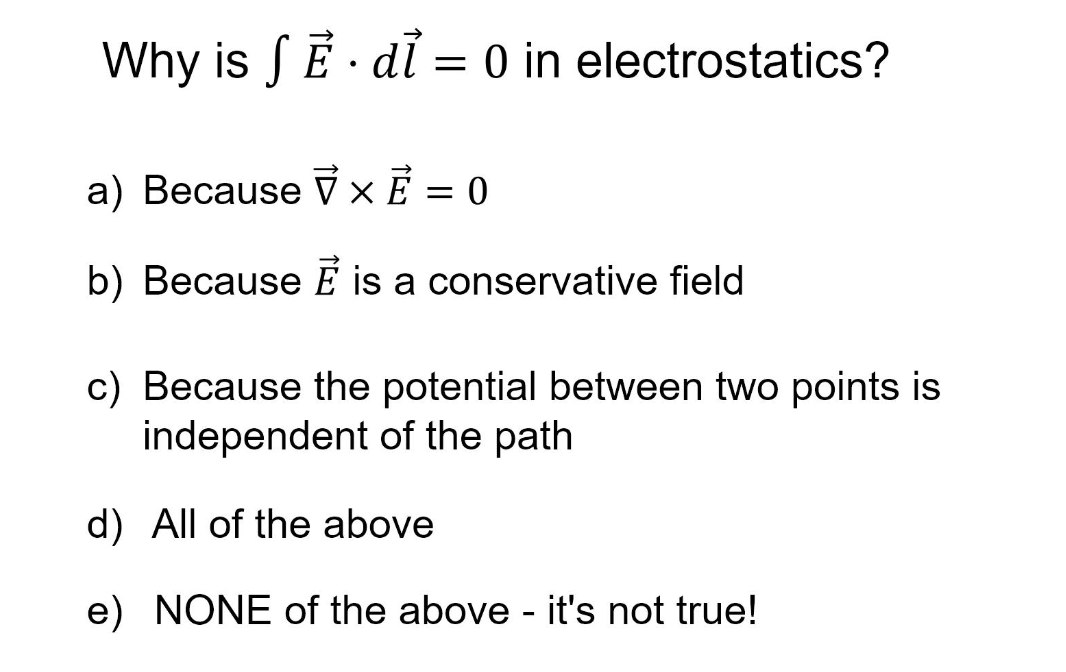
D) All of the above

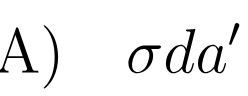
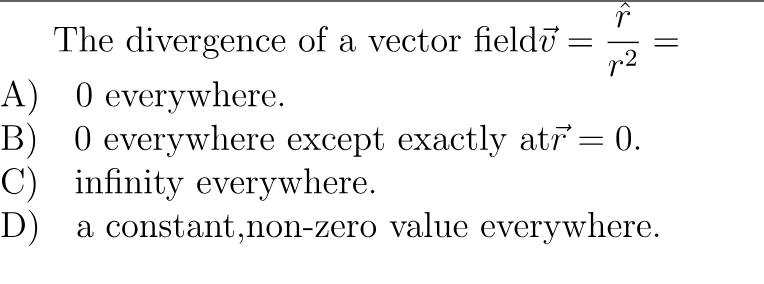

In electrostatics, where the magnetic and electric fields are constant in time, the curl of the electric field:
A) depends on the geometry of the static charges producing the field
B) is positive if the charges producing the field are positive
C) is always zero
D) is negative if the charges producing the field are negative
C) is always zero
Which of the following statements is true?
A) The electric potential is a vector quantity
B) The electric potential at a point is an absolute, unique quantity that has a physical significance irrespective of the potential at any other point
C) The electric potential at a specific point caris no real physical significance; only the potential difference between two points has physical significance
C) The electric potential at a specific point caris no real physical significance; only the potential difference between two points has physical significance
Poisson’s equation says that the Laplacian of electric field potential is:
A) independent of the charge density
B) proportional to the charge density
C) is always equal to zero
B) proportional to the charge density
The units of electric potential are:
A) Coulombs
B) Joules
C) Volts
D) Newtons
C) Volts

C) Infinity
The formula for electric potential yields a:
A) scalar
B) a vector or a scalar, depending on the situation
C) vector
A) scalar
The perpendicular component of the electric field across a boundary that has no surface charge is:
A) discontinuous
B) equal to zero
C) continious
C) continuous
The potential across any boundary is:
A) continuous
B) discontinuous
C) always zero
A) continuous
The work done in taking a charge from point A to point B is:
A) proportional to the potential difference between the two points
B) inversely proportional to the potential difference between the two points
C) independent of the potential difference between the two points
A) proportional to the potential difference between the two points

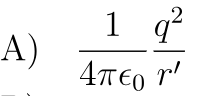
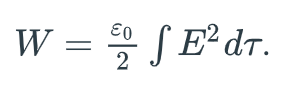
For a continuous charge distribution, the work done to assemble the charges is given by this integral. The integral is done over:
A) the volume of all space
B) only the volume where there are no charges located
C) only the volume where the charges are located
A) the volume of all space
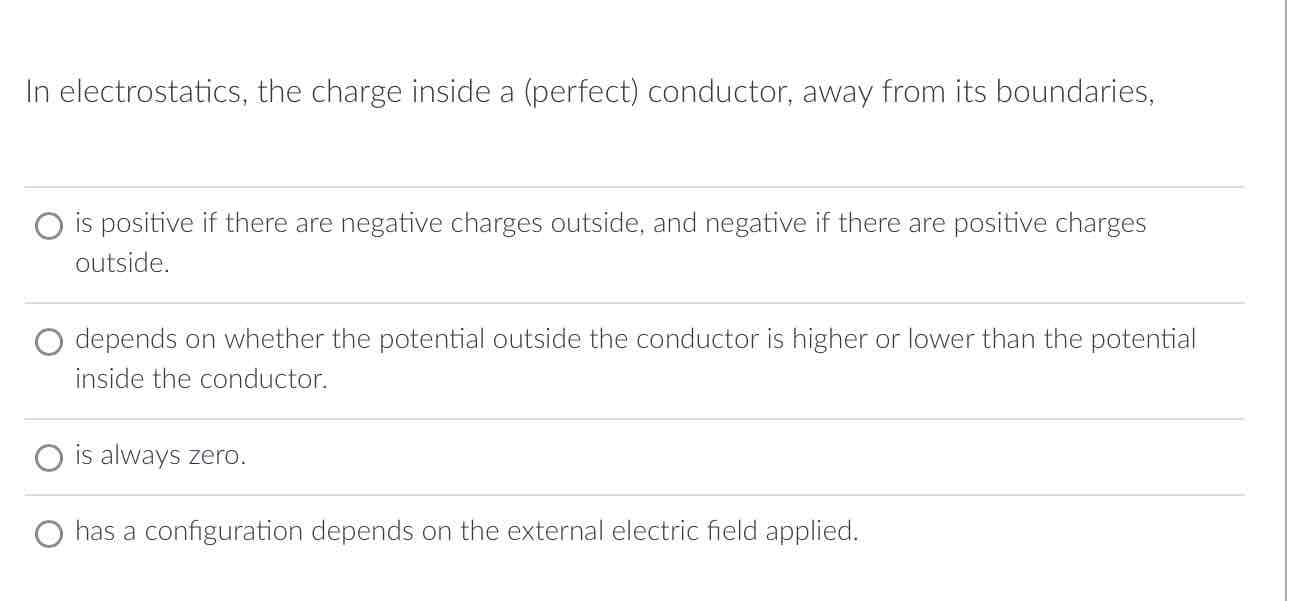
Is always zero
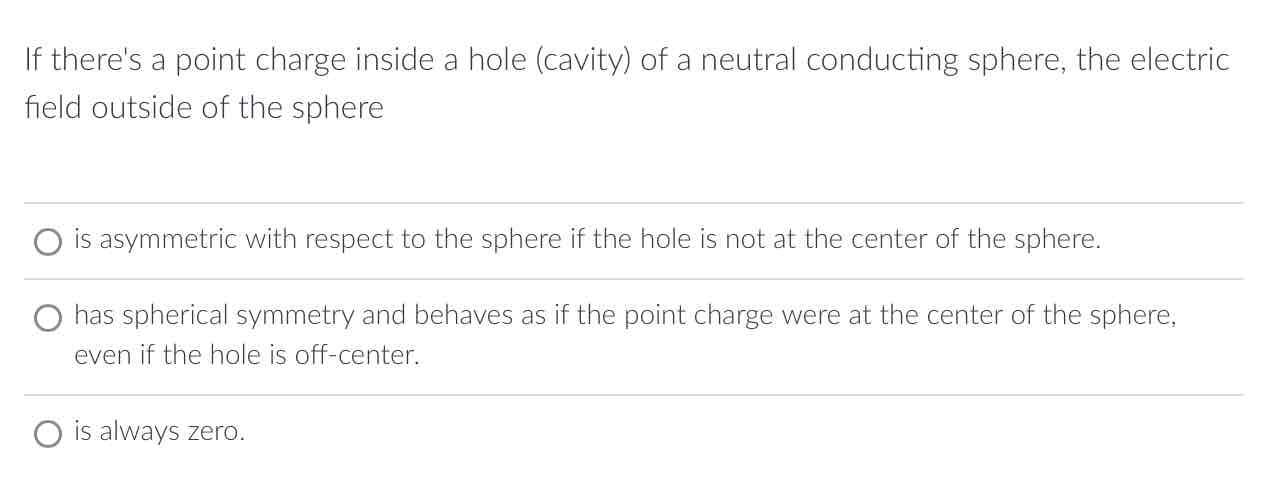
Has spherical symmetry and behaves as if the point charge were at the center of the sphere, even if the hole is off center
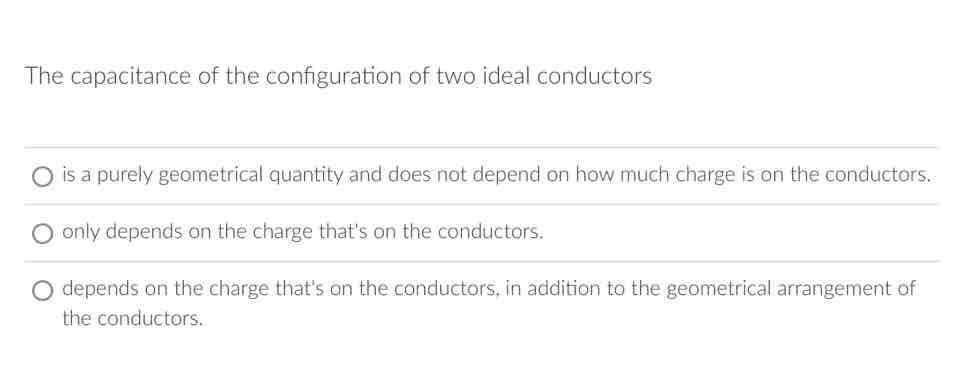
is a purely geometrical quantity and does not depend on how much charge is on the conductors
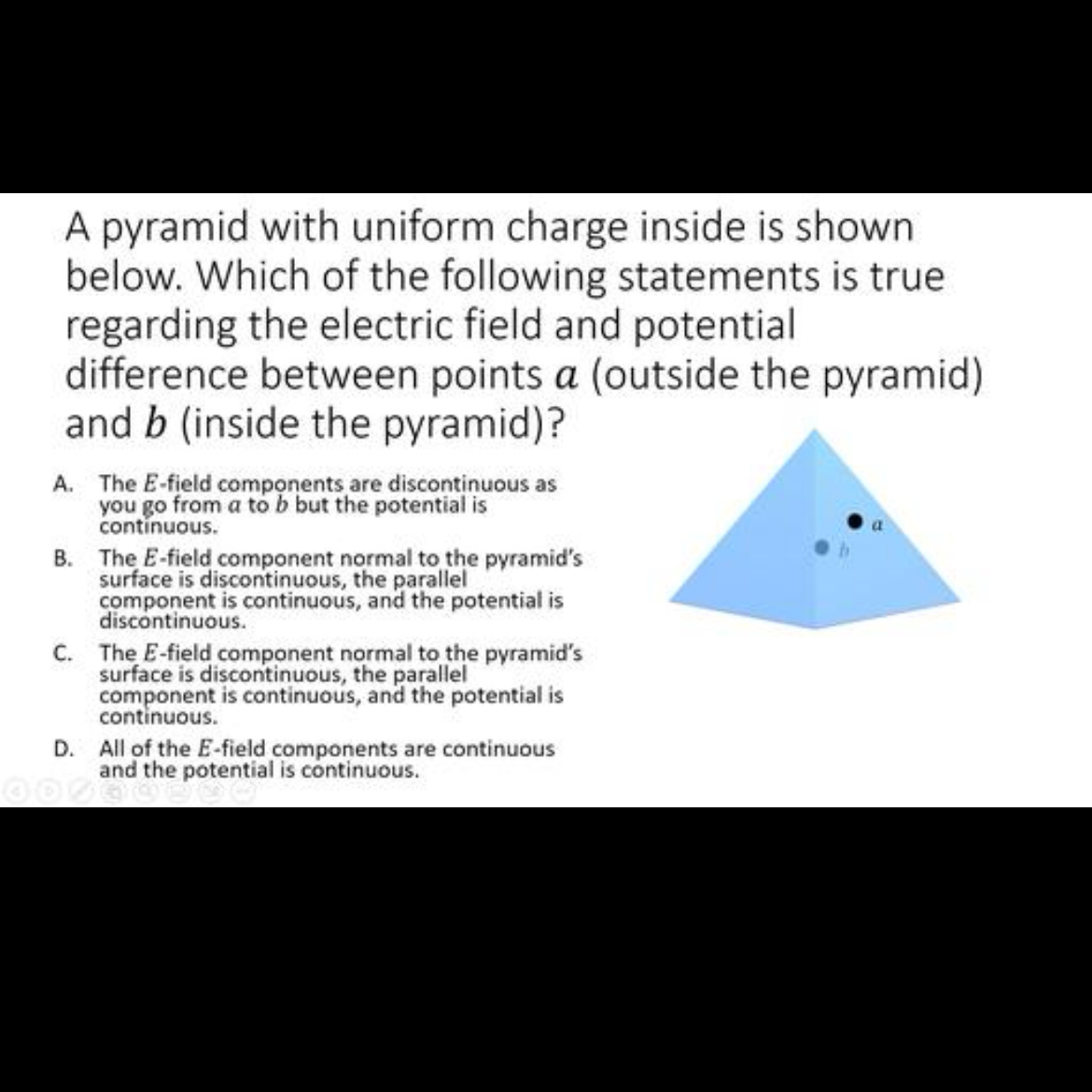
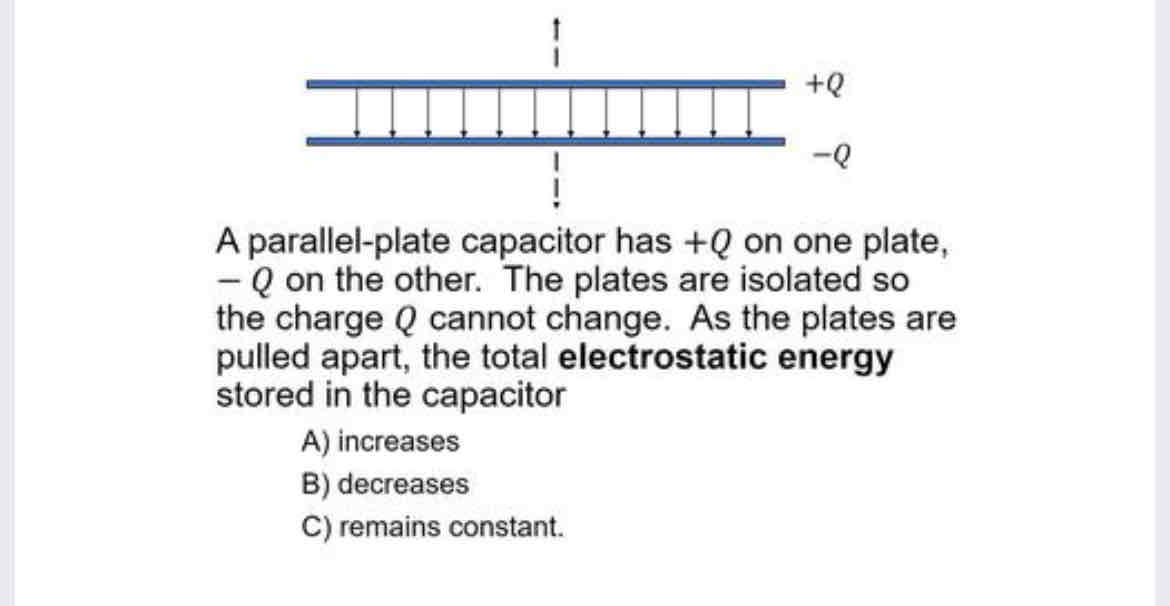
A) increases
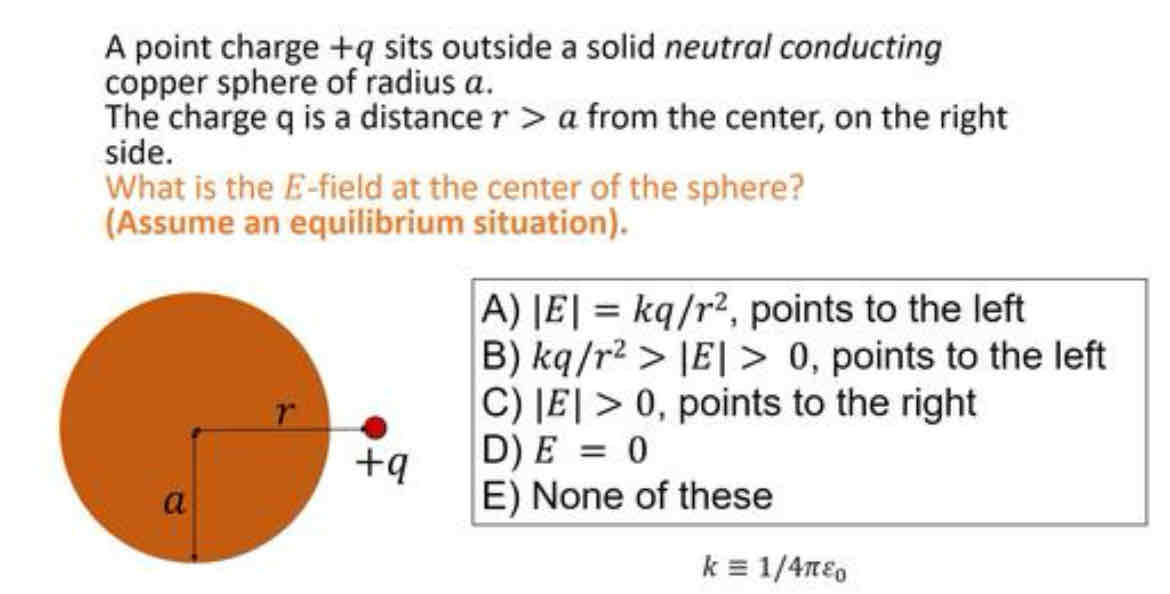
D=0