Quiz 8 Chap 6
 Call Kai
 Learn
Learn Practice Test
 Spaced Repetition
 Match
Match Flashcards
 Knowt Play
1/52

There's no tags or description
Looks like no tags are added yet.
Name | Mastery | Learn | Test | Matching | Spaced | Call with Kai |
|---|
No analytics yet
Send a link to your students to track their progress
53 Terms
Deformation when loaded, return to original shape when loading removed. what is this
elastic
deformation when loaded, some permanent shape change occurs
Plastic
WHat does this mean: crack growth when loaded - separation into two pieces
Failure - Chapter 8
Viscoelastic
deformation under load, but deformation is time dependent in addition to load dependent, return to original shape over time
Elastic vs Plastic Deformation
Elastic is temporary and reversible
Plastic is permanent and irreversible

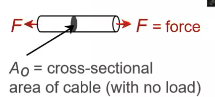
Simple tension cable
Force applied perpendicular to and away from area of interest
By convention, tensile stress is positive
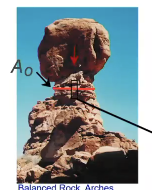
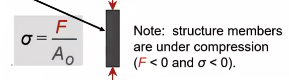
Simple compression
force applied perpendicular to and toward area of interest
compressive stress is negative
Shear
force applied parallel to area of interest
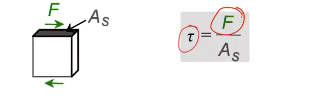
Shear is the mechanism for
plastic deformation
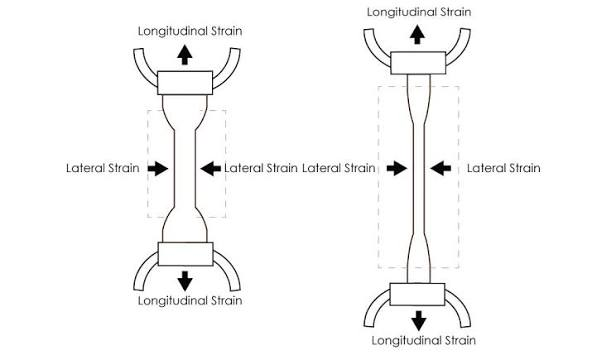
Tensile, εz, vs Lateral strain, εx
Tensile strain refers to the stretching along the direction of the force, while lateral strain refers to the simultaneous thinning (or thickening) of the material's cross-section.
Lateral strain is negative while tensile strain is positive
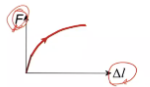
Force vs elongation graph
Depends on specimen size - not useful for comparison
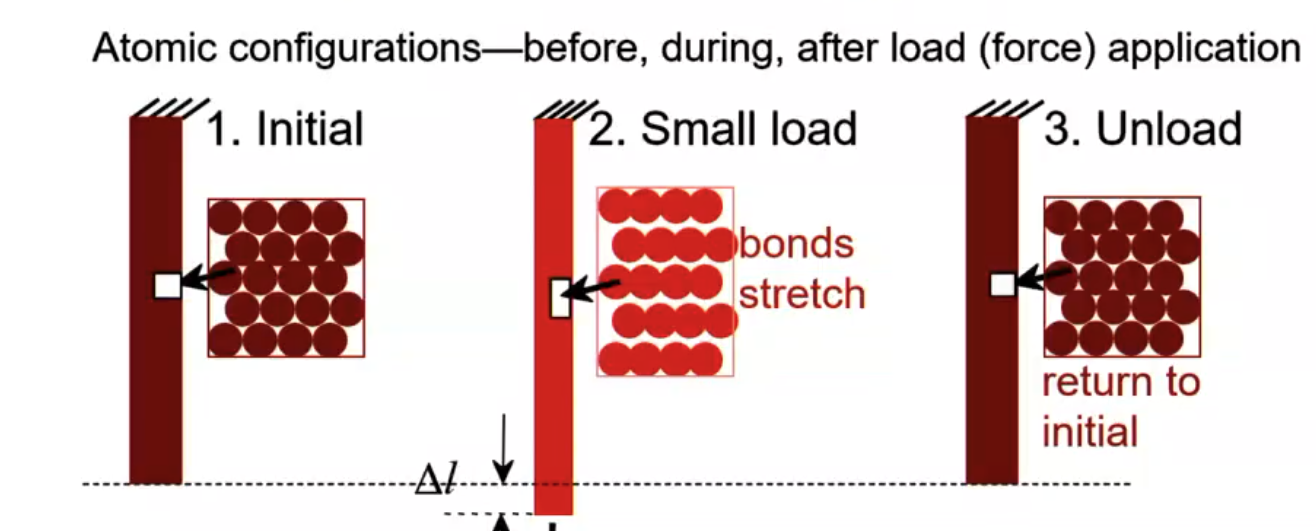
Elastic deformation
nonpermanent and reversible deformation
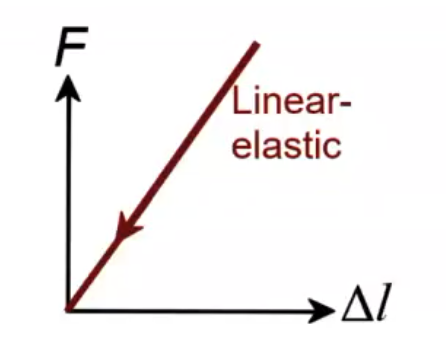
explain (linear-elastic)
force on an elastic object is directly proportional to the change in length of the object
slope = stiffness (constant)
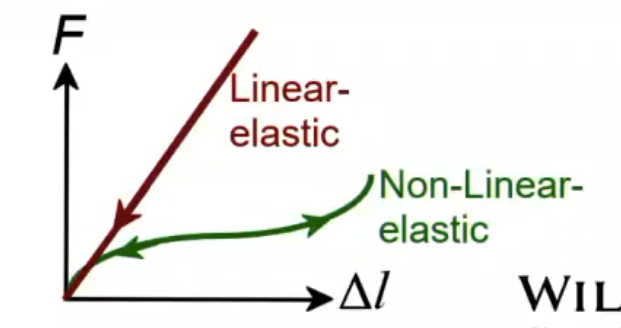
Explain the green (nonlinear-elastic)
Still elastic, but Force is not proportional to change in length of the object
stiffness is changing (slope not constant)
Modulus of Elasticity, E AKA Young’s Modulus
measures stiffness
higher E = stiffer material
Elastic Modulus depends on
interatomic bonding forces
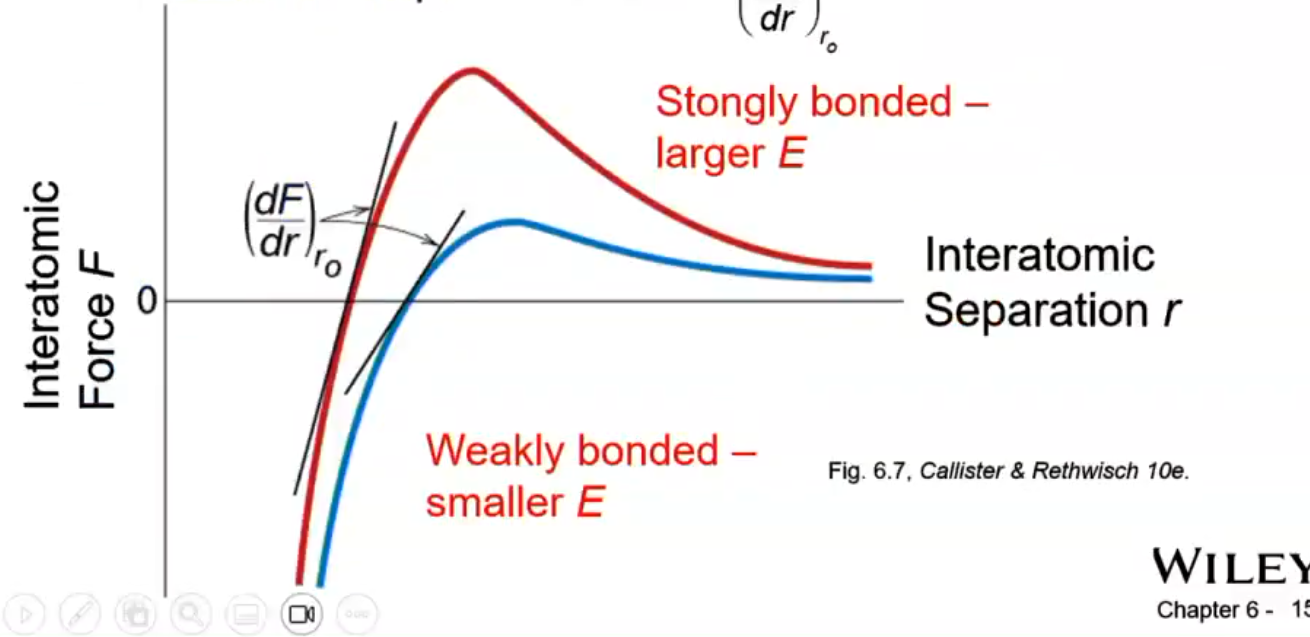
strongly bonded = larger E
weakly bonded = smaller E
Elastic modulus is proportional to
the slope of the the interatomic force-interatomic separation curve (dF/dr)r0
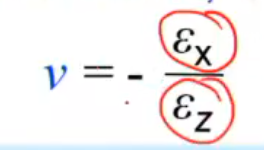
Poisson’s ratio
ratio of lateral strain to tensile stain
negative because material gets thinner when stretched
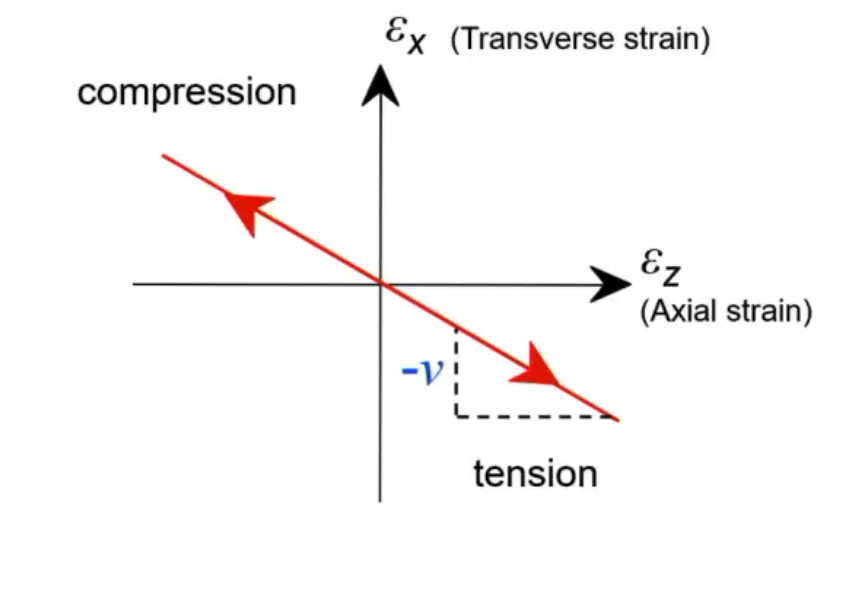
Axial strain def
stain along the loading direction
lateral/transverse strain def
strain perpendicular to the axial direction
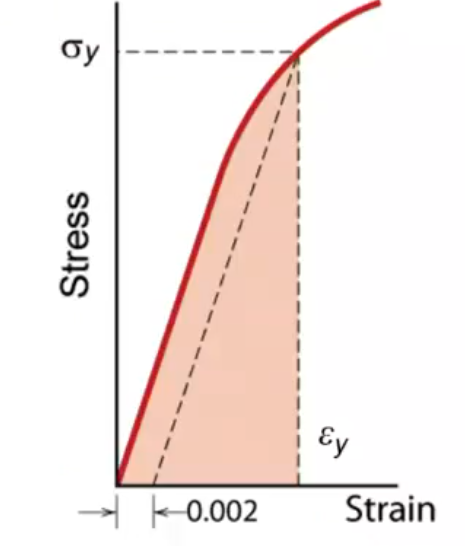
Resilience
ability of a material to absorb energy during elastic deformation (defined by yield point)
energy recovered when load released
resilience specified by modulus of resilience, Ur
Modulus of Resilience, Ur approx by
Area under stress-strain curve to yielding
Plastic deformation
permanent and irreversible deformation
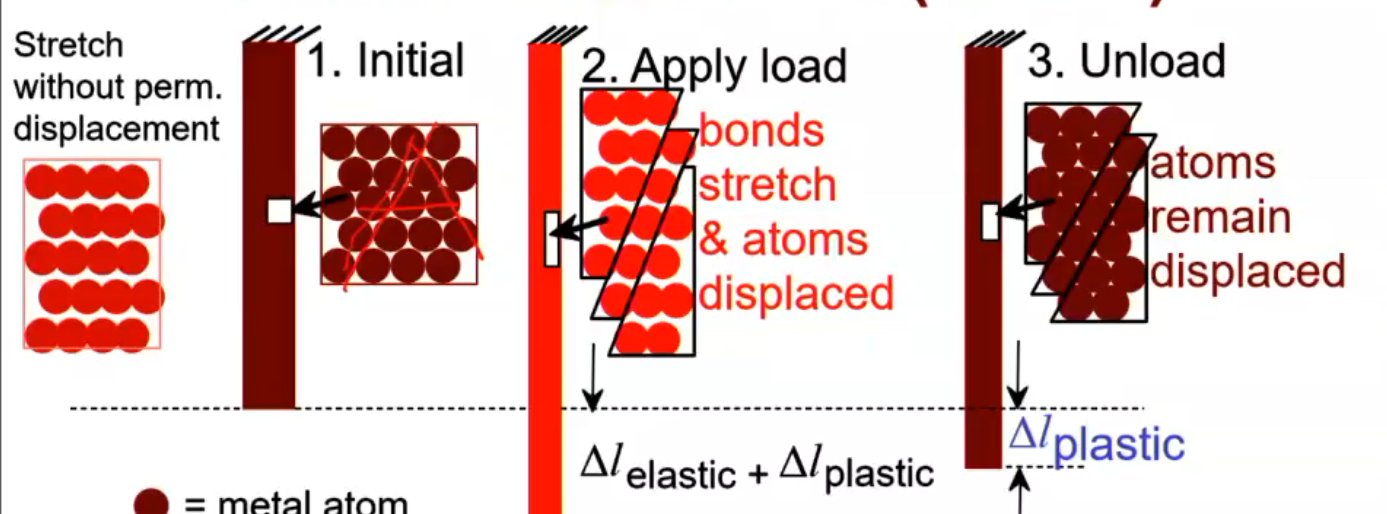
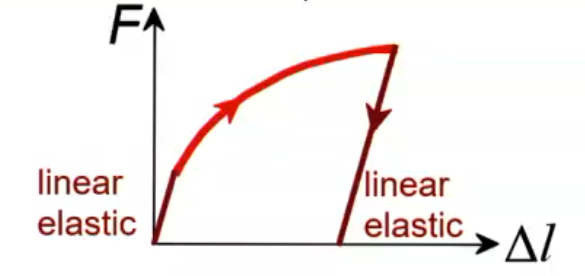
explain
graph starts linear - elastic region
graph starts to curve - plastic deformation begins
the slanted line at the end is the elastic deformation returning back to its original state.
Ends with the permanent deformation
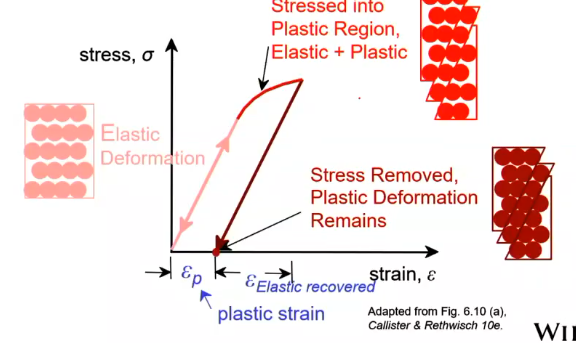
Transition from elastic to plastic deformation is
gradual (lnear line starts to curve more and more)
Yield Strength, σy
stress at which noticeable plastic deformation has occurred
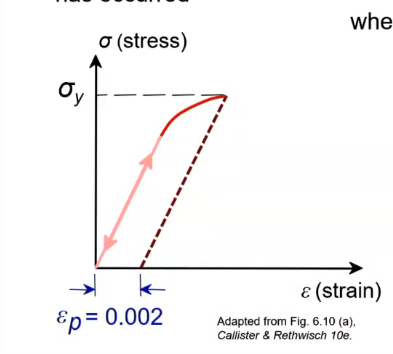
plastic strain, εp
portion of strain that is permanent (non-recoverable)
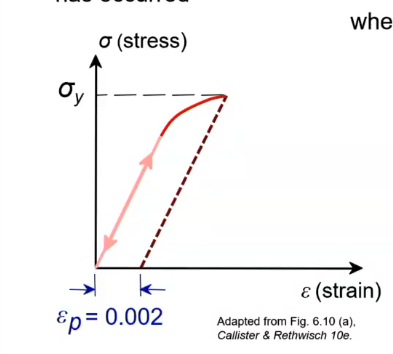
standard plastic strain value when a material doesn’t have a clear yield point (noticable plastic deformation)
εp = 0.002
Metals/Alloys in Yield strength graph
wide range
easy to measure
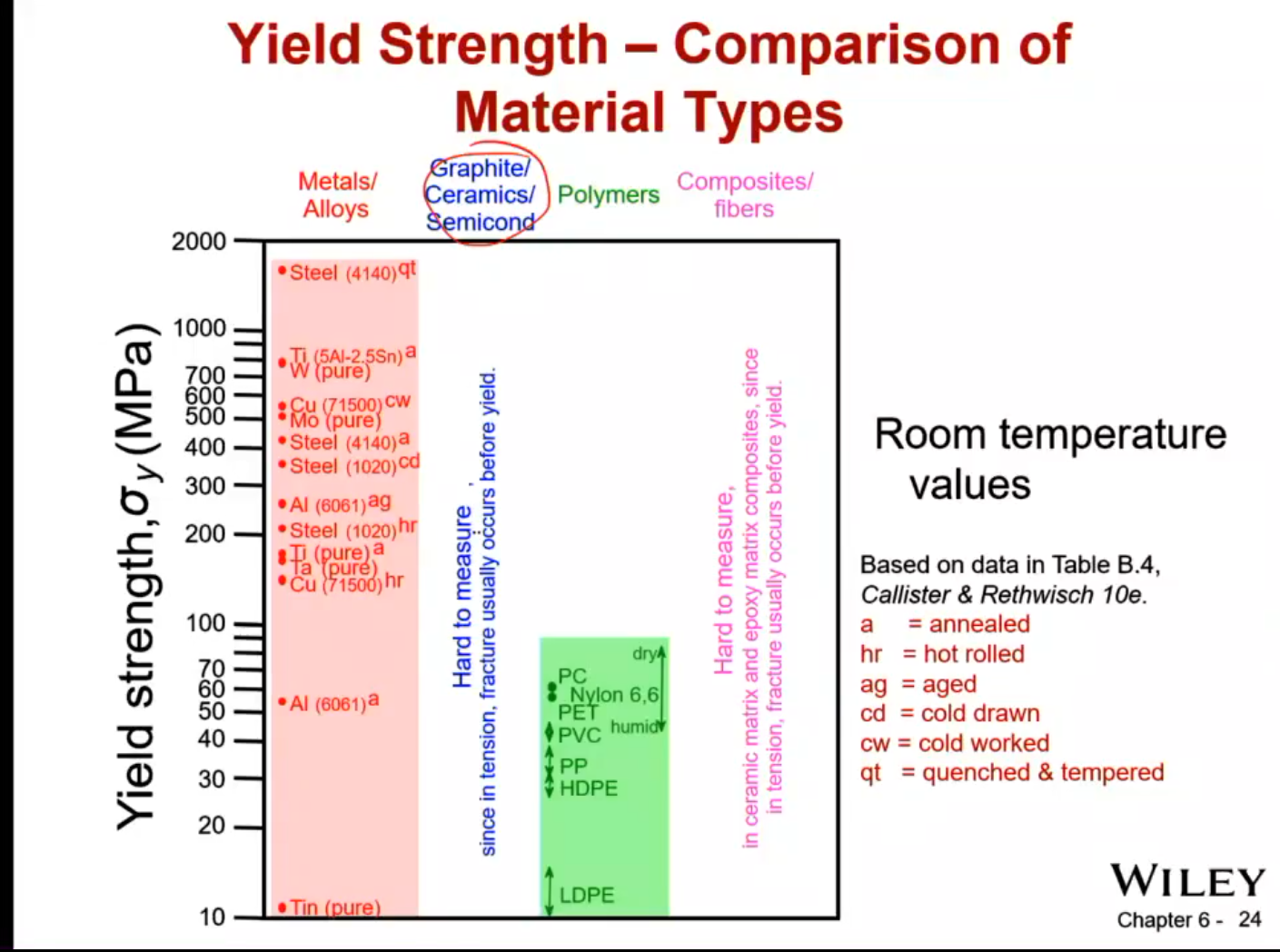
Ceramics/graphite/semiconductors in Yield strength graph
hard to measure
since in tension, fracture occurs before yielding (brittle)
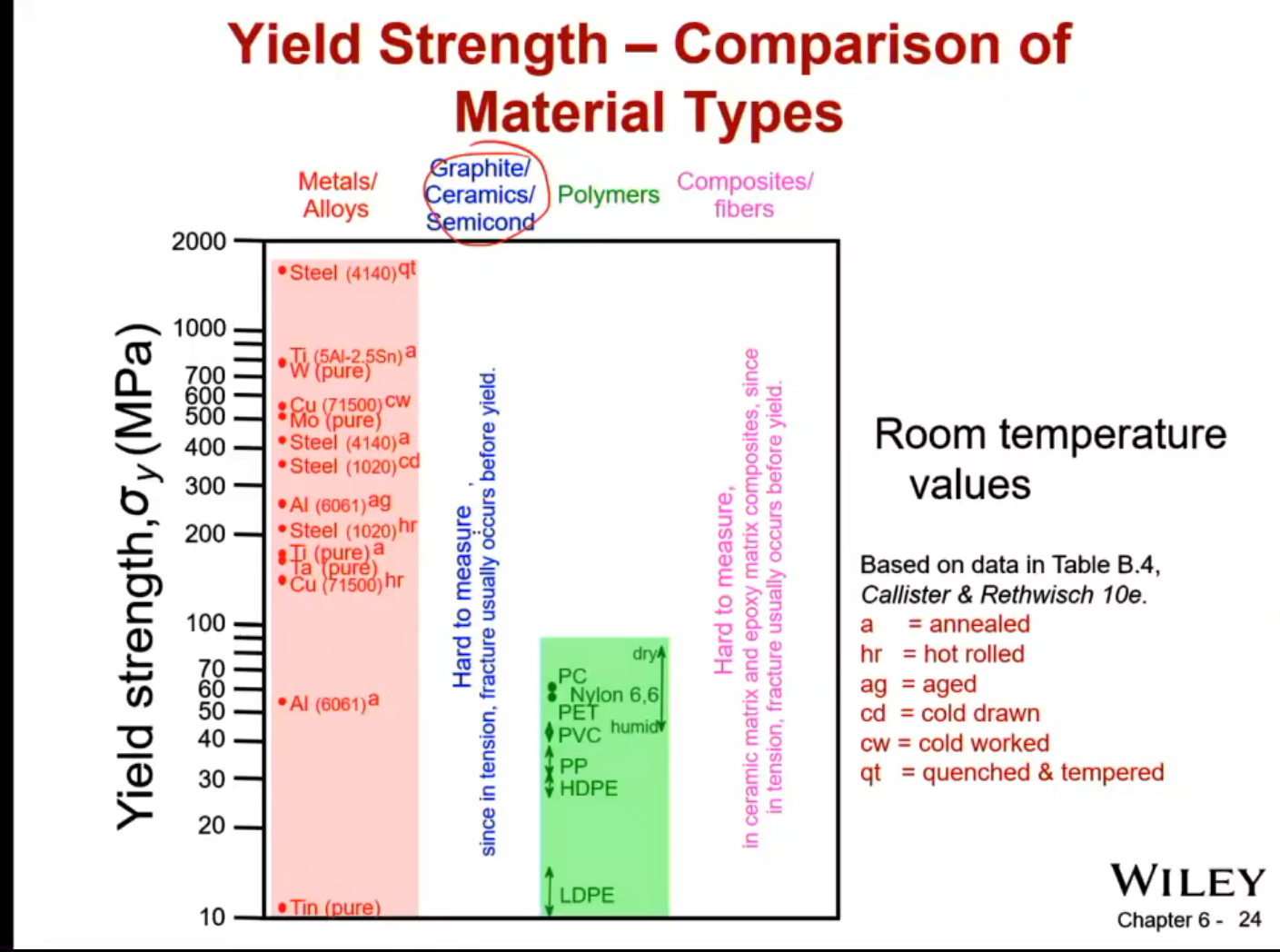
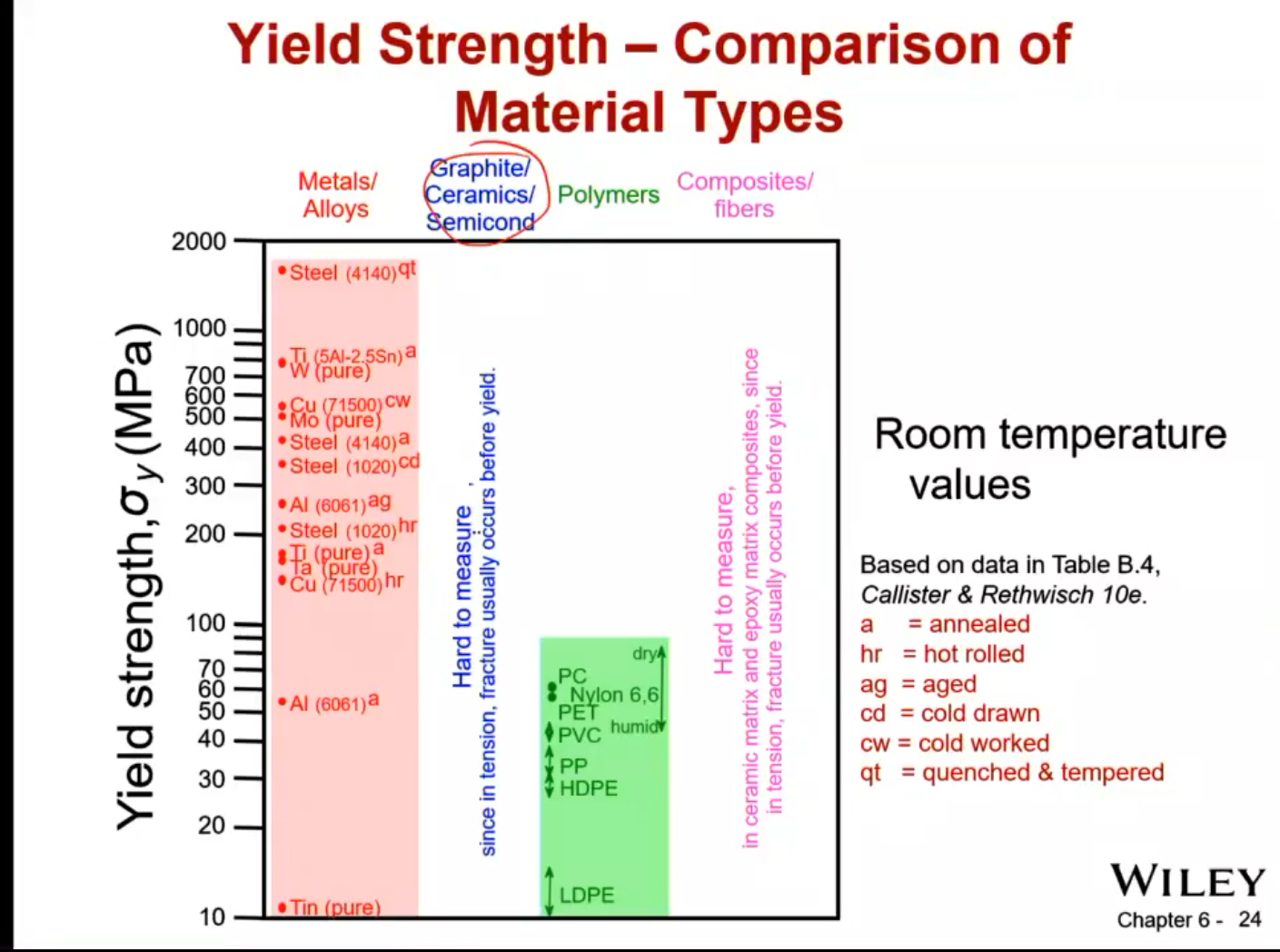
Polymers in Yield strength graph
Much lower range
softer, more deformable
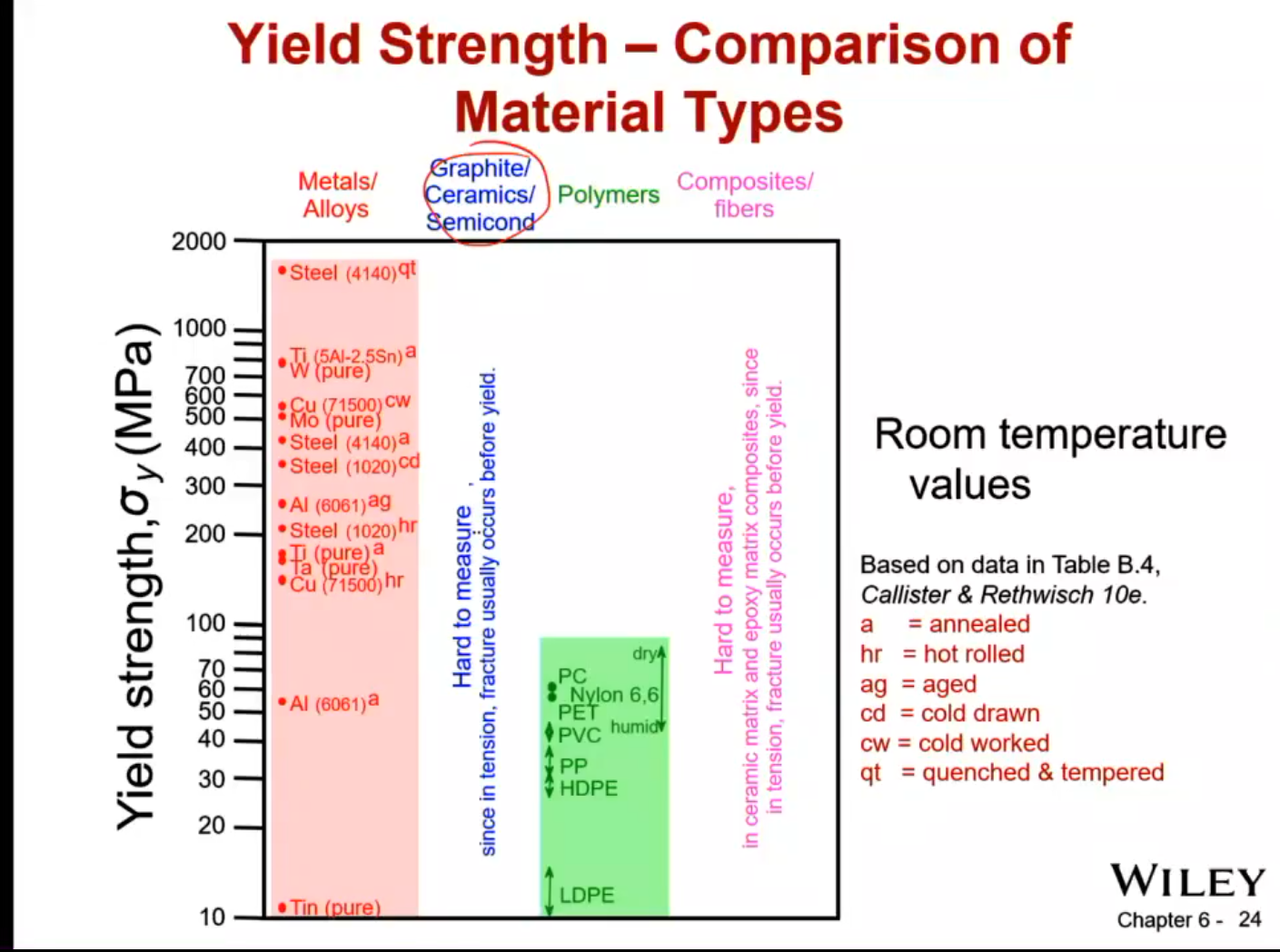
Composites/fibers in Yield strength graph
hard to measure
failure happens differently (matrix cracking, fiber break), fracture usually occurs before yield
Yield strength is mainly meaningful for ___ and not meaningful for ____
ductile materials (metals)
brittle materials (ceramics/composites)
Poisson’s ratio can be used to calculate the transverse deformation in the
elastic region
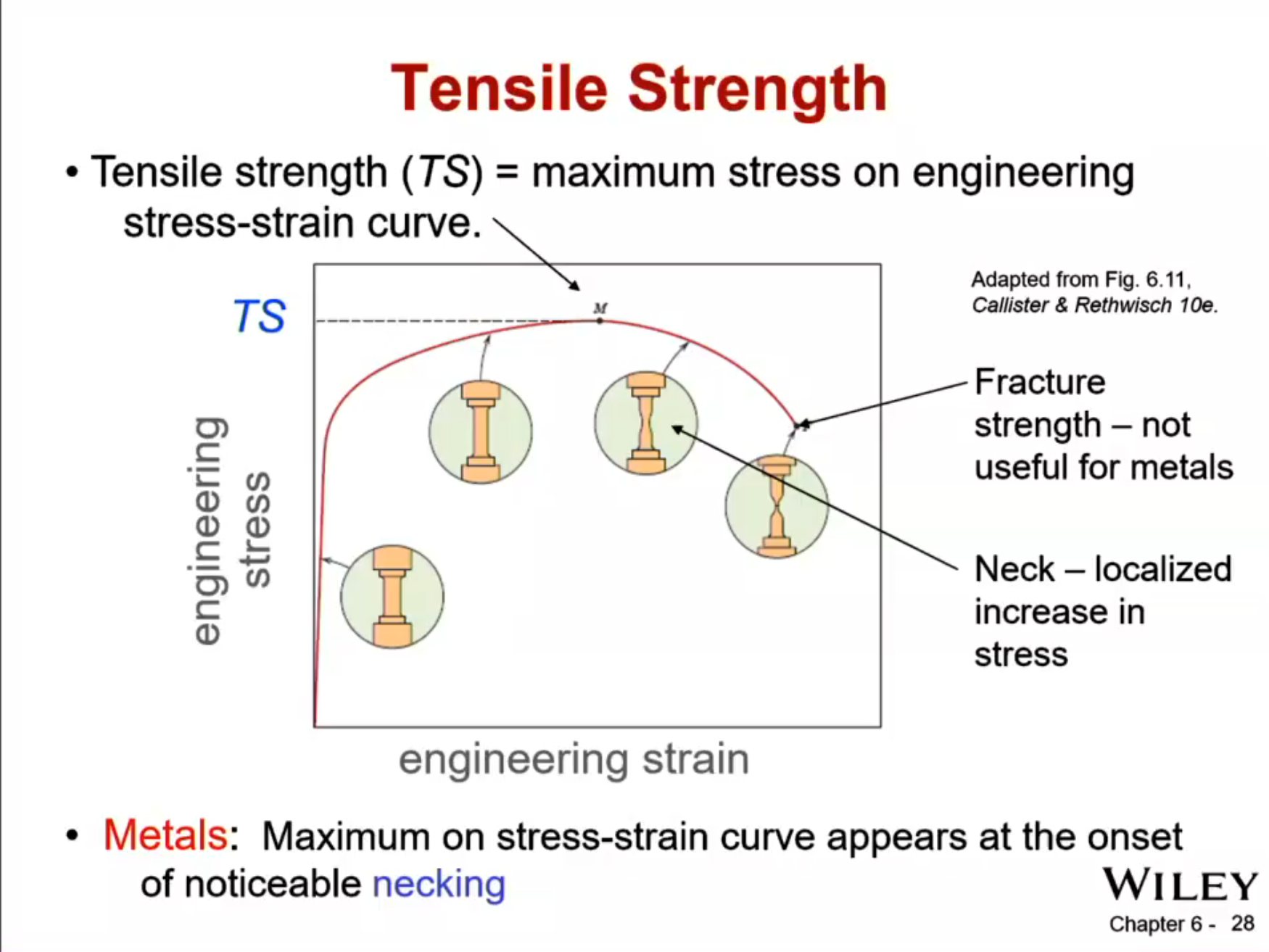
Tensile Strength (TS)
max stress on engineering stress-strain curve
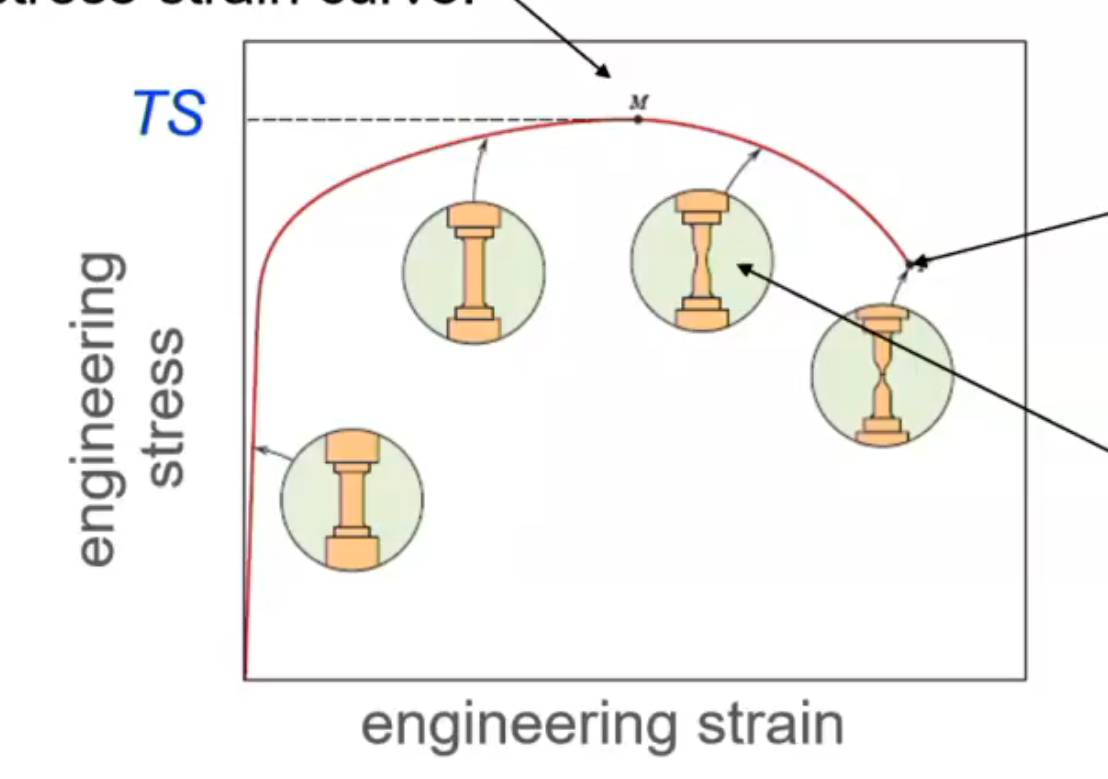
For metals, the maximum on the stress-strain curve (TS) appears at
the onset of noticeable necking
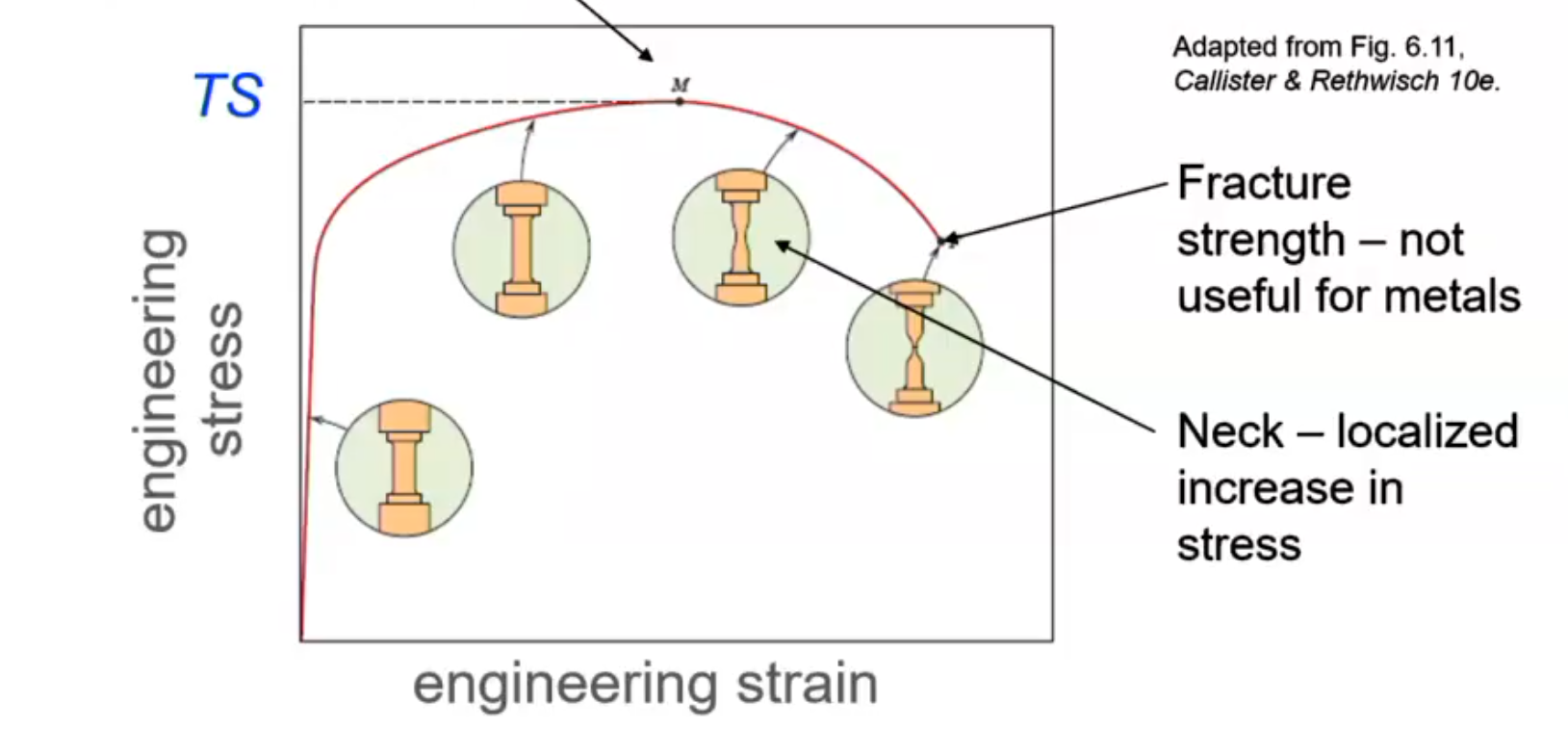
Neck/necking def
localized increase in stress
leads to fracture at the neck
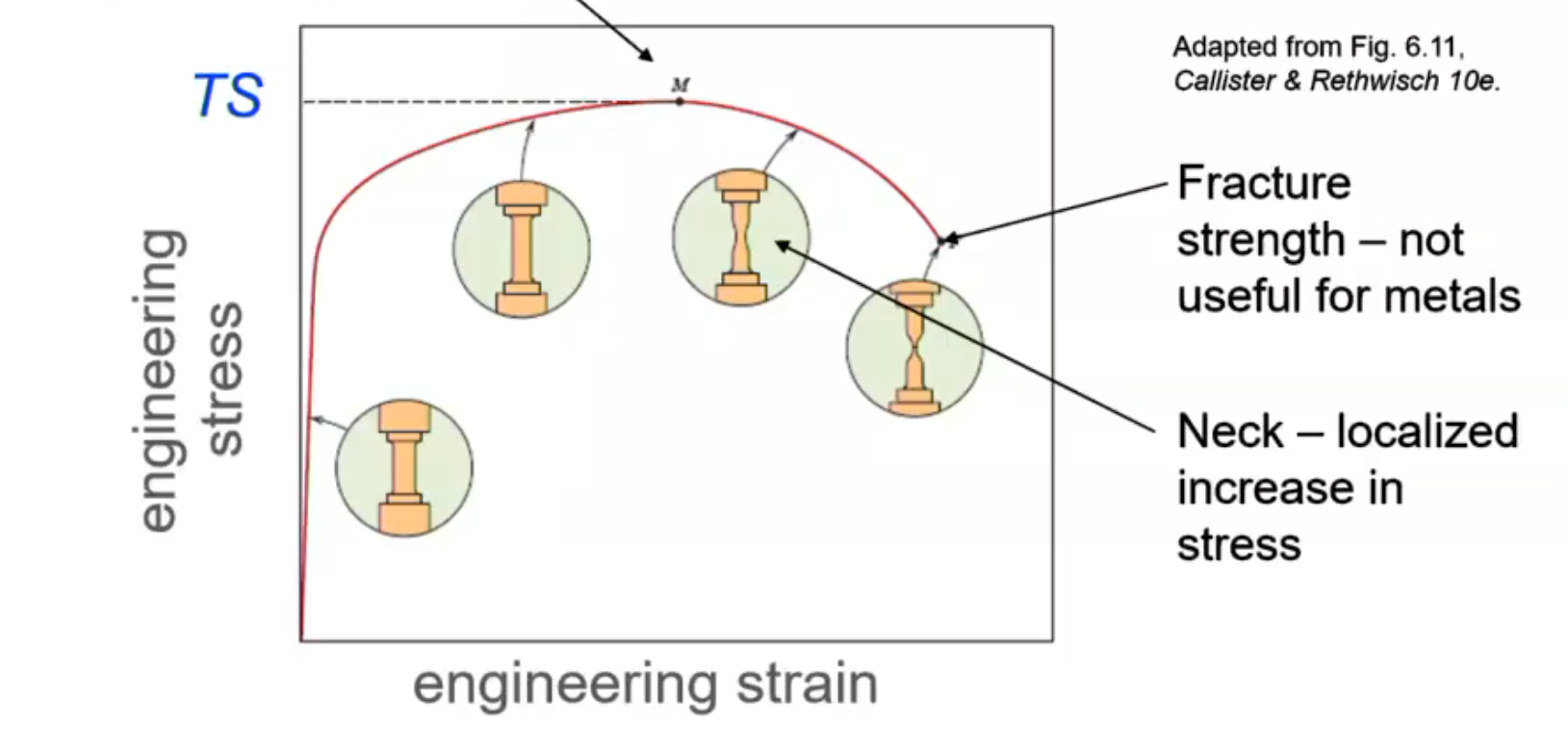
After necking begins:
area decreases rapidly in one spot
load capacity drops, engineering stress decreases
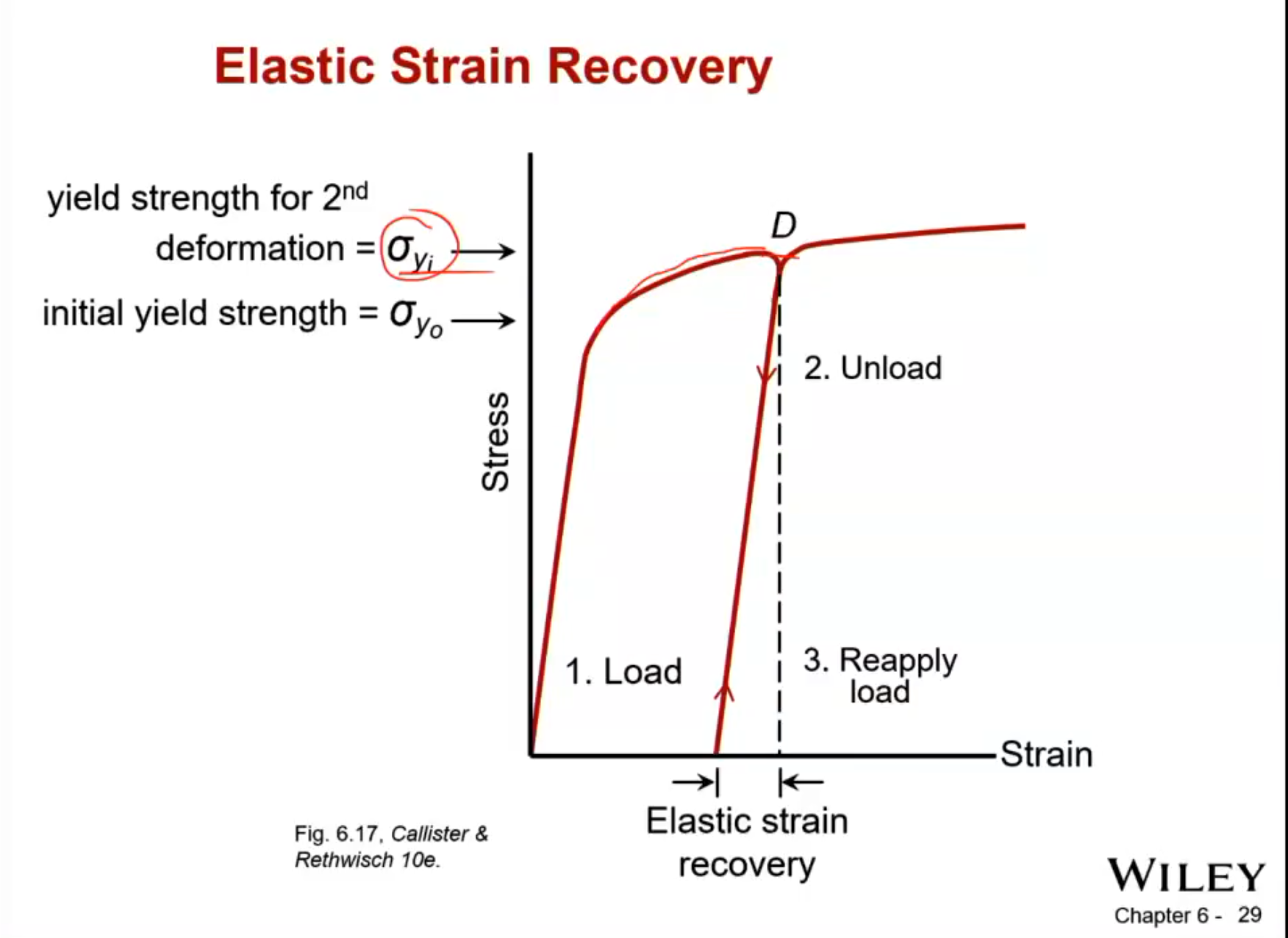
Explain
Load - material goes elastic, then plastic to point D
Unload - path is linear (elastic slope), and only elastic strain is recovered. The remaining strain is plastic
Reapply load - Follows same linear line back up, no new plastic deformation until reaching higher stress
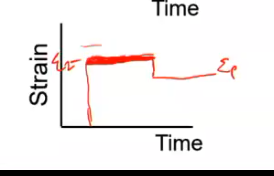
explain
strain increases to a larger value → after unloading it drops partially, but not to 0.
the remaining strain is the permanent plastic strain, εp
ductility def
amount of plastic deformation at failure
2 types of ductility
% elongation
% reduction in area
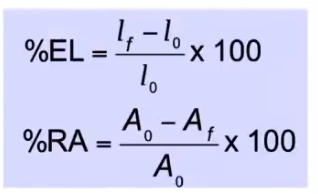
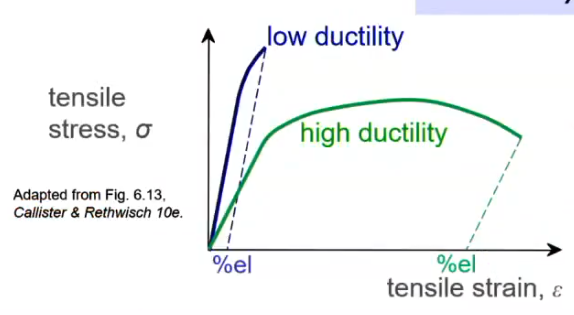
explain
Little Plastic deformation → short curve → small % elongation
Significant plastic deformation → long curve → large % elongation
Toughness def
amount of energy absorbed before fracture
approximation of toughness
approximate by area under stress strain curve with units energy per unit volume
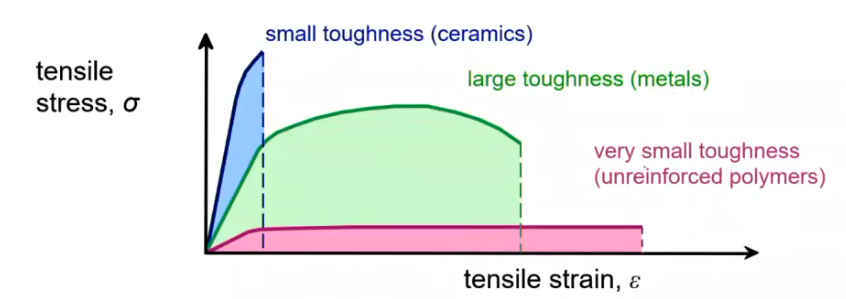
what materials are associated with +small toughness
ceramics
large toughness are common in what kindve materials
metals
what material is associated w/ very small toughness
reinforced polymers
brittle fracture is associated with
small toughness
ductile fracture means
large toughness
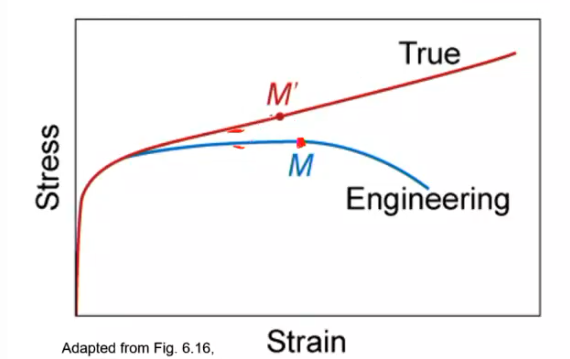
Engineering stress vs true stress
engineering stress uses original area A0
True stress uses current area Ai
Engineering strain vs true strain
Engineering strain uses total change relative to original length
true strain accumulates incremental strain using a log expression
True vs engineering line on stress-strain
Before necking - curves are close
after necking - engineering curve drops, true curve increases