Introduction
 Call Kai
 Learn
Learn Practice Test
 Spaced Repetition
 Match
Match Flashcards
 Knowt Play
1/38

Earn XP
Description and Tags
Name | Mastery | Learn | Test | Matching | Spaced | Call with Kai | Chat |
|---|
No analytics yet
Send a link to your students to track their progress
39 Terms
Biological membrane
Phospholipid bilayer that contains protein
allows the uptake of certain substances
Has various transporter proteins consuming metabolic energy for selective transport
regulates the fluxes of ions and metabolites
described as a fluid-mosaic model
components of a fluid-mosaic model
phospholipid bilayer
integral proteins
peripheral proteins
anchored proteins
Integral Proteins
embedded in the bilayer and span the entire width of the bilayer to serves as ion channels
Peripheral Proteins
bound to the surface of the membrane surface by noncovalent bonds, and can be dissociated from the membrane with a high salt solution.
peripheral proteins are involved in interactions between the plasma membrane and components of the cytoskeleton such as ,…..
Microtubules and actin microfilaments
Anchored Proteins
bound to the membrane surface via lipid molecules (covalently)
Plastids are derived from
Proplastids
Proplastids
an organelle found in the meristematic region of the plant that is colorless and small ,and is still underdeveloped. ( when developed they turn to specialized plastids)
Chloroplasts
Plastids with chlorophyll and are involved in photosynthesis
Chromoplasts
involved in producing and storing pigments ( carotene, xanthophylls. etc) and are found in fruits, flowers and roots
Leucoplast
lacks pigments and involved mainly for storing food
types of leucoplast
Amyloplast (stores starch)
Elaioplast (stores fat)
proteinoplast (stores protein)
Mitrochondria
plastids that have their own DNA and ribosomes
Semiautonomous organelles
Organelles that contain their own DNA and protein-synthesizing machinery, however they depend on the nucleus for the majority of their protein
Example of semiautonomous organelles
mitochondria and chloroplasts
DNA of semiautonomous organelles
circular chromosomes that are localized in a specific region (nucleoids)
Cell division in plants are limited to ——— post embryonic growth and development
the meristems
meristems are divided into
Shoot Apical Meristem (SAM)
Root Apical Meristem (RAM)
Lateral Meristem
Shoot Apical Meristem (SAM)
Growth lengthwise upward
Root Apical Meristem (RAM)
Growth lengthwise downwards
Lateral Meristem
Growth in diameter
Cytoskeleton
a three-dimensional network of filamentous protein
Cytoskeletons function
Spatial organization for the organelles
Scaffolding for the movement of organelles
Fundamental role in meiosis, cytokinesis, wall deposition
Maintenance of cell shape, and cell differentiation
types of cytoskeletal elements
Microtubules
Microfilaments
Intermediate filaments
Microtubules
a hollow cylinder that are composed of polymer of the protein tubulin
Protofilaments
a single microtubule consists of hundreds of thousands of tubulin monomers arranged in 13 columns
Microfilaments
solid, and composed of a special form of the protein found in muscle (G-actin). consisting of two chains of polymerized actin subunits that intertwine in a helical fashion
Intermediate filaments
a diverse group of tough, helically wound fibrous elements that function in the structural support of membranes ,and are composed of linear polypeptide monomers of various types.
Plasmodesmata
tubular extensions of the plasma membrane that traverse the cell wall and connect the cytoplasm of the adjacent cells
the cytoplasm form a continuum referred to as the symplast because ?
most plant cells are interconnected by the plasmodesmata
Symplastic transport
Intercellular transport of solutes through plasmodesmata
Plasmodesmata Function
regulating macromolecular traffic from cell-to-cell
the complex internal structure of plasmodesmata
contains a narrow tubule of ER called desmotubule
Desmotubule
is a continuous with the ER of the adjacent cells

Plant Cell

Microtubules
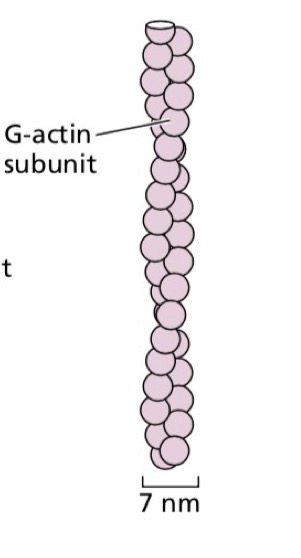
Microfilaments
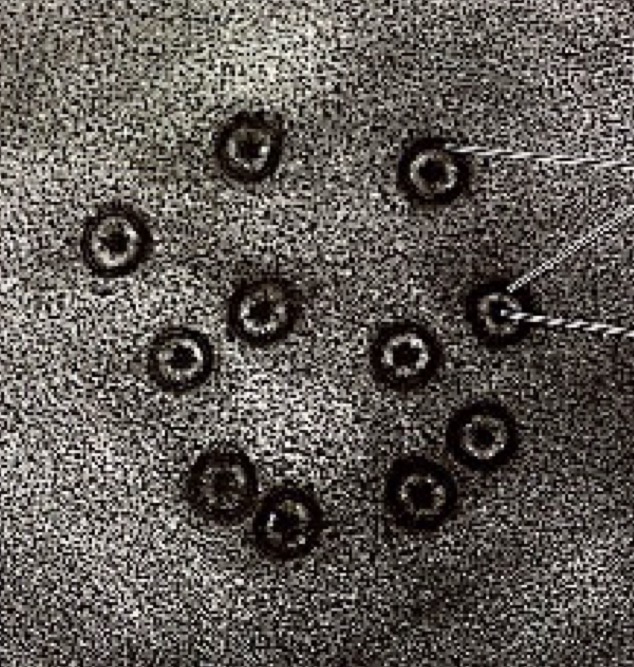
Desmotubule

Plasmodesmata