Chapter 4 + 16 BIOL300
 Call Kai
 Learn
Learn Practice Test
 Spaced Repetition
 Match
Match Flashcards
 Knowt Play
1/56

There's no tags or description
Looks like no tags are added yet.
Name | Mastery | Learn | Test | Matching | Spaced | Call with Kai | Chat |
|---|
No analytics yet
Send a link to your students to track their progress
57 Terms
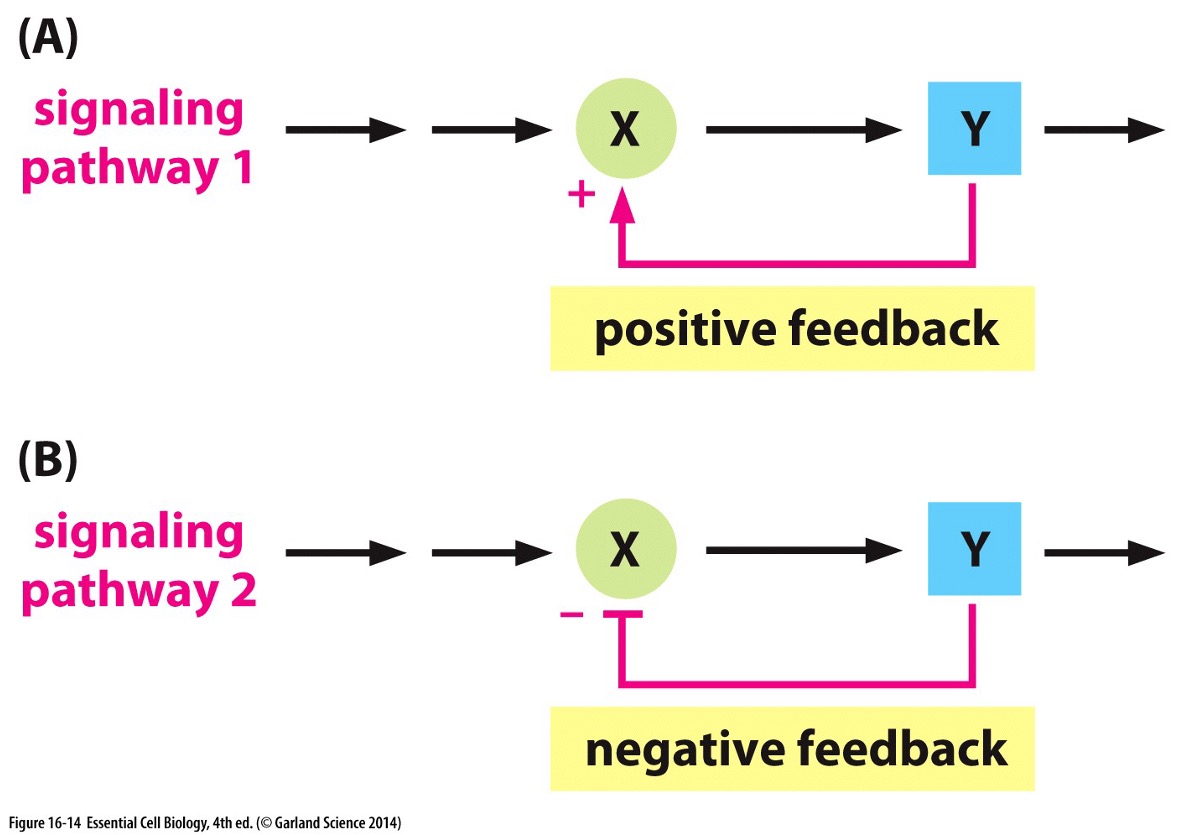
Modification of protein function through
feedback loops
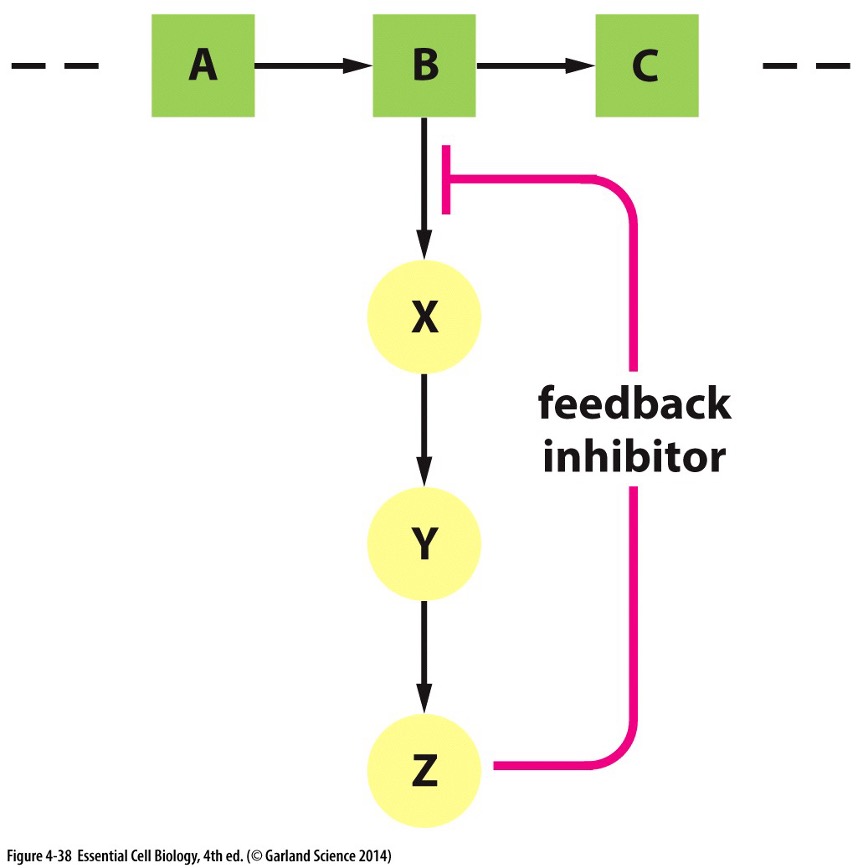
Feedback Inhibtion
enzyme acting early in a reaction pathway is inhibited by a late product of the pathway
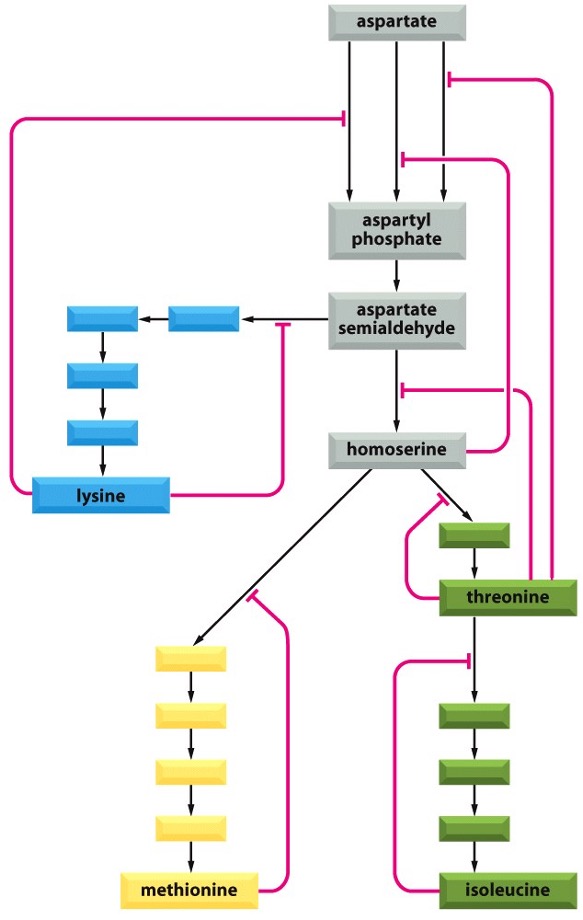
Feedback is key to regulation of metabolism
Once an amino acid is synthesized it inhibits the reaction
When that amino acid is “used up” and the cell needs to make more the inhibitory effect on the pathway is released
This example is “negative feedback”
The same principle can exists in a positive manner
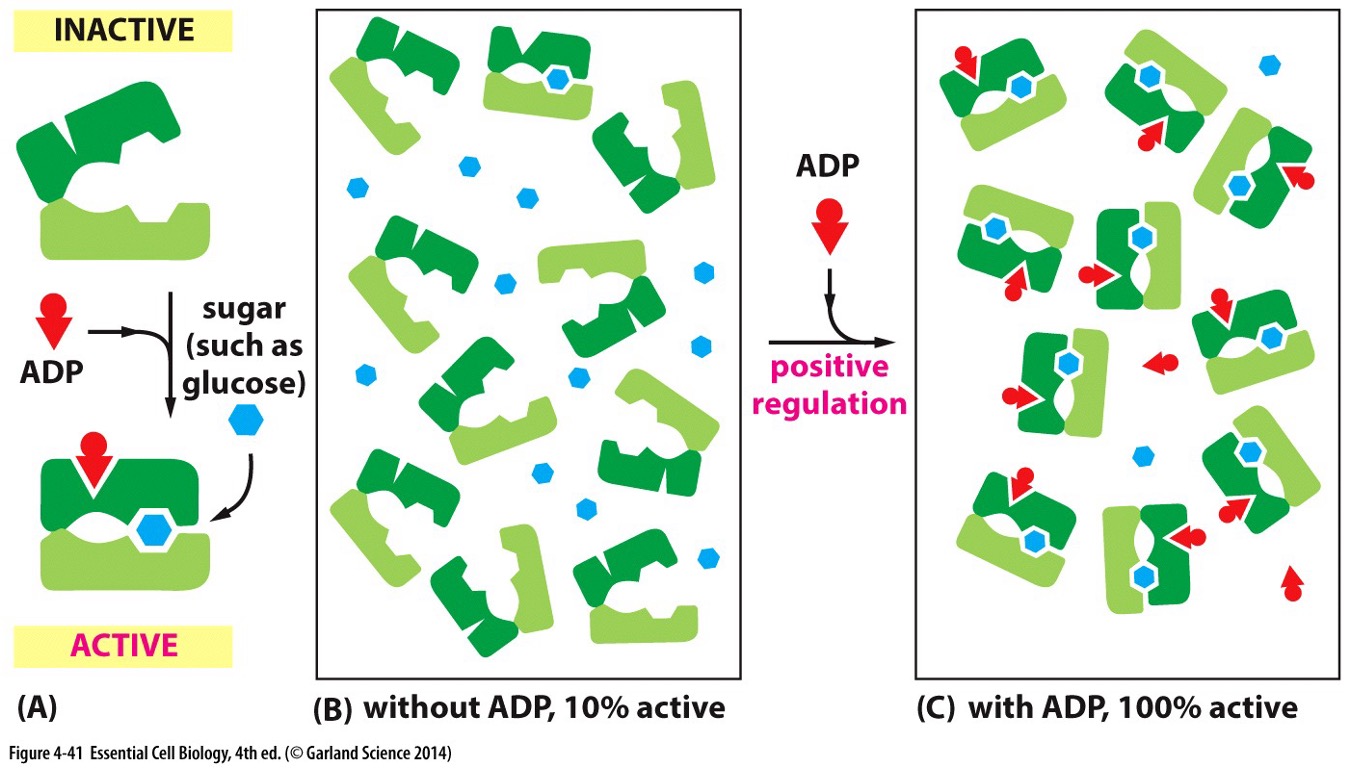
Ligand binding stabilizes…
confirmation to increase enzyme activity
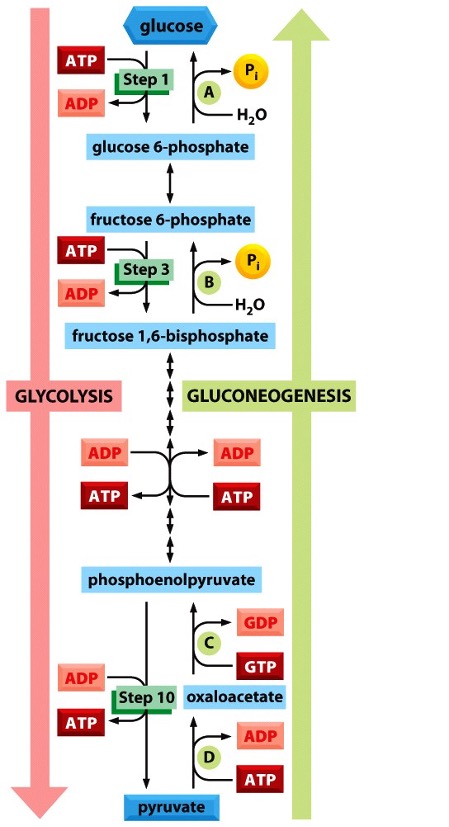
Feedback loops in regulation of …
Glycolysis
-Reaction reverses at time of high energy cell needs to generate more glucose
-
-Steps 1,3 and 10 are irreversible need “bypass” reactions
-
-Common starting product is lactate
-Lots of lactate generated when glucose is being used, this initiates the reversal of the reaction
-
-Takes A LOT of energy
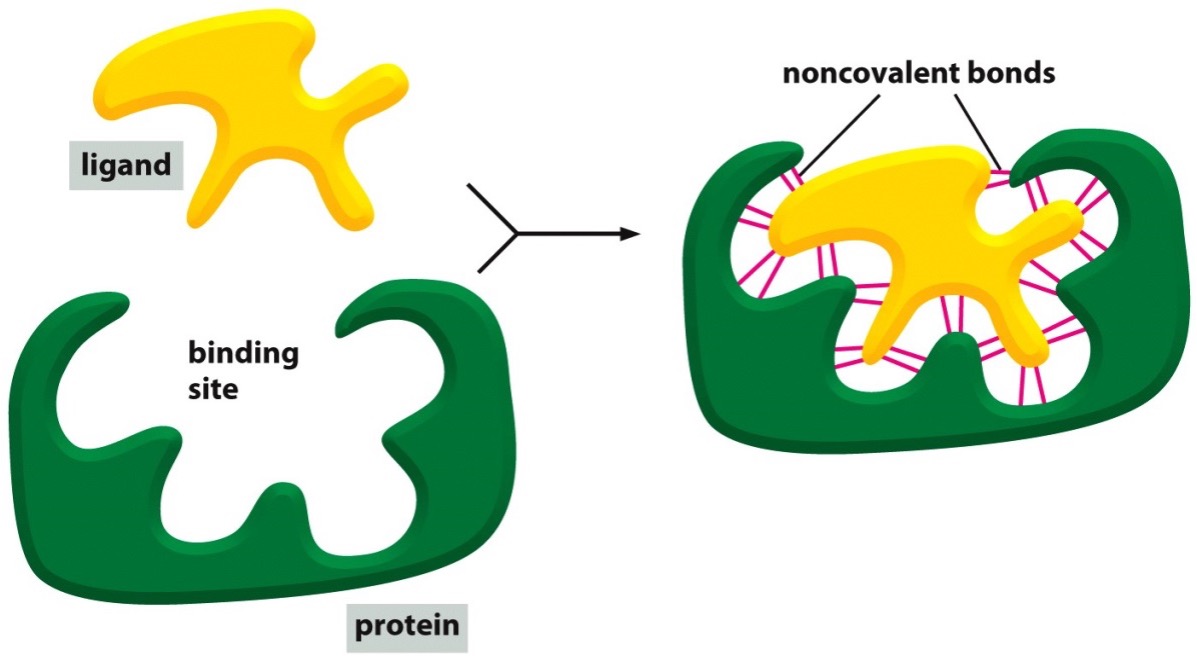
Ligand
•any molecule that binds to a specific site on a protein (eg. an enzyme binding to a substrate, or a signaling molecule binding to receptor)
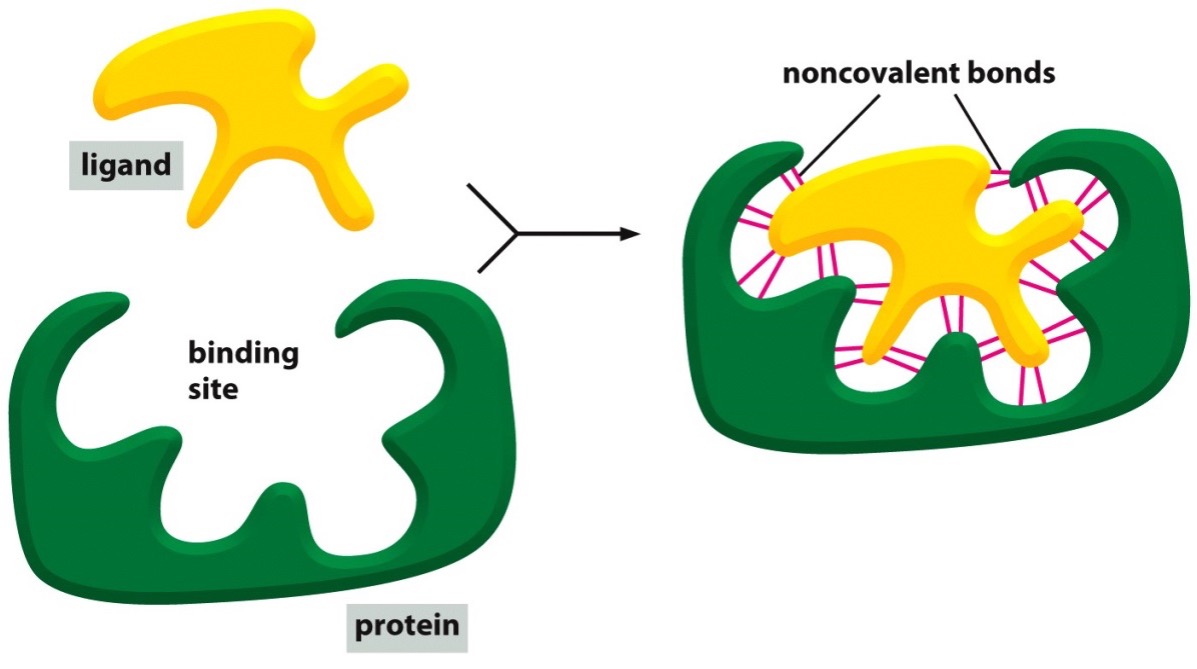
Binding Site
•region of protein that associates with a ligand
Able bind selectively and with high affinity is due to non-covalent bonds and hydrophobic interactions (shape of the pocket). “hand into a glove” “Lock and Key”
POINT OF REGULATION
How does Feeback Inhibiton occur often?
Allosterically through ligand binding.
Allosteric
can adopt rwo or more slightly different conformations
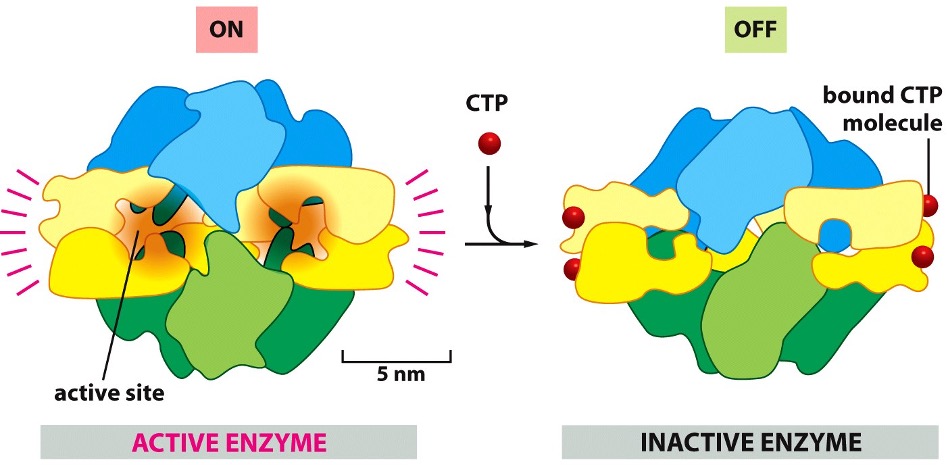
Allosteric binding
shifts the protein from one form to another (active vs. inactive) which can regulate activity
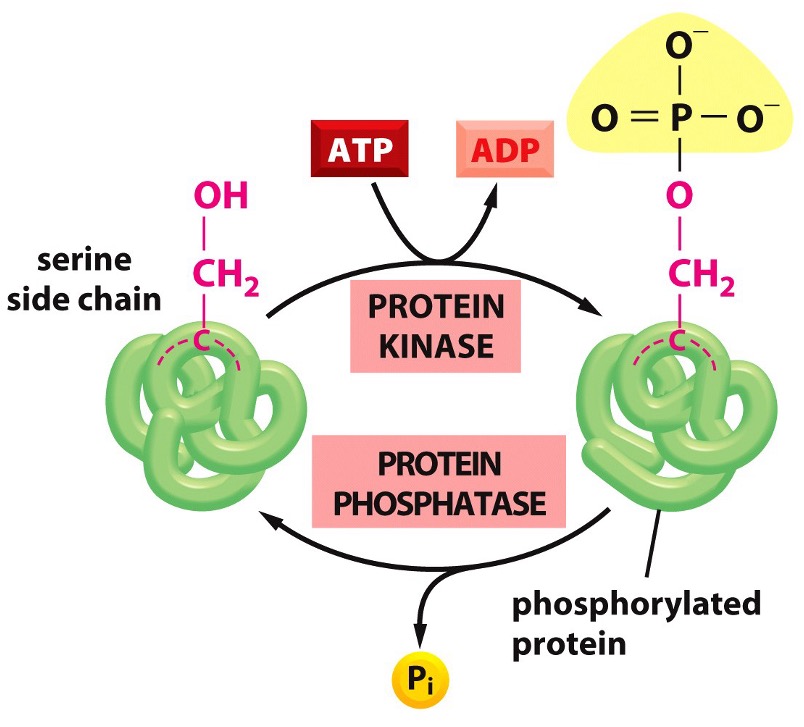
Enzymatic transfer of terminal phosphate of ATP to hydroxyl group on…
Serinem threonine, or tyrosine side chain
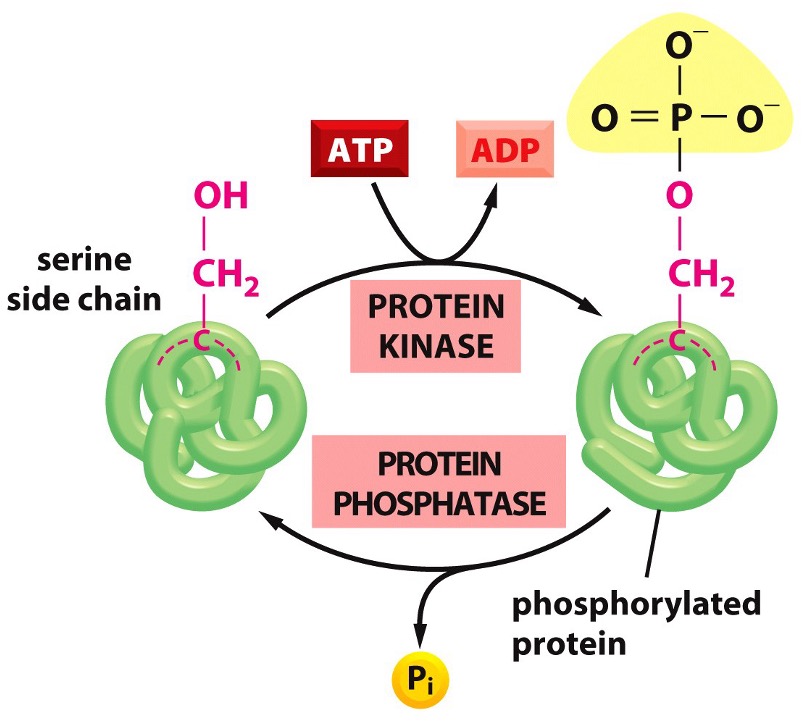
Negative charge of the Phosphate groups…
“flips” or “shifts” protein conformation
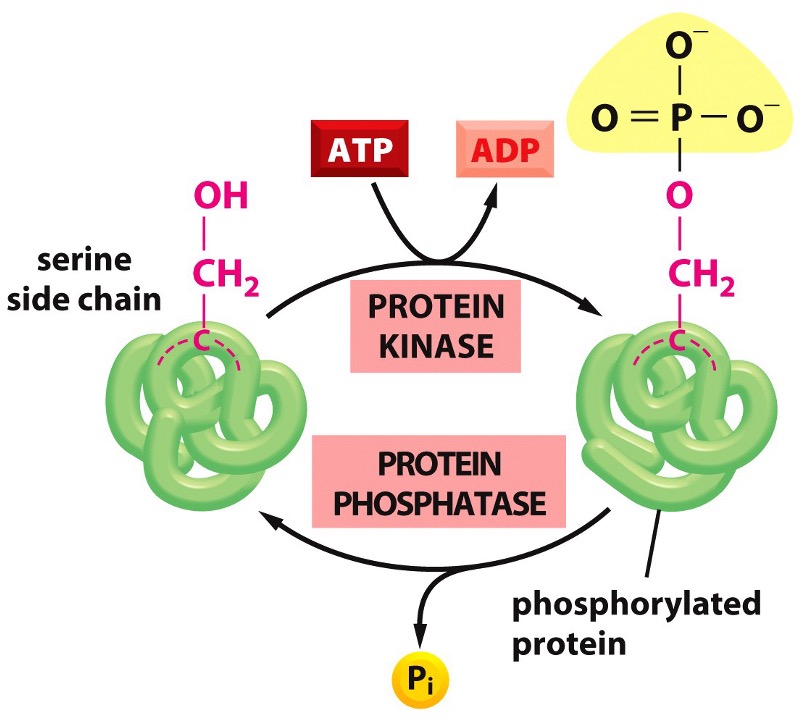
Kinases present that are known as…
“serine threonine kinases” or “tyrosine kinases”
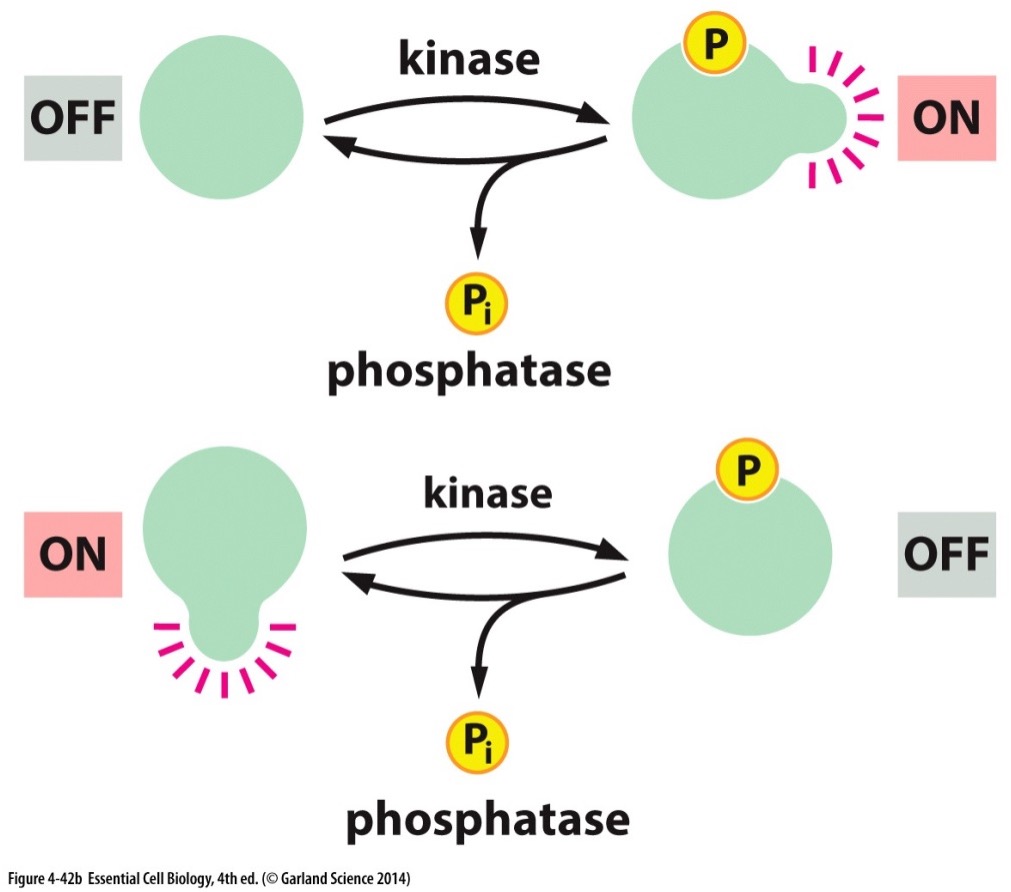
Phosphorylation is the most common form of..
chemical modification in addition to PO4 groups that can “flip” polarity
Chemical Modification is also known as…
Post Translational Modification
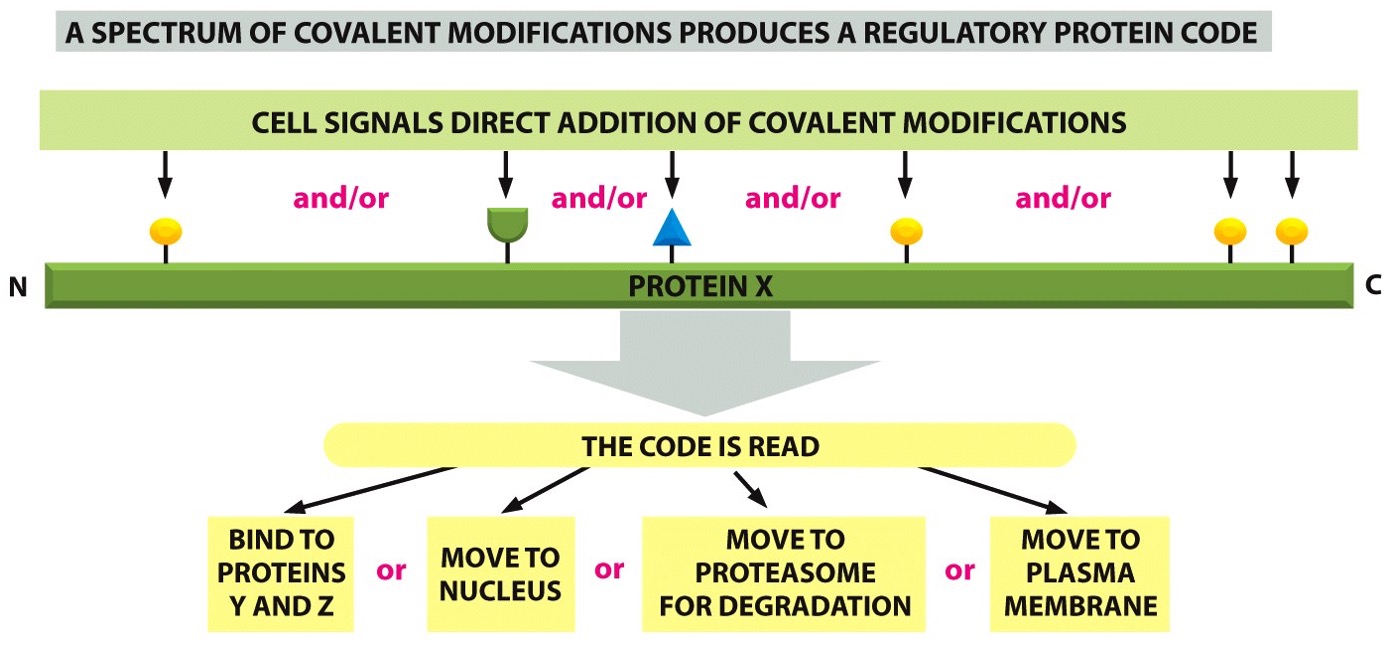
What does yellow sphere represent on this spectrum ?
Phosphorylation
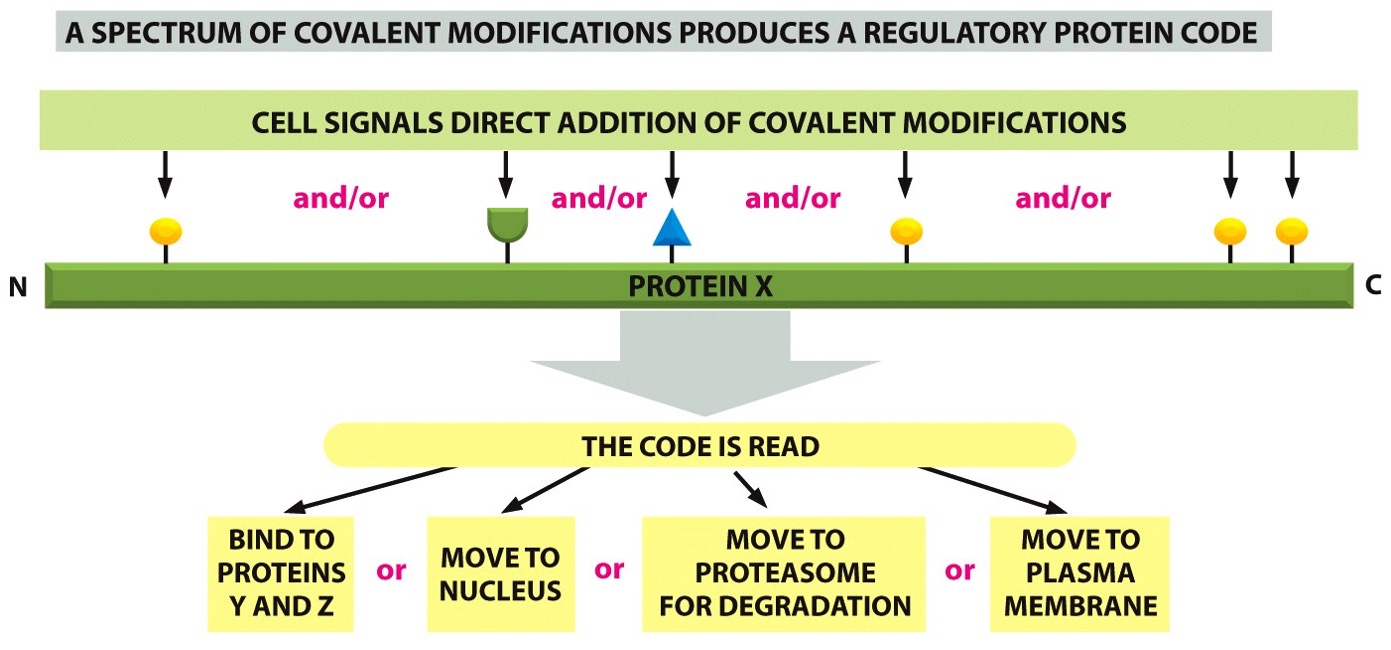
What does the green shape represent?
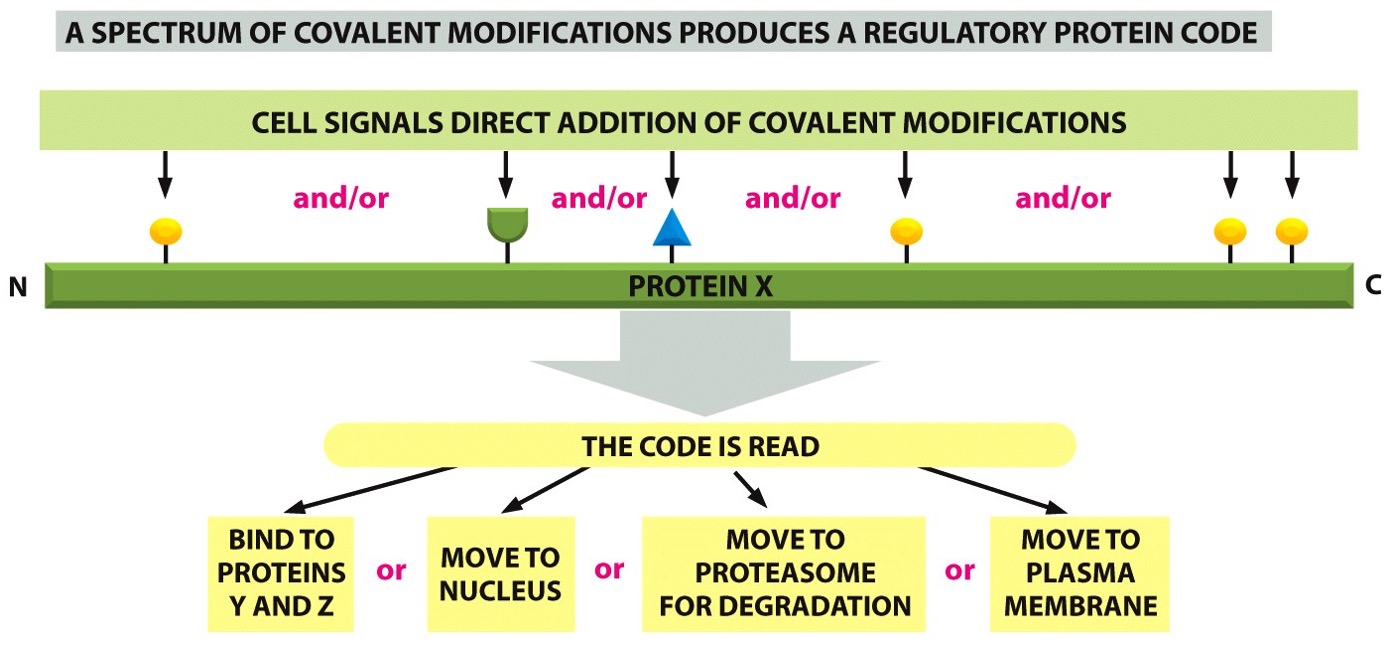
What does the blue triangle represent ?
Acetylation
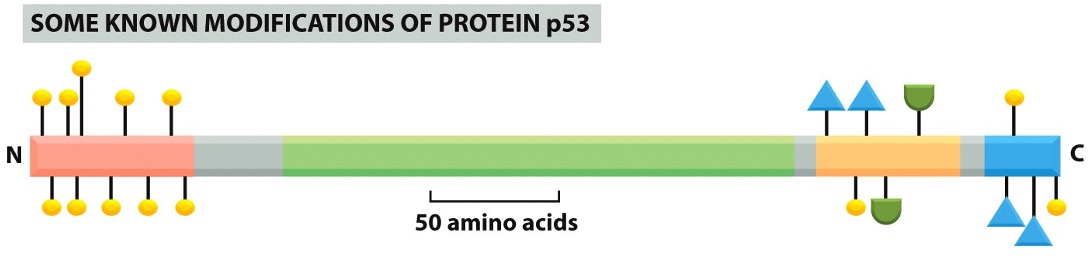
p53 Protein
Plays a role on how a cell responds to DNA damage
What does Phosphorylation do to p53?
Can turn p53 On or Off
What does Ubiquitination do to p53?
signals to degrade or move the protein
What does Acetylation do to p53?
Modulates the acvitivty of p53
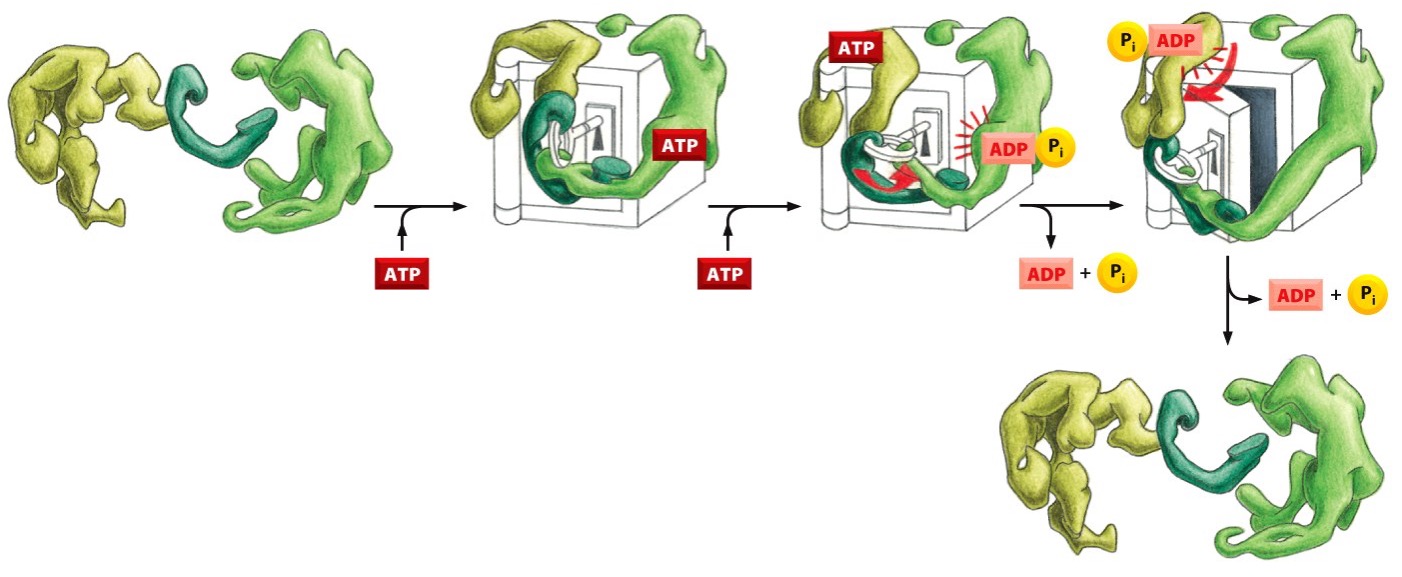
How can Individual proteins perform a specific task?
movement is often coordinated by the hydrolysis of a bound nucleotide.
Example above: Turning a key to a safe
Real example: Unwinding DNA in a damaged area
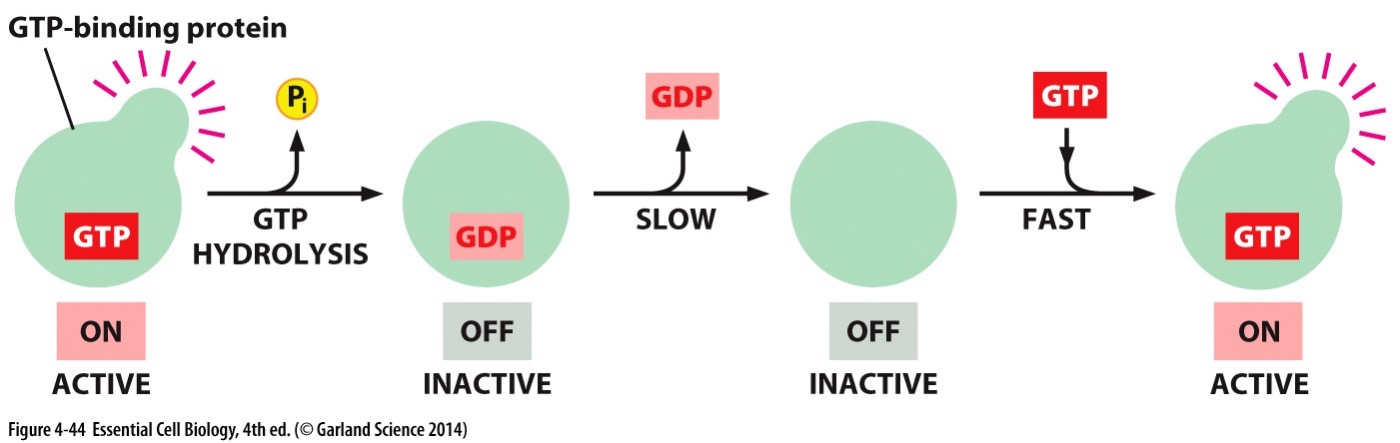
GTP Binding Proteins
Protein whose conformation and activity determined by association with either GTP or GDP
Active Formation
GTP Bound
Protein hydrolyzes GTP to…
GDP - releasing phosphate and flips to inactive conformation
- Resetting the switch requires the tightly bound GDP to dissociate, a slow step that is greatly accelerated by specific signals.
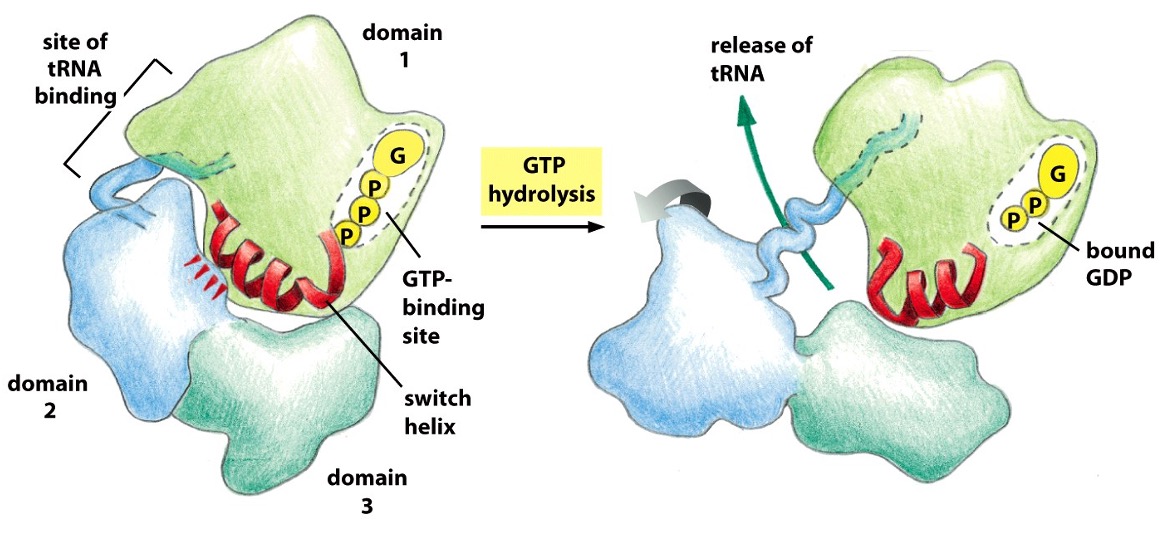
EF-Tu
GTP binding protein involved in loading tRNA onto the ribosomes
GTP Hydrolysis
causes a small shift in structure (0.1 nm), but this gets exaggerated due to the shape of the protein allowing the complex to open and release the tRNA
- it releases an intramolecular bond, like a ‘latch’ (red arrows), which allows domain 2 & 3 to rotate and release tRNA.
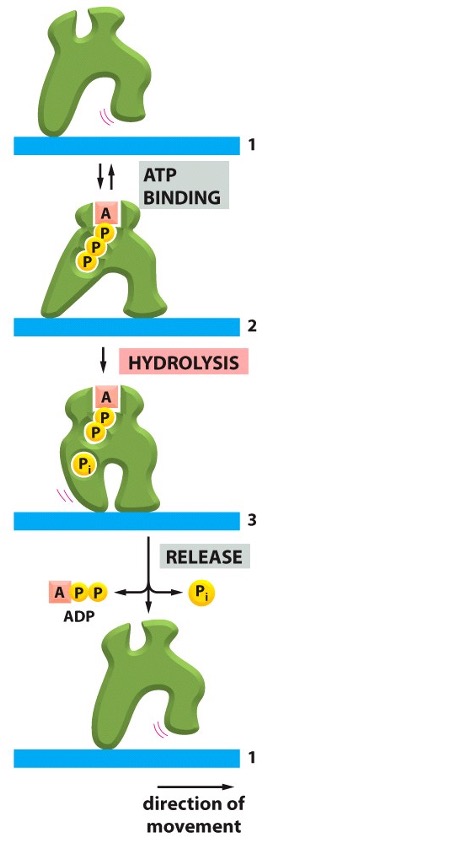
How does a protein “walk”?
Motor Molecules
Depends on ATP
Hydrolysis to move
-Step 2 to 3 requires ATP hydrolysis, so is essential irreversible, thus the protein moves in one direction along the thread
Cells must recieve and adapt to..
Signals from their enviornment and convert them to a cellular response
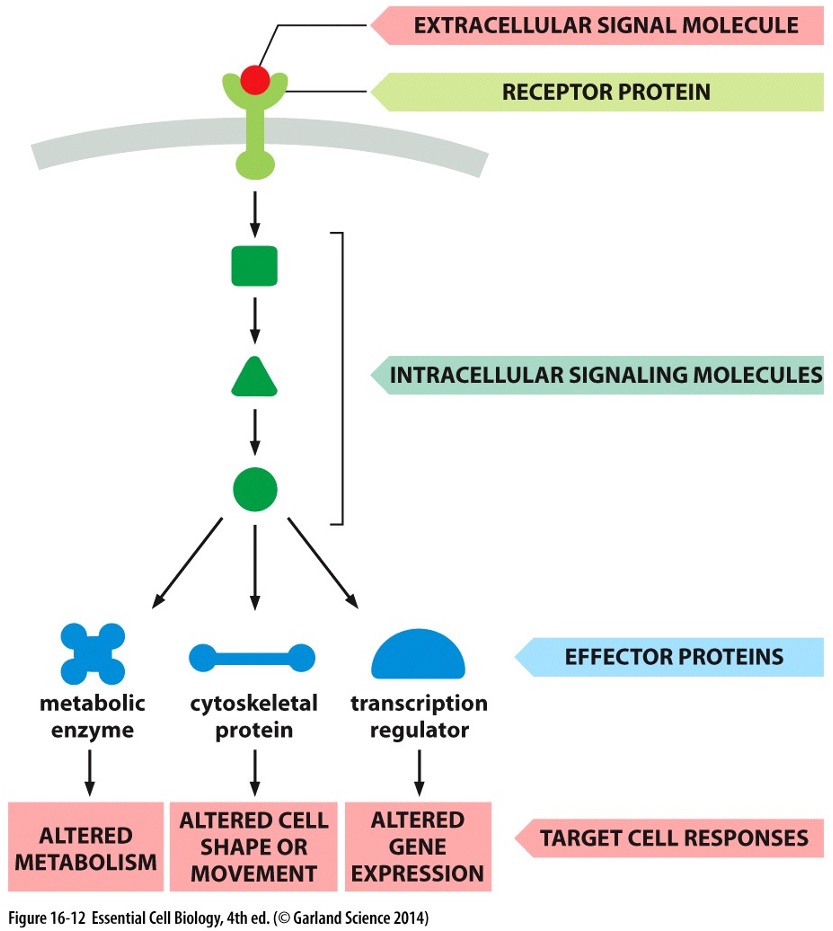
Signaling Cascades (Plasma Membrane)
Order
Extracellular Signal Molecule
Receptor Protein
Intracellular Signaling Molecules
Effector Proteins
Target Cell Responses
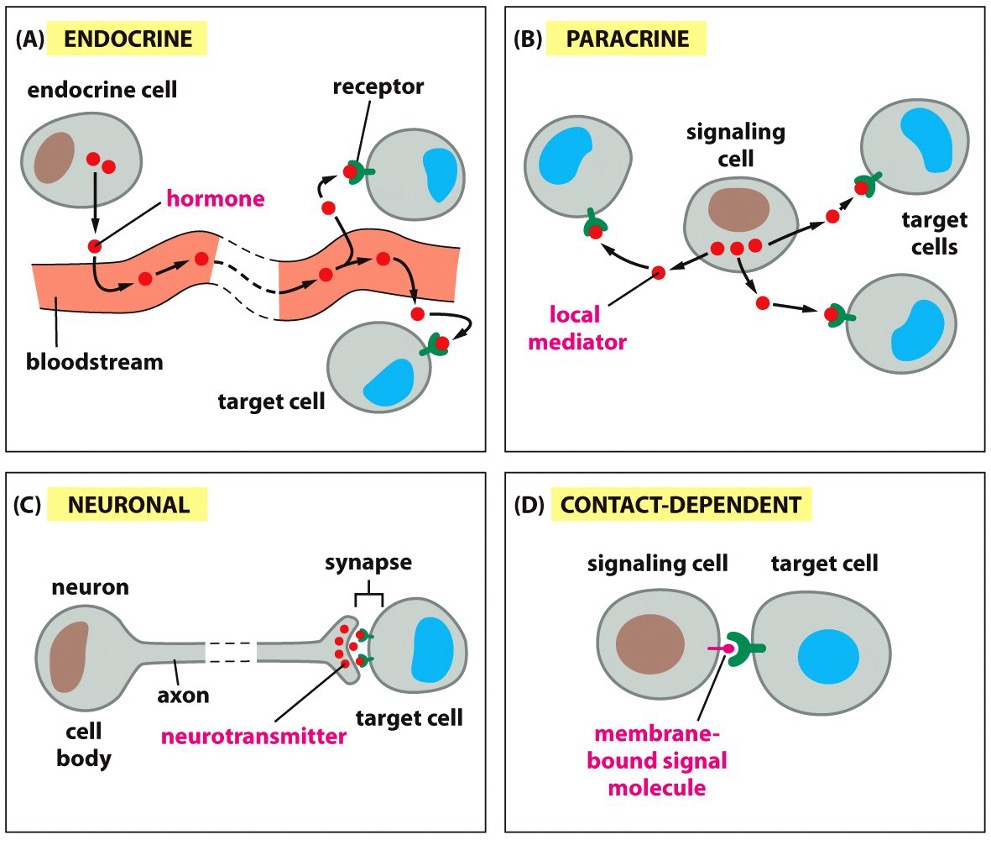
Endocrine
signaling involves hormones that travel through the bloodstream to distant target cells.
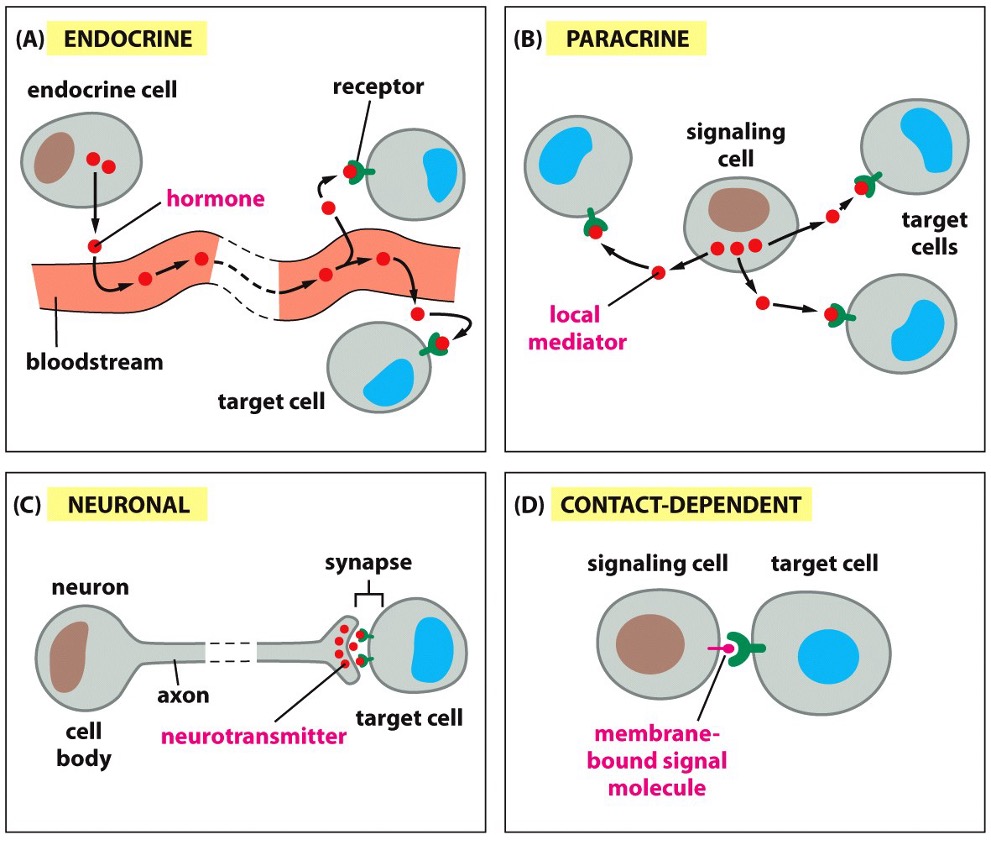
Paracine
signaling involves hormones that act on nearby cells within the same tissue, facilitating local communication.
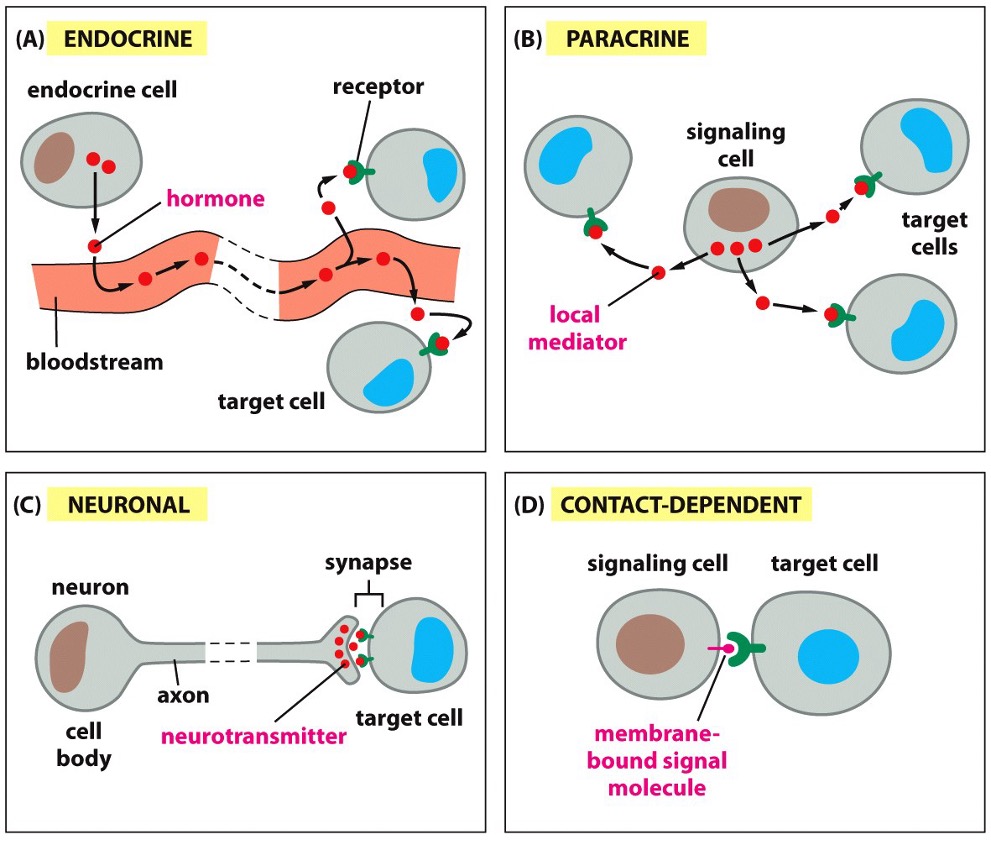
Neuronal
signaling involves the release of neurotransmitters from nerve cells that act on adjacent neurons, enabling rapid communication across the nervous system.
Contact-Dependent
signaling involves direct communication between adjacent cells through membrane-bound signals.
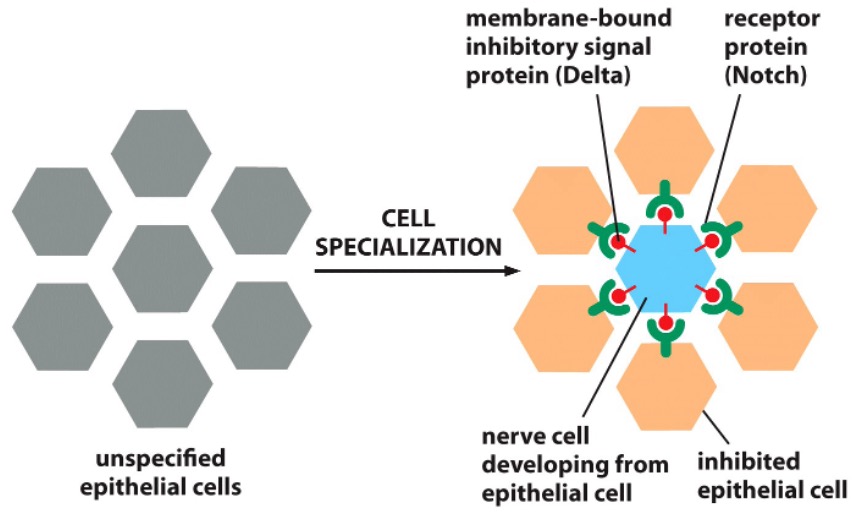
Delta and Notch
Signal and Receptor
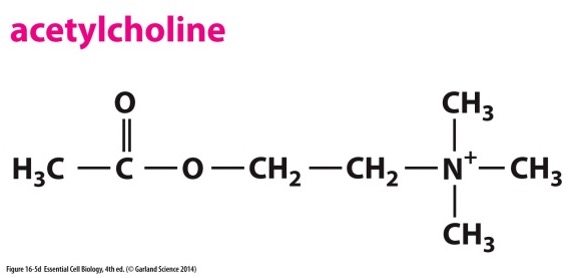
One signaling molecule may have..
several receptors
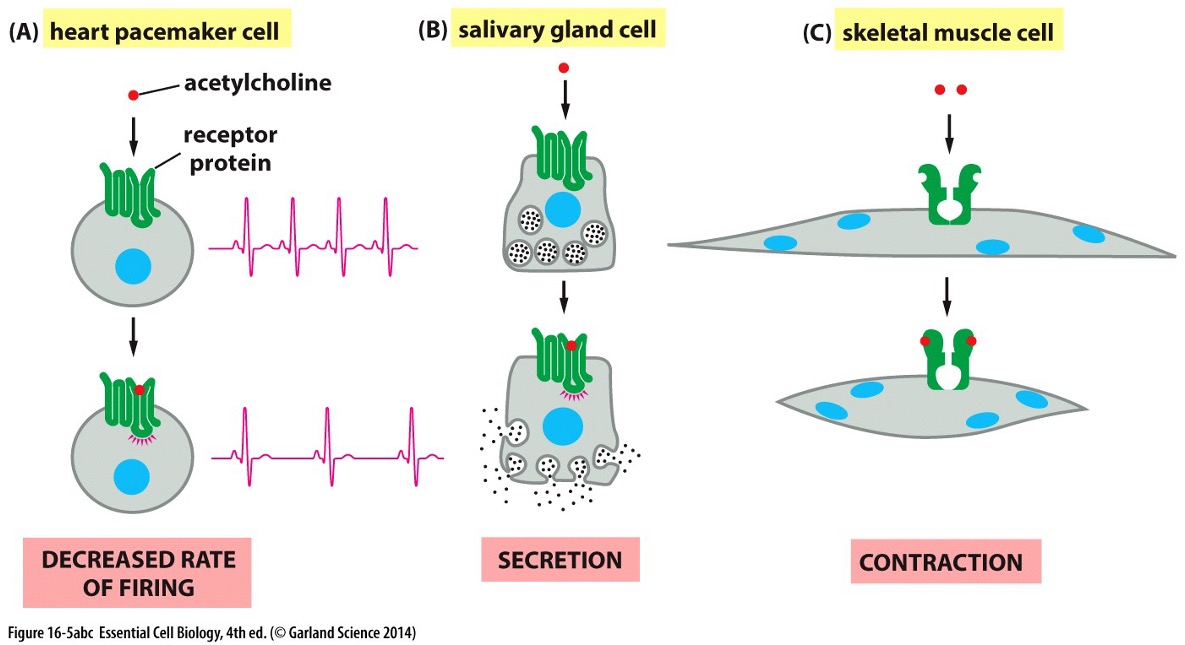
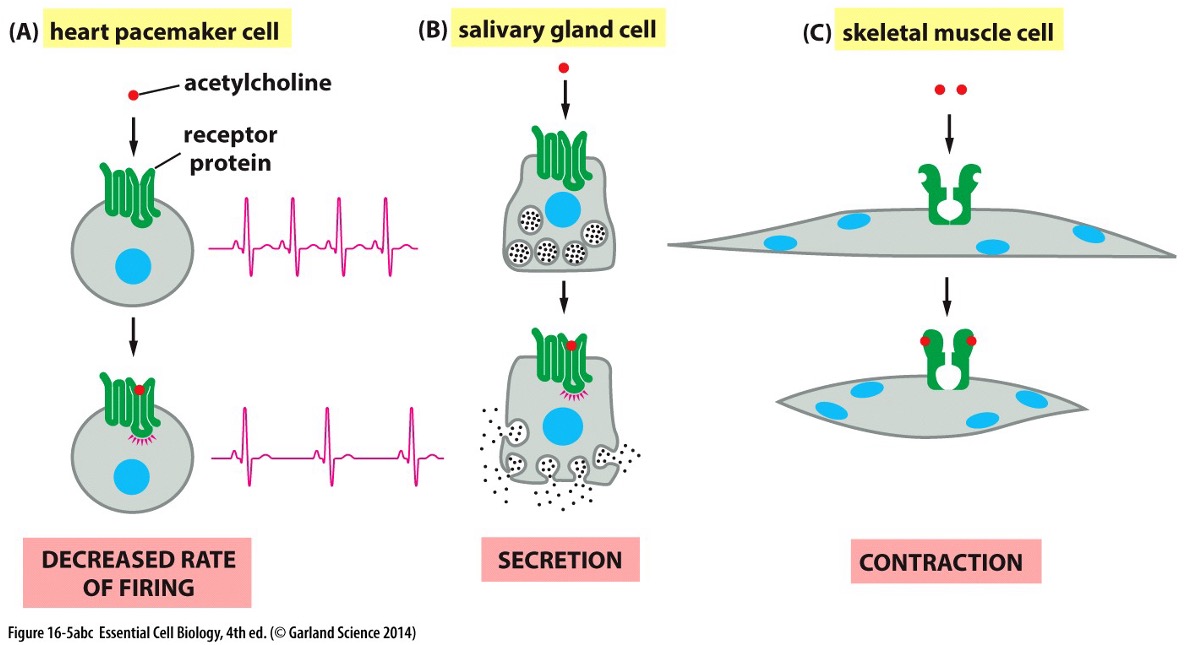
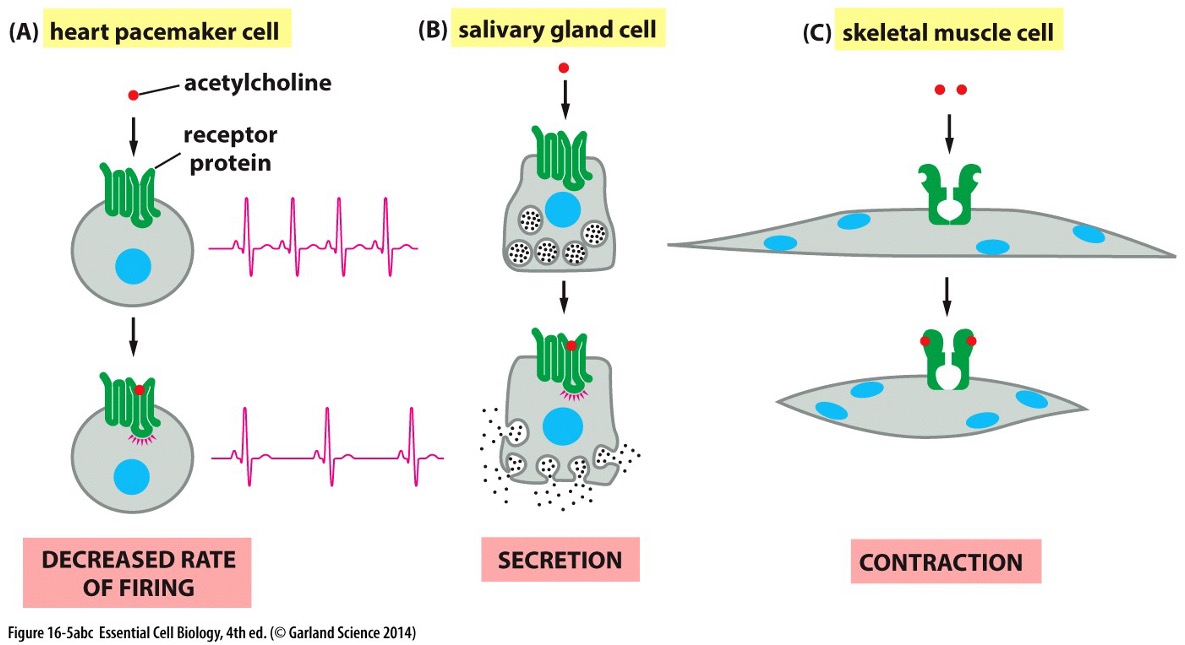
-Receptor response depends upon the context of the cell
Heart pacemaker cell
Contains acetylcholine and receptor protein
Decreased Rate of Firing
Salivary gland cell
Secretion of saliva containing enzymes and mucus, which aids in digestion and lubrication of food.
Skeletal Muscle Cell
Contraction occurs through the sliding filament mechanism, allowing movement and support for the body.
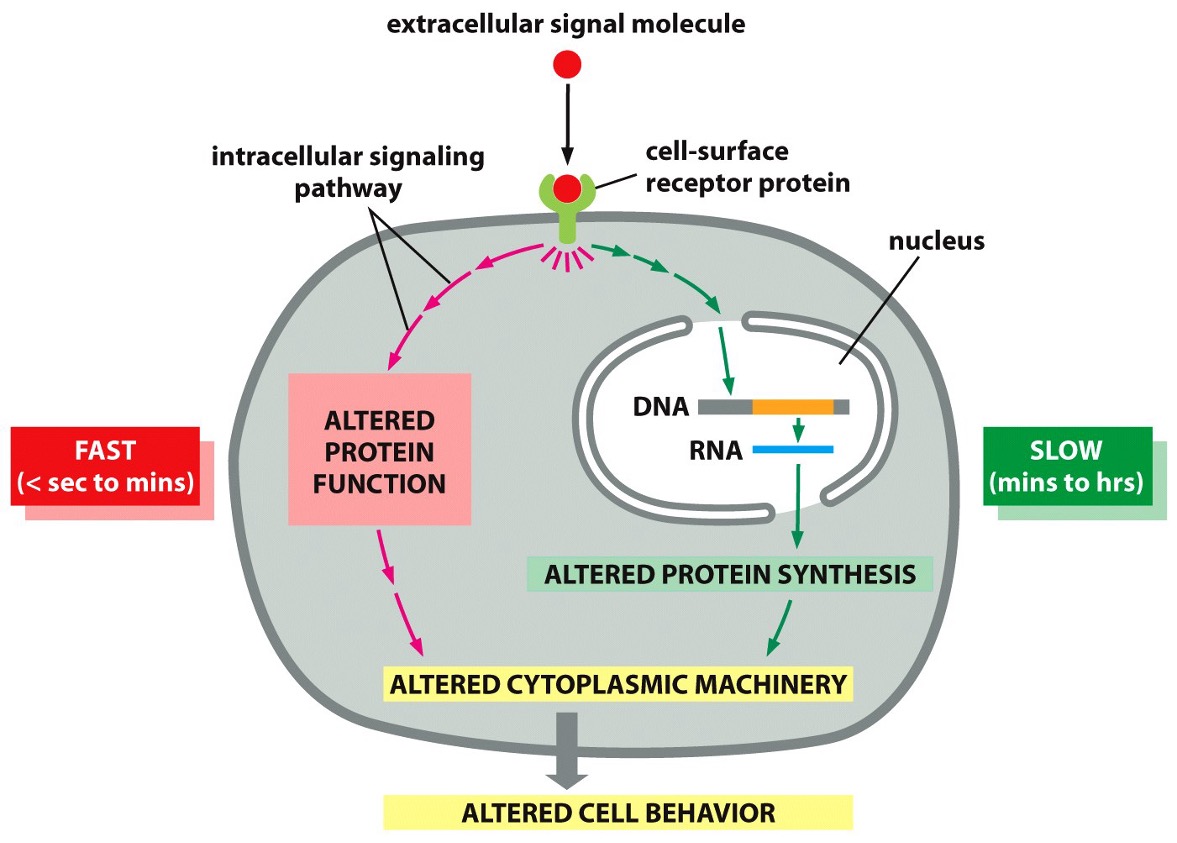
Response time depends on…
The signal..
Cell Surface Receptors
Red shape - Hydrophilic signal Molecule
Green- Cell Surface Receptor
-Gray Area- Plasma Membrane
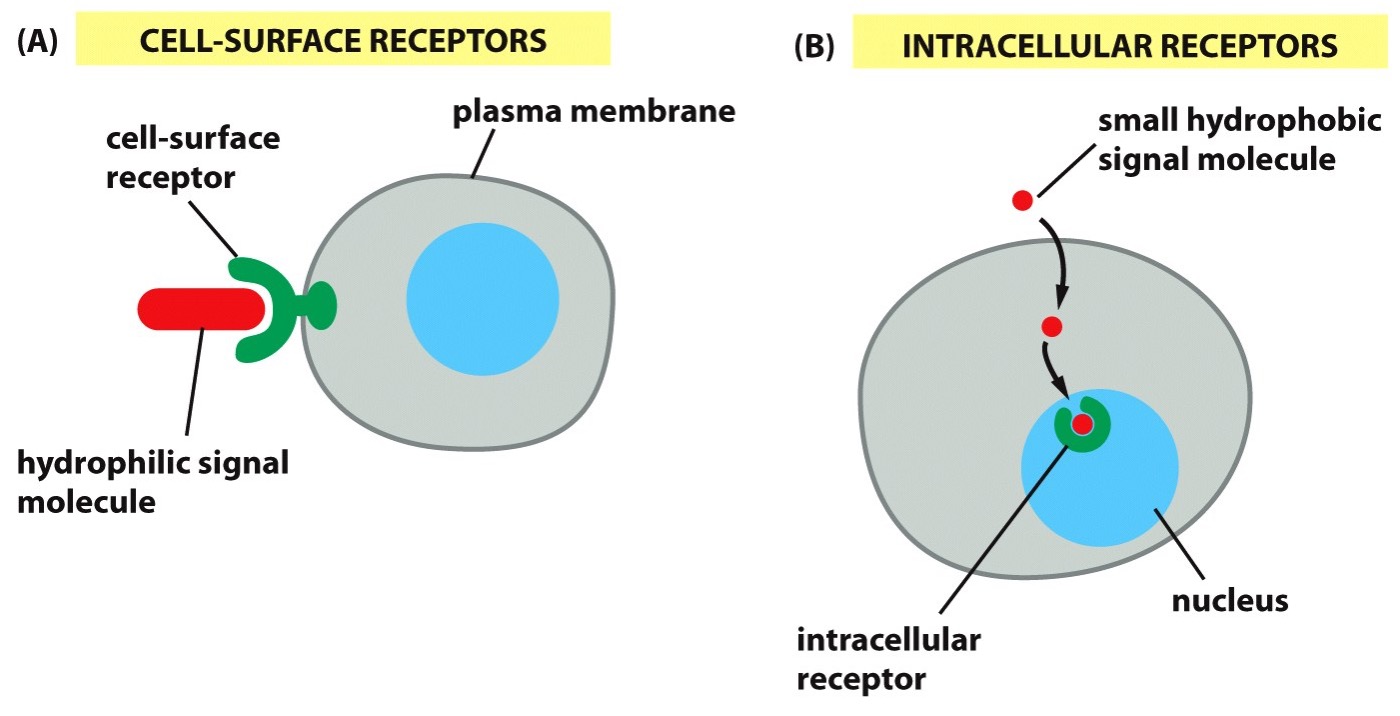
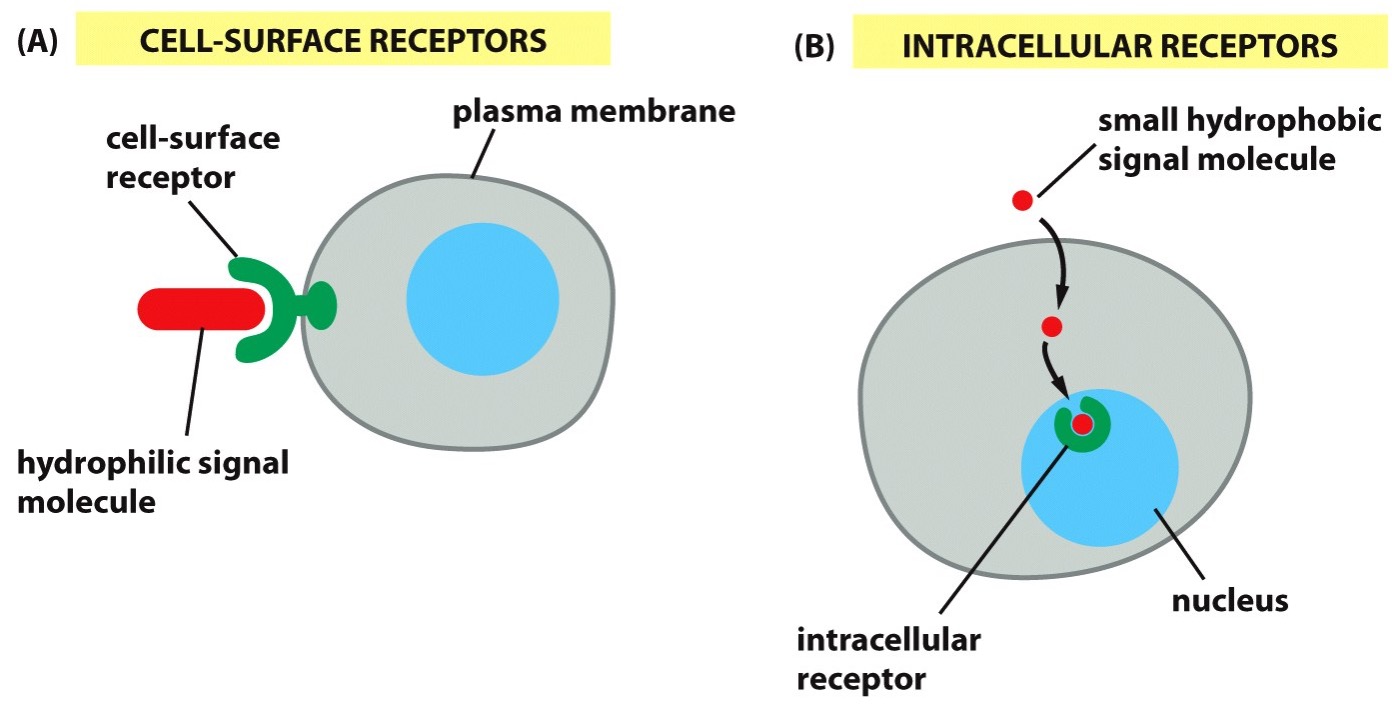
Intracellular Receptor
Red dot (that enters in) - Small Hydrophobic Signal Molecule
Blue Circle- Nucleus
Green shape- Intracellular Receptor
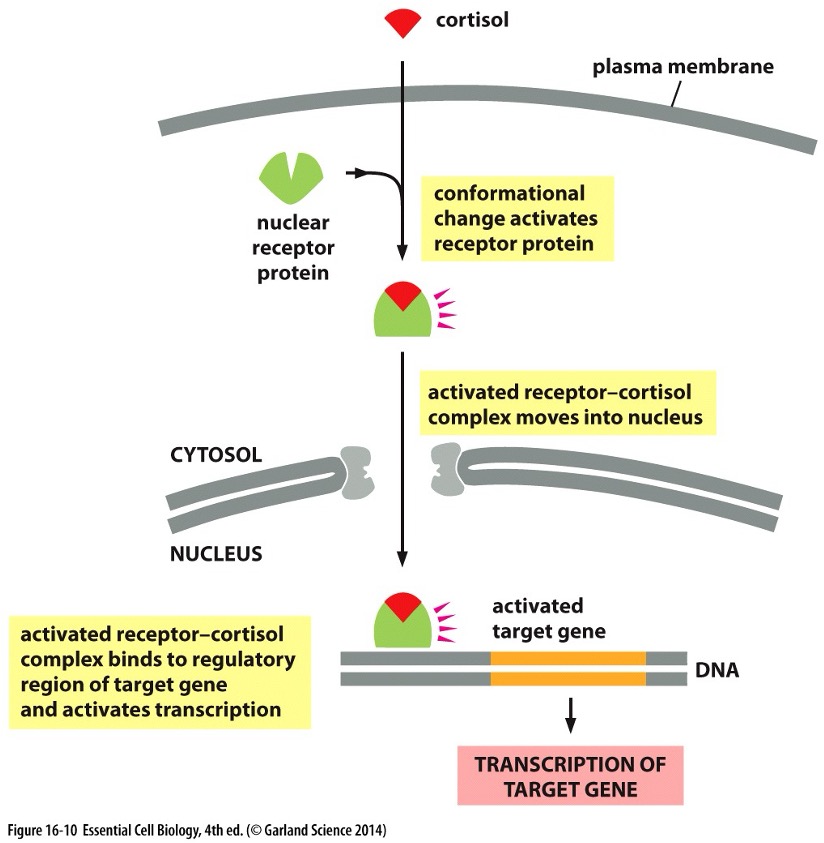
Hydrophobic Hormones
Cortisol - Nuclear receptor protein (conformationa change activates it) - Activated recpetor cortisol complex moves into nucleus- reaches to activated target gene
Smooth muscle cells
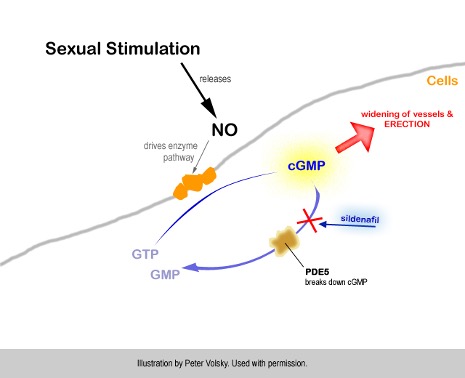
Involves Nitric oxide gas that is released from endothelial cells and diffuses into the smooth muscle cells
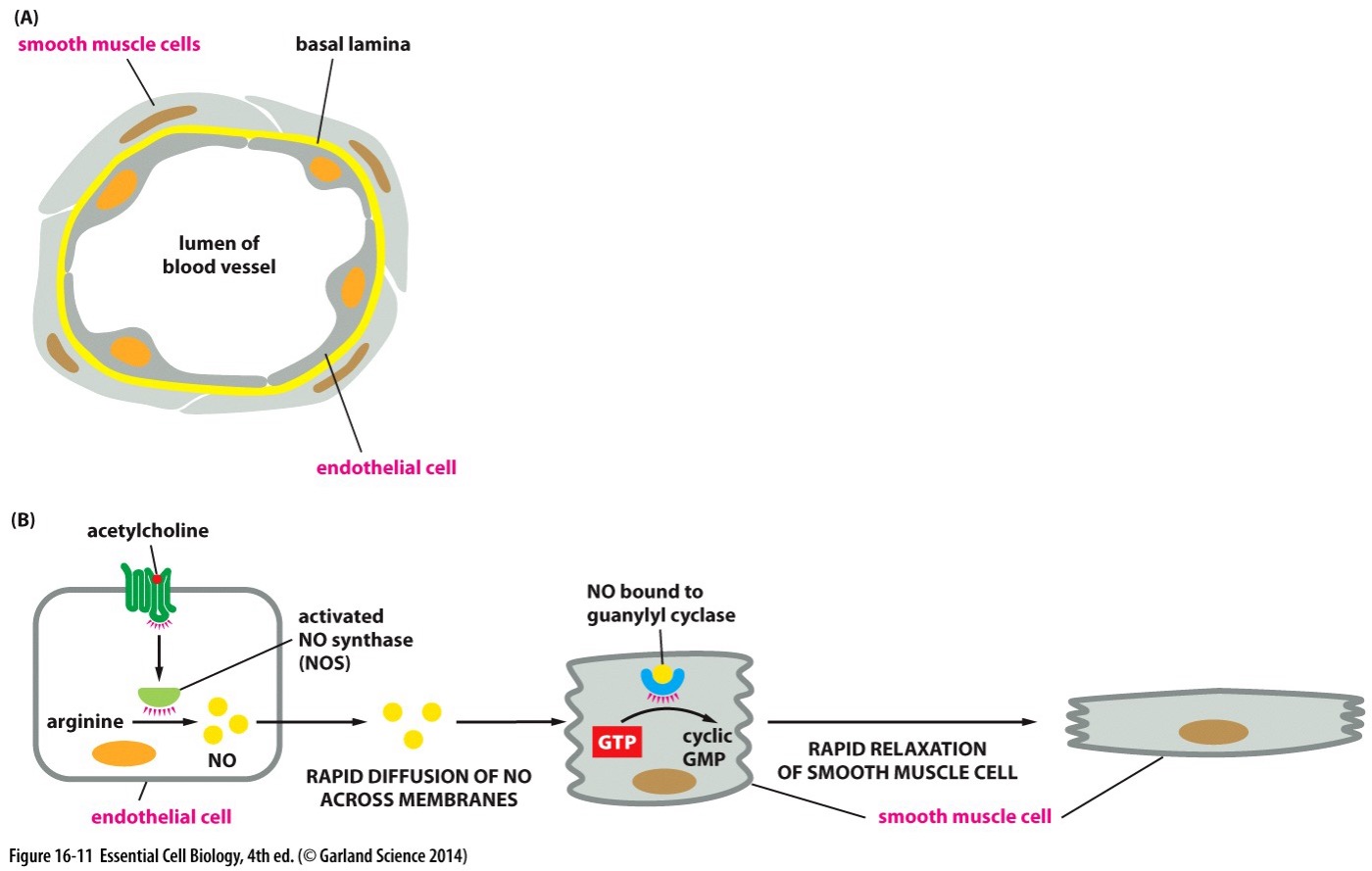
Viagra (Slidenafil Citrate)
blocks phosphodiesterase type 5 (PDE5) which breaks down cGMP causing prolonged relaxation of smooth muscle (vasodilation)
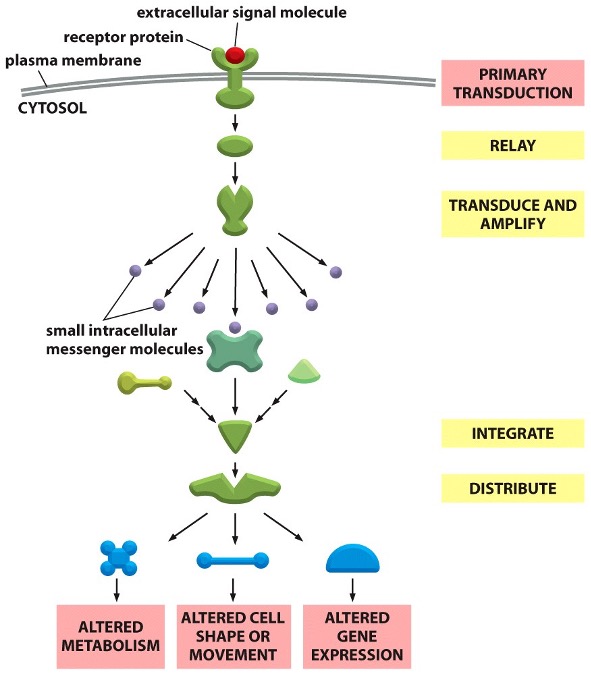
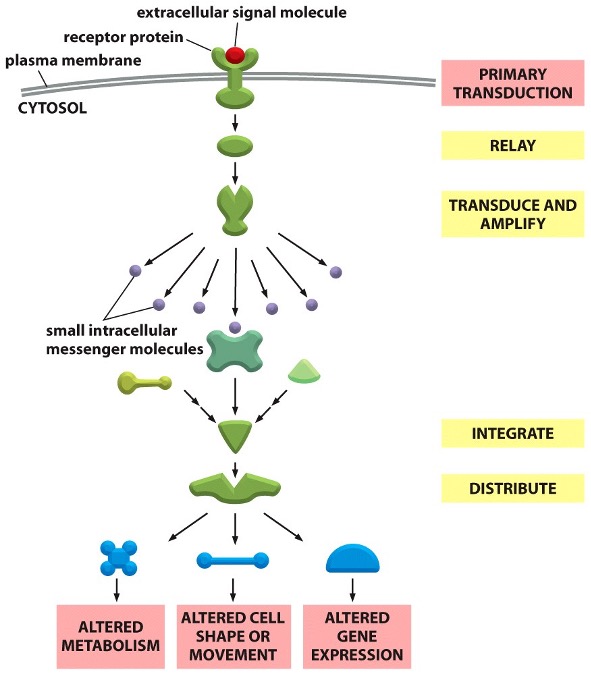
Intracellular Signaling Pathways 1.
•They can simply relay the signal onward and thereby help spread it through the cell
Intracellular Signaling Pathways 2.
•They can amplify the signal received, making it stronger, so that a few extracellular signal molecules are enough to evoke a large intracellular response.
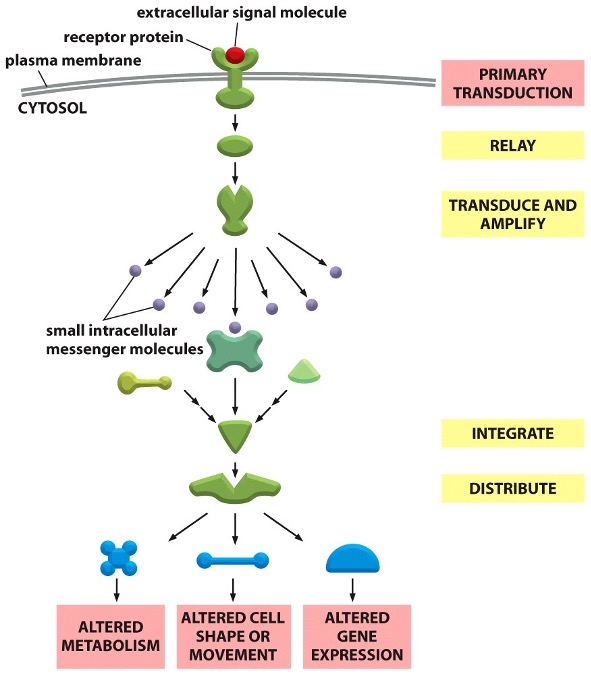
Intracellular Signaling Pathways 3.
•They can receive signals from more than one intracellular pathway and integrate them before relaying a signal onward
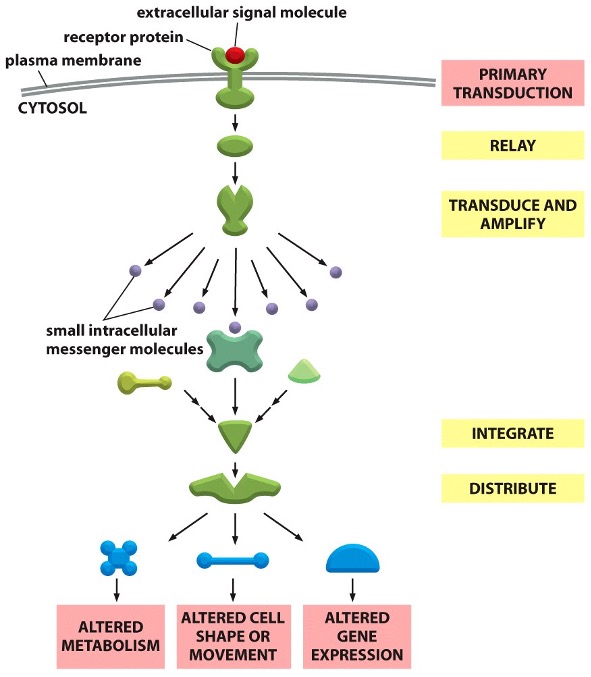
ntracellular Signaling Pathways 4.
They can distribute the signal to more than one signaling pathway or effector protein, creating branches in the information flow diagram and evoking a complex response
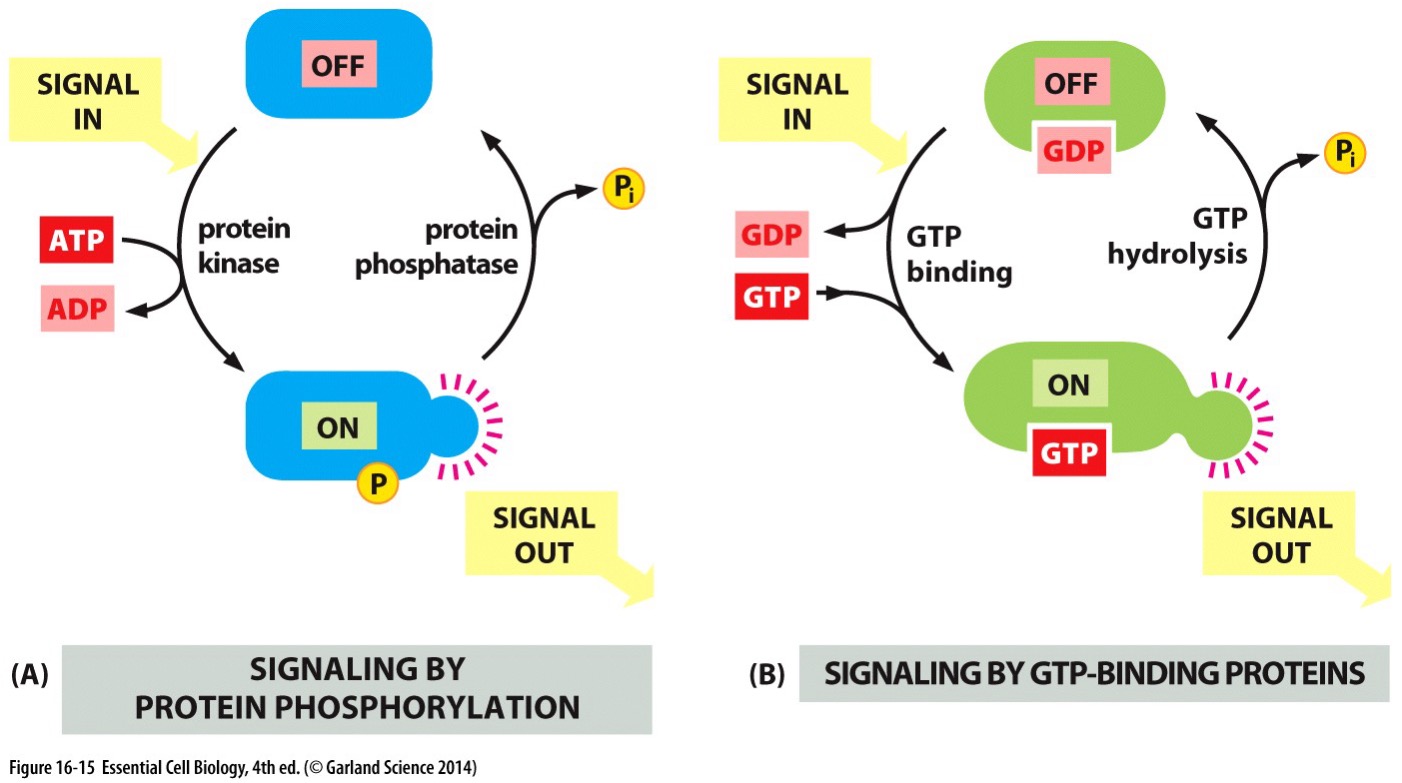
Signaling By Protein Phosphorylation
Protein Kinase and Protein Phisphatase
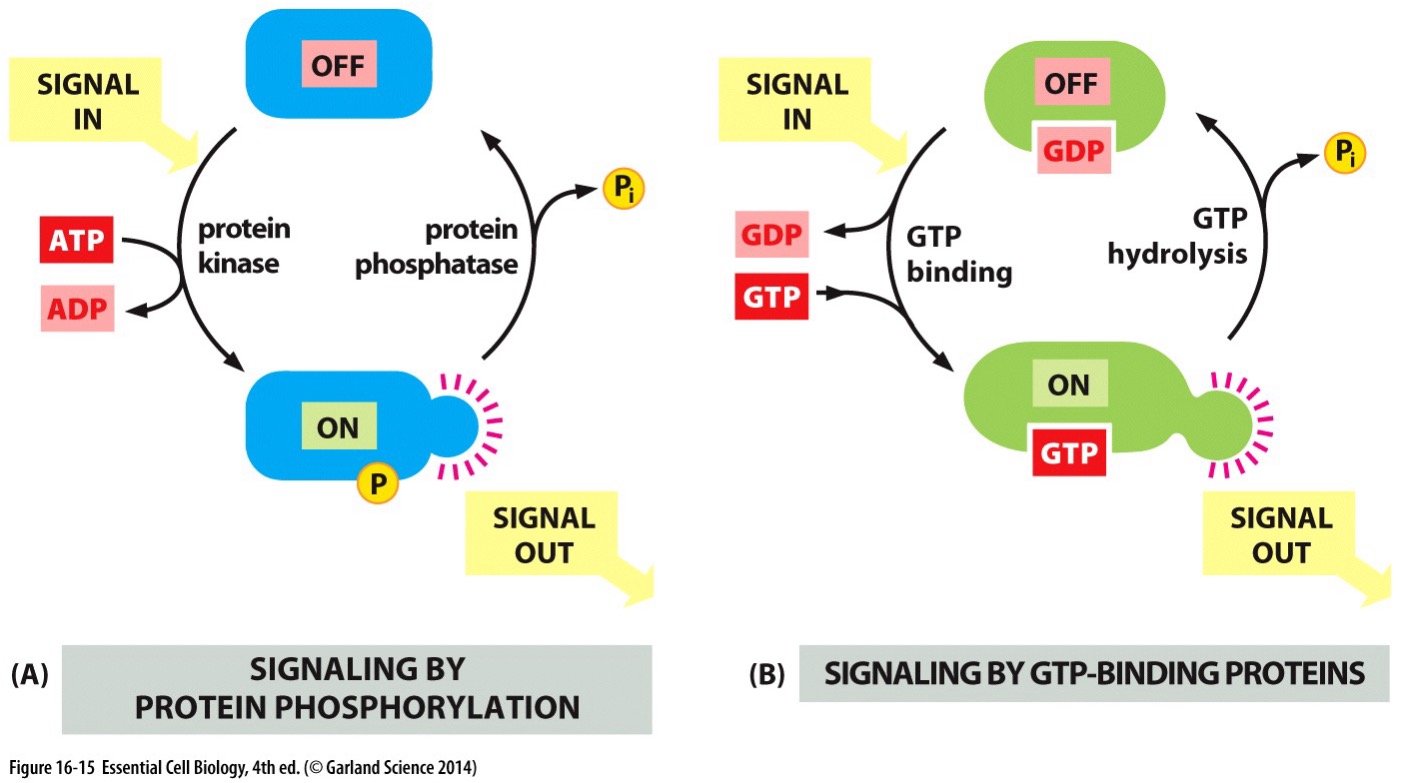
Signaling By GTP-Binding Proteins
GTP binding + GTP Hydrolysis
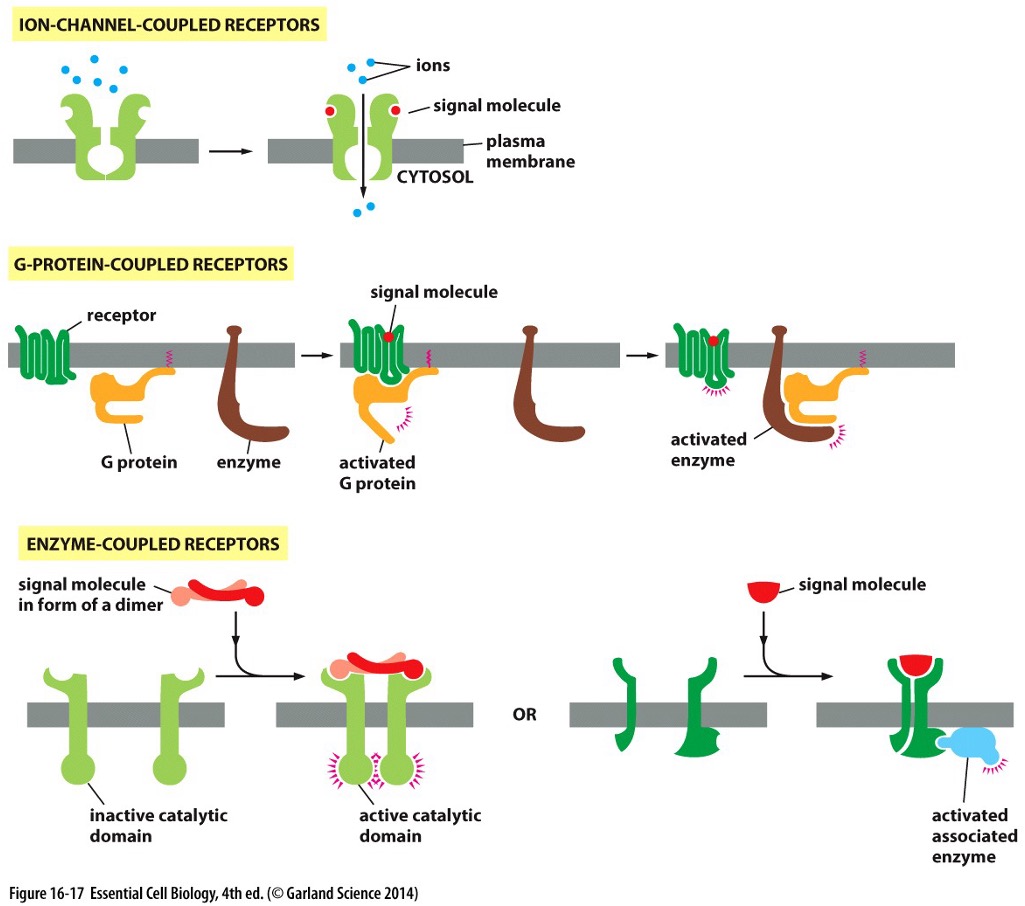
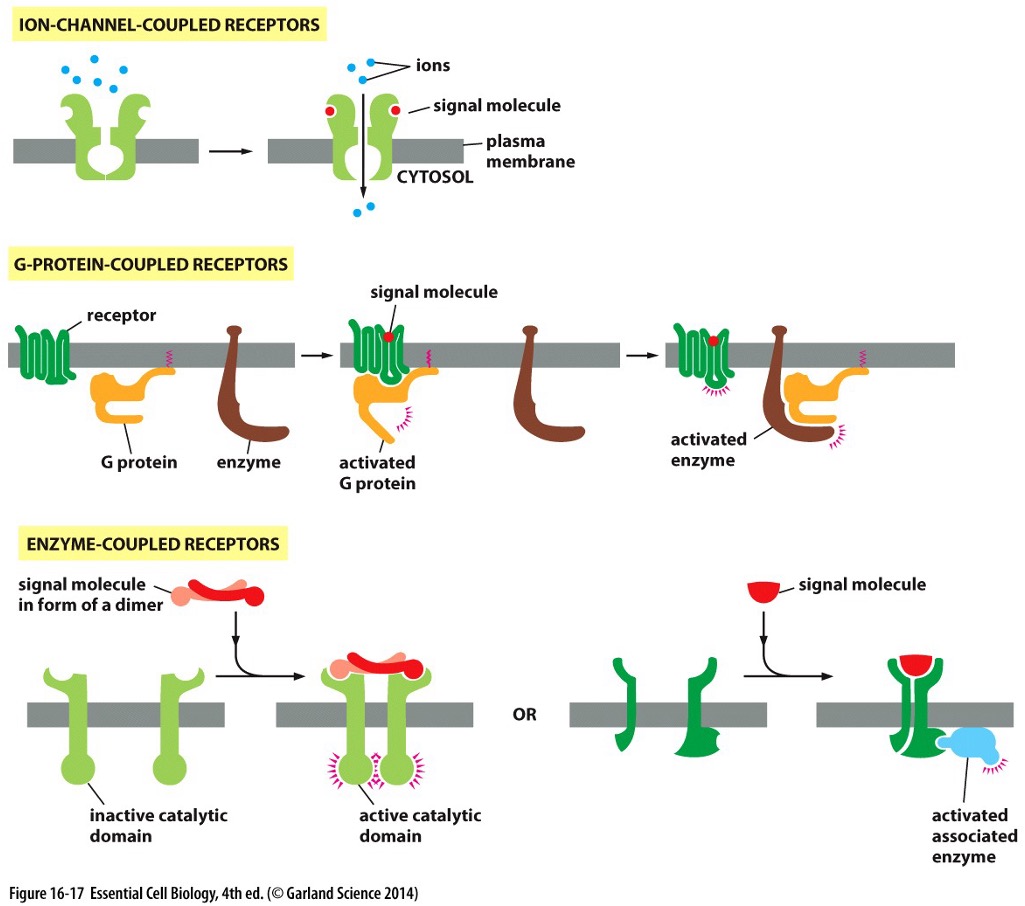
Ion Channel Coupled Receptors
receptors that are membrane proteins that allow ions to flow across the cell membrane in response to ligand binding, facilitating rapid cellular responses.
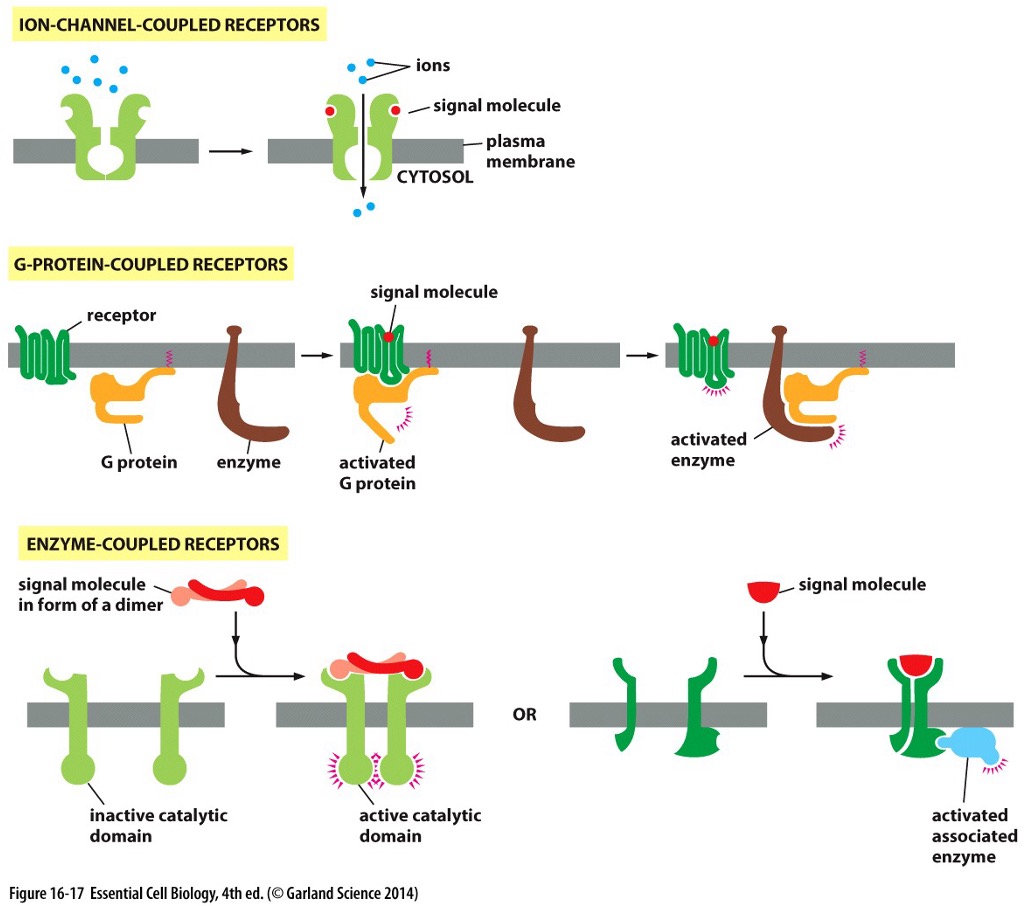
G Protein Coupled Receptors
are a large family of membrane proteins that transmit signals via activation of G proteins upon ligand binding, leading to various intracellular responses. (Majority of Drugs work here)
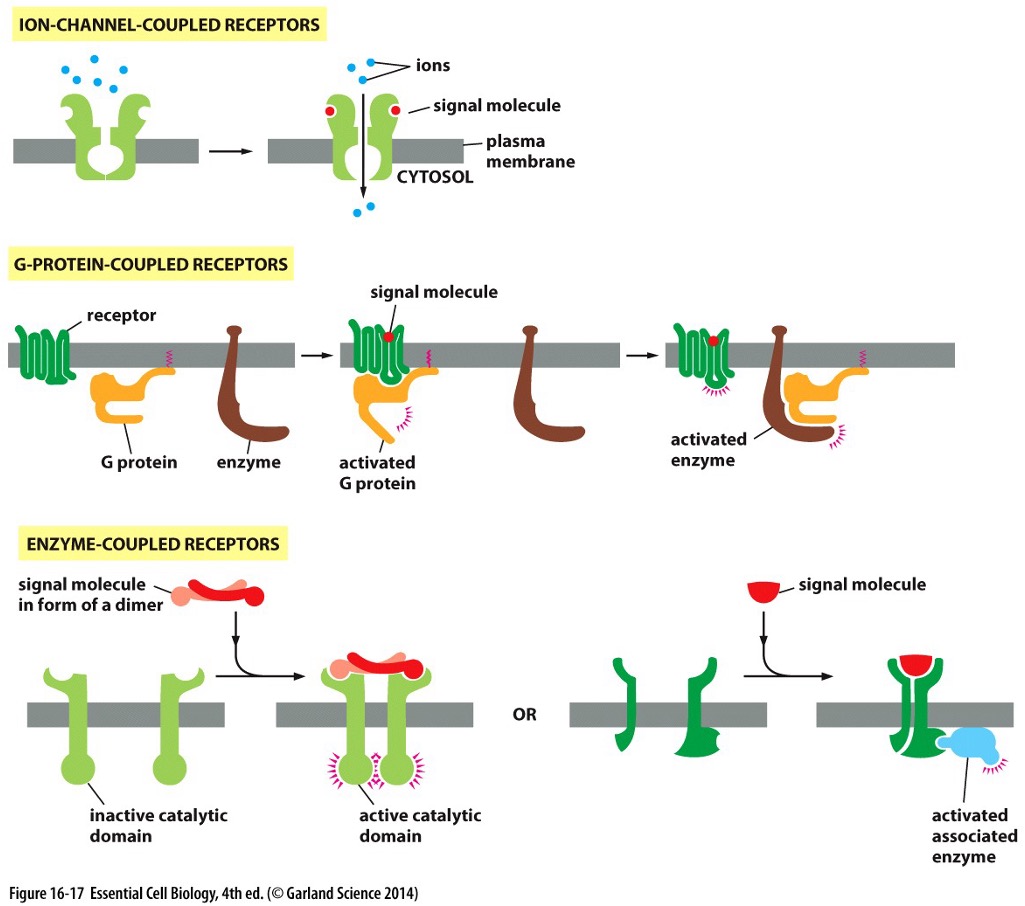
Enzyme Coupled Receptors
are membrane proteins that activate intracellular enzymes in response to ligand binding, initiating signal transduction pathways and cellular responses.
Intracellular Receptors (DNA Binding)
are receptors located inside the cell that, upon binding to their ligands, regulate gene expression by interacting with specific DNA sequences.
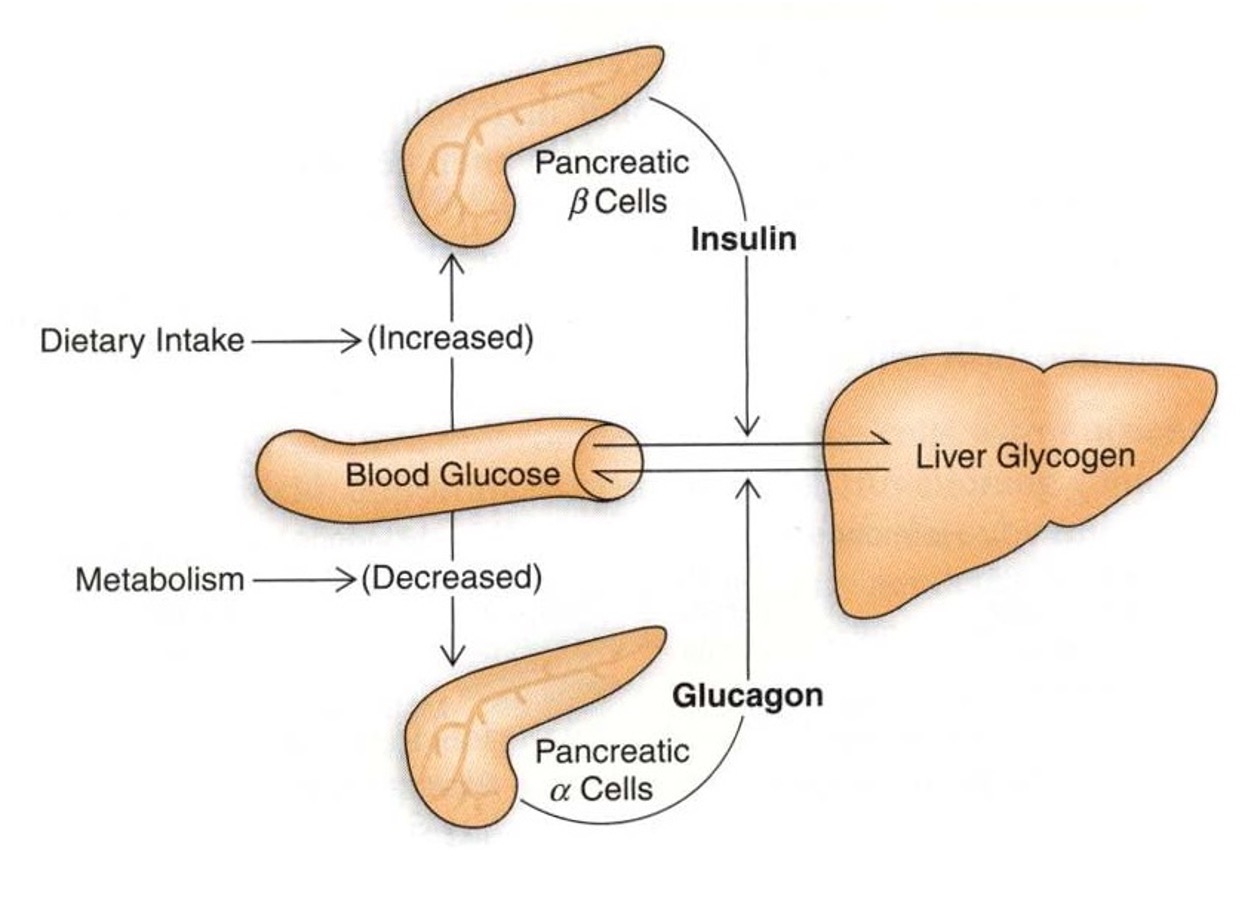
Gucose Homestasis
refers to the physiological process that maintains stable levels of glucose in the bloodstream, ensuring adequate energy supply for cellular functions. This involves hormonal regulation by insulin and glucagon, among others.