Cockroaches
 Call Kai
 Learn
Learn Practice Test
 Spaced Repetition
 Match
Match Flashcards
 Knowt Play
1/30

There's no tags or description
Looks like no tags are added yet.
Name | Mastery | Learn | Test | Matching | Spaced | Call with Kai |
|---|
No analytics yet
Send a link to your students to track their progress
31 Terms
Cockroaches
Carboniferous period (300 million years ago)
Similar form today (have evolved very little)
E.g. Blaberus giganteus
Giant Cave Cockroach
Neotropical species
Spanish: cucaracha
Latin: blatta
What order?
Blattaria
3500 + species
Tropical origin
Native species live in fields and woods
Madagascar hissing cockroaches kept frequently as pets
Cockroaches of the Southeast
American
Oriental
German
Brown Banded
Smoky-Brown
Australian
Brown
Woods
Surinam
Cuban
Cockroaches of main concern in NC
American
Oriental
German
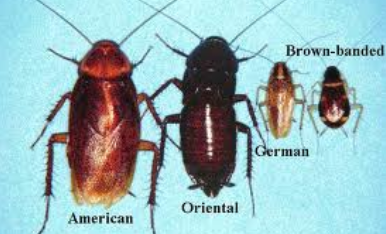
Most important cockroach species
American
German
Oriental
Brown-banded
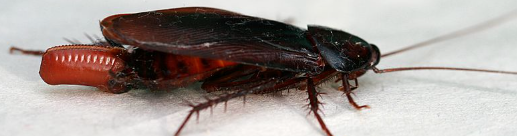
Smoky brown cockroach
uniformly dark
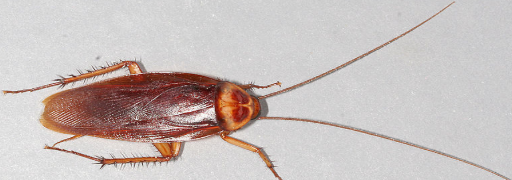
American cockroach
lighter colors on thorax
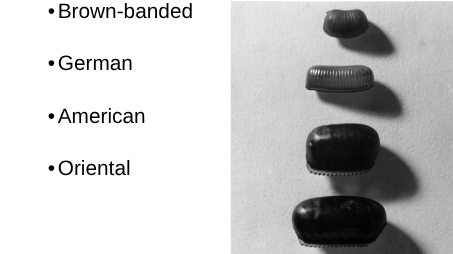
Oothece
egg cases
Life history
Hemimetabolous
Eggs protected inside a thick-walled ootheca until deposited.
Embryonic development occurs outside of the female (in most species).
Nymphs exude aggregation pheromones
Studies show that the presence of this pheromone reduces development time from nymph to adult.
American cockroach stages
Eggs
ca. 14 eggs/case
Hidden in cracks
Hatch in 1-2 months
Nymphs
10-13 molts (nymphal stage)
6-12 months
Adult
Female 1 case/week
12-24 cases/summer
Longevity
One year or more
Lifespan (all stages)
2 years
American cockroaches are ______.
Large, reddish brown to dark brown
4-5 cm long
Commonly aboard ships
Reports of sailors wearing gloves to bed to keep cockroaches from gnawing their fingernails
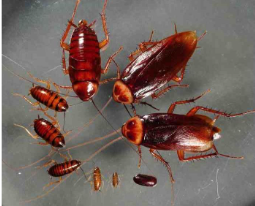
Habitat of the American cockroach
Commercial establishments
Grocery stores, restaurants, bakeries
Boiler rooms, steam tunnels, basements
Inspection:
Warm, humid areas, drains
Fermenting liquids
Beer soaked bread for trapping
Oriental cockroach stages
Eggs
ca. 16 eggs/case
Deposited by female 2 days after formation
Hatch in 2 months
Nymphs
6-7 molts
2 months
Adult
4-8 cases/female
128 young/female
Longevity
3 months
Oriental cockroaches are ______.
2-3 cm long, black color
Male has short wings, Female has just a trace of wings
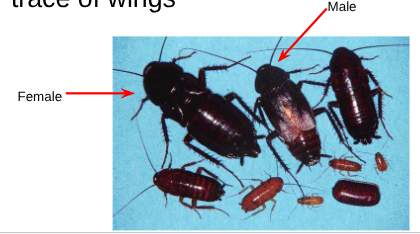
Habitat of the Oriental cockroach
Cool, damp sites
Basements, crawl spaces, under sidewalks
Garden stones, sewer pipes, floor drains
Inspection:
Cool, humid areas
Fecal smears
Egg cases, live and dead cockroaches
German cockroach stages
Eggs
30-40 eggs/case
Carried by females for 3 weeks
Deposited just prior to hatching
Nymphs
6-7 molts
2 months
Adult
4-8 cases/female
300 young/female
Longevity
3-6 months
German cockroaches are ______.
Small (12-16 mm), light brown to yellow, with 2 longitudinal stripes that are darker brown on the thorax
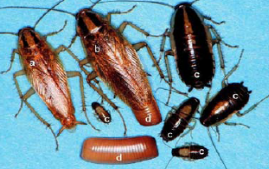
Habitat of the German cockroach
Home and farm
Kitchens, bathrooms, sinks, showers
Inspection:
Sink cabinets, dripping faucets, moist areas
Dark, humid places
Brown banded cockroach stages
Eggs
13-18 eggs/case
Attached to surfaces
Hatch in 50 days
Nymphs
6-8 molts
6 months
Adult
14 cases/female
250 young/female
Longevity
6 months
Males fly
Brown banded cockroaches are ________.
Light brown to yellow color
Mottled reddish-brown wings on female; lighter wings on male
Slightly larger than German cockroach but has 2 wide bands across the dorsum of the abdomen most noticeable in nymphs
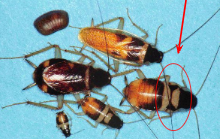
Habitat of Brown banded cockroaches
Warm temperatures
Refrigerators, clocks, television sets, stereo equipment
Behind pictures, cabinets, closets
Egg cases attached to rough surfaces
High, dry sites
Inspection:
Warm, humid areas
Fecal smears, cast skins, egg cases
Australian cockroach stages
Eggs
24 eggs/case
Deposit egg cases in cracks
Hatch in 30 days
Nymphs
6-8 molts
6 months
Adult
1 case every 10 days
Longevity
6 months
Australian cockroaches are ______.
Reddish brown to dark brown color.
2.5 cm long
Similar in appearance to American cockroach, but with yellow streak on base of outer margins of wings.
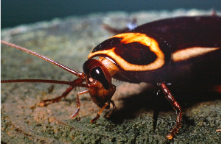
Habitat of the Australian cockroach
Unable to become permanently established in the North.
Repeatedly introduced from the South.
Develop in damp but warm places.
Found mostly on first floors of buildings.
Problem in greenhouses.
Pest status of cockroaches
Feeding habits
Material of animal or plant origin
Destroy/contaminate food and other objects
Starchy materials
Book bindings, cheese, beer, leather, hair, wall paper, toe nails, parchment, postage stamps
Odor
Abdominal scent glands
Fecal pellets
Regurgitation
Odor is noticeable in infected buildings.
May also ruin food that they contact.
Mechanical transmission of Pathogens
Capable of transmitting microorganisms such as bacteria
Contaminate food and/or food preparation surfaces
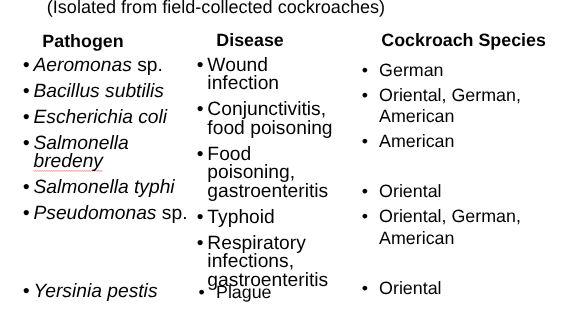
Allergies to cockroaches
Specific components of allergy?
Cast skins
Excrement
Whole bodies
Several proteins have been identified as allergens.
Once hypersensitized, people can experience a severe reaction by entering the room where cockroaches are present.
Exposure to cockroach allergens are an important cause of ______.
asthma-related illness and hospitalizations among inner city children.
Leading cause of pediatric ER visits
Prevention and control
Sanitation
Clean up and remove clutter
Eliminate entry
Caulking and sealing
Physical control
Vacuum, trap, etc.
Biological Control
Parasitic wasps, nematodes, fungi
Chemical Control
Residual pesticides, baits
Some generations of cockroaches can _______.
be repulsed by the presence of glucose →is an issue because glucose is used in many traps to lure cockroaches
The German cockroach produces the _______.
greatest amount of offspring per female

