parts of trench warfare
 Studied by 0 people
 Call Kai
 Learn
Learn Practice Test
 Spaced Repetition
 Match
Match Flashcards
 Knowt Play
1/8

There's no tags or description
Looks like no tags are added yet.
Name | Mastery | Learn | Test | Matching | Spaced | Call with Kai |
|---|
No analytics yet
Send a link to your students to track their progress
9 Terms
no mans land
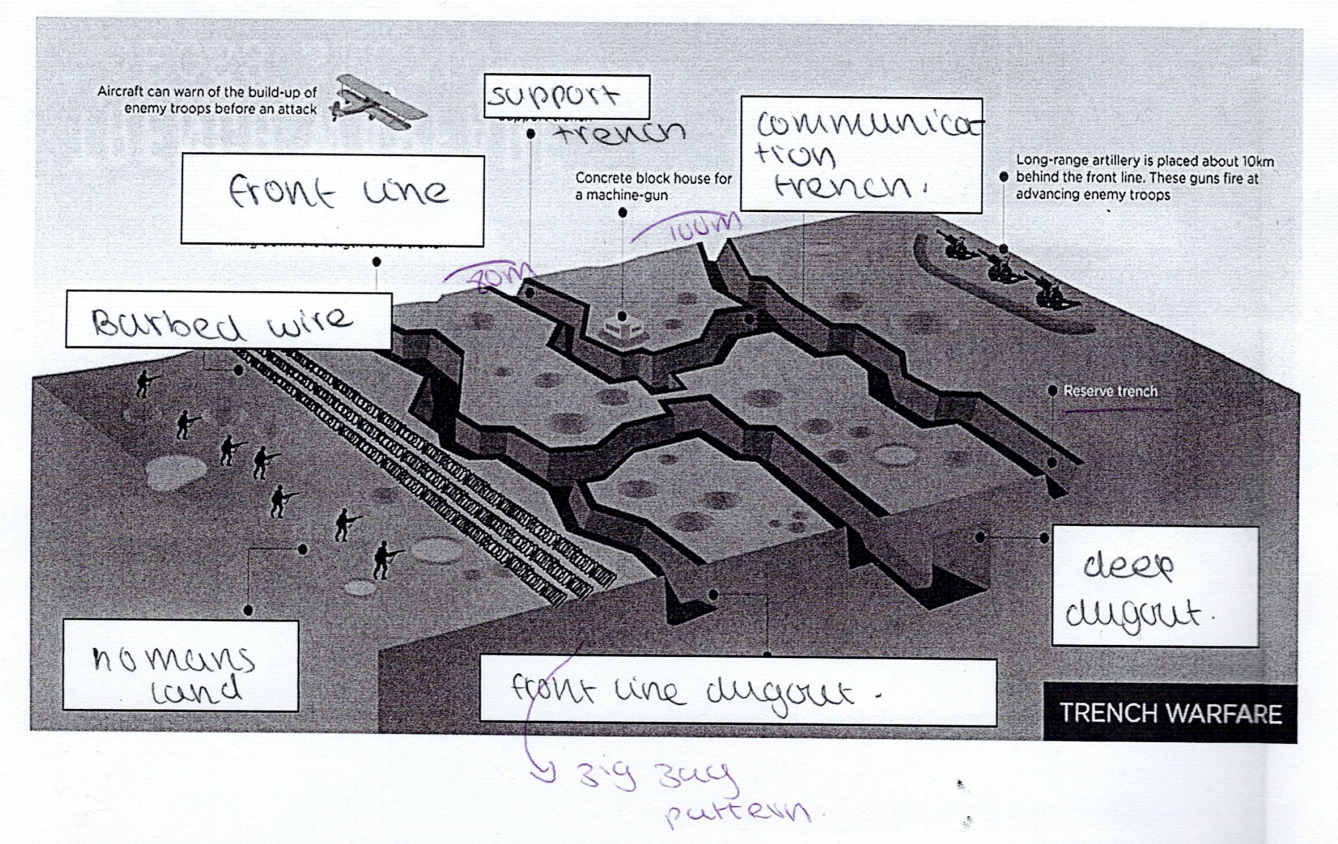
name given to the area between the two lines of trenches.
it was the land that both sides were fighting to gain control of.
artillery line
where the big field guns were located. they were used to fire shells to the enemy. the noise from a barrage (a concentrated artillery bombardment over a wide area) of guns was deafening.
communication trenches
were used to moved between the front and rear trenches. used to transport injured men to the field hospitals.
support trenches
provided a second line of defence in cade the front line trench was taken by the enemy. contained first aid stations and kitchens to ensure men in the front line had medical treatment and hot food.
front line trench
generally about 8 feet deep and between 4 and 6 feets wide. soldiers would spend a week in this trench and then would spend a week in the rear trenches / rest camp. soldiers were liable to be hit by enemy fire or by their own artillery.
traverse
trenches were not built in straight lines (zig-zag pattern) - so that if the enemy managed to get into the front line they would not have a straight firing line along the trench. they were built with alternating straight and angled lines. this was the name given to the angled part of the trench.
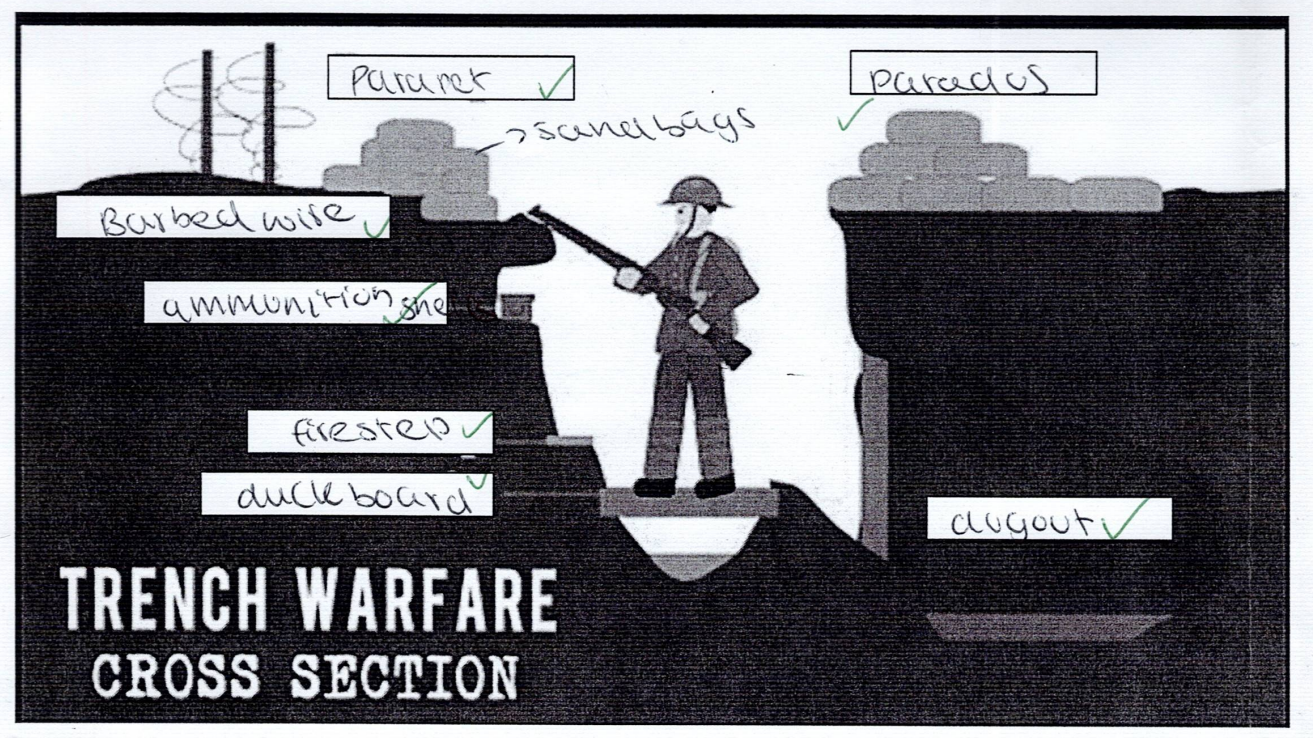
parapet
name given to the front wall of the trench. often be strengthened with wood and covered in sandbags. sandbags would protect the heads of the men standing on top of the fire step from rifle fire.
 Note
Note  Flashcards (52)