GS1
 View linked note
 Call Kai
 Learn
Learn Practice Test
 Spaced Repetition
 Match
Match Flashcards
 Knowt Play
1/20

There's no tags or description
Looks like no tags are added yet.
Name | Mastery | Learn | Test | Matching | Spaced | Call with Kai | Chat |
|---|
No analytics yet
Send a link to your students to track their progress
21 Terms
What are P waves?
P waves are Fast, Weak, Longitudinal, and they travel through Solids, Liquids, and Gases (Also known as Primary Waves)
What are S waves?
S waves are Strong, Slow, Transverse, and they only go through Solids (Also known as Secondary Waves)
What are seismic waves?
Seismic waves carry the energy of an earthquake away from the focus, through the earth and to the surface. (S waves and P waves are both Seismic waves, it’s just a way to say both of them at the same time)
What are Longitudinal waves
Horizontal waves, think of slinky effect from IXL

What are Transverse waves
Vertical waves, think of the rope effect from IXL

What are Mechanical Waves?
A mechanical wave is any wave that travels through matter. When talking about mechanical waves, you could be referring to both/either P waves and S waves.
What is amplitude and how do you find it?
Amplitude is how high and/or low the wave is on a seismogram.

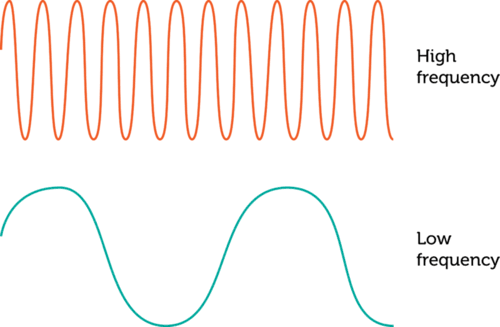
What is frequency and how do you find it?
Frequency is the number of waves that pass a fixed point in a certain amount of time. (Frequency is a number)
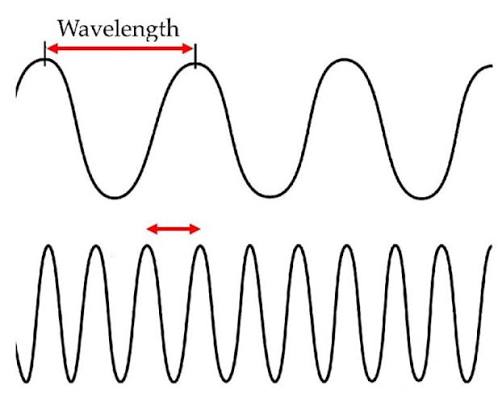
What is Wave Length and how do you find it?
Wave Length is the amount of space between two full waves and it is found with a seismogram (Wave length isn’t a number)
What is a Crest?
A Crest is the top of a transverse wave
What is a Trough?
A Trough is the bottom of a transverse wave
What is Compression?
Compression is the part of a Longitudinal wave where the particles are more closely packed
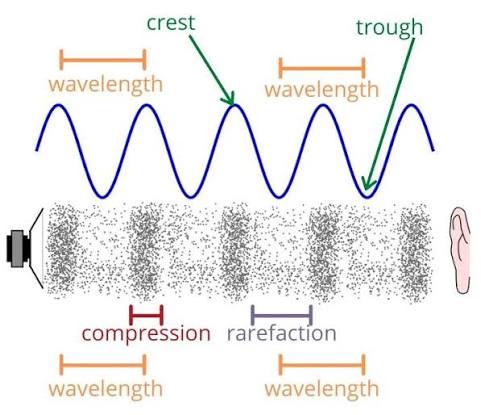
What is Rarefraction?
Rarefraction is the part of a Longitudinal wave where the particles are more loosely packed.

What is a Seismograph?
A Seismograph is an instrument used to detect and record seismic waves produced by earthquakes
What is a Seismogram?
A Seismogram is a record produced by a seismograph, which measures motion of the ground during an earthquake or other seismic events. It displays the amplitude and frequency of seismic waves, allowing scientists to analyze the characteristics of the earthquake, such as magnitude and location
What is a Seismometer? (Most likely not going to be on the test, but could be)
A Seismometer is an instrument used to detect and record the vibrations caused by seismic waves as they travel through the earth
What is an Epicenter?
An Epicenter is the point on earth’s surface directly above the focus of the earthquake. It is also the very first spot on the earth where someone would feel the effects of the earthquake. The location of the epicenter is typically determined using data from seismographs. (Above ground)
What is a Focus?
A Focus is the actual location within the earth where the earthquake originates, also known as the hypocenter. (Below ground)
What does “Seismo” mean?
The prefix “Seismo” means anything related to earthquakes or seismic activity
Who are Seismologists and what do they do?
Seismologists are scientists who study earthquakes and the propogation of seismic waves through the earth. They analyze data to understand and assess risks using seismograms, seismographs, and seismometers
What is an Earthquake?
An earthquake is shaking and trembling that results from the movements of rock beneath earth’s surface