Art History 102 Quiz 3
 Call Kai
 Learn
Learn Practice Test
 Spaced Repetition
 Match
Match Flashcards
 Knowt Play
1/62

There's no tags or description
Looks like no tags are added yet.
Name | Mastery | Learn | Test | Matching | Spaced | Call with Kai |
|---|
No analytics yet
Send a link to your students to track their progress
63 Terms
Edmund Burke’s “The Sublime”
awe & terror of nature; ambivalent: both love & hate; irrational & attraction; coexistence
Theodore Gericault (1791-1824)
Romantic pioneer; studied w/ a Neoclassical painter; heroics & epics; drama, visual complexity, emotional force
Raft of the Medusa (1818-1819)
Gericault; Neoclassical/early romantic; france; July 2, 1816 shipwrek (Medusa); survivers made a wraft & drifted for 13 days; 15 ppl out of 147 survived (cannibalism); grandeur; studied the dead; interviewed survivors; had a model of the raft built
Goya (1746-1828)
Romantic; etchings; Spain; deaf (later in life); official court artist for Charles IV (for a time)
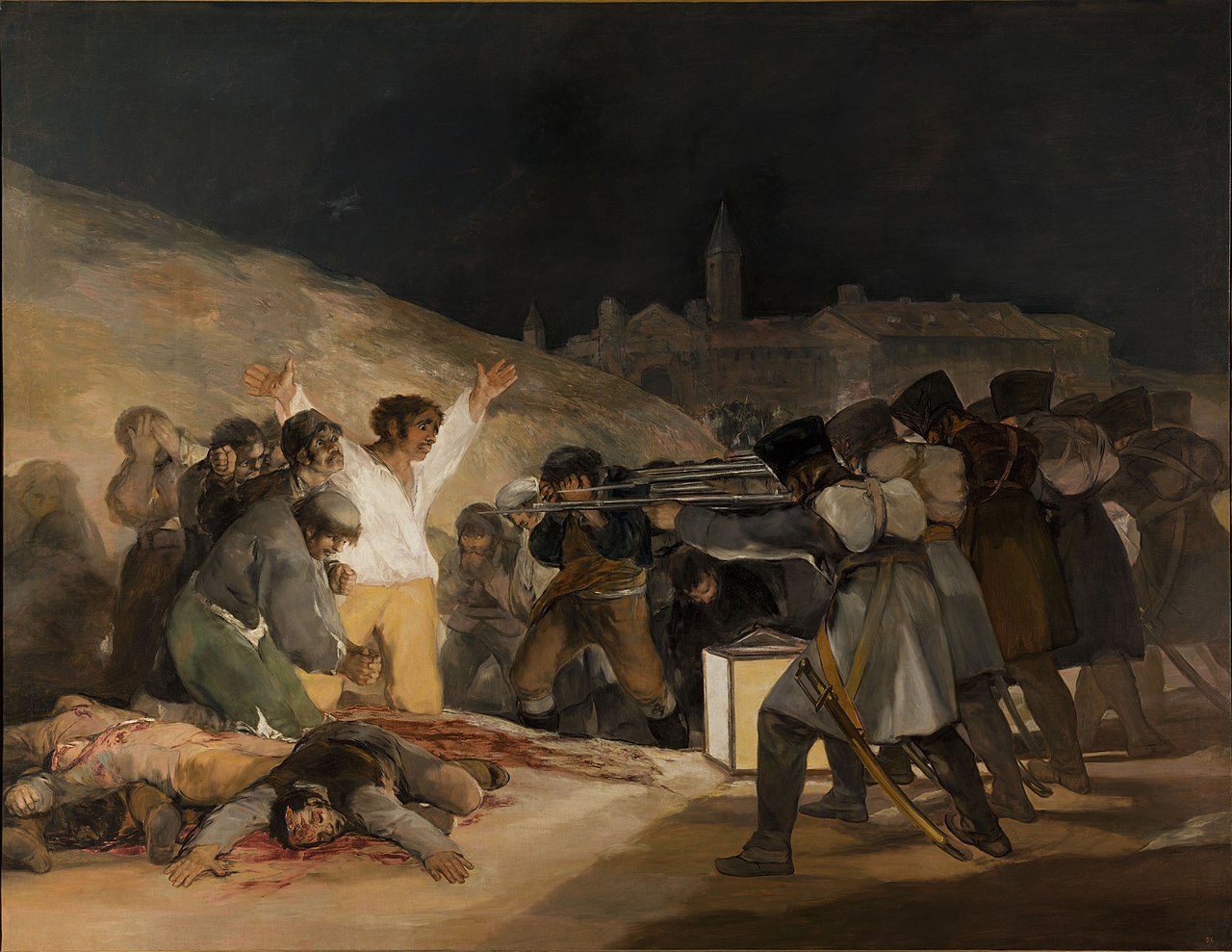
The Third of May 1808 (1814-1815)
Goya; Romantic; Spain; contemporary event; french troops executing Spanish citizens; commissioned by Ferdinand VII; empathy through horrified faces; cruciform gesture; intense contrast
Majo
unofficial village leader; squat top hat/costume
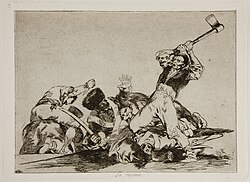
Disaster of War (1810-1820)
Goya; Spain; Romantic; print series;
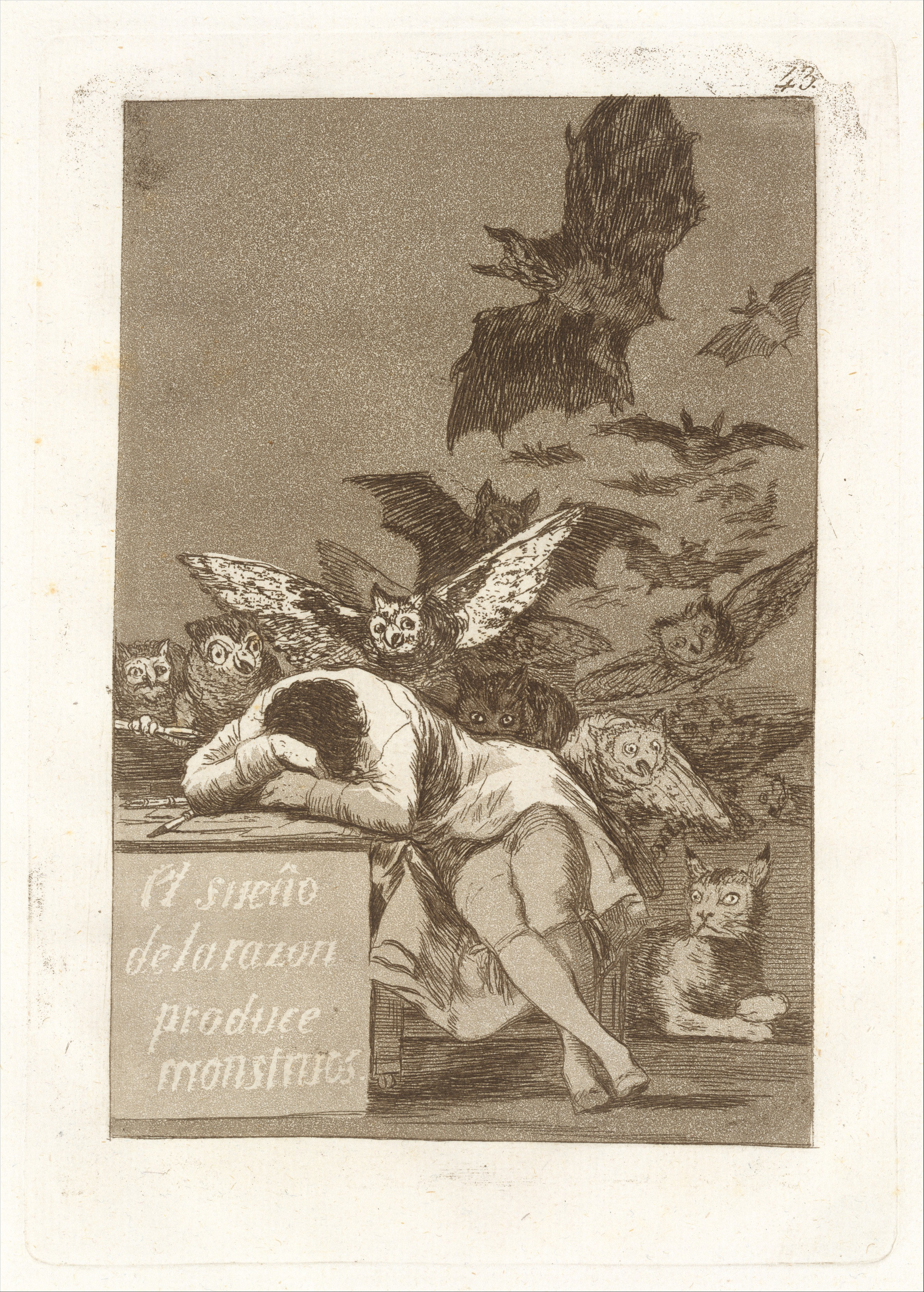
Los Caprichos (1797-1798)
Goya; Spain; Romantic; print series; The Caprices; superstition;
Eugene Delacroix (1798-1863)
Romantic colorist; liturature of imaginative power
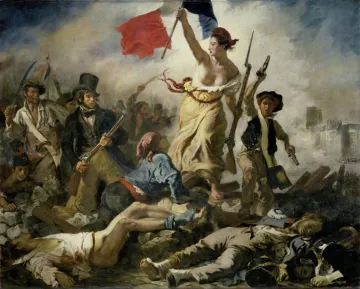
Liberty Leading the People (1830)
Delacroix; Romantic; French; 1830 Revolution; bare-brested Liberty holding the republic’s tricolored flag; phrygian cap: freed slave symbol; street boys; menacing worker; intellectual dandy; dead bodies; Notre-Dame in the back
1830 Revolution
ppl of all classes coming together; against Charles X;
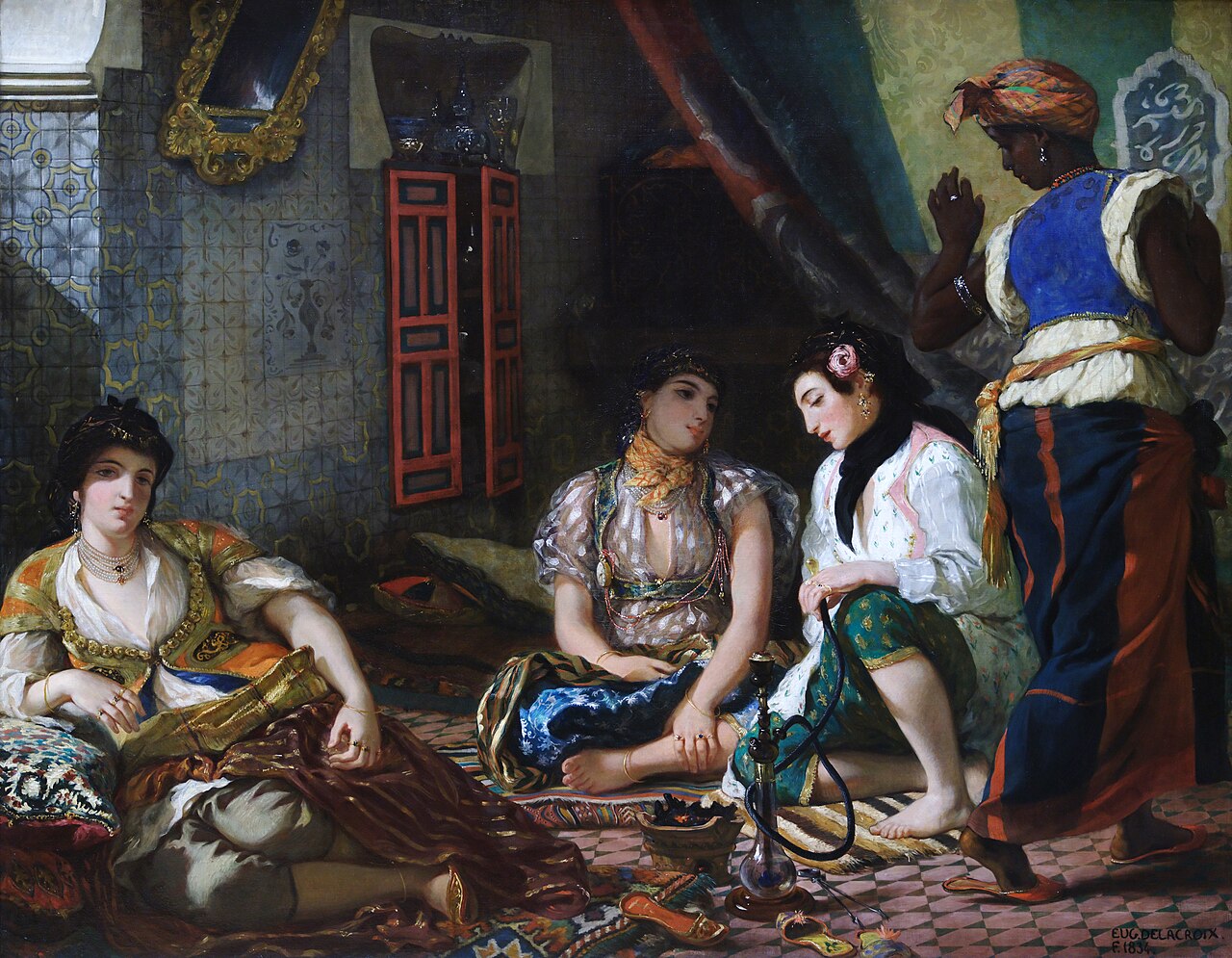
The Women of Algiers (1834)
Delacroix; Romantic; harem: 3 odalisques (modestly dressed); black servant; North Africa; detailed (carpet, tiles); rich colors; documented color observations in his journal
Kaspar David Friedrich (1774-1840)
Romantic: transcendental landscapes; German; nature → deeper understanding of God; reverential mood → silence
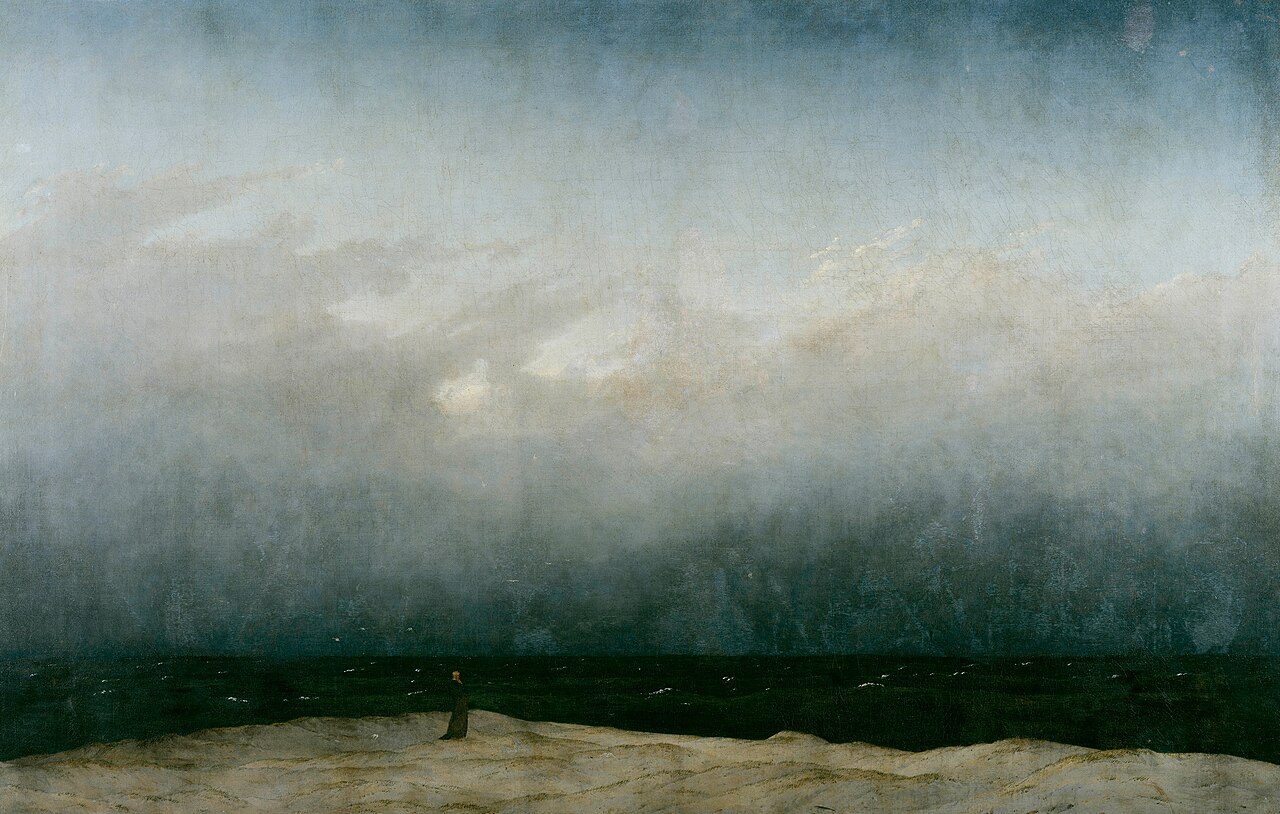
Monk by The Sea (1809)
Kaspar David Friedrich; Romantic; Germany;
JMW Turner (1775-1851)
Romantic; landscapes; wider range of themes; seascapes; awe & terror/sublime; pure color; haziness of forms; energetic brushstrokes
The Hudson River School
landscape painting; subject: New York’s Hudson River Valley (artists did paint regions across the country); Romantic; participated w/ exploration of individual’s & country’s relationship w/ the land; identify America’s unique qualities
Thomas Cole (1801-1848)
Romantic; “leader of the Hudson River School”; wrote a poem called The Oxbow along with the painting; Naturalist; writer (poems & Essay on American Scenery); Inspired by James Cooper/Last of the Mohicans
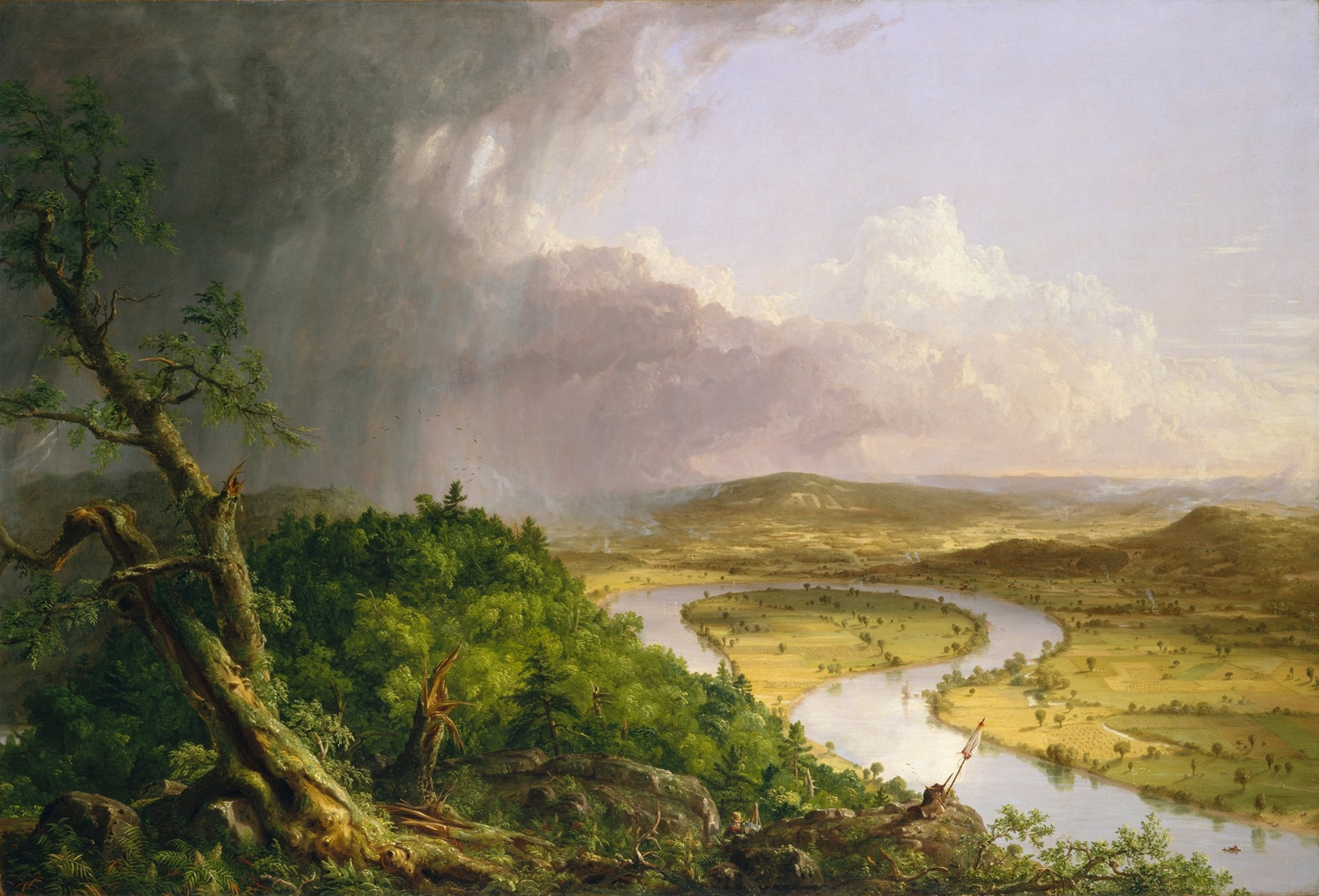
The Oxbow (1836)
Thomas Cole; Romantic; America(New York); addressed the moral question of America’s direction as a civilization; Connecticut River; dark stormy wilderness on the left vs. more developed civilization on the right; little artist (bottom center)
James Fenimore Cooper’s Last of the Mohicans
Inspiration for many romantic pieces; last of the Leatherstocking Tales; a romance; 1826
Jean Jacques Rousseau’s “Noble Savage”
idealized concept of uncivilized man, who symbolizes the innate goodness of one not exposed to the corrupting influences of civilization
1839 (photography’s discovery)
The camera; ability to make convincing pictures of ppl, places, & things;
JLM Daguerre (1789-1851)
Photography; French; architect & theatrical set painter/designer; Diorama
William Henry Fox Talbot (1800-1877)
Photography; English; first practical photography process (1839)
daguerreotype
earliest photography process; camera obscura + metal plate dipped in light-sensitive coating; latent developing & chemically stopping the action of light on plate
Talbotype
calotype; photographic images incorporated texture of the paper; slightly blurred grainy effect
Rosa Bonheur (1822-1899)
Realist; trained by father; lesbian who dressed in men’s clothes; resisted dipicting problematic social & political themes; subject: animals (mostly horses); snuck into stockyards & slaughterhouses by dressing as a man; won a medal at the Salon (1848); director of France's state-sponsored drawing school for women;
Edouard Manet (1832-1883)
Realist; played a part in the development of Impressionism; figures in soft focus; incomprehensible subject; brother as model
Honore Daumeir (1808-1879)
Realist; urban working class defender; confront authority→imprisoned; painter, sculptor, printmaker; lithographs (public & satirical)
Gustav Courbet (1819-1877)
Realist; French; scrutinizing their environment: mundane & trivial subjects; contemporary subject matter & traditional themes of “high art”
1848-49 French Revolution
February Revolution; civil unrest; collapse of the July Monarchy and foundation og the French Second Republic; Paris; started as a large scale protest; abdication of King Louis Philippe I
Karl Marx’s “Communist Manifesto” (1848)
Socialist philosopher; called for the working class to overthrow the capitalist system; socialist state
The Luddite Revolts 1811
workers rioted for the destruction of textile machinery that replaced them; Luddites: masked ppl who worked at night: England
Courbet’s “Pavilion of Realism” (1855)
Private exhibition outside the grounds of the Salon; Salon rejected 3 of his 14 paintings so he w/drew his work; featured 40 of his paintings; first artist to do a private exhibition
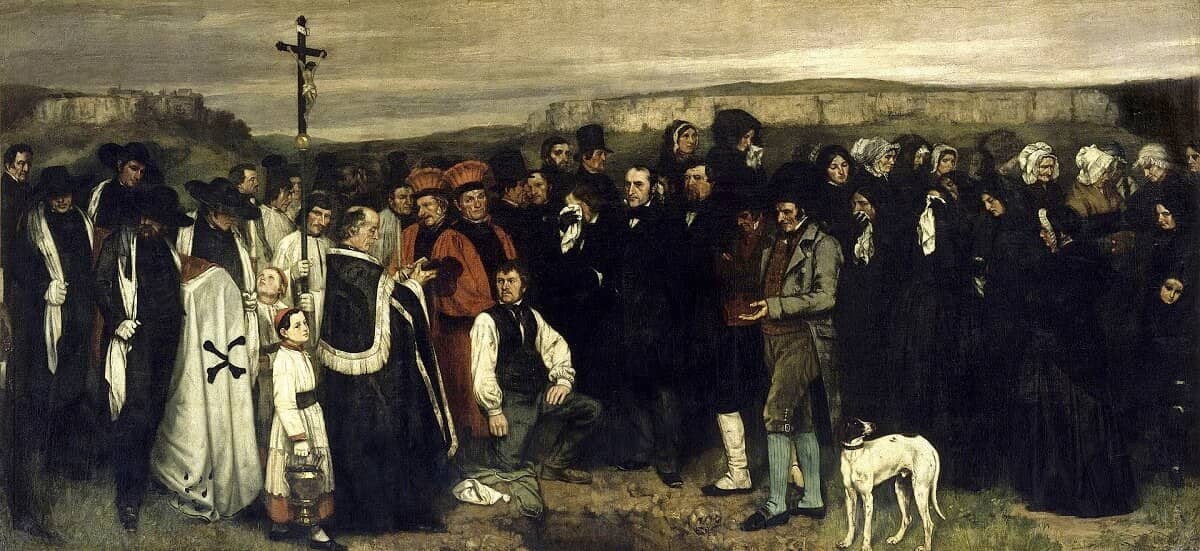
Burial at Ornans (1849)
Gustave Courbet, France; Impressionist; 10×22ft; funeral outside his hometown (eastern France, Besancon); ordinary ppl
The Barbizon School
village of Barbizon in the forest of Fontainebleau; many artist lived around the area; detailed pictures of forest & countryside
The Industrial Revolution
created unrest in the countryside: farmers could no longer afford to farm on their small plots; flooding the market w/ cheaply made & ill-designed commodities; machines replacing handicraft/ppl
Emile Zola (1840-1920)
novelist; socialist
the Salon des Refuses
(1863) salon of rejected; showed all the rejected art of that year
Victorine Meurend (1844-1927)
Edouard Manet’s brother and favorite model
Thomas Eakins (1844-1916)
Realist; Philadelphia; recording the realities of the human experience; paint things as he saw them (rather than what the public might wish); admiration for accurate depiction + a hunger for truth; The Gross Clinic (1875)
John Singer Sargent (1856-1925)
Realist (looser/dashing style); Italian (settled in London); portrait painter; thin layers (studied Velazquez)
Henry Ossawa Tanner (1859-1937)
Realist; African American (moved to Paris); studied with Eakins; careful study from nature w/ a desire to portray w/ dignity the life of the working ppl
Edmonia Lewis (~1844-1911)
Sculptor; Neoclassical style, Realist themes; Chippewa/African American; Wildfire (first name); Oberlin College (1859); Studied then lived in Rome
The Pre-Raphaelite Brotherhood
Not realistic; fictional, historical, & fanciful subjects; 1848; distaste for materialism & ugliness of the contemporary industrial world; spirituality & idealism of the past (Early Ren.); inspo: John Ruskin
The Paris Opera
Neo-Baroque architecture; Charles Garnier; competition sponsored by Napoleon III; theatrical facade; Beaus-Arts; gathering place for fashionable audiences
Edward Paxton’s Crystal Palace
London’s world far; prefabricated building (greenhouse); Joseph Paxton
Nadar (1820-1910)
Photography (Portraits); Gaspar-Felix Tournachon; French novelist, journalist, balloonist, caricaturist; portrait studio; “captured the essence of his subjects
Julia Margaret Cameron (1815-1879)
Photography; England; serious at 48y/o; more women than men (some well known men); female subject: often as characters in literature or biblical narratives; blurred focus (ethereal/dream-like)
Timothy O’Sullivan (1840-1882)
Photography (documentary); American Civil War; death (high price of war)
Eadweard Muybridge (1830-1904)
Photography (Realist); Scientist; English but lived in San Fran; Western US (photos); motion photography (Horse Galloping); zoopraxiscope
Claude Monet (1840-1926)
Impressionist; started at an early age; visible brushstrokes & no blended pigment; intersection of what they saw & felt; en plein air
“en plein air”
outdoors; painting outside
Gare St. Lazare
on of the 7 largest train stations of Paris; subject of Claude Monet’s Saint-Lazare Train Station (1877)
Chevreul’s color theory
identified a fundamental law of the simultaneous contrast of colors which detailed the effects that proximity between two colors has on what the eye sees; represented the complete range of shades, tones and tins of every hue, but his concept of tone confounded value and saturation; french chemist
Gustave Caillebotte (1849-1893)
Impressionist; collector; impressionist subject: modern life; asymmetric composition
Nadar’s Studio
Impressionist exhibition; Anonymous Society of Painters, Sculptors, Printmakers, ect; impressionist exhibition location
Berthe Morisot (1941-1895)
Impressionist: Frenchwoman; privately taught; subject: leisure activities of Parisians at resorts & park Bois de Boulogne (women & children); married Edouard Manet’s brother; sketchy brushstrokes;
Pierre Auguste-Renoir (1841-1919)
Impressionist; subjects: Parisian cafes & clubs; trained porcelian painter; en plein air; also a writer
Edgar Degas (1834-1917)
Impressionist; indoor scenes; subject: ballet/ballerinas; recording body movement; unusual angles; fleeting moment(cut off figures); used photography as an aid; inspired by Japanese woodblock prints
oil pastel
pastels that use a non-drying oil and wax binder
Mary Cassatt (1844-1926)
Impressionist; American/Philadelphian; subjects: women & children (objectivity & genuine sentiment); moved to Europe; couldn’t go to cafes; Pennsylvania Academy of Fine Art
Japonisme
Trading w/ Japan; Japanese aesthetic (big in France); Japanese imports/exports; Japanese art influenced Impressionists (prints)
J.A.M. Whistler (1834-1903)
Impressionist; American in Europe (settled in London); recording contemporary life & sensations that color produces on the eye; creates harmonies; named his pieces in abstract terms

