HS2711 - W3 Social Aspects of Aging & Ageism
 Call Kai
 Learn
Learn Practice Test
 Spaced Repetition
 Match
Match Flashcards
 Knowt Play
1/51

There's no tags or description
Looks like no tags are added yet.
Name | Mastery | Learn | Test | Matching | Spaced | Call with Kai |
|---|
No analytics yet
Send a link to your students to track their progress
52 Terms
what is a demographic force?
factor that changes the size, structure, or distribution of a population.
- fertility
- mortality
- migration
is it true more developed countries show faster rate of population aging compared to least developed countries?
FALSE → have DEC fertility rates + INC life expectancy
developing countries catch up quickly to developed countries + developed countries rise slowly
What is ageism, according to Butler?
systematic stereotyping of and discrimination against people because they are old → view as “other”
dimensions:
attitudinal (what people think)
behavioral (what people do)
EX → verbal comments, jokes, stereotypes of weakness/incompetence
How do Bytheway and Johnson define ageism?
Ageism is experienced through: 1. The devaluation of the aging process throughout life. 2. Stigmatization and institutional identification of specific groups based on chronological age.
How are older people constructed as "others"?
Older people are seen as fundamentally different from the rest of the population, which fosters ageist attitudes, beliefs, and discriminatory behavior or practices, denying them access to resources and opportunities.
what is positive ageism?
stereotype show older adults in an overly favorable but generalized way
(-) → overemphasis = excludes certain people (if have issue at a age, X want to think X normal)
What is institutional ageism?
Institutional ageism refers to discriminatory policies, programs, and structures that assume everyone is young, failing to respond appropriately to the actual needs of older persons.
What is internalized ageism?
Internalized ageism occurs when older people begin to believe negative cultural stereotypes about aging, incorporating them into their own self-concept.
What is stigmatization in the context of ageism?
Stigmatization is the process where age-related cultural beliefs label older persons as a separate category, resulting in differential treatment, loss of status, and spoiled identities.
How can ageism discourage older adults' participation in political demands?
Ageism can discourage participation by emphasizing older adults' vulnerabilities, which undermines their ability to advocate for services.
What social perspective connects ageism to fear of death?
Some suggest ageism is rooted in a cross-cultural, existential fear of death, as older people symbolize our own mortality.
How do psychological theories explain the development of ageism?
Psychological theories focus on socialization and social learning, suggesting that negative age stereotypes are learned in childhood and persist throughout life, shaping beliefs and behavior toward older adults.
what are the differences in aging with individuals and populations?
individual = regardless of pop, they age
population = aging changes pop structure & policy responses affect individuals
EX → child policy in China = impact the populations structure, aging really fast even though life expectancy is fairly high
EX → Population aging can change based on policies
European countries are trying a lot to promote fertility → policies that you put in place to control population aging
How does Chinese culture approach aging differently?
Chinese culture emphasizes filial piety within families, a concept that includes caring for, obeying, showing deference to parents, and honoring ancestors.
What misunderstanding arises between caring for and caring about older people?
conflates providing care (caring for) with → (1) emotional attachment (2) respect (caring about)
RESULT → potential cultural misinterpretations of ageism
EX → live together X auto = better care
How can the social learning perspective help eliminate ageism?
By changing cultural norms and stereotypes about aging and promoting positive ideals and images of aging through increased socialization, particularly between younger and older generations.
What is positive ageism, and why can it be problematic?
Positive ageism overemphasizes idealized images of aging, which can inadvertently stigmatize older persons who cannot meet those ideals
what are social issues related to aging?
change in social status → modernization theory
intergenerational issues
age relation
intersectionality
Modernization Theory
suggests social status declines with age due to perceived reduced economic contribution (true most situation)
What does modernization theory say about ageism?
Modernization theory links ageism to societal industrialization. It suggests that older people's status declines as they are valued less for their inability to contribute to industrial society, leading to lower status and income.
What criticisms exist of modernization theory?
Critics argue that modernization theory idealizes the past and less industrialized societies while oversimplifying the complexities of ageism.
How have post-industrial societies changed aging dynamics?
Post-industrial societies have loosened traditional social norms, giving older people greater freedom from cultural and biological constraints related to age. Old age may no longer define identities as strongly.
What does the critical theoretical perspective suggest about ageism?
From this perspective, ageism is rooted in broader social structures within political and economic systems, rather than merely attitudes or institutionalization.
What are age relations?
Age relations refer to how societies organize based on age, determining identities and power dynamics among age groups. They intersect with other forms of inequality.
how do age relations result in social issues with aging?
self-belief aging limitation
age organizes society & power given to youth
DEC access to resources when old & esp w other social factors
What are intergenerational relations?
Intergenerational relations focus on interactions and exchanges between age groups, whether within families or on a societal level, and the attitudes they hold toward one another
diff gens = diff life skills & experiences, misunderstanding
how does intergenerational relations lead to social issues with aging?
intergenerational competition in job market → INC life expectedness & longer work = INC gen in workplace
change in family relations & values → INC old adults care for even older pop, mainly older women w chronic issues
diff in practices, activities, and beliefs
What is the dominant assumption about population aging?
The assumption is that population aging, especially in the current political and economic context, will lead to generational conflict at the societal level.
What are aging-related changes, and how do they affect individuals and populations?
Aging-related changes occur in individuals, while changes in population structure and policy responses impact individuals.
why are contextual and compositional factors important?
frame policy & intervention
effective understanding of behaviour
giving us a problem to ”fix”
non-linear determinism
what are contextual & compositional effects?
compositional→ built enviro changes bc ppl live there (PEOPLE MAKE the PLACE)
if impt = need to work on aging in place
contextual → elders move to area w favorable built enviro (PLACE MAKES the PEOPLE)
if impt = better areas to make INC attractive to live in
What are contextual and compositional effects in aging-friendly neighborhoods?
compositional effects = make INC of these built environment features bc the neighborhood is composed of more seniors + high demand
contextual effects = elders move to the area with the features bc its healthier for them
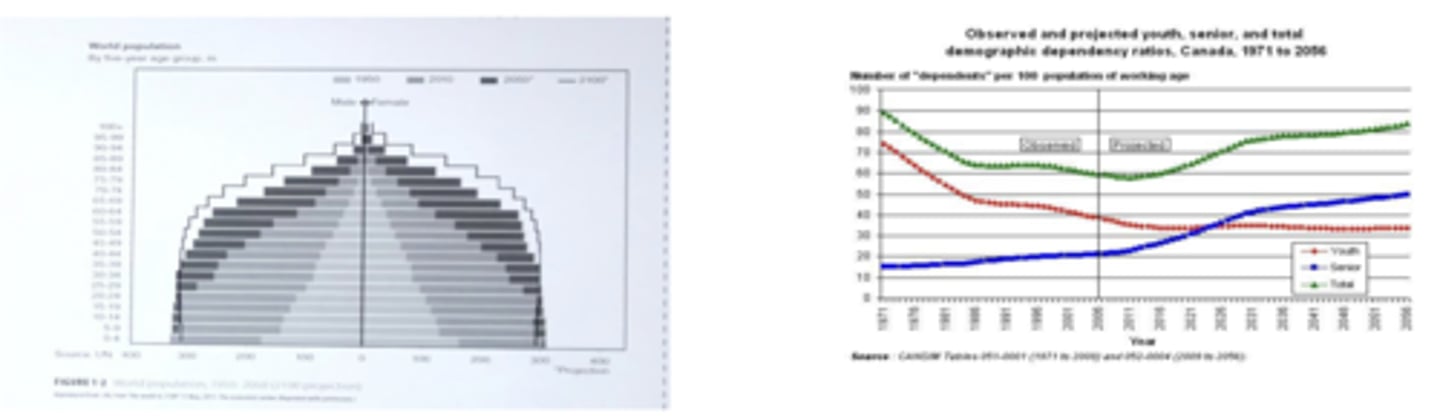
How is the age distribution of the population changing, and how can it be seen as an opportunity?
The age distribution is shifting, but it is not a crisis if we understand the trends and respond with evidence-based, feasible policies.
What is policy?
A set of ideas or a plan of what to do in particular situations that has been agreed to officially by a group, business, government, or political party
X abstract, clear, official, enforced & situational
What makes a policy effective?
It must be targeted, feasible, and evidence-based
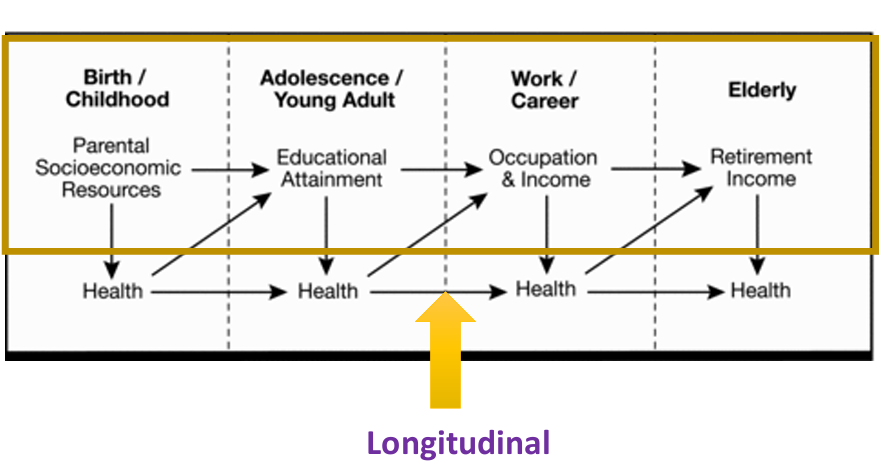
focus on interaction btwn social factors thru life → X only for JUST NOW, need comprehensive for all age groups
healthy aging start at birth
What is the goal of policy in the context of population aging?
address issues related to aging → INC old & dependency issues
INC productivity of older adults
ensure healthy aging in place
INC social services
aging in place
focus healthy aging, X focus social serivces bc people health
need evidence of trajectories of aging and related issues for good policy
How can the dependency ratio be reframed in the context of aging?
By making older people productive through healthy aging and changes in labor regulations, the dependency ratio does not equate to dependency.
what are the causes of a change in social status?
lack of contribution
can be inevitable aging OR bc aging polices
mandatory retirement at 65 → keeps contribution alive & have status, do edu bc give staus
older people themselves believe age is a limitation
society reinforce this idea directly and indirectly
they internalize limitations from young age & youth value youth
ensure policy ideas focused on MAIN issue
What is the relationship between social factors and aging throughout life?
Social factors interact and influence aging, contributing to social location, health outcomes, and marginalization.
How do older people see age relations?
older people themselves believe age is a limitation (age structure society & older = DEC resources)
intersects with other social factors
(+) → combo of social identities = resilience & power
(-) → combo diff forms affecting health and social status
How does society reinforce the idea that age is a limitation?
Society indirectly and directly reinforces the belief → elders internalize it, DEC access to opportunities
RESULT → social isolation
What challenges arise from increasing life expectancy?
It creates intergenerational competition (e.g., in the job market) and raises questions about whether family should remain responsible for older adult care.
What is intersectionality in the context of aging?
Intersectionality examines how age intersects with other social factors (e.g., race, gender) to create unique experiences of marginalization and resilience
basically abt how need to consider bc X remove from social situation & need polices
What is ageism?
systematic stereotyping (belief) of and discrimination (action) against people because they are old(er)
negative valuation of the aging process and seeing older people as "others"
How common is ageism in Canada?
50% + report, mainly from youth (closer to 80-90% bc X know experience ageism)
1/3 stereotypes from service providers
What are some common stereotypes about older people?
They are often stereotyped as weak, incompetent, and unable to contribute, leading to poor service and discrimination.
What is the relationship between thinking and actions in ageism?
Ageist thoughts lead to discriminatory actions, such as assuming health issues are a normal part of aging.
What are the social consequences of ageism?
unhealthy aging population → social, mental, physical health DEC
deprives society of older adults' contribution
reinforce intergenerational conflicts
assumed burden becomes real burden → INC dependance
internalize dependency → accepting that when you are old you are only receiver of services
Why does ageism persist?
normal response to the fear of death
reinforced by socialization during childhood, media, marketing, and cultural values
social discourse focus youth and independence
start as joke & internalize
What are cultural and cohort differences in aging?
“Caring for” X necessarily = “caring about”
Neglect of issues in other cultures
Growing up in different times means different life skills
segregation of age groups = stereotype & conflict
Key: Age integration & Age literacy (Knowing about other ages)
How does age segregation contribute to ageism?
age segregation → fosters stereotypes, misunderstandings, and intergenerational conflicts
SOLN → age integration DEC stereotypes & INC understanding
Is it possible to eliminate ageism?
Yes → fundamental changes in social structures, attitudes, and public efforts
leads to some improvement w understanding, integration w public effort
Explore top notes

