kingdom protista
 View linked note
 Call Kai
 Learn
Learn Practice Test
 Spaced Repetition
 Match
Match Flashcards
 Knowt Play
1/20

There's no tags or description
Looks like no tags are added yet.
Name | Mastery | Learn | Test | Matching | Spaced | Call with Kai | Chat |
|---|
No analytics yet
Send a link to your students to track their progress
21 Terms
Phylum Mastigophora
A group of protozoa that move using flagella.
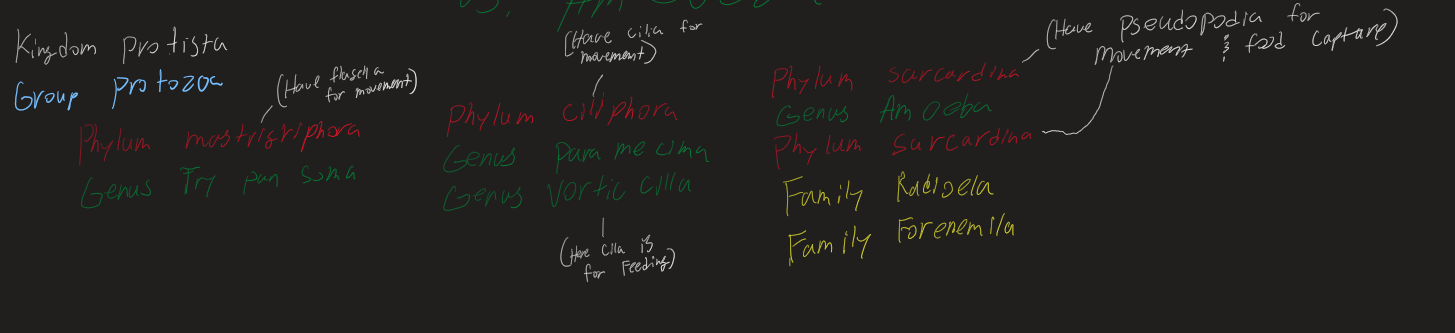
Genus Trypanosoma
A parasite that lives in the blood of vertebrates, causing sleeping sickness or Chagas disease.
Tsetse Fly
A blood-sucking insect that transmits Trypanosoma in parts of Africa.
Phylum Ciliophora
A group of protozoa that move using cilia and are often well-developed with specialized organelles.
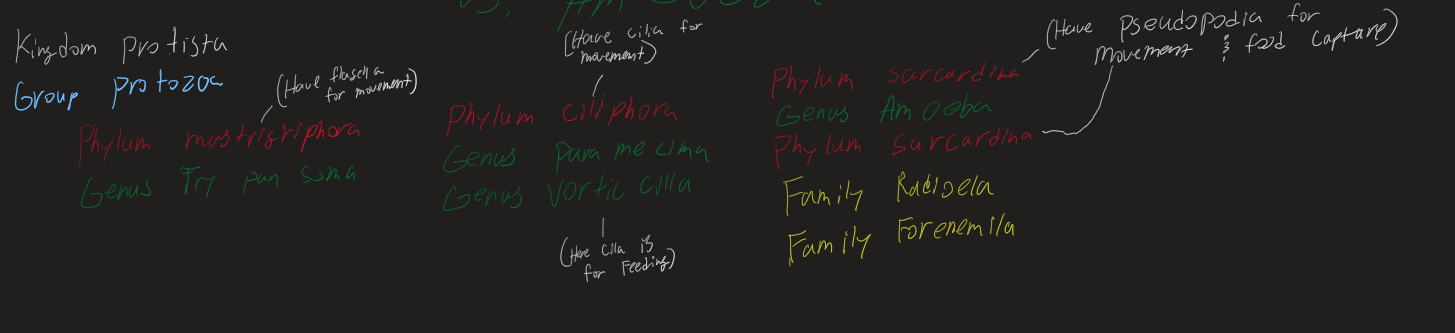
Genus Paramecium
A ciliated organism that has trichocysts for food capture and defense, and contains two nuclei.
Macronucleus
The larger nucleus in Paramecium that controls the cell’s activities. (day to day activities)
Micronucleus
The smaller nucleus in Paramecium that functions in sexual reproduction.(for sex)
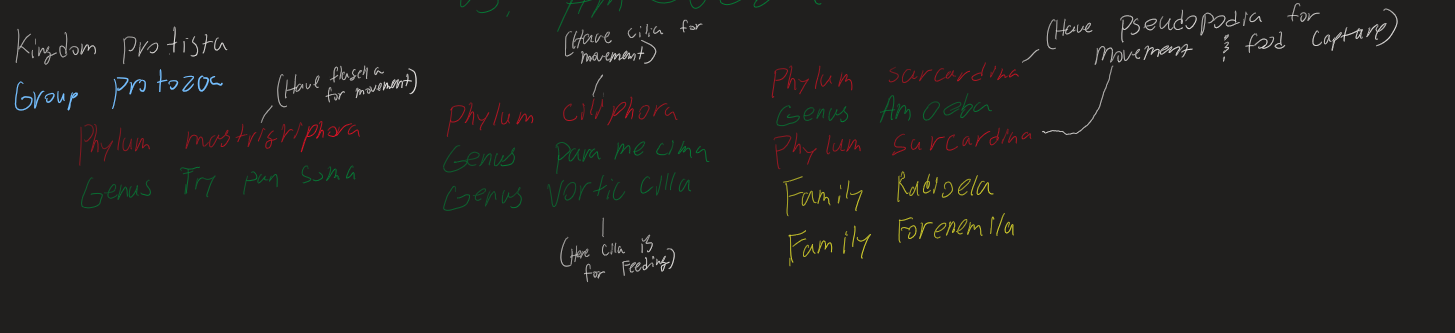
Genus Vorticella
A ciliated organism that has a stalk for attachment and uses cilia to create currents for feeding.
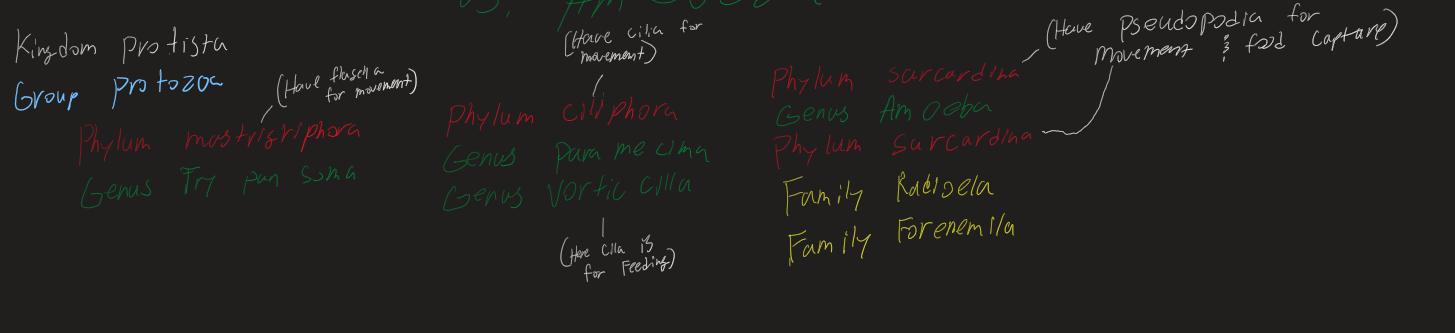
Phylum Sarcodina
A group of protozoa that move and capture food using pseudopodia.
Pseudopodia
False feet used by organisms in the Phylum Sarcodina for movement and food capture.
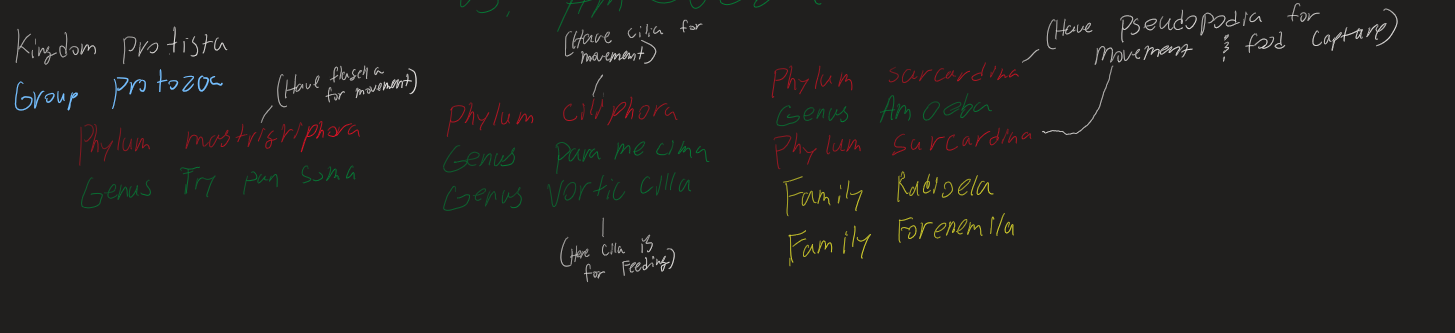
Genus Amoeba
A member of the Phylum Sarcodina found in freshwater, characterized by pseudopodia and food vacuoles.
Family Radiolaria
A family within the Phylum Sarcodina, with shells made of silica, often with spines. (glass)
Family Foraminifera
A family within the Phylum Sarcodina, with shells made of calcium carbonate, typically lacking spines. (chalk)
Contractile Vacuole
An organelle found in certain protozoa, such as Amoeba and Paramecium, that helps regulate water balance.
Trichocysts
Specialized structures in Paramecium used for food capture and self-defense.
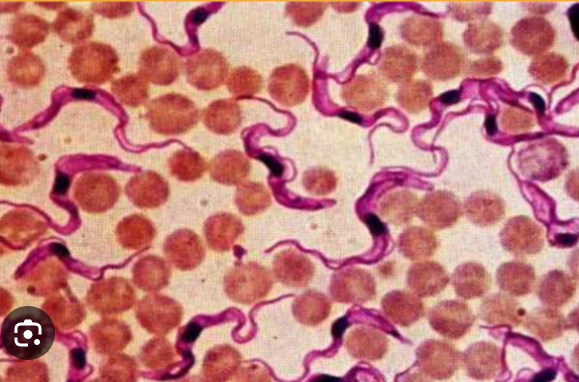
what is this
phylum mastrigophora
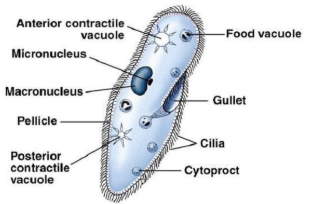
what is this
phylum ciliophora
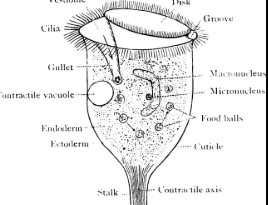
what is this
Genus vorticella
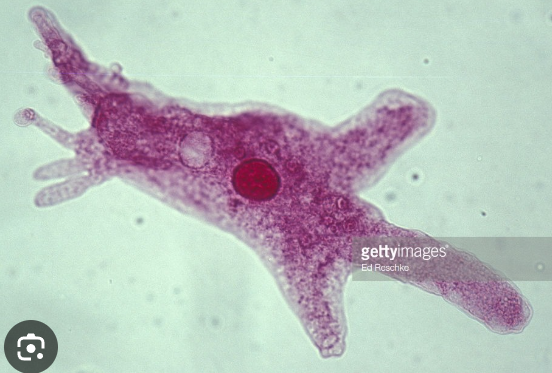
what is this
phylum sarcordina
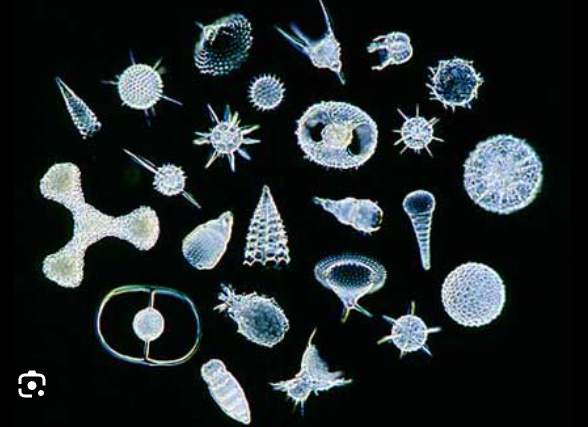
what is this
family radiolera
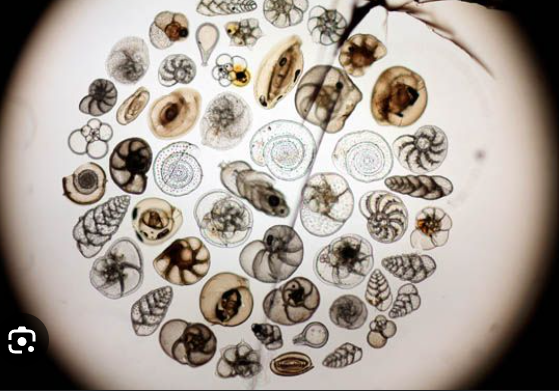
what is this
Famiy foraminifera