MODULE 2: GEARING UP FOR SELF-EMPOWERMENT
 Studied by 0 people
 Call Kai
 Learn
Learn Practice Test
 Spaced Repetition
 Match
Match Flashcards
 Knowt Play
1/36

There's no tags or description
Looks like no tags are added yet.
Name | Mastery | Learn | Test | Matching | Spaced | Call with Kai |
|---|
No analytics yet
Send a link to your students to track their progress
37 Terms
self-concept
defined by Carl Rogers as “the organized, consistent set of perceptions and beliefs about oneself."
according to Carl Rogers (1959)
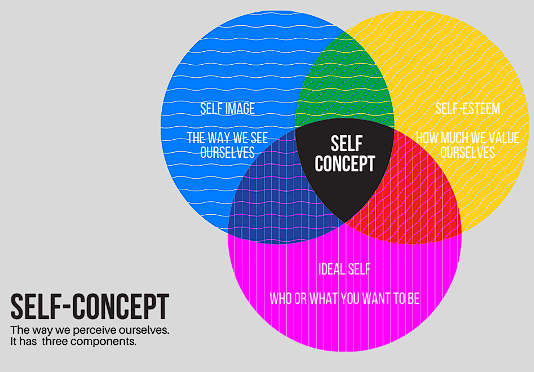
Self-image
does not always reflect reality or we may see ourselves differently from how others see us.
Self-esteem
This can be in a positive (high) or negative (low) way. Our ____ also changes depending on the person we’re interacting with or the situation we are experiencing.
Ideal Self
Just like in self-image, what you want to be may not be consistent with who you really are now and what you are experiencing in reality.
Congruence
where the self-image is similar to the ideal self
incongruence
the opposite of it has minimal similarities only.
SOCIO-ECONOMIC STATUS
It includes your background such as educational attainment, income, wealth, family status. If you have the ability to acquire material things and achieve things in your life, you may view yourself positively. However, if it's difficult for you, it could affect your self-concept differently.
NAMES AND NICKNAMES
given to you can affect the way you look at yourself especially if these are based on physical aspects or characteristics and even your background.
APPEARANCE
This can be how you present yourself such as the way you dress, your posture, your facial expression, etc. _____ can be one of the biggest sources of our self-esteem and we give importance to it simply because this is the first thing that people will see.
RELATIONSHIPS IN THE FAMILY
often the first and closest group of people we interact with on a daily basis and this is where we formed most of our natural and acquired personality.
PEERS
Our friends can also influence our personality especially the acquired ones that's why there is the concept of barkadas with good or bad influence.
INTELLIGENCE AND ABILITIES
Our cognitive skills, creativity, and other abilities and skills can form a particular understanding of who we are, how we value ourselves, and who we want to be.
self-empowerment
When an individual recognizes his or her abilities, strengths, beliefs, and traits and how these can change or influence certain events in his or her life
self-awareness
knowing your strengths and weaknesses.
You can be more responsible
Self-empowerment is helpful to you because it gives you the opportunity to be more responsible and accountable for your actions and decisions.
You can empower others
When you know how to empower yourself, you can influence others and empower them as well. Sometimes, some of our decisions can give others the chance to re-evaluate their own. If you can do it, others can too.
You can be motivated to achieve more
When you are aware of what you are capable of, you can easily identify goals and achieve them.
You can create better relationships
Taking charge of your life means taking control of the kind of connection you create with people. You know yourself well enough that you want to form social relationships that have a more significant foundation and are based on what is good for you.
You can improve your overall health
Knowing what’s good and not so good for you will help you filter out things are not beneficial to your self-concept. If you know your strengths and weaknesses, you will focus more of your energy to improving what you can instead of doubting yourself.
Lack of self-awareness
Not taking time to reflect hinders your ability to make certain decisions in your life. If you are not aware of what you can do and can’t do, you have no way of making things happen.
Egoism
Empowering yourself doesn’t mean it’s all about yourself. It is all about beginning with yourself to influence different aspects of your life.
Fear of change
Empowerment will shift certain habits in your life and when you fear the changes it brings, you will keep doing the same things or keeping the same relationships, even if there is too much negativity in it.
TAKE RESPONSIBILITY FOR YOUR OWN GROWTH
Set your mind that if you want something to happen, you hold the most essential role in making it happen. You might need others' help but you have to initiate the first step.
HAVE AS MUCH OPTIMISTIC VIEW IN LIFE AS POSSIBLE
It's acceptable to be negative at times but if there reasons to look on the brighter sides of things, grab that opportunity.
RECOGNIZE YOUR POTENTIALS AND ACCOMPLISHMENTS
Celebrate small victories and admire your capabilities. Be the first person to believe in yourself.
ACCEPT YOUR WEAKNESSES AND LIMITATIONS
Nobody is perfect but there is always room for improvements. If you make mistakes, it is okay to feel bad about it but don't stop there. Keep moving and improving. If you're tired, learn to rest but don't quit.
LEARN TO PRIORITIZE THINGS AND SET ATTAINABLE GOALS
Be realistic in setting goals. But knowing what you want to achieve is just one part. You have to know how you can achieve them and one way is to separate the most important things to the least important ones.
ENTER INTO MEANINGFUL RELATIONSHIPS
Any kind of relationship should have a significant foundation. If you want to have a good friend, be a good friend also. Learn to give importance to every connection you create.
LEAD A VIRTUOUS LIFE
For others, it might not be easy. But we have to make it a habit to know and do what's right especially if these are basic rules that can also help us.
IMPROVE YOUR EMOTIONAL INTELLIGENCE
Everyone has different levels of sensitivity so learn to be sensitive to other people's emotions.
DEEPEN YOUR CONCERN FOR OTHERS
No matter how small, if you can help someone, extend a helping hand. Even if it's just listening to them, do what you can to make them feel better. When we help others, we also feel good about it. And remember, we don't need to show others that we are helping other people.
GROW IN YOUR PRAYER LIFE
Give importance to your spiritual life. Learn to be grateful and appreciative to what you have and to the people around you.
READ LITERATURE
Always seek to learn more beyond the corners of the classroom and beyond the requirements you need to work on. Learn from stories and experiences and broaden your perspective to many things.
Stephen R. Covey
“Principles are natural laws like gravity. If you drop something, gravity controls. If I don’t tell the truth, you won’t trust me; that’s a natural law.”
Covey (1989)
said principles are like “lighthouses” and that “you don’t break them, you break yourself against them.”
paradigm
our set of beliefs, our point of view, or the way we see and perceive different things.
 Note
Note  Flashcards (25)