CPR - Histology {4.01}

0.0(0)
studied byStudied by 0 people
0.0(0)
full-widthCall with Kai
learnLearn
examPractice Test
spaced repetitionSpaced Repetition
heart puzzleMatch
flashcardsFlashcards
GameKnowt Play
Card Sorting

1/75

encourage image

There's no tags or description

Looks like no tags are added yet.

Study Analytics
Name
Mastery
Learn
Test
Matching
Spaced
Call with Kai

No study sessions yet.

76 Terms

1
New cards
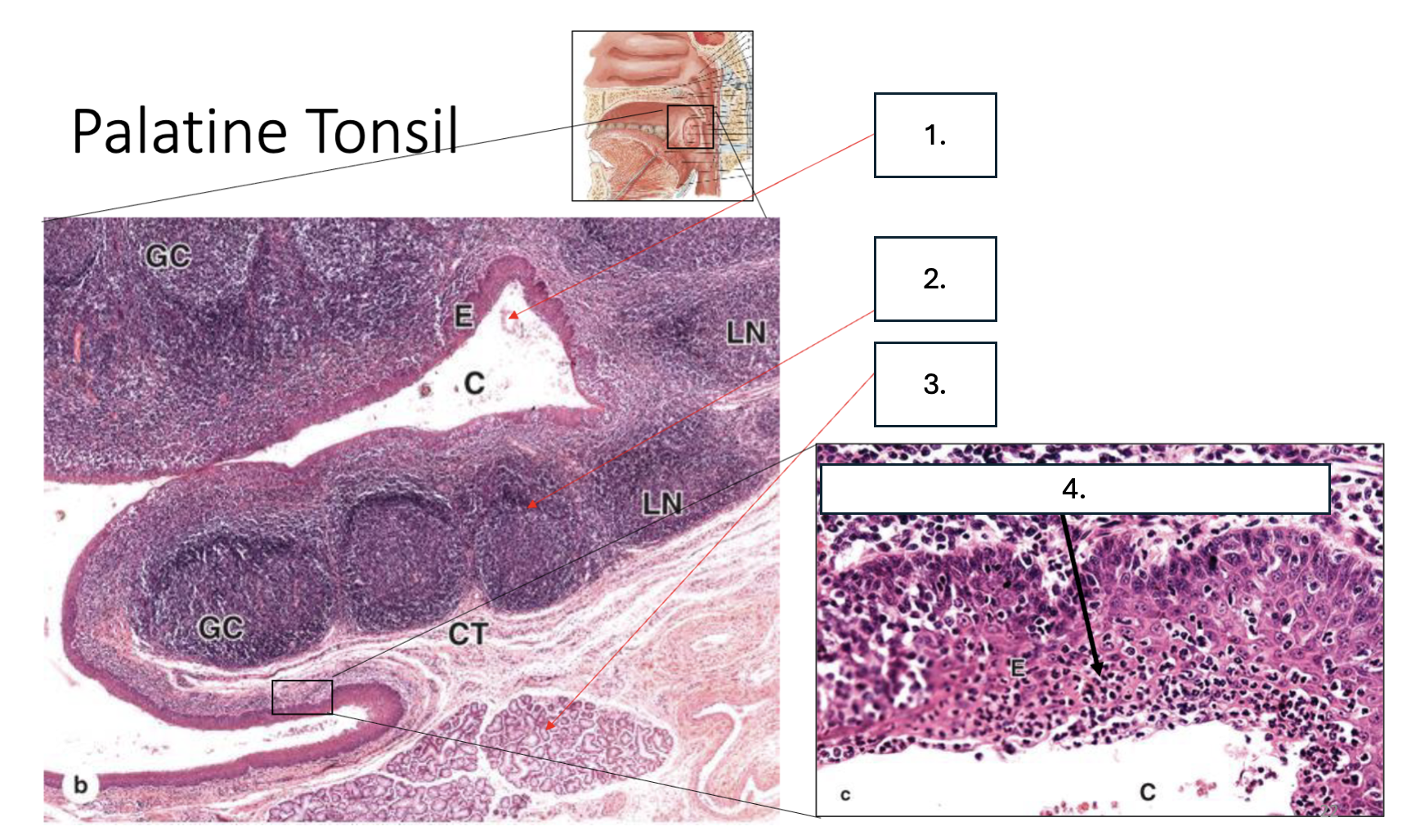
The respiratory system originates as an outgrowth from which embryonic structure at 4 weeks of development?
Foregut
2
New cards
What structure separates the laryngotracheal diverticulum from the pharynx and esophagus?
Tracheo-esophageal septum
3
New cards
From which embryonic layer is the visceral pleura derived?
Splanchnic mesoderm
4
New cards
The parietal pleura is derived from the _____ mesoderm.
Somatic
5
New cards

Identify the lung maturation period (5-16 weeks) where the lungs resemble exocrine glands and gas exchange is impossible.

Pseudoglandular period
6
New cards

During which maturation period (16-24 weeks) do the lumina of bronchi and bronchioles enlarge and vascularity increases?

Canalicular period
7
New cards
At what gestational age do respiratory bronchioles and primordial alveoli first allow for potential fetal viability and gas exchange?
24 weeks
8
New cards
The _____ period (24 weeks to late fetal period) is characterized by the budding of terminal sacs and the start of surfactant production.
Terminal saccular
9
New cards
Until what age does the Alveolar period continue to produce mature alveoli?
8 years
10
New cards
A failure of the tracheoesophageal septum to develop or fuse properly leads to a _____.
Tracheo-esophageal fistula
11
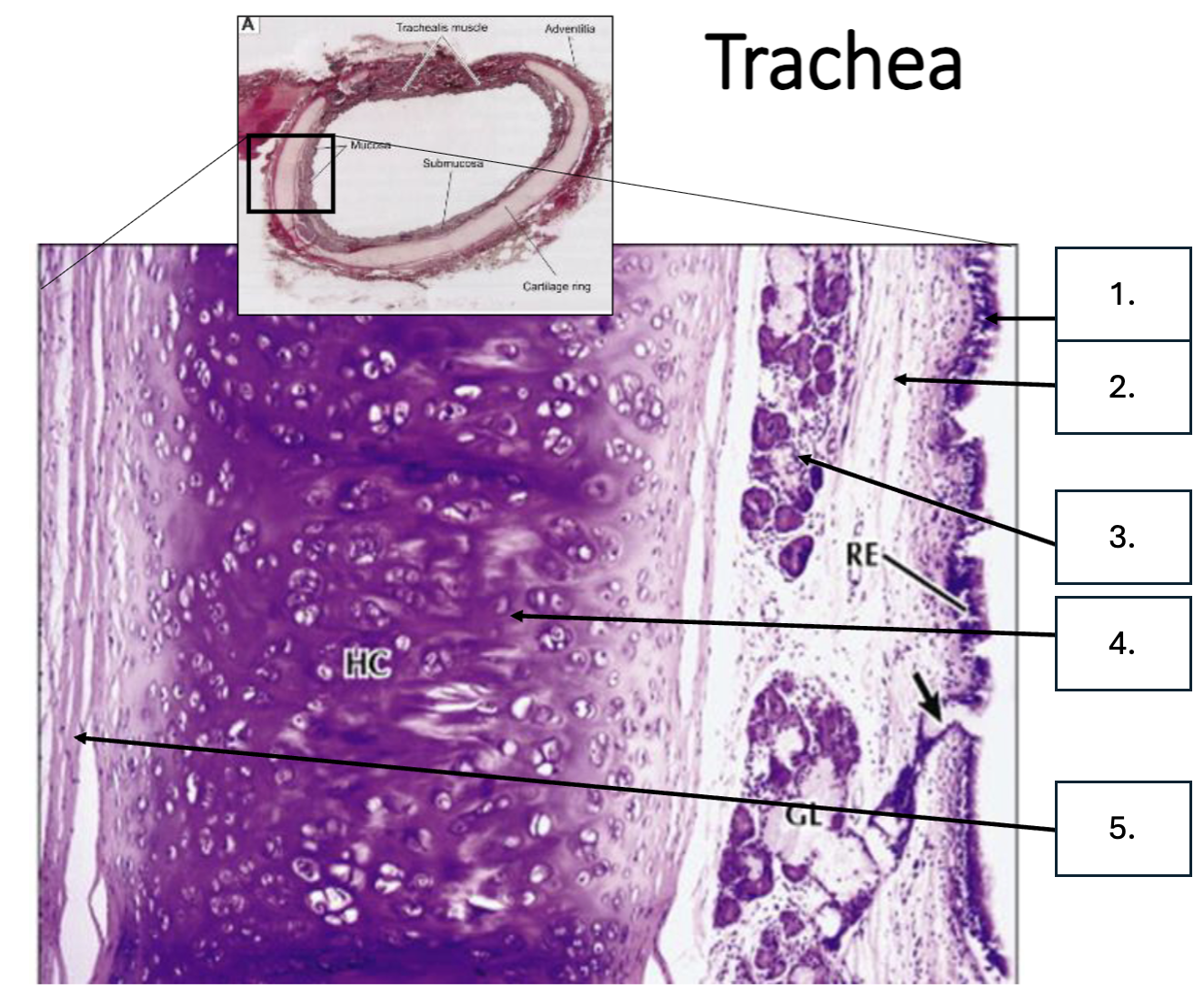
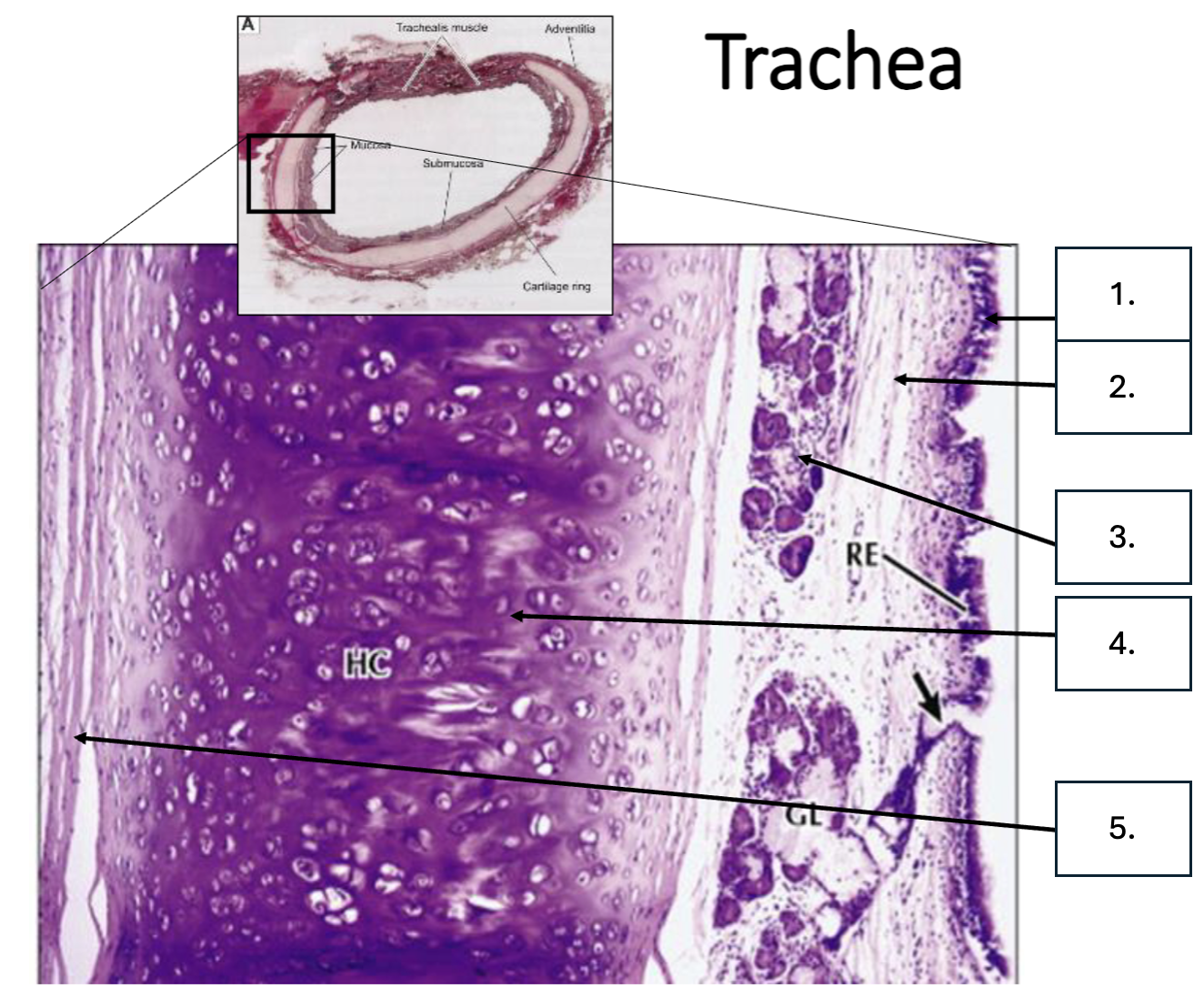
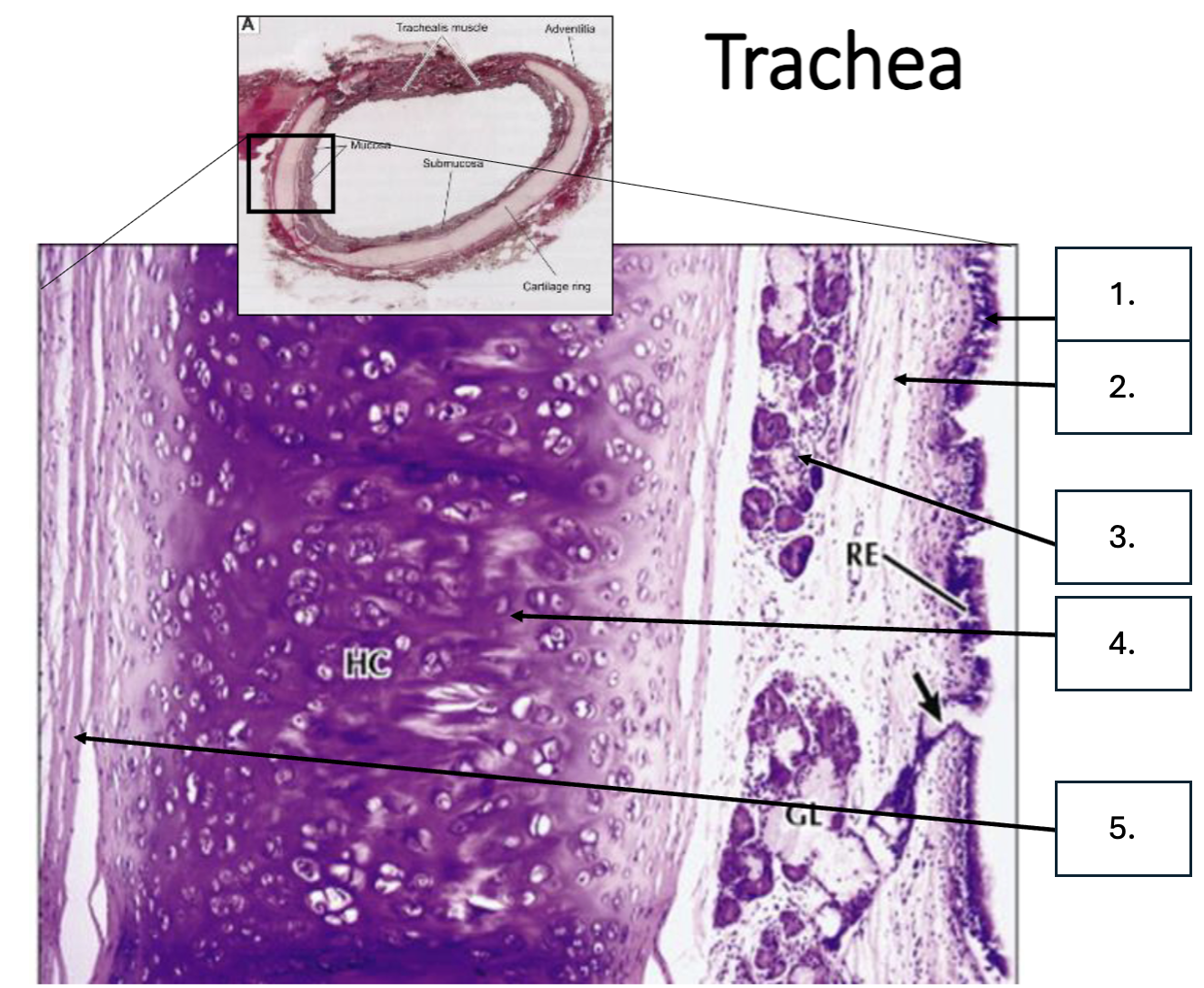
New cards
Why is esophageal atresia often associated with polyhydramnios?
The fetus is unable to swallow amniotic fluid.
12
New cards
What condition involving low amniotic fluid volume can lead to inadequate thoracic space and pulmonary hypoplasia?
Oligohydramnios
13
New cards
Name the triad of factors required for normal lung development: Adequate amniotic fluid, adequate thoracic space, and _____.
Fetal breathing
14
New cards
Respiratory Distress Syndrome (Hyaline Membrane Disease) in premature infants is primarily caused by a deficiency in _____.
Surfactant
15
New cards
The conducting portion of the respiratory tract extends from the nasal cavity to the _____.
Terminal bronchioles
16
New cards
What are the four components of the respiratory portion of the respiratory system?
Respiratory bronchioles, alveolar ducts, alveolar sacs, and alveoli.
17
New cards
Describe the cellular classification of the standard respiratory epithelium.
Pseudostratified ciliated columnar epithelium
18
New cards
Which cell type in the respiratory epithelium serves as a stem cell for the other cell types?
Basal cells
19
New cards
Identify the respiratory epithelial cell type that functions as a neurosensory cell.
Brush cells
20
New cards
What is the function of Kulchitsky (K) cells in the respiratory epithelium?
They are neuroendocrine cells that contain basal granules.
21
New cards
From which specific cell type does Small Cell Carcinoma typically originate?
Kulchitsky (K) cells
22
New cards
Chronic exposure to cigarette smoke can cause respiratory epithelium to undergo _____, potentially leading to dysplasia and carcinoma.
Squamous metaplasia
23
New cards

Kartageners syndrome (Primary ciliary dyskinesia) is caused by a structural defect in the _____ of the cilia.

Dynein arms
24
New cards
What is the primary function of the venous sinuses in the lamina propria of the nasal cavity?
To warm the inhaled air.
25
New cards
What type of cartilage forms the septal cartilage of the nose?
Hyaline cartilage
26
New cards
Identify the specific area of the nasal septum that is highly vascularized and a common site for epistaxis.

Littles Area (Kiesselbachs plexus)

27
New cards

Which four types of tonsils constitute Waldeyers Ring?

Pharyngeal, tubal, palatine, and lingual tonsils.
28
New cards
What type of epithelium covers the Palatine tonsils?
Nonkeratinized stratified squamous epithelium
29
New cards
How does the histological structure of Palatine tonsils differ from Pharyngeal tonsils regarding surface invaginations?
Palatine tonsils have deep crypts, while Pharyngeal tonsils have few or no crypts.
30
New cards
The clinical term for an enlarged pharyngeal tonsil that may obstruct the airway is _____.
Adenoids
31
New cards
Identify the histological transition in cartilage structure as a primary bronchus branches into smaller lobar and segmental bronchi.
C-shaped rings are replaced by irregular plates of cartilage.
32
New cards
What are the three structural elements that disappear when a bronchus becomes a bronchiole?
Cartilage, glands, and goblet cells.
33
New cards
Which layer becomes the most prominent feature of the bronchiole wall to maintain patency in the absence of cartilage?
Smooth muscle
34
New cards
Identify the specialized nonciliated cuboidal cells found in terminal and respiratory bronchioles.
Club (Clara) cells
35
New cards
Club (Clara) cells produce surfactants, lysozymes, and the _____ enzyme used for detoxification.

P450

36
New cards
Which alveolar cell type covers the majority of the alveolar surface and facilitates gas exchange?
Type I pneumocyte
37
New cards
Identify the two primary functions of Type II pneumocytes.
Production of surfactant and acting as stem cells for Type I cells.
38
New cards
What is the clinical significance of finding carbon particles within alveolar macrophages ('dust cells')?
It indicates the phagocytosis of inhaled environmental pollutants.
39
New cards

What is the clinical significance of finding hemosiderin-laden macrophages within the alveoli?

Pulmonary edema/Heart failure

40
New cards
List the three main layers of the blood-air barrier.
Alveolar epithelium (Type I pneumocytes), fused basal lamina, and capillary endothelium.
41
New cards
How does pulmonary fibrosis affect lung function based on its histological changes?
Thickening of the interalveolar septum reduces lung compliance.
42
New cards
The conducting portion of a bronchiole is supplied by _____ arteries, while the respiratory portion is supplied by pulmonary vessels.
Bronchial
43
New cards
What are the eosinophilic knobs found in alveolar ducts composed of?
Smooth muscle
44
New cards
Each respiratory bronchiole supplies a structural unit of the lung known as a _____.
Pulmonary acinus
45
New cards
In the respiratory epithelium, which cell type accounts for roughly 30% of the population and possesses motile projections?
Ciliated columnar cells
46
New cards
Concept: MALT
Definition: Mucosa-Associated Lymphoid Tissue, which provides secondary lymphoid defense along the respiratory tract.
47
New cards

The sequence of development for the respiratory system is: LTfold → LTdiverticulum → _____.

Respiratory bud
48
New cards
What is the primary function of the seromucous glands in the nasal mucosa?
To provide humidity and filtration for inhaled air.
49
New cards
Which cell type in the terminal bronchiole acts as a progenitor for both ciliated and non-ciliated epithelial cells?
Club (Clara) cells
50
New cards
Describe the epithelial change that occurs as a terminal bronchiole transitions into a respiratory bronchiole.
The epithelium changes from simple cuboidal to simple squamous at the sites of alveolar outpocketings.
51
New cards

Potters Syndrome is a clinical result of _____ during fetal development.
Oligohydramnios
52
New cards
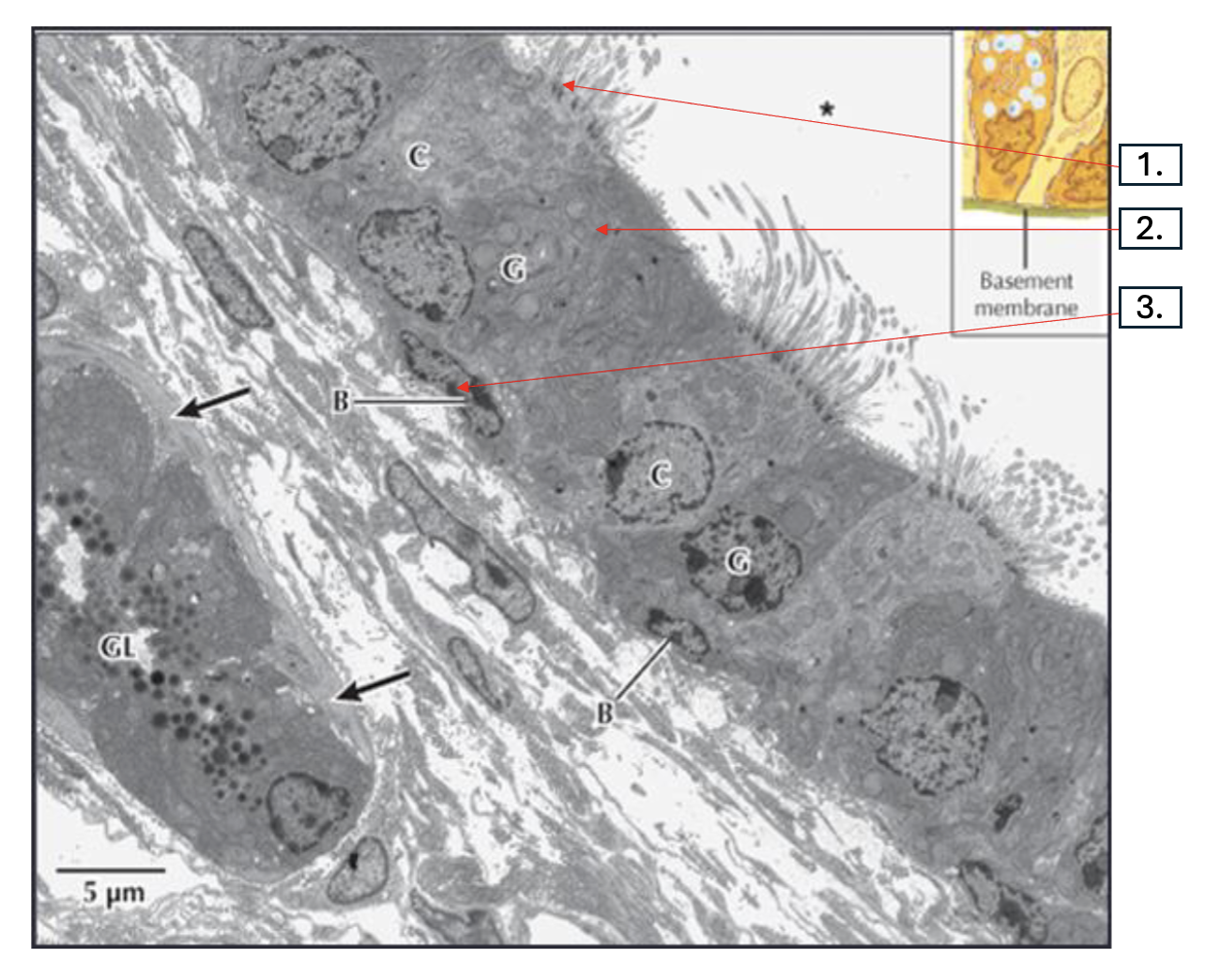
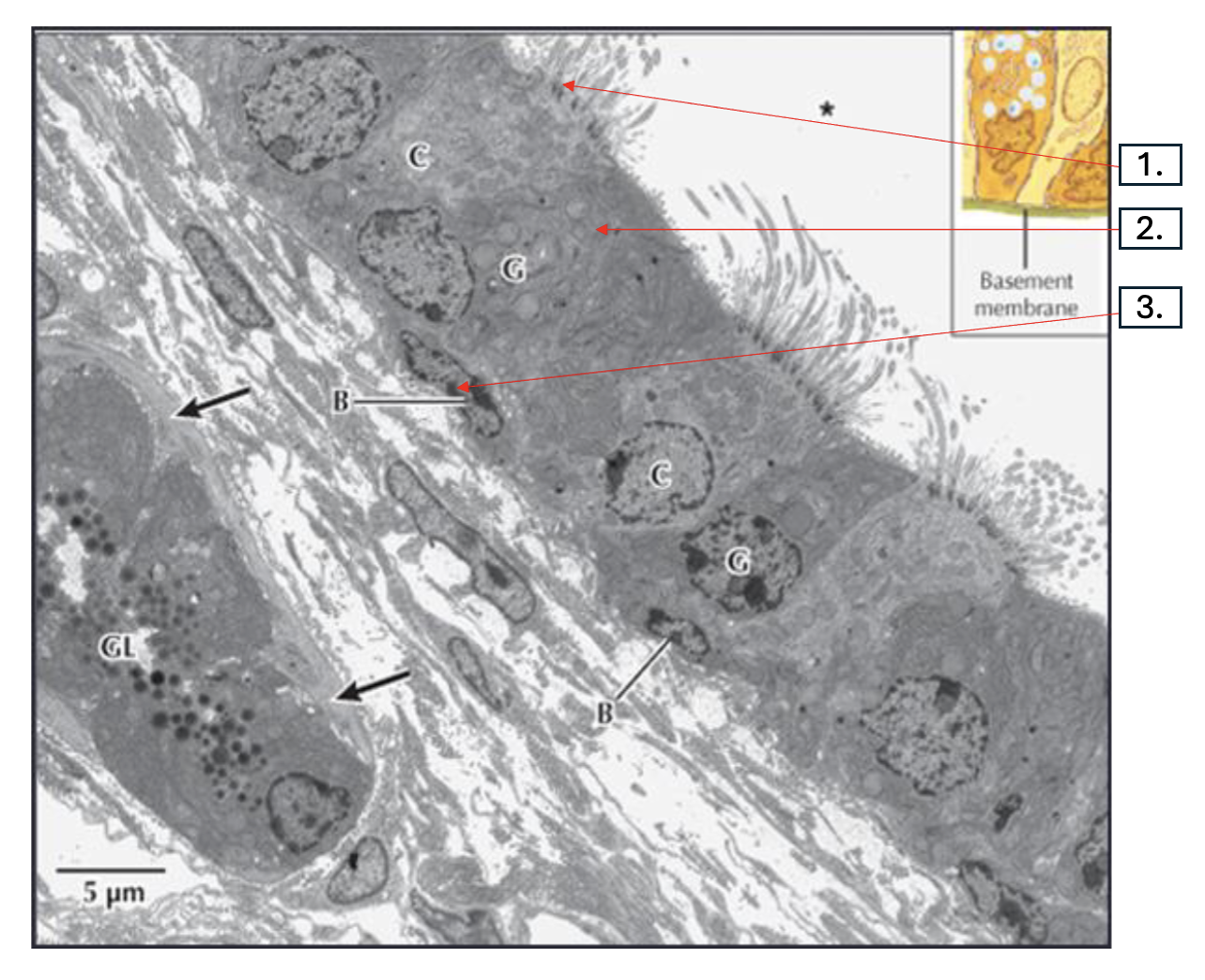
<p>What is number 1?</p>

What is number 1?

Ciliated columnar cells
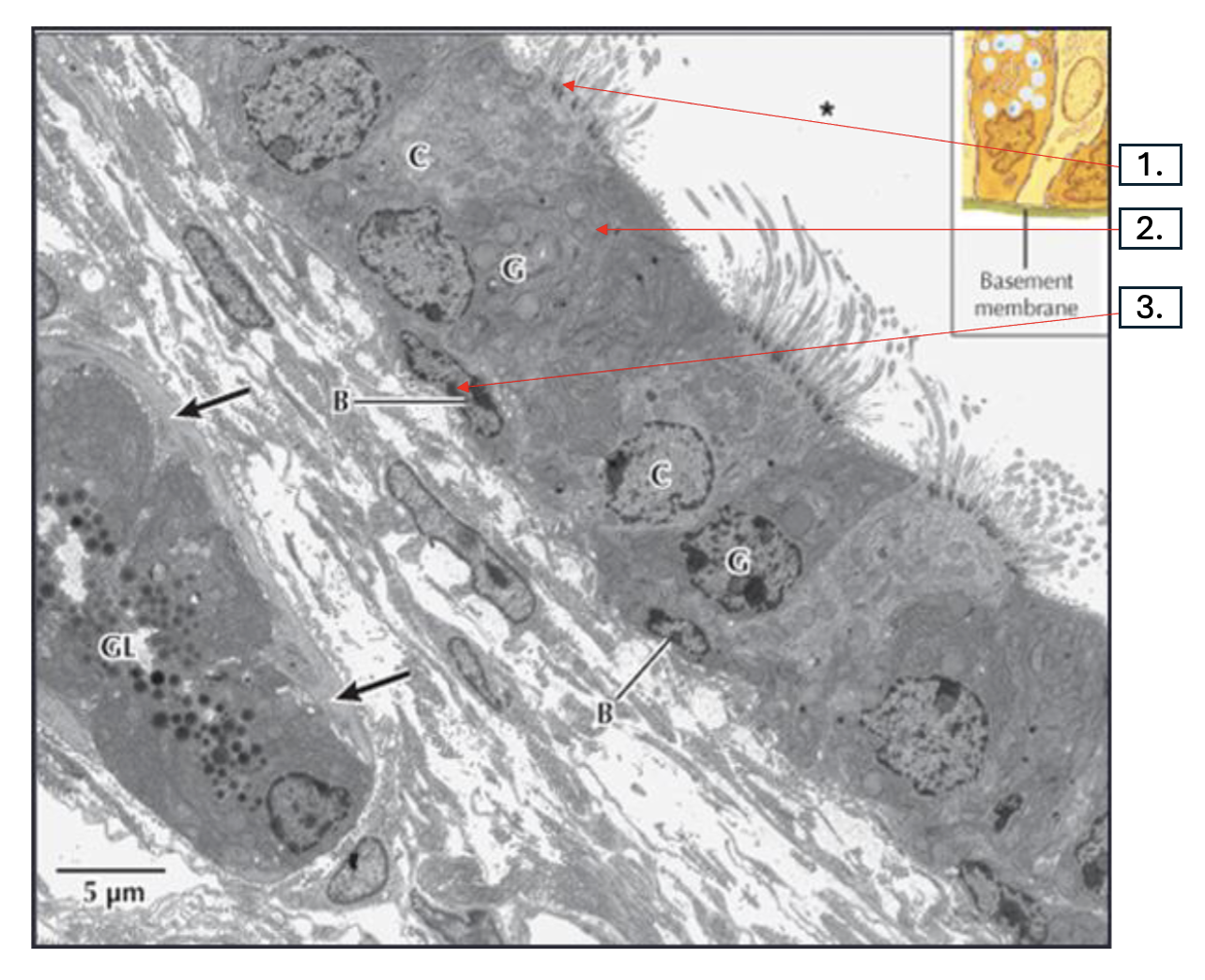
53
New cards
<p>What is number 2?</p>

What is number 2?

Goblet cells

54
New cards
<p>What is number 3?</p>

What is number 3?

Basal cells

55
New cards
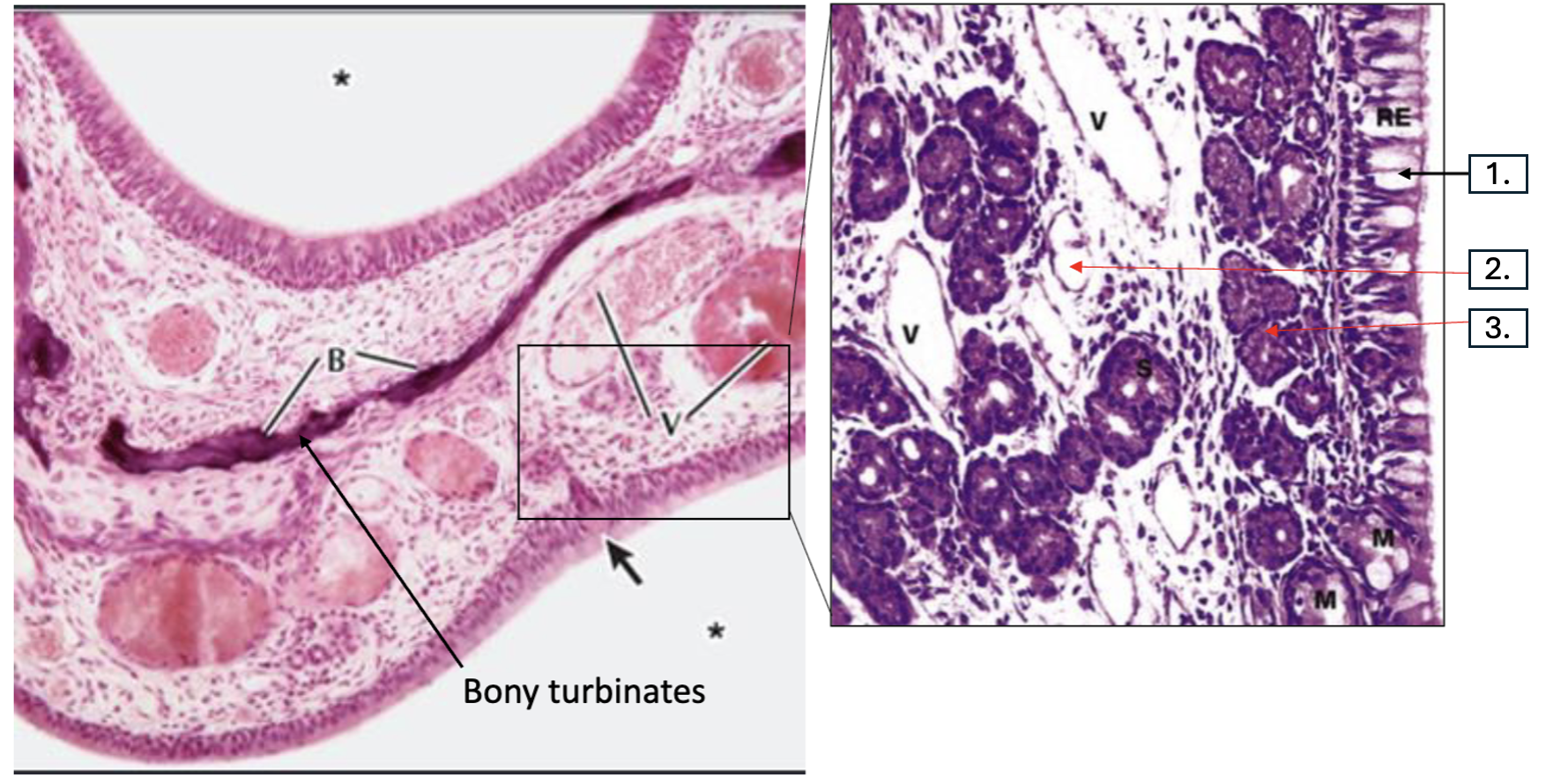
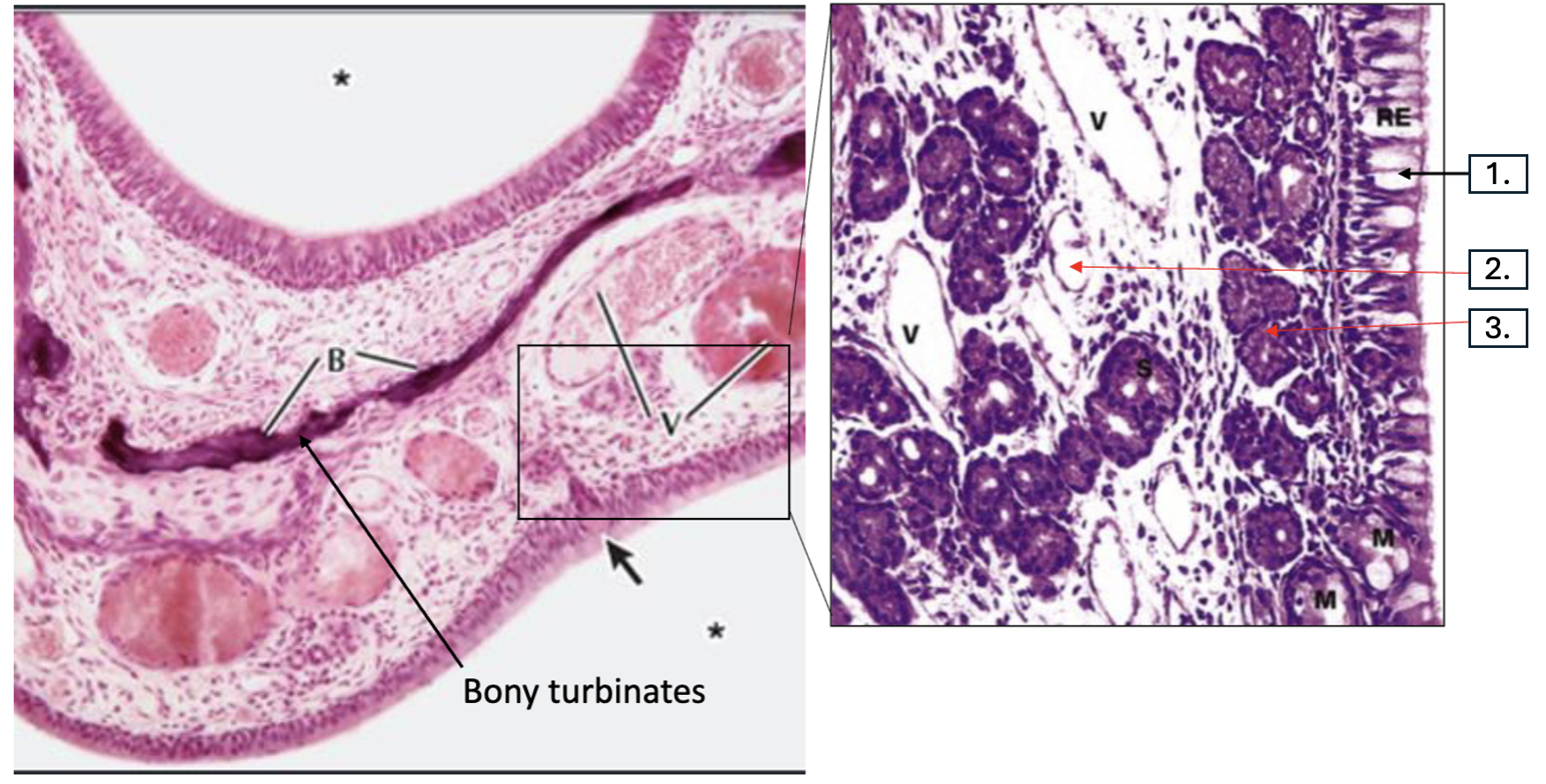
<p>What is number 1?</p>

What is number 1?

Respiratory endothelium
56
New cards
<p>What is number 2?</p>

What is number 2?

Venous sinuses

57
New cards
<p>What is number 3?</p>

What is number 3?

Seromucous glands

58
New cards
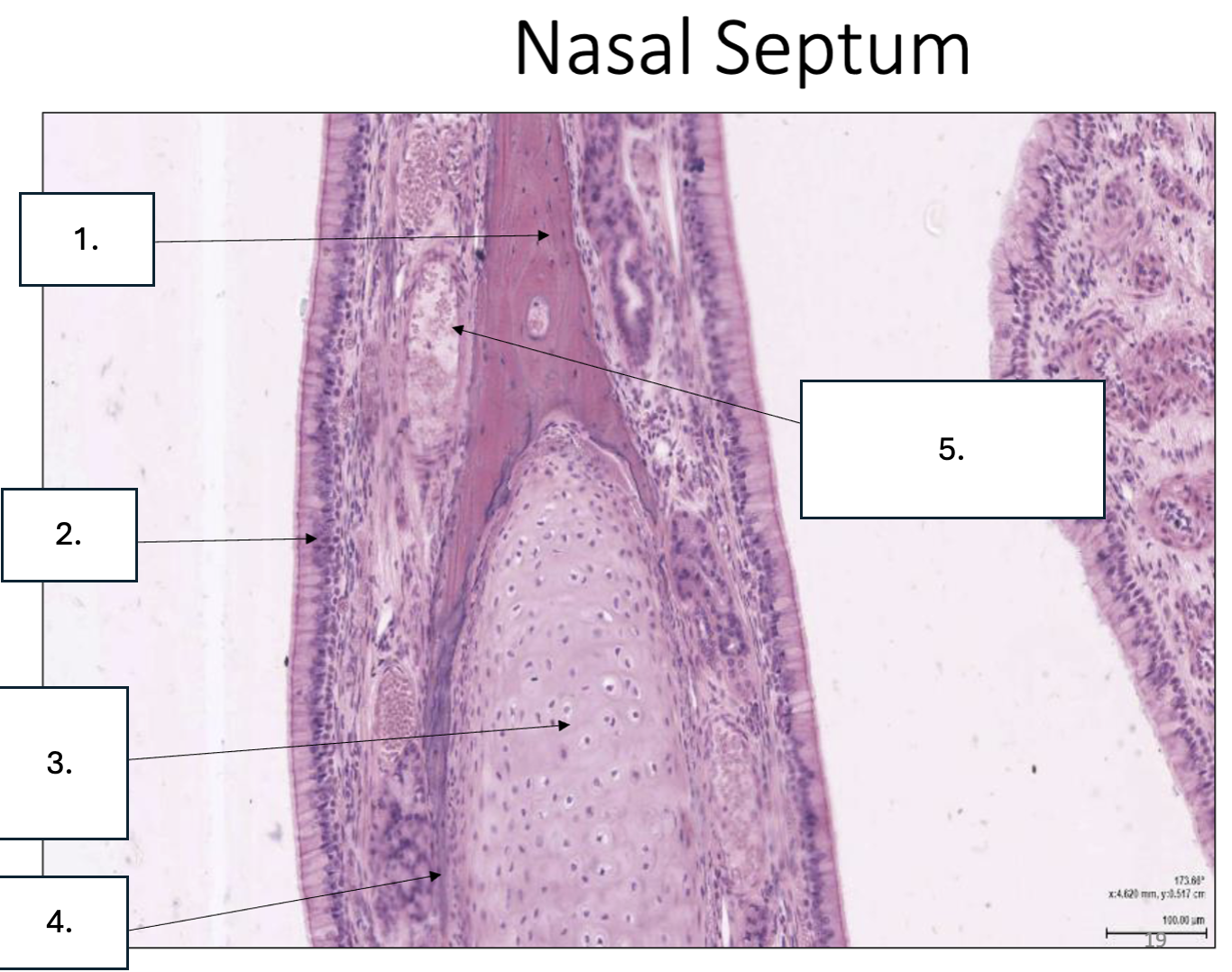
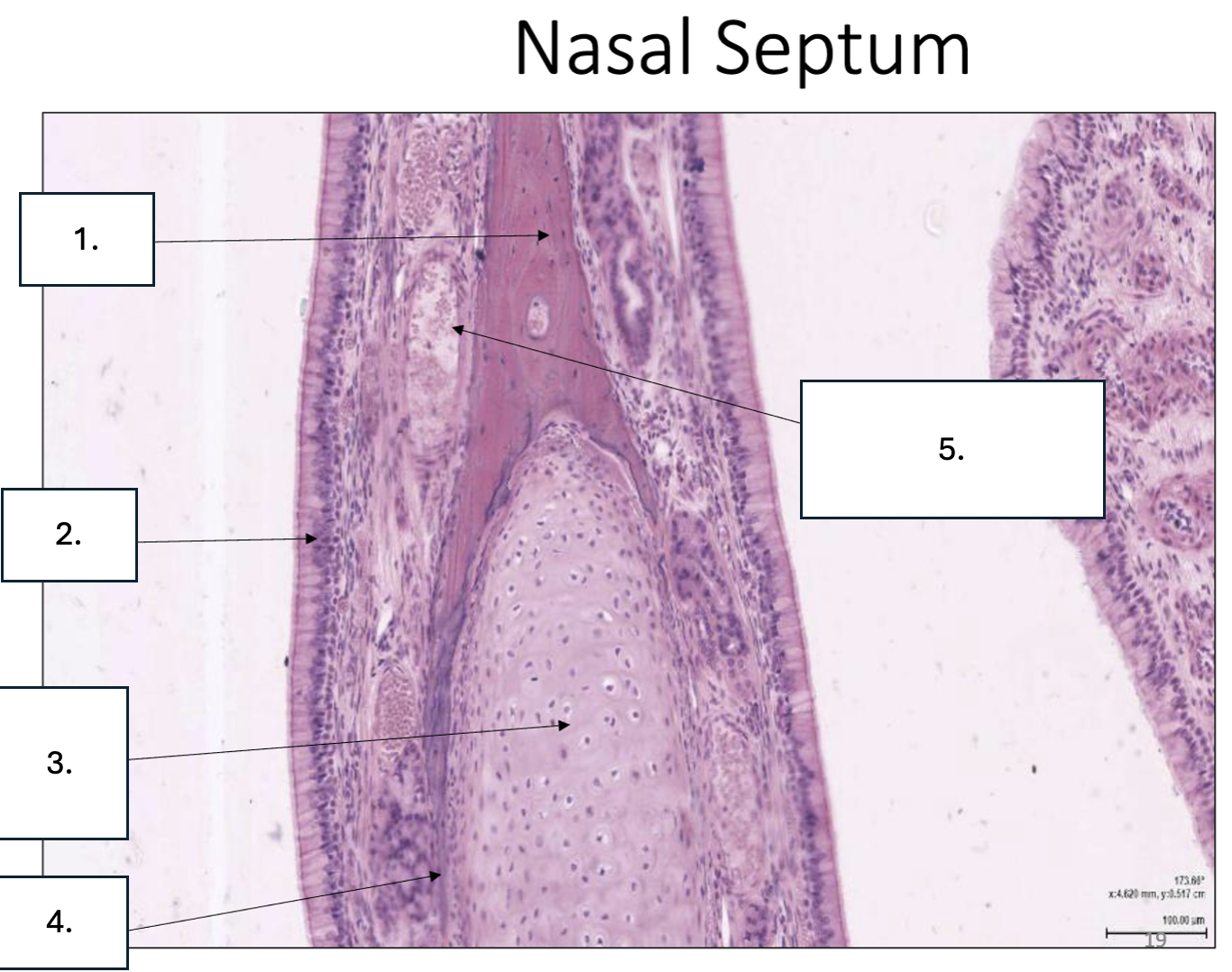
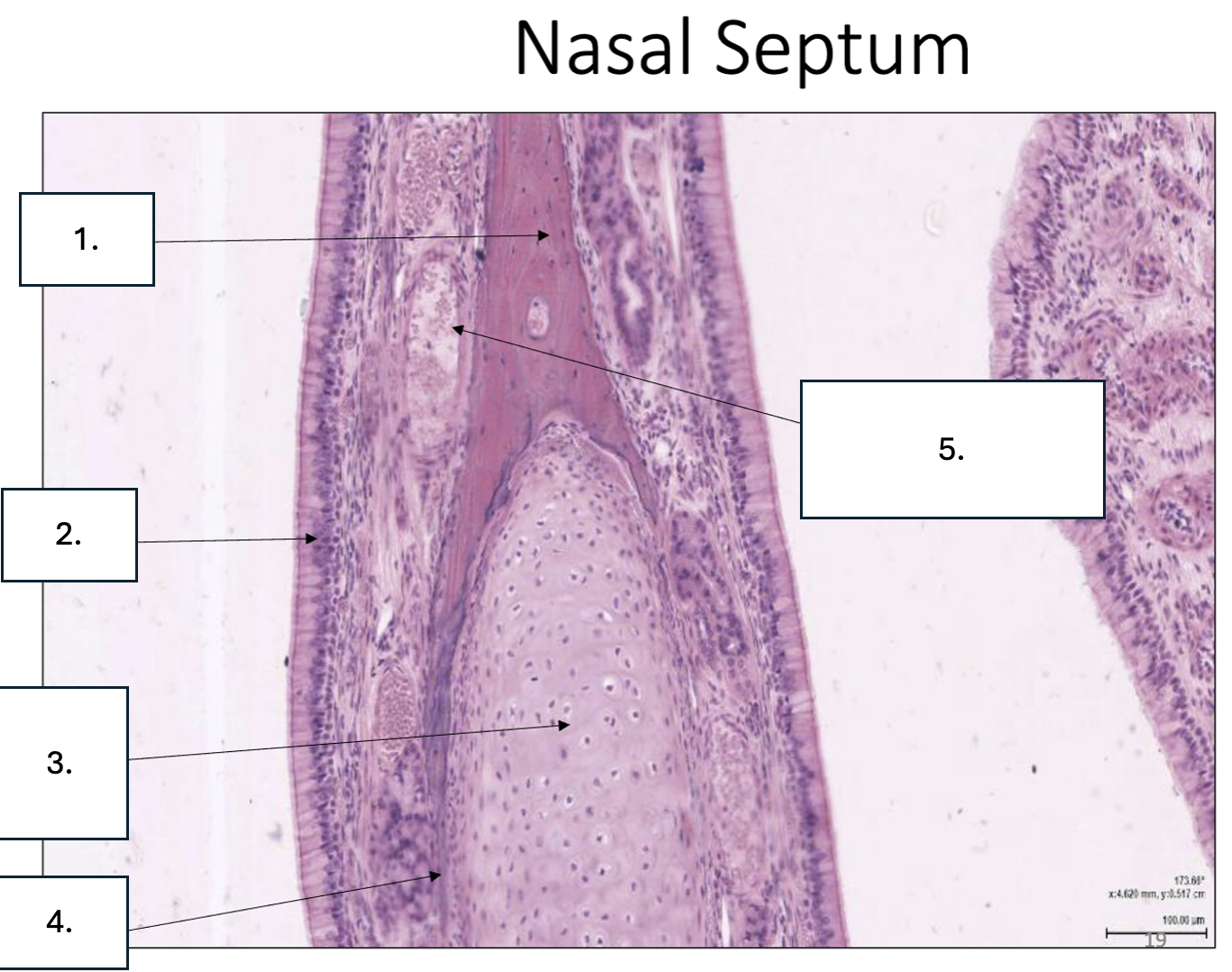
<p>What is number 1?</p>

What is number 1?

Bony septum

59
New cards
<p>What is number 2?</p>

What is number 2?

Respiratory endothelium
60
New cards
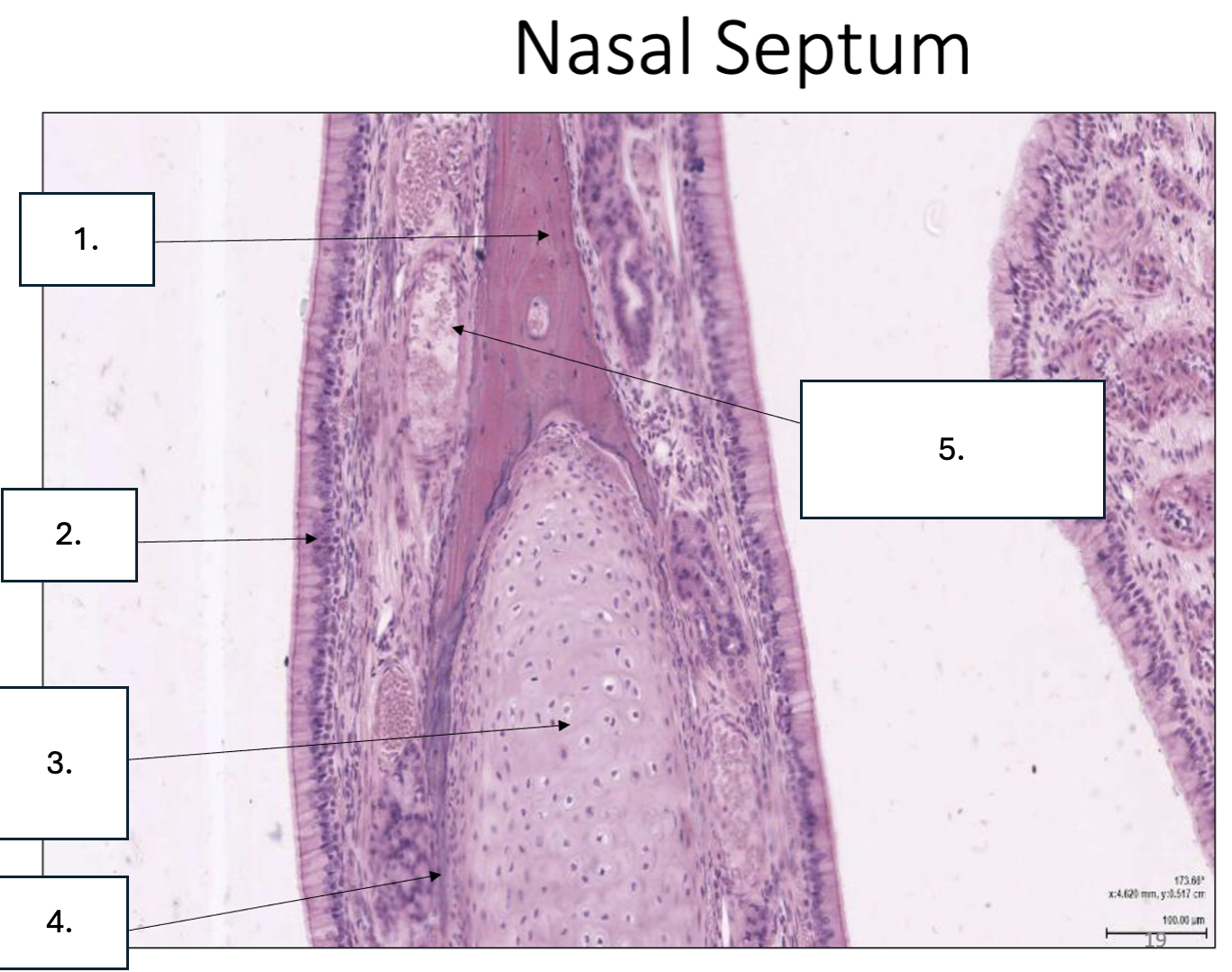
<p>What is number 3?</p>

What is number 3?

Septal cartilage - hyaline
61
New cards
<p>What is number 4?</p>

What is number 4?

Perichondrium

62
New cards
<p>What is number 5?</p>

What is number 5?

Dilated blood vessels
63
New cards
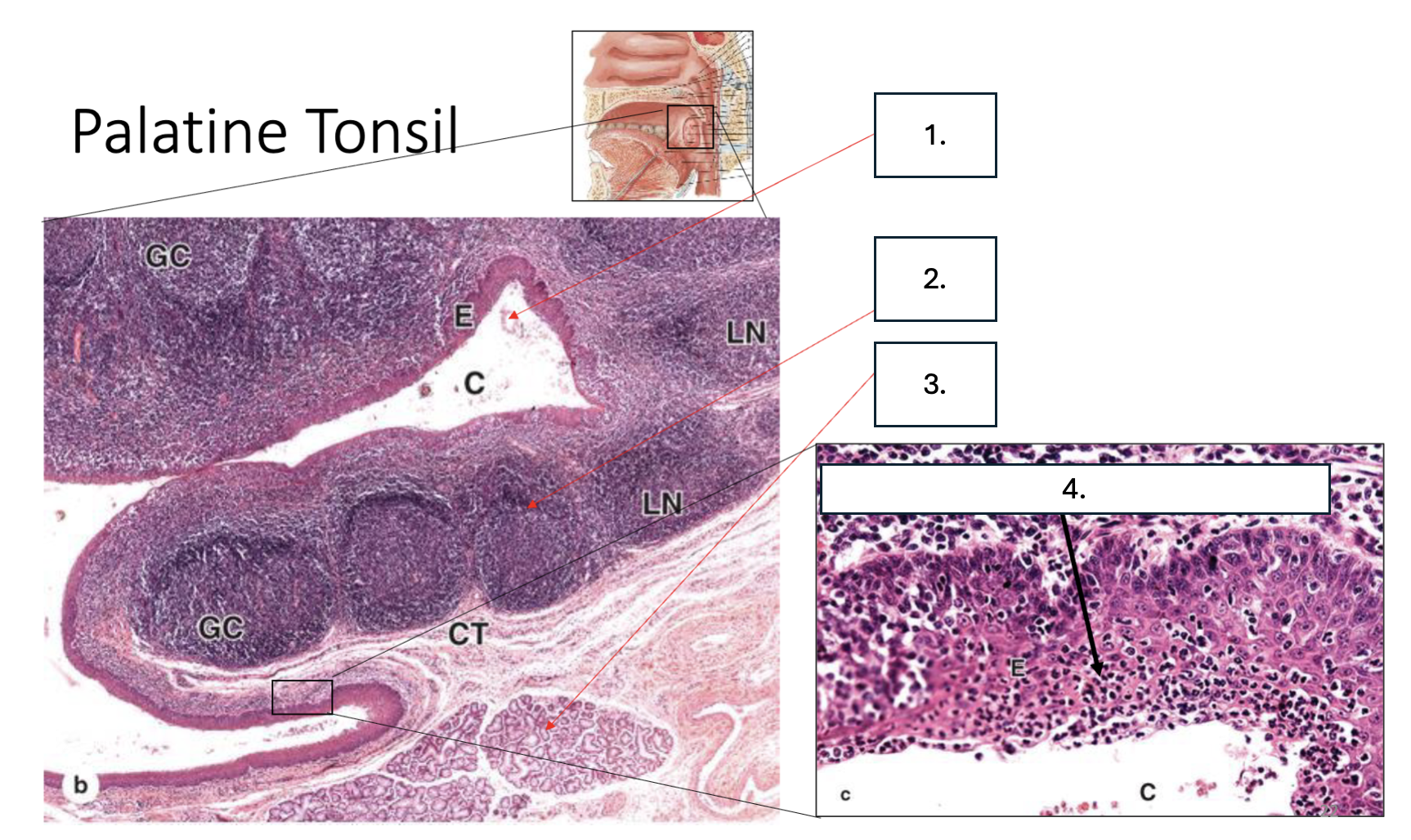
<p>What is number 1?</p>

What is number 1?

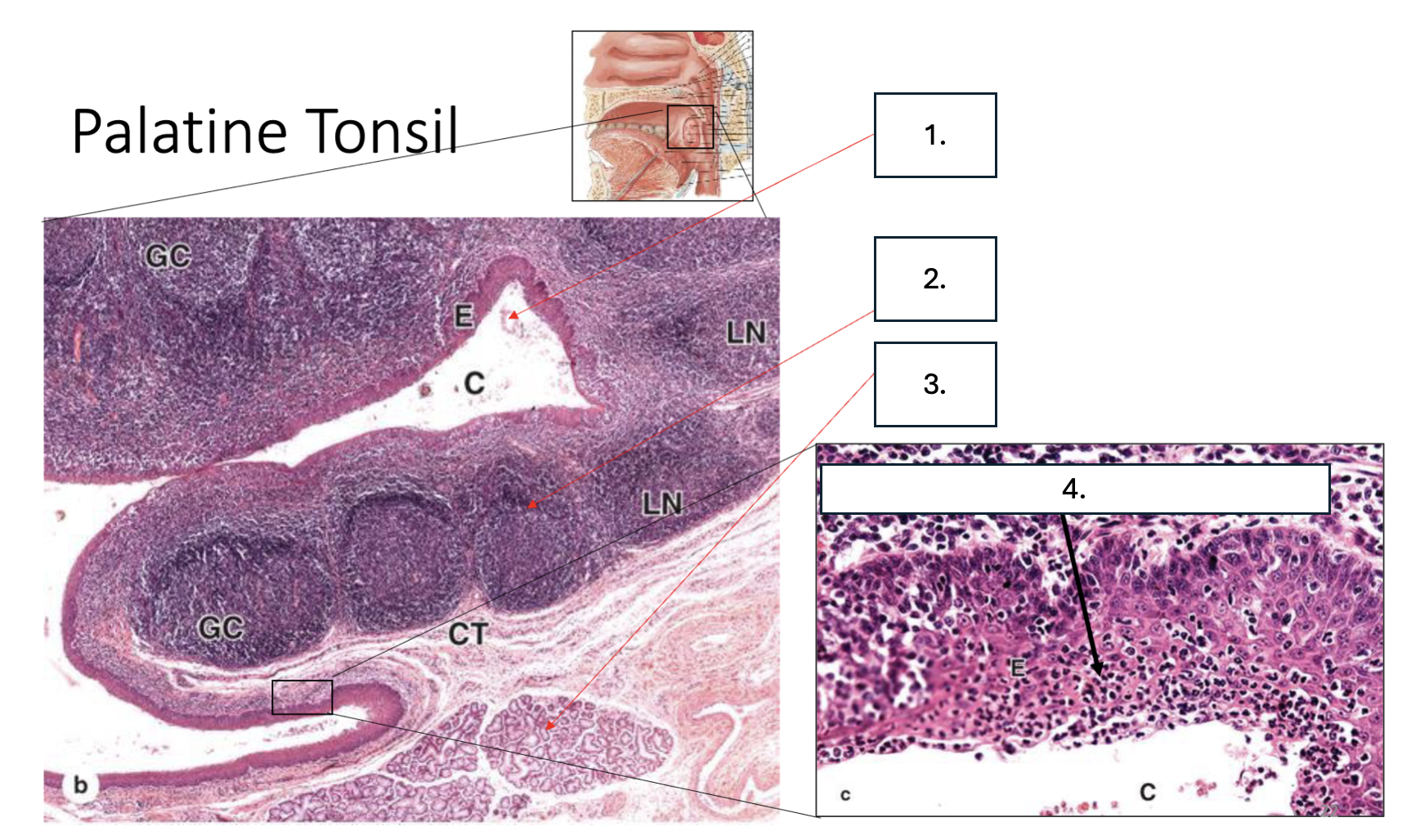
Crypts

64
New cards
<p>What is number 2?</p>

What is number 2?

Lymphoid tissue

65
New cards
<p>What is number 3?</p>

What is number 3?

Mucous glands

66
New cards
<p>What is number 4?</p>

What is number 4?

Nonkeratinized stratified squamous epithelium
67
New cards
<p>What is number 1?</p>

What is number 1?

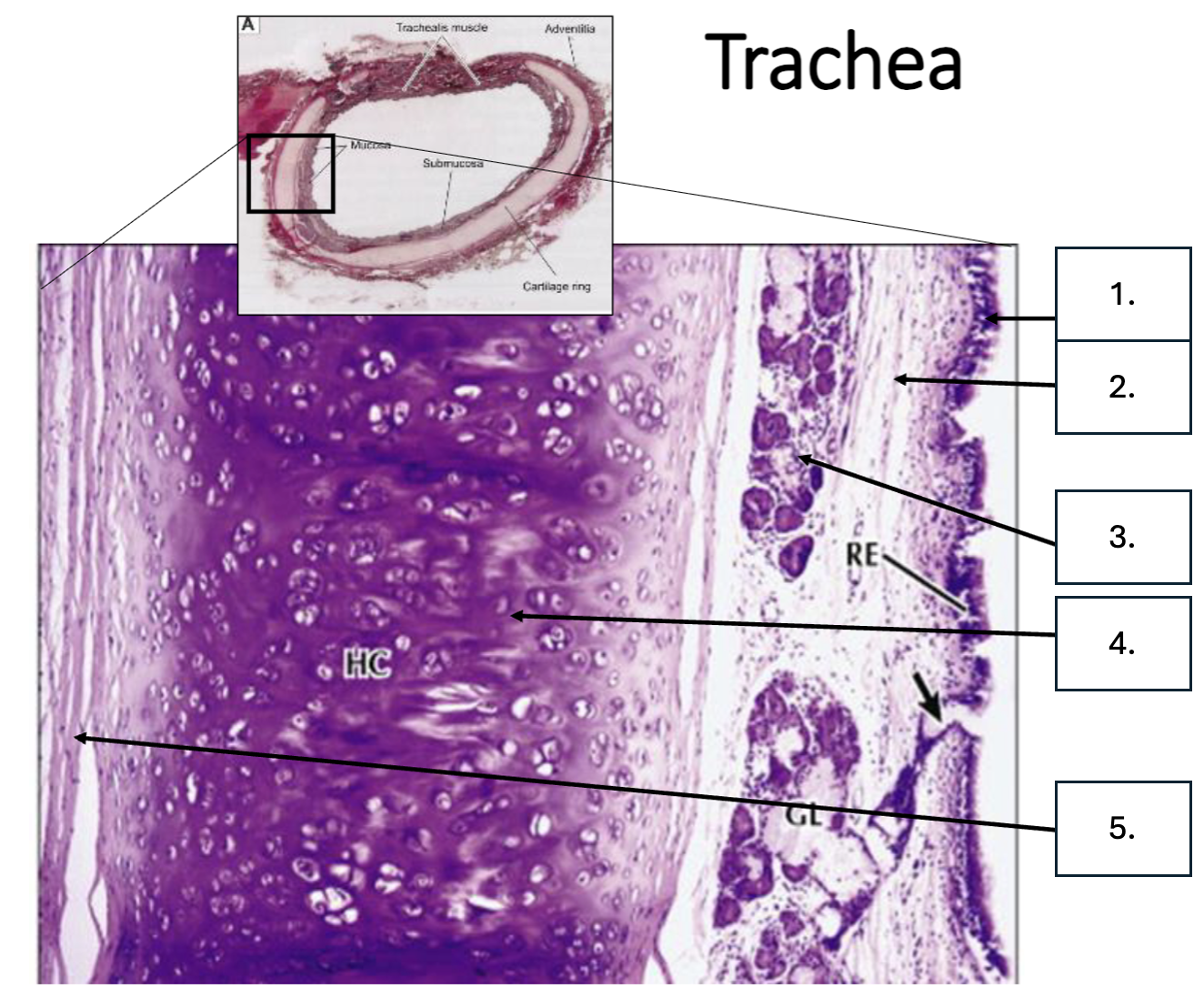
Respiratory epithelium
68
New cards
<p>What is number 2?</p>

What is number 2?

Lamina propria

69
New cards
<p>What is number 3?</p>

What is number 3?

Seromucous glands

70
New cards
<p>What is number 4?</p>

What is number 4?

Hyaline cartilage

71
New cards
<p>What is number 5?</p>

What is number 5?

Adventitia

72
New cards
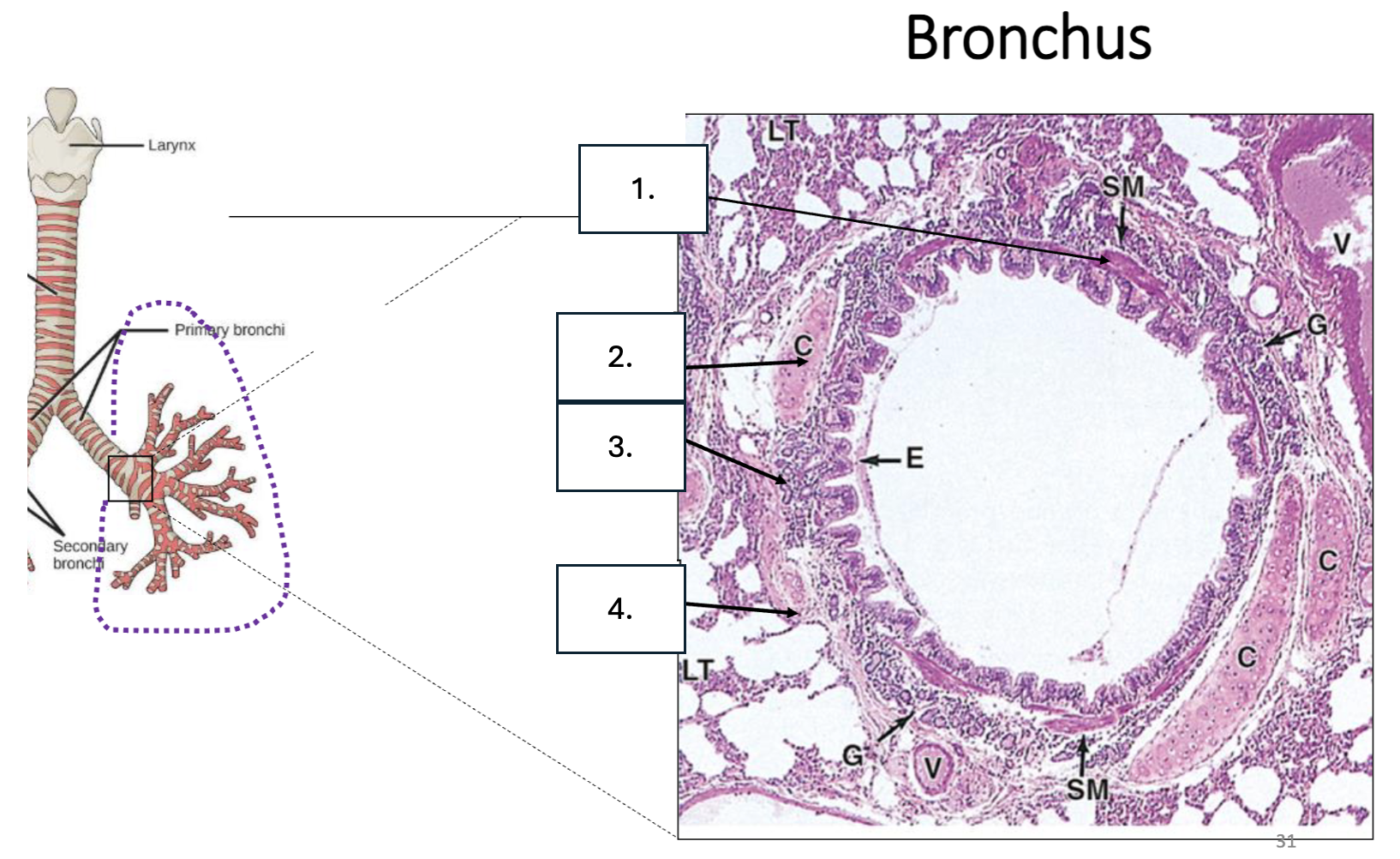
<p>What is number 1?</p>

What is number 1?

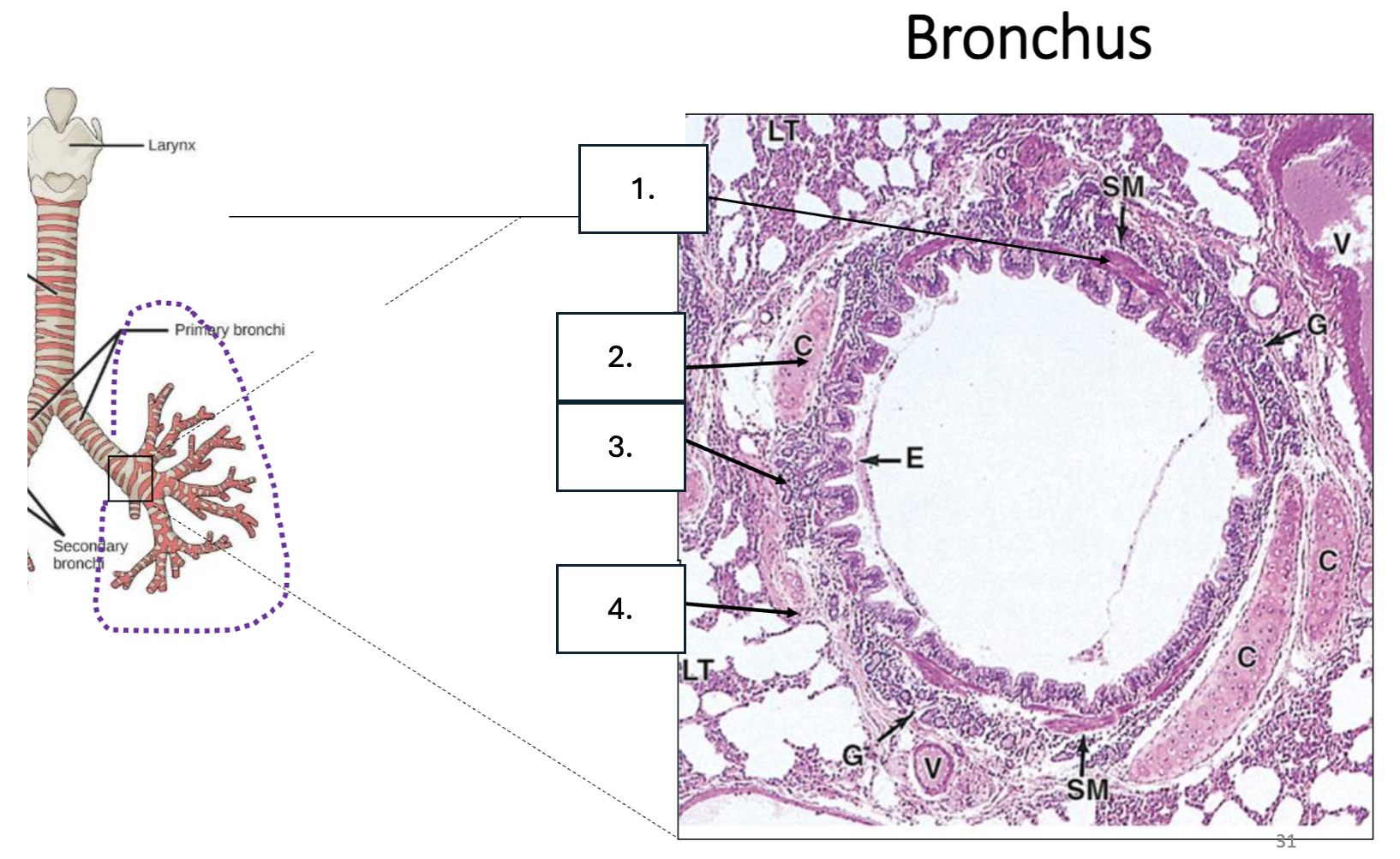
Spiral smooth muscle
73
New cards
<p>What is number 2?</p>

What is number 2?

Cartilage plates

74
New cards
<p>What is number 3?</p>

What is number 3?

Submucosal Glands

75
New cards
<p>What is number 4?</p>

What is number 4?

Fibroelastic CT

76
New cards

Ultrastructurally, cilia are comprised of which of the following?

Microtubules