IB Economics HL - Midterm | Quizlet
 Studied by 7 people
 Call Kai
 Learn
Learn Practice Test
 Spaced Repetition
 Match
Match Flashcards
 Knowt Play
1/103

Earn XP
Description and Tags
Chapter 3: Demand (HL-ONLY section) Chapter 8: Government intervention (micro) Chapter 10: Rational Producer Behavior (micro) Chapter 11-12: Market power/structures (micro) Chapter 17: Demand-side policies (macro)
Name | Mastery | Learn | Test | Matching | Spaced | Call with Kai |
|---|
No study sessions yet.
104 Terms
Rational producer behavior
Firms wanting to maximize profits (cost, revenue, profits)
Market power
Ability of firm to raise market price of a good or service above MC, influencing market outcomes by restricting output to increase price without loosing their share
Perfect competition
- Many firms
- Firms are small relative to industry size (price takers)
- No product differentiation
- No barriers to entry
- Invisible hand has power
- Only short-run abnormal profits/losses
- Long-run normal profits
- No market failure
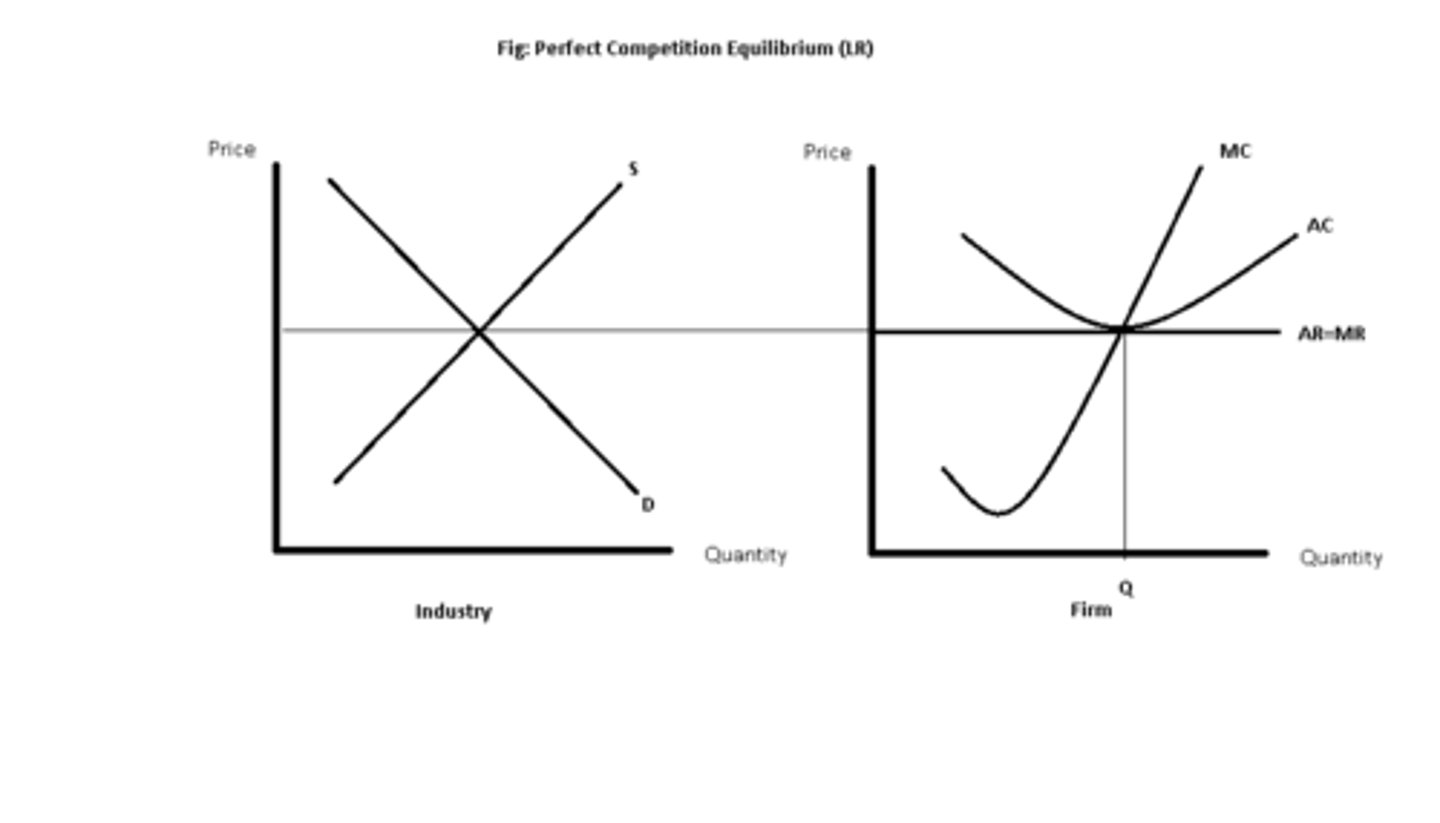
Perfect competition making abnormal profits
Short-run only
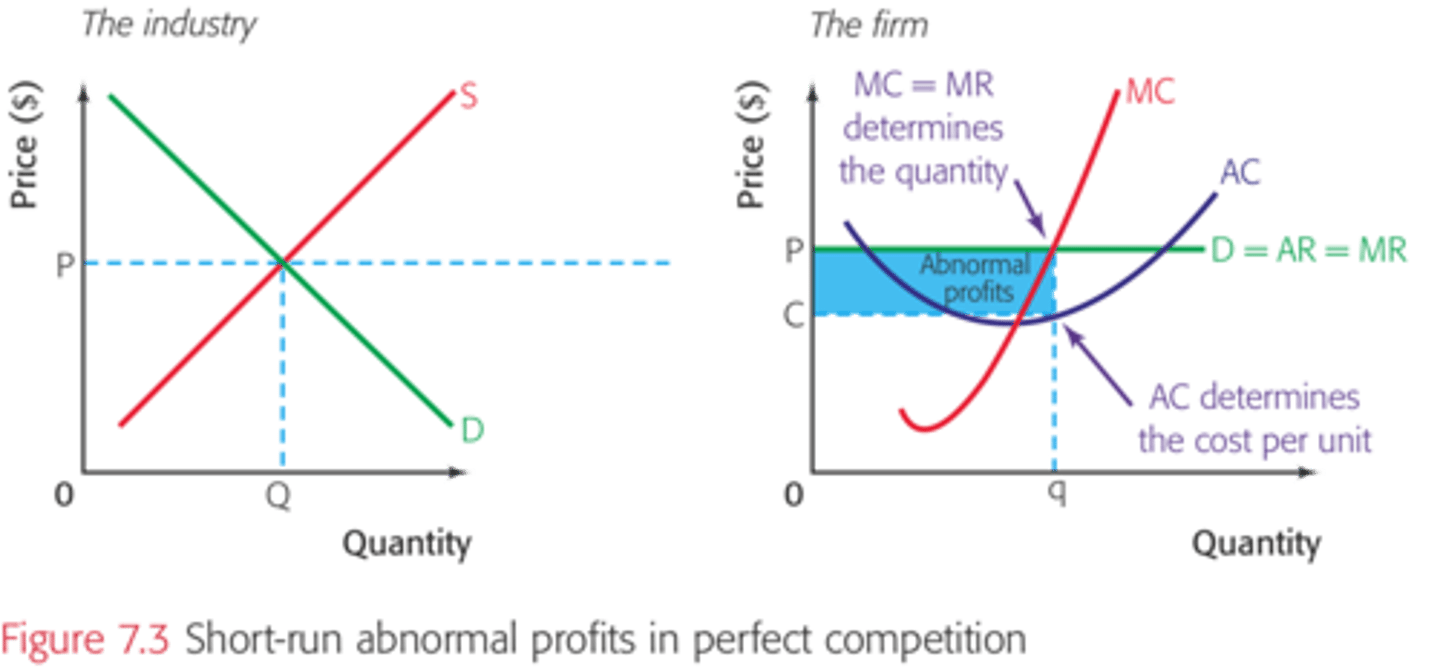
Perfect competition making losses
Short-run only
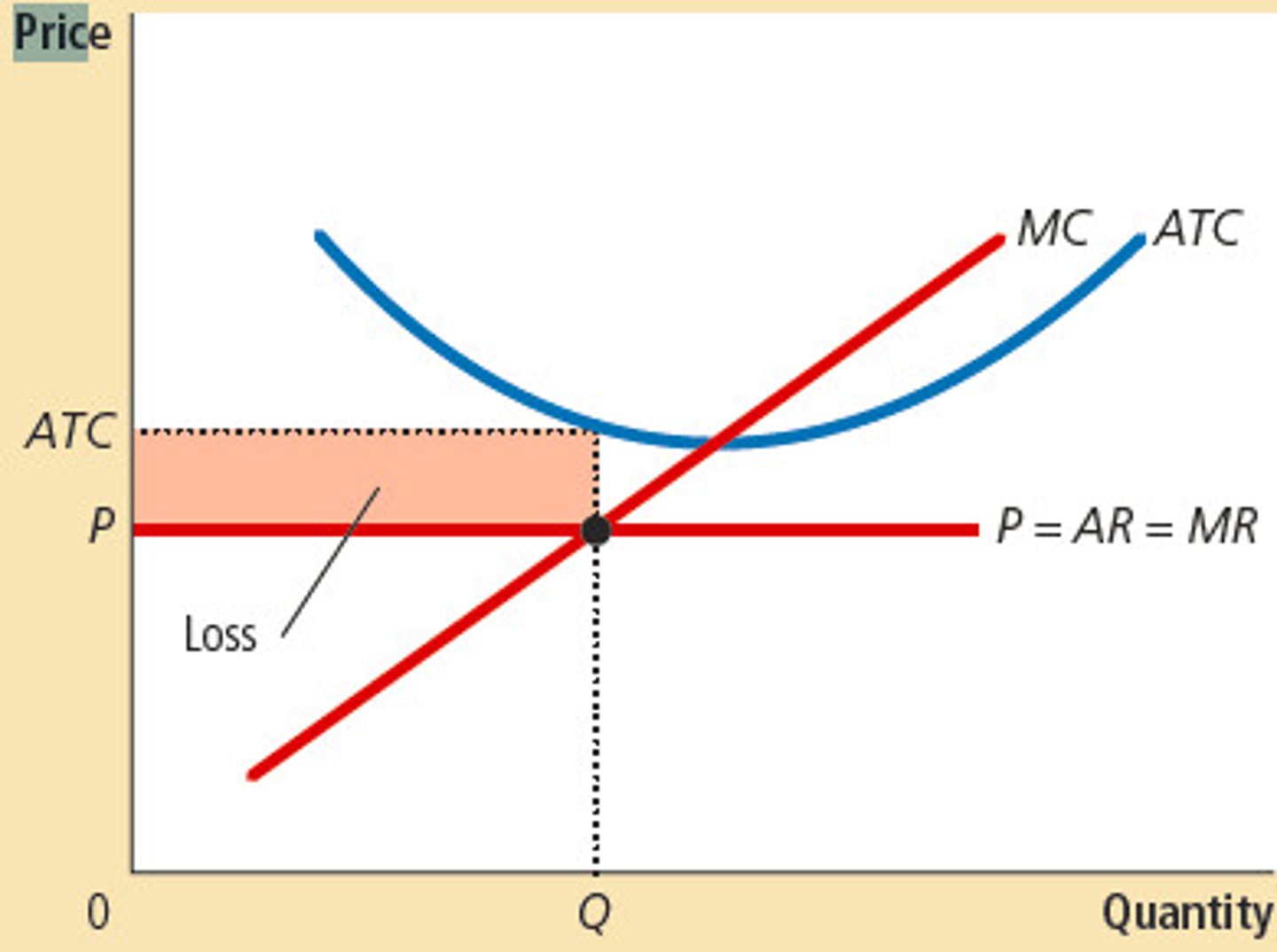
Perfect competition making normal profits
Long-run
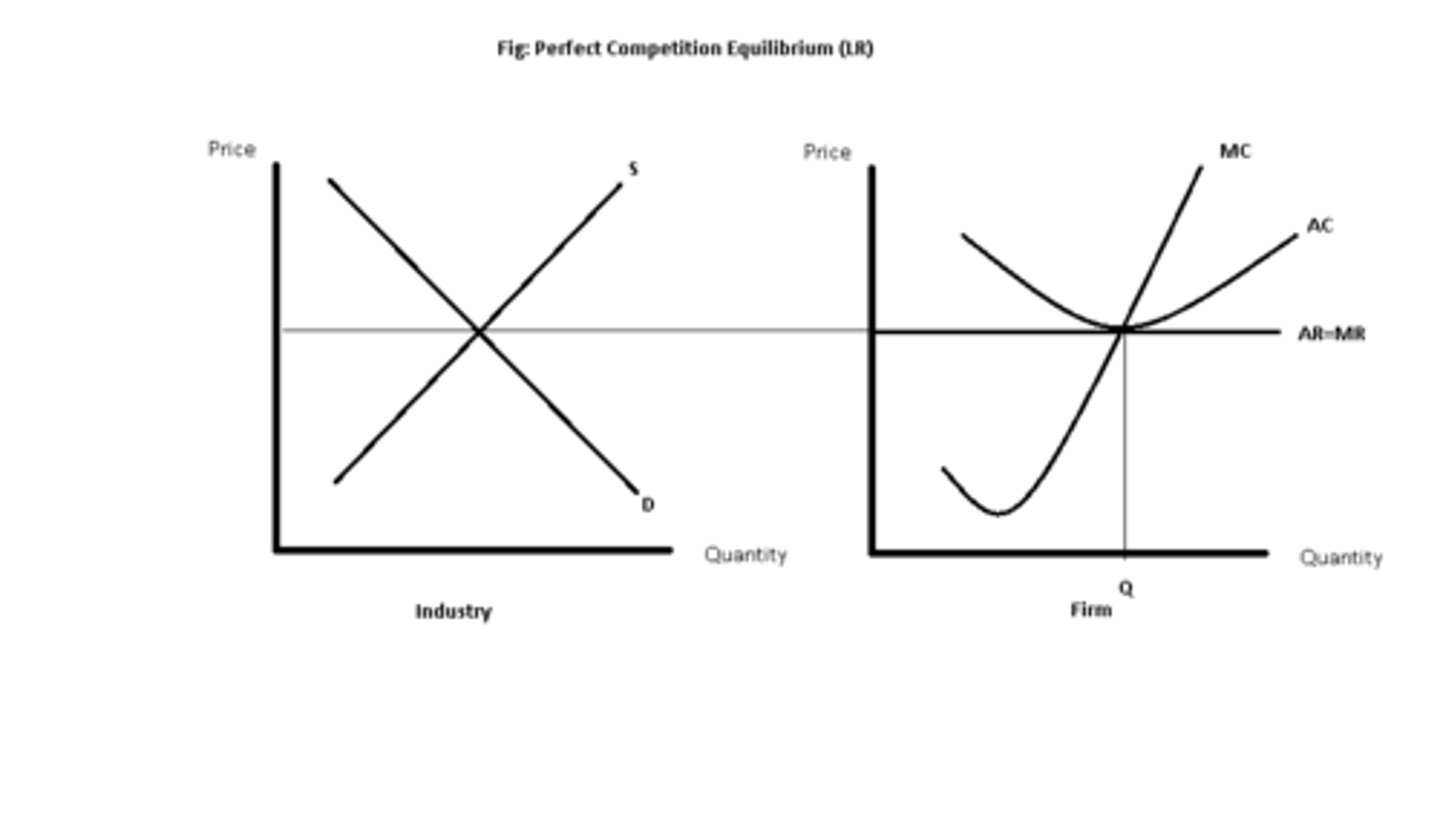
Productive efficiency in perfect competition
Firm produces at lowest possible unit average cost (MC=AC)
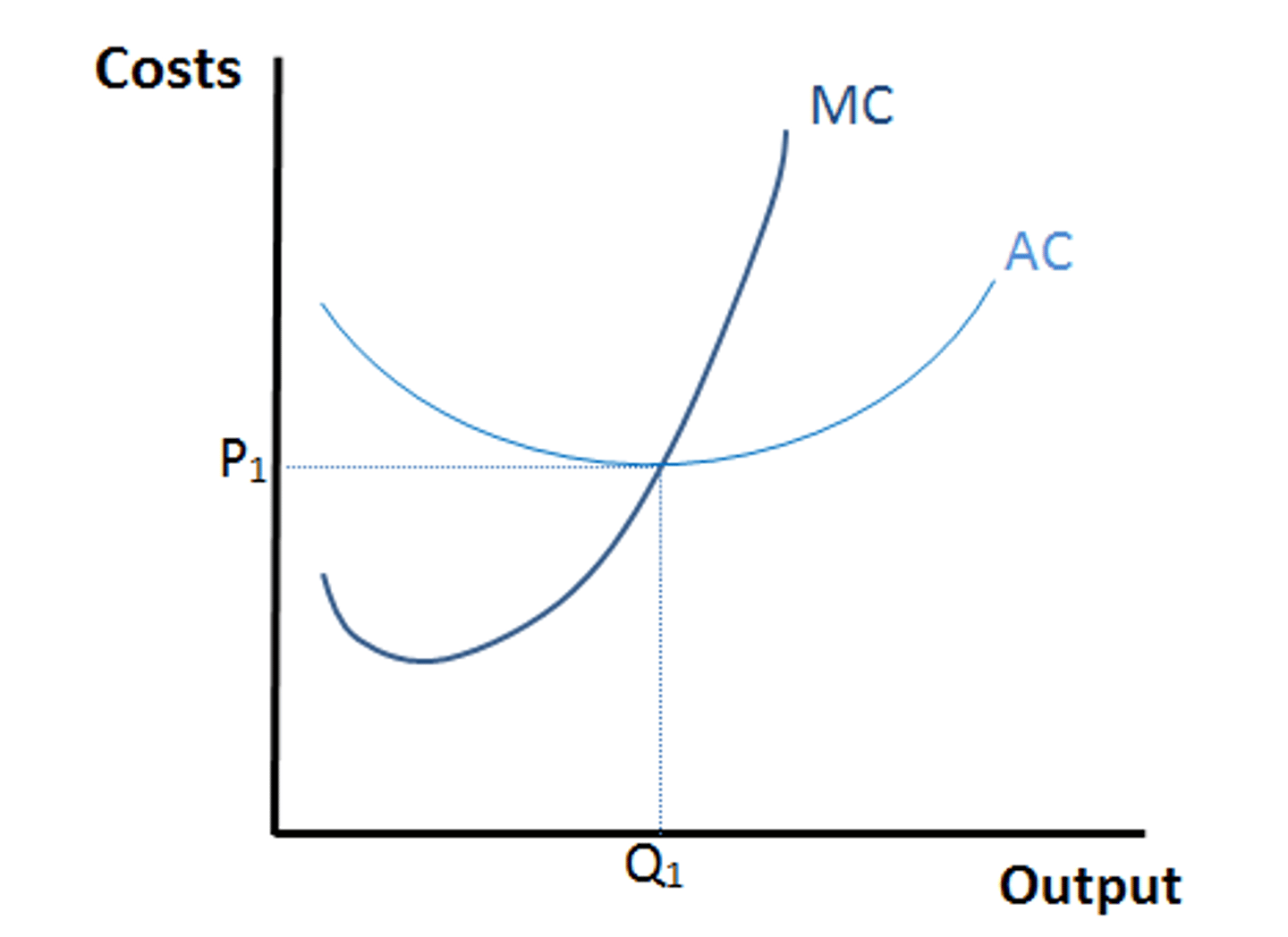
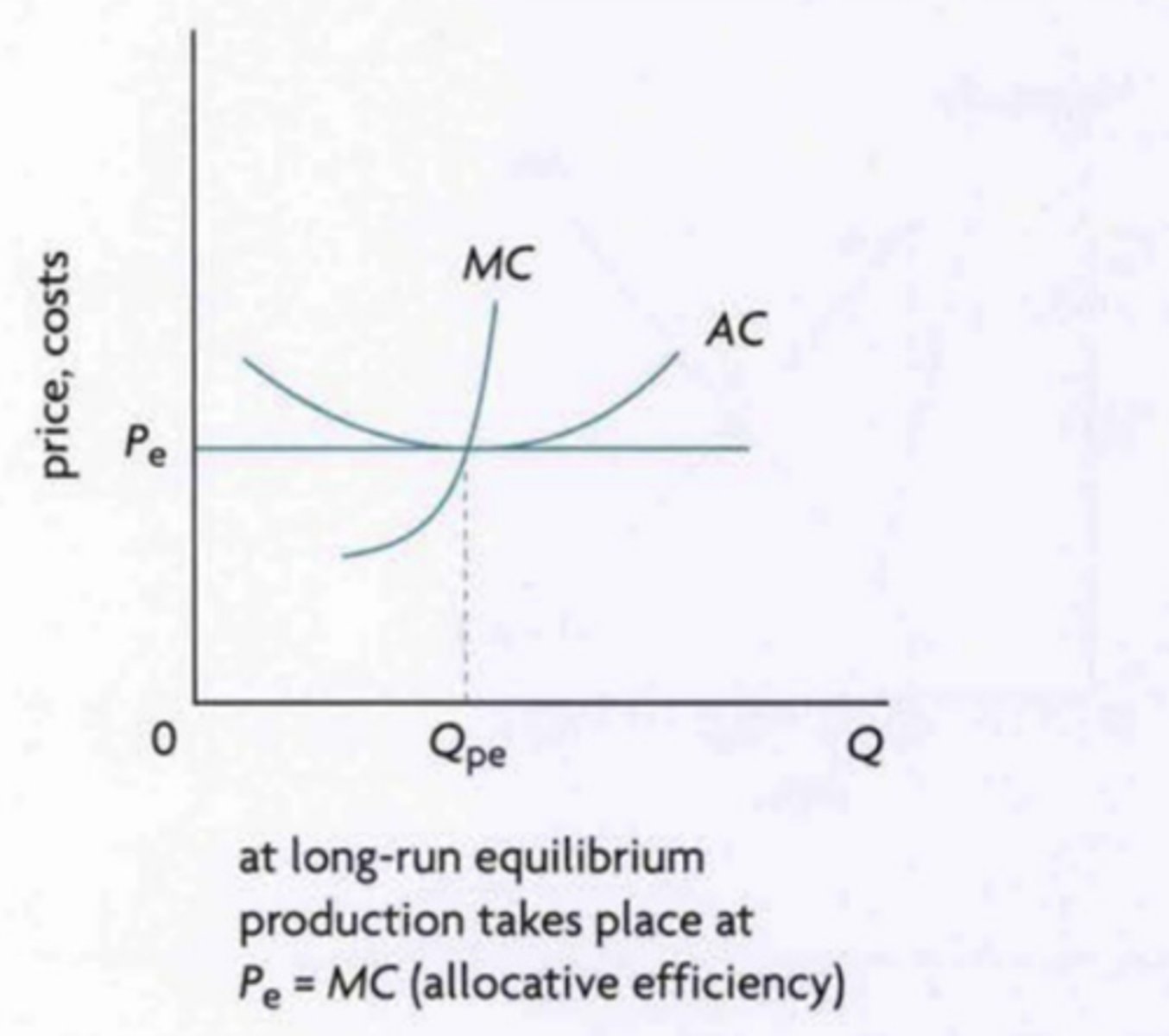
Allocative efficiency in perfect competition
Socially optimum level of output where suppliers produce optimal mix of goods/services required by consumers
Monopolistic competition
- Many firms
- Few firms have little market power
- Product differentiation
- No barriers to entry/exit
- Perfect information
- Only short-run abnormal profits/losses
- Long-run normal profits
- Market failure
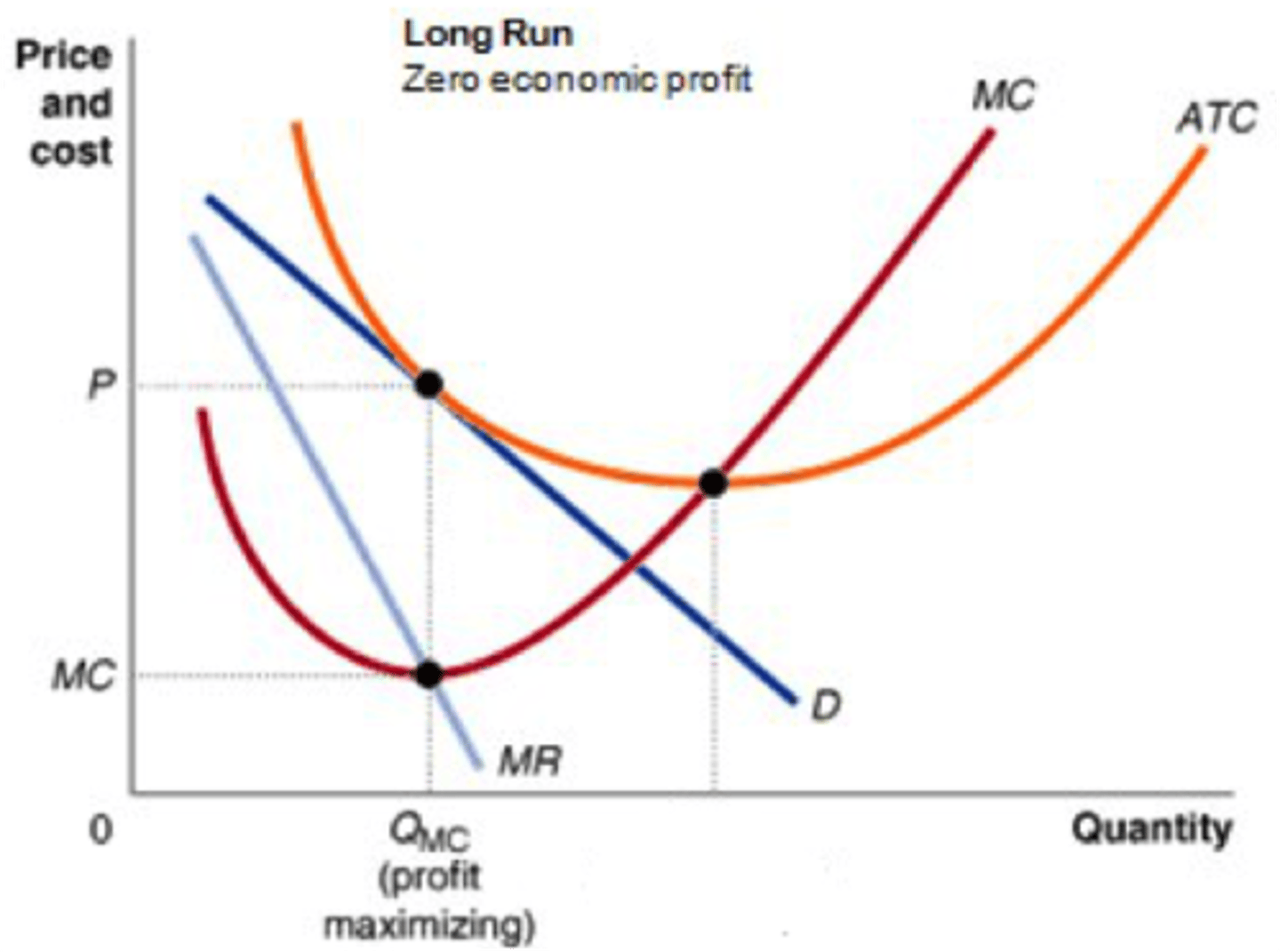
Monopolistic competition making abnormal profits
Short-run only
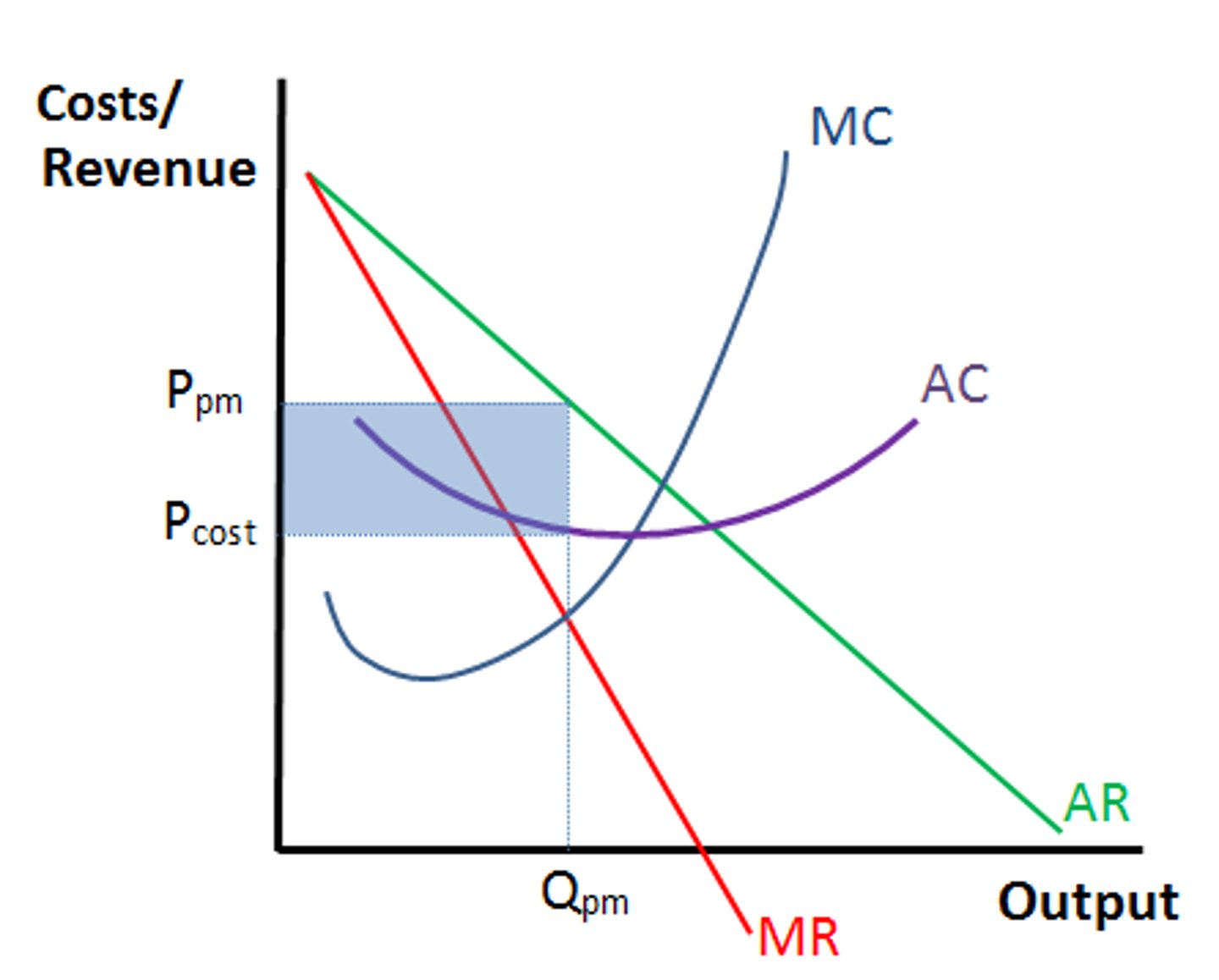
Monopolistic competition making losses
Short-run only
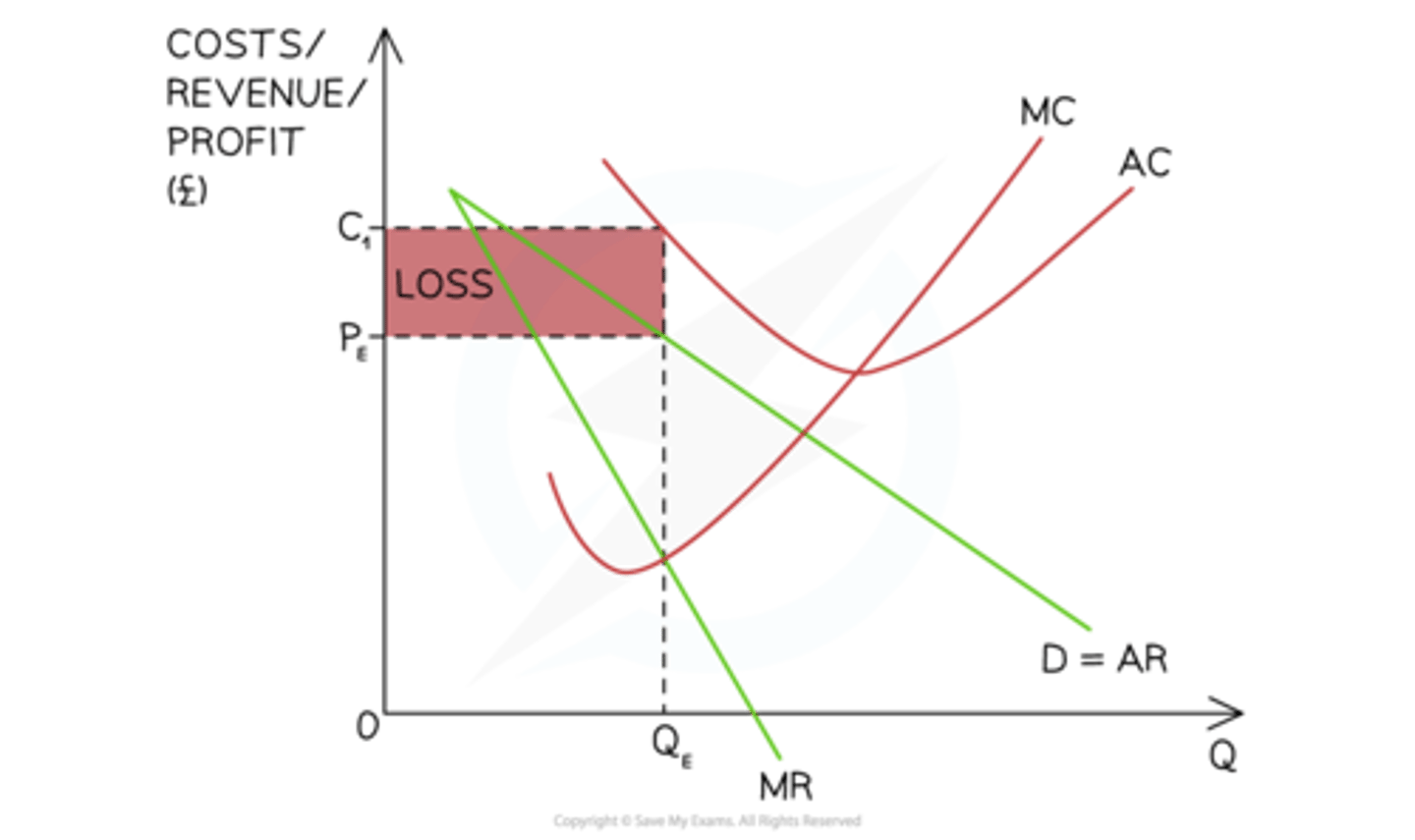
Monopolistic competition making normal profits
Long-run
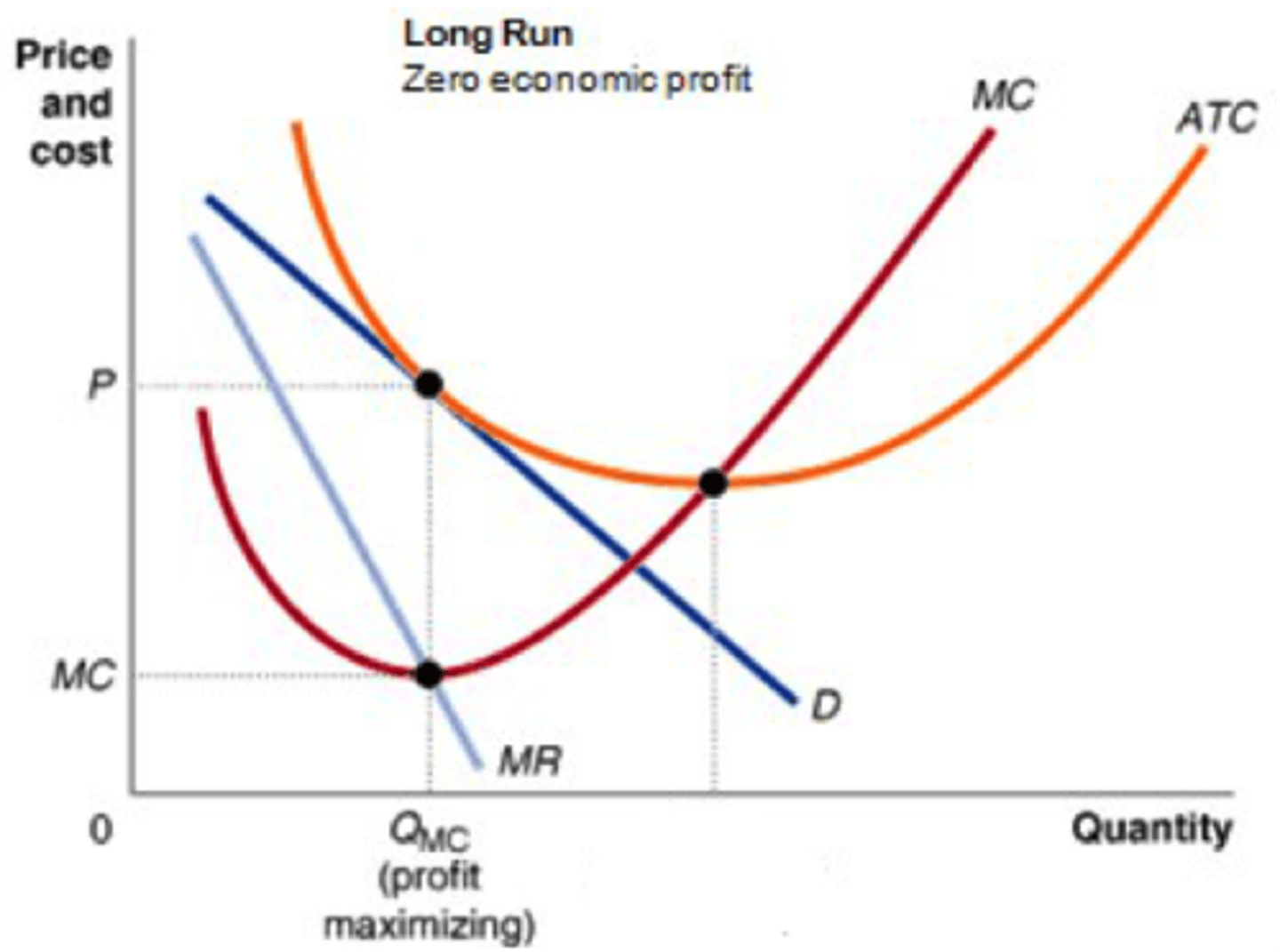
Productive efficiency in monopolistic competition
MC=AC
Allocative efficiency in monopolistic competition
MC=AR
Monopolies
- One firm with power (firm=industry)
- Barriers to entry
- Abnormal/normal profits, losses (long/short-run)
Factors of how monopolies maintain position/market power efficiently
Economies of scale, natural monopolies, legal barriers, brand loyalty, anti-competitive behavior
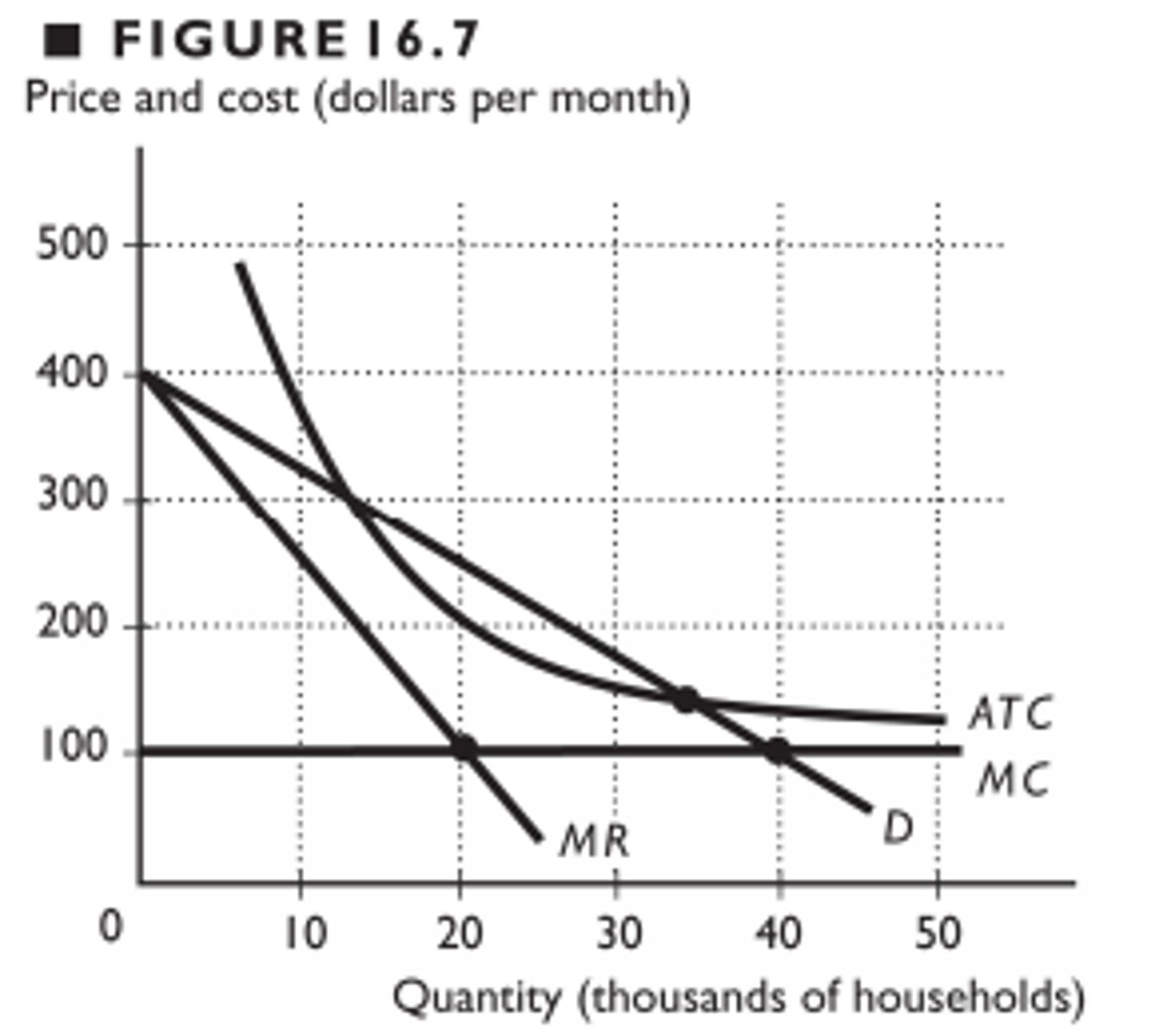
Economies of scale
Factors that cause a firm's average cost per unit to fall as output rises (specialization, division of labour, bulk buying, financial economies, transport economies, large machines, promotional economies)
Natural monopoly
A market that runs most efficiently when one large firm supplies all of the output
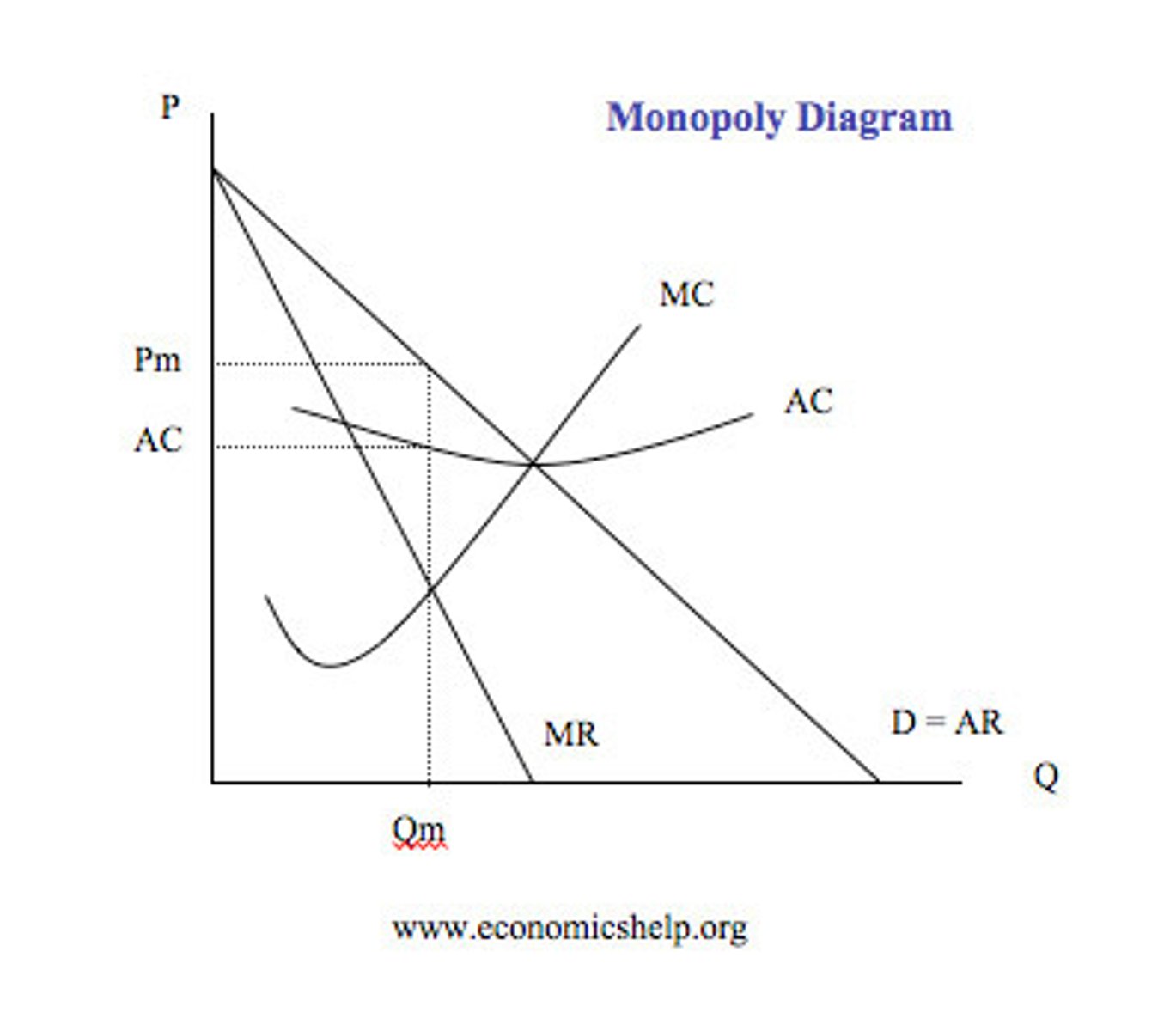
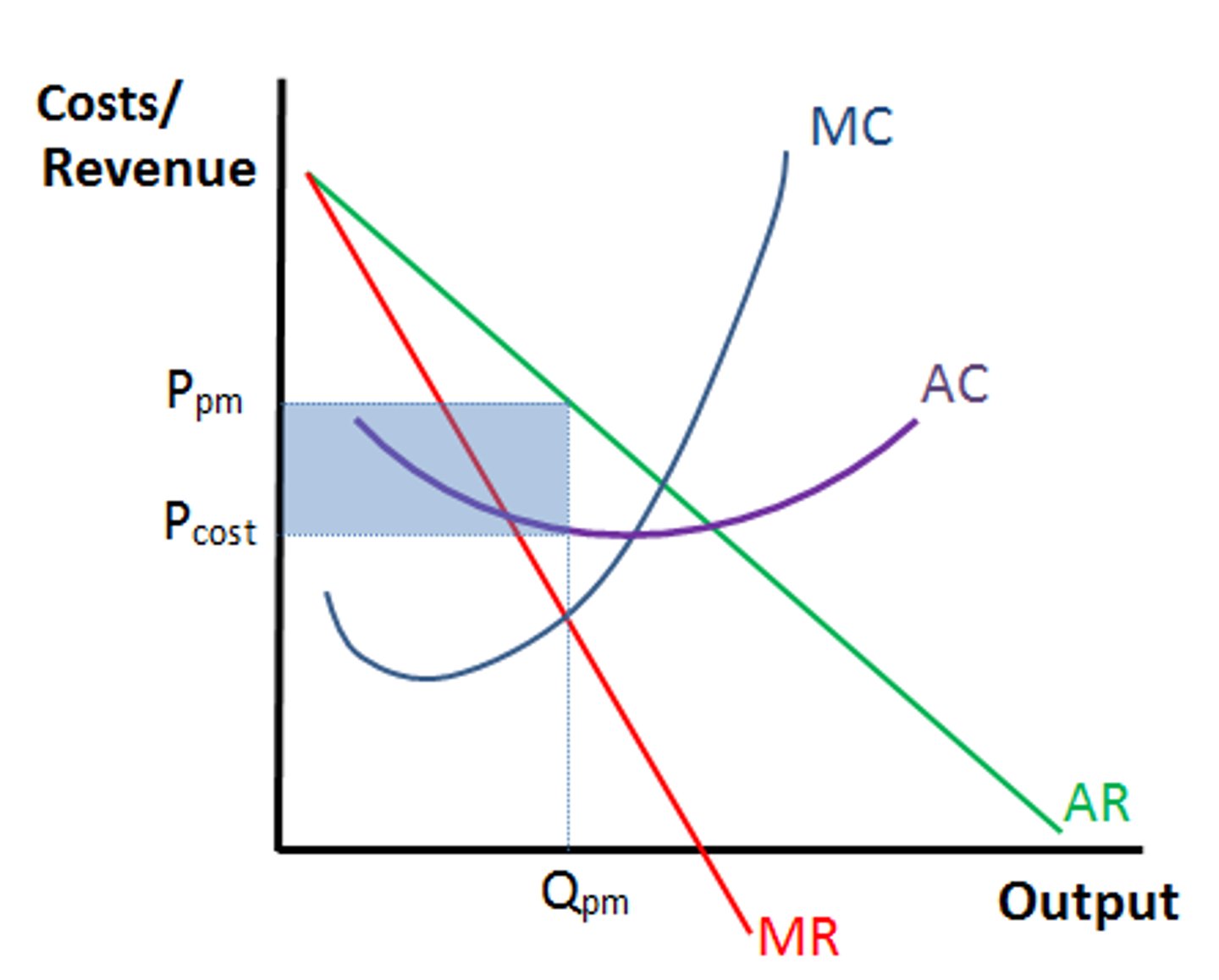
Monopolies making abnormal profits
AC below profit-maximizing quantity (MC=MR)
- MC crosses the lowest point at AC
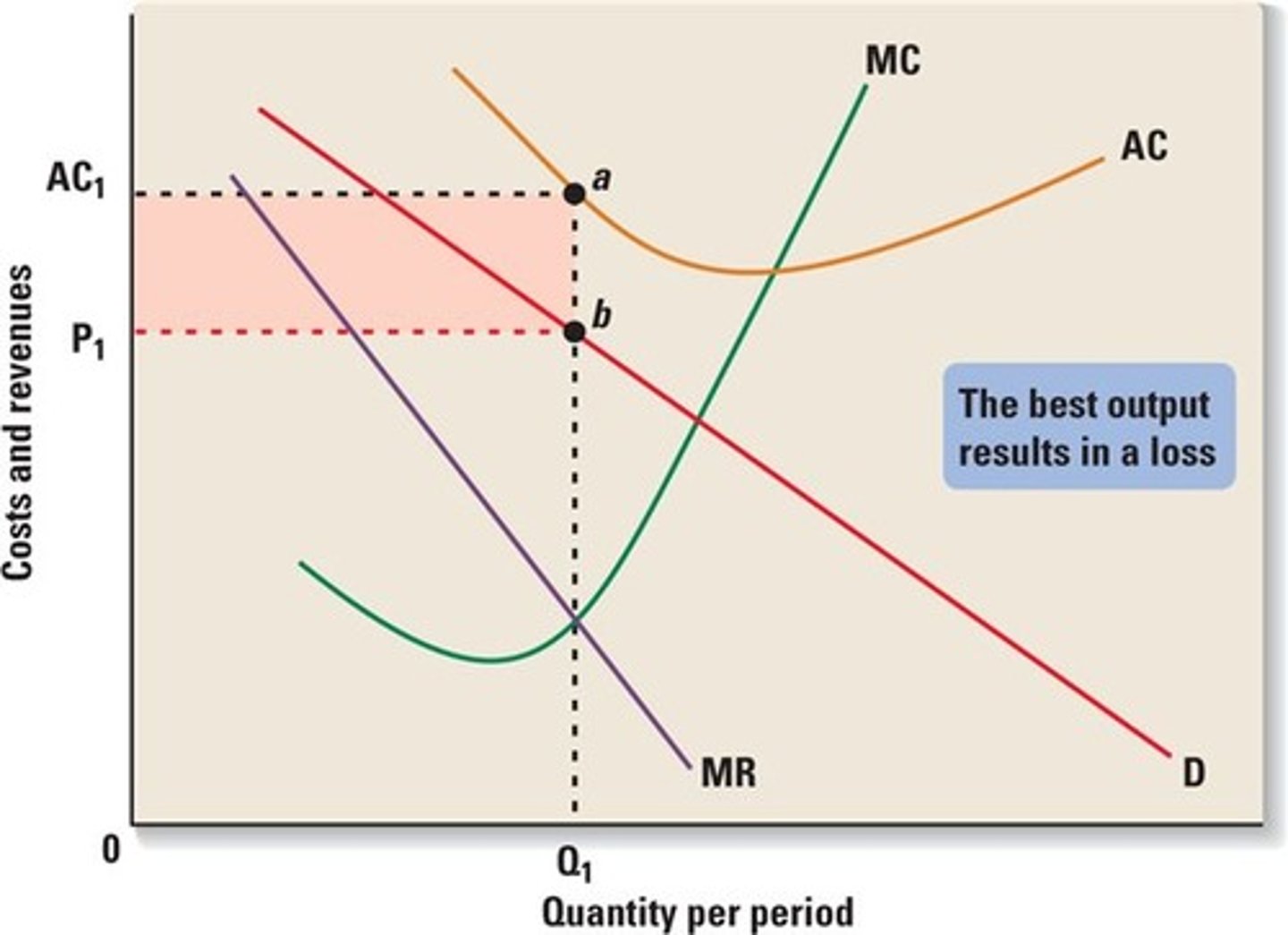
Monopolies making losses
AC above profit-maximizing quantity (MC=MR)
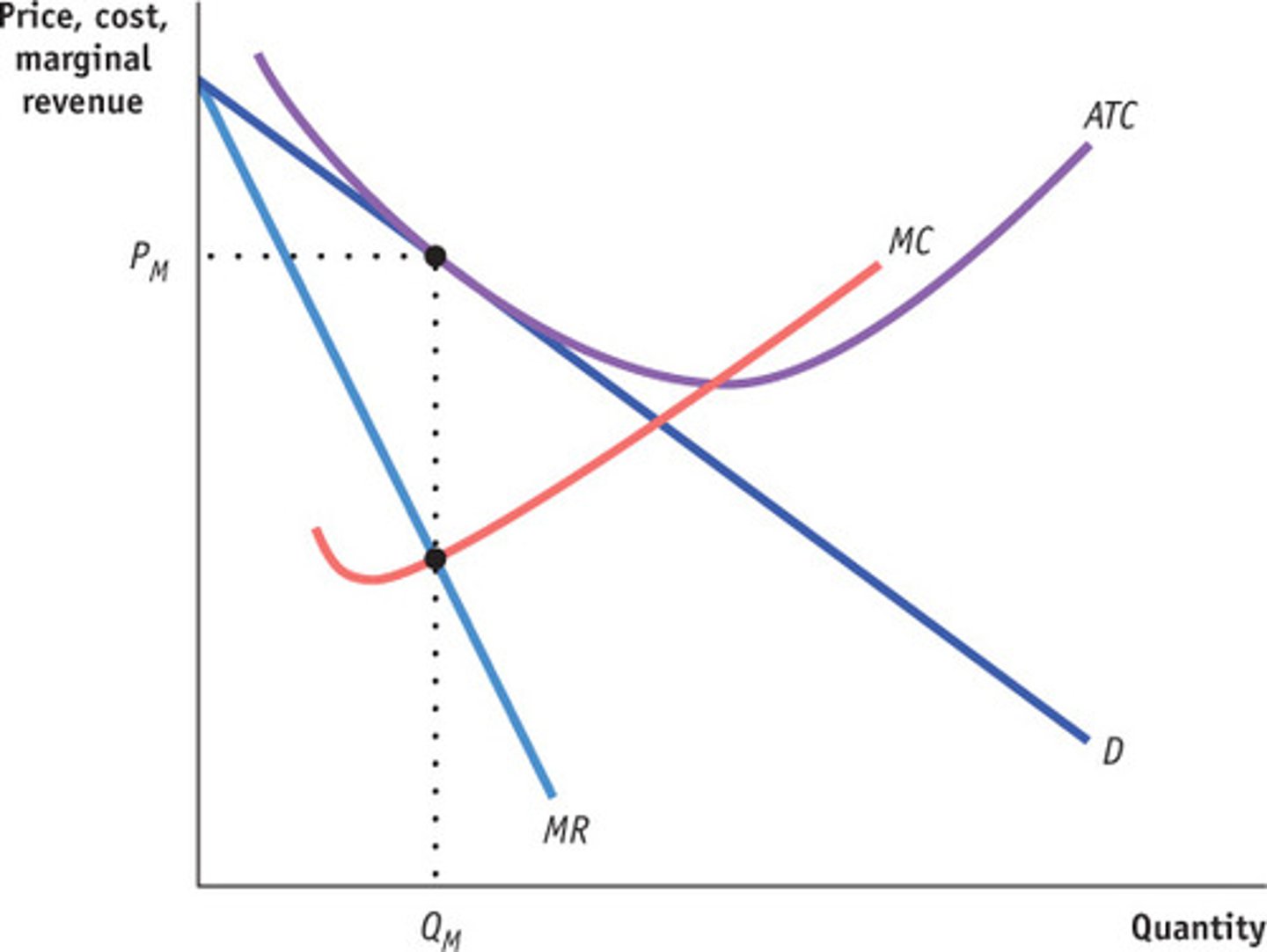
Monopolies making normal profits
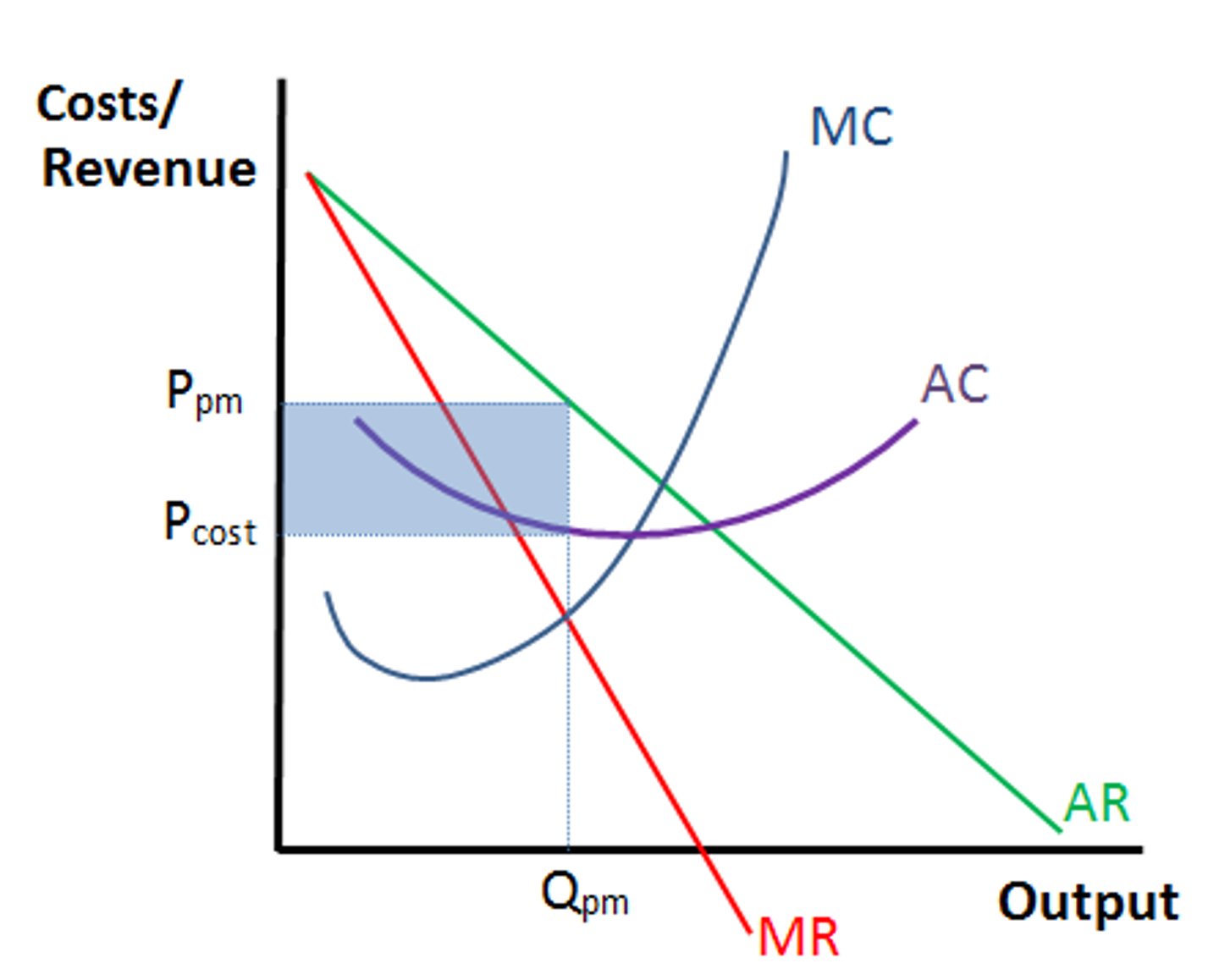
Productive/allocative efficiency in monopolies
MC=D=AR=P
Advantages of monopolies
- Substantial economies of scale: More possible to change price (lower) than in perfect competition
- High levels of investment: Abnormal profits used for R&D, benefitting quality of products and consumers in long-run
Disadvantages of monopolies
- May restrict output
- Charge high price w/ less economies of scale (brings lower output)
- Unfair high profits for low-income firms
- Anti-competitive
- No productive/allocative efficiency
- Can act against public interest
Oligopolies
- Few firms dominate the industry
- Concentration ratio (CRx) --> higher percentage = more concentrated market power of the firms
- Barriers to entry
- Product differentiation
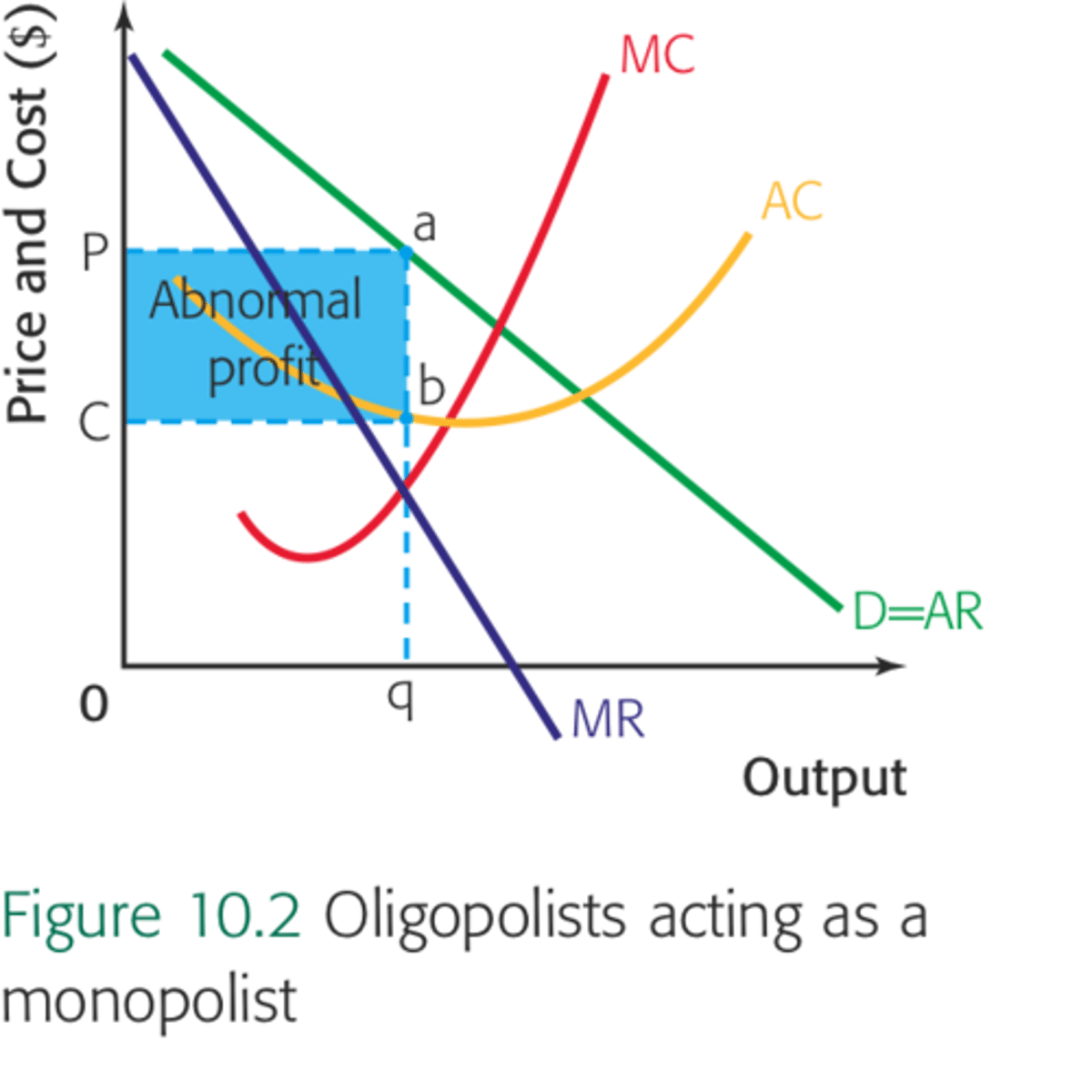
Collusive oligopolies
When firms in market collude to charge the same prices for their products in effect of monopolies (dividing profits), offering price ridgity--> ex. cartel
Non-collusive oligopolies
When firms don't collude so they are aware of firms' actions and reactions when deciding on pricing (game theory applied)
Competition in oligopolies
- Non-price competition (brand names, packagings, special features, adverts, etc.)
- Used to make demand less-elastic
Reasons why governments intervene
- Output/price/distorted resource allocation
- Less consumer choice
- Productive inefficiency
- Allocative inefficiency
- Abnormal profits exploiting firms/consumers
How governments intervene
- Regulation (taxes, incentives, etc.)
- Legislation (laws/rules to follow)
Economic costs
Explicit costs + implicit costs
Explicit costs
Direct, out-of-pocket monetary payments made for business expenses (salary, rent, etc.)
Implicit costs
Indirect, non-purchased, or opportunity costs of resources provided by the entrepreneur (Potential investment, time, etc.)
Fixed costs
Costs that remain constant as output changes
Variable costs
Costs that vary with the quantity of output produced
Total costs
Fixed costs + variable costs
Marginal costs
Cost of producing one more unit of a good
Average costs
Total costs / output
Law of diminishing marginal returns
As more of a variable resource is added to a given amount of a fixed resource, marginal product eventually declines and could become negative
TR (Total Revenue)
P x Q (price times quantity)
AR ( Average revenue)
TR / q --> (pxq) /q (total revenue over quantity)
MR (Marginal Revenue)
∆TR / ∆Q (change in total revenue over change in quantity)
TC (Total Cost)
Total fixed costs + Total variable costs
or
Average Cost * Quantity
AFC (Average Fixed Cost)
TFC/Q (total fixed cost/quantity)
AVC (Average Variable Cost)
TVC / Q (total variable cost/quantity)
ATC or AC (Average Total Cost)
TC / q (total cost over quantity)
MC (Marginal Cost)
change in TC / change in q (change in total cost over change in quantity)
TFC (Total Fixed Costs)
Total Costs - Total Variable Costs
TVC (Total Variable Costs)
Total Costs - Total Fixed Costs
Profit
TR - TC (total revenue - total costs)
Demand
Quantity of goods/services that consumers are willing/able to purchase at different prices in a given time period
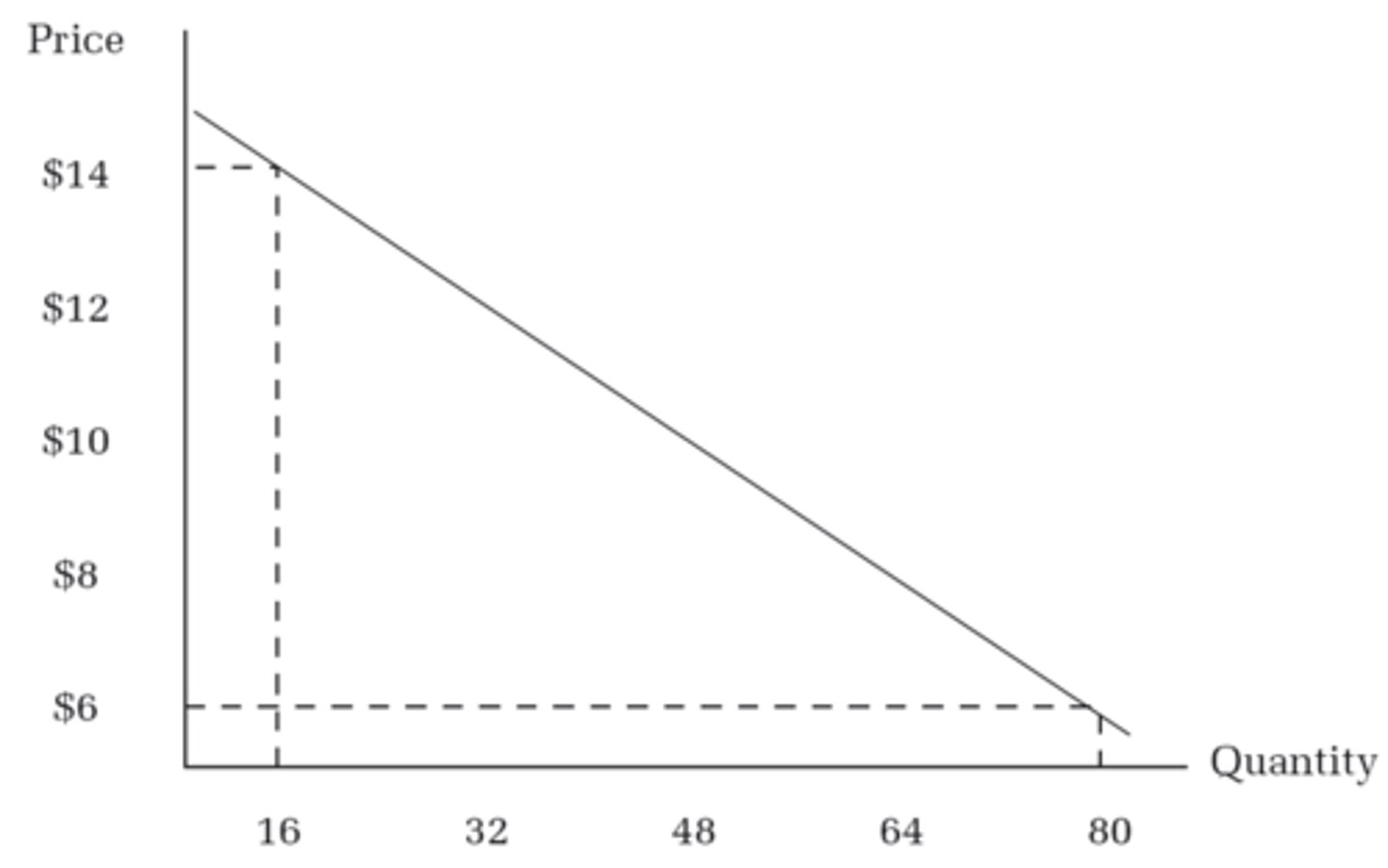
Non-price determinants of demand
- Income (normal/inferior goods)
- Price of related goods (substitutes/complements/unrelated goods)
- Tastes and preferences
- Future price expectations
- Number of consumers
Income effect
When the price of a product falls, people have an increase in their "real income" (reflects amount that their income will buy), so people will be likely to buy more of the product (increasing demand)
Substitution effect
When the price of a product falls, people will still gain the same amount of satisfaction (utility) from the product before, but are paying less for it (ratio of satisfaction to price improved)
Perfect information
Assumption that consumers make decisions acting on their own interests, and have access to all relevant information
Bounded rationality
Notion that the rationality of consumers is limited by the information that they have, knowing they don't have the time or abilities to weigh all options
Bounded selfishness
Humans not always acting in their own self-interest as assumed by Neoclassical
Bounded self-control
Illustrating the natural tendency to give in to temptation
Availability bias
Recent information tending to over-influence people's decision-making
Anchoring bias
Fixating on information as a reference point to influence future choices/decisions
Framing bias
Tendency of presentation of information influencing choices
Social conformity/herd behavior
Consumers naturally wanting to fit in, where decisions made by others exert a powerful influence on choices
Status quo/inertia bias
Consumers when faced with many choices would rather prefer to maintain status quo by doing nothing
Loss aversion bias
Humans feeling more losses than gains
Hyperbolic discounting
Tendency of humans to prefer smaller/short-term rewards over larger/later rewards
Choice architecture
Theory that decisions made are heavily influenced by how choices are presented to us
Nudge theory
Choice architecture being carefully designed to gently encourage (nudge) people to voluntarily choose the option that is "better" for them, where consumers maintain their sovereignty
Indirect tax
Tax imposed upon expenditure, raising the firms costs/shifting supply curve upwards (ex. VAT, goods and services tax, sales tax, etc.), where burdens depend on the elasticity of supply/demand
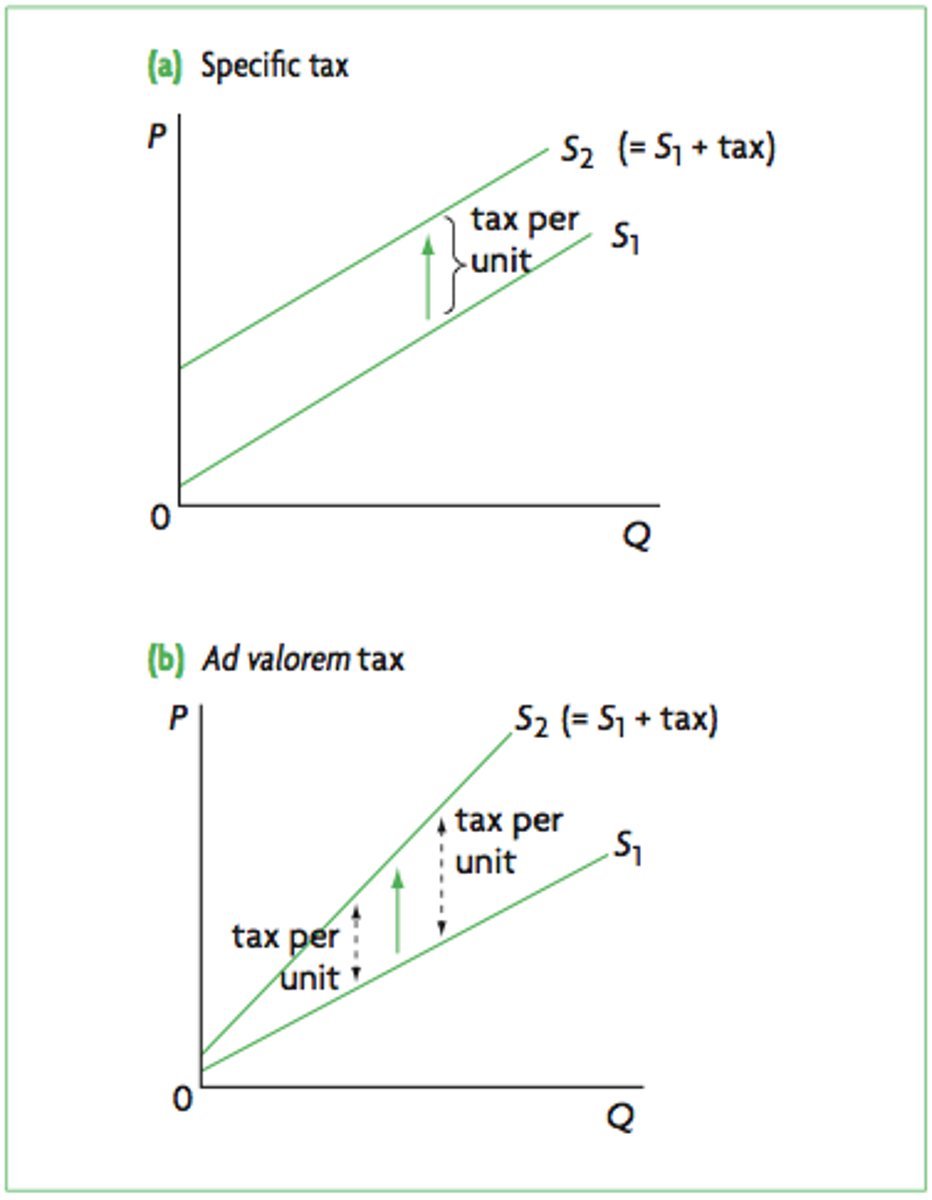
PED = PES, indirect tax burden is..
Shared equally between consumers/producers of the product
PED > PES, indirect tax burden is..
Greater on the producers than consumers of the product
PES > PED, indirect tax burden is..
Greater on the consumers than producers of the product
Subsidy
Amount of money paid by the government to a firm per unit of output
Price ceilings
Situation where the government sets a maximum price below the equilibrium price, preventing producers from raising the price above it (usually on a necessity/merit good) + excess demand
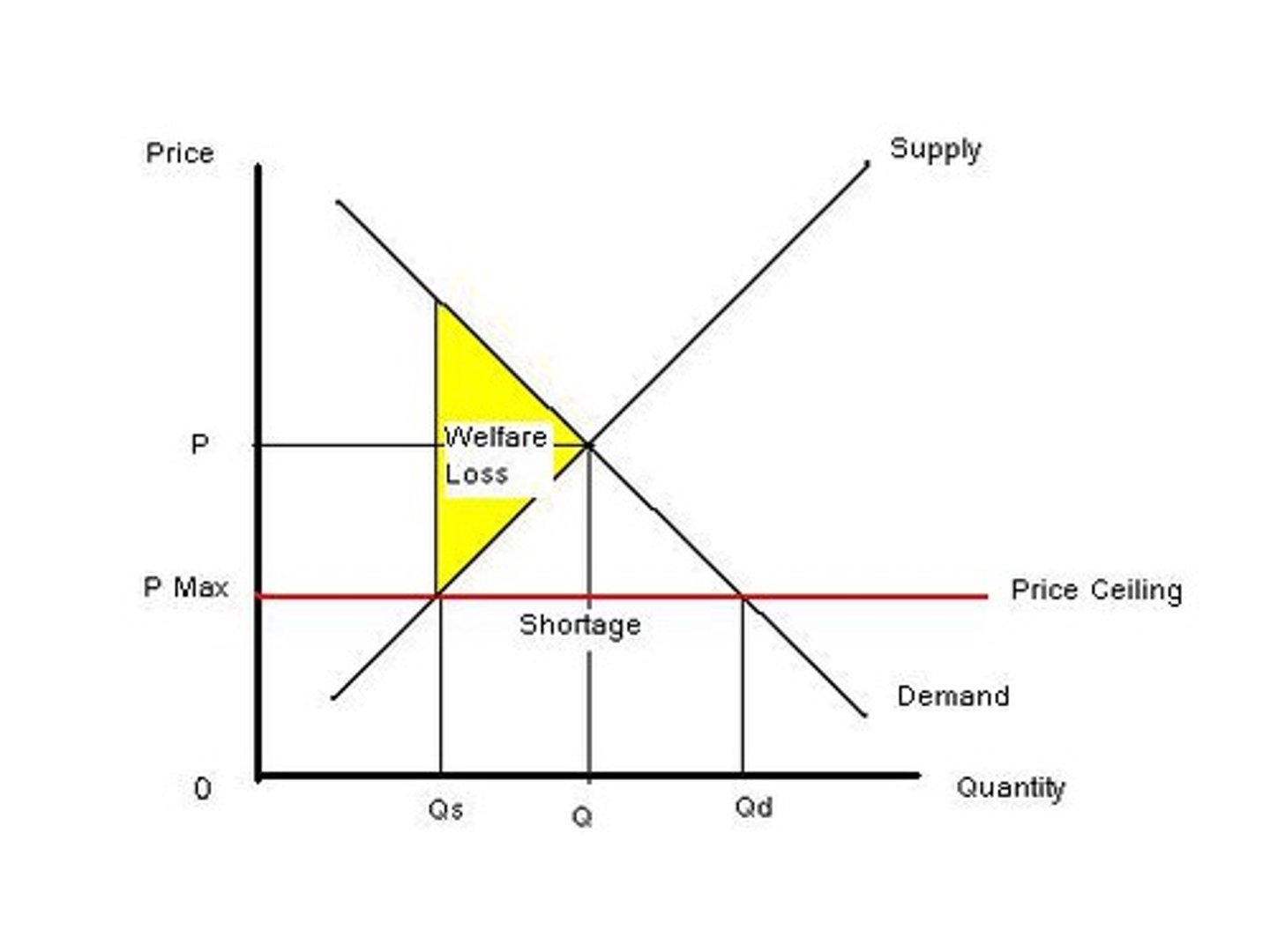
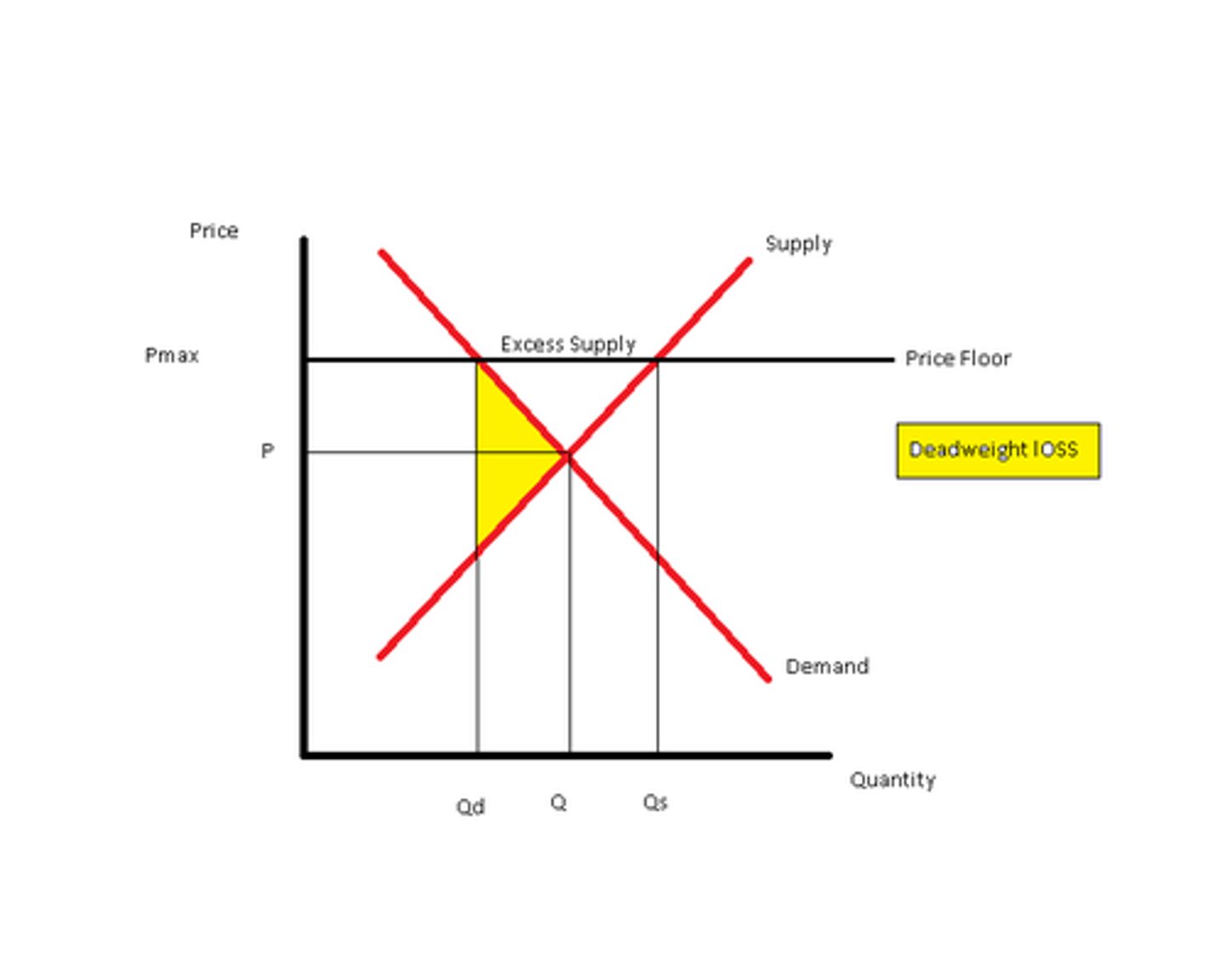
Price floors
Situation where the government sets a minimum price above the equilibrium price, preventing producers from reducing the price below it (usually for minimum wage, prevent fluctuations) + excess supply
Fiscal policy
Set of a government's policies relating to expenditure and taxation rates, using expansionary to increase AD, and contractionary/deflationary to decrease AD
Aims of fiscal policy
- Maintain a low/stable rate of inflation
- Low unemployment rate
- Stable economic environment for long-term growth
- Reduce fluctuations of business cycle
- Achieve external balance between export/import revenue/expenditure
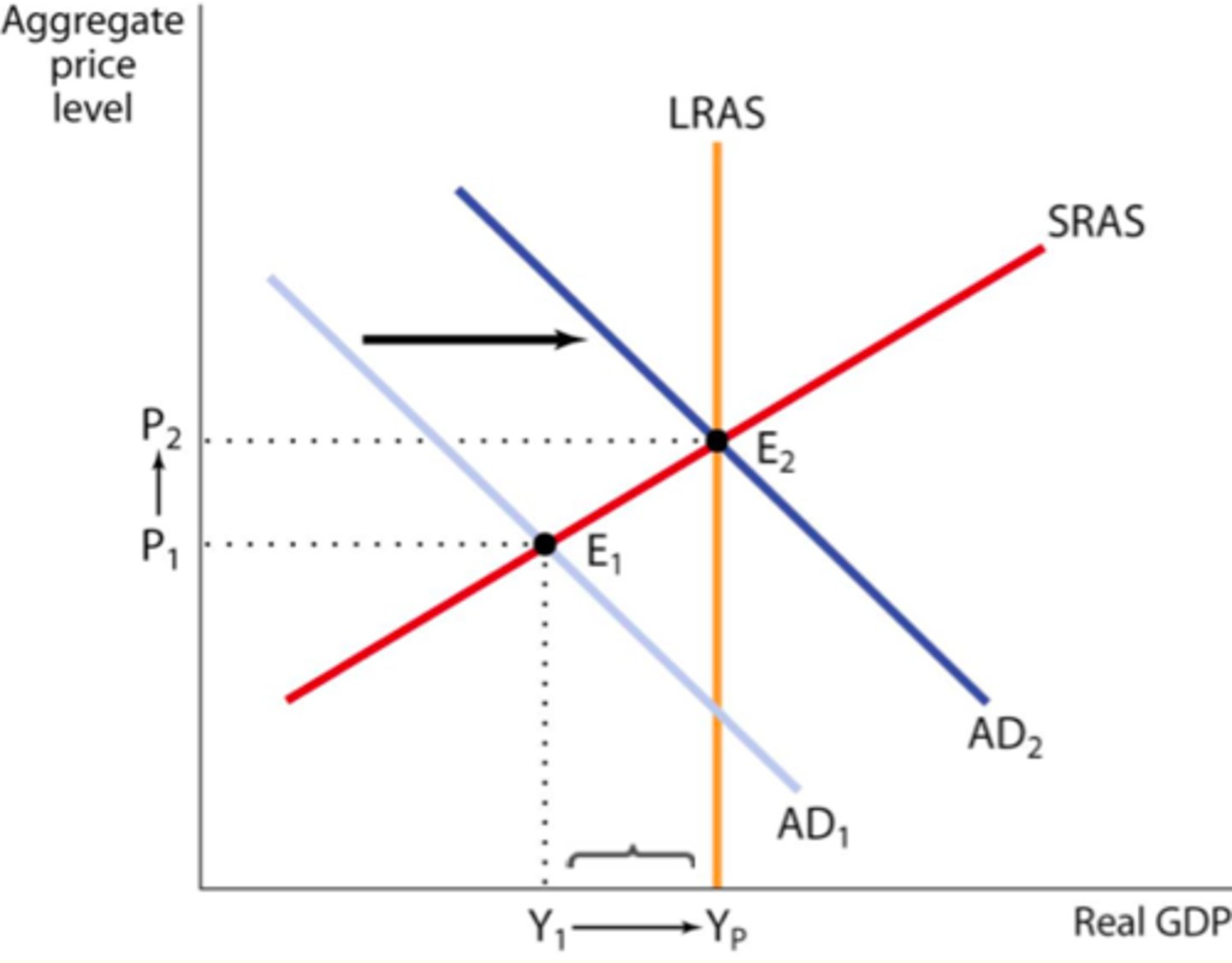
Expansionary fiscal policy
Form of Keynesian demand management where the government wants to encourage consumption, investment, and spending (increasing AD)
Pros of fiscal policies
- Effective in long run with dealing with a deep recession
- Used to target specific sectors of the economy
Cons of fiscal policies
- Time lags
- Political pressure
- Sustainable debt
- Effect on net exports
- Crowding-out effect
- Inability to achieve specific targets
Costs of high government (national) debt
- Crowding out of private investments (firms have no access to investment + decrease in investment)
- Benefit/service expenditure cut (as interest increases)
- Fall in output/income (deflationary)
- Decrease ability of government to respond to emergencies
Multiplier effect
Increase in aggregate demand resulting in proportionately larger increase in national income (injections into circular flow that are multiplied through the economy as people receive shares of the income and spend part of what they receive)
Multiplier formula
1/(1-mpc) OR 1/(mps+mpm+mrt)
Monetary policy
Set of official policies governing the supply of money and level of interest rates in an economy
Aims of monetary policy
- Maintaining low/stable rate of inflation
- Low unemployment rate
- Stable economic environment for long-term growth
- Reduce fluctuations in business cycle
- Achieve balance between export revenue/import expenditure
Expansionary monetary policy
Increasing money supply by increasing consumption and investment (loose monetary policy)
Pros of monetary policy
- Relatively quick to place
- No political intervention
- No crowding-out
- Make smaller changes
Cons of monetary policy
- Time lags
- Ineffective when interest rates are low
- Low consumer/business confidence
Credit creation
When commercial banks lend money to customers/individuals/businesses by making loans based on deposits that customers have made with them
Minimum reserve requirement
Percentage of deposits that commercial banks are legally required to hold in reserve by the central bank to meet cash requirements of depositors
Money multiplier formula
1/(minimum reserve requirement)
Tools to control money supply by government
- Minimum reserve requirements (larger min=smaller multiplier effect)
- Open market operations (buying and selling of gov securities in open market by central bank) (ex. reducing money supply by selling gov securities to insitutions, reducing money banks can lend, falling in supply and increasing cost of borrowing/interest rates)
- Changes in central bank minimum lending rate (ex. raising the rate reduces AD)
- Quantitiative easing (introducing new money into supply by central bank, so expansionary)
-
Nominal rate of interest
Rate of interest available in market, not allowing for inflation
Real rate of interest
Rate of interest adjusted for inflation
Total revenue formula
Price x Quantity
Tax revenue formula
Tax per unit×Quantity traded
Consumer expenditure formula
Price paid by consumers×Quantity traded
Producer revenue formula
Price received by producers×Quantity traded
Total subsidy cost formula
Subsidy per unit×Quantity traded
Producer revenue (with subsidy) formula
(Market price+Subsidy)×Quantity traded
Consumer expenditure (with subsidy) formula
Market price×Quantity traded
 Note
Note  Flashcards (35)