Integrated Pest Management
 Studied by 0 people
 Call Kai
 Learn
Learn Practice Test
 Spaced Repetition
 Match
Match Flashcards
 Knowt Play
1/47

There's no tags or description
Looks like no tags are added yet.
Name | Mastery | Learn | Test | Matching | Spaced | Call with Kai |
|---|
No analytics yet
Send a link to your students to track their progress
48 Terms
Major consumers of Insecticides in the US
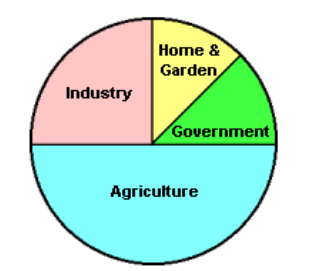
Common Sense Approach
Do not attract pests
Keep pests out
Get rid of them with the safest, most effective methods
IPM is a ________.
comprehensive, systems-based approach to pest management to provide the safest, most effective, most economical, and sustained remedy to pest problems.
Reduces risk from pests and also reduces the risk from overuse or inappropriate use of chemical pest control products.
Uses pesticides as a small component of a comprehensive program.
Environmental health specialists must understand ______.
the behavior and ecology of the target pest, the environment in which it lives, changes that occur in the environment, and the activities of people who share the environment.
Elements of IPM
Inspection/monitoring
Identification
Establishment of threshold levels
Implementation of two or more control methods
Measurement and evaluation
Inspection/monitoring
Routine examination of indoor and outdoor areas to determine if pests are present or if conditions are such that pest infestations may occur in the future.
Identification
If inspections show rodents or insects, the species of pest must be determined to establish appropriate control methods.
E.g. control methods would be different for Norway versus roof rats, Aedes albopictus versus Culex pipiens, etc.
Establishment of Threshold levels
It may not be possible to eliminate all pests. Threshold levels should be established that trigger control methods (based on potential health impacts or property damage).
Implementation of two or more control methods
The foundation of IPM is to manage the environment to eliminate pest access to food, water, and shelter. Eliminating at least two of these things that pests need to survive will reduce pest populations.
Measurement and evaluation
Regular follow-up is necessary to determine the extent to which treatments are successful and what should be done next. Evaluation is a critical component of IPM.
Types of Control
Physical
Mechanical
Sanitation
Biological
Genetic
Chemical
Physical Control
Modify physical properties of the environment (habitat disruption)
Temperature (e.g. dry bedding to kill lice)
Sound (may repel, confuse, or attract insects)
Terrain modifiers/barriers (e.g. exclude mosquitoes from home with window screen)
Habitat disruption (e.g. standing water management for mosquito control)
Ex: Maintain 3 yards of vegetation-free space in play areas to establish a tick safe zone.
Mechanical Control
Can involve using machinery or manual operations.
Direct removal
Hand picking/shaking/swatting (e.g. picking off lice)
Collection devices (e.g. suction devices for crops)
Traps – mostly for surveillance (e.g. fly paper, mosquito magnet)
Sanitation
Modification of established production practices to make a crop/animal less favorable for pests, or at least minimize loss of commodity in spite of injury.
Ex: remove food, vacuum, etc. and remove animal waste
Biological Control
Introduce, conserve, or encourage natural enemies to reduce a pest.
E.g. predators, parasites, pathogens
Suppression, not elimination.
Most biotic agents are density-dependent.
As pest population increases, so does the biotic agent…and vice versa.
Ex: predatory wasps
Genetic Control
Introduction of genetically modified “nonviable” insects into a wild population with the aim of producing enough modified/wild matings to result in a significant reduction in wild population size or even elimination.
Ex: radiation or chemicals to sterilize male screwworms (cattle pest)
Chemical Control
Last line of defense in IPM
Some ways people come into contact with pesticides:
In and around our homes and gardens
On our pets
In our communities
On our food
National pesticide Informational Center
EPA regulates production and use of pesticides in the U.S. under the Federal Insecticide, Fungicide, and Rodenticide Act.
North Carolina Department of Agriculture and Consumer Services
Regulates pesticides in NC
Who applies pesticides for mosquito control?
Local environmental/public health departments
County mosquito districts (depends on tax base)
Individual cities (e.g. Public Works)
Private contractors and/or pest management professionals (e.g. Mosquito Authority)
Commonly used pesticides for mosquito control
adulticides
larvicides
Adulticides
Organophosphates (e.g. Naled, Malathion)
Pyrethroids (e.g. Permethrin, Pyrethrum, Sumethrin, Resmethrin, Bifenthrin)
Larvicides
Biological: Bacillus thuringiensis israelensis, Bacillus sphaericus
Insect Growth Regulators: methoprene
Oils and monomolecular films
Repellents
Prevent migration, oviposition, or feeding of insects.
Chemicals that prevent insect damage to plants/animals by rendering them unattractive, unpalatable, or offensive.
Advantages of repellents
Registration relatively easy.
Relatively safe.
Immediate effect.
Disadvantages of repellents
Brief persistence.
Complete coverage needed.
Only repel, not kill.
Too expensive for large scale use.
May not repel all nuisance insects.
Insecticide definition from EPA
“By their nature, many pesticides may pose some risk to humans, animals, or the environment because they are designed to kill or otherwise adversely affect living organisms. Safely using pesticides depends on using the appropriate pesticide and using it correctly.”
Under the Federal Insecticide, Fungicide, and Rodenticide Act (FIFRA) and the Food Quality Protection Act (FQPA), the _______.
EPA is responsible for regulating pesticides (including insecticides) with public health uses.
Advantages of Insecticides
Effective (high percentage killed).
Fast acting.
Economical.
Easy to apply (minimal experience and equipment).
Readily available.
Reliable.
Disadvantages of Insecticides
Weather dependent (can’t be applied in the rain, will be washed away)
Repeated applications.
Effects on non-target organisms.
User/consumer risks (long-term use).
Resistance, replacement (kill one species and another comes in).
Environmental persistence.
Not always compatible with IPM (interfere with biological control).
Resistance
Ability of insects to survive lethal doses of insecticide
Selection of tolerant individuals in populations exposed to the insecticide for several generations
Insects can have multiple resistance
Extends to a variety of insecticide classes
Some factors determining Insecticide toxicity
Penetration through skin, cuticle, gut wall, etc.
Distribution through body.
Storage in fat tissues, organs.
Amount excreted.
Metabolism.
Types of Insecticides
Organochlorines
Organophosphates
Organosulfurs
Carbamates
Formamidines
Pyrethroids
Nicotinoids
Fiproles
Botanicals
Microbials
Inorganics
Organochlorines
Contain chlorine.
Stable and persistent in environment.
E.g. DDT
More than 4 billion pounds of DDT used globally beginning in 1940
US banned its use in 1973 and other 1st world countries also banned. →due to bioaccumulation and biomagnification that was effecting the eggshells of our raptor bird species (ex: bald eagles)
DDT still used to today in some 3rd world countries (e.g. mosquito control – malaria).
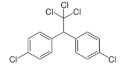
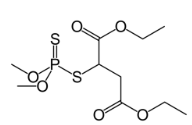
Organophosphates
Contain phosphorus.
Class of pesticides most toxic to vertebrates (very toxic to humans and animals)
Chemically unstable, non-persistent in environment.
widely used
Ex: Malathion
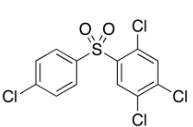
Organosulfurs
Contain sulfur.
Low toxicity to insects.
Used primarily as acaricides (i.e. to kill mites).
Ex: Tetradifon
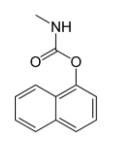
Carbamates
Low vertebrate toxicity.
Broad spectrum insect control.
Ex: carbaryl (Sevin®)(introduced in 1956)
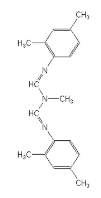
Formamidines
Small group of insecticides.
Used as an alternative when pests become resistant to organophosphates and carbamates.
Ex: Carzol®
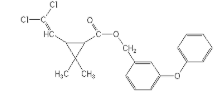
Pyrethroids
Modeled after natural pyrethrins.
Stable in sunlight (unlike natural pyrethrum).
Commonly used in US for mosquito control: permethrin (Biomist®), resmethrin (Scourge®) and sumithrin (Anvil®)
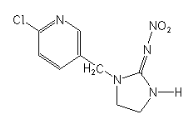
Nicotinoids
Modeled after natural nicotine.
Imidacloprid (e.g. Admire®)
Greatest volume used globally.
Used in agriculture (e.g. cotton, peanuts, turf) to control sucking insects.
No effect on mites.
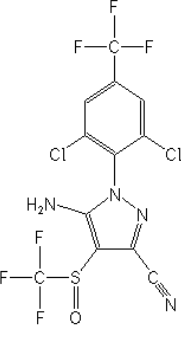
Fiproles
Control soil insects (e.g. corn rootworm), public health pests.
Also in baits for cockroaches, ants, termites.
Effective against insects that are resistant to pyrethroids, organophosphates, and carbamates.
Fipronil (e.g. Frontline)
Botanicals
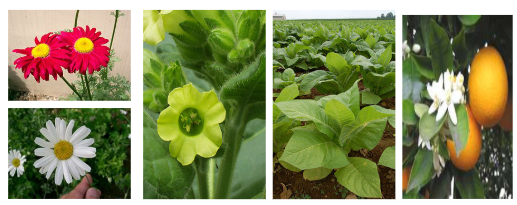
Natural insecticides.
Toxicants derived from plants.
Ex: Pyrethrum is extracted from 2 species of chrysanthemum flowers; fast knockdown of a variety of pests
Ex: Nicotine (an alkaloid) is extracted from tobacco; control of aphids and caterpillars.
Ex: Rotenone is found in the roots of two genera of legumes in S. America; used to kill leaf-eating insects and also fish!
Ex: Limonene extracted from citrus peel; used against pests of pets (e.g. fleas, lice, mites, ticks).
Inorganics
Do not contain carbon.
Usually white crystals.
Ex: sulfur dusts for chigger control and boric acid (a salt) for cockroach control.
Microbials
Microorganisms used to control pests.
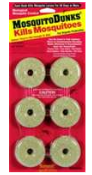
Ex: Bacillus thuringiensis is a bacterium used to control insects in the larval stage (e.g. caterpillars, mosquitoes, beetles)
The only insect repellent currently used for factory treatment of clothing is ______.
Permethrin
Registered by the EPA as an insecticide for use in a variety of settings. When used to pre-treat clothing, it is an insect repellent.
Used for people that work outside to prevent occupational exposure to ticks and mosquitoes.
National Pesticide Informational Center gives _______.
info about mosquitoes and apply pesticides properly
Restaurant example of IPM
A restaurant dumpster (and inside of restaurant)
is a gold mine for pests (food, water, and shelter).If possible, increase the distance from the
dumpster to the restaurant.Inside restaurants, food should be stored in
sealed containers and off the floor.Water leaks or damage to floor, walls, and
ceilings should be repaired to prevent shelter for
pests.
It’s important to read the _______.
label of pesticides to know how and where to apply
Organophosphates are the ________.
most widely used type of insecticide
 Note
Note  Flashcards (34)