Jan. 12, 2025 - Business Law Lecture
 Studied by 0 people
 Call Kai
 Learn
Learn Practice Test
 Spaced Repetition
 Match
Match Flashcards
 Knowt Play
 Podcast
1/30

There's no tags or description
Looks like no tags are added yet.
Name | Mastery | Learn | Test | Matching | Spaced | Call with Kai |
|---|
No analytics yet
Send a link to your students to track their progress
31 Terms
What does Value-Neutral Laws Mean?
Laws are not value-neutral. They reflect
how lawmakers think the world is
how they think it should be
their political, social, and moral values
Different theories of law explain where law comes from and how it should be understood.
Legal positivism strives to be value neutral.
What is Process (Related to Law)?
How laws are created, interpreted, and applied.
This includes:
Who has authority to make law
How courts interpret laws
How judges justify decisions
whether law is flexible or rigid.
Jurisprudence (theory of philosophy of law) comes from the political, social and moral values of the person making the law during the process.
Different legal theories answer these questions differently.
Jurisprudence (Legal Philosophy)
The philosophy of the law. It is the examination of what law is and what it ought to be. It looks at issues such as:
What is the law?
Where does the law come from?
What should law be based on?
Should law reflect morality, reason, power or social reality?
How the law interrelates to other areas.
Law often mirror the lawmakers own deeper philosophical beliefs.
Main Schools of Legal Thought (and Subcategories)
Legal Philosophy of Jurisprudence
Natural Law Theory (What should the law be)
Old school (god)
Deistic School of Natural Law (rational)
Legal Positivism (What is the law)
Legal Realism (Why is the law what it is)
Old School & Theorists
Natural Law Theory
Old school gets its origins from Thomas Aquiness and Edmond Burk (founder of modern conservatism).
This school states that the law should be based on eternal fundamental truths inspired by God.
These truths or moral principles are perceived in history, customs and scriptures and should be replicated in society.
They are metaphysically created.
Deistic Natural Law
Believes that it rests NOT on Devine inspiration, but on the assumption that rational people.
By applying their inheritabilities of reason and logic to their perception of the world, will arrive at basic principles of justice.
Relying on rationale over god. It is man’s faculty of reason.
Believers of this school are Thomas Pane, Thomas Jefferson, Pierre Trudeau, and John Lock.
Basic principles should be common to us, even though they usually aren’t.
Legal Positivism
Legal positivism is only concerned with “What is the law?”
It is like a social science because it doesn’t evaluate the law.
Wants to be value neutral.
Identifies legal principles.
Follows steps to interpret.
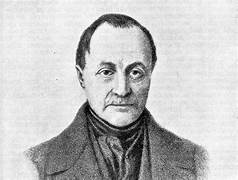
Founder is positivism is August Compt (founder of sociology).
This theory supports the idea that the scientific method through the work of sociology.
How Legal Positivists Analyze Law
2 Steps
Locate the sovereign
Who has law-making power?
(Parliament, legislature, courts)
Identify the law and interpret the law as created by the sovereign authority under different methods and different cases.
Law is valid if it comes from the right authority, not because it is moral.
Sanctions
Means that you are subject to punishment and they differentiate law and rules.
Principle of Law (Ratio Decidendi)
Ratio decidendi = The legal reasoning behind a judge’s decision.
This is the binding part of a case.
Future courts must follow it (precedent).
Central to precedent in common law systems.
The rule or principle that explains why the judge decided the case that way.
Legal Realism
Ask “Why are decisions made?” and “Why is the law what it is?”
Look at why the law is created, and use different scientific techniques as to why the law is created.
More complete positivists.
Seeking to explain why certain decisions are made.
What Legal Realists Study
Why judges deviate from precedent
Why similar cases get different outcomes
How law works in practice, not theory.
Law is not mechanical, it is shaped by human decisions.
Three Main Roles of Law
To protect people, property, and society as a whole.
Gives the government power to act for the benefit of society as a whole (e.g. police, firetrucks). To also raise taxes to pay for those activities.
Regulates the interaction between individuals. (e.g. binding agreements that are enforceable in the courts).
This is also known as private law.
The Courts (As a Lawmaker)
Determine the validity of legislation.
Interpret legislation (and apply principles – ratio decidendi).
Protect human rights (ensure compliance to Charter and other laws)
Develop case law, creating new principles to be applied to resolve disputes without court intervention.
Determine decisions of disputes.
Courts make law by deciding cases.
Parliament of Canada
Elected lawmakers create statutes
Lawmaking is part of the political process
Laws reflect political compromise and values
Law is the “crystallized” outcome of political debate.
The Constitution (Highest Law)
Sets the rules for all other laws
Determines:
division of powers
rights and freedoms
All laws must conform to the Constitution, or they can be struck down.
Constitution is hard to change, and it came into effect for Canada in 1867.
If a law conflicts with the Constitution, it is invalid.
Where Do Legal Sanctions Come From (How do they get implemented)?
For a statute to become law, it must receive consent from the:
House of Commons (Elected officials)
Monarch (Head of state - Britain)
Senate
Sanctions are legit because the law comes from a recognized authority.
What Is the Purpose of Law in Society?
Law exists to support justice and social order.
Prevent violent conflict.
Create predictable and orderly relations.
Regulate behavior through rules.
Provide continuity and stability.
Allocate resources fairly.
Structure relationships:
state ↔ people
people ↔ people
people ↔ corporations
Law is not just legal, it is political and philosophical.
Different Visions of a Just Society
4
Lawmakers bring their own vision of justice into lawmaking.
Liberal Capitalist Vision
Communist / Marxist Vision
Principle of Utility
Social Engineering
Liberal Capitalist Vision (Society)
Vision around allowing the market to move freely. This vision influences private property, corporate, and tax laws.
Elements of social justice in this include the ability to own property, compete in the market with goods and services, and limit government involvement when necessary.
Right to private property
Free markets and competition
Limited government intervention
Markets distribute benefits broadly
Criticism:
Wealth concentrates (e.g. top 1%)
Inequality affects how laws function
Communist / Marxist Vision (Alternative View)
Associated with Karl Marx
Capitalism = economic oppression
Private property and capitalism benefit elites.
Eradication of private property.
Believe in an equality of condition, no one gets more than the other.
Law supports class dominance
Justice requires collective ownership
Very different vision → very different laws from the liberal perspective.
Principle of Utility (Utilitarianism)
Associated with Jeremy Bentham. Associated with the idea that is a law is just if it produces the greatest happiness for the greatest number.
Problems with this include that happiness can be hard to measure.
Can justify harm to minorities.
Social Engineering & Who it is Associated With?
The idea that law should be used as a tool to shape society in a better way, not just to punish wrongdoing or strictly apply rules. This idea is strongly associated with Roscoe Pound and his three questions that are still used today in law.
Laws aren’t just rules to follow. They are tools to balance people’s interests, reduce conflict, and improve how society works overall.
Think of law as a balancing tool, not just a set of fixed rules.
Courts, legislators and policymakers use this philosophy present day.
Reflects a Bentuamite influence.
Obtains its values or criteria for change from the scientific study of the community.
Pound’s Three Questions (Used Today in Law)
Does law shape society, or reflect its changing values?
It does both e.g. drinking and driving, smoking inside, divorce.
Laws can be created by lobby groups.
Can science improve lawmaking, or only to be used by social groups?
Data can help, but science is not neutral. Can advance specific groups interests.
Can be misused, abused and misinterpreted.
Can exposing the truth damage society (exposing myths that society depends on)?
Law depends on myths (e.g. that the legal system treats cases all the same).
Justitia: Goddess of creating balance.
Symbol of Justice
Justice is often personified as Justitia:
Scales → balance
Sword → authority
Blindfold → impartiality
Earlier versions:
Ma’at (Ancient Egypt)
Themis (Ancient Greece)
These symbols represent ideals, not always reality.
What is Law?
A subset of rules and are differentiated in the formalities of documentation and enforcement.
Law is everywhere.
Physical Laws
Humes distinguishes between physical and normative laws.
Are laws of nature in physics, chemistry and biology.
For example, the law of gravity or law of inertia.
Normative Laws
Some of the rules governing human conduct made by humans.
For example, the law of stealing: one should not steal, but not that you can’t physically steal.
Rather it indicates or commends that you shouldn’t steal and if found guilty you suffer the consequences.
You may break the law and suffer the consequences, because it is a decision of free will.
Therefore, physical laws cannot be broken, but normative ones can.
Normative Rules & Who They are Associated With
Humes also distinguished between normative rules.
Some normative rules were law because they created a code of behaviour with sanctions for failure to live by that code.
Laws are created by formal processes of enforcement and adjudication. Liberal aspect to Humes insight.
How are Sanctions Created For Drinking and Driving for Example?
Through the criminal code (a federal statute);
The highway and traffic act (provincial);
Delegate Bodies (penalties from MPI);
Laws are created by politicians. Politics govern through law.
Residual and Concurrent Powers Meaning
Federal Paramountcy
Residual powers: Powers that fall within federal jurisdiction because they are not expressly allocated to the provinces by the Constitution.
Concurrent powers: Overlapping powers of both jurisdictions (federal and provincial) to regulate the same activities.
Federal paramountcy: The principle that a federal law prevails over a conflicting provincial law.
 Note
Note  Flashcards (26)