Neurons, Synapses, and Signaling: Campbell Biology Chapter 37
 Call Kai
 Learn
Learn Practice Test
 Spaced Repetition
 Match
Match Flashcards
 Knowt Play
1/56

There's no tags or description
Looks like no tags are added yet.
Name | Mastery | Learn | Test | Matching | Spaced | Call with Kai |
|---|
No analytics yet
Send a link to your students to track their progress
57 Terms
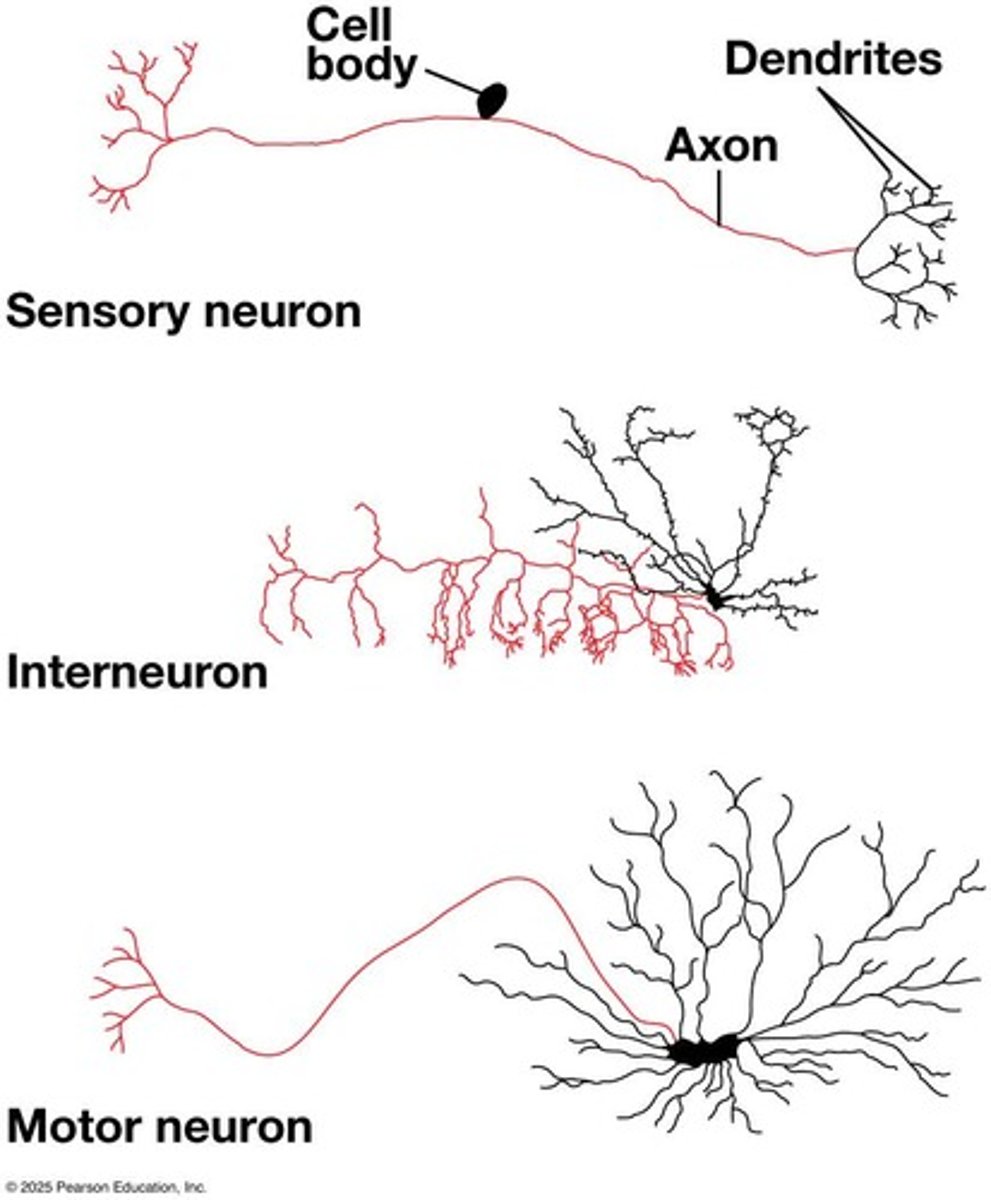
What is the primary function of a neuron?
To transmit information throughout the nervous system.
What is the significance of the cone snail (Conus geographus) in the study of neurons?
It is a slow-moving but dangerous hunter, illustrating unique adaptations in neuronal signaling.

What are synapses?
Junctions between neurons that allow for communication through neurotransmitters.
How do neurons communicate with each other?
Through the release of neurotransmitters at synapses.
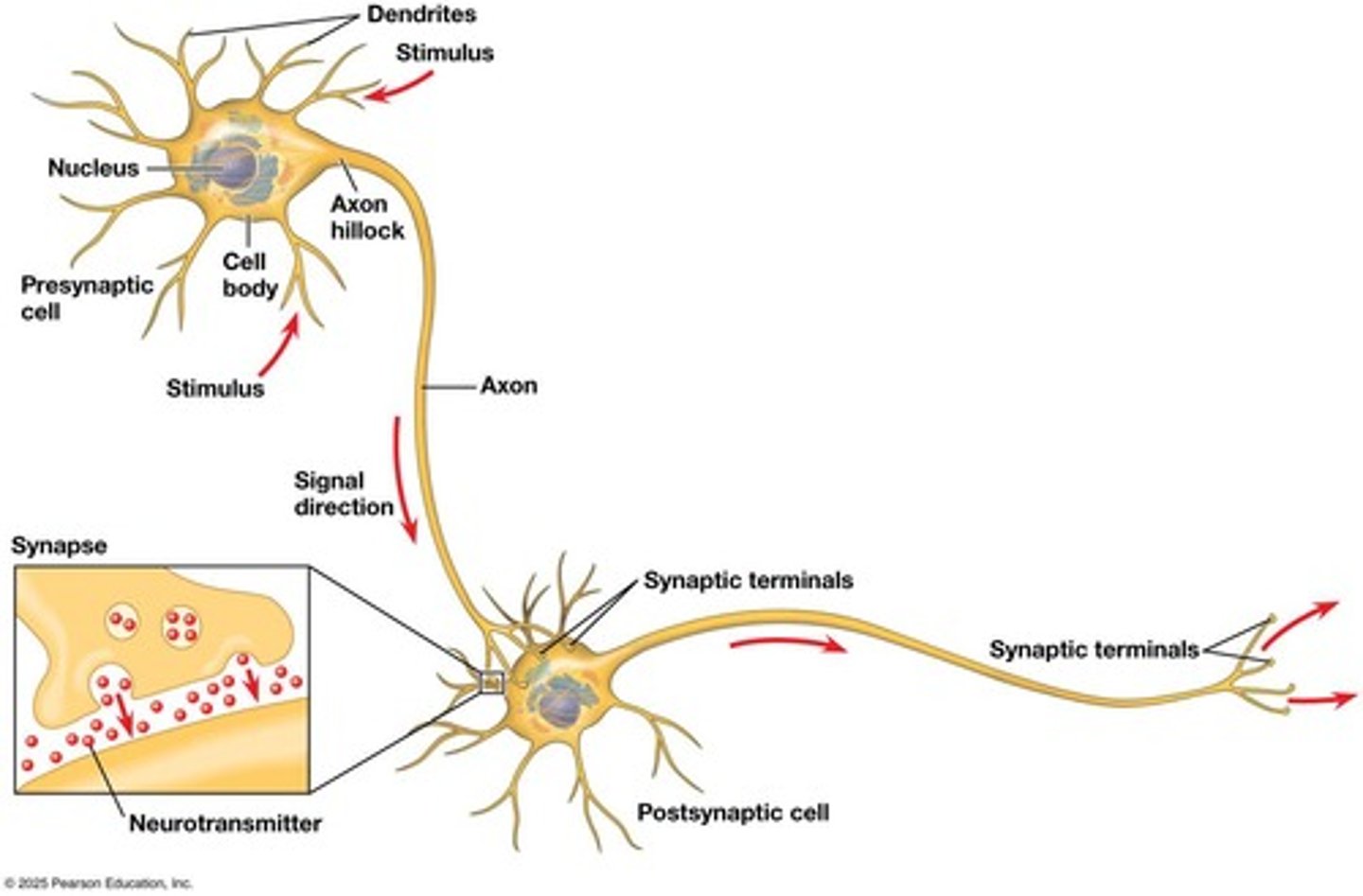
What role do neurotransmitters play in neuronal signaling?
They are chemical messengers that transmit signals across synapses from one neuron to another.
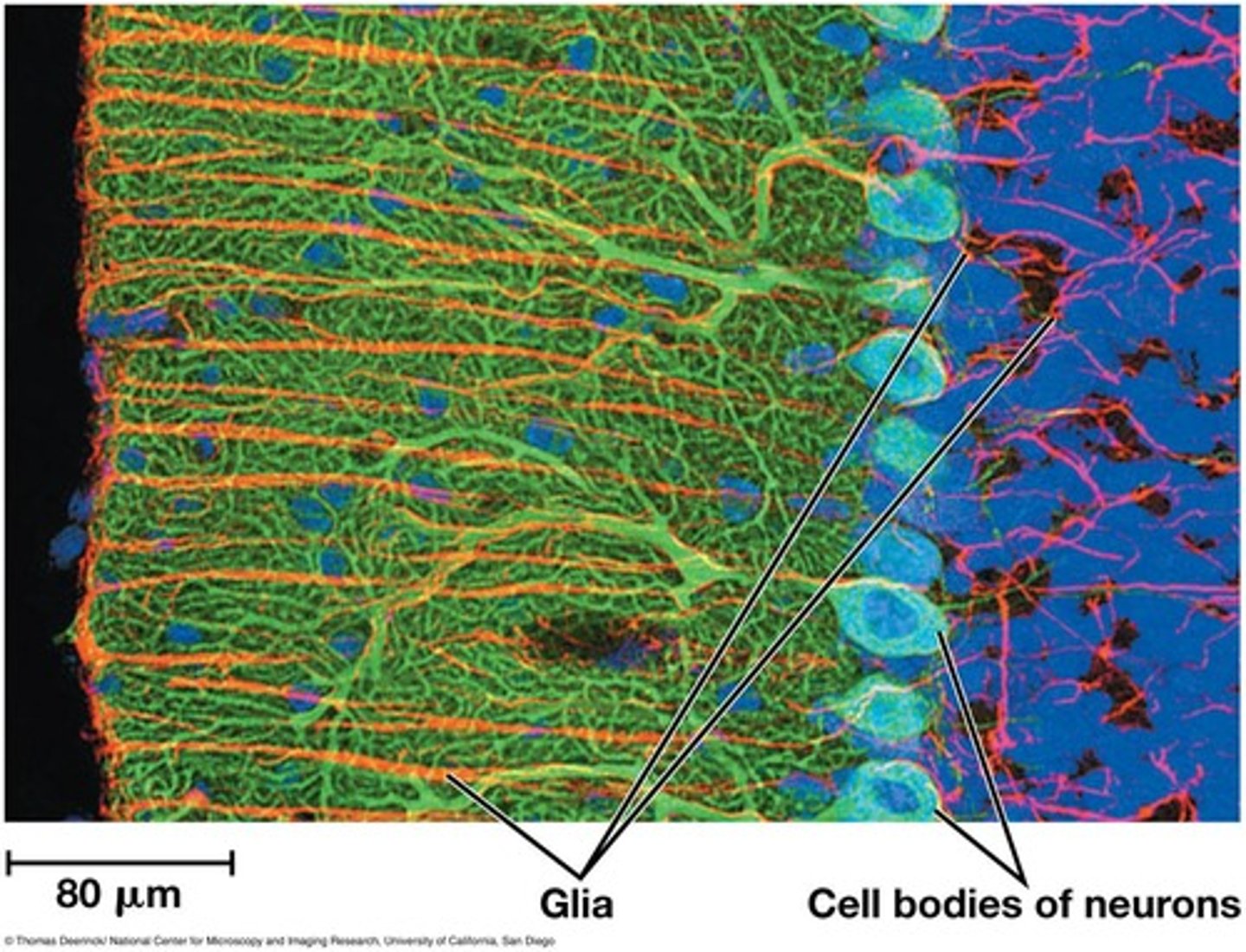
What is a neuron?
A nerve cell that transfers information within the body.
What are dendrites?
Highly branched extensions of a neuron that receive signals from other neurons.
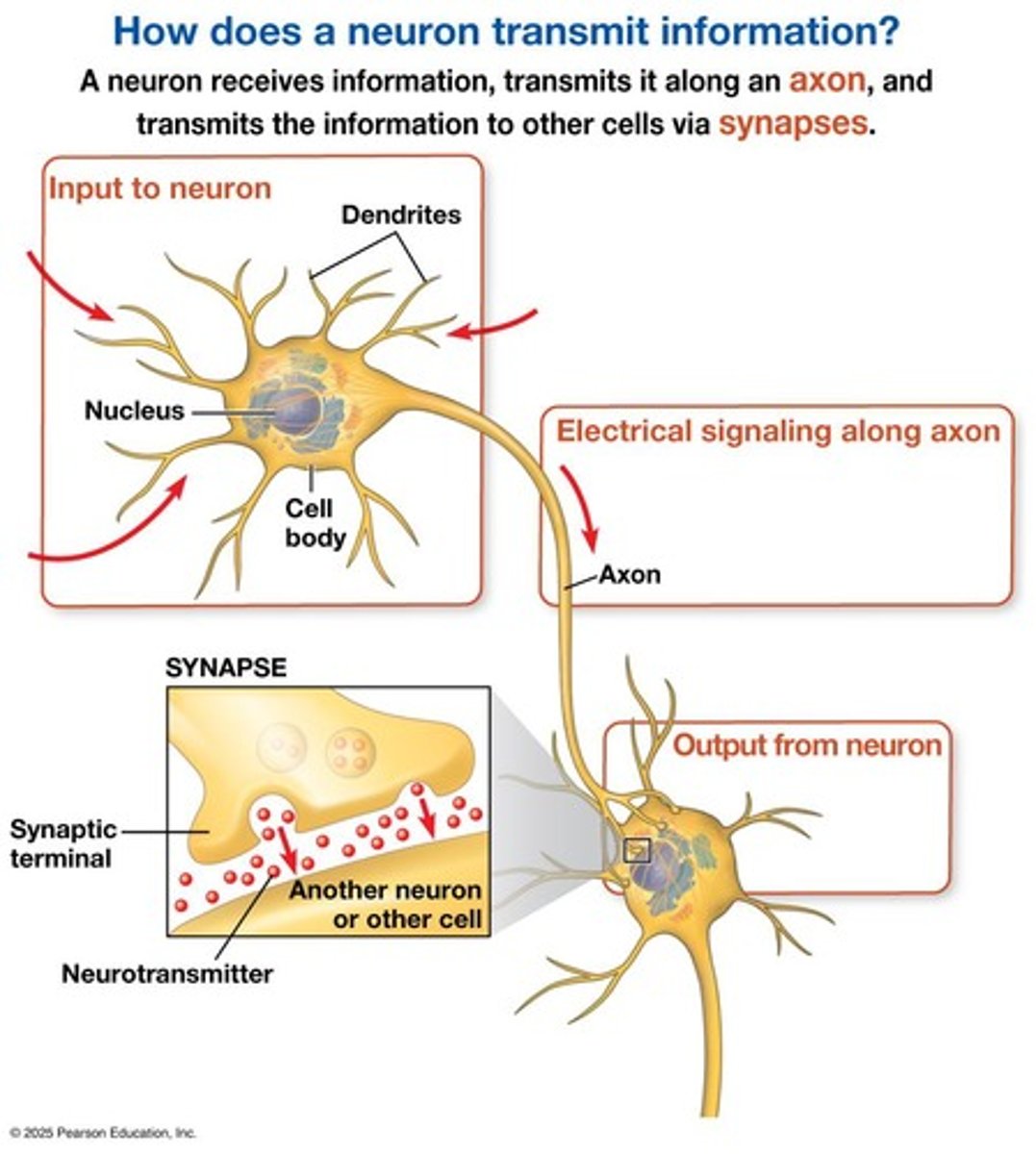
What is the function of the axon?
Transmits signals to other cells.
What is the axon hillock?
The cone-shaped base of an axon where signals are generated.
What is a synapse?
A junction where the branched ends of axons transmit signals to other cells.
What are neurotransmitters?
Chemical messengers that pass information from the transmitting neuron to the receiving cell.
What role do glial cells play?
They nourish neurons, insulate axons, and regulate the fluid surrounding neurons.
What are the three stages of information processing in nervous systems?
Sensory input, integration, and motor output.
What is the central nervous system (CNS)?
The part of the nervous system that carries out integration.
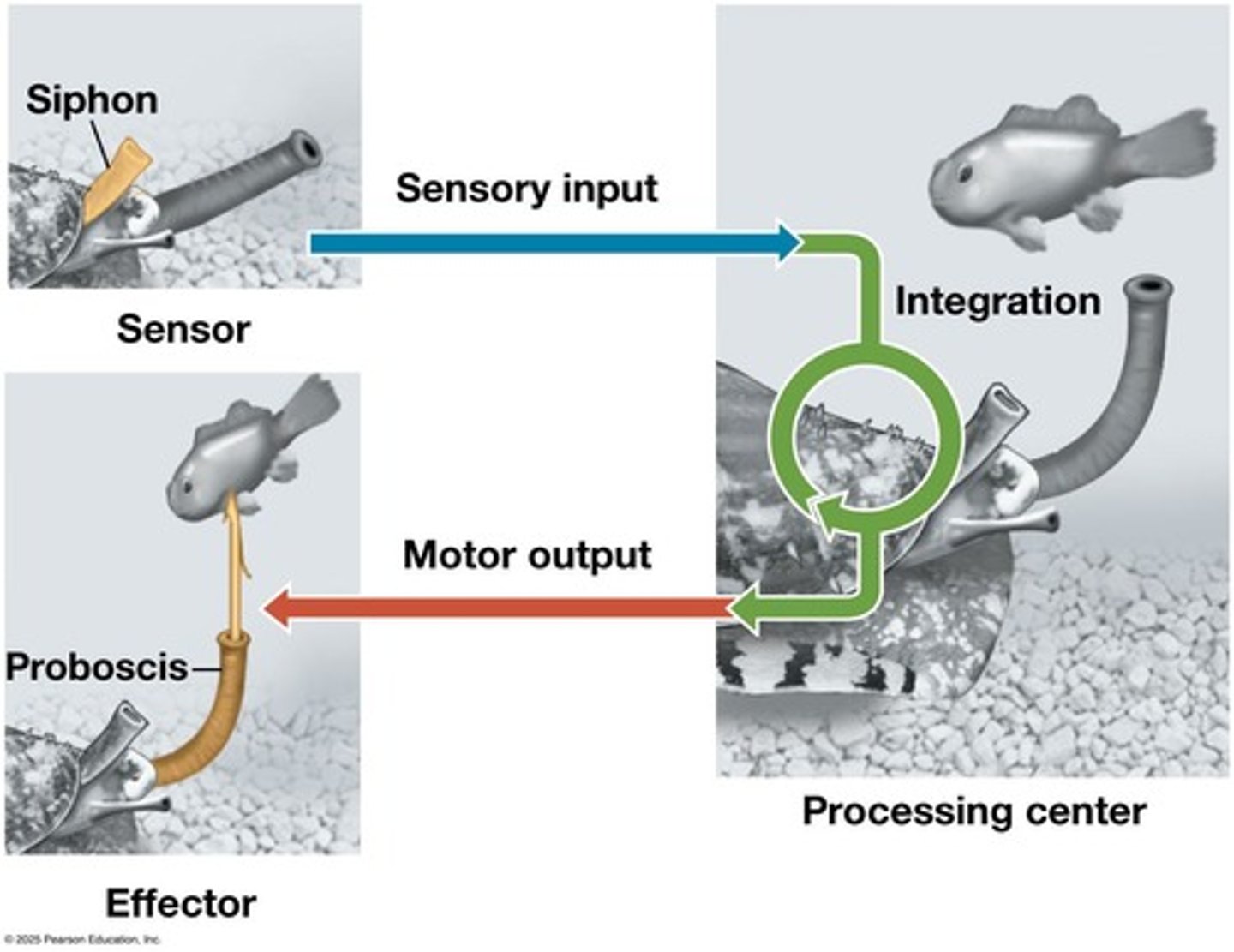
What is the peripheral nervous system (PNS)?
The part of the nervous system that carries information into and out of the CNS.
What is membrane potential?
The charge difference across a cell membrane, which is a source of potential energy.
What is resting potential?
The membrane potential of a neuron that is not sending signals.
What ions are involved in establishing resting potential?
Potassium ions (K+) are higher inside the cell, while sodium ions (Na+) are higher outside.
What is the role of sodium-potassium pumps?
They maintain ion gradients across the plasma membrane using ATP.
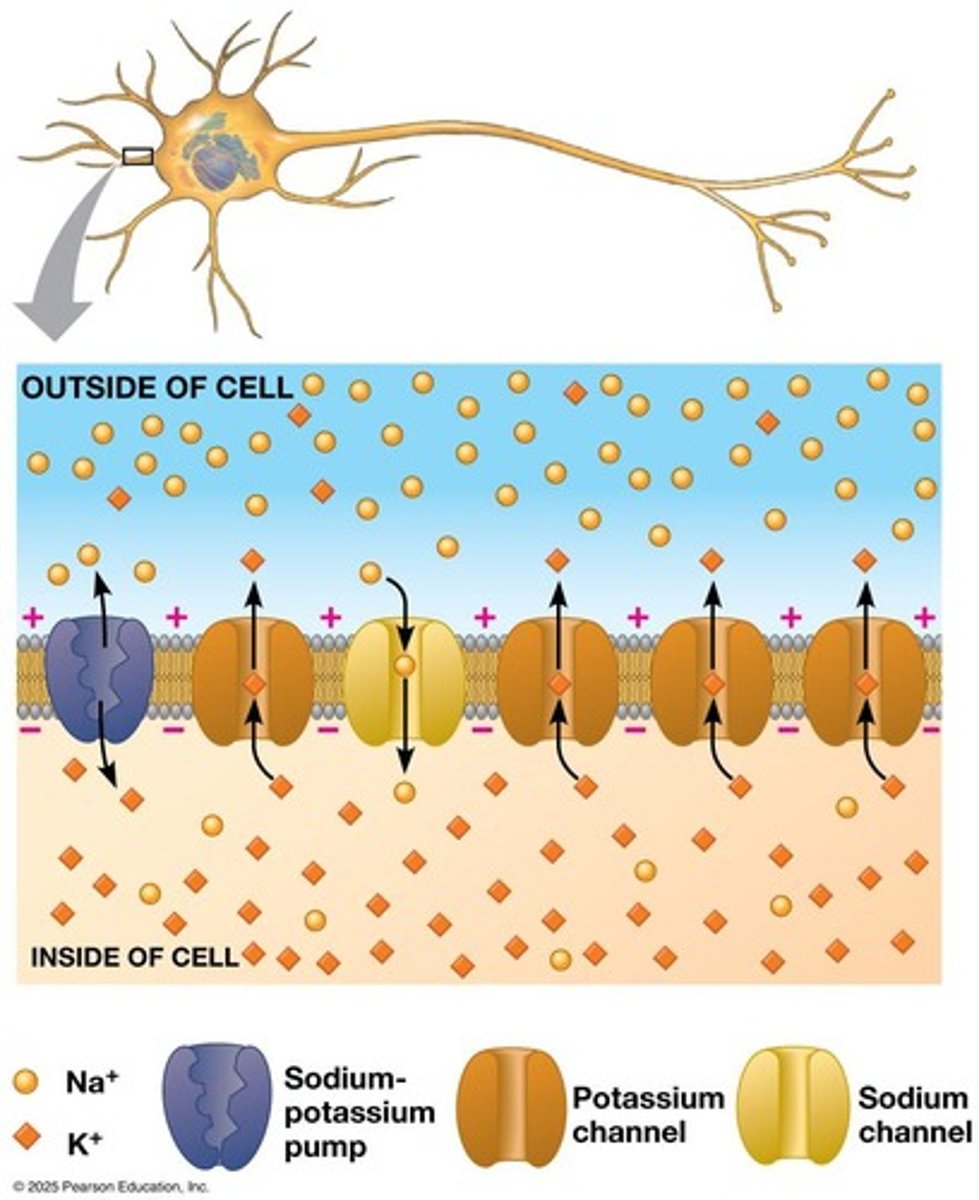
What are leak channels?
Potassium channels that are open in a resting neuron, allowing K+ to flow out.
What happens during hyperpolarization?
The inside of the cell becomes more negative due to K+ diffusing out.
What is depolarization?
A reduction in the magnitude of the membrane potential, often due to Na+ diffusing into the cell.
What are graded potentials?
Changes in polarization where the magnitude of change varies with the strength of the stimulus.
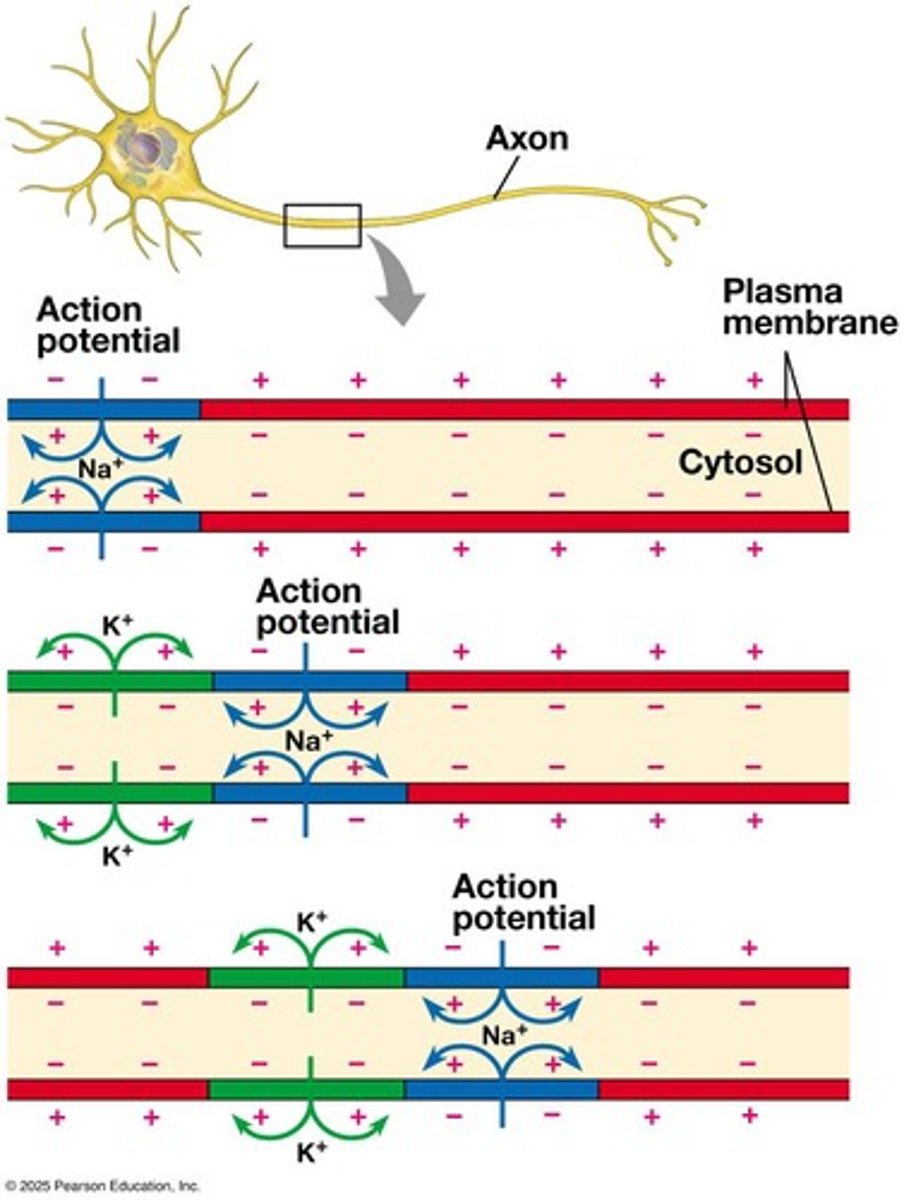
What is an action potential?
A massive change in membrane voltage that occurs when depolarization reaches a threshold.
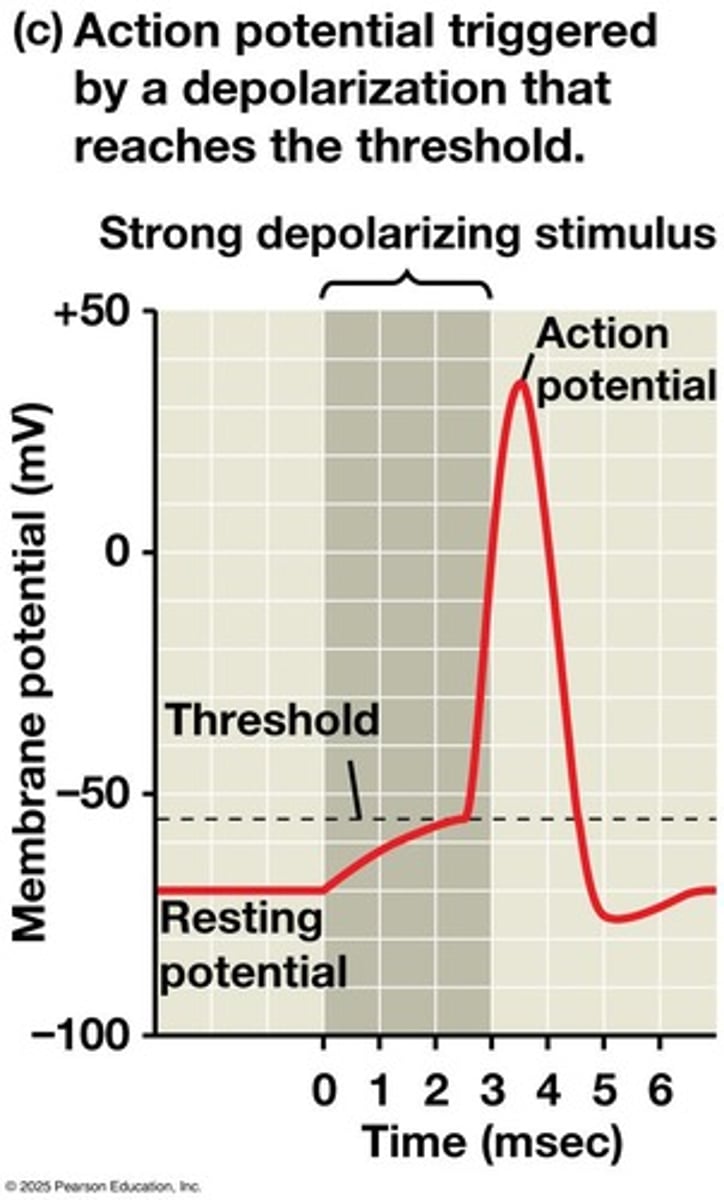
What is the refractory period?
The time after an action potential during which a second action potential cannot be initiated.
What is saltatory conduction?
The process by which action potentials jump between nodes of Ranvier in myelinated axons.
What are chemical synapses?
Synapses that rely on the release of a neurotransmitter to transmit information.
What are excitatory postsynaptic potentials (EPSPs)?
Depolarizations that bring the membrane potential closer to threshold.
What are inhibitory postsynaptic potentials (IPSPs)?
Hyperpolarizations that move the membrane potential further from threshold.
What is temporal summation?
The effect that occurs when two EPSPs are produced in rapid succession.
What is spatial summation?
The effect that occurs when EPSPs produced simultaneously by different synapses add together.
What are G protein-coupled receptors?
Receptors that activate a signal transduction pathway involving a second messenger.
What is acetylcholine?
A common neurotransmitter that can have excitatory or inhibitory effects depending on the receptor.
What role does glutamate play in the CNS?
It is the most common neurotransmitter in the central nervous system.
What are biogenic amines?
Neurotransmitters synthesized from amino acids, including norepinephrine and dopamine.
What are neuropeptides?
Short chains of amino acids that function as neurotransmitters, such as endorphins.
What is the role of nitric oxide (NO) in neurotransmission?
It acts as a local regulator in the peripheral nervous system and is synthesized as needed.
What is the function of acetylcholinesterase?
It terminates the excitatory activity of acetylcholine at the neuromuscular junction.
What is the significance of ion channels in neurons?
They are selectively permeable and allow specific ions to pass through, influencing membrane potential.
What is the role of the axon hillock in action potentials?
It is the site where action potentials are initiated due to depolarization reaching threshold.
What part of the neuron receives signals?
Dendrites.
What do sensory neurons do?
Transmit information about external stimuli or internal conditions.
What ions are primarily involved in establishing resting potential?
Potassium ions (K+) and sodium ions (Na+).
What are ion channels?
Pores formed by proteins that allow specific ions to pass through the membrane.
What is hyperpolarization?
An increase in the magnitude of the membrane potential, making the inside of the cell more negative.
What is the threshold in neuron signaling?
The specific membrane potential that must be reached to trigger an action potential.
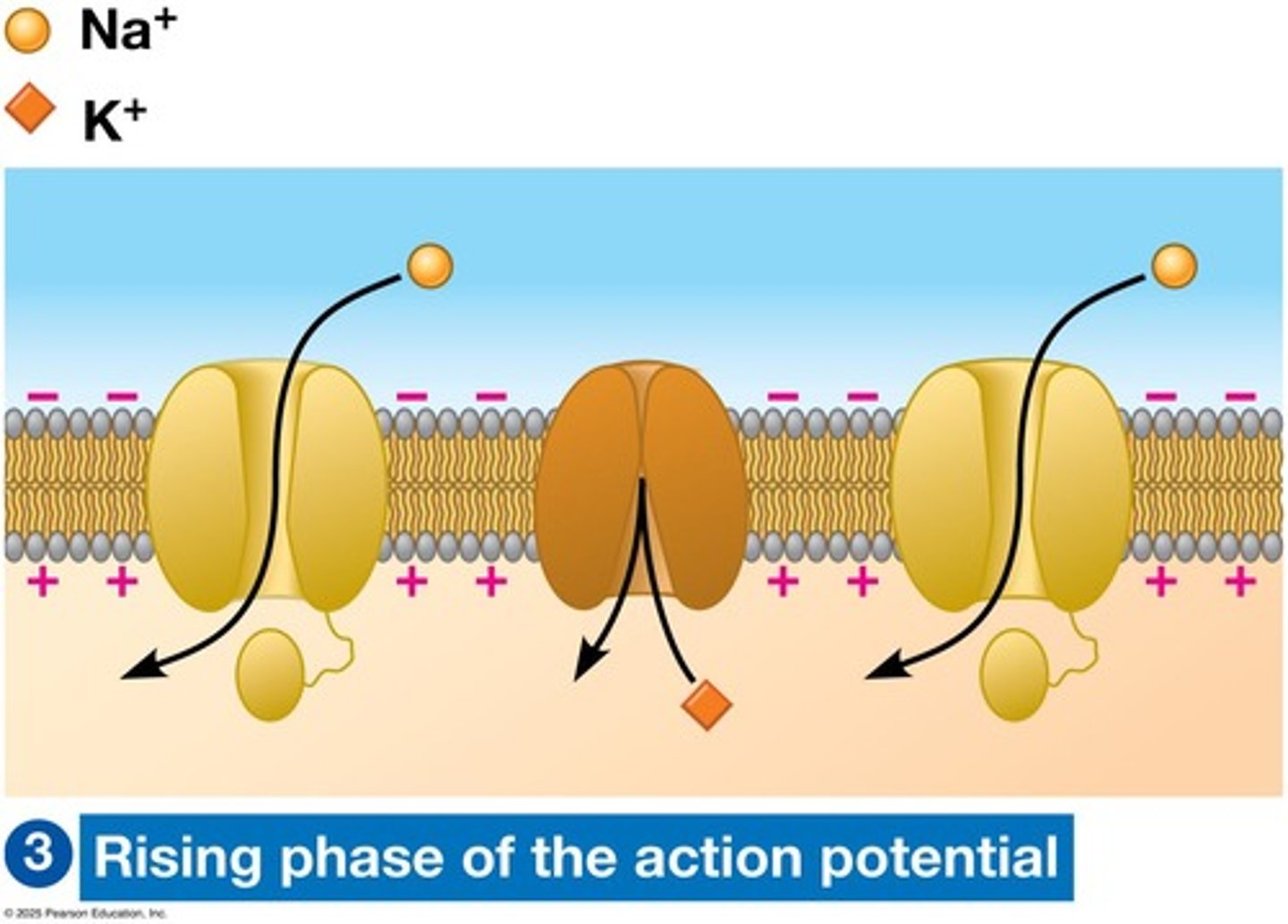
What occurs during the rising phase of an action potential?
Voltage-gated sodium channels open, allowing sodium to diffuse into the cell.
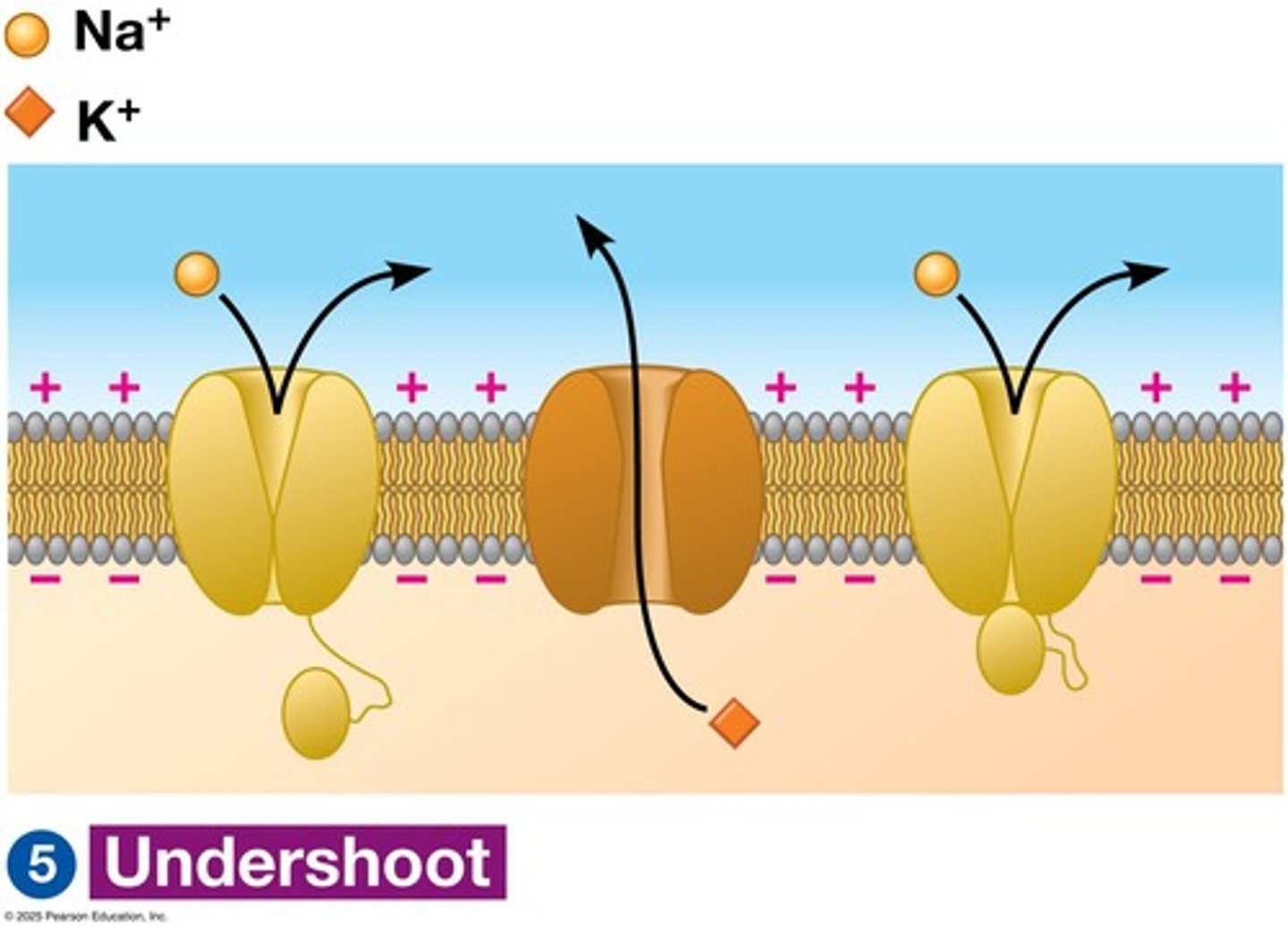
What happens during the falling phase of an action potential?
Voltage-gated sodium channels become inactivated, and potassium flows out of the cell.
What is the role of ligand-gated ion channels?
They open in response to neurotransmitter binding, generating postsynaptic potentials.
What is summation in postsynaptic potentials?
The process where individual postsynaptic potentials combine to produce a larger potential.
What are metabotropic receptors?
Receptors that activate a signal transduction pathway involving a second messenger.
What are muscarinic receptors?
Metabotropic receptors for acetylcholine.
What are nicotinic receptors?
Ligand-gated receptors for acetylcholine.
What is glutamate?
The most common neurotransmitter in the central nervous system (CNS).
What is GABA?
The neurotransmitter at most inhibitory synapses in the brain.
What role do neuropeptides play?
They function as neurotransmitters that operate via G protein-coupled receptors.
What are some examples of gases that act as neurotransmitters?
Nitric oxide (NO) and carbon monoxide (CO).

