biological processes
 View linked note
 Call Kai
 Learn
Learn Practice Test
 Spaced Repetition
 Match
Match Flashcards
 Knowt Play
1/44

There's no tags or description
Looks like no tags are added yet.
Name | Mastery | Learn | Test | Matching | Spaced | Call with Kai |
|---|
No analytics yet
Send a link to your students to track their progress
45 Terms
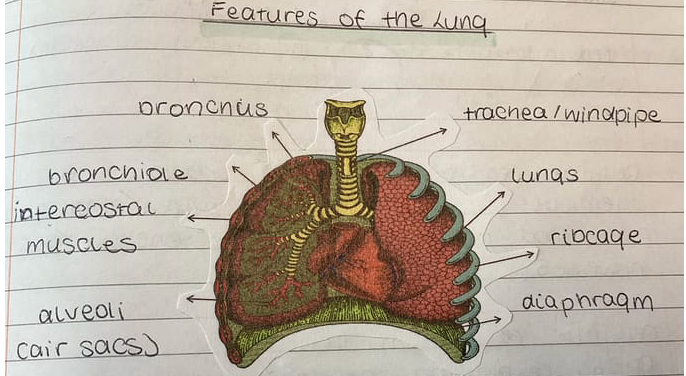
features of the lungs
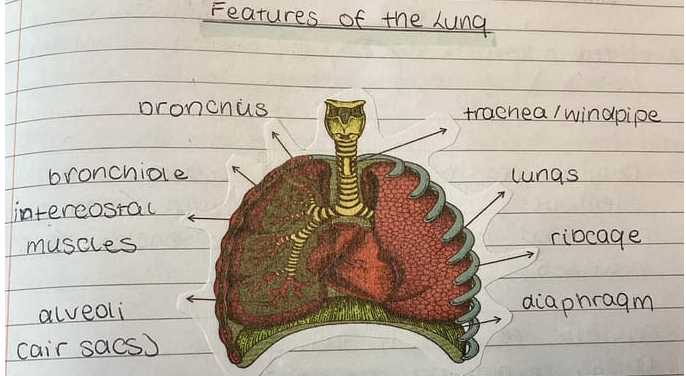
alveoli
bunches of tiny air sacs inside the lungs
breathing
the process in which air is moved in and out of the lungs
air
A mix of different gases - 78% nitrogen, 21% oxygen, 0.04% carbon dioxide, and the remainder is other gases.
what do body cells contain for cellular respiration
Body cells contain structures called mitochondria that use oxygen for cellular respiration
cellular respiration in mitochondria
uses oxygen and sugar from food as fuel to provide energy for life processes
process of inhalation
1.
Intercostal muscles contract, pulling the ribs outward
2.the diaphragm contracts and pulls down
3.As the volume and space in the lungs increases, the pressure drops
4.Air moves throughugh the nose, mouth, bronchus, and bronchioles, and gushes inside the lungs, filling the alveoli with fresh air.
process of exhalation
1.
The diaphragm muscles are relaxed and the diaphragm returns to its normal structure (upwards)
2.
The intercostal muscles relax, meaning that the ribs return back to their normal position (inwards)
3.
As the thoracic volume decreases causing the pressure to increase.
4.
Air in the alveoli is pushed out through the bronchioles, bronchus, and finally out by the nasal cavity.
gas exchange
carbon dioxide and oxygen switching, changing places
from where does oxygen diffuse into the blood?
particles of oxygen from the air sac diffuse into the blood
how is carbon dioxide brought to the lungs?
carbon dioxide is brought to the lungs by the blood
what occurs in gas exchange?
Carbon dioxide goes into the alveoli from the blood vessel, but oxygen goes from the alveoli to the blood vessel
what are the adaptations of the alveoli?
-they have moist thin walls
-they give the lungs a large surface area
-they have a lot of tiny blood vessels called capillaries
what does the heart do?
pumps blood around the body and the blood contains nutrients necessary for respiration: oxygen and glucose
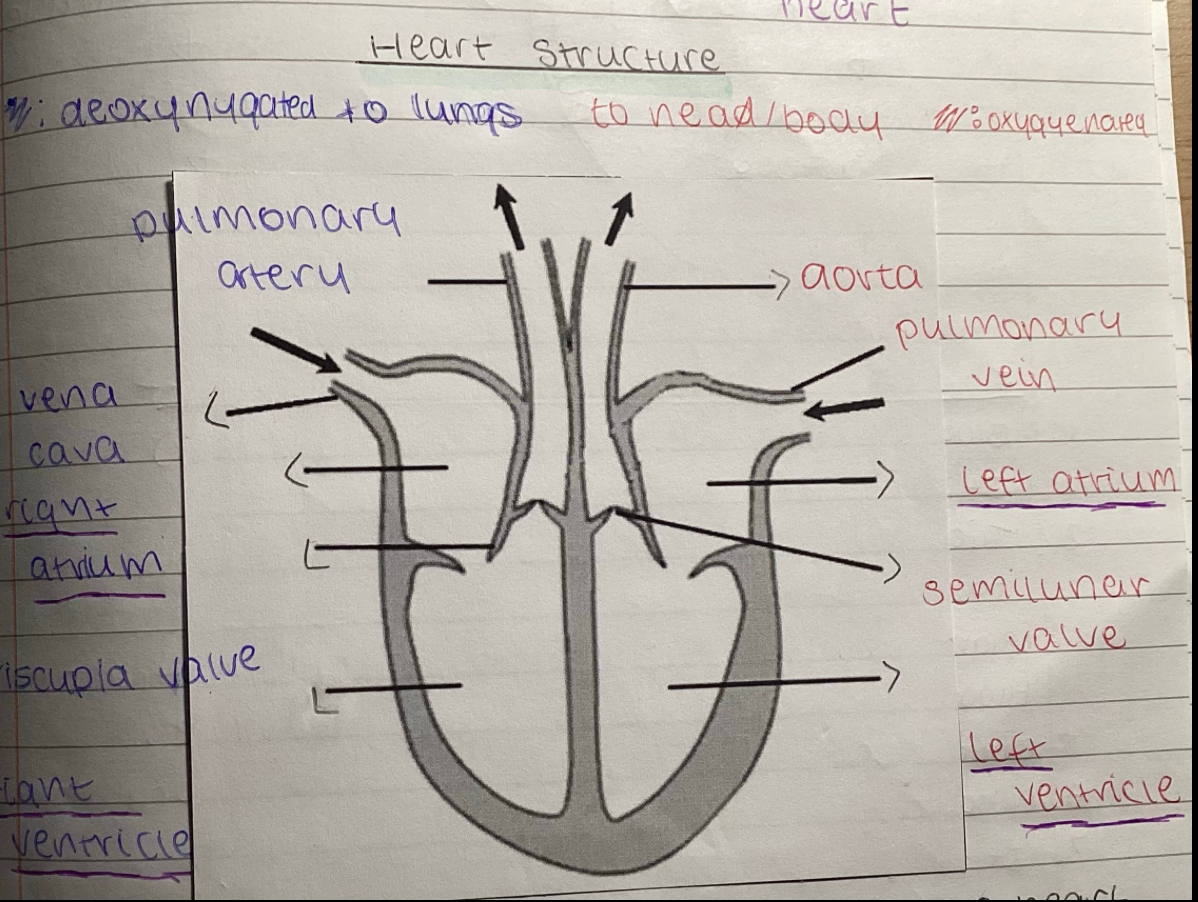
heart structure
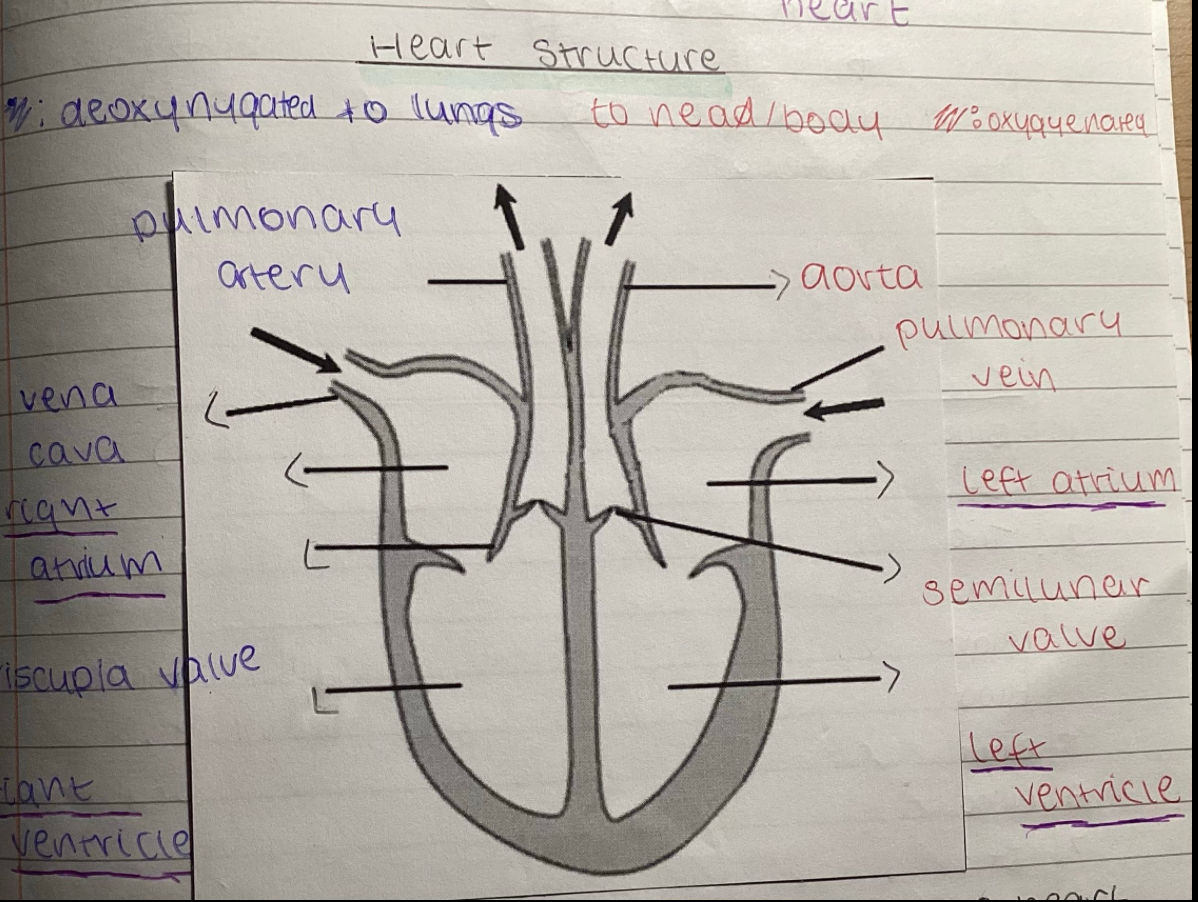
in which direction do arteries carry blood?
arteries carry blood AWAY from the heart
in which direction do veins carry blood?
veins carry blood INTO the heart
what vein carries OXYGENATED blood?
pulmonary vein carries OXYGENATED blood
what artery carries DEOXYGENATED blood?
pulmonary artery carries DEOXYGENATED blood
what are the first 5 steps of the flow of blood through the heart?
blood enters through the vena cava
it fills up the right atrium
tricuspid valve opens up and blood flows through to right ventricle
right ventricle fills upend muscles contract forcing blood up and through semilunar valve
blood leaves heart to lungs through pulmonary artery
what are the last 5 steps of the flow of blood through the heart?
blood enters heart through pulmonary vein
it fills up left atrium
bicuspid valve opens and blood flows through to left ventricle
left ventricle fills up and muscles contract forcing blood up through the semilunar valve
blood leaves heart through aorta
arteries
carry blood AWAY from the heart
carry blood under HIGH pressure
thick MUSCULAR walls
veins
carry blood to the heart under low pressure
thin walls
have valves and large lumen
capillaries
one cell thick
connect arteries and veins
carry blood under very low pressure
red blood cell
carries oxygen around the body
white blood cell
engulf invading pathogens
plasma
fluid which carries other blood components
platelet
plays an important role in blood clotting
blood
blood is a tissue consisting of plasma, in which the red blood cells, white blood cells, and platelets are suspended.
red blood cells more details
no nucleus
biconcave shape
contains haemoglobin - to which oxygen molecules attack
white blood cells more details
responsible for immune responses
fight infections
engulfs invading pathogens and destroys them
respiration
the process that the body uses to release energy from digested food (glucose)
aerobic cellular respiration
glucose +oxygen —> carbon dioxide + water + energy
C6H12O6 + 6O2 —> 6O2 + 6H2O + ATP
atria
receive blood from the veins
ventricle
pump blood out into arteries
valves
prevent back flow of blood
pulmonary vein
carry blood to the heart
vena cava
carry blood to the heart
pulmonary arteries
carry blood away from the heart
left ventricle
pumps blood around the body
septum
prevents oxygenated and deoxygenated blood from mixing
anaerobic respiration
glucose —> lactic acid + energy
oxygen debt
lactic acid needs to been broken down by oxygen to allow muscles to return to normal during anaerobic respiration.
Diaphragm
Found underneath the ribcage
Intercostal muscles
Found in between the ribs