BISC 1303 - Chapter 7: Cellular Respiration
 Call Kai
 Learn
Learn Practice Test
 Spaced Repetition
 Match
Match Flashcards
 Knowt Play
1/15

There's no tags or description
Looks like no tags are added yet.
Name | Mastery | Learn | Test | Matching | Spaced | Call with Kai |
|---|
No analytics yet
Send a link to your students to track their progress
16 Terms
Electrons have
potential energy
Oxidation
the loss of electrons, lower energy
Reduction
gain of electron, higher energy
Redox reactions
oxidations and reductions are coupled together, H+ may be transferred along with e-
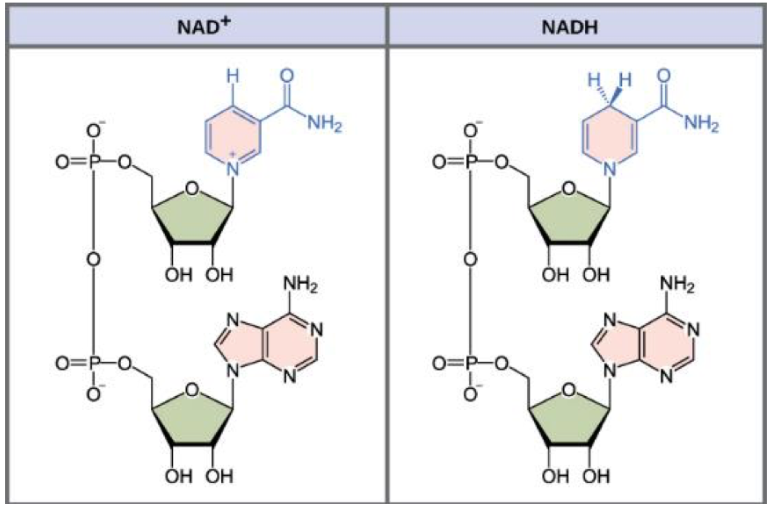
Electron carrier
some organic molecules readily gain or lose electrons
E.G. NAD+ and NADH
Electron energy states
electrons can be at a high or low energy state
the further from the nucleus are at a higher level and have higher energy
Cellular Respiration
the complete breakdown and oxidation of glucose in order to generate ATP
C6H12O6 (glucose) + O2 (oxygen gas) → CO2 (carbon dioxide) + H2O (water) + energy (ATP)
happens in several stages:
Glycolysis (in cytoplasm, rest in mitochondria), Pyruvate Oxidation, Citric Acid/Krebs cycle and Oxidative Phosphorylation (electron transport chain)
Glycolysis
in Eukaryotes cells, this happens in the cytoplasm
10 enzyme metabolic pathway
glucose (6C) to pyruvate (3C) x2
ATP is spent in initial steps, but a net amount is generated
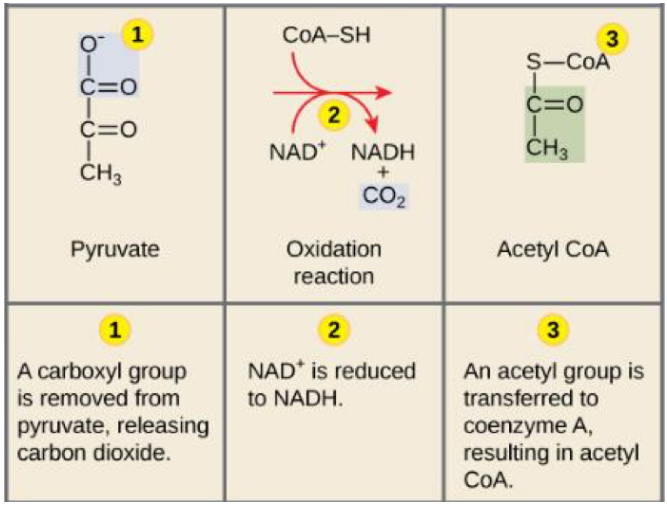
Pyruvate Oxidation
pyruvate broken down, oxidized attached to coenzyme (CoA)
releases CO2, generates NADH and results in acetyl-CoA
The Citric Acid Cycle (Krebs Cycle)
acetyl group (2C) transferred from CoA to oxaloacetate (4C) to form citrate (6C)
in several steps citrate is broken down and oxidized back into oxaloacetate
CO2 ×2 released
ATP generated
NADH generated
FAD reduced to FADH2 (another e- carrier)
*a lot of the energy is in the NADH and FADH2
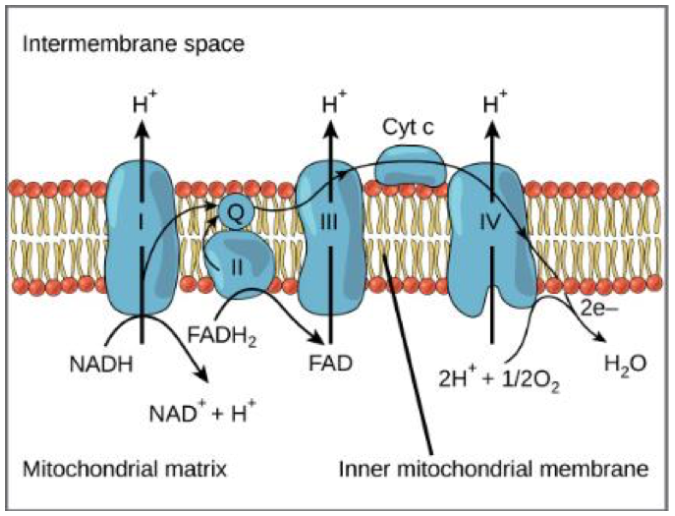
Electron Transport Chain (ETC)
NADH and FADH2 are oxidized back to NAD+ and FAD
their high energy electrons are passed through a series of other e- carriers
conceptual - lose energy with each transfer until they are transferred to O2 as low energy electrons, energy from e- used to pump H+ across the membrane (active transport), creates a “proton gradient”. the H+ cannot diffuse across the membrane
the proton gradient has a lot of potential energy
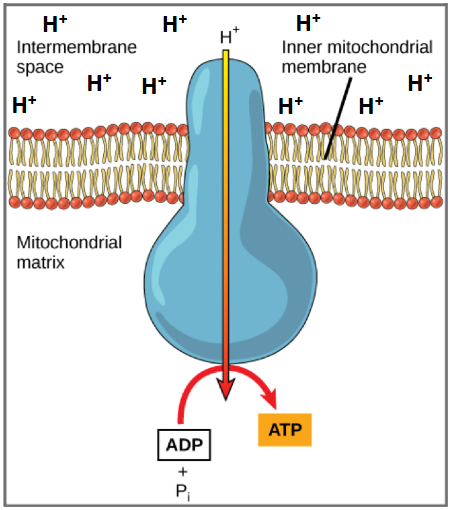
ATP Synthase
a large multi-protein complex, spans the membrane and allows H+ to pass through, down their concentration gradient
this movement powers the rotation of a stalk, which generates ATP.
!!! this is where most of the ATP comes from in cellular respiration !!!
All the steps of cellular respiration put together…
each of these steps are put together to perform cellular respiration, proton gradient is required for this to work.
Catabolism of other carbohydrates
broke into monosaccharides, enter glycolysis
Catabolism of proteins
broke into amino acids, where they can then enter glycolysis, pyruvate oxidation, citric acid cycle
Catabolism of lipids/fatty acids
broken into 2-carbon units, enter citric acid cycle

