UNIT 5 - CENTRAL DOGMA
 Call Kai
 Learn
Learn Practice Test
 Spaced Repetition
 Match
Match Flashcards
 Knowt Play
1/127

There's no tags or description
Looks like no tags are added yet.
Name | Mastery | Learn | Test | Matching | Spaced | Call with Kai |
|---|
No analytics yet
Send a link to your students to track their progress
128 Terms
What is the central dogma
it is a concept that states DNA is transcribed into mRNA, which is then translated into proteins that perform cellular functions.
What are the features of DNA
double helix structure, anti-parallel strands, complementary base pairing, directionality, nucleotide composition
Double helix structure
DNA consists of two long strands that twist around each other,
Nucleotide composition
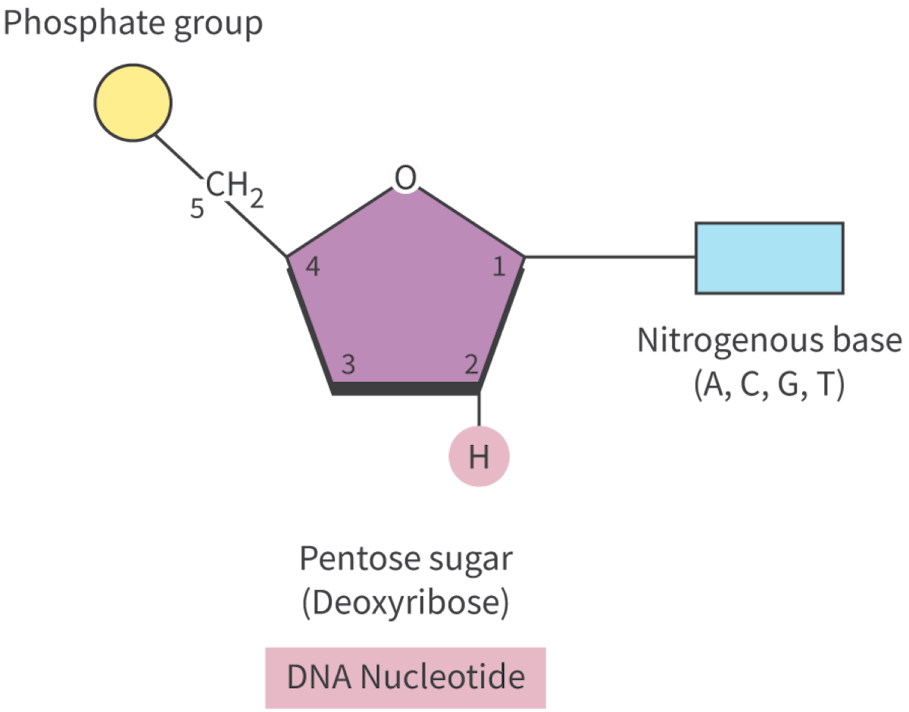
Each strand is a polymer made of nucleotides, consisting of a phosphate group, deoxyribose sugar, and a nitrogenous base
Complementary base pairing
specific, hydrogen-bonded pairing of nitrogenous bases in nucleic acids
DNA Base pairing rules
Adenine - Thymine , Guanine - Cytosine
Anti-Parallel strands
The two sugar-phosphate backbones run in opposite directions—one in a direction and the other .
DNA self-replication
DNA can create copies of itself; each strand acts as a pattern for forming a new complementary strand.
Directionality
Phosphodiester bonds link the carbon of one sugar molecule to the carbon of another, giving the strand its -to- directionality.
Processes of the central dogma
DNA replication, (reverse) transcription in RNA , translation in proteins
How are strong backbones in molecules formed?
Sugar–phosphate bonding makes a continuous chain of covalently bonded atoms in each strand of DNA or RNA nucleotides.
Directionality of an amino acid sequence
An amino terminal will always start the sequence and the carboxyl terminal will always end it.
How are polymers formed
Condensation reactions
Why are polymers formed by condensation reactions
because this process links nucleotide monomers together by forming phosphodiester bonds while releasing a water molecule as a byproduct
structure of a nucleotide (DNA and RNA)
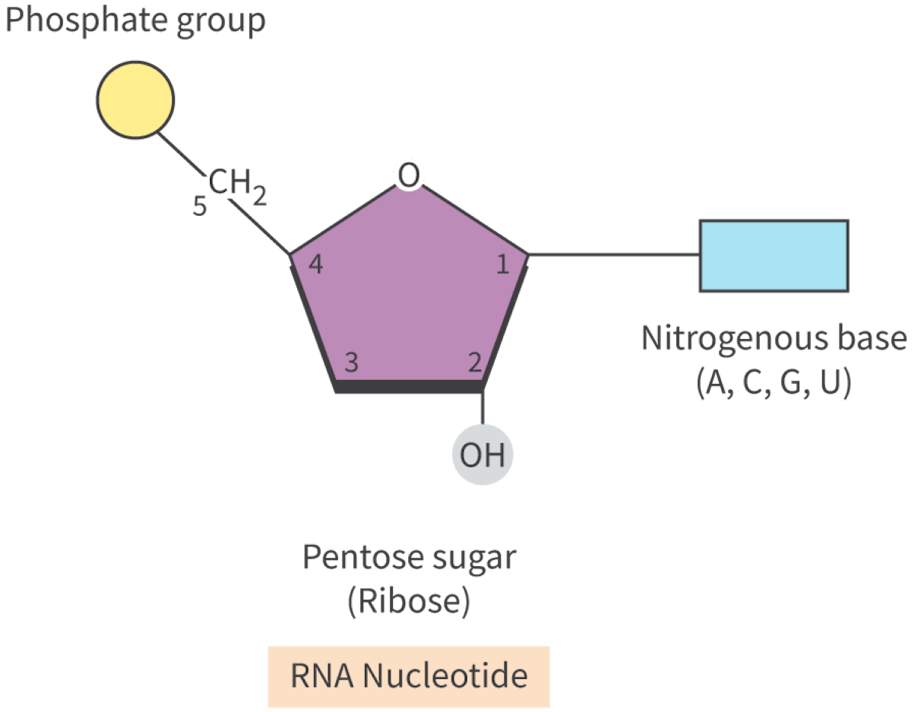
Nucleotides are made up of a pentose sugar, nitrogenous base and phosphate group that join together by a condensation reaction to form a polymer.
What bond is formed when a phosphate group attached to the 5′ C of one pentose sugar and the –OH group attached to the 3′ C of another sugar
covalent bond
Key points of RNA
Pentose sugar: Ribose, bases: AUCG, polymer structure: single stranded
Key points of DNA
Pentose sugar: Deoxyribose, bases: ATGC, polymer structure: double-stranded molecule connected by hydrogen bonding
What does CBP base off of to allow genetic info to be replicated and expressed
Hydrogen bonding
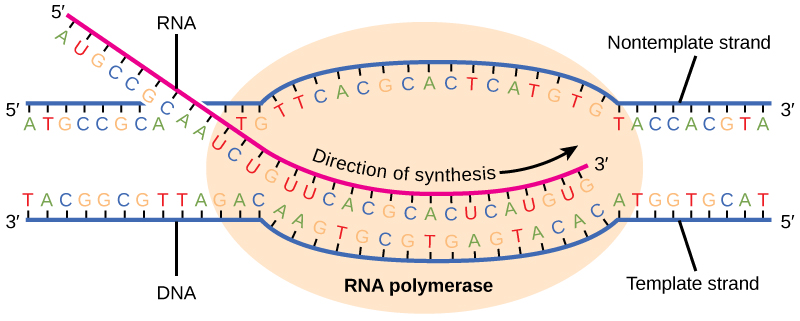
Directionality of RNA and DNA
Replication, transcription and translation occur in a 5′-3′ direction to ensure consistency of the reading frame.
Why is CBP important?
maintaining the base sequence during copying as the cell replicates before mitosis
What is replication?
the copying of DNA to create a new DNA molecule
What is Transcription?
The process in which the DNA is used as a template to produce RNA
What is Translation?
The process by which the transcribed RNA is translated by the ribosomes to produce proteins
Why is directionality important? (5’-3’)
ensures the conservation of the DNA base sequence during DNA copying and to ensure that the same protein is produced every time the gene is transcribed
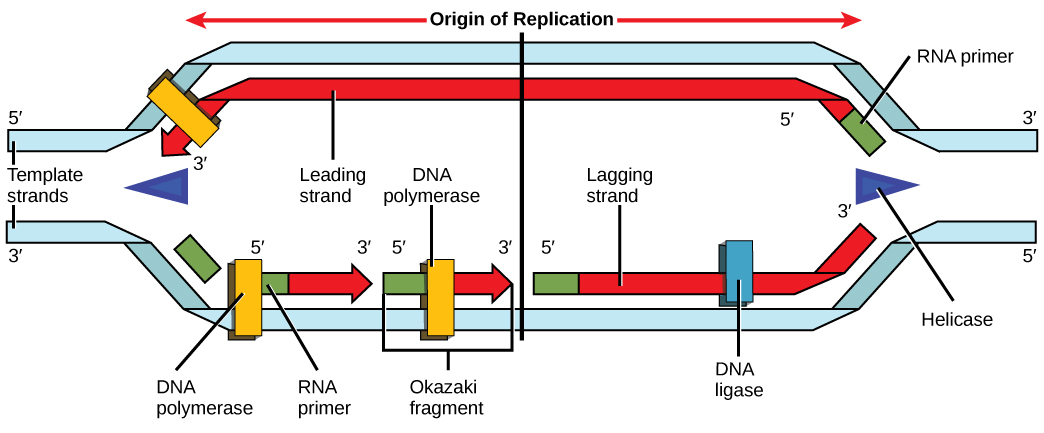
What enzymes are present in DNA replication
Helicase, Polymerase 3, primase, ligase
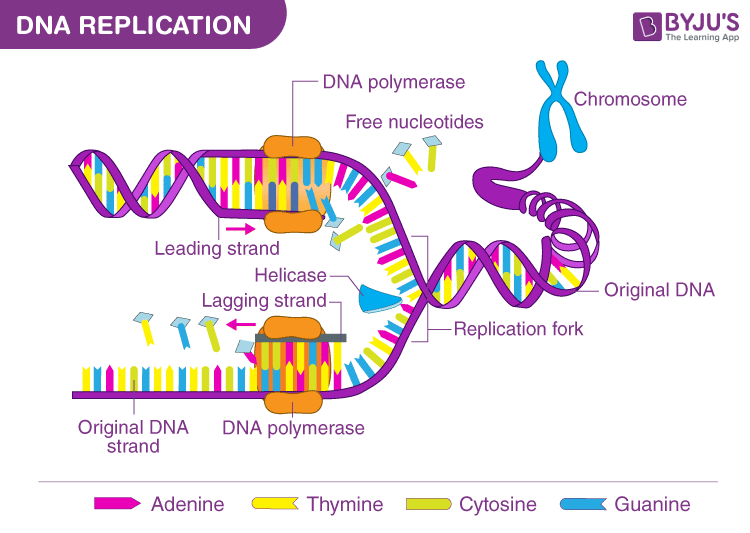
What does helicase do in DNA replication
Unwinds the double helix by breaking hydrogen bonds, creating the replication fork.
What does DNA polymerase 3 do in DNA replication?
Synthesizes new DNA strands by adding nucleotides (5' to 3' direction). It also provides proofreading (3' to 5' exonuclease activity) to correct errors.
What does DNA primase do?
A type of RNA polymerase that creates short RNA primers, providing a 3' OH group for DNA polymerase to start synthesis.
What does Ligase do in DNA replication
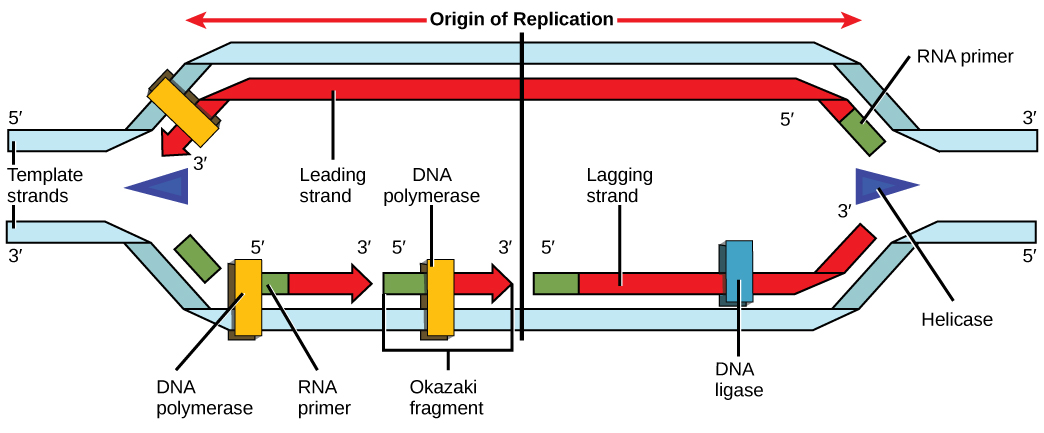
Seals gaps between Okazaki fragments on the lagging strand, connecting them into a continuous strand by forming phosphodiester bonds between them.
The 3 phases of DNA replication
Initation, Elongation, Termination
What enzymes are present in intiation?
Helicase and primase
What enzymes are present in elongation?
DNA polymerase and Primase
What enzymes are present in Termination
DNA ligase
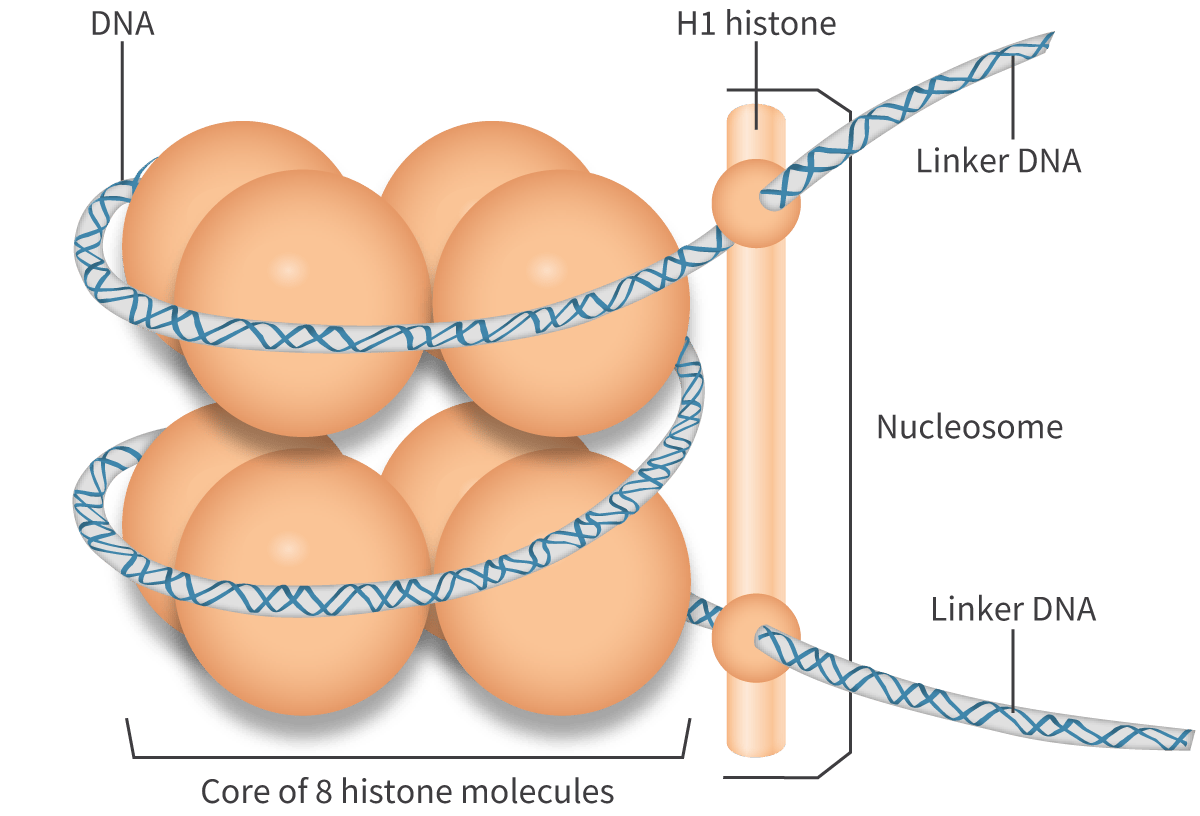
Structure of a nucleosome
Supercoil chromosome and inside consists of 8 subunits of the histone (Octomer), wrapped around twice is the DNA
When will DNA in a nucleosome decondense
•When replication occurs, DNA can not be in such a condensed format, therefore it must decondense (only during /mitosis)
How are nucleosomes linked?
by a DNA linker, A protein that joins DNA in a nucleosome.
How is DNA replication semi-conservative
each new DNA double helix is composed of one strand from the original parent DNA and one newly synthesised strand.
What is a lagging strand
one of two new DNA strands created during DNA replication, synthesized in short, discontinuous segments called Okazaki fragments
What does DNA polymerase and ligase do to okazaki fragments
DNAP: fills the gaps between Okazaki fragments and replaces the RNA primers with DNA nucleotides. L: seals up the gaps in the Okazaki fragments
Leading strand
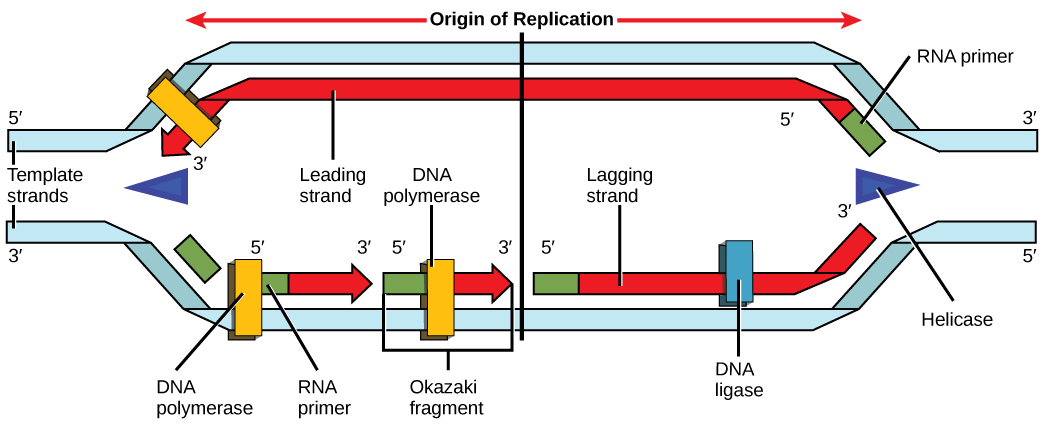
The new strand of DNA is synthesised continuously in the 5' to 3' direction during DNA replication.
Polymerase chain reaction
a technique used to amplify small samples or target sequences of DNA that can then be used for other types of analysis.
What has PCR allowed scientists to do
clone genes, to work with minute amounts of DNA found at crime scenes, to identify the dead
Requirements for PCR
free nucleoside triphosphates, primers, Taq polymerase
Free nucleoside triphosphates
The building blocks (nucleotides) used by DNA polymerase during DNA replication or PCR to synthesise new DNA strands.
role of Primers in PCR
allow replication to occur from the desired point
Taq polymerase
a special heat-stable version of DNA polymerase
What are the 3 phases in PCR
Denaturing, annealing, extension
What happens in the denaturing phase of PCR
The DNA is heated, around 98 °C, enough to break the hydrogen bonds that hold the two strands of the double helix together.
What happens in the annealing phase of PCR
The temperature is lowered to 60 °C to allow the primers to bind to complementary sequences on the DNA template.
What happens in the extension phase of PCR
The bonding of primers allows Taq polymerase to replicate DNA using the primer as a starting point at around 78 °C . Once the DNA has been replicated, the DNA strands are heated to the point of separation, and the process begins again.
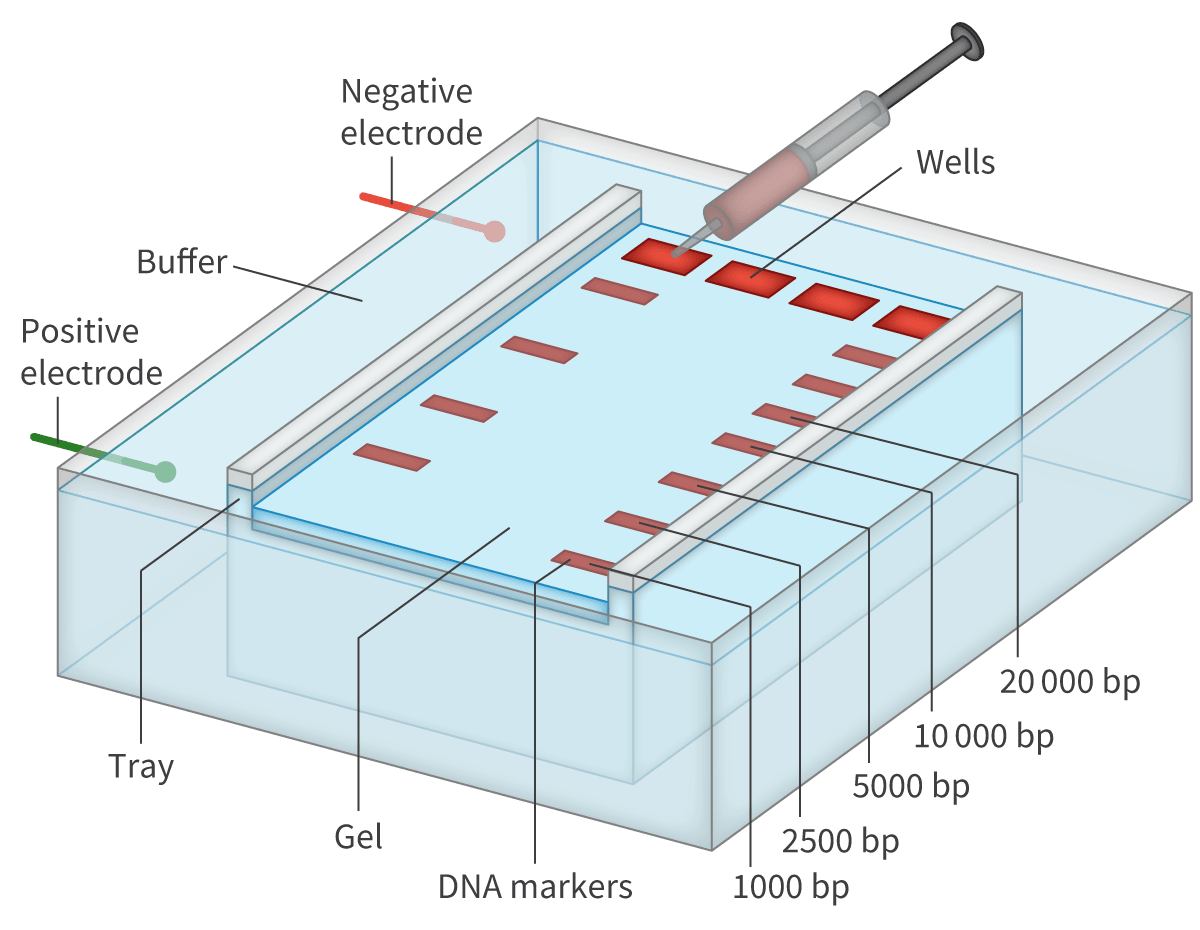
Why is PCR ideal for gel electropheresis
It provides ample copies as each time a cycle occurs, the amount of DNA doubles, resulting in exponential growth.
What is gel electropheresis
A technique used to separate and analyse DNA fragments based on their size and charge using an electric field and a gel matrix.
What is gel electropheresis ideal for
to identify some key features of the DNA.
How does gel electropheresis identify key features of DNA?
An electrical current moves molecules through a gel. The DNA molecules are separated by their size and amount of charge.
Why do DNA molecules move towards the positive electrode in an electric field
DNA molecules have a negative electrical charge (opposites attract).
Phosphodiester bonds
The covalent bond that forms between the phosphate group of one nucleotide and the sugar of the adjacent nucleotide in a DNA or RNA strand.
Okazaki fragments
Short DNA fragments that are synthesised on the lagging strand during DNA replication and later joined together.
In what direction is the leading strand synthesized?
5’-3’
In what direction is the lagging strand synthesized?
in the 5’-3’ direction, similar to the leading strand. However, it is synthesized on an antiparallel template, its overall direction of synthesis is away from the replication fork
What is the first step in protein synthesis?
transcription
What is transcription?
Process by which the genetic information encoded in DNA is copied into RNA.
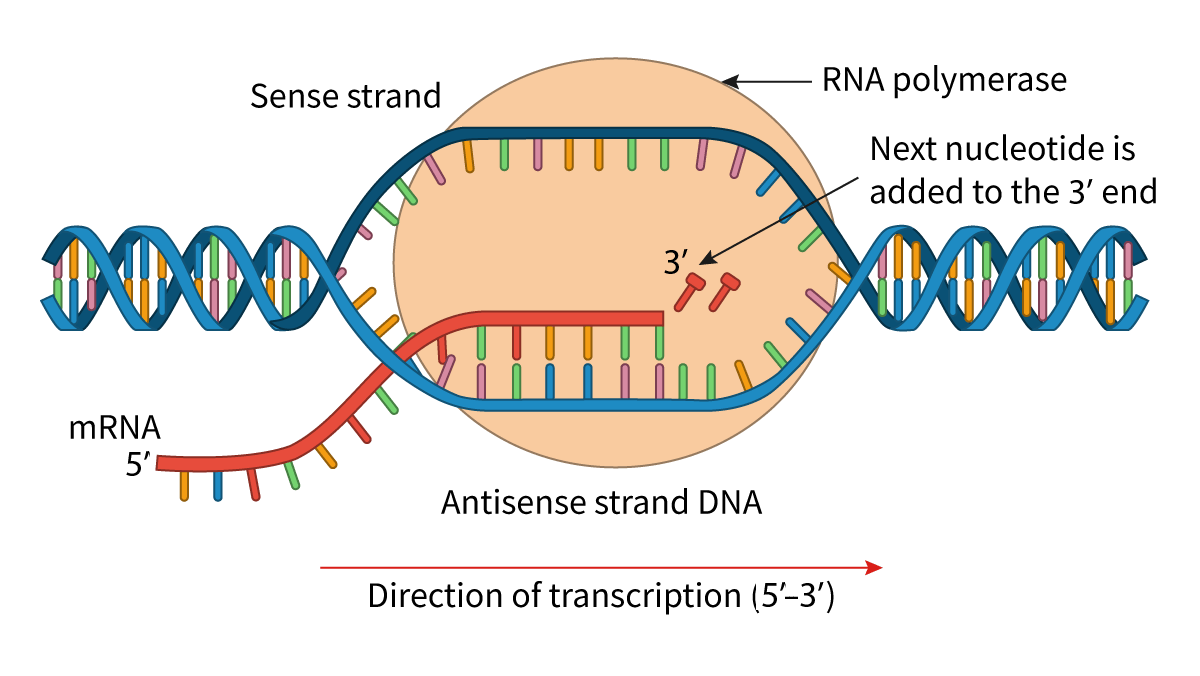
What is the process of transcription?
Similar to DNA, it follows initiation, elongation, termination phases
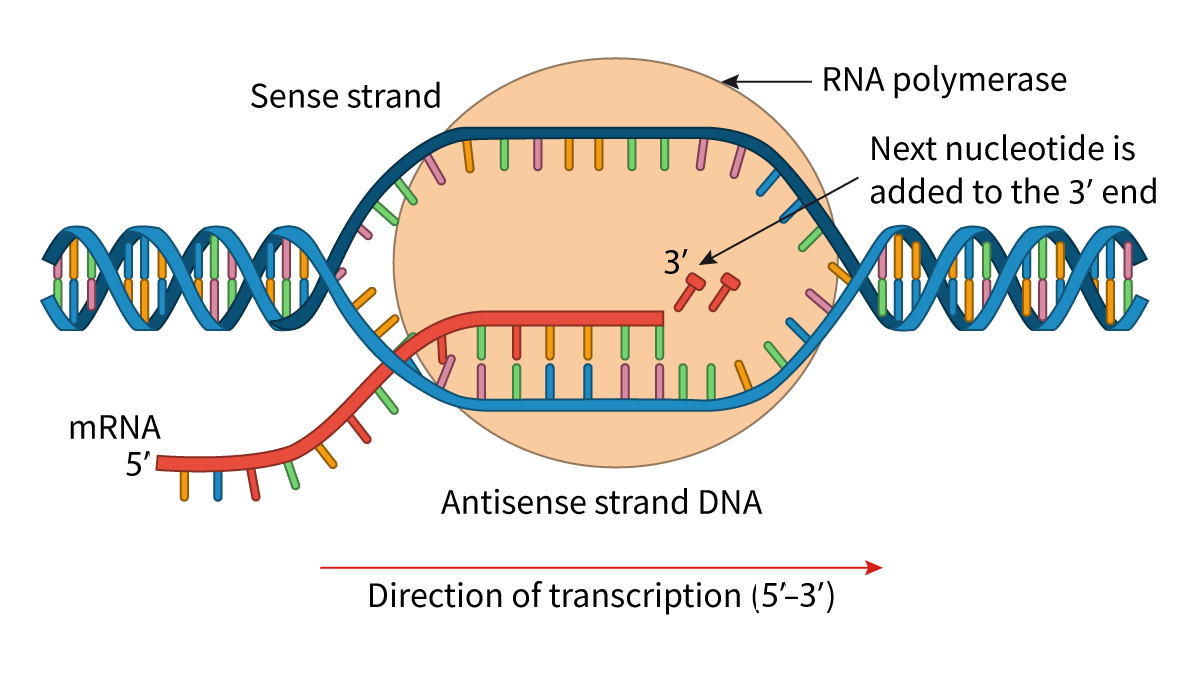
RNA transcription Initiation phase
RNA polymerase binds to the DNA at the start of a gene. It then separates the two strands of the DNA by breaking the hydrogen bonds, exposing the bases.
What enzymes are present in RNA transcription initation?
RNA polymerase,
What happens in RNA transcription elongation?
RNA polymerase builds a molecule of mRNA on the template strand of the DNA. RNAP reads one base at a time adding a free RNA nucleotide to the growing mRNA
what is a free growing nucleotide?
Individual RNA nucleotides (adenine, uracil, cytosine, and guanine) that are available in the cell for use during transcription to create the complementary RNA molecule.
What happens in RNA transcription termination phase?
a terminator sequence in the DNA is reached and the mRNA is released. The RNA polymerase detaches from the DNA strand, allowing the two strands to come together again.
What is gene expression?
The process by which genetic information is used to produce RNA and proteins.
How does gene expression link to RNA transcription?
A key stage of gene expression is transcription as only genes (DNA sequences) that are transcribed are active within the cell.
RNA -Protein translation process
Process by which ribosomes use the genetic information carried by mRNA to synthesise proteins.
How does translation happen?
the mRNA is read by the ribosome and using the code within the mRNA, amino acids are added in a specific sequence to form a polypeptide.
Where does DNA replication occur?
The nucleus
Where does Transcription occur?
In the nucleus then exits to the free ribosomes (cytoplasm or RER)
three main components of translation
mRNA, ribosomes, tRNA
Why is mRNA important in translation?
The mRNA brings the code from the DNA in the nucleus in its base sequence. This code has the instructions for the polypeptide to be produced.
Why are ribosomes important in translation?
The structure of the ribosome brings the mRNA and the tRNA together in the correct orientation so that the process can occur efficiently and correctly.
What do ribosomes act as?
an enzyme with multiple active sites
What is rRNA in ribosomes?
A type of RNA molecule that is a structural component of ribosomes, the cellular organelles responsible for protein synthesis.
Structure of a ribosome
Ribosomes have a small and a large subunit, with three binding sites for tRNA molecules
Translation binding process
mRNA binds small ribosomal subunit; up to 2 tRNAs bind large subunit. Each tRNA carries a specific amino acid. Matching tRNA anticodon to mRNA codon → amino acid added to growing polypeptide via peptide bond.
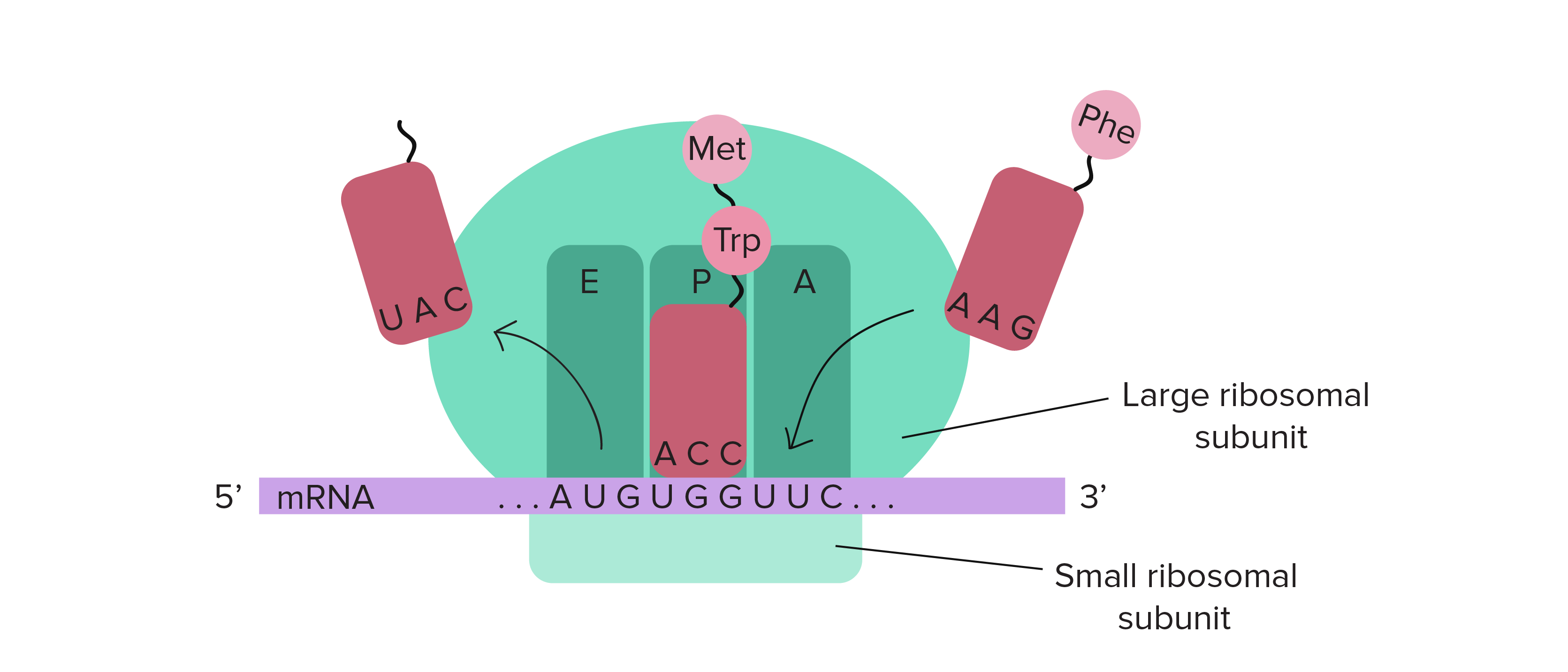
Codons
A set of three adjacent nucleotides in DNA or mRNA that code for a particular amino acid.
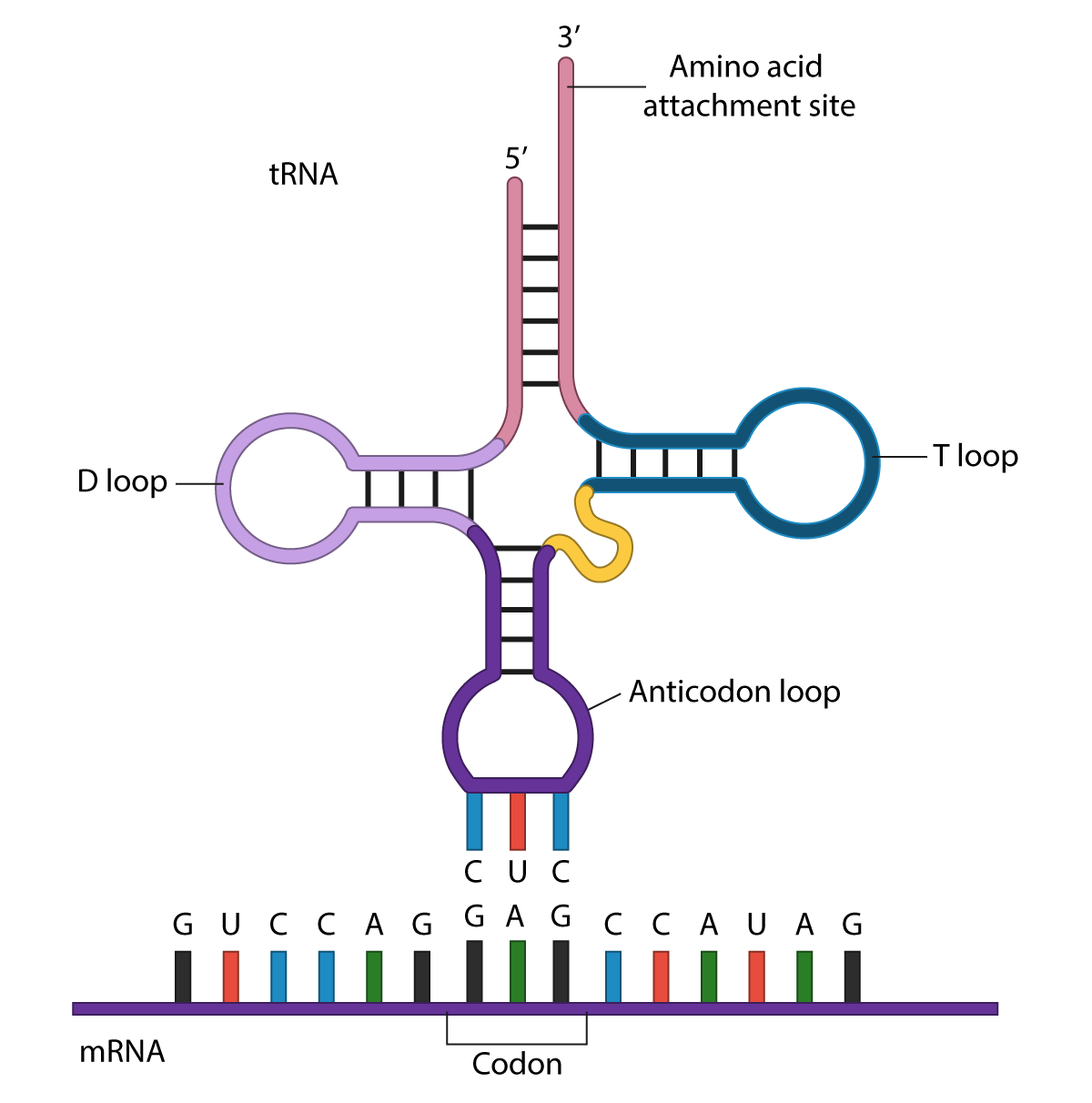
anticodon
A sequence of three nucleotides in tRNA that is complementary to a specific codon in mRNA, allowing the tRNA to recognise and bind to the corresponding codon.
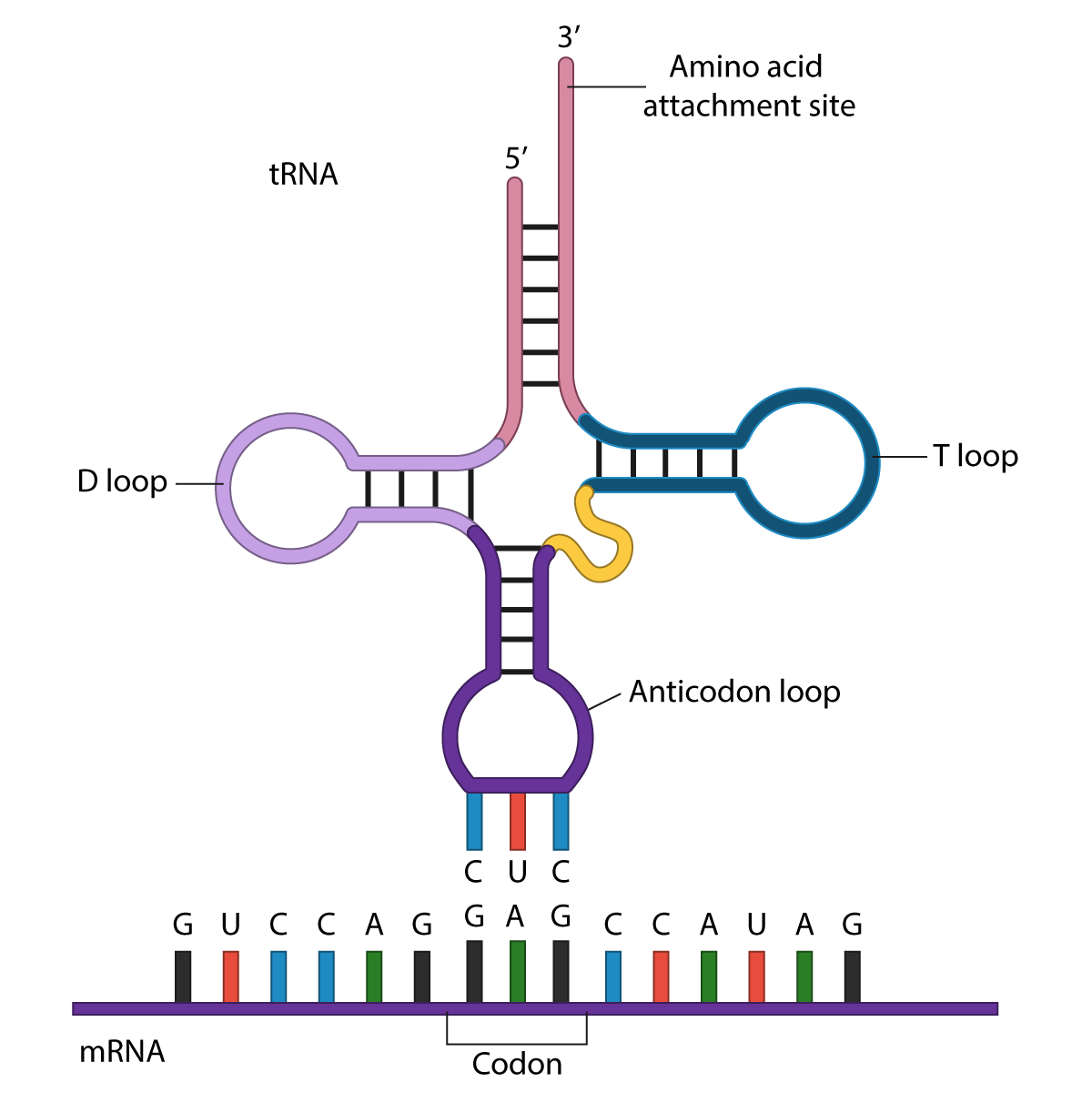
degeneracy
Refers to the redundancy in the genetic code, which allows for multiple codons to code for the same amino acid.
universal
Referring to the fact that the genetic code is nearly identical in all organisms, with most codons specifying the same amino acids.
Three processes of translation
initiation, elongation, termination
Translation initiation phase
where the ribosome, mRNA, and initiator tRNA assemble to identify the start codon (AUG)
Translation elongation phase
As each codon enters, a matching tRNA (with amino acid) binds, shifting previous tRNAs along. Condensation reactions form peptide bonds between amino acids.
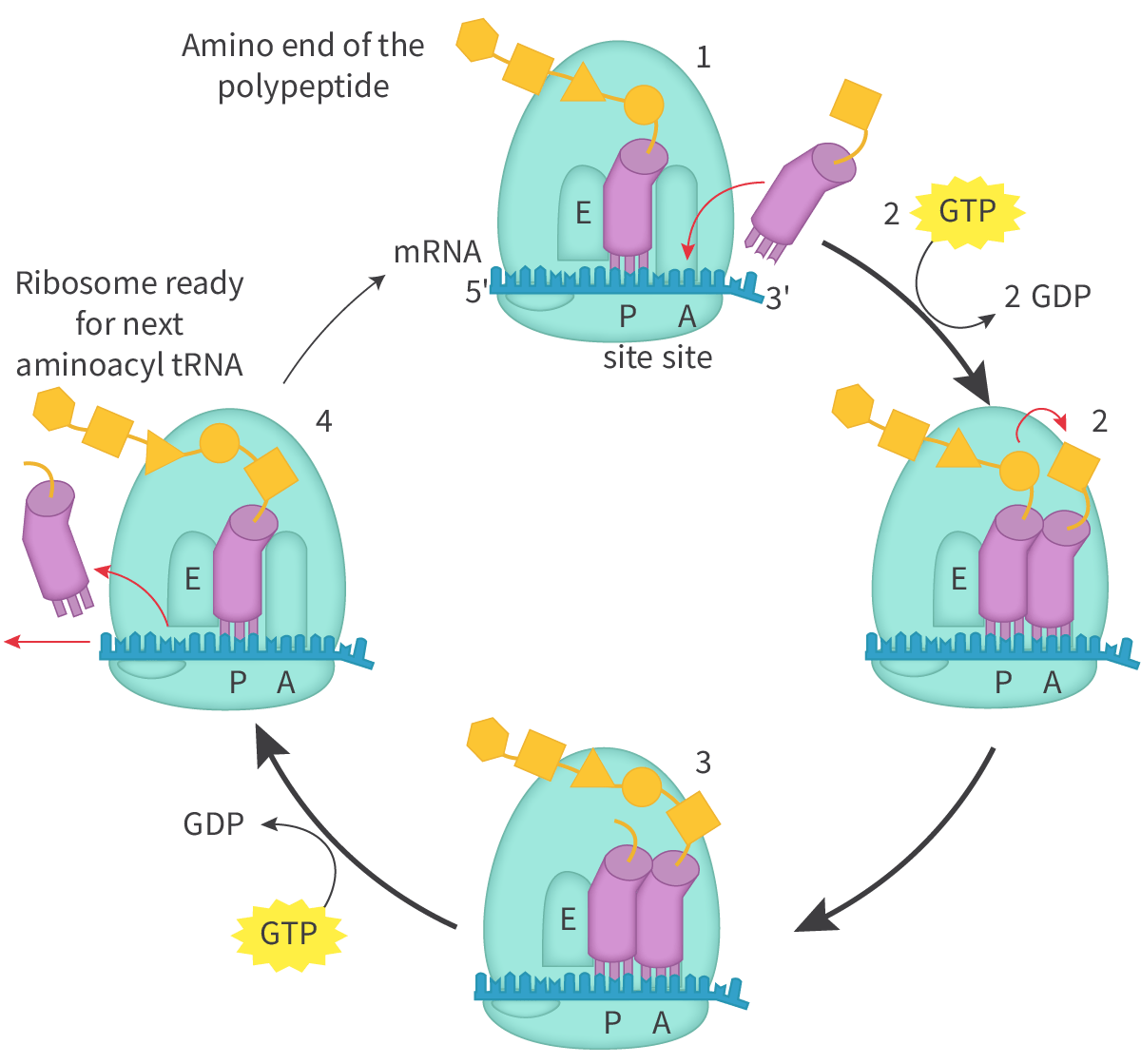
Elongation the APE
tRNA + amino acid binds A site (anticodon ↔ codon). Large subunit forms peptide bond with polypeptide in P site. Ribosome translocates one codon: P→E (exit), A→P, A site free.
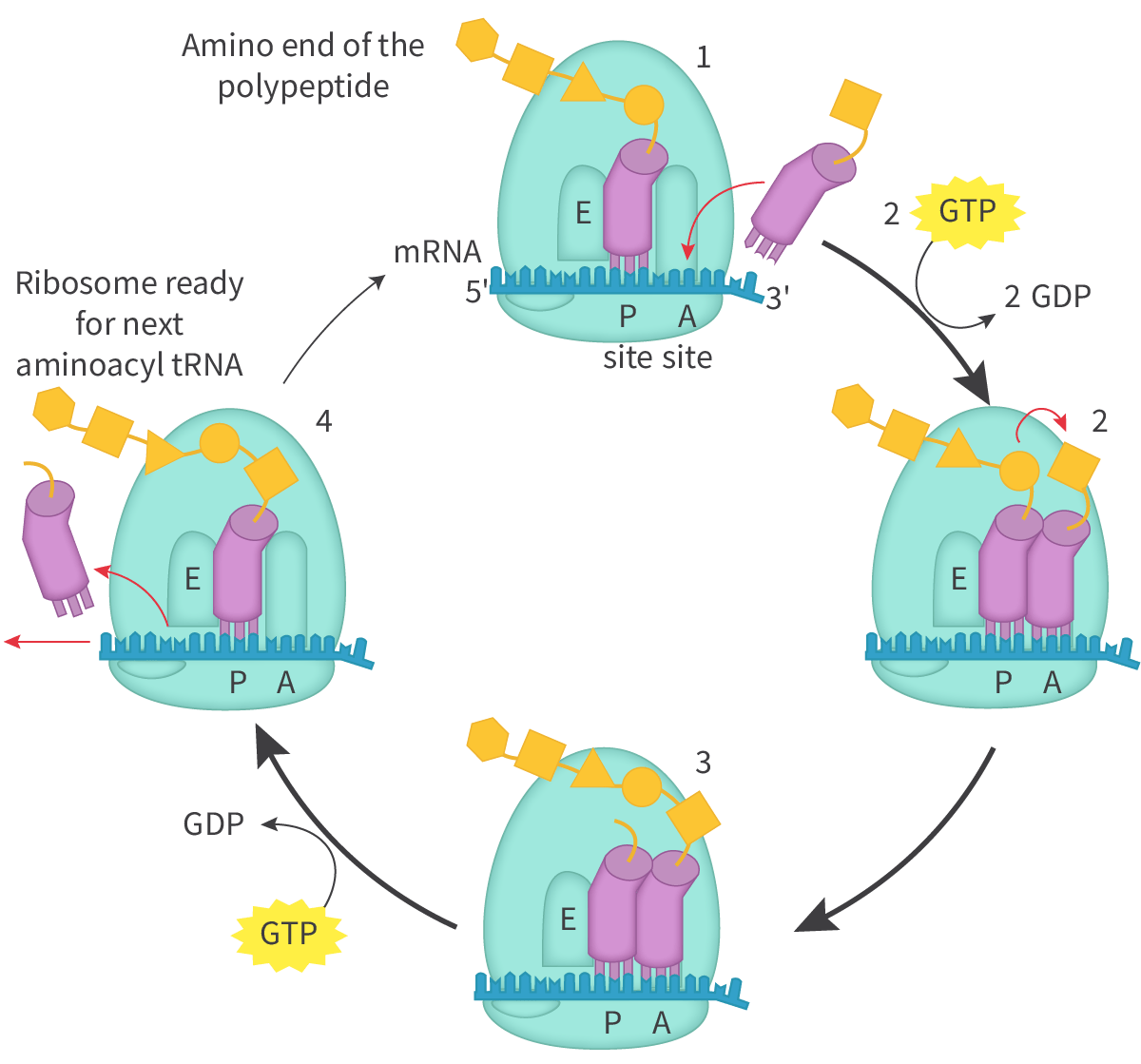
mutation types
insertion, deletion, frameshift, substitution, silent
insertation mutation
A type of genetic mutation where one or more nucleotides are added to a DNA sequence.
deletion mutation
A type of genetic mutation where one or more nucleotides are deleted from a DNA sequence.
frameshift mutation
Frameshift mutations occur when insertions or deletions of nucleotides disrupt the reading frame of a gene sequence
substitution mutation
A type of genetic mutation where one nucleotide is replaced by another in a DNA sequence.
silent mutation
A type of mutation that does not result in any change in the amino acid sequence of a protein due to the degeneracy of the genetic code.
example of single point mutation
sickle cell anaemia
Promotors
A non-coding region of DNA to which RNA polymerase binds to initiate transcription.
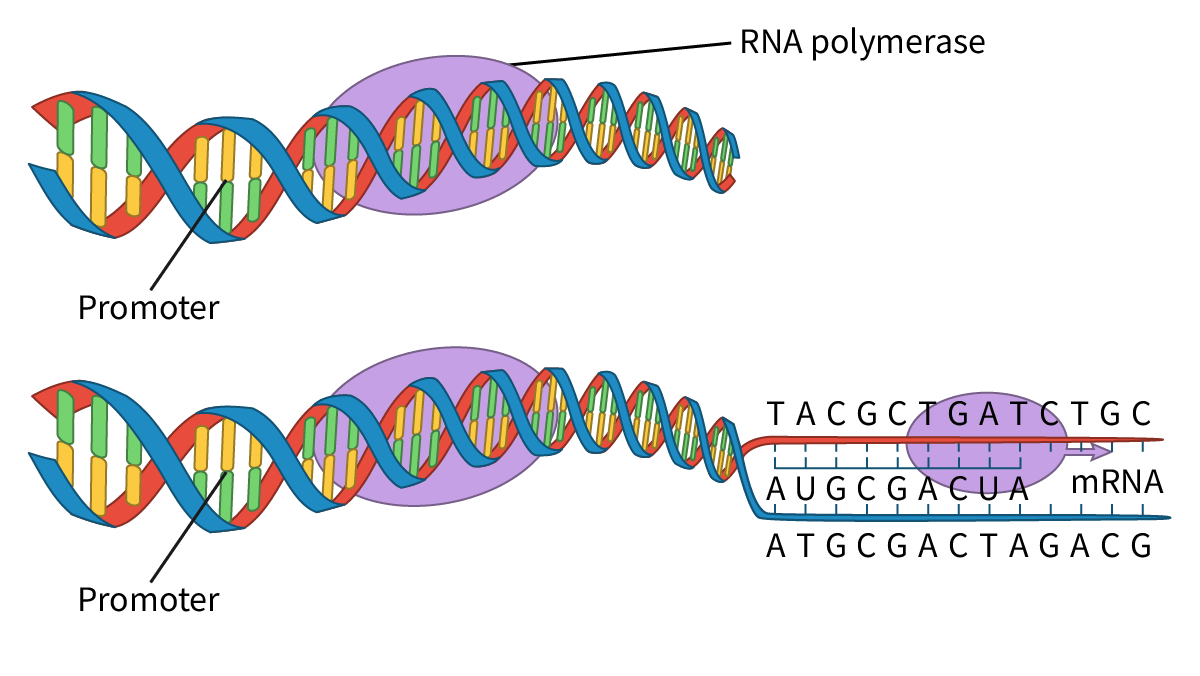
Why do promotors bind to transcription factors ?
allows the RNA polymerase to also bind and then begin to transcribe the DNA into RNA
transcription factors
A group of proteins that impact gene expression.
What happens if the transcription factor is missing?
transcription will not take place and that gene cannot be expressed.

