Entm 010 Midterm Prep
 Studied by 0 people
 Call Kai
 Learn
Learn Practice Test
 Spaced Repetition
 Match
Match Flashcards
 Knowt Play
1/48

Earn XP
Description and Tags
Key words around physiology, manners, etc.
Name | Mastery | Learn | Test | Matching | Spaced | Call with Kai |
|---|
No analytics yet
Send a link to your students to track their progress
49 Terms
tagmata
the three body segments of an insect; head, throax, abdomen
(plural is tagmata singular is tagma)
exoskeletonn
a hard, tough, watertight covering that protects the body of certain insects and forms wings in some
sclerites
hard, plate like sections of an insects exterior
midgut
middle section of an insects gut, main section where digestion of nutrients and absorption occur
food absorption
the process by which insects intake food broken down in their gut
basement membrane
innermost component of the exoskeleton, connects tissues to the exoskeletons
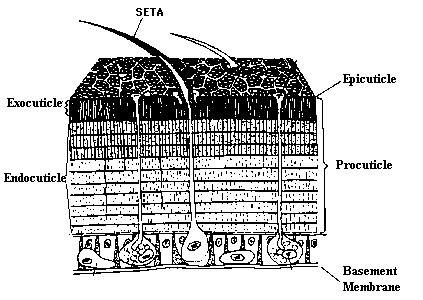
cellular epidermis
layer of cells that secretes the basement membrane and the external cuticle
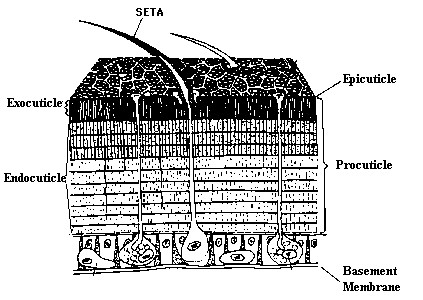
cuticle
non-cellular material covering the insects; has two components
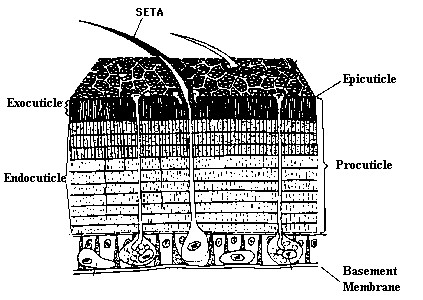
procuticle
two layers, endocuticle and exocuticle
epicuticle
on top of the exocuticle, the outer-most layer of the exoskeleton and manifests the characteristics of the insect
chitin
tough polysaccharide similar to cellulose and starch found in plants; main ingredient of exoskeleton
sclerotin
protein mixed with chitin
sclerotization
process occuring in the exocuticle; proteins chemically cross-link and cause the cuticle to darken/ harden
consequences of an exoskeleton
insect grows by molting
limits size of animals
benefits of a exoskeleton
dispels water loss
defense against predators, parasites, pathogens
protects digestive lining
efficient muscle placement
shock absorption
labrum
insect “upper lip“; keeps food in mouth
mandibles
cut up and chew food
maxillae
second set of jaws
labium
insect “lower lip“; helps keep food in mouth
palps
finger like appendages that help insects grip food, taste, smell, and perceive temperatures
chewing mouthpart insect
insect that chews their food through specific mouth parts
piercing-sucking mouthparts
modifications of basic chewing part, insects that withdraw fluids from plants and animals
maxillary stylet
inside stylet; sucks up fluids
mandibular stylet
outside stylet; spews out fluids and spit
antennae
sensory structure that helps touch, detect odor, humidity, vibration, wind velocity and direction
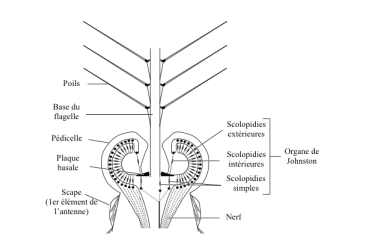
scape
base connecting antennae to head
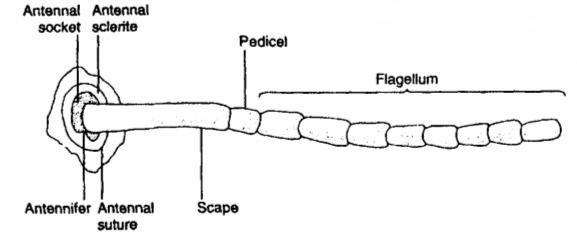
pedicel
small middle section connecting scape to flagellum
flagellum
longest part of the antennae and is the part that connects to substances to feel
johnston’s organ
sensory ctructure that detects moving air; sound or movement
compound eyes
photoreceptive organs in adult insects receiving form, color, and movement
ommatidia
individual units making up the compound eye
dorsal ocelli
three small eyes capable of detecting changes in the weather
stemmata or lateral ocelli
eyes found in juvenal insects, similar to compound eyes but less efficient and limited in focus capabilities
thorax
middle section of an insect, holds the insects legs and wings
insect legs
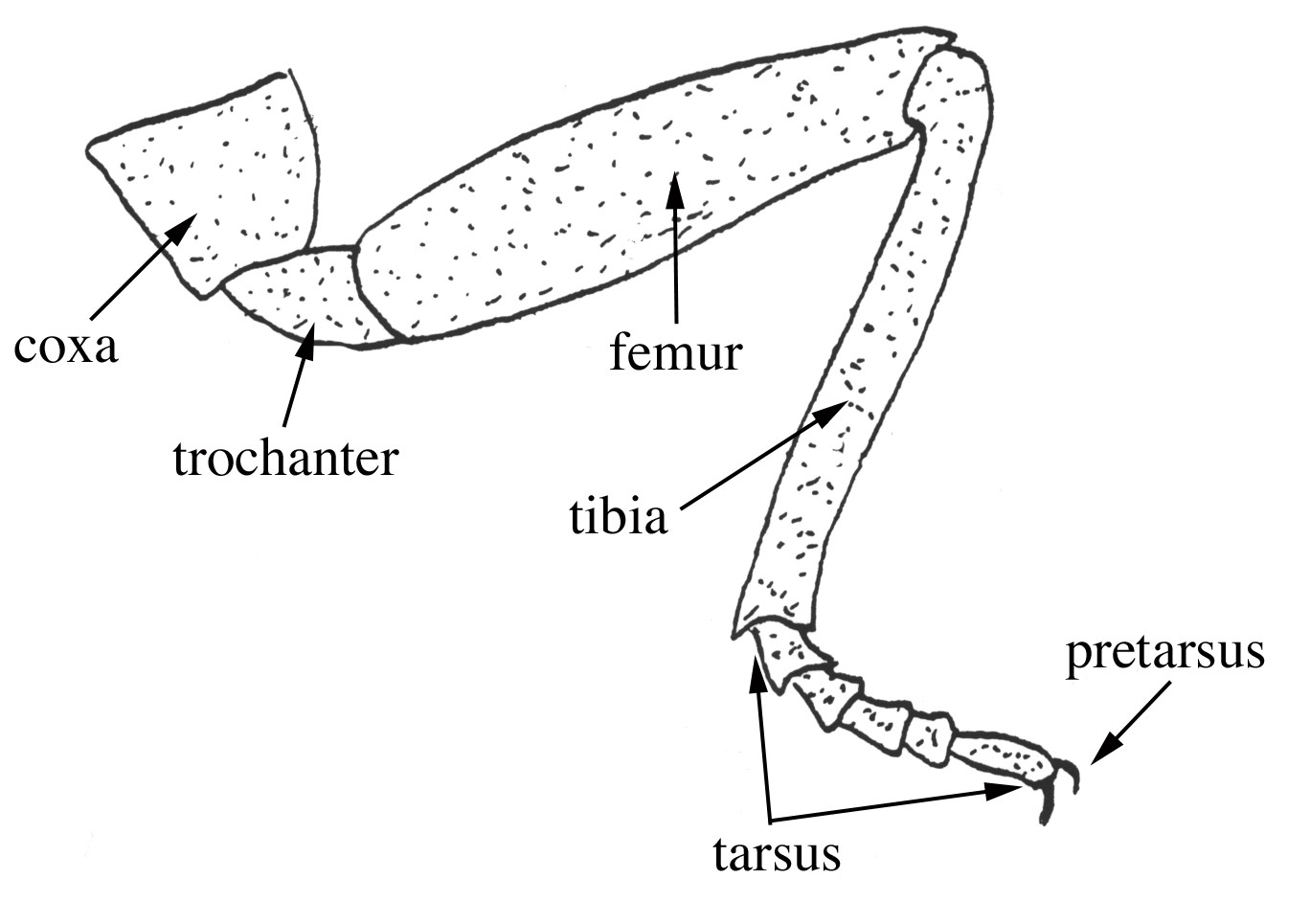
four segments trochanter, femur, tibia and tarsus make up the mode of travel for most insects
pretarsus
the bottom of the insect “foot“, allowing it to walk up a walk and walk upside down on a ceiling
cursorial legs
thin and long legs best for running or walking on surfaces
natatorial legs
smaller, slightly thicker legs that propel an insect in water
saltatorial legs
long legs best for jumping
raptorial legs
thick and sturdy legs best for hunting prey
fossorial legs
thick, small legs best for digging
wings
extensions of the exoskeleton that propel some insects
apterygota
insects that never developed flight structures
pterygota
groups of insects that developed wings
abdomen
hind section of an insect, last tagma
aedeagus
male genitalia
ovipositor
female genitalia
cerci
segment of the abdomen that acts as a sensory appendage
 Note
Note  Flashcards (43)