Chapter 25-1: The Digestive System
 Call Kai
 Learn
Learn Practice Test
 Spaced Repetition
 Match
Match Flashcards
 Knowt Play
1/103

There's no tags or description
Looks like no tags are added yet.
Name | Mastery | Learn | Test | Matching | Spaced | Call with Kai |
|---|
No analytics yet
Send a link to your students to track their progress
104 Terms
Functions of the Digestive system (6)
Ingestion
Mechanical processing (mastication, propulsion, mixing)
Digestion (Chemical digestion)
Secretion (exocrine: in gut, endocrine: hormones to regulate organs in gut)
Absorption
Elimination (compaction and defecation)
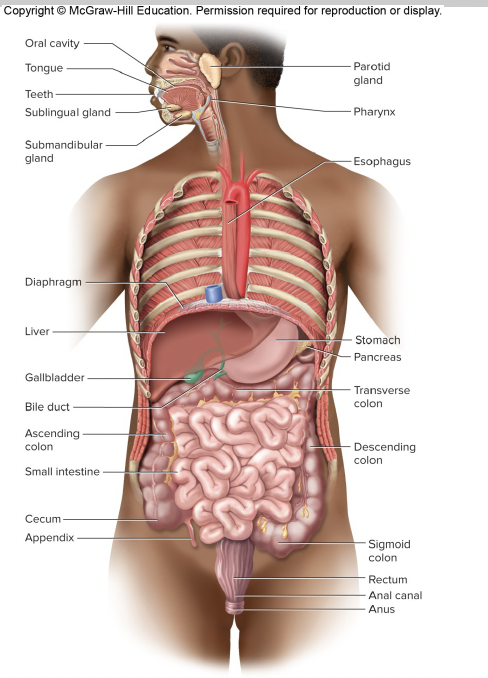
The Digestive system is make or what tract and what acessory organs
muscular digestive tract (alimentary tract)
1.esophagus
2.stomach
3.small intestine
4.large intestine
Accessory organs (produce exocrine products to help digestion)
1.salivary glands
2.exocrine pancreas
3.liver
4.gallbladder
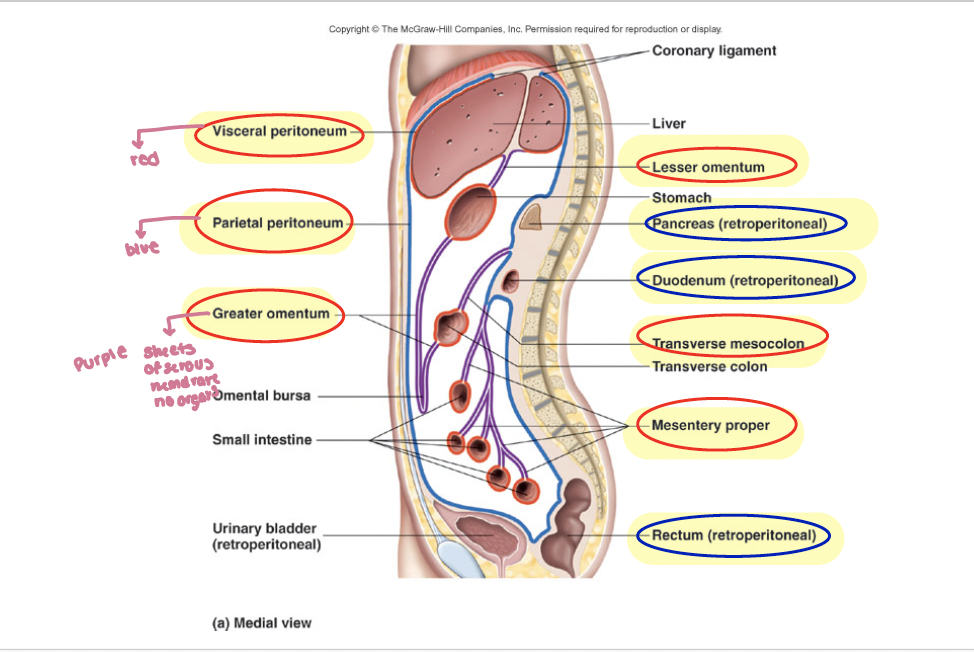
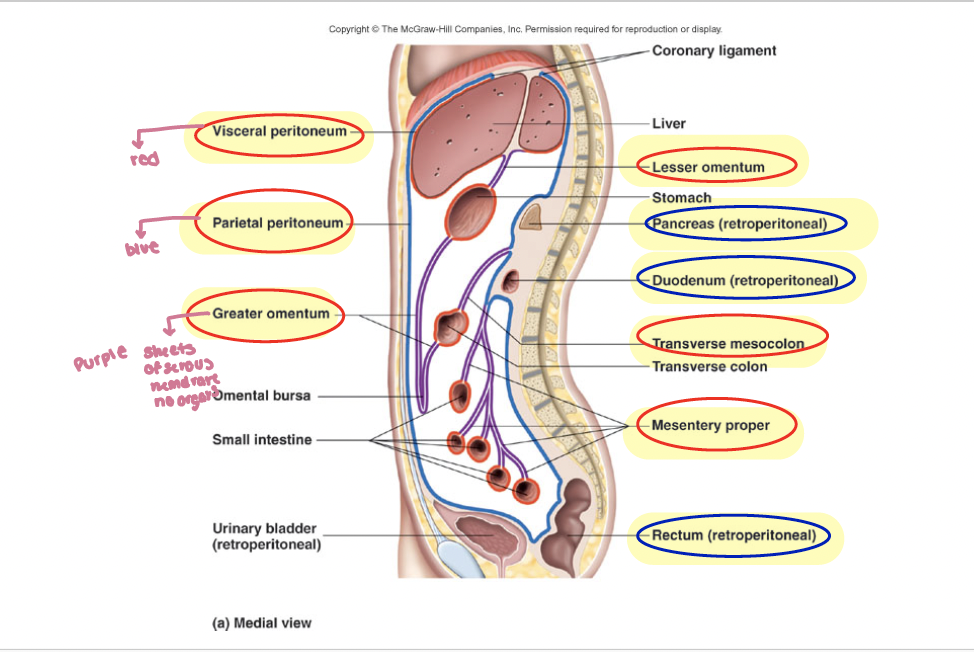
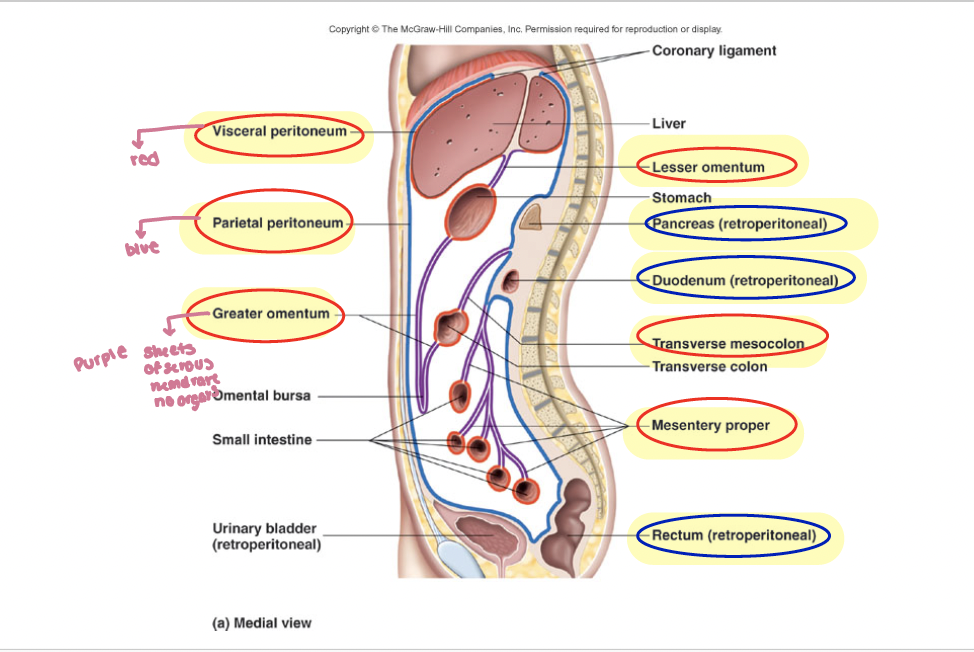
parietal peritoneum lines where
attaches to abdominal muscles
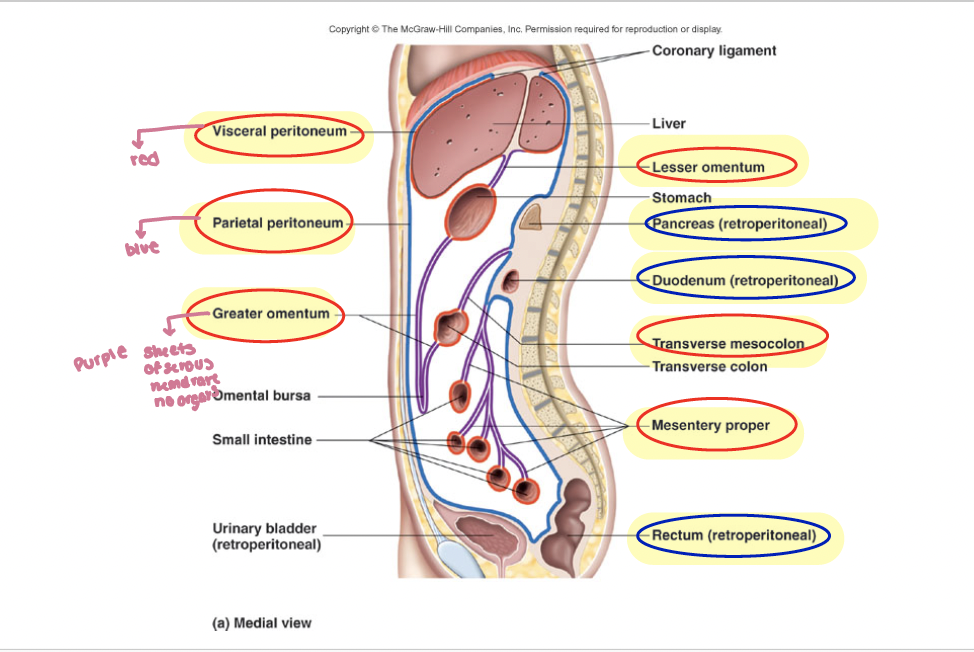
visceral peritoneum lines where
attaches to organs
peritoneums develop in what
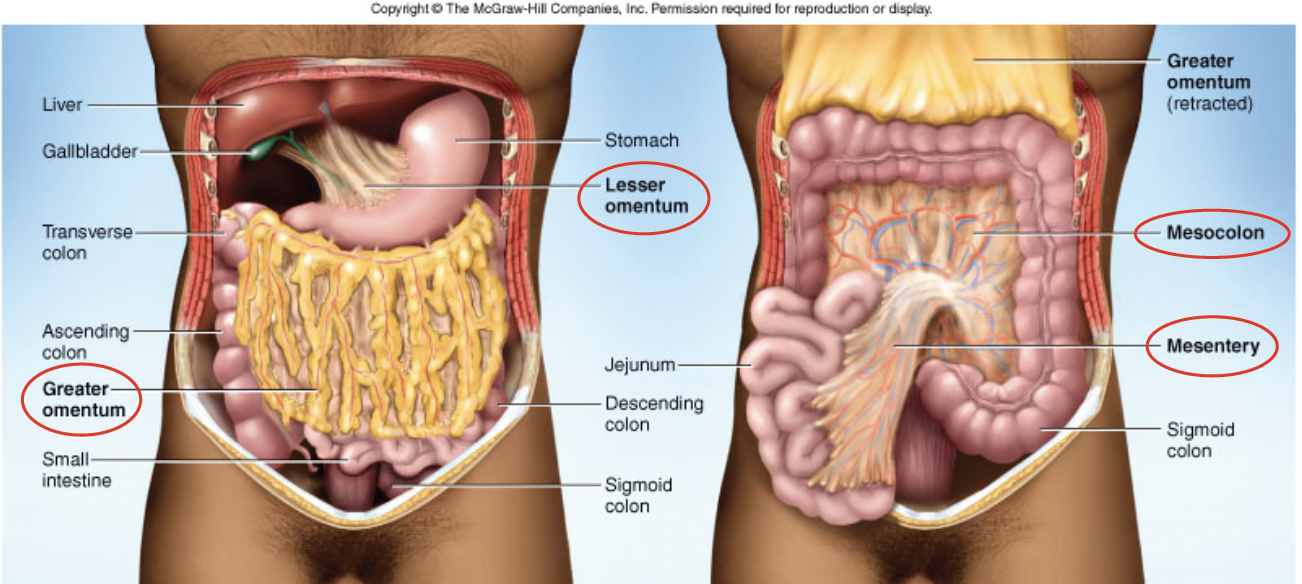
mesenteries that hold and supports the digestive organs
mesenteries are what
sheets of serous membrane that support portions of the digestive tract
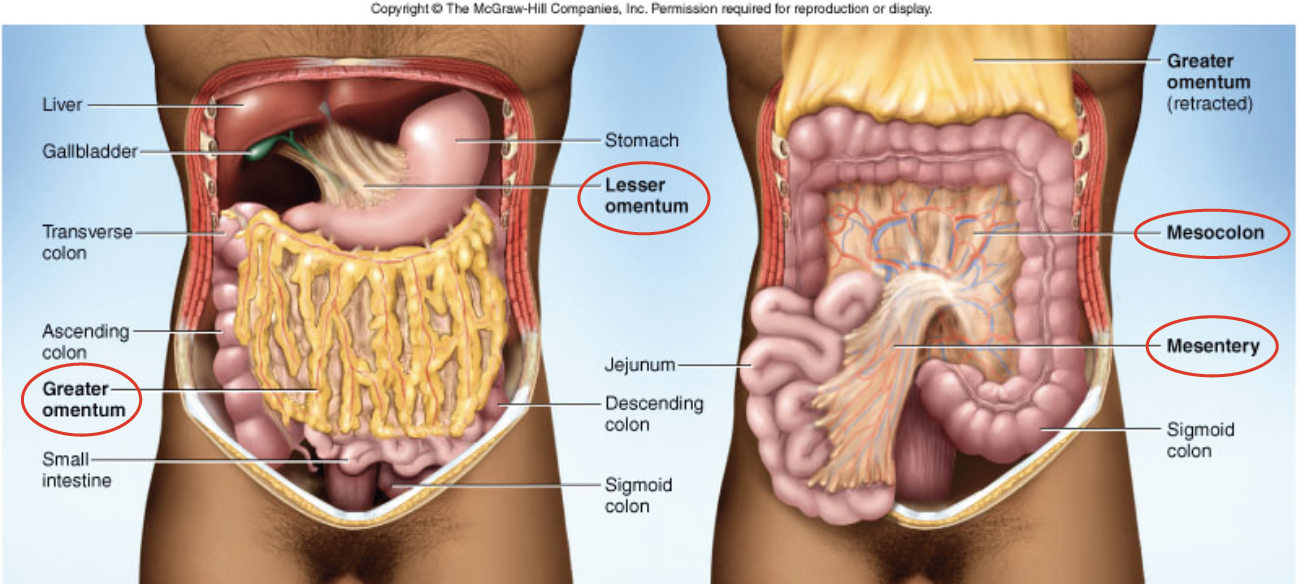
greater omentum lies where and provides what (4)
anterior to the abdominal viscera (abdominal organs)
provides protection, padding, insulation and energy reserves
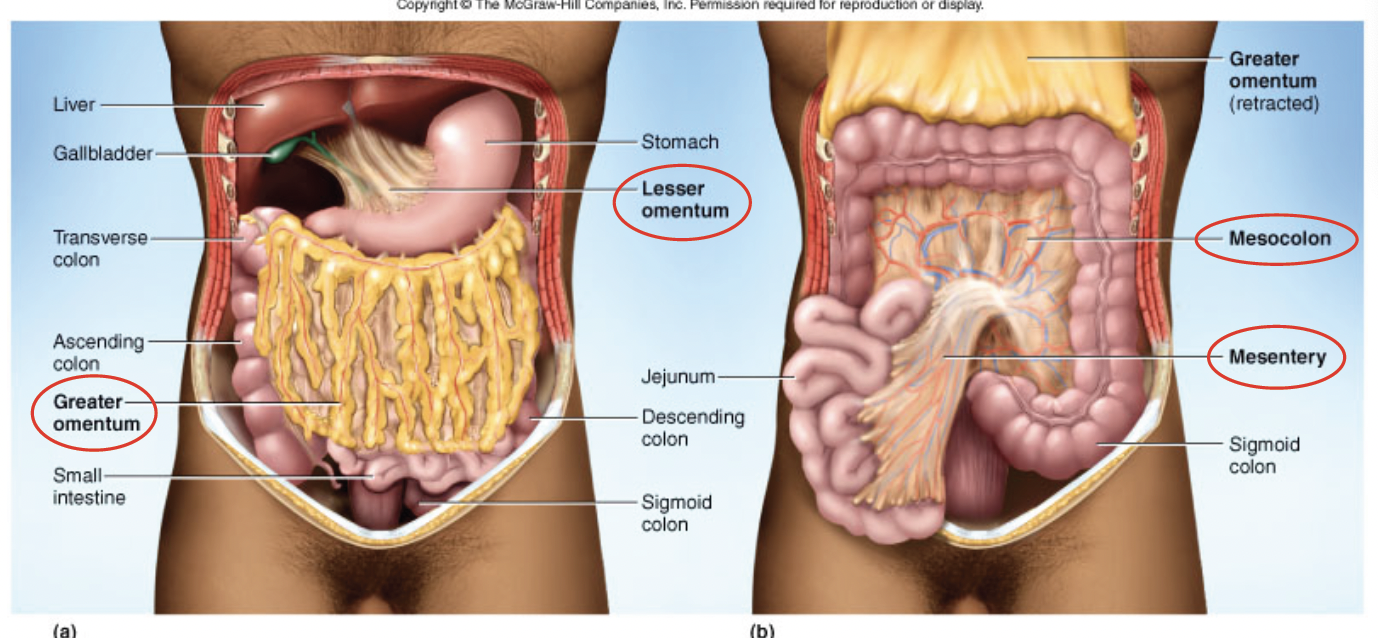
lesser omentum lies where and does what
between liver and stomach
stabilizes the stomach abd provides support for blood vessels entering and leaving the stomach
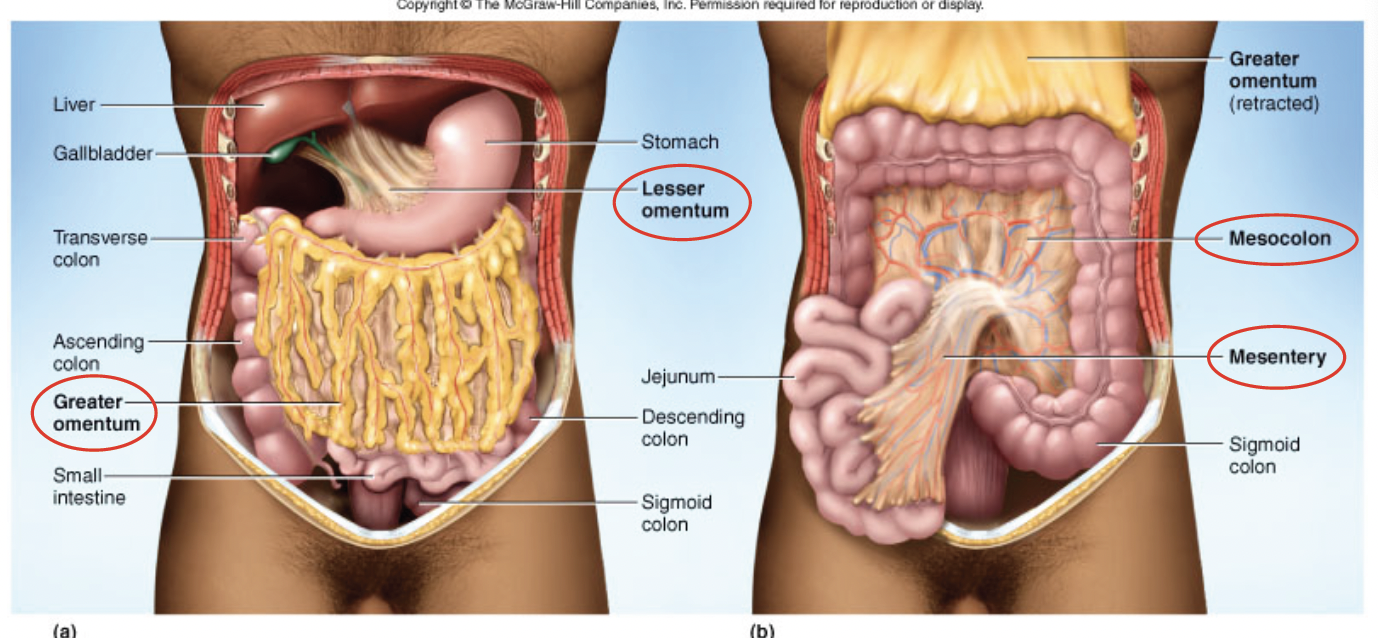
Falciform ligament does what
supports and stabilizes the liver
mesocolon is what
mesentery associated with the large intestine
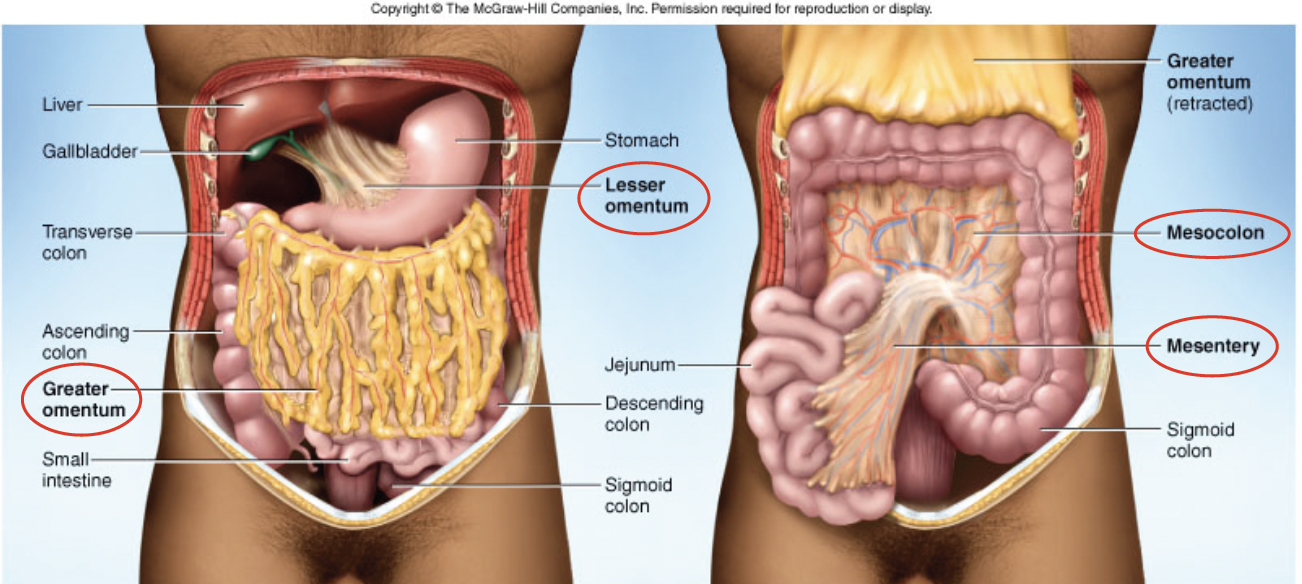
two types of mesocolon
transverse mesocolon and sigmoid mesocolon
retroperitoneal organs means what and what organs are retroperitoneal (3)
organs that lie behind the peritoneum
1.duodenum
2.pancreas
3.rectum
mucosa lines where in the digestive tract
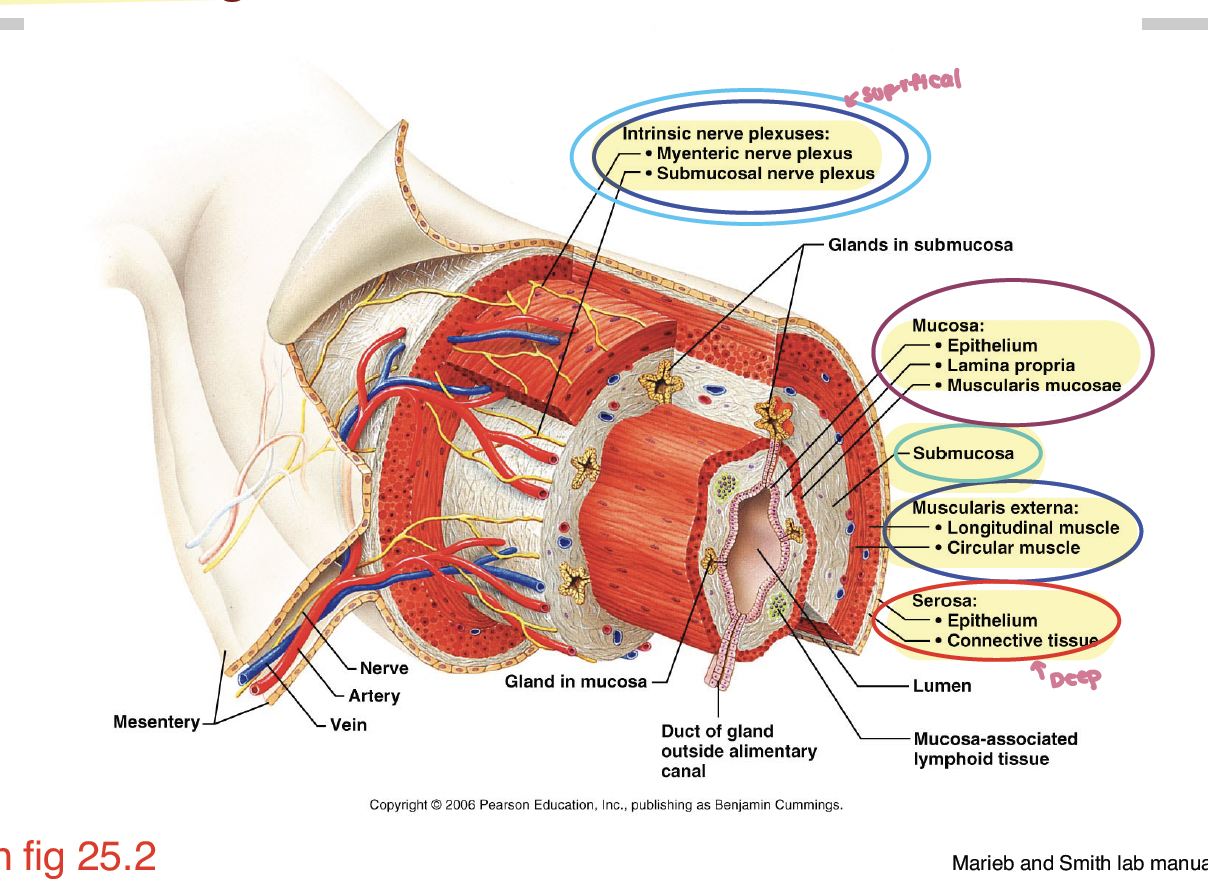
inside the digestive tract
mucosa has 3 parts what are they
epithelium
lamina propria
muscularis mucosae
mucosa epithelium types and where there found (2) and specialized cells (2)
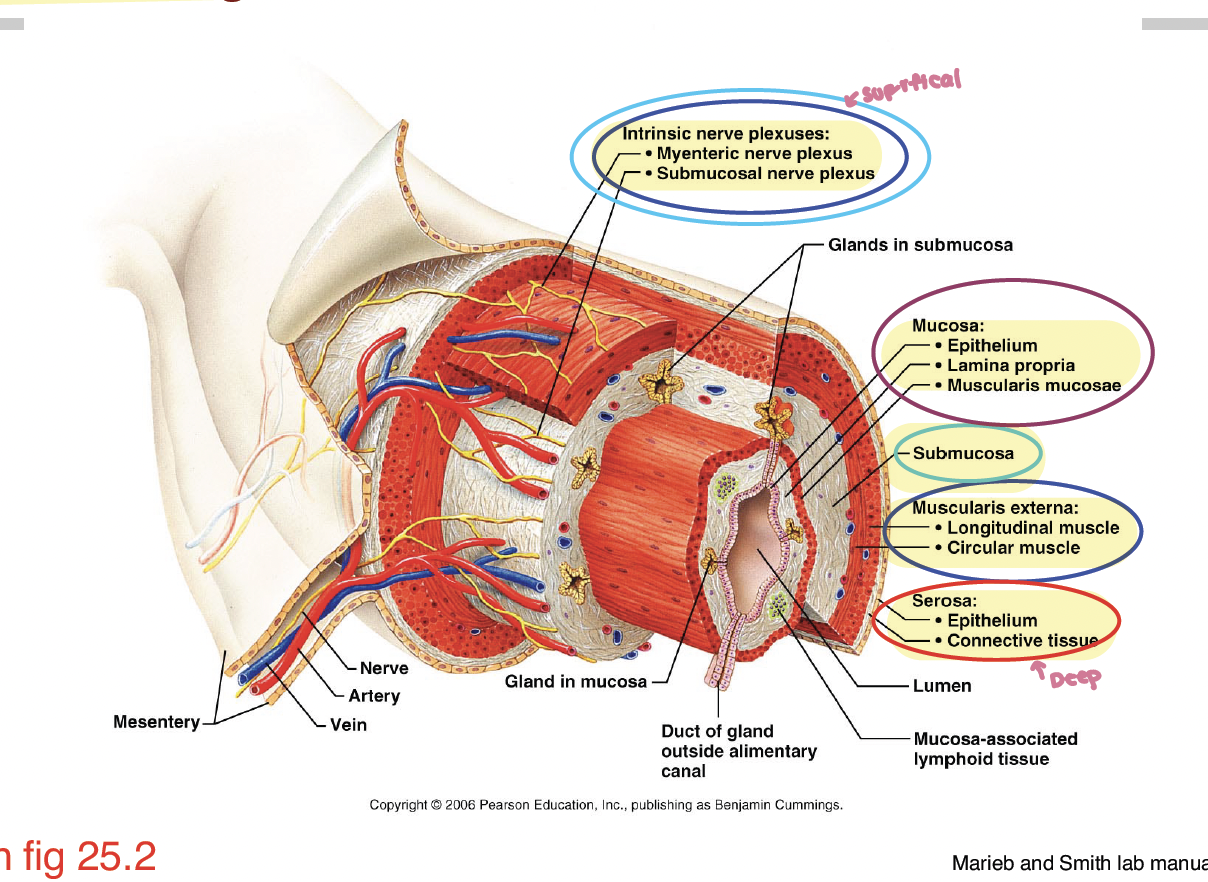
mucosa epithelium types (2)
stratified squamous: mouth, oral pharynx, esophagus, anus
simple columnar: most of tract
specialized cells (2)
goblet cells
enteroendocrine cells
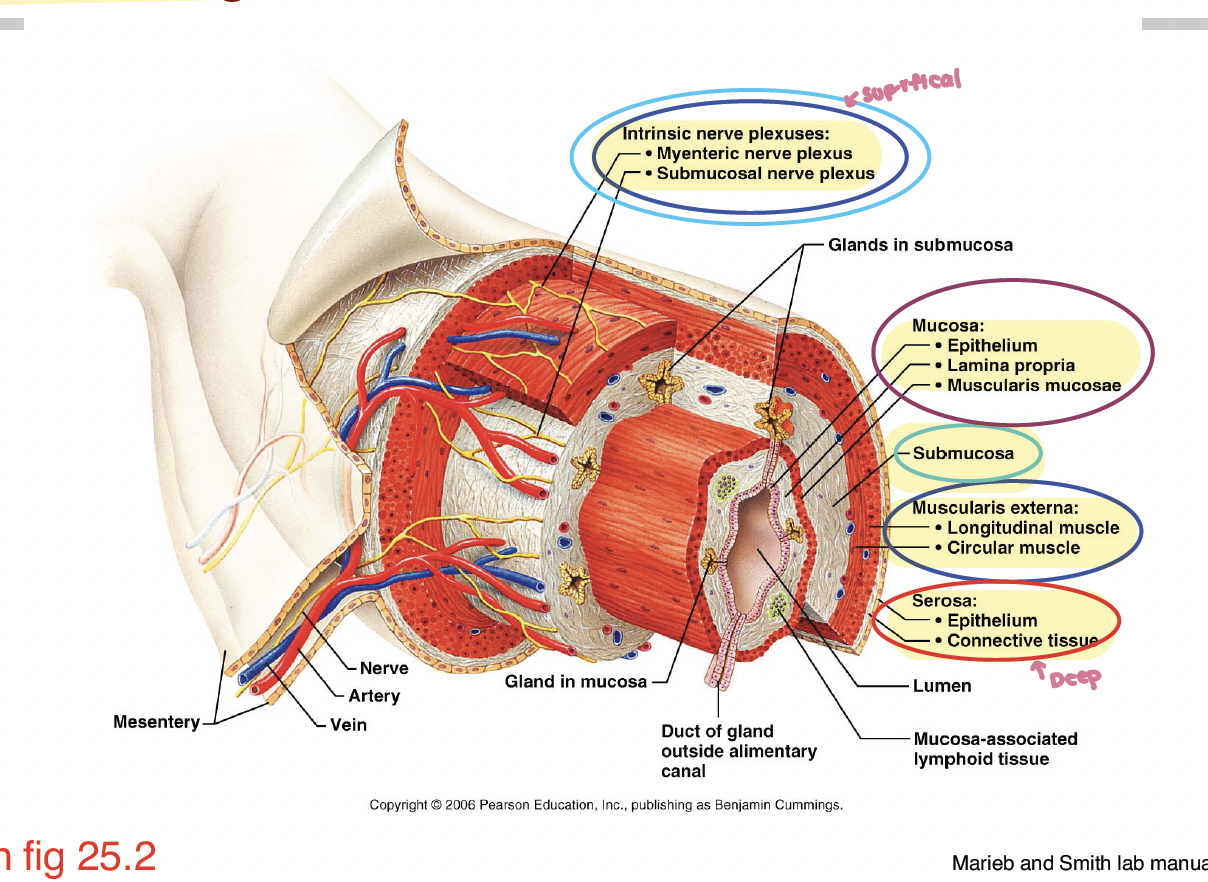
Lamina Propria includes what (5)
areolar tissue
blood vessels
nerves
lymphatics
MALT system
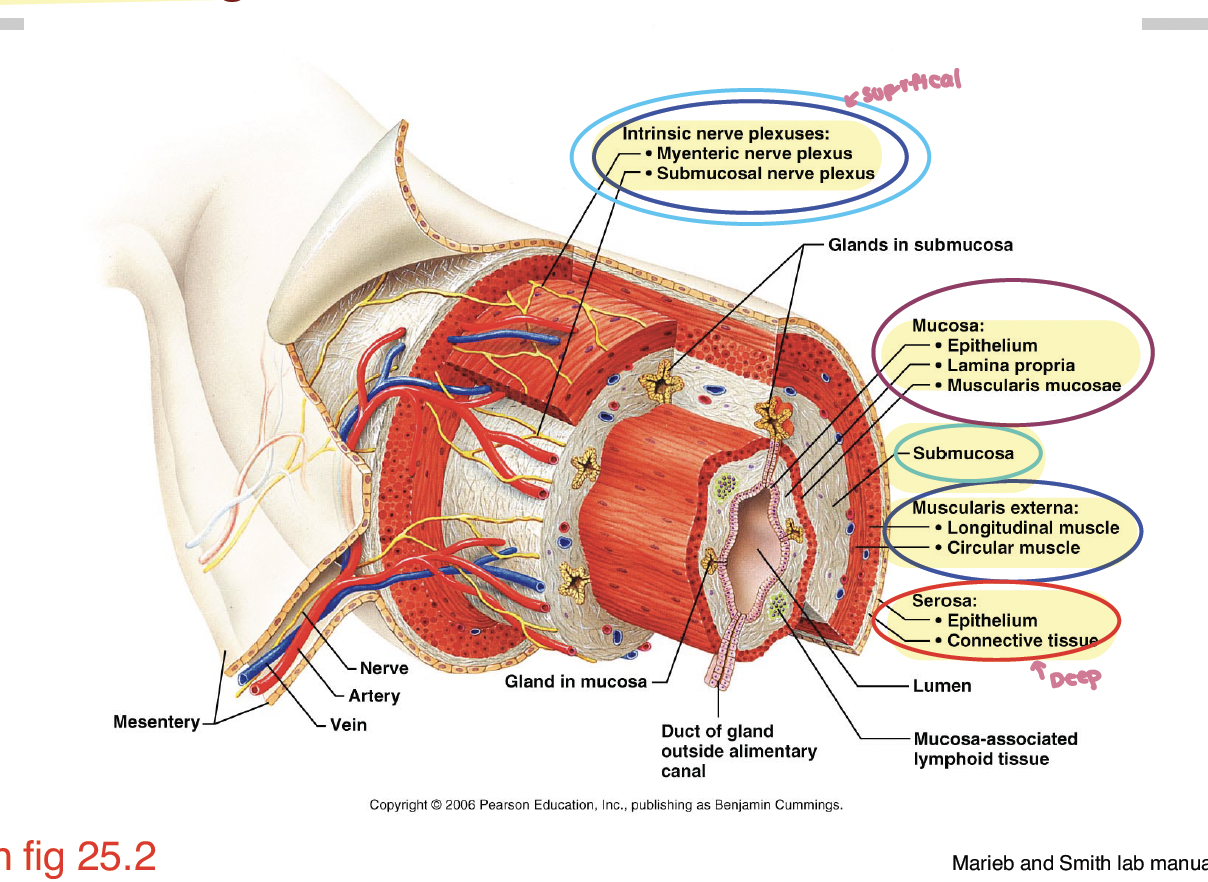
Muscularis mucosae is what
thin layer of smooth muscle cells, alters shape of muscosa
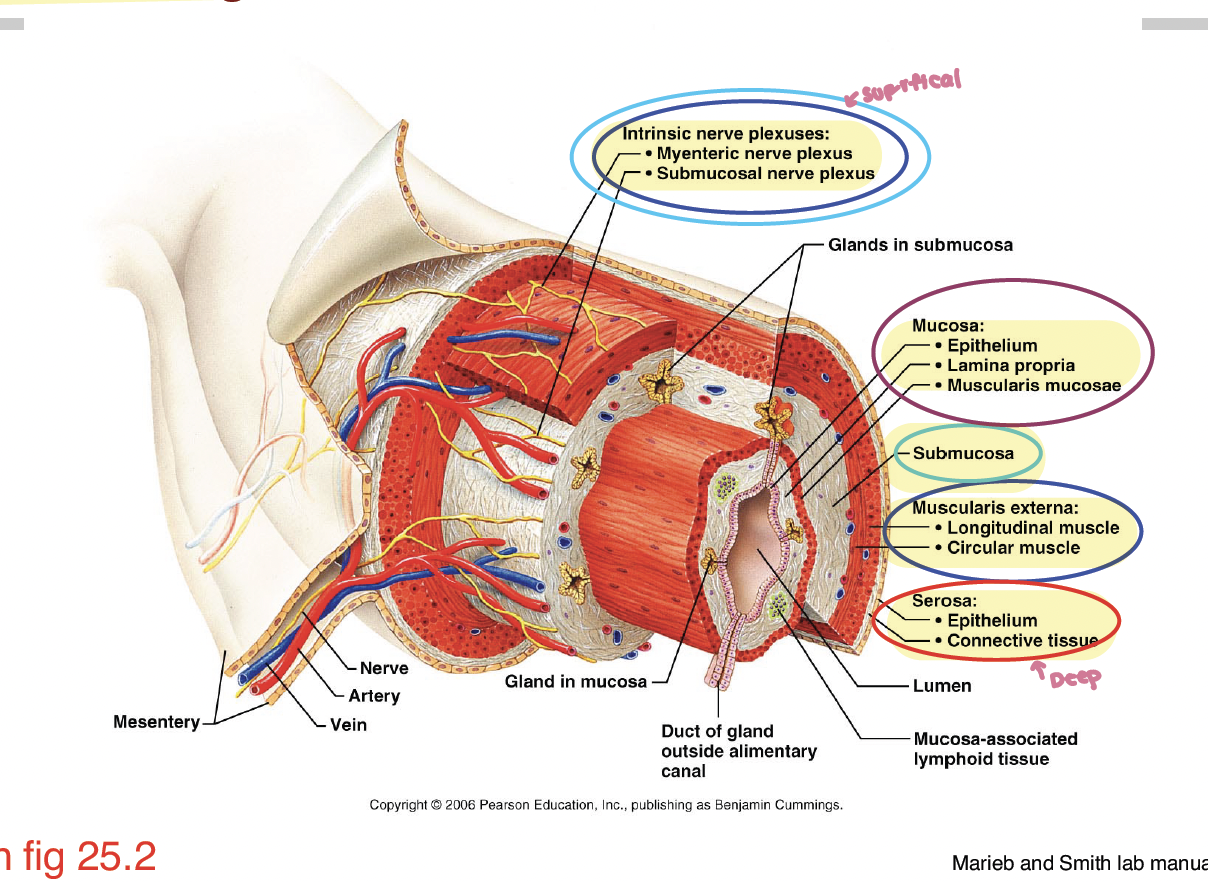
submucosa is deep to what
mucosa
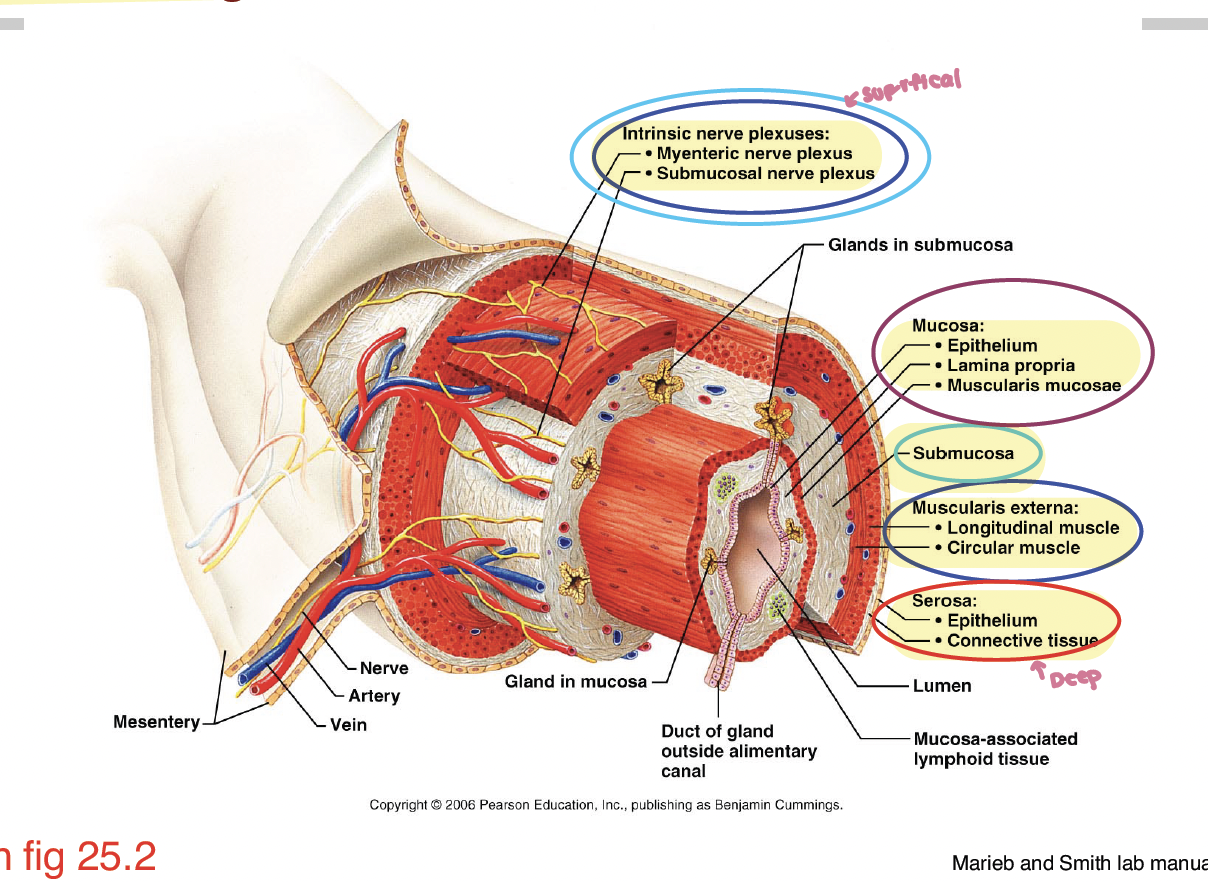
submucosa is layer of what kind of connective tissue
irregular connective tissue
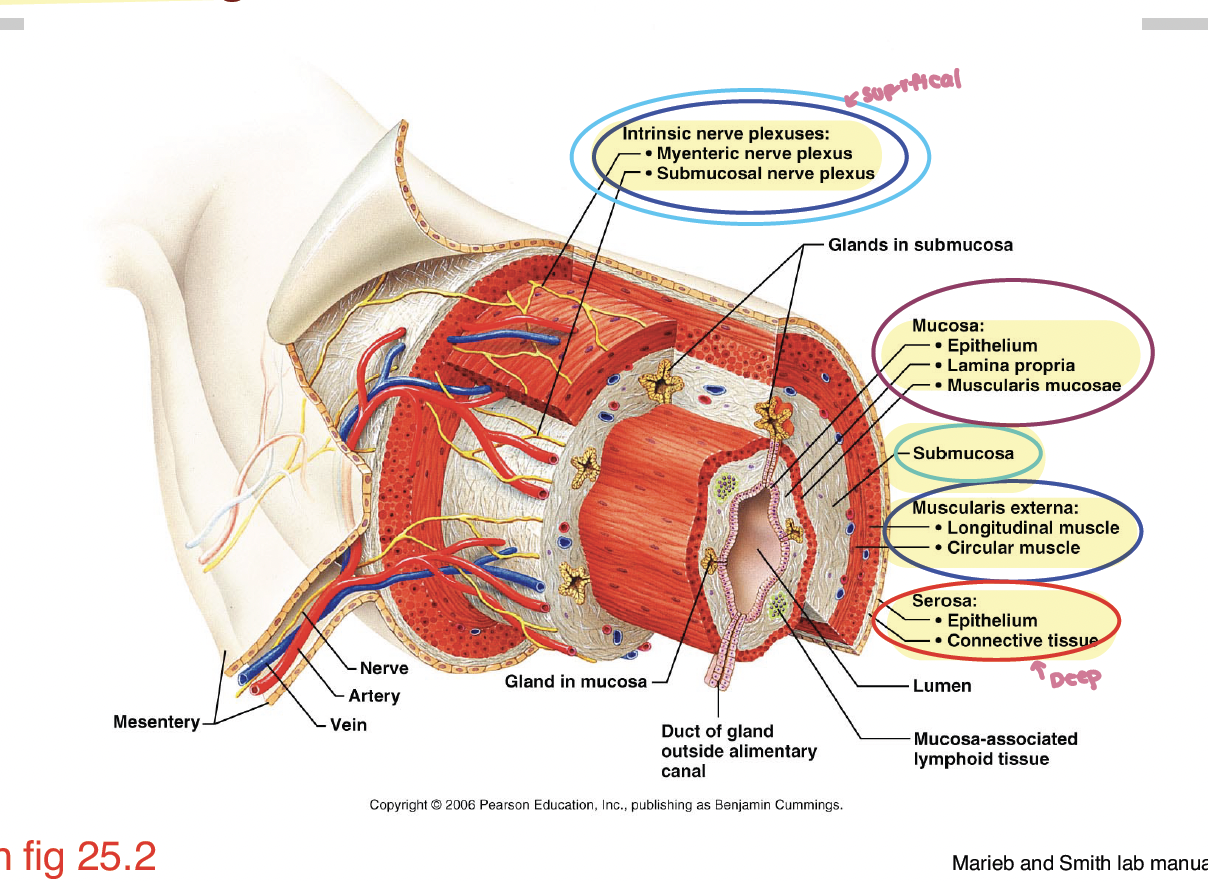
submucosa contains what
exocrine glands
large blood vessel and lymphatic vessels
meissners plexus (submucosa plexus)
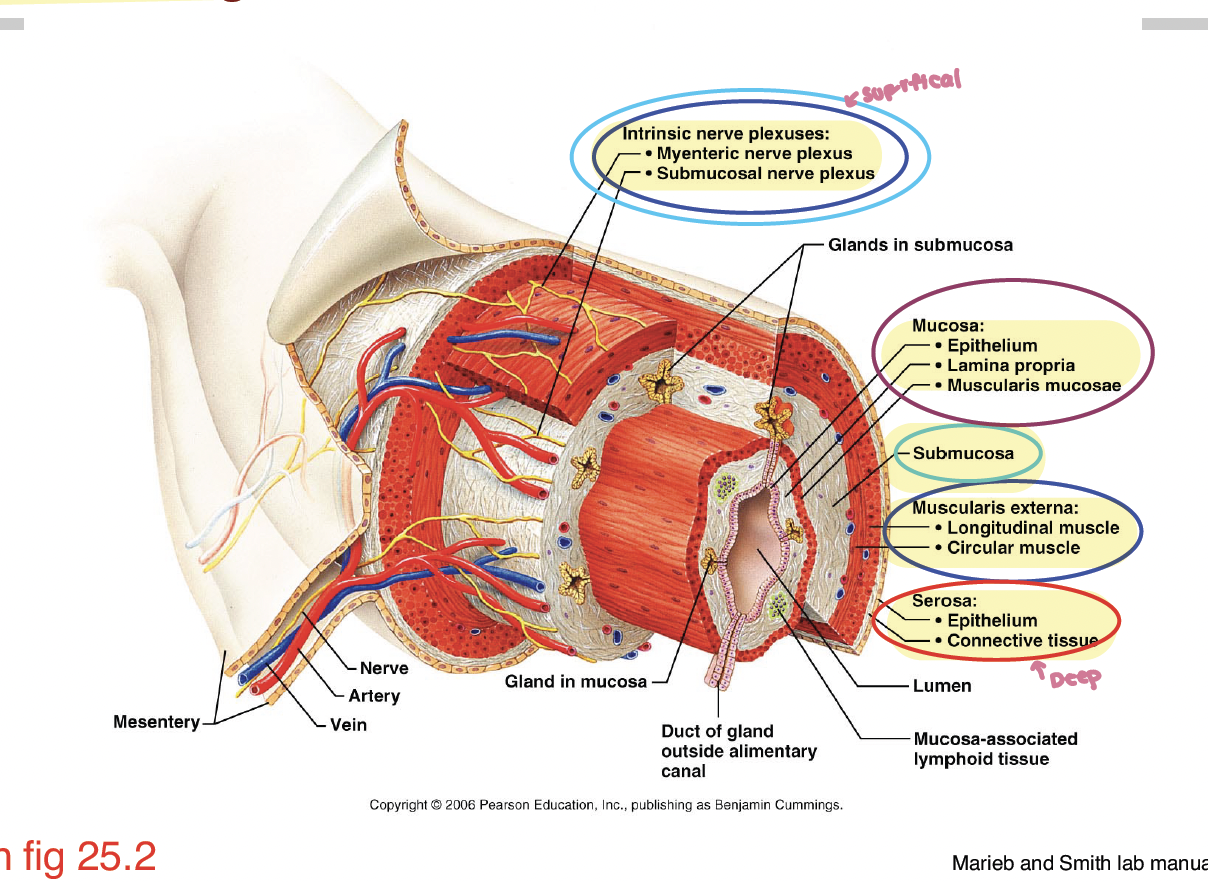
meissners plexus (submucosa plexus) is what and controls what
network of sensory neurons, parasympathetic ganglion neurons, and sympathetic nerves
mainly controls secretions and mucosa muscle contractions
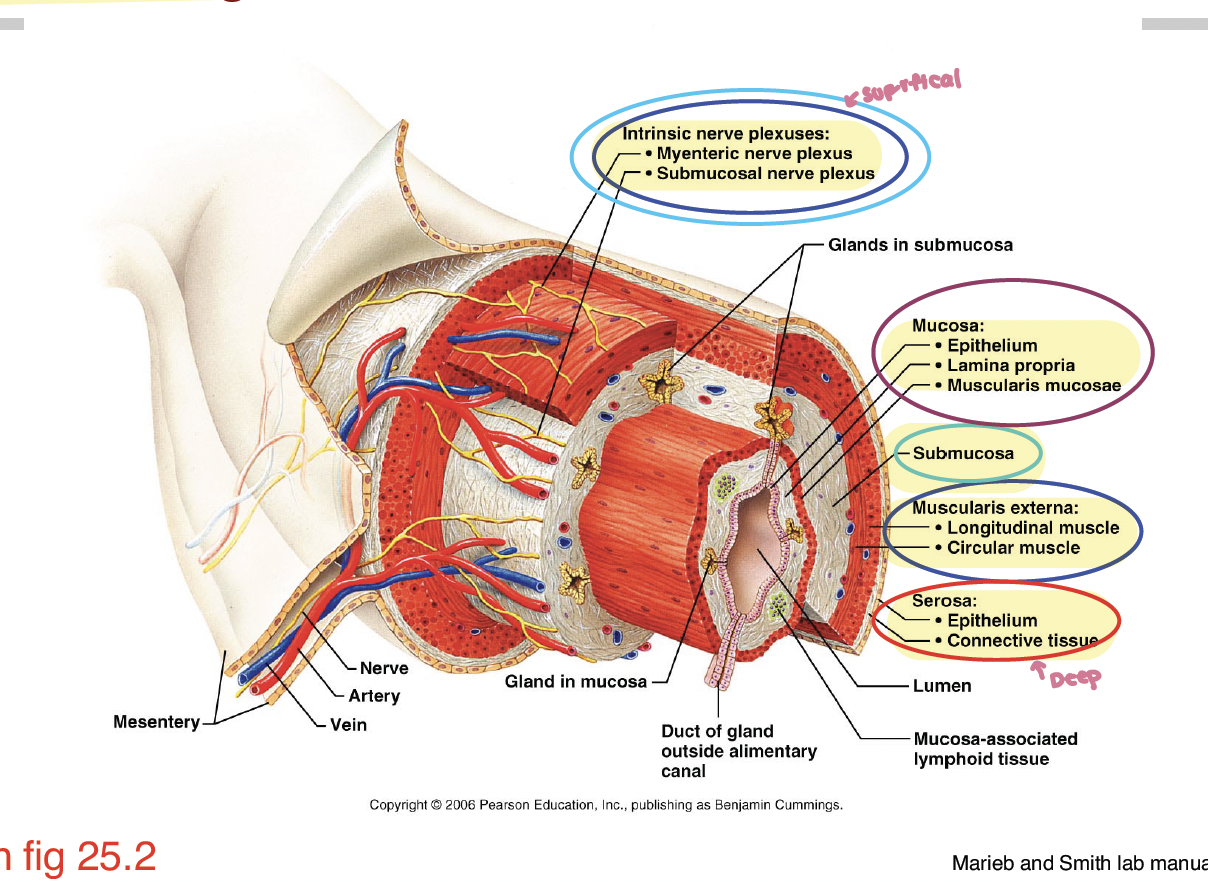
Muscular externa is made of what two muscle layers
two layers of smooth muscle arranged in circular and longitudinal layers (in most parts of tract)
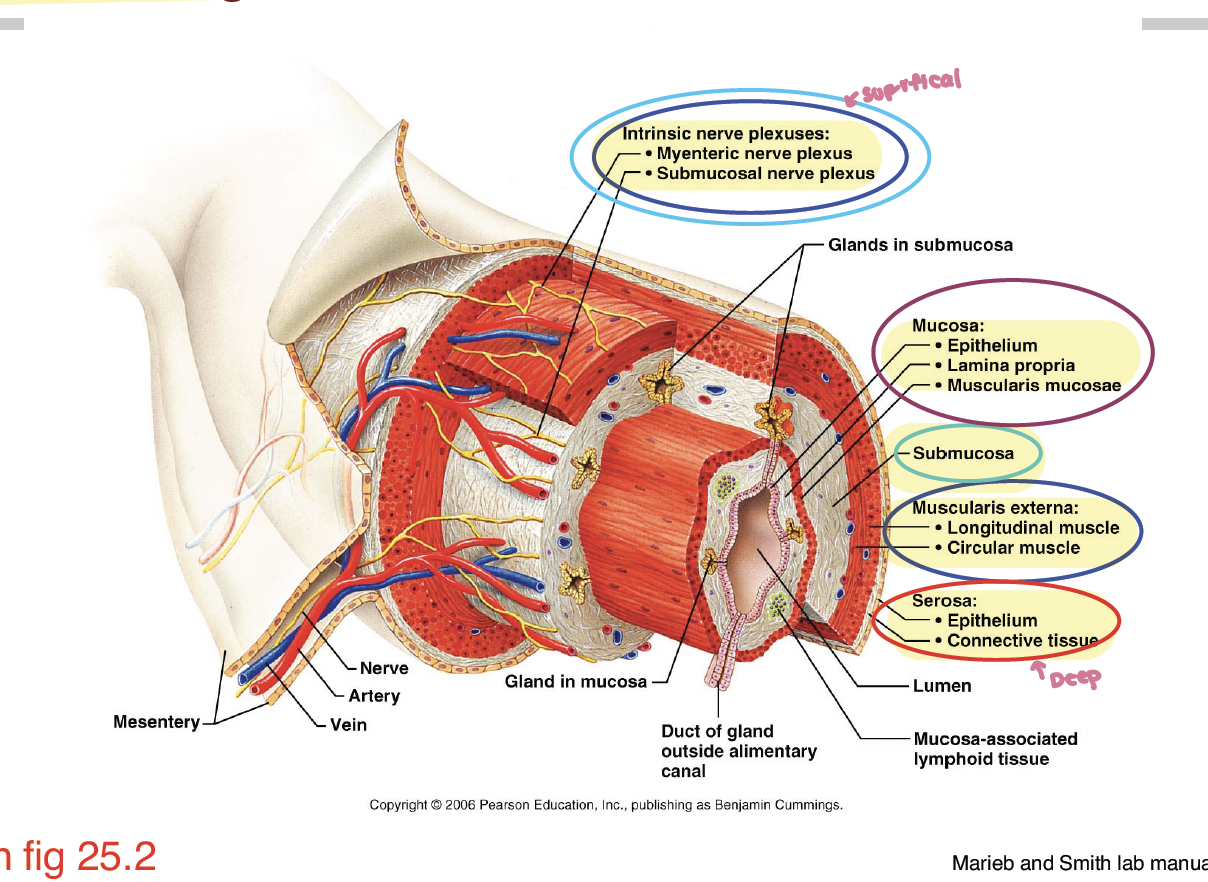
myenteric plexus is located where and does what
located in muscularis extrena and controls smooth muscle contraction of muscularis externa
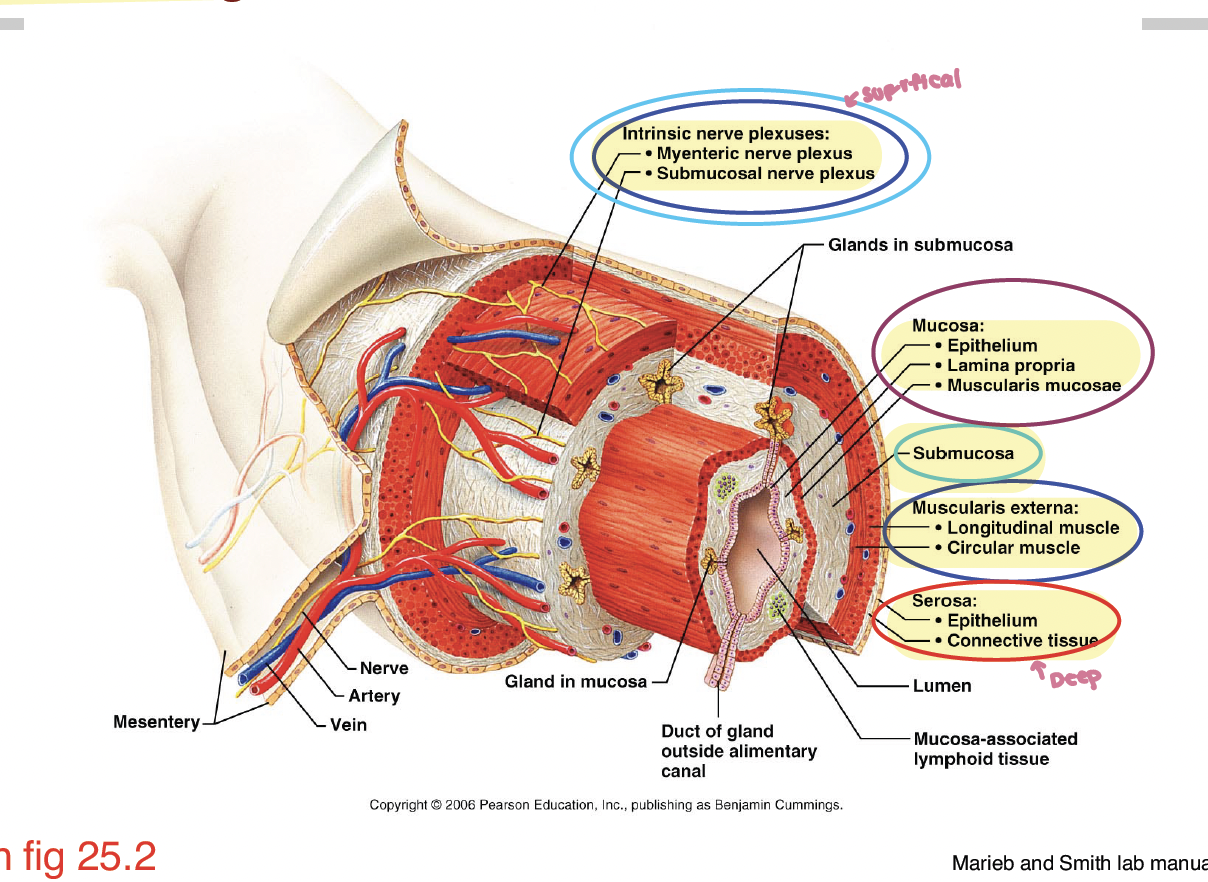
Serosa (visceral peritoneum) is
serous membrane covering most of the muscularis externa
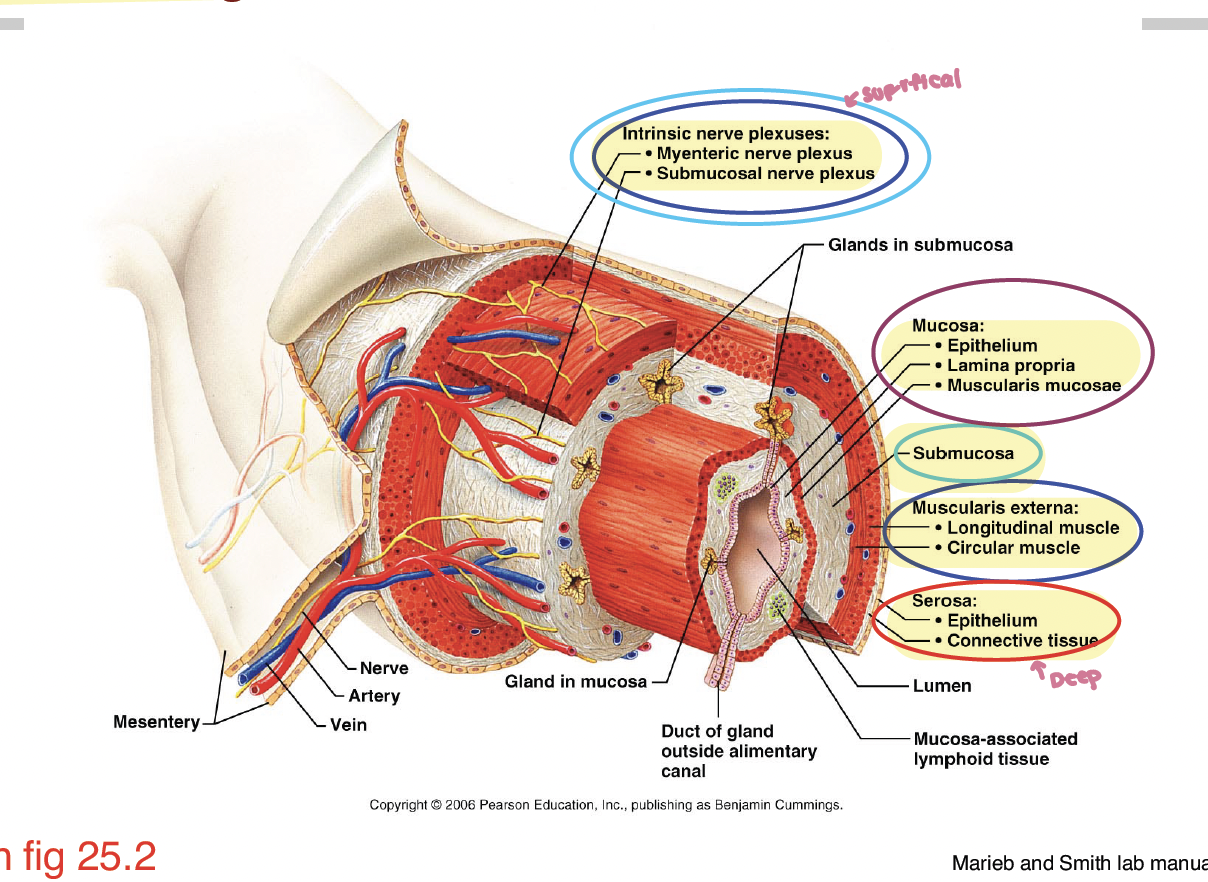
adventitia is what and found where
tough outer layer of serosa found in oral cavity, pharynx esophagus, and rectum
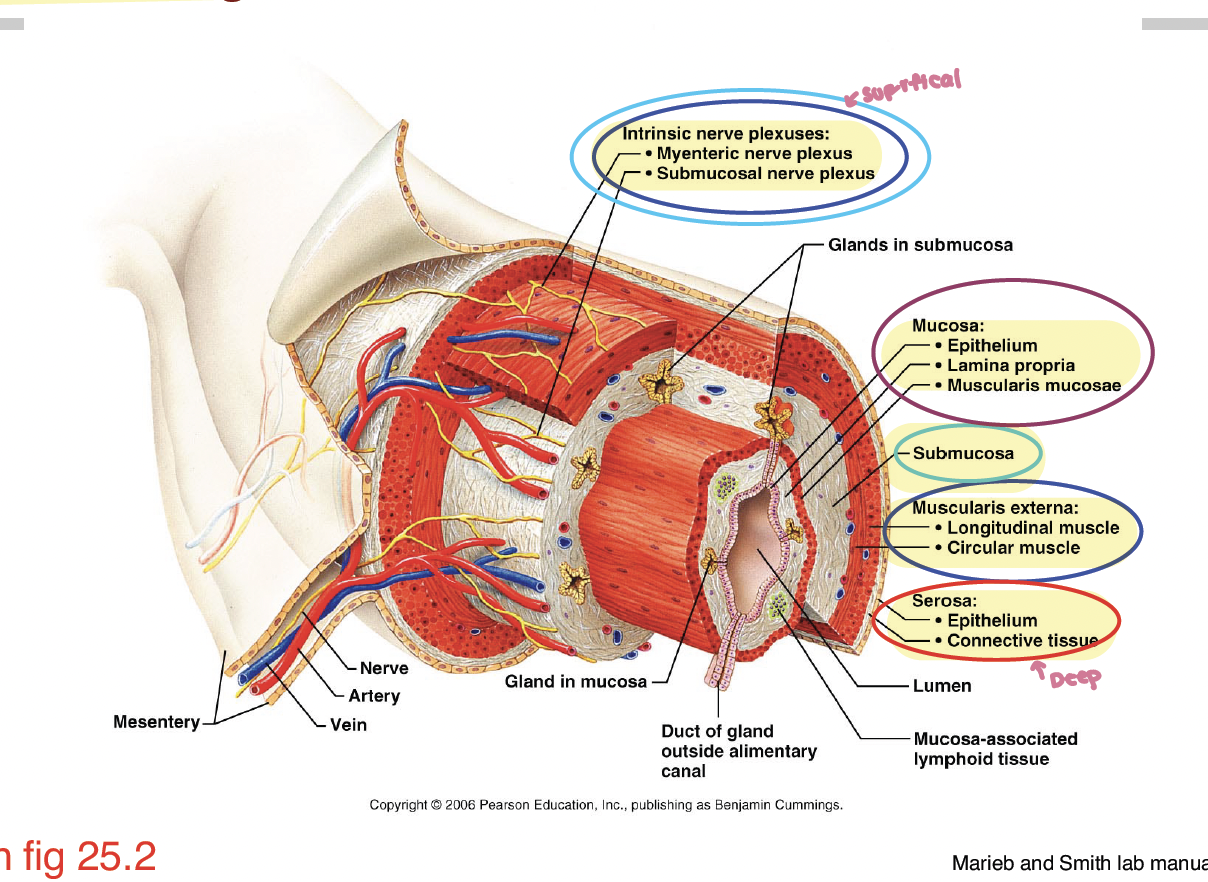
Short GI reflexes do what
stay within GI tract and don’t use CNS
Short GI reflexes use what type of networks
submucosal (meissners) and myenteric
Long reflexes do what
go to and from the CNS
Long reflexes are mainly what
vagovagal (parasympathetic) reflexes

