AP European History: Unit 2 - The Reformation
0.0(0)
Studied by 1 person Call Kai
 Learn
Learn Practice Test
 Spaced Repetition
 Match
Match Flashcards
 Knowt Play
Card Sorting
1/49

Earn XP
Description and Tags
Last updated 12:27 AM on 10/19/22
Name | Mastery | Learn | Test | Matching | Spaced | Call with Kai | Chat |
|---|
No analytics yet
Send a link to your students to track their progress
50 Terms
1
New cards
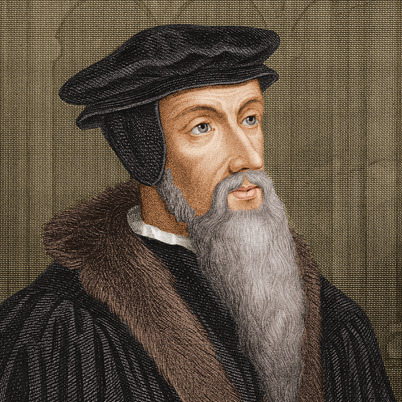
John Calvin
I believe in predestination and started a religious community with very strict laws in Geneva.
2
New cards
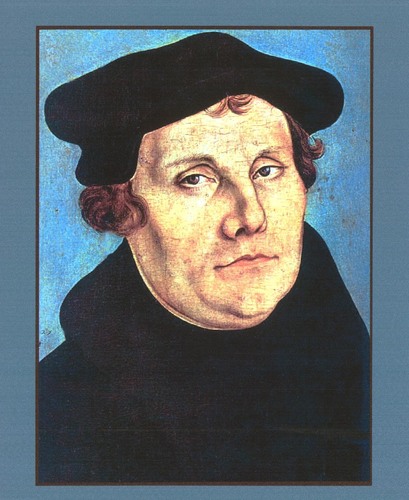
Martin Luther
I believed in salvation by faith alone, that scripture was the source of the creed.
3
New cards
Peace of Augsburg
This agreement stated that the religion of the ruler is the religion of the state.
4
New cards
Council of Trent
This meeting was called to help reform the Catholic Church, define Church doctrine, and help the Church regain its power.
5
New cards
Jesuits
They are known as the "Soldiers of Christ" and established the Society of Jesus.
6
New cards
Ninety-five theses
This document was also known as the "Disputations on the Power and Efficacy of Indulgences" where the sale of indulgences and other church abuses were criticized.
7
New cards
Act of Supremacy
This document required all the king's subject to take an oath of loyalty to the king as head of the Church of England.
8
New cards
Conciliarism
This is a view that the Church is a corporation of cardinals that can override papal authority.
9
New cards
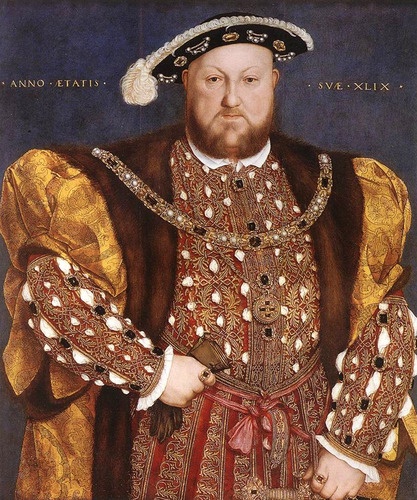
Henry VIII
To England he was known as the "Defender of the Faith", soon after he found the Anglican Church.
10
New cards
Diet of Worms 1521
This council was summoned by Charles V, condemned Luther's beliefs, and forbade Luther from preaching and declared him a heretic.
11
New cards
What where the Jesuits known for?
Inquisitions
12
New cards
What did the Council of Trent reaffirm?
-good works
-purgatory and indulgences
-transubstantiation
-hierarchy of priesthood
-role of church tradition and teaching
-purgatory and indulgences
-transubstantiation
-hierarchy of priesthood
-role of church tradition and teaching
13
New cards
What were the 5 main Catholic orders?
-Jesuits
-Franciscans
-Benedictines
-Augustinians
-Dominicans
-Franciscans
-Benedictines
-Augustinians
-Dominicans
14
New cards
Christian Humanism
"Northern humanists", focused on sources of early Christianity, characterized by its reform program
15
New cards
Thomas More's Utopia
1516, literary masterpiece of ideal life and institutions of community based on communal owenership
16
New cards
Pluralism
high church officials (bishops, archbishops, cardinals) take over more than one church office
17
New cards
Absenteeism
result of pluralism, church office holders ignored their duties and hired underlings who often had even less interest in the job
18
New cards
The Sacraments
a catholic's chief means of receiving God's grace
19
New cards
How did Luther react to the Peasant's War?
Unsupported, published pamphlet Against the Robbing and Murdering Hordes of Peasants
20
New cards
Indulgences
remission after death of all or part of the punishment for sin
21
New cards
Peasant's Revolt 1524
Uprising against the Holy Roman Emperor, unsupported by Luther
22
New cards
Transubstanitation
taught that the substance of bread and wine consumed in the rite is miraculously transformed into the body and blood of Jesus
23
New cards
Charles V
1519-1556 Holy Roman Emperor, Diet of Worms
24
New cards
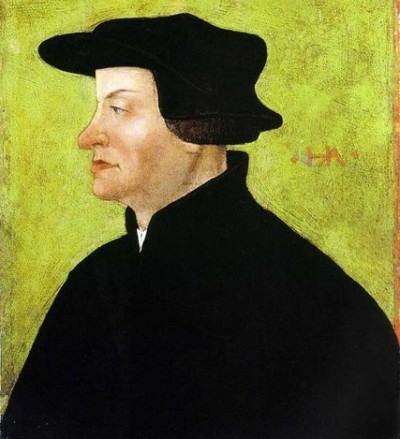
Ulrich Zwingli
great minister of Zurich, began reformation in Switzerland; killed, cut, burned in Swiss civil war 1531
25
New cards
Edward VI and "Bloody Mary"
both kids of Henry VII, Edward= Jane Saymour, Mary= Catherine of Aragon
26
New cards
Geneva
city in which John Calvin took up ministry and established the Ecclesiastical Ordinances
27
New cards
Charlemagne
First Holy Roman Emperor
28
New cards
Sola Fida
Foundation of Lutheran beliefs - Justification by faith alone
29
New cards
Schmaldkaldic League
Military alliance of German princes
30
New cards
Aristocracy
Ruling wealthy class
31
New cards
Eucharist
A Christian sacrament commemorating the Last Supper by consecrating bread and wine.
32
New cards
Cantons
A largely self-governing state within a country, as in Switzerland
33
New cards
Anabaptists
A Protestant sect that believed only adults could make a free choice regarding religion
34
New cards
Predistination
Calvinist doctrine that God had foreordained some people to be saved and some to be damned
35
New cards
The Elect
In Calvinist doctrine, those who have been chosen by God for salvation.
36
New cards
Augsburg Confession
Definitive statement of Lutheran beliefs
37
New cards
Consistories
Lutheran judicial bodies overseeing new Protestant churches
38
New cards
Frederick the Wise
Elector of Saxony who hid Luther after his excommunication
39
New cards
Lollards
Followers of John Wycliffe's teachings - early English humanist
40
New cards
Reformation Parliament
Used by Henry VIII to end pope's power in England, make him head of church and to grant him a divorce from Catherine of Aragon.
41
New cards
Counter-Reformation
Efforts by the Catholic church to bring back members
42
New cards
Education
Was increased due to the spread of the Reformation and Counter-Reformation
43
New cards
Honored Mothers and Wives
Evolved view of women's role in society under the Reformation
44
New cards
Family Planning
The act of birth control or encouraging rapid pregnancy, condemned by the church
45
New cards
Wet Nurse
Condemned by the Catholic Church given it contributed to family planning or increased infant mortality
46
New cards
Cervantes
Famous Spanish writer - author of Don Quixote
47
New cards
Don Quixote
Fiction book combining idealism with realism
48
New cards
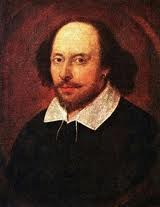
William Shakespeare
English author of 154 Sonnets and 37 Plays
49
New cards
Cuius regio, eius religio
The principle that a local leader can choose the religion of his region.
50
New cards
Ignatius of Loyola
(1491-1556) Spanish churchman and founder of the Jesuits (1534); this order of Roman Catholic priests proved an effective force for reviving Catholicism during the Catholic Reformation.