BIO quiz 6
 Call Kai
 Learn
Learn Practice Test
 Spaced Repetition
 Match
Match Flashcards
 Knowt Play
1/23

There's no tags or description
Looks like no tags are added yet.
Name | Mastery | Learn | Test | Matching | Spaced | Call with Kai |
|---|
No analytics yet
Send a link to your students to track their progress
24 Terms
What is a animal?
Eukaryotic (membrane bound organelles)
Heterotrophic
Cells lack walls (plasma membrane instead)
Motility
Embryos that go through blastula stage
Poriferans (sponges)
8,500 species
lack true tissue layers
lack symmetry
no nervous system
have three groups
Demosponges
Glass sponges
Calcarea
Demosponges
make up 90% of sponges (marine and freshwater)
Glass sponges
Have intricate silica skeletons (entirety marine)
Calcera sponges
Made of calcium carbonate skeletons
Sponge cell types
Pinacocytes
Choanocytes
Archeocytes
Pinacocytes
Epidermal cells which contract to move water
Choanocytes
Wave flagella to produce a current
Archeocytes/ Amoebocytes
cells that can digest food, store nutrients, secrete collagen
Sponge body plan
Central cavity
Ostia
Osculum
Skeleton (made of calcareous or salicaceous spiculas held together with collagen)
Spicules
biominerals that provide structure and defense
what is tissue?
A group of cells that form a specific function
Differentiate from 2-3 germ layers during embryonic development
Tissue (?) organization
Germ layers
Tissue types
Body plans
Germ layers
ectoderm, mesoderm and endoderm
Tissue types
Epithelial
connective
muscle
nervous
Body plans
Asymmetric
Bilateral symmetry
radial symmerty
All animals
Eumetazoans — have true tissue
diploblastic animals primary germ layers (jellyfish, corals, sea anemones, & comb jellies):
Endoderm
ectoderm
Cnidaria
Precambrian to present
characterized by stinging cells (nematocysts); nerve nets
• Anthozoans (sea anemones, sea pens and corals)
• Scyphozoans (jellyfishes)
• Hydrozoans (Obelia and Hydra in lab)
• Cubozoans (box jellies)
Cnidarian life cycle
Alternation between polyp a medusa stages
Sexual reproduction: gametes (released by medusa) → zygote → blastula → free-swimming planula larvae → polyp
Polyps can reproduce sexually or asexually by strobilation (budding of disc-like structures from gonozooids)
Connective tissue
• Consists mainly of cell products (very diverse group), mostly collagen
• Derived from the mesoderm
• All tissues are made up of cells within an extracellular matrix and some cells secrete more of that extracellular matrix
Examples:
• Fat (adipose) tissue
• Cartilage
• Bone
- Osteocyte cells
- Haversian canals
• Blood
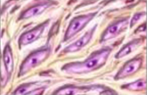
Muscle tissue
• Perform work through contractions
- Actin & myosin
• Smooth muscle
- Found in blood vessels, intestine, and other body tubes
- Elongated, spindle-shaped cells
- No active control & no striations
- 1 nucleus per cell
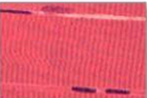
• Striated or skeletal muscle
- Composes muscles you have control of
- Very long cells with multiple nuclei on outside
• Cardiac muscle
- Only in the heart
- Branched cells
- Connected by intercalated discs
- 1-2 nuclei
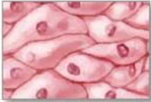
Epithelial tissue
Covers outside of body and lines surface of the organs • Mainly a protective layer
Keeps things out, but also in!
Number of layers
• Simple – one layer
• Stratified – more than one layer
• Pseudostratified – simple, but looks multilayered (usually irregular shapes
Cell shape
• Squamous – flattened sheet-like
• Cuboidal – cube shaped
• Columnar
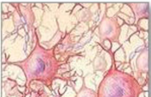
Nerve tissue
Made up of neurons and glial cells
Neurons carry electrical signals over long extensions (axons) to communicate with other neurons, muscle cells or secretory cells
Glial cells do not carry electrical signals but support neurons (astrocytes shown here are a type of glial cell)