Chapter 20 Antimicrobial drugs
 Studied by 0 people
 Call Kai
 Learn
Learn Practice Test
 Spaced Repetition
 Match
Match Flashcards
 Knowt Play
1/26

There's no tags or description
Looks like no tags are added yet.
Name | Mastery | Learn | Test | Matching | Spaced | Call with Kai |
|---|
No analytics yet
Send a link to your students to track their progress
27 Terms
Spectrum of Antimicrobial Activity:
Narrow spectrum antibiotics
Broad-spectrum antibiotics
Spectrum of Antimicrobial Activity-
Superinfection:
overgrowth of normal microbiota that is resistant to antibiotics
The Action of Antimicrobial Drugs
Bactericidal:
kill microbes directly
Bacteriostatic:
prevent microbes from growing
Inhibiting cell wall synthesis
Penicillins prevent the synthesis of peptidoglycan
Injuring the plasma membrane
Polypeptide antibiotics change membrane permeability.
Injuring the plasma membrane
Ionophore antibiotics:
allow for uncontrolled movement of cations.
Inhibiting protein synthesis
‒ Target bacterial 70S ribosomes
‒ Chloramphenicol, erythromycin, streptomycin, tetracyclines
The Action of Antimicrobial Drugs
Inhibiting nucleic acid synthesis:
interfere with DNA replication and transcription
Rifamycin; quinolones (nalidixic acid) & fluoroquinolones
inhibiting the synthesis of essential metabolites
Anti-metabolites compete with normal substrates for an enzyme.
Sulfanilamide competes with para-aminobenzoic acid (PABA), stopping the synthesis of folic acid.
Antiviral Drugs
Entry and fusion inhibitors:
Block the receptors on the host cell that bind to the virus
Block fusion of the virus and cell
Uncoating, genome integration, and nucleic acid synthesis inhibitors
Prevent viral uncoating
Inhibit viral DNA integration into the host genome
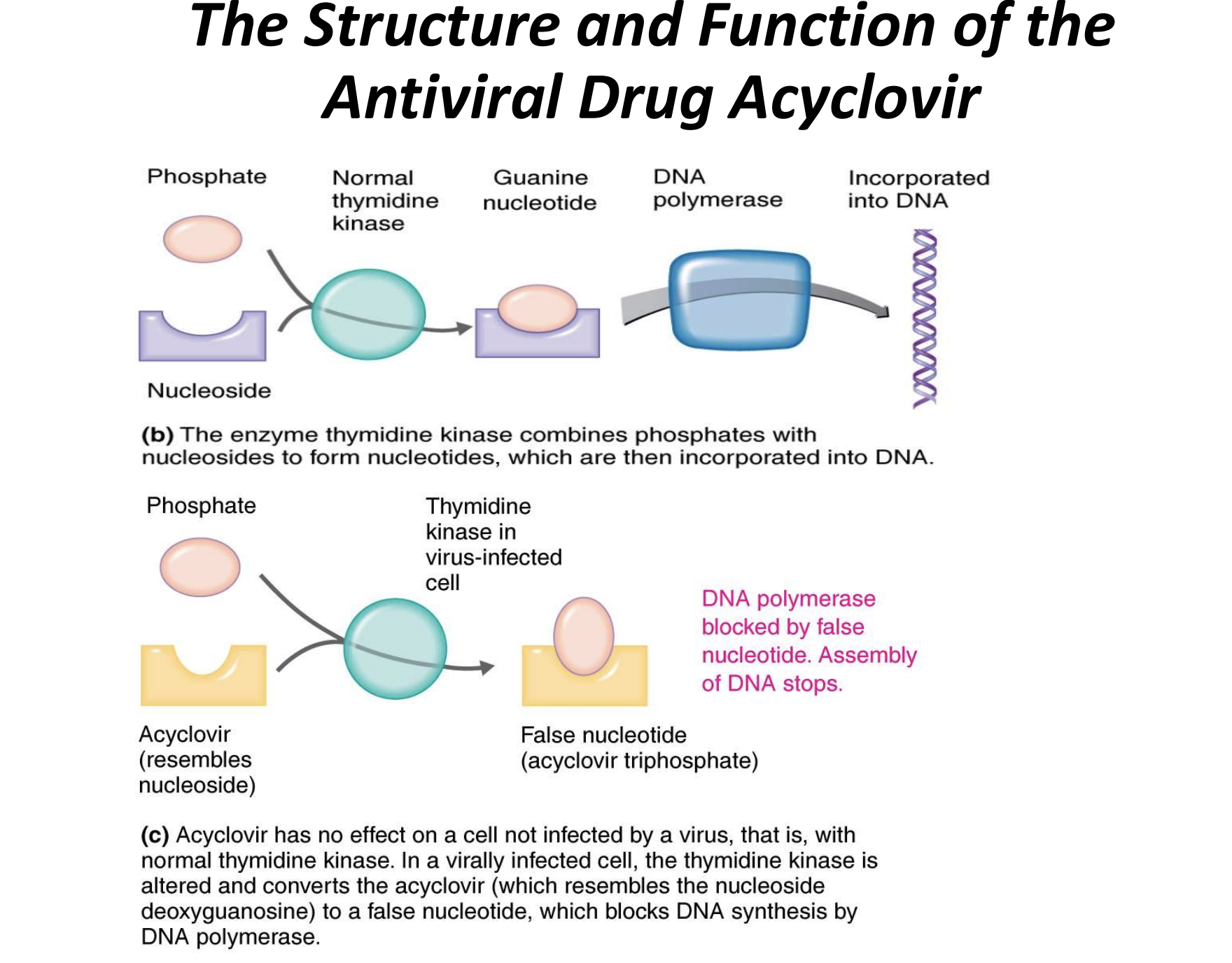
Nucleoside analogs inhibit RNA/DNA synthesis
Assembly and exit inhibitors
Protease inhibitors:
block the cleavage of protein precursors
Assembly and exit inhibitors
Exit inhibitors:
inhibit neuraminidase, an enzyme required for some viruses to bud from the host cell
Interferons
Produced by viral-infected cells to inhibit further spread of the infection
Imiquimod:
promotes interferon production
Antiretrovirals for Treating HIV/AIDS (RNA virus)
Antiretroviral:
drug is used to treat HIV infections
AZT:
interferes with reverse transcriptase
Persister cells:
microbes with genetic characteristics allowing for their survival when exposed to an antibiotic
Superbugs:
bacteria that are resistant to large numbers of antibiotics
Resistance to Antimicrobial Drugs
Resistance genes are often spread horizontally among bacteria on plasmids or transposons via conjugation or transduction
Mechanisms of Resistance
Enzymatic destruction or inactivation of the drug
Prevention of penetration to the target site within the microbe
Alteration of the drug's target site
Rapid efflux (ejection) of the antibiotic
Variations of mechanisms of resistance
Antibiotic Misuse
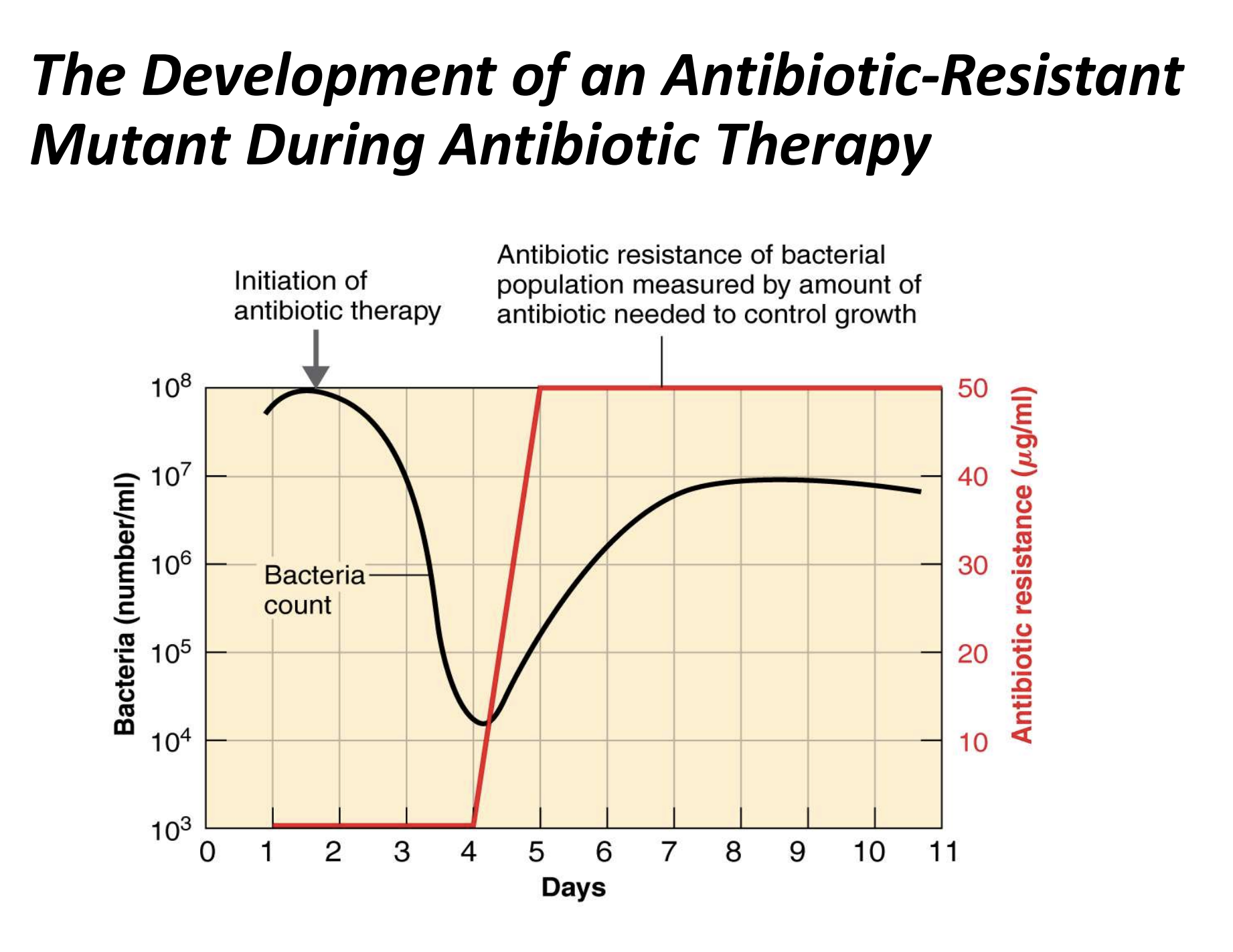
Misuse of antibiotics selected for resistance mutants
Misuse includes:
Using outdated or weakened antibiotics
Using antibiotics for the common cold and other inappropriate conditions
Using antibiotics in animal feed
Failing to complete the prescribed regimen
Using someone else’s leftover prescription
Effects of Combinations of Drugs
Synergism:
the effect of two drugs together is greater than the effect of either alone
Effects of Combinations of Drugs
Antagonism:
the effect of two drugs together is less than the effect of either alone
 Note
Note  Flashcards (105)