MMA132: 2 Italian Renaissance
0.0(0)
Studied by 4 people Call Kai
 Learn
Learn Practice Test
 Spaced Repetition
 Match
Match Flashcards
 Knowt Play
Card Sorting
1/103

Earn XP
Description and Tags
Last updated 3:17 AM on 2/21/23
Name | Mastery | Learn | Test | Matching | Spaced | Call with Kai | Chat |
|---|
No analytics yet
Send a link to your students to track their progress
104 Terms
1
New cards
has become synonymous with the extraordinary cultural phenomenon called the Italian Renaissance.
The Medici family of Florence
2
New cards
The banker who had established the family fortune.
Giovanni di Bicci de' Medici
3
New cards
Medici's son became a great patron of art and of learning in the broadest sense.
Cosimo
4
New cards
The phenomenon known as \____________
The Italian Renaissance is one of the standards stops on any tour through the history of Western culture.
5
New cards
The Renaissance encompasses a roughly \__________ period in Europe. Where architects, poets, and philosophers reconnected with the style and ambitions of ancient Greek and Roman civilization.
300-year
6
New cards
Why do we need to study this lesson?
▪ We believe that the main reason to study history is to rescue certain good, provocative, and inspiring ideas that have been lost in the past.
▪ In order to put them to use in relation to the dilemmas and problems of our own times
▪ In order to put them to use in relation to the dilemmas and problems of our own times
7
New cards
Italy-
Florence, Italy 1469
8
New cards
A twenty-year-old nobleman from one of the grandest families of Florence who takes over the family business
Lorenzo de’ Medici
9
New cards
that's been going since 1397 and is the most respected financial institution in Europe with flourishing branches in Florence, Venice, Rome, and Geneva.
The Medici Bank
10
New cards
Lorenzo, like his uncles and his father before him, has
a great gift for business.
11
New cards
Lorenzo and his family are typical of the Florentine upper classes of his age in honoring the business of making money without any of the traditional suspicion of trade found in most Christian societies..
12
New cards
But not only are the Medicis interested in making money they are also extremely ambitious about how to spend money.
13
New cards
Lorenzo and his family believe that the express purpose of what we would now call \_________.
philanthropy is to promote beauty, truth, and wisdom in the world.
14
New cards
Lorenzo de Medici's grandfather had started the collection of books that became known as the \_________ and Lorenzo now expanded it decisively.
Medici library
15
New cards
Lorenzo was a patron of many philosophers including
* Poliziano
* Marsilio Ficino
* Giovanni Pico della Mirandola
* Marsilio Ficino
* Giovanni Pico della Mirandola
16
New cards
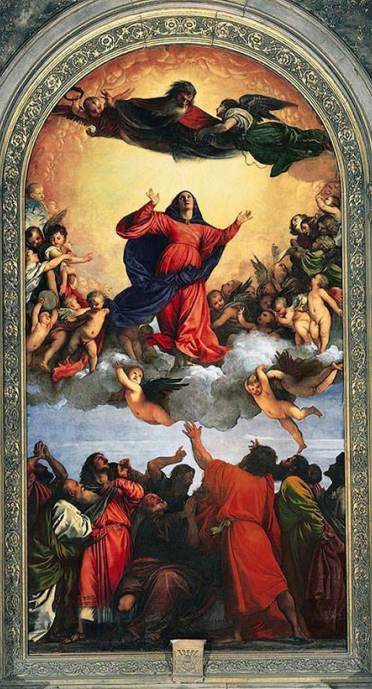
Under Lorenzo's guidance, these philosophers (Poliziano, Marsilio Ficino, and Giovanni Pico della Mirandola) undertook pioneering research into Greek philosophy. They absorb the ideas of Epicurus, Zeno, and Aristotle and tried to harmonize Plato's theories with Christianity.
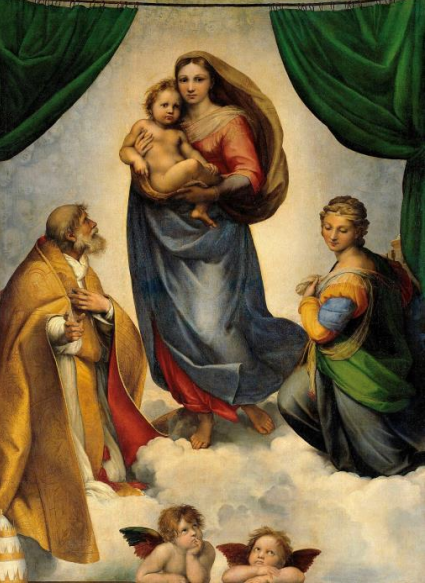
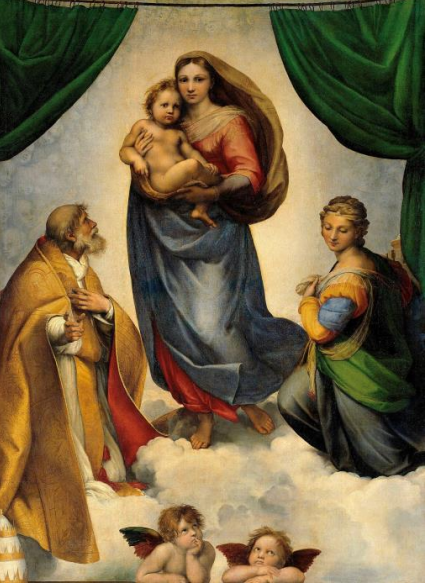
17
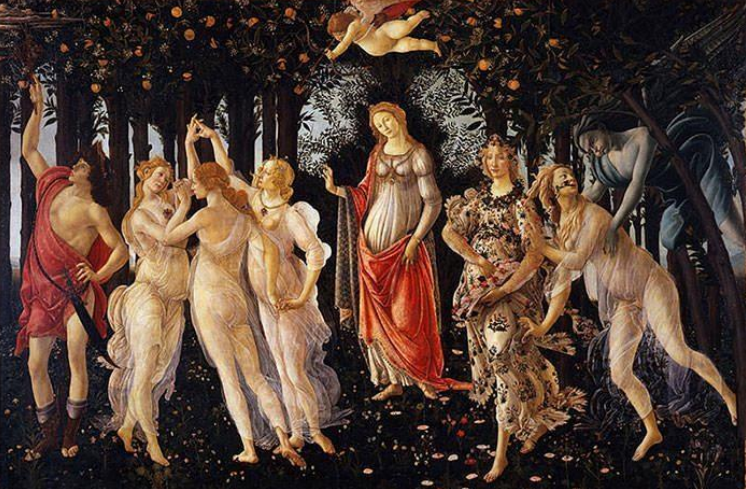
New cards
was perhaps best known as a patron of art.
Lorenzo de' Medici
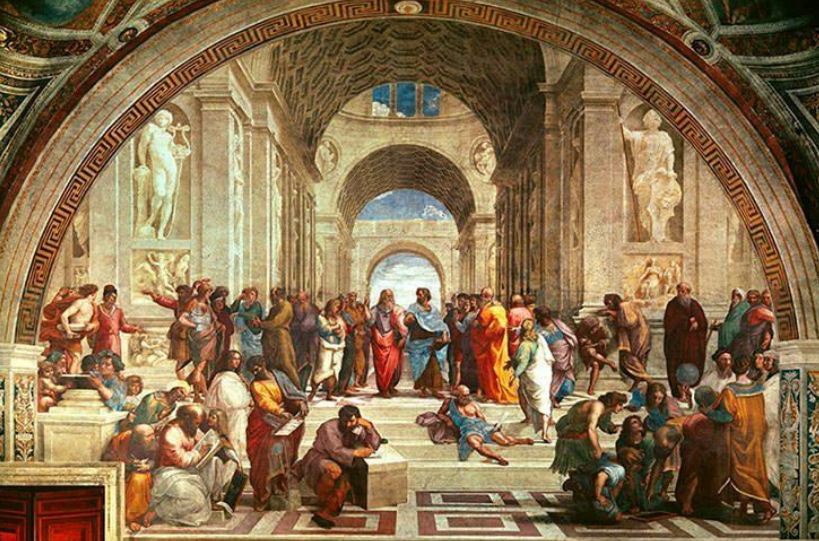
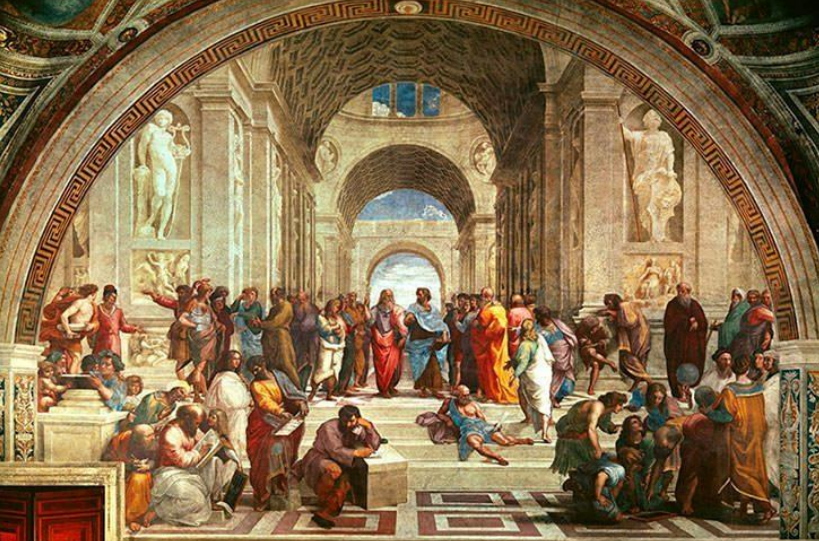
18
New cards
Lorenzo court artists include:
* Ghirlandaio
* Botticelli
* Leonardo da Vinci
* Verrochio
* Michelangelo
* Botticelli
* Leonardo da Vinci
* Verrochio
* Michelangelo
19
New cards
The patronage was extremely intimate and involved. He lived with Lorenzo in his family for five years. Dining at his table and participating in discussions led by Marsilio Ficino.
Michelangelo
20
New cards
Although the Medici were quite rich, by modern standards their fortune was a relatively moderate one. Across four crucial decades from the 1430s to 1470s it's estimated that the Medici family spent the equivalent of around half a billion US dollars on intellectual, patronage, architecture, and art works.
Which is a huge sum by comparison with average incomes, but it's not very substantial by comparison with the wealth of the richest people today
Which is a huge sum by comparison with average incomes, but it's not very substantial by comparison with the wealth of the richest people today
21
New cards
Lorenzo fueled the Renaissance for how many years?
30 years
22
New cards
The secret to the Medici's impact was that they didn't see themselves as there simply to hand over the cash to allow artists, architects, and scholars to do whatever they wanted.
23
New cards
The Medicis had a __________, and were extremely direct and didactic in putting it forward; usefully so.
vision, a mission for the arts and philosophy
24
New cards
Guided by his philosopher friend Ficino, Lorenzo thought of art the kind of education under his patronage artists were therefore asked to illustrate \___________ about, say, the \________________.
key philosophical truths
importance of kindness and compassion
importance of kindness and compassion
25
New cards
The Medicis promoted serenity and glorified the best qualities of the state of good leadership. The Renaissance would never be remembered if its leading members had simply made piles of cash.
26
New cards
The Early Renaissance:
1. Masaccio
2. Donatello
3. Piero della Francesca
4. Lorenzo Ghiberti
5. Andrea Mantegna
6. Filippo Brunelleschi
27
New cards
The High Renaissance:
1. Sandro Botticelli
2. Leonardo da Vinci
3. Raphael
4. Michelangelo
5. Titian
2. Leonardo da Vinci
3. Raphael
4. Michelangelo
5. Titian
28
New cards
The primary focus of the painters of the Early Renaissance was
the imitation of nature and the creation of a believable three-dimensional reality on flat surface of a painting.
29
New cards
The Early Renaissance in visual art encompasses the first half of the 15th century, and in Italy, Florentine artists took leadership in the development of a new style of painting focusing on illusion
30
New cards
art created on damp plaster
Frescoes
31
New cards
a technique from the north
Oil paints
32
New cards
of human nature
Realistic portrayal
33
New cards
use of shadows to show balance of light and dark
Chiaroscuro
34
New cards
the treatment of light and shade in drawing and painting
Chiaroscuro
35
New cards
particularly in anatomy
Science
36
New cards
It allowed artist to represent objects in relative sizes
Linear perspective
37
New cards
Enumerate the Innovations
Frescoes
Oil paints
Realistic portrayal of human nature
Chiaroscuro
Science
Linear perspective
Oil paints
Realistic portrayal of human nature
Chiaroscuro
Science
Linear perspective
38
New cards
the most influential artist on Renaissance painting.
Giotto
39
New cards
Father of the Renaissance
Giotto
40
New cards
He dignified figures seemed to displace space, to stand upon the ground with real substance and weight.
Giotto
41
New cards
Created the figures seem to extend both backward, into the picture, and forward, toward the spectator's space.
Giotto
42
New cards
Florentine architect and engineer
Filippo Brunelleschi
43
New cards
Filippo Brunelleschi is the first to carry out a series of optical experiments that led to a \___________.
mathematical theory of perspective.
44
New cards
His method of perspective had a dramatic impact on the depiction of 3-dimensional space in the arts
Filippo Brunelleschi
45
New cards
Filippo Brunelleschi's famous masterpiece
Dome of the Cathedral
46
New cards
abiding interest in mathematics led him, along with Masaccio and Brunelleschi, to create illusionistic spaces in which ideally proportioned and sized human beings enacted religious and secular events. This rationalized space reflected a humanistic worldview in which human beings were the measure of all things.
Piero della Francesca
47
New cards
The renaissance of classical antiquity in the 15th century meant an abandonment of many medieval conventions and an emphasis on solid human forms grounded in an illusionistic space Despite this new substantiality, Piero's paintings still possess an atmosphere of otherworldliness due to his color palette and stillness of his figures.
48
New cards
One of first artists to apply the new method of linear perspective in his fresco of the Holy Trinity
Masaccio
49
New cards
Used a barrel-vaulted ceiling to imitate with precision the true appearance of architectural space
Masaccio
50
New cards
He figures depict accurate human anatomy
Masaccio
51
New cards
He has new sense of naturalism in sculpture
Donatello
52
New cards
Use of classical contrapposto stance (relaxed not rigid)
Donatello
53
New cards
Statue of David considered first full-scale nude since ancient times
Donatello
54
New cards
is an Italian term that means counterpoise. It is used in the visual arts to describe a human figure standing with most of its weight on one foot so that its shoulders and arms twist off-axis from the hips and legs. This gives the figure a more dynamic, or alternatively relaxed appearance. It can also be used to refer to multiple figures which are in counter-pose (or opposite pose) to one another.
Contrapposto
55
New cards
Created unusual vantage points
Andrea Mantegna
56
New cards
Looking at figures from below
Andrea Mantegna
57
New cards
Lamentation of the Dead Christ the viewer is looking from the feet of the subject.
Andrea Mantegna
58
New cards
Deep foreshortening
Andrea Mantegna
59
New cards
Effectively placed the viewer at the scene, adding to the sense of empathy
Andrea Mantegna
60
New cards
Famous artwork: The Lamentation over the Dead Christ, 1490
Andrea Mantegna
61
New cards
First artist to paint a full-length female nude
Sandro Botticelli
62
New cards
In Birth of Venus the figure occupies the center of the work which was traditionally reserved for the Virgin. This work is possibly the most pagan image of the entire Renaissance.
Sandro Botticelli
63
New cards
He was the most celebrated bronze-caster and goldsmith in early 15th-century Florence, and his many-sided activity makes him the first great representative of the universal artist of the Renaissance.
Lorenzo Ghiberti
64
New cards
He designed bronze doors for the Baptistery, Florence (1403-24 and 1424-32), and from 1420 was appointed supervisor (with Brunelleschi and Battista d'Antonio) for the building of the great dome at Florence Cathedral, a position he held until 1436.
Lorenzo Ghiberti
65
New cards
"Renaissance Man"
Leonardo da Vinci
66
New cards
A polymath
Leonardo da Vinci
67
New cards
"There are three classes of people. Those who see;
those who see when they are shown; those who do not see."
those who see when they are shown; those who do not see."
Leonardo da Vinci
68
New cards
Always thought himself a sculptor, not a painter
Michelangelo Buonarroti
69
New cards
A contender for Renaissance Man
Michelangelo Buonarroti
70
New cards
Conducted a battle of wills with Pope Julius II
Michelangelo Buonarroti
71
New cards
"The young painter from Urbino thus adopted the artistic innovations of his elder colleagues, in particular those of Leonardo and Michelangelo, and synthesized them with his own aims." - Toman
Raphael Sanzio
72
New cards
Greatest of the Venetian School
Titian
73
New cards
Most versatile: portrait, landscape, mythological, & religious paintings
Titian
74
New cards
Manner & styles changed drastically throughout long life, but consistent interest in use of color
Titian
75
New cards
introduced realism and real-life things into their art works.
Renaissance artists introduced realism and real-life things into their art works. Most of the art works prior to this period used to primarily focus on religion and Christianity. While many Renaissance artists also painted scenes of religion, they moved more towards humanistic themes, power and the identity of a person as an individual.
Renaissance artists introduced realism and real-life things into their art works. Most of the art works prior to this period used to primarily focus on religion and Christianity. While many Renaissance artists also painted scenes of religion, they moved more towards humanistic themes, power and the identity of a person as an individual.
Realism
76
New cards
paintings started representing humanism of individual figures. realistic, and more attention was given to details.
Instead of being stereotypes, symbolic figures, paintings started representing humanism of individual figures. The paintings became realistic, and more attention was given to details. Human bodies and faces became more real, and kids looked more like kids rather than miniature forms of human adults.
Instead of being stereotypes, symbolic figures, paintings started representing humanism of individual figures. The paintings became realistic, and more attention was given to details. Human bodies and faces became more real, and kids looked more like kids rather than miniature forms of human adults.
Humanism
77
New cards
Shadows, perspectives and light elements were efficiently used to bring attention to certain figures in the paintings.
Leonardo da Vinci was a Renaissance artist from Italy who set higher standards for painting and drawing bodies that were anatomically correct. To have correct understanding of the human body, including its functioning and placement, he performed around 20 autopsies to learn musculature, organ placement and bone structure. Shadows, perspectives and light elements were efficiently used to bring attention to certain figures in the paintings. Some of the art works that show anatomically approved bodies are Mona Lisa, David, Birth of Venus and others.
Leonardo da Vinci was a Renaissance artist from Italy who set higher standards for painting and drawing bodies that were anatomically correct. To have correct understanding of the human body, including its functioning and placement, he performed around 20 autopsies to learn musculature, organ placement and bone structure. Shadows, perspectives and light elements were efficiently used to bring attention to certain figures in the paintings. Some of the art works that show anatomically approved bodies are Mona Lisa, David, Birth of Venus and others.
Anatomically Approved Bodies
78
New cards
painters rediscovered the ideas of horizon line, vanishing point, linear perspective and others. The Last Supper' by Leonardo da Vinci is a perfect example
With an aim to add 3D space and depth to their art work, another of the characteristics of Renaissance art is that their painters rediscovered the ideas of horizon line, vanishing point, linear perspective and others. The Last Supper' by Leonardo da Vinci is a perfect example of how Renaissance artists drew their viewers into their painting by showcasing a scene filled with emotion and psychology. Different reactions of the apostles are shown and the head of Jesus is situated at a vanishing point.
With an aim to add 3D space and depth to their art work, another of the characteristics of Renaissance art is that their painters rediscovered the ideas of horizon line, vanishing point, linear perspective and others. The Last Supper' by Leonardo da Vinci is a perfect example of how Renaissance artists drew their viewers into their painting by showcasing a scene filled with emotion and psychology. Different reactions of the apostles are shown and the head of Jesus is situated at a vanishing point.
Perspective
79
New cards
used light and shadows to draw a person's attention to a specific point. It aimed at achieving perfect realism in still life.
Renaissance art works played with how light creates shadows and hits the objects in their path. Renaissance artists used light and shadows to draw a person's attention to a specific point in the drawing. Renaissance art was significantly characterized by representation of light via space, and its shadows and reflection on various surfaces. It aimed at achieving perfect realism in still life. This was made possible with the use of oil paints by Renaissance artists. Richer colors could be laid out using oil painting. As they took longer time to dry, the artists had more time to keep reworking on the painting, and achieving finer details with greater realism.
Renaissance art works played with how light creates shadows and hits the objects in their path. Renaissance artists used light and shadows to draw a person's attention to a specific point in the drawing. Renaissance art was significantly characterized by representation of light via space, and its shadows and reflection on various surfaces. It aimed at achieving perfect realism in still life. This was made possible with the use of oil paints by Renaissance artists. Richer colors could be laid out using oil painting. As they took longer time to dry, the artists had more time to keep reworking on the painting, and achieving finer details with greater realism.
Light and Shadows
80
New cards
It aimed at making their drawings more realistic and natural, especially people. Human figures in these art works displayed emotions and looked solid, allowing the viewers to connect with their thoughts and feelings.
Renaissance artists aimed at making their drawings more realistic and natural, especially people. After studying human anatomy and measuring proportions, they sought ideal form of human bodies in their paintings and sculptures. Human figures in these art works displayed emotions and looked solid, allowing the viewers to connect with their thoughts and feelings. While earlier paintings focused mainly on religious scenes and classical mythology, or they depicted the lifestyles and richness of the wealthy only, Renaissance art works featured domestic interiors of common people, and portrayed lives of the peasants carrying out their everyday tasks.
Renaissance artists aimed at making their drawings more realistic and natural, especially people. After studying human anatomy and measuring proportions, they sought ideal form of human bodies in their paintings and sculptures. Human figures in these art works displayed emotions and looked solid, allowing the viewers to connect with their thoughts and feelings. While earlier paintings focused mainly on religious scenes and classical mythology, or they depicted the lifestyles and richness of the wealthy only, Renaissance art works featured domestic interiors of common people, and portrayed lives of the peasants carrying out their everyday tasks.
Nature and Reality
81
New cards
Popes started spending extravagantly on paintings, sculpture and architecture to recapture the influence they lost during that period.
Churches and Christianity was going through a period of decline and weakness during the Renaissance period, and this clearly showed in the paintings of those times. As the Churches became weaker, more significance started being given to humanism and human actions.
Churches and Christianity was going through a period of decline and weakness during the Renaissance period, and this clearly showed in the paintings of those times. As the Churches became weaker, more significance started being given to humanism and human actions.
Weakness of Church
82
New cards
parallels the beginning of an age of discovery.
In terms of art history, many of the characteristics of Renaissance art and its period parallels the beginning of an age of discovery. During this period, people developed a great craving to explore each and every aspect of the world and their nature. European explorers were discovering new continents and sea routes, and establishing new colonies at that time.
In terms of art history, many of the characteristics of Renaissance art and its period parallels the beginning of an age of discovery. During this period, people developed a great craving to explore each and every aspect of the world and their nature. European explorers were discovering new continents and sea routes, and establishing new colonies at that time.
Exploration
83
New cards
Italy had a massive repository of artifacts and classical ruins as well. All these factors joined together to begin Renaissance in Italy influenced by the ancient Roman art.
Apart from being a rich trading country among the Orient and Europe, Italy had a massive repository of artifacts and classical ruins as well. Roman architecture could be seen in almost every city and town, including replicas of lost art works from Greece. Many Greek scholars also emigrated to Italy and brought with them significant texts of Greek classics.
All these factors joined together to begin Renaissance in Italy influenced by the ancient Roman art. Being laid by a number of social, political and economic factors, Renaissance period was primarily led forward by Italian artists. Some of the most prominent sculptors, painters, designers and architects of that period include Leonardo da Vinci, Raphael, Michelangelo and Titian.
Apart from being a rich trading country among the Orient and Europe, Italy had a massive repository of artifacts and classical ruins as well. Roman architecture could be seen in almost every city and town, including replicas of lost art works from Greece. Many Greek scholars also emigrated to Italy and brought with them significant texts of Greek classics.
All these factors joined together to begin Renaissance in Italy influenced by the ancient Roman art. Being laid by a number of social, political and economic factors, Renaissance period was primarily led forward by Italian artists. Some of the most prominent sculptors, painters, designers and architects of that period include Leonardo da Vinci, Raphael, Michelangelo and Titian.
Ancient Art Influence
84
New cards
It depicts the classical myth of Venus rising from the sea. In the painting the goddess of love, Venus, born out of a seashell, a fully mature woman, is arriving at the sea shore. It remains one of the most treasured artworks of the Renaissance.
The Birth of Venus (1486) - Botticelli
85
New cards
It is considered as the greatest masterpiece of Titian, one of the most versatile and popular painters in history
Assumption of the Virgin (1518) - Titian
86
New cards
It depicts the Madonna, holding the Christ Child and flanked by Saint Sixtus and Saint Barbara. Also, there are two winged cherubs beneath Mary, who are perhaps the most famous cherubs depicted in any picture. Such is their popularity that there are many legends regarding how he painted them.
Sistine Madonna (1512) - Raphael
87
New cards
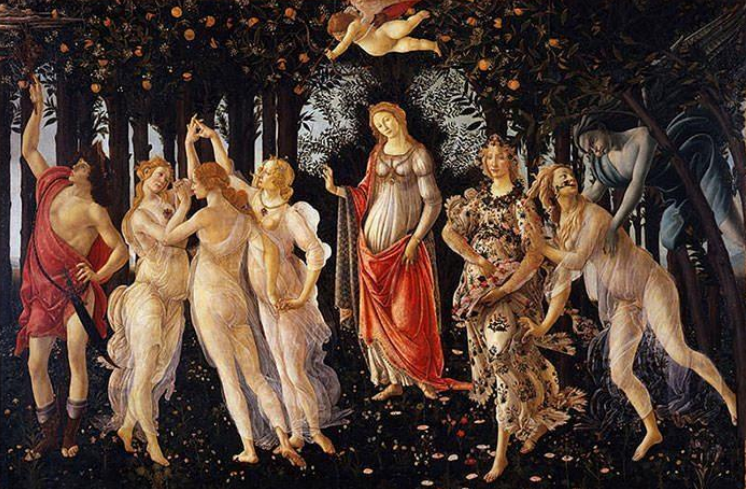
It means 'the season of spring' and the painting is sometimes also referred to as 'Allegory of Spring'
It is "one of the most written about and most controversial paintings in the world." The fascinating use of color and multiple interpretations of the work have made the painting hugely popular and it often cited as a prime example of the grace of Early Renaissance art.
It is "one of the most written about and most controversial paintings in the world." The fascinating use of color and multiple interpretations of the work have made the painting hugely popular and it often cited as a prime example of the grace of Early Renaissance art.
Primavera (1482) - Sandro Botticelli
88
New cards
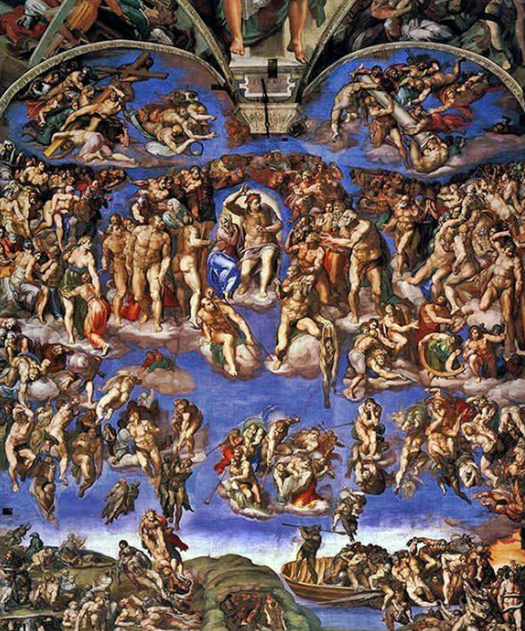
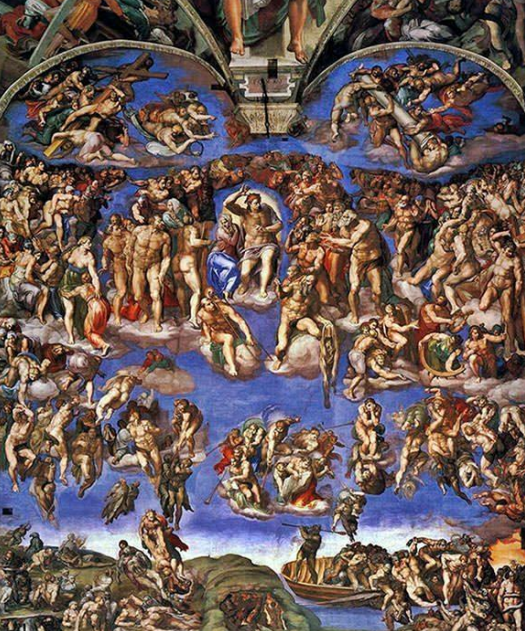
It is one of the most influential works in fresco in the history of Western art. Painted on the altar wall of the Sistine Chapel in Vatican City, it depicts the Second Coming of Christ (a future return of Jesus to earth) and the final and eternal judgment by God of all humanity.
The Last Judgement (1541) - Michelangelo Buonarroti
89
New cards
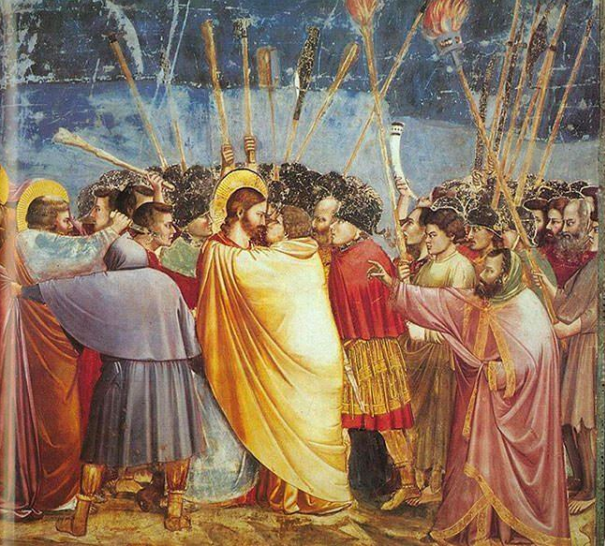
Many critics consider him as the first genius of modern painting and some claim that no artist has surpassed him with only a handful coming close. His fresco cycle on the Scrovegni Chapel is one of the most important masterpieces of Western art and '____________' is the most famous painting of the cycle.
The Kiss of Judas (1306) - Giotto di Bondone
90
New cards
is one of the four main frescoes on the walls of the Stanze di Raffaello, in the Apostolic Palace in the Vatican. The four paintings epitomize Philosophy, Poetry, Theology, and Law; with '_________' representing Philosophy. Critics have suggested that every great Greek philosopher can be found among the 21 painted in the painting. It is considered "the perfect embodiment of the classical spirit of the High Renaissance."
The School of Athens (1509) - Raphael
91
New cards
It masterfully depicts the bewilderment and confusion that occurs among the disciples of Jesus when he announces that one of them would betray him. Leonardo's detailed knowledge of anatomy, light, botany and geology; his interest in how humans register emotion in expression and gesture; and his subtle gradation of tone; all come together to make this painting among the most revered and famous works of all time.
The Last Supper (1498) - Leonardo da Vinci
92
New cards
His work done on the Sistine Chapel ceiling is a cornerstone of Renaissance art and \_______________ is the most famous fresco panel of the masterpiece.
The Creation of Adam (1512) - Michelangelo Buonarroti
93
New cards
It has been acclaimed as "the best known, the most visited, the most written about, the most sung about and the most parodied work of art in the world". Its fame rests, in particular, on the elusive smile on the woman's face which is why it is also known as "la Gioconda", or the laughing one. It was forever a work in progress, as it was his attempt at perfection. \n \n The painting was never delivered to its commissioner; Da Vinci kept it with him till the end of his life. Guinness World Records lists the 'Mona Lisa' as having the highest insurance value for a painting in history. It was assessed at US$100 million on December 14, 1962, which after adjusting inflation, would be around today
Mona Lisa (1517) - Leonardo da Vinci
94
New cards
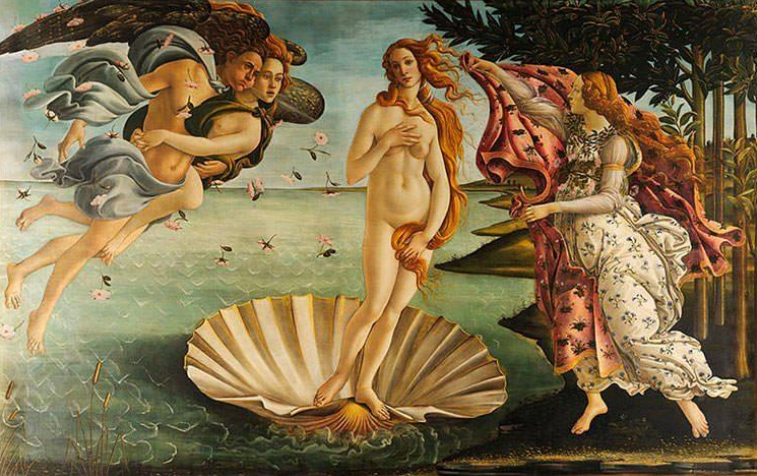
\
The Birth of Venus (1486) – Botticelli
95
New cards
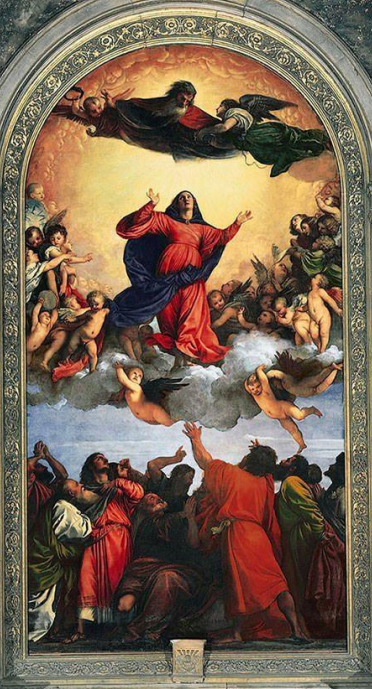
\
Assumption of the Virgin (1518) – Titian
96
New cards
\
Sistine Madonna (1512) – Raphael
97
New cards
\
Primavera (1482) - Sandro Botticelli
98
New cards
\
The Last Judgement (1541) - Michelangelo Buonarroti
99
New cards
\
The Kiss of Judas (1306) - Giotto di Bondone
100
New cards
\
The School of Athens (1509) – Raphael