Nucleic Acids
 Call Kai
 Learn
Learn Practice Test
 Spaced Repetition
 Match
Match Flashcards
 Knowt Play
1/13

Earn XP
Description and Tags
SBI4U - Birrell
Name | Mastery | Learn | Test | Matching | Spaced | Call with Kai |
|---|
No analytics yet
Send a link to your students to track their progress
14 Terms
Function of nucleic acids
assembly instructions for all proteins in living organisms
Nucleic acids are ____________ of _____________, the monomer
polymers, nucelotides
2 types of nucleic acids
Deoxyribonucleic acid (DNA) and ribonucleic acid (RNA)
DNA
🧬 Stores hereditary info responsible for inherited traits in all eukaryotes and prokaryotes + many viruses
☆ double-stranded
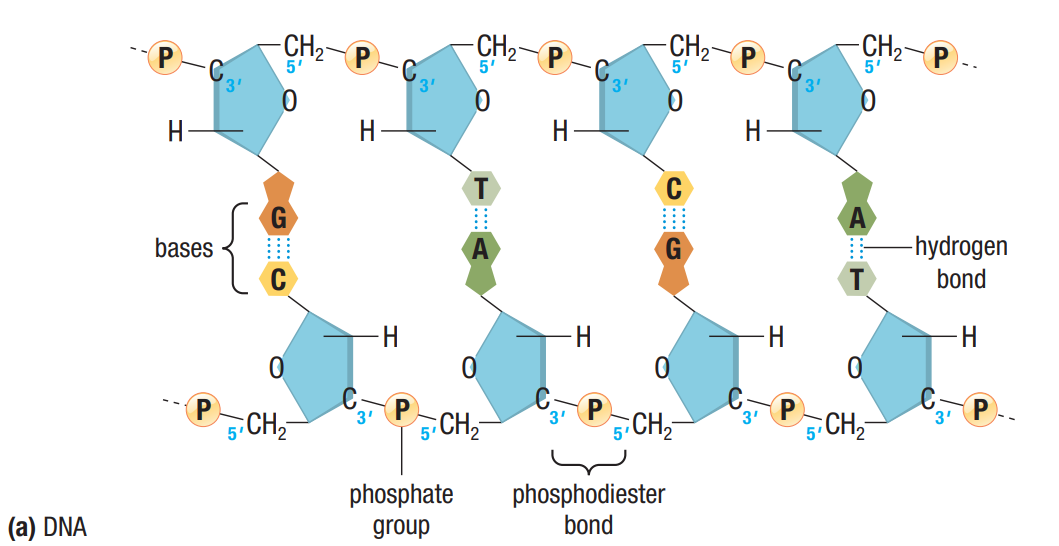
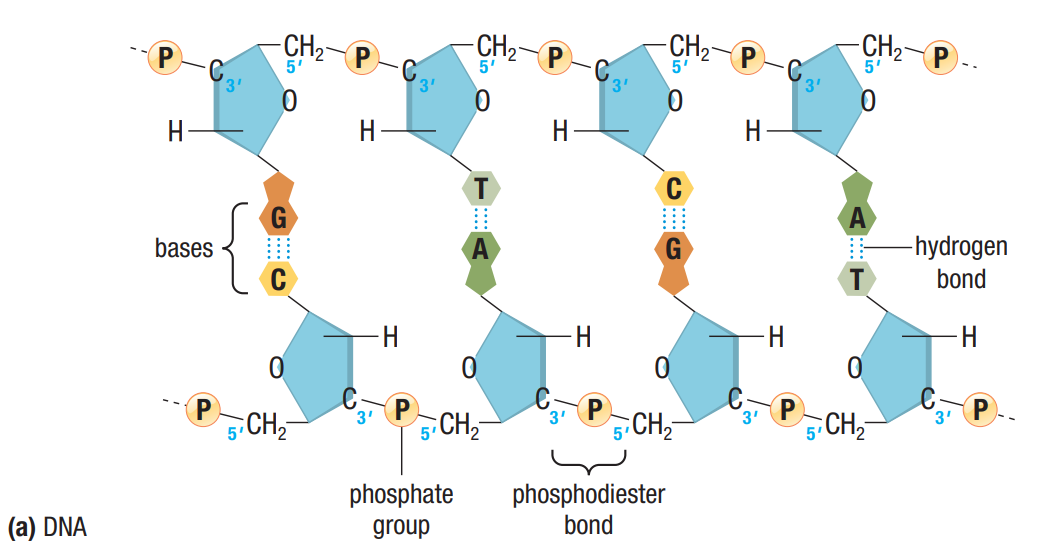
DNA is a double-stranded molecule in which the ____ _______ run ___________ to each other; they are oriented in the _______ direction relative to the sugar-phosphate backbone.
two strands, antiparallel, opposite
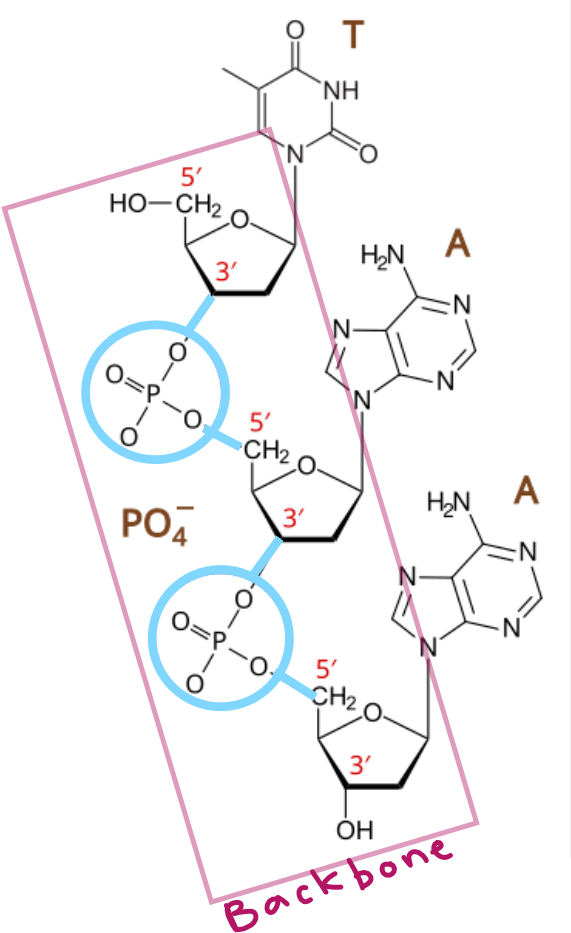
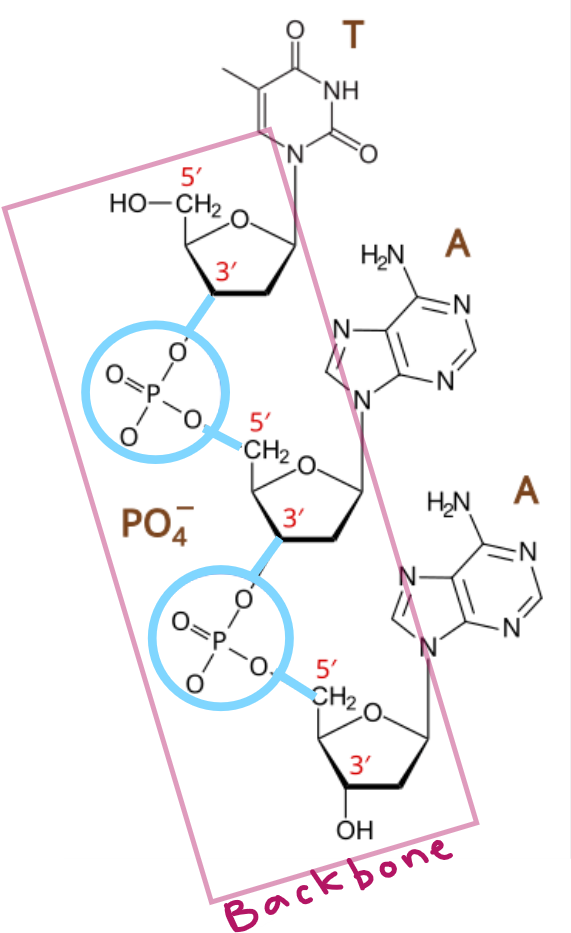
the link that forms between _________, creating a sugar-phosphate _________, is called a ______________ _____
nucleotides, backbone, phosphodiester bond
RNA
〰 The hereditary molecule of some viruses, several different forms are involved in protein synthesis
☆ single stranded
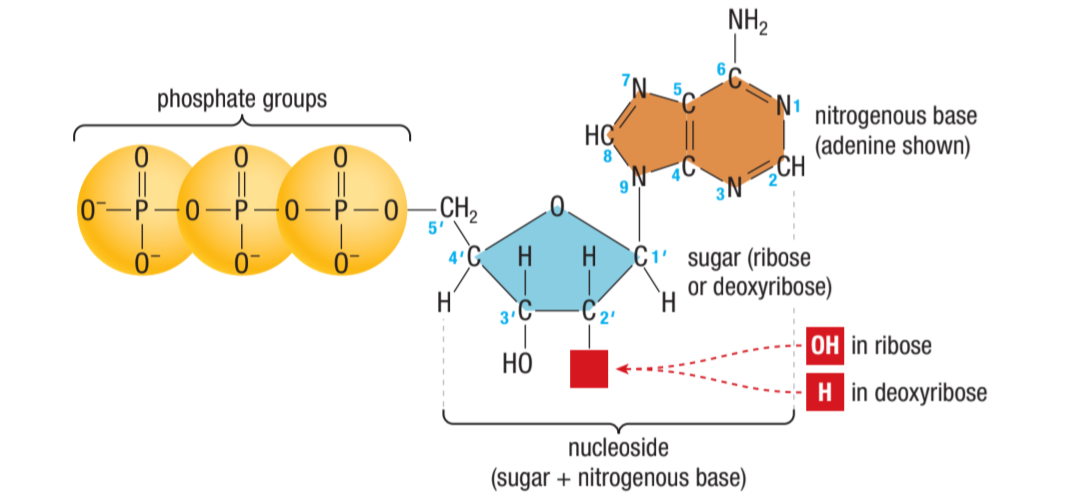
Components of nucleotides
phosphate group
pentose sugar (ribose or deoxyribose)
nitrogenous base
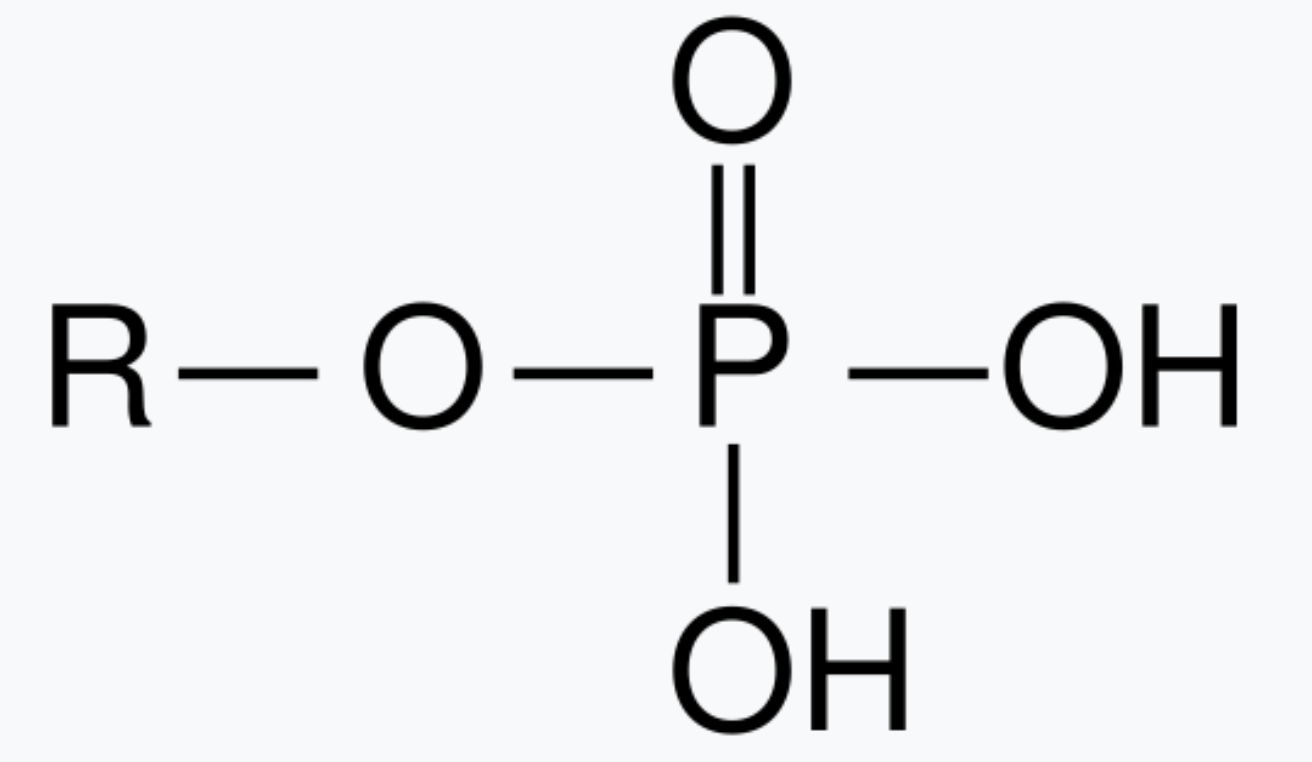
draw a phosphate group
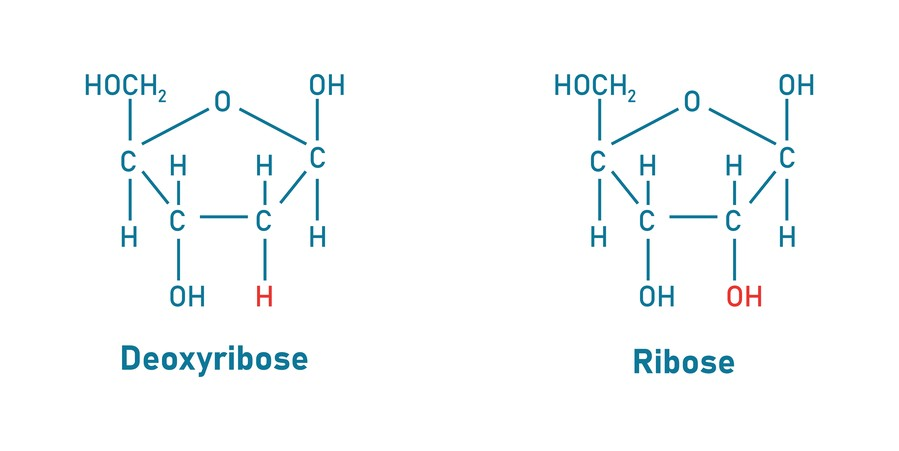
deoxyribose vs ribose sugars
deoxyribose: -H on carbon 2
ribose: -OH on carbon 2
Nitrogenous bases are classified as ____________ (single ring) or _______ (double ring)
pyrimidines, purines
The nitrogenous bases
👯♀ Adenine
👯♀ Guanine
💍Cytosine
💍Thymine (DNA only)
💍Uracil (RNA only)
nitrogenous bases on ______ _____ of DNA form _______ _____ to create the double helix shape.
☆ A ___ T, and G___ C
opposite strands, hydrogen bonds, A=T, C☰G
Besides DNA & RNA, other biomolecules composed of __________ exist. An example of this is ____, which carries energy.
Nucleotides, ATP
Explore top notes

