Language Devices
0.0(0)
Studied by 0 people Call Kai
 Learn
Learn Practice Test
 Spaced Repetition
 Match
Match Flashcards
 Knowt Play
Card Sorting
1/42

Last updated 3:56 PM on 2/18/23
Name | Mastery | Learn | Test | Matching | Spaced | Call with Kai |
|---|
No analytics yet
Send a link to your students to track their progress
43 Terms
1
New cards
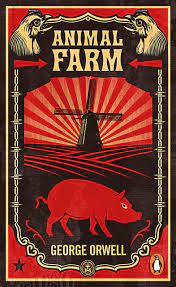
Allegory
A story, poem, or picture that can be interpreted to reveal a hidden meaning, typically a moral or political one.
2
New cards
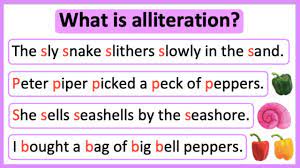
Alliteration
**A s**eries of words in quick succession that all start with the same letter or sound.
3
New cards
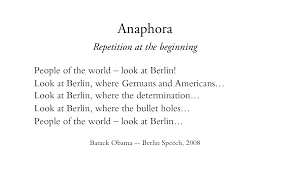
Anaphora
**T**he repetition of a word or phrase at the beginning of a series of clauses or sentences. It’s often seen in poetry and speeches, intended to provoke a emotional response in its audience.
4
New cards
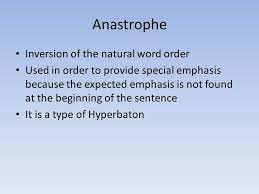
Anastrophe
A figure of speech wherein the traditional sentence structure is reversed. So a typical verb-subject-adjective sentence such as “Are you ready?” becomes a Yoda-esque adjective-verb-subject question: “Ready, are you?” Or a standard adjective-noun pairing like “tall mountain” becomes “mountain tall.”
5
New cards
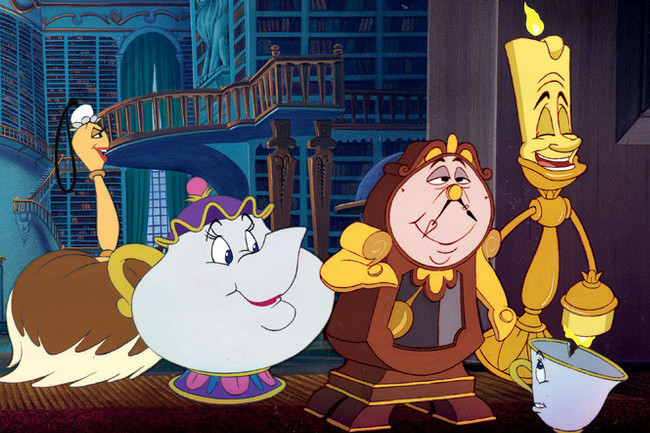
Anthropomorphism
To **anthropomorphize** is to apply human traits or qualities to a non-human thing such as objects, animals, or the weather. But unlike personification, in which this is done through figurative description, anthropomorphism is literal: a sun with a smiling face, for example, or talking dogs in a cartoon.
6
New cards
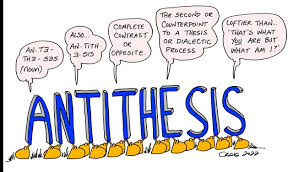
Antithesis
An antithesis is a figure of speech that states strongly contrasting ideas placed in juxtaposition.
7
New cards
Archetype
A very typical example of a certain person or thing. \n

8
New cards
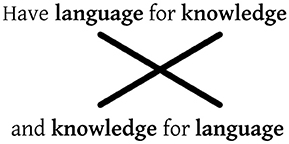
Chiasmus
A sentence in which two words in the first half are criss-crossed in the second half.
9
New cards
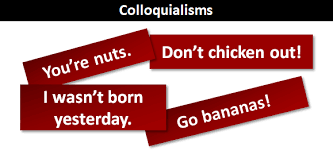
Colloquialism
**T**he use of casual and informal language in writing, which can also include slang. Writers use colloquialisms to provide context to settings and characters, and to make their writing sound more authentic.
10
New cards
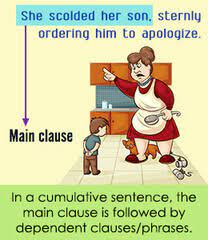
Cumulative Sentence
A **cumulative sentence** (or “loose sentence”) is one that starts with an independent clause, but then has additional or modifying clauses. They’re often used for contextual or clarifying details. This may sound complex, but even, “I ran to the store to buy milk, bread, and toilet paper” is a cumulative sentence, because the first clause, “I ran to the store,” is a complete sentence, while the rest tells us extra information about your run to the store.
11
New cards
Dramatic irony
**Dramatic irony** is when the readers know more about the situation going on than at least one of the characters involved. This creates a difference between the ways the audience and the characters perceive unfolding events.
12
New cards
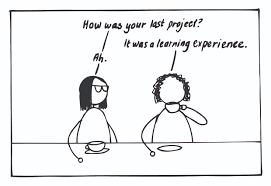
Euphemism
A **euphemism** is an indirect, “polite” way of describing something too inappropriate or awkward to address directly.
13
New cards
Exposition
**Exposition** is when the narrative provides background information in order to help the reader understand what’s going on. When used in conjunction with description and dialogue, this literary device provides a richer understanding of the characters, setting, and events.
14
New cards
Flashback
**Flashbacks** to previous events split up present-day scenes in a story, usually to build suspense toward a big reveal. Flashbacks are also an interesting way to present exposition for your story, gradually revealing to the reader what happened in the past.
15
New cards
Foreshadowing
**Foreshadowing** is when the author hints at events yet to come in a story. Similar to flashbacks (and often used in conjunction with them), this technique is also used to create tension or suspense — giving readers just enough breadcrumbs to keep them hungry for more.
16
New cards
Hyperbole
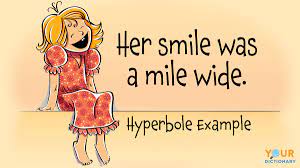
**Hyperbole** is an exaggerated statement that emphasizes the significance of the statement’s actual meaning. When a friend says, "Oh my god, I haven't seen you in a million years," *that's* hyperbole.
17
New cards
Hypophora
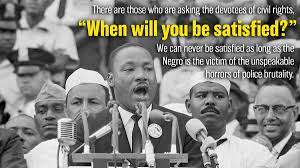
**Hypophora** is much like a rhetorical question, wherein someone asks a question that doesn't require an answer. However, in hypophora, the person raises a question and answers it immediately themselves (hence the prefix *hypo,* meaning 'under' or 'before').
18
New cards
Imagery
**Imagery** appeals to readers’ senses through highly descriptive language. It’s crucial for any writer hoping to follow the rule of "show, don’t tell," as strong imagery truly paints a picture of the scene at hand.
19
New cards
In Medias Res
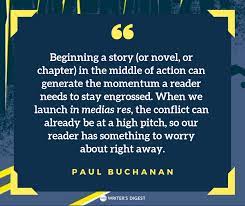
**In medias res** is a Latin term that means "in the midst of things" and is a way of starting a narrative without exposition or contextual information. It launches straight into a scene or action that is already unfolding.
20
New cards
Irony
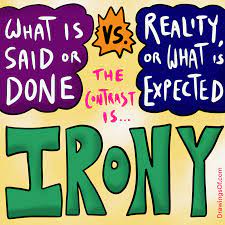
**Irony** creates a contrast between how things seem and how they really are. There are three types of literary irony: *dramatic* (when readers know what will happen before characters do), *situational* (when readers expect a certain outcome, only to be surprised by a turn of events), and *verbal* (when the intended meaning of a statement is the opposite of what was said).
21
New cards
Isocolon
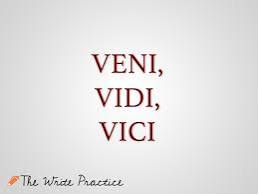
If you’re a neat freak who likes things *just so,* **isocolon** is the literary device for you. This is when two or more phrases or clauses have similar structure, rhythm, and even length — such that, when stacked up on top of each other, they would line up perfectly. Isocolon often crops up in brand slogans and famous sayings; the quick, balanced rhythm makes the phrase catchier and more memorable.
**Example:** *Veni, vidi, vici* (“I came, I saw, I conquered”)
**Example:** *Veni, vidi, vici* (“I came, I saw, I conquered”)
22
New cards
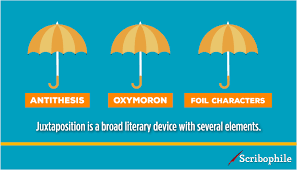
Juxtaposition
**Juxtaposition** places two or more dissimilar characters, themes, concepts, etc. side by side, and the profound contrast highlights their differences.
23
New cards
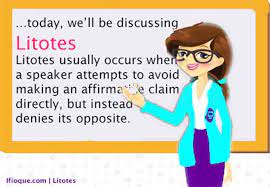
Litotes
**Litotes** (pronounced *lie-toe-teez*) is the signature literary device of the double negative.
\
**Examples:** “You won’t be sorry” (meaning you’ll be happy); “you’re not wrong” (meaning you’re right); “I didn’t *not* like it” (meaning I did)
\
**Examples:** “You won’t be sorry” (meaning you’ll be happy); “you’re not wrong” (meaning you’re right); “I didn’t *not* like it” (meaning I did)
24
New cards
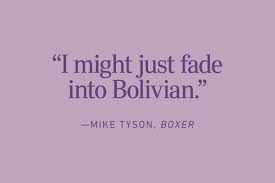
Malapropism
A **malapropism** is when similar-sounding words replace their appropriate counterparts, typically to comic effect — one of the most commonly cited is “dance a flamingo,” rather than a “flamenco.” Malapropisms are often employed in dialogue when a character flubs up their speech.
25
New cards
Metaphor
A **metaphor** compares two similar things by saying that one of them *is* the other. As you'd likely expect, when it comes to literary devices, this one is a heavy hitter. And if a standard metaphor doesn't do the trick, a writer can always try an extended metaphor: a metaphor that expands on the initial comparison through more elaborate parallels.
26
New cards
Metonymy
**Metonymy** is like symbolism, but even more so. A metonym doesn’t just symbolize something else, it comes to serve as a synonym for that thing or things — typically, a single object embodies an entire institution.
\
**Examples:** “The crown” representing the monarchy, “Washington” representing the U.S. government
\
**Examples:** “The crown” representing the monarchy, “Washington” representing the U.S. government
27
New cards
Motif
Whatever form a **motif** takes, it recurs throughout the novel and helps develop the theme of the narrative. This might be a symbol, concept, or image.
28
New cards
Onomatopoeia
Amusingly, **onomatopoeia** (itself a difficult-to-pronounce word) refers to words that *sound* like the thing they’re referring to. Well-known instances of onomatopoeia include whiz, buzz, snap, grunt, etc.
29
New cards
Oxymoron
An **oxymoron** comes from two contradictory words that describe one thing. While juxtaposition contrasts two story elements, oxymorons are about the actual *words* you are using.
30
New cards
Paradox
**Paradox** derives from the Greek word *paradoxon*, which means “beyond belief.” It’s a statement that asks people to think outside the box by providing seemingly illogical — and yet actually true — premises.
\
**Example:** In George Orwell’s *1984*, the slogan of the totalitarian government is built on paradoxes: “War is Peace, Freedom is Slavery, Ignorance is Strength.” While we might read these statements as obviously contradictory, in the context of Orwell’s novel, these blatantly corrupt sentiments have become an accepted truth.
\
**Example:** In George Orwell’s *1984*, the slogan of the totalitarian government is built on paradoxes: “War is Peace, Freedom is Slavery, Ignorance is Strength.” While we might read these statements as obviously contradictory, in the context of Orwell’s novel, these blatantly corrupt sentiments have become an accepted truth.
31
New cards
Point of view (POV)
**Point of view** is, of course, the mode of narration in a story. There are many POVs an author can choose, and each one will have a different impact on the reading experience.
32
New cards
Polysyndeton
Instead of using a single conjunction in a lengthy statements, **polysyndeton** uses several in succession for a dramatic effect. This one is definitely for authors looking to add a bit of artistic flair to their writing, or who are hoping to portray a particular (usually naïve) sort of voice.
33
New cards
Repetition
**Repetition**, repetition, repetition… where would we be without it? Though too much repetition is rarely a good thing, occasional repetition can be used quite effectively to drill home a point, or to create a certain atmosphere. For example, horror writers often use repetition to make the reader feel trapped and scared.
34
New cards
Satire
Writers use **satire** to make fun of some aspect of human nature or society — usually through exaggeration, ridicule, or irony. There are countless ways to satirize something; most of the time, you know it when you read it.
35
New cards
Simile
A **simile** draws resemblance between two things by saying “Thing A is like Thing B,” or “Thing A is as \[adjective\] as Thing B.” Unlike a metaphor, a similar does not posit that these things are the same, only that they are alike. As a result, it is probably the most common literary device in writing — you can almost always recognize a simile through the use of “like” or “as.”
36
New cards
Soliloquy
**Soliloquy** involves a character speaking their thoughts aloud, usually at length (and often in a Shakespeare play). The character in question may be alone or in the company of others, but they’re not speaking *for* the benefit of other people; the purpose of a soliloquy is for a character to reflect independently.
37
New cards
Symbolism
Authors turn to tangible **symbols** to represent abstract concepts and ideas in their stories Symbols typically derive from objects or non-humans — for instance, a dove might represent peace, or raven might represent death.
38
New cards
Synecdoche
**Synecdoche** is the usage of a part to represent the whole. That is, rather than an object or title that’s merely *associated* with the larger concept (as in metonymy), synecdoche must actually be *attached* in some way: either to the name, or to the larger whole itself.
**Examples:** “Stanford won the game” (*Stanford* referring to the full title of the Stanford football team) or “Nice wheels you got there” (*wheels* referring to the entire car)
**Examples:** “Stanford won the game” (*Stanford* referring to the full title of the Stanford football team) or “Nice wheels you got there” (*wheels* referring to the entire car)
39
New cards
Tmesis
**Tmesis** is when a word or phrase is broken up by an interjecting word, such as abso-freaking-lutely. It’s used to draw out and emphasize the idea, often with a humorous or sarcastic slant.
40
New cards
Tone
**Tone** refers to the overall mood and message of your book. It’s established through a variety of means, including voice, characterization, symbolism, and themes. Tone sets the feelings you want your readers to take away from the story.
41
New cards
Tragicomedy
**Tragicomedy** is just what it sounds like: a blend of tragedy and comedy. Tragicomedy helps an audience process darker themes by allowing them to laugh at the situation even when circumstances are bleak.
\
**Example:** Lemony Snicket’s *A Series of Unfortunate Events* uses wordplay, absurd situations, and over-the-top characters to provide humor in an otherwise tragic story.
\
**Example:** Lemony Snicket’s *A Series of Unfortunate Events* uses wordplay, absurd situations, and over-the-top characters to provide humor in an otherwise tragic story.
42
New cards
Zoomorphism
**Zoomorphism** is when you take animal traits and assign them to anything that’s not an animal. It’s the opposite of anthropomorphism and personification, and can be either a physical manifestation, such as a god appearing as an animal, or a comparison, like calling someone a *busy bee*.
43
New cards
Double Entendre
A word or phrase that is open to two __interpretations__, one of which is usually risqué or __indecent__.