A-Level Biology: Gas Exchange, Heart, and Plant Transport Flashcards
 Call Kai
 Learn
Learn Practice Test
 Spaced Repetition
 Match
Match Flashcards
 Knowt Play
1/175

There's no tags or description
Looks like no tags are added yet.
Name | Mastery | Learn | Test | Matching | Spaced | Call with Kai |
|---|
No analytics yet
Send a link to your students to track their progress
176 Terms
What is the surface area to volume ratio of an organism?
It is the surface area of an organism divided by its volume; larger organisms have a smaller ratio.
why do the tips of fish gill filaments overlap
slows water flow increasing the time for gas exchange
how does lymph differ from blood
contains fatty acids
what would happen to blood flow if the right atrioventricular valve couldnt close
during ventricular systole,blood would enter right atrium from the right ventricle
what does the casparian strip do
block the apoplast pathway between the cortex and the medulla
to ensure the water and dissolved mineral ions have to pass into the cell cytoplasm through the plasma membrane
what effect would a hole in the septum,between the left and right atria,that lets blood pass through (ASD) have?
some oxygenated blood in the left atrium gets pumped back into the lungs
what would happen to the blood in the heart if the atrio-ventricular node was stimulated at the same times as the sino-atrial node?
atria and ventricle would contract at the same time
why does the plasma membrane contain transporter proteins
actively pump mineral ions from the cytoplasm of the cortex cells into the medulla and xylem
makes the water potential of the medulla and xylem more negative so that water moves from the cortex cells into the medulla and xylem by osmosis
once the water has entered the medulla,it cannot pass back into the cortex,as the apoplast pathway of the endodermal cells is blocked by the Casparian strip
importance of transpiration
transports useful mineral ions up the plant
maintains cell turgidity
supplies water for growth,cell elongation and photosynthesis
supplies water that,as it evaporates,can keep the plant cool on a hot day
lignin
impregnates xylem cell walls
kills cells
prevents vessel from collapsing
leaves gaps which form bordered pits,allowing water to leave one vessel and pass into the next vessel or leave the xylem and pass into the living parts of the plant
dicotyledonous
two seed leaves
xylem and phloem in vascular bundles
bundles may also contain collenchyma and sclerenchyma to give support and strength
endodermis
gets water into xylem vessels
inside has a layer of meristem called pericycle
conformational change
as o2 tension rises,the diffusion gradient into the haemoglobin molecule increases
eventually one o2 molecule enters the haemoglobin molecule and associates with one of the groups
this causes a slight change in the shape of the haemoglobin molecule
it allows more o2 moleules to enter the haemoglobin molecule and associate with the other haem groups relatively easily
this accounts for the steepness of the curve as the tension rises
why does mammalian haemoglobin produce an s-shaped curve?
well adapted to transporting o2 to the tissues of a mammal
o2 tension found in the lungs is sufficient to produce close to 100% saturation
the o2 tension in respiring body tissues is. sufficiently low to cause o2 to dissociate readily from the oxyhaemoglobin
why does the curve for fetal haemoglobin differ from the adult’s?
fetal curve is to the left
in the placenta,where o2 tension is low,fetal haemoglobin will absorb o2 from the surrounding fluid
this reduces the o2 tension even further
so o2 diffuses from the mother’s blood fluid into the placenta
this reduces the o2 tension within the mother’s blood making the maternal haemoglobin release more o2
haemoglobinic acid
hydrogen ions building up in rbc could cause contents to become very acidic
so they are taken out of the solution by associating with haemoglobin which acts as a buffer
atrial fibrillation
atria beating more frequently than ventricles
no clear P waves seen
endothelium
thin layer that is particularly smooth to reduce friction with the flowing blood
artery layers
inner layer (tunica intima) - thin layer of elastic tissue which allows the wall to stretch and recoil to help maintain bp
middle layer (tunica media) - thick layer of smooth muscle
outer layer (tunica adventita) - thick layer of collagen and elastic tissue which provides strength to withstand the high pressure and recoil to maintain the pressure
capillary walls
single layer of flattened endothelial cells
leaky walls which allow blood plasma and dissolved substances to leave the blood
venule walls
thin layers of muscle and elastic tissue outside the endothelium and a thin outer layer of collagen
hydrostatic pressure:blood plasma,tissue fluid, lymph
high,low,low
oncotic pressure:blood plasma,tissue fluid, lymph
more -ve,less -ve,less -ve
cells:blood plasma,tissue fluid, lymph
rbc neutrophils lymphocytes,some neutrophiles esp in infected areas,lymphocytes
proteins:blood plasma,tissue fluid, lymph
plasma proteins,few proteins,few proteins
erythrocyte
biconcave disc
no nucleus,Gogli body,rER,mitachondria
contains Hb(respiratory pigment)
7.5 micrometres diameter,2 micrometres thick
squeezes through blood vessels
large sa:v
neutrophil
granular cytoplasm
many lysosomes
multilobed nucleus
myogenic
self excitation
SAN
initiates contraction
pace maker
found in atrial wall just below entry point of vena cava
how is hydrostatic pressure generated in the heart
ventricular systole
why does the hydrostatic pressure of the blood drop as blood moves away from the heart?
more vessels whch have a larger cross section
reduced resistance to blood flow
arteries stretch
loss of fluid from capillaries
fats:blood plasma,tissue fluid, lymph
transported in lipoproteins,few fats,more fats esp near digestive system
what does the hydrostatic pressure of the blood do?
push fluid out into tissues
what does the hydrostatic pressure of tissue fluid do?
push fluid back into the capillaries
cotransport
proteins only allow the movement of the hydrogen ions into the cell if they are accopanied by sucrose molecules
source
any part of the plant that loads sucrose into the sieve tube
sink
anywhere that removes sucrose from the phloem sieve tubes
what does the oncotic pressure of blood do?
pull water back into the blood (-ve figure)
what does the oncotic pressure of tissue fluid do?
pull water into the tissue fluid
what does the net result of hydrostatic and oncotic pressure in blood and tissue fluid do?
pushes fluid out of capillary at the arterial end into the capillary at the venule end
ostia
pore which blood from the body enters the heart through
peristalsis
process by which heart pumps blood towards the head
disadvantages of open circulatory system
low bp
slow blood flow
circulation of blood may be affected by body movements or lack of
advantages of closed circulatory system
higher pressure so blood flows more quickly
more rapid delivery of o2 and nutrients
more rapid removal of co2 and other wastes
transport is independent of body movement
How does increased surface area aid in gas exchange?
Increased surface area, such as projections on root hair cells, facilitates more efficient diffusion.
What factors affect the rate of diffusion?
Diffusion distance, surface area, concentration gradient, and temperature.
Adaptations of large organisms to maximise diffusion
Increased surface area- e.g. projections on root hair cells
Steeper concentration gradient- e.g. ventilation, good blood supply and countercurrent flow mechanism
Shortened length of diffusion pathway- e.g. alveoli wall is one thin layer of squamous epithelial cells
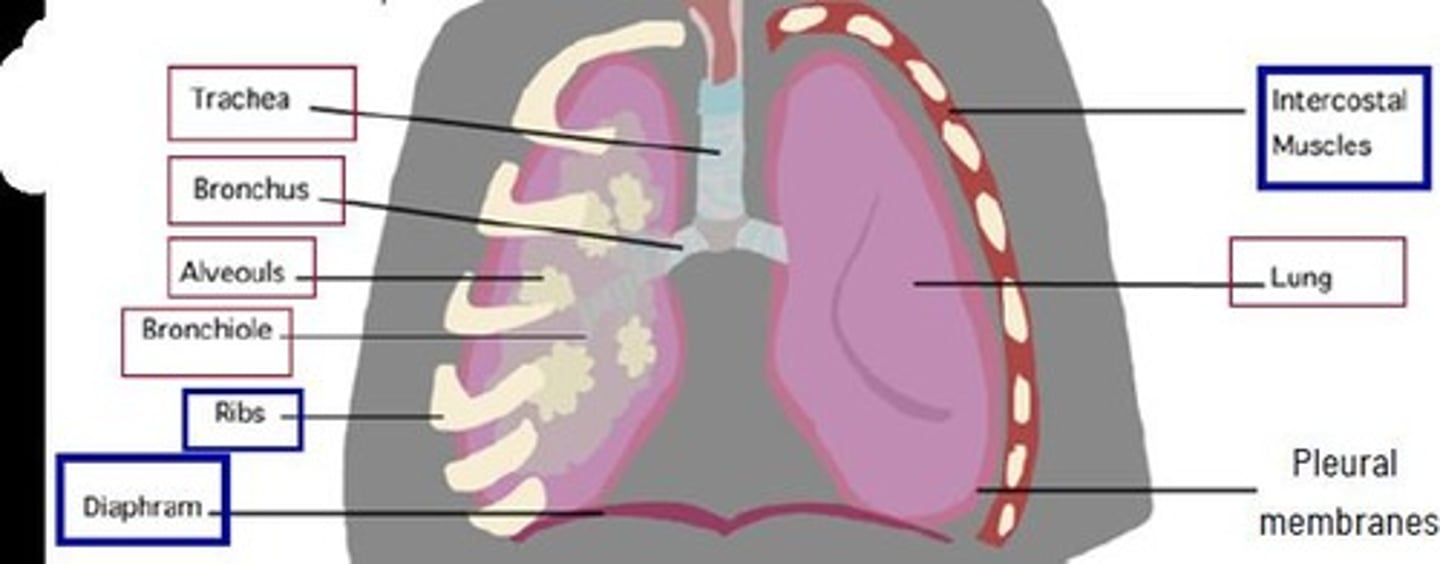
Route that air takes during ventilation
trachea
bronchi
bronchioles
alveoli
ventilation
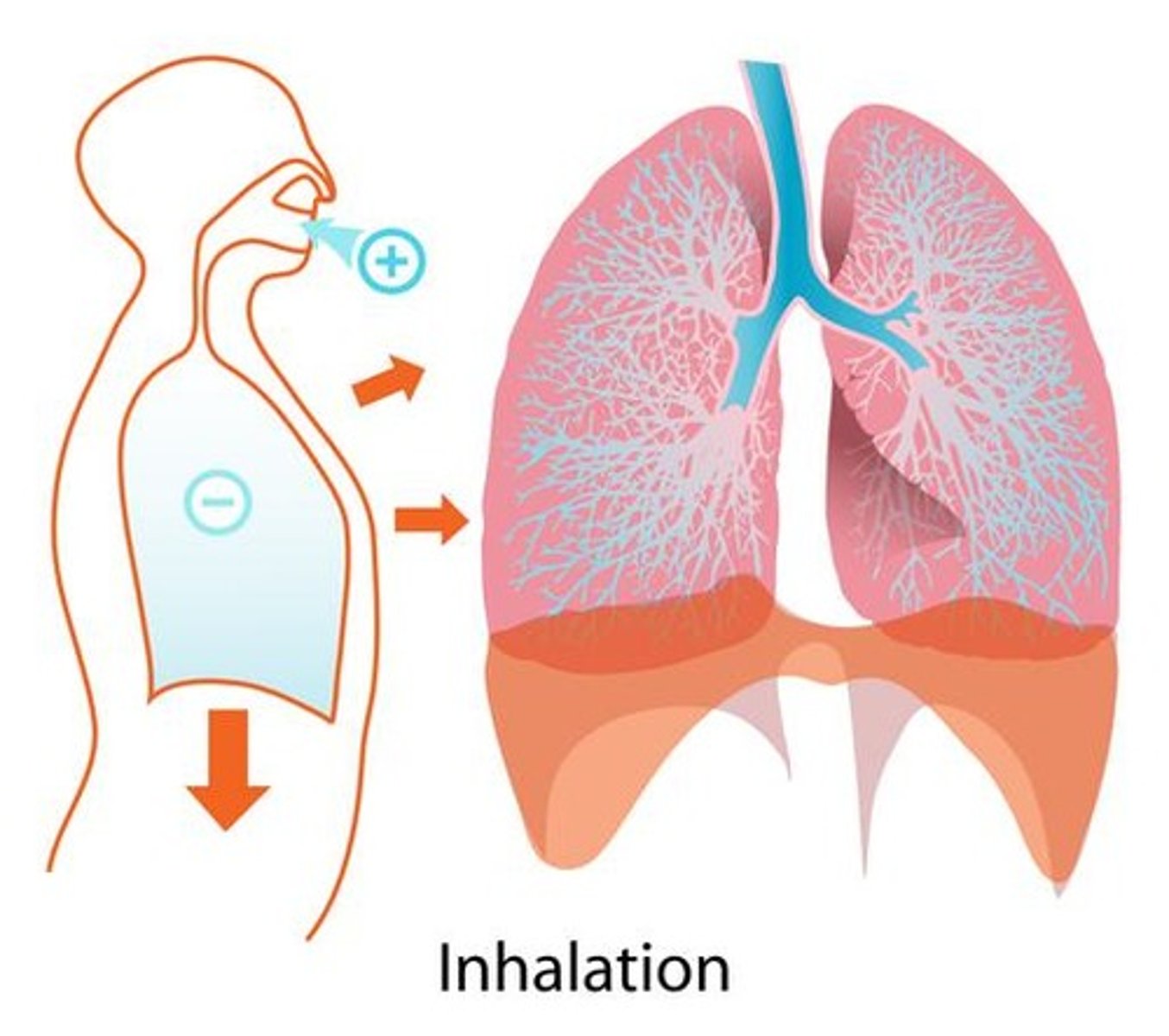
Inhaling and exhaling in humans
Controlled by diaphragm and antagonistic interaction of internal and external intercostal muscles
What is the role of the diaphragm during inspiration?
The diaphragm contracts and flattens, increasing lung volume and decreasing pressure.
Precautions that should be taken when using a spirometer
the subject should be healthy,free from asthma
the soda lime should be fresh and functioning\
there should be no leaks in the apparatus
the mouthpiece should be sterilised
the water chamber must not be overfilled (or water may enter the air tubes)
Inspiration
External intercostal muscles contract and internal relax
Pushing ribs up and out
Diaphragm contracts and flattens
Air pressure in the lungs drops below atmospheric pressure as lung volume increases
Air moves in down pressure gradient
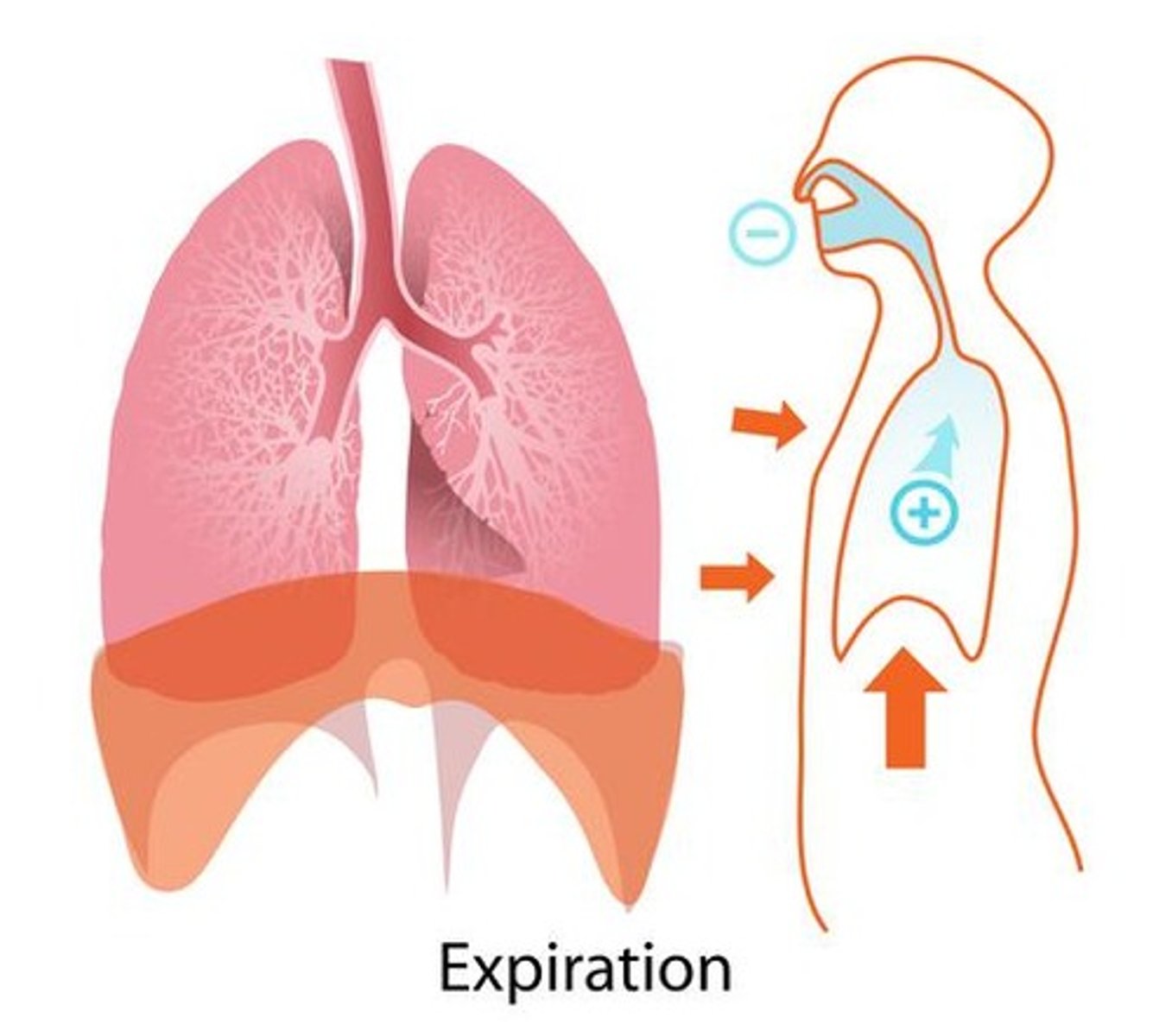
What happens during expiration?
External intercostal muscles relax (and internal contract on forced expiration)
Pulling ribs down and in
Diaphragm relaxes and domes
Air pressure in lungs increases above atmospheric pressure as lung volume decreases
Air flows out down pressure gradient
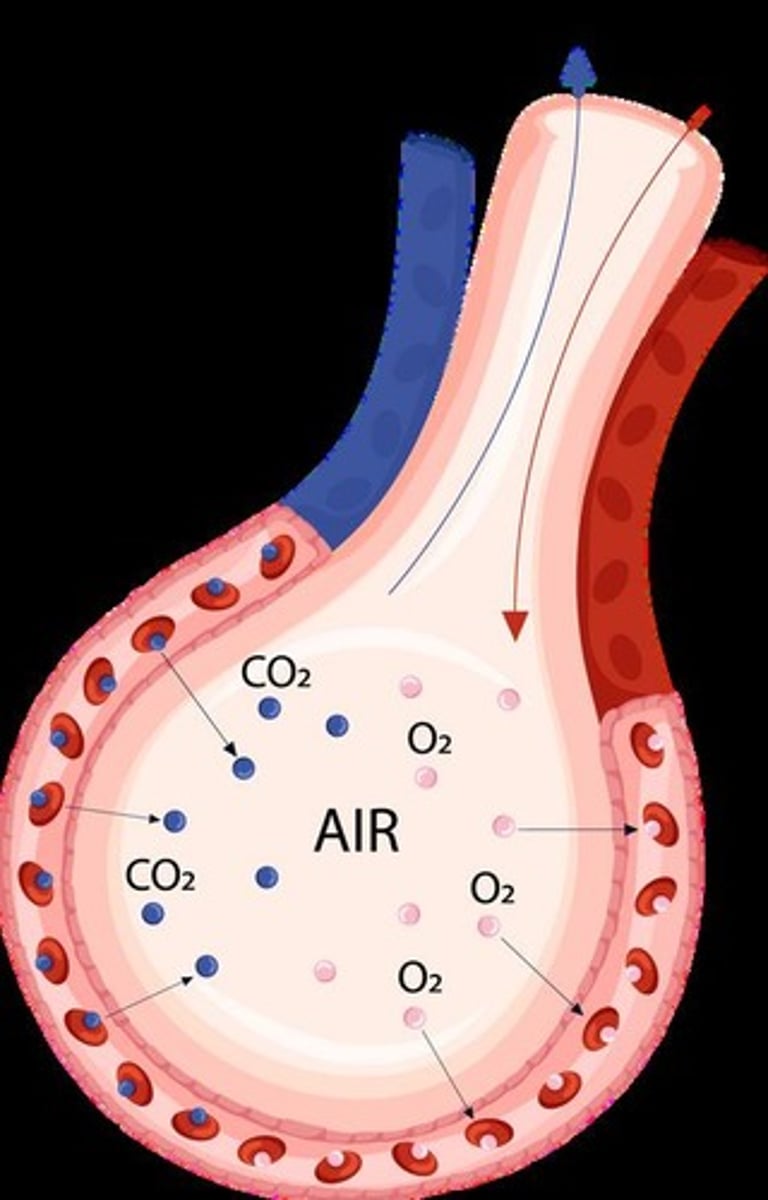
Alveoli structure
Tiny air sacs located at the end of the bronchioles
The site of gas exchange
Highly abundant in each lung- 300 million in each human lung Surrounded by the capillary network
Squamous epithelium one cell thick
Why do large organisms need a specialised exchange surface?
They have a small surface area to volume ratio
Higher metabolic rate- demands efficient gas exchange
Specialised organs- e.g. lungs/gills designed for gas exchange
Vital capacity
The maximum volume of air an individual can inhale or exhale during a deep breath.
2.5-5 dm³
What is tidal volume?
The maximum volume of air an individual can inhale or exhale during a deep breath.
0.5dm³
Spirometer
An apparatus that measures the volume of air inspired and expired by the lungs
ventilation rate
Ventilation rate = tidal volume x breathing rate.
The volume of air inhaled per minute
What is the structure of fish gills?
Fish gills are stacks of gill filaments, each covered with gill lamellae at right angles.
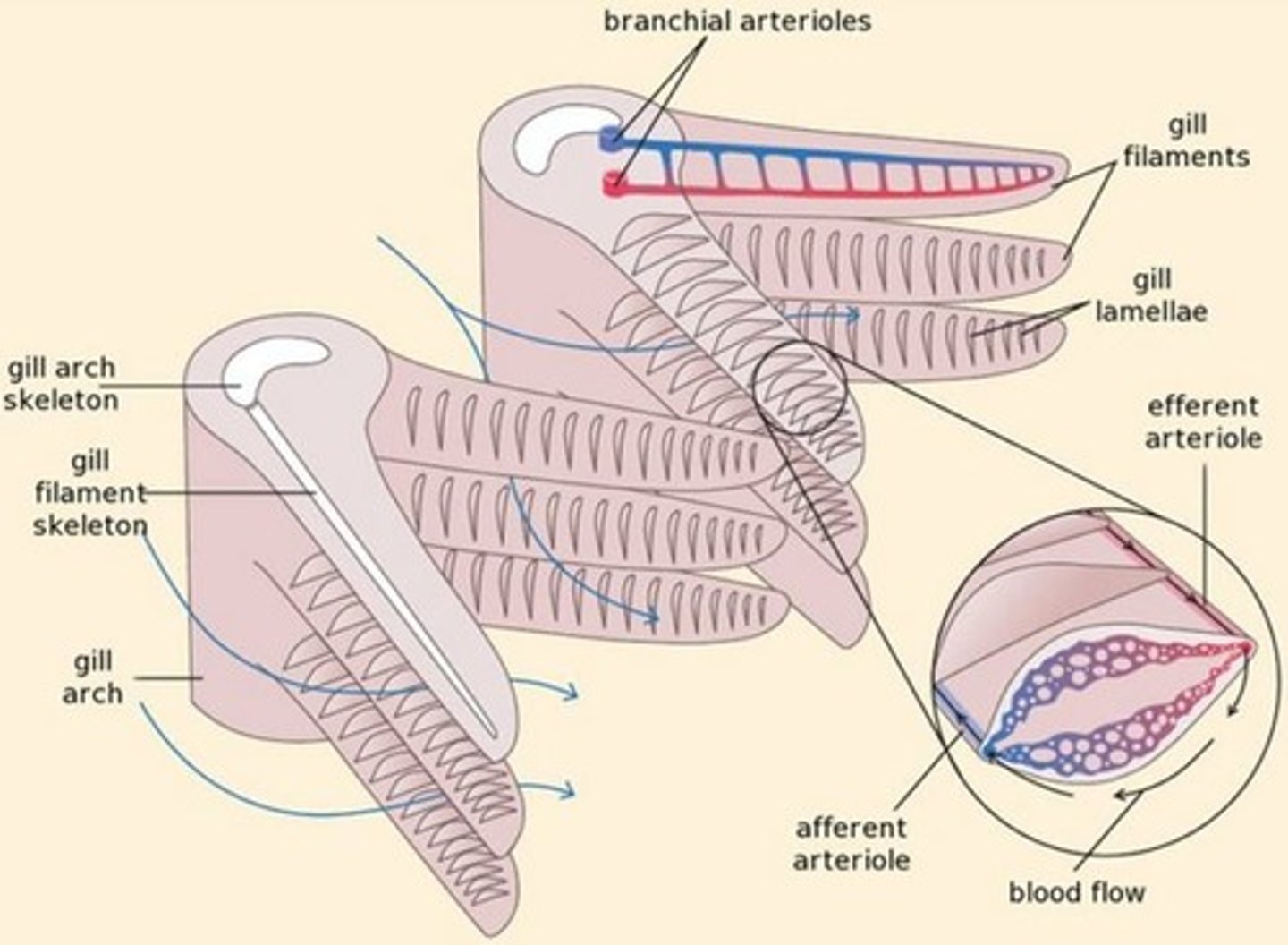
How do fish gas exchange surfaces provides large
surface area?
Several gill arches
Many gill filaments covered in many gill lamellae are positioned at right angles
Creates a large surface area for efficient diffusion
What is countercurrent flow in fish gills?
It is the mechanism where water flows over gill lamellae in the opposite direction to blood flow,
Equilibrium is not reached
Steep diffusion gradient is maintained across entire length of gill lamellae
What adaptations do tracheoles in insects have for gas exchange?
Many tracheoles, which are highly branched and filled with fluid to enhance gas movement.
What is the significance of the alveoli structure?
Alveoli are tiny air sacs that provide a large surface area for gas exchange.
many for large sa:v
surfactant prevents collapse
elastic fibres stretch and recoil
thin walls
capillaries close to wall
ventilated
good blood supply to maintain conc. gradient
Why are the tracheole ends filled with fluid?
Adaptation to increase movement of gases
When insect flies and muscles respire anaerobically- lactate produced
Water potential of cells lowered, so water moves from tracheoles to cells by osmosis
Gases diffuse faster in air than liquid
How does the open circulatory system function?
In an open circulatory system, the transport medium does not stay in vessels at all times.
The transport medium is usually pumped directly to the open body cavity
There are very few transport vessels
Closed circulatory system
The transport medium remains inside of the vessels
Single closed circulatory system
The blood only passes through the heart once per cycle of the body e.g. fish
Double closed circulatory system
The blood passes through the heart twice per cycle of the body e.g. most mammals
residual volume
air that remains in the lungs even after forced expiration
this air remains in the airways and alveoli
1.5dm³
spirometer when person breathes
as a person breathes from the spirometer,oxygen is absorbed by the blood and replaced by co2
the co2 is absorbed by the soda lime in the spirometer so that the volume of air in the chamber decreases
the volume of co2 released and absorbed by the soda lime equals the volume of o2 absorbed by the blood
measuring the gradient of the decrease in volume enables the rate of o2 uptake to be measured
increased o2 uptake will result from:
increased breathing rate
deeper breaths
What is the role of the intercostal muscles during ventilation?
They work antagonistically to control the movement of the ribs during inhalation and exhalation.
What is the effect of a steeper concentration gradient on gas exchange?
A steeper concentration gradient increases the rate of diffusion, enhancing gas exchange efficiency.
Why is the alveoli wall thin?
The alveoli wall is one thin layer of squamous epithelial cells to shorten the diffusion pathway.
What happens to air pressure in the lungs during inhalation?
Air pressure in the lungs drops below atmospheric pressure as lung volume increases.
What is the function of the gill arches in fish?
Gill arches support the gill filaments and help maintain their structure for efficient gas exchange.
How does lactate production in insects affect gas exchange?
Lactate production during anaerobic respiration lowers water potential in cells, promoting gas movement from tracheoles.
What is the primary function of the respiratory system in large organisms?
To facilitate efficient gas exchange due to their higher metabolic demands.
What type of circulatory system do fish have?
Single closed circulatory system
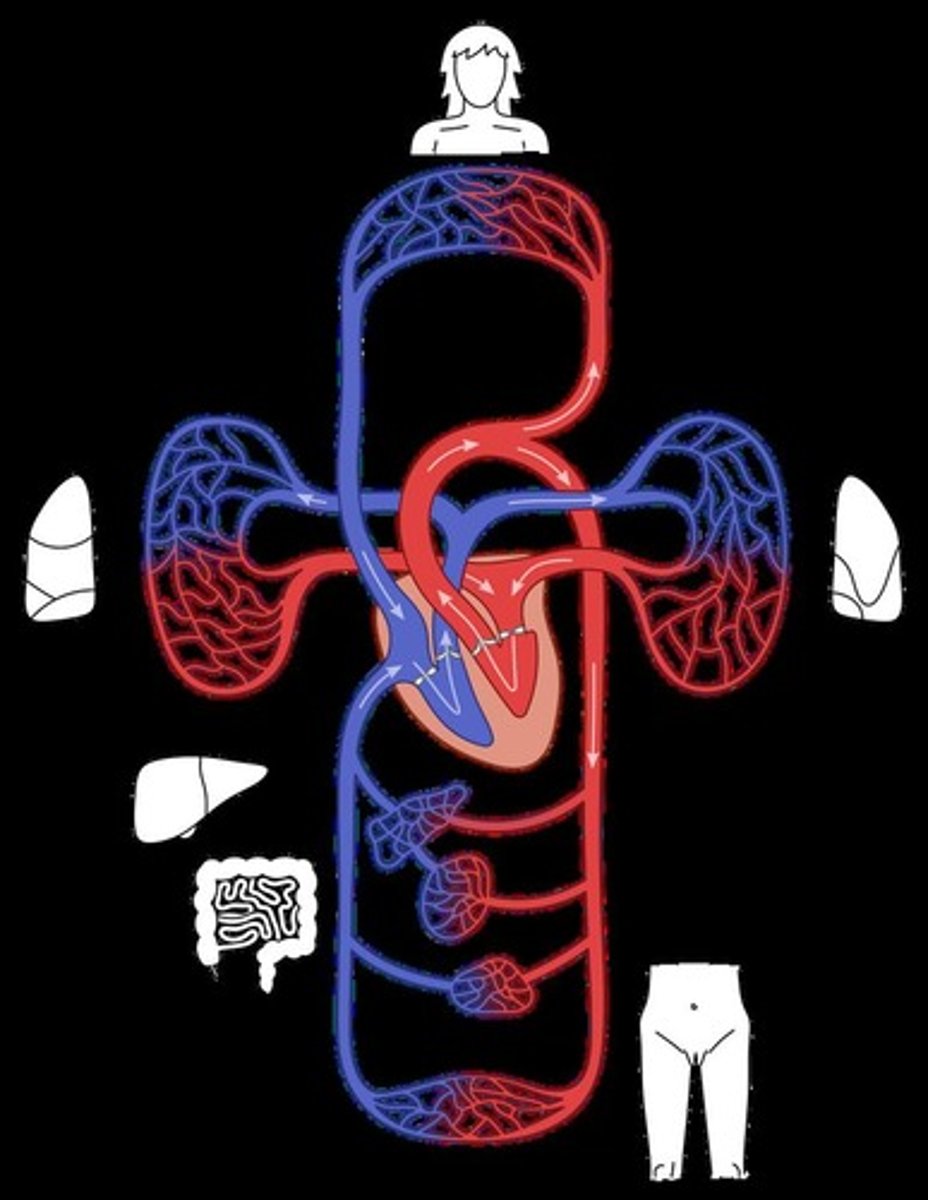
What happens in the single circulatory system of fish?
blood pressure drops as blood passes through the tiny capillaries of gills
blood has a low pressure as it flows towards the body and will not flow very quickly
rate at which oxygen and nutrients are delivered to respiring tissues and co2 and urea are removed is limited
Why do fish have a single circulatory system?
not as metabolically active as mammals
do not need to maintain body temp
need less energy
this supplies sufficient o2 and nutrients for their need
What happens in the double circulatory system of mammals?
blood pressure must not be too high in the pulmonary circulation,otherwise it may damage the delicate capillaries in the lungs
the heart can increase the pressure of the blood after it has passed through the lungs,so the blood is under high pressure as it flows to the body and flows more quickly
the systematic circulation can carry blood at a higher pressure than the pulmonary circulation
Why do mammals have a double circulatory system?
active
maintain body temp
What type of circulatory system do most mammals have?
Double closed circulatory system
route of blood in fish
heart to gills to body to heart
route of blood in mammals
heart to body to heart to lungs to heart
What is the role of tissue fluid?
Enables delivery of useful molecules to cells and removal of waste
What components are found in tissue fluid?
Water, glucose, amino acids, fatty acids, ions, and oxygen
Tissue fluid formation
At the arteriole end of a capillary, the smaller diameter results in high hydrostatic pressure
Small molecules forced out (ultrafiltration)
Red blood cells/plasma proteins too big to fit through capillary pores so remain
What is the structure and function of capillaries?
Capillaries have a narrow diameter (1 red blood cell wide) to slow blood flow and have small pores for liquid/small molecules to be forced out.
Red blood cells squashed against walls shortens diffusion pathway
What are arterioles and their function?
Arterioles branch off from arteries and have the thickest muscular layer to restrict blood flow.
Arteriole structure compared to artery
Thinner elastic layer and outer layer than arteries as pressure is lower
What is the structure of arteries?
Arteries have a thick muscular layer, thick elastic layer, and thick outer layer,small lumen and no valves
capillary endothelium
Flat (squamous) cells
One cell thick
Contains small pores/fenestrations for small molecules to pass through (e.g. glucose, oxygen)
What is unique about the capillary endothelium?
It has a small lumen and no valves, allowing small molecules to pass through.
Different type of blood vessels
Arteries Arterioles Capillaries Venules Veins
What happens to the hydrostatic pressure in capillaries towards the venule end?
There is a lower hydrostatic pressure due to a loss of liquid and a higher oncotic pressure.
Reabsorption of tissue fluid
Large molecules remaining in capillary lower its water potential
Towards venule end there is a lower hydrostatic pressure due to a loss of liquid and a higher oncotic pressure
Water is reabsorbed back into capillaries by osmosis
Role of the lymph in tissue fluid
reabsorption
Not all liquid will be reabsorbed by osmosis as equilibrium will be reached
Excess tissue fluid is absorbed into the lymphatic system to form lymph and drains back into the bloodstream and deposited near the heart

