Chem II - Topic 1 and 2 (organic chem)
 Call Kai
 Learn
Learn Practice Test
 Spaced Repetition
 Match
Match Flashcards
 Knowt Play
1/77

Earn XP
Description and Tags
Name | Mastery | Learn | Test | Matching | Spaced | Call with Kai | Chat |
|---|
No analytics yet
Send a link to your students to track their progress
78 Terms
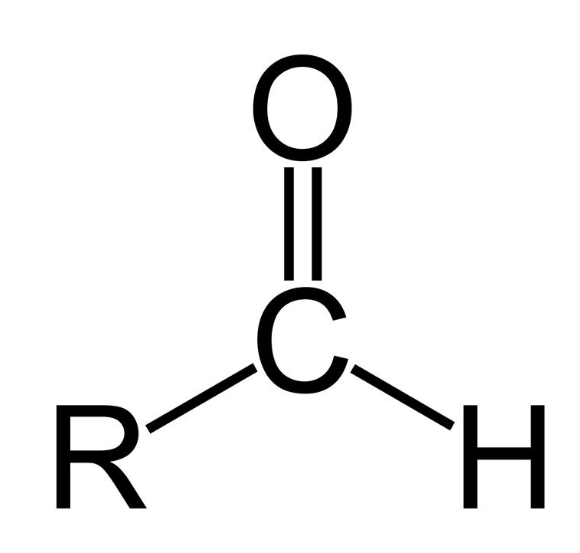
Aldehyde structure:
Carbon is bonded to one Hydrogen, double bonded to one Oxygen and is connected to one other chain
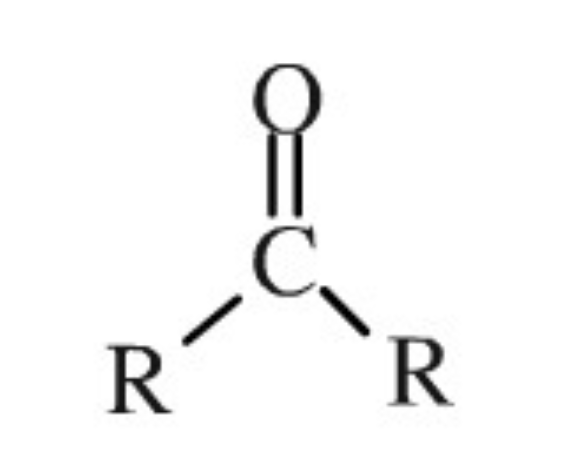
Ketone structure:
Carbon is double bonded to one Oxygen and has two chains.
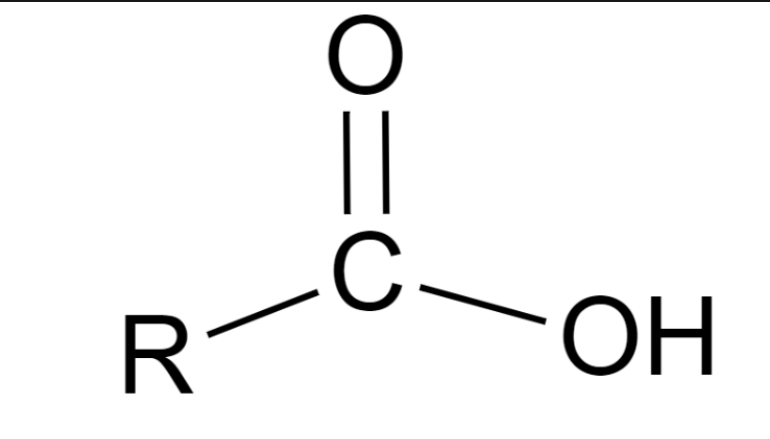
Carboxylic Acid structure:
Carbon is double bonded to one Oxygen, bonded to one OH and bonded to a chain.
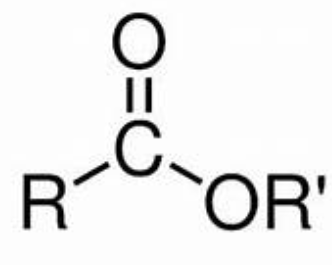
Ester structure:
C double bonded to one Oxygen, single bonded to one Oxygen, bonded to a chain.
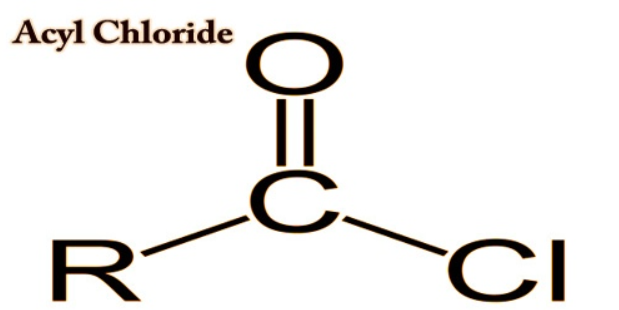
Acyl chloride structure
Carbon bonded with Cl and has one double bond with oxygen.
Alkyl chloride structure
A chain bonded with one Cl molecule.
(R-Cl)
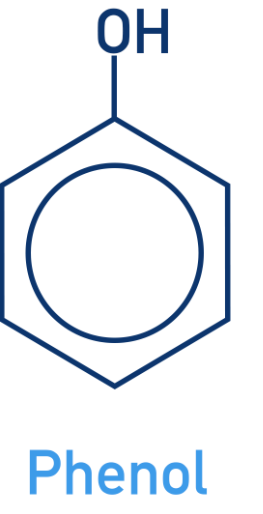
Phenol structure
OH bonded to a benzene ring.
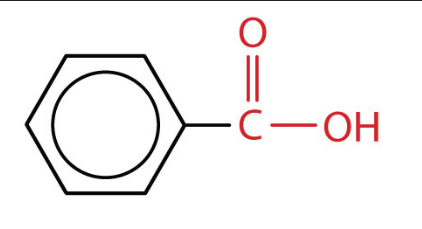
Benzoic Acid structure
Benzene ring bonded to COOH.
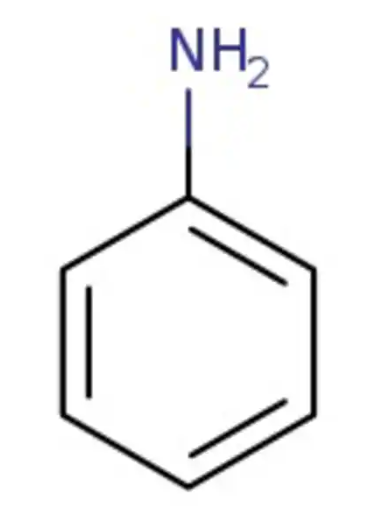
Aniline Structure
Benzene ring bonded with NH2.
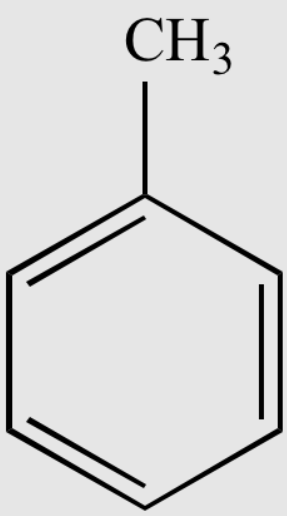
Toluene structure
Benzene ring bonded with CH3/methyl
What functional group are ‘anol’ and ‘ol’ used for?
Alcohol
What functional group are ‘anal’ and ‘al’ used for?
Aldehyde
What functional group are ‘anone’ and ‘one’ used for?
Ketone
What functional group are ‘anamine’ used for?
Amines
What functional group are ‘anoyl chloride’ used for?
Acyl Chloride
What is the general formula for open chain alkanes?
Cn H2n+2
What is the general formula for closed chain alkanes and open chain alkenes?
Cn H2n
What is the general formula for alcohols and esters?
Cn H 2n+2 O
What is the general formula for halogenated aromatic compounds?
Cn Hn-2 X2
What is a carbonyl?
Group consisting of Aldehydes and Ketones
What is the general formula for open chain carbonyl compounds?
Cn H2n O
What is the general formula for carboxylic acids and esters?
Cn H2 O2
What functional groups are insoluble?
Alkanes. Alkenes, Alkynes, and Benzene (All are non-polar)
What functional groups are soluble?
Aldehydes and Ketones (Polar)
What functional groups are very soluble?
Alcohols (OH in alcohol has strong interactions with water molecules)
What functional groups are the most soluble?
Carboxylic acids (OH in carboxylic acids has VERY strong interactions with water molecules)
What affects solubility?
The higher the molecular mass, the lower the solubility.
‘Like dissolves-’ what
‘like dissolves like’
Polar molecules dissolve in polar solvents
Non polar molecules dissolve in non polar solvents
Which functional groups have the lowest boiling points?
Alkanes, alkenes (Typically dispersion forces)
Which functional groups have the second lowest boiling points?
Ethers, aldehydes, ketones, esters, tertiary amines (Dipole-dipole forces and dispersion forces)
List down amines with the lowest boiling point to the highest boiling point.
Tertiary amines, secondary amines, primary amines
Which functional groups have the highest boiling points?
Amides with H bonded to N
What affects boiling points in the same functional group?
The larger the molecular mass, the higher the boiling point as there are more intermolecular forces.
How does branching affect the boiling point?
More branching results in less surface area, which leads to lesser intermolecular forces of attraction. This causes a lower boiling point.
Complete combustion:
When an organic compounds burn in excess O2 to give CO2 and H2O
Addition:
When a small molecule is added to an organic compound
Elimination:
When a small molecule is removed from an organic compound
Substitution:
When an atom/group is replaced with another atom/group
Condensation:
Two organic compounds combining to form a larger product and a smaller side product
Hydrolysis:
An organic compound is broken apart using H2O
Oxidation:
Carbon in an organic compound forms additional bonds with O
Reduction:
Carbon in an organic compound forms more bonds with H
Catalyst for addition
H+/Platinum
Catalyst for addition with chlorine/bromine
Br/CCL4
Cl/CCl4
Bromination (Chemical test)
Tests for the presence of C=C bonds
A brown solution that decolorizes in the presence of C=C
*Benzene doesn’t react with bromine
Markonikov’s rule
Hydrogen will be added to molecule with more hydrogen atoms during reactions like hydration
Catalysts for hydration:
H20/H+
Gentle oxidation
-Takes place where there is double bonds
→only one of the bonds in the double bond breaks
-Uses cold, dilute alkaline KMnO4
-A chemical test for presence of unsaturated bonds
→Purple to colourless, brown ppt forms
Harsh oxidation
-Takes place where there is double bonds
→Breaks the molecule at double bond and forms multiple products
-Uses hot, acidic KMnO4
-one O atom bonds with electrophilic carbon, and to H attached to electrophilic carbon
Can benzene go through addition?
No. The rotating C=C bonds make it difficult to isolate, and therefore stable
Can benzene go through substitution?
Yes
Catalyst for substitution with halogens in aromatic compounds:
Cl2/FeCl2
Br2/FeBr2
Catalyst for nitration in aromatic compounds:
Concentrated HNO3/Concentrated H2SO4
Catalyst for substitution with alkyl chloride in aromatic compounds:
RCl/ACl3
With Friedal Craft’s Alkylation
Catalyst for oxidation of alkyl benzene:
hot H+/KMnO4
Which kind of butylbenzene cannot undergo oxidation?
Tertiary butylbenzene
What is the catalyst for alcohol/ester substitution?
PCl3
PCl5
SOCl2
Steps of oxidation of alcohol to carboxylic acids:
Reagents:
H+/KMnO4
H+/K2Cr2O7
H+/Na2Cr2O7
Step 1:
Remove 2 hydrogen atoms, one from OH and one from electrophilic carbon.
Step 2:
Convert C-O to C=O
Step 3:
If electrophilic carbon has H atom attached to it, add O to that H atom
Steps of reduction of carboxylic acid to alcohol:
Reagents:
LiAlH4/ether and H+/H2O (both are in one set)
Step 1:
If electrophilic carbon has OH attached to it, remove O
Step 2:
Concert C=O to C-O
Step 3:
Add 2 H atoms, one to the O and one to the electrophilic carbon
Dehydration reagent:
Concentrated H2SO4
Reagents of oxidation of Aldehydes to carboxylic acid
Acidic KMnO4 → turns from purple to colorless
Na2Cr2O7 → Turns form orange to green
K2Cr2O7 → Turns form orange to green
Step 1:
Add O to the hydrogens connected to the electrophilic C
Reagents of reduction of Aldehydes to alcohol
H2/Platinum
LiAlH4/ether + H+/H2O
Steps of reduction of Aldehydes to alcohol
Step 1:
C=O to C-O
Step 2:
Add H to O and electrophilic C
Reduction of ketones:
Reagents:
H2/Platinum
LiAlH4/ether + H+/H2O
Step:
Add hydrogen to O and electrophilic carbon
Tollen’s test
-uses [Ag(NH3)2]
-When aldehydes are preset, silver mirror forms
Fehling’s test
-Uses Fehling’s solution
-When aldehydes are present, brick red ppt forms
2-4 - DNPH test
-Uses 2, 4 - dinitrophenylhydrazine
-Forms red/yellow/red ppt in presence of carbonyl compounds
Iodoform test
-Uses NaOI
-tests for presence of CH3 bonded with electrophilic carbon
Acidic compounds in organic chem
Carboxylic acid > Phenol > Alcohol
Acidic things that react with metal
Carboxylic acid, phenol, alcohol
All give salt +H2
Acidic things that react with strong bases
Carboxylic acid and phenol
Both give salt and H2O
Acidic things that react with weak bases
Carboxylic acid
Gives salt and H2O
How to name esters:
Step 1
Look for C=O, then O-C from electrophilic carbon
Step 2
Highlight carboxylic acid (Part with no O-C)
Other side is alcohol
Step 3
Put alcohol part first, then acid
Reagent for esterification:
H+
Reagent for hydrolysis of acyl chloride:
H2O
Reagent for acid hydrolysis of esters:
H+/H2O
Reagent for base hydrolysis of esters:
NaOH (aq)
Reagent for neutralization of amine
HCl