PURCOM L3 : COMMUNICATION IN MULTICULTURAL CONTEXT
0.0(0)
Studied by 1 person Call Kai
 Learn
Learn Practice Test
 Spaced Repetition
 Match
Match Flashcards
 Knowt Play
Card Sorting
1/24

Earn XP
Last updated 3:50 AM on 2/18/23
Name | Mastery | Learn | Test | Matching | Spaced | Call with Kai | Chat |
|---|
No analytics yet
Send a link to your students to track their progress
25 Terms
1
New cards
Culture
System of shared ideas, values, beliefs, attitudes and norms that guides what is considered appropriate among an identifiable group of people
2
New cards
Ethnocentrism
Is the use of one’s own culture and its practices as a standard for interpreting the values, beliefs, norms and communication of other cultures
3
New cards
Cultural Relativism
To understand the behavior of other groups on the basis of the context in which the behavior occurs rather than from the own frame of reference
4
New cards
Cultural Sensitivity
Being aware that cultural differences and similarities
between people exist without assigning them value
between people exist without assigning them value
5
New cards
INTERCULTURAL COMMUNICATION
Refers to interaction with people between or from diverse cultures Jandt 1998
6
New cards
FORMS OF INTERCULTURAL COMMUNICATION
(JANDT,1998
(JANDT,1998
\
* Interracial communication
* Interethnic communication
* International communication
* Intracultural communication
* Interracial communication
* Interethnic communication
* International communication
* Intracultural communication
7
New cards
Stage 1: Denial
The individual does not recognize cultural differences
8
New cards
Stage 2: Defense
The individual starts to recognize cultural differences and is intimidated by them
9
New cards
Stage 3: Minimization
Although the individual sees cultural differences, he/she banks more on the universality of ideas than cultural differences
10
New cards
Stage 4: Acceptance
The individual begins to appreciate important cultural differences in behaviors and eventually in values
11
New cards
Stage 5: Adaptation
The individual becomes very open to world views when accepting new perspectives
12
New cards
Stage 6: Integration
The individual starts to go beyond his/her own culture and sees himself/herself and his/her actions based on multifarious cultural viewpoints
13
New cards
Bennet and Bennet (2004)
THE DEVELOPMENTAL MODEL OF CULTURAL SENSITIVITY
14
New cards
GENERAL GUIDELINES FOR COMMUNICATING IN A MULTICULTURAL CONTEXT
Avoid asking inappropriate or personal questions
\
Avoid stereotyping or generalizing certain groups Keep an open mind and be flexible
\
Avoid using jargon, cliches, highfalutin terms, technical terms, acronyms, and gender biased language
\
Avoid stereotyping or generalizing certain groups Keep an open mind and be flexible
\
Avoid using jargon, cliches, highfalutin terms, technical terms, acronyms, and gender biased language
15
New cards
GENERAL GUIDELINES FOR COMMUNICATING IN A MULTICULTURAL CONTEXT
Be sensitive, polite, tactful, and respectful at all times, particularly in relation to cultural practices, attitudes, and beliefs Learn and understand the value of diversity
\
Develop intercultural skills
\
Develop intercultural skills
16
New cards
GENERAL GUIDELINES FOR COMMUNICATING IN A MULTICULTURAL CONTEXT
Eliminate gender biased words or sexist language, particularly in writing
\
In case you do not get the message conveyed by the person you are communicating with, request him/her to repeat the message or simplify it
\
In case you do not get the message conveyed by the person you are communicating with, request him/her to repeat the message or simplify it
17
New cards
GENERAL GUIDELINES FOR COMMUNICATING IN A MULTICULTURAL CONTEXT
Learn to observe physical distance or space in dealing with other people
\
Listen attentively when others are speaking
\
Observe patience in listening to other people’s ideas, which may not be the same as yours
\
Listen attentively when others are speaking
\
Observe patience in listening to other people’s ideas, which may not be the same as yours
18
New cards
GENERAL GUIDELINES FOR COMMUNICATING IN A MULTICULTURAL CONTEXT
Pay attention to your non verbal communication. Learn the non verbal cues of other cultures
\
Respect a person’s right to confidentiality and privacy
\
Show consideration.
\
Respect a person’s right to confidentiality and privacy
\
Show consideration.
19
New cards
GENERAL GUIDELINES FOR COMMUNICATING IN A MULTICULTURAL CONTEXT
Speak gently and politely; never shout to be understood
\
Stay calm, cool, and composed when you make a mistake or feel embarrassed by others.
\
Stay calm, cool, and composed when you make a mistake or feel embarrassed by others.
20
New cards
GENERAL GUIDELINES FOR COMMUNICATING IN A MULTICULTURAL CONTEXT
Make positive interpretations of the actions and words of other people
\
When you feel strange or uncomfortable about something being communicated by other people, request them to clarify their meanings and intentions before you express your emotions and ideas
\
When you feel strange or uncomfortable about something being communicated by other people, request them to clarify their meanings and intentions before you express your emotions and ideas
21
New cards
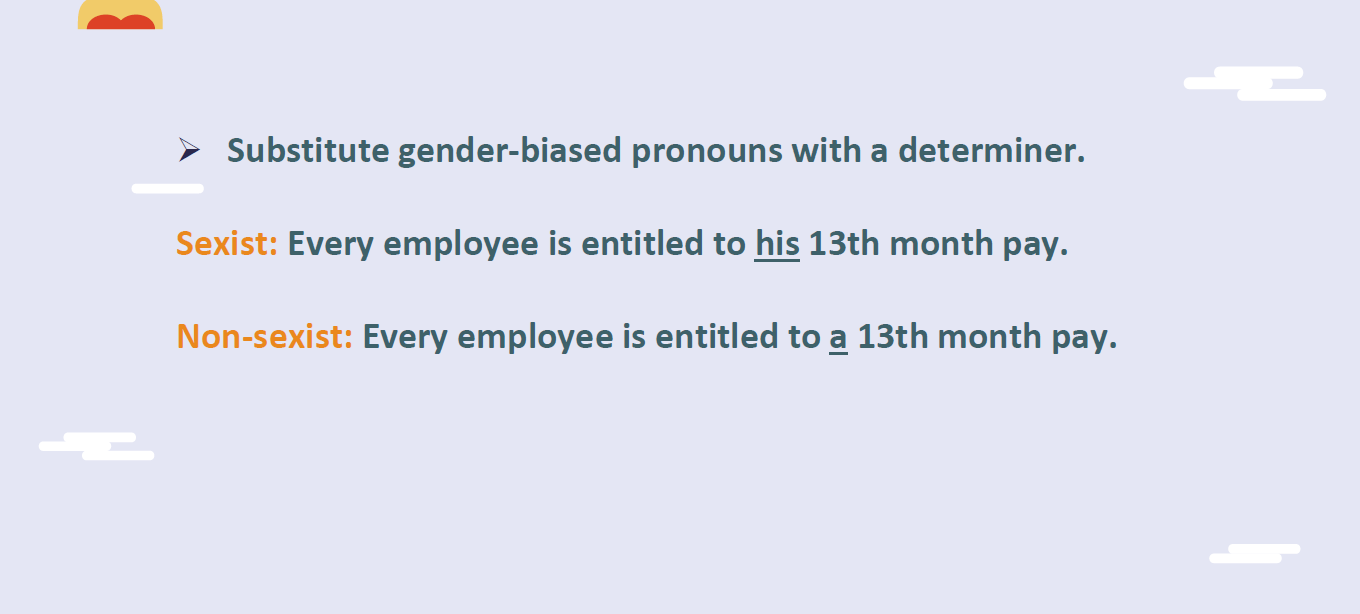
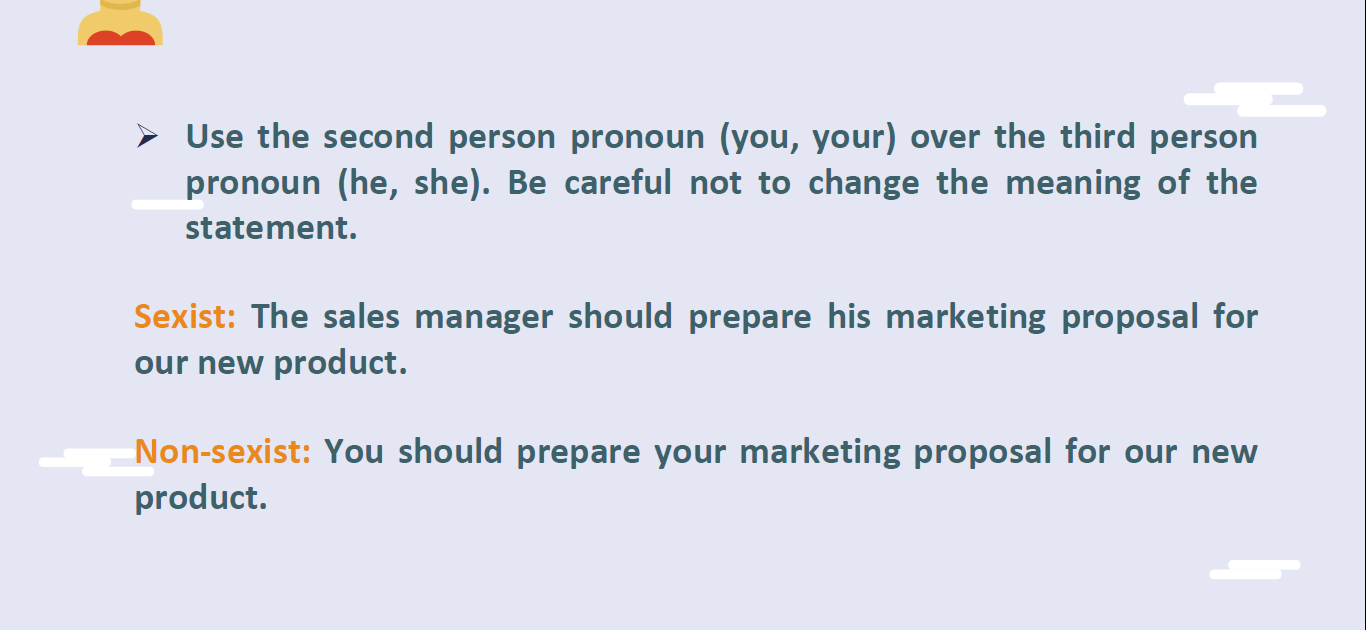
WAYS TO AVOID GENDER- BIASED LANGUAGE
22
New cards
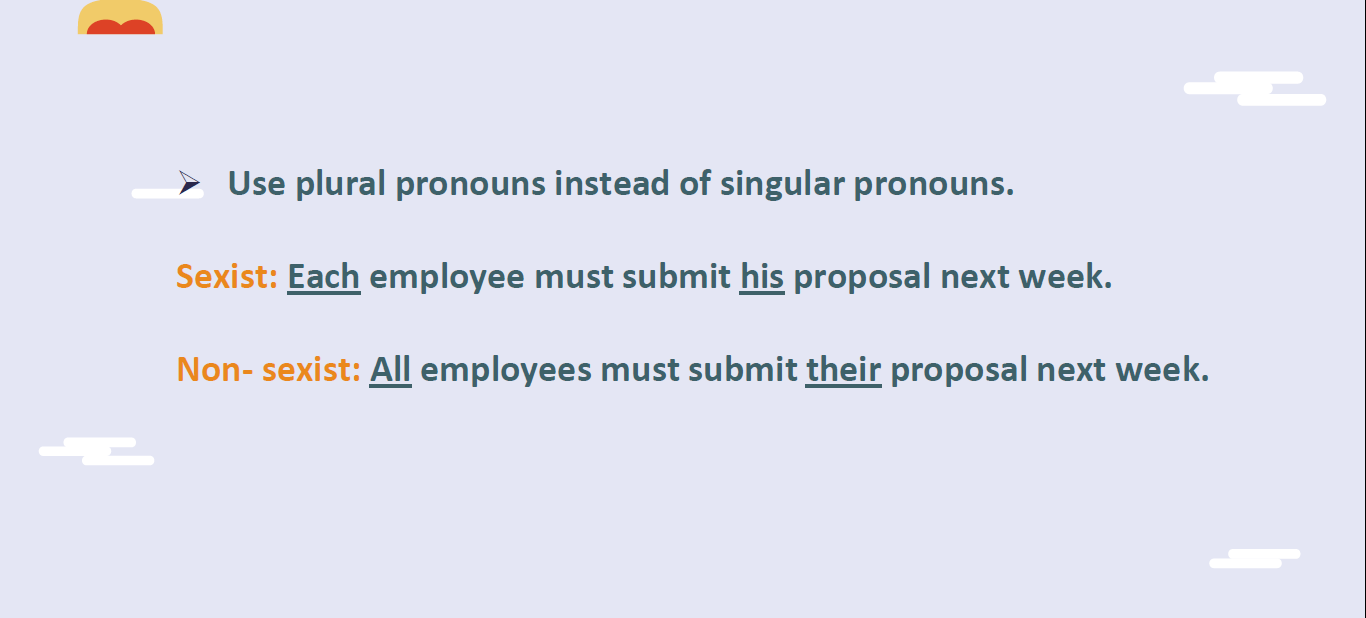
WAYS TO AVOID GENDER- BIASED LANGUAGE
23
New cards
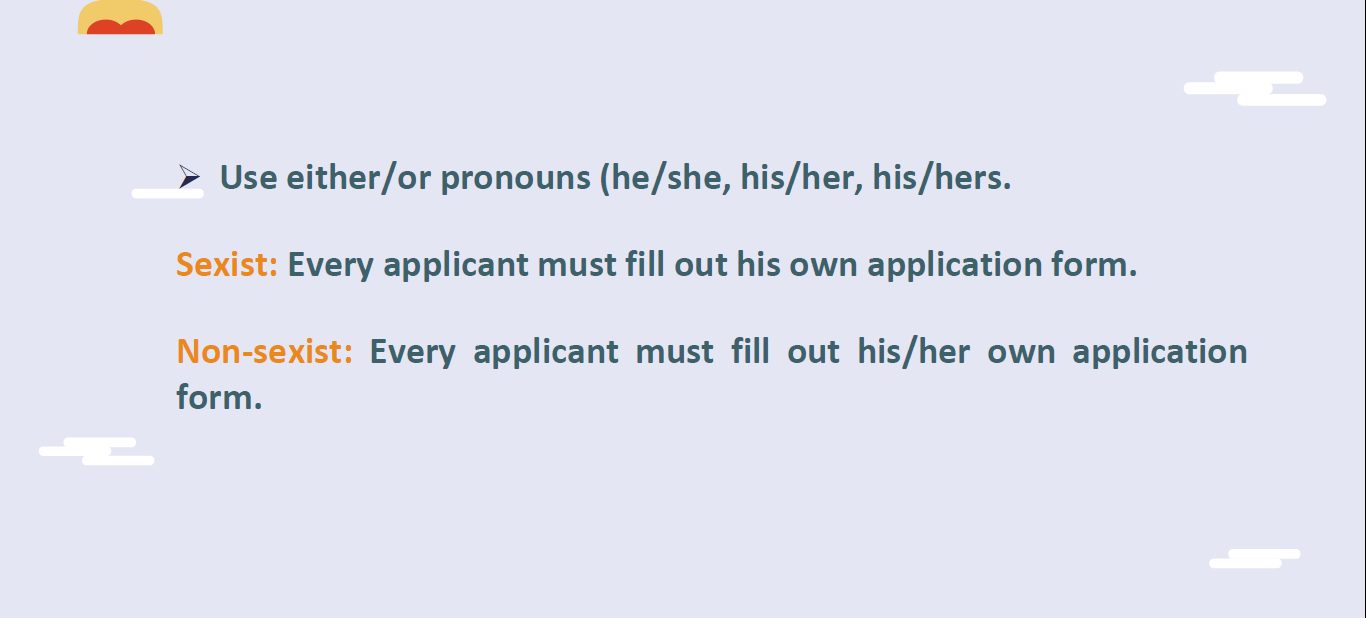
WAYS TO AVOID GENDER- BIASED LANGUAGE
24
New cards
WAYS TO AVOID GENDER- BIASED LANGUAGE
25
New cards
WAYS TO AVOID GENDER- BIASED LANGUAGE