Metals and Non-Metals
 Studied by 6 people
 Call Kai
 Learn
Learn Practice Test
 Spaced Repetition
 Match
Match Flashcards
 Knowt Play
1/25

There's no tags or description
Looks like no tags are added yet.
Name | Mastery | Learn | Test | Matching | Spaced | Call with Kai |
|---|
No analytics yet
Send a link to your students to track their progress
26 Terms
Metals
1. Good conductors of electricity
2. Good conductors of heat
3. Shiny
4. Sonorous
5. Ductile
6. Malleable
7. High melting point
8. Dense
Non-Metals
1. Poor conductors of electricity
2. Poor conductors of heat
3. Dull
4. Brittle
5. Low melting point
Good conductors of heat (Metal)
transfer heat
example: copper for saucepan
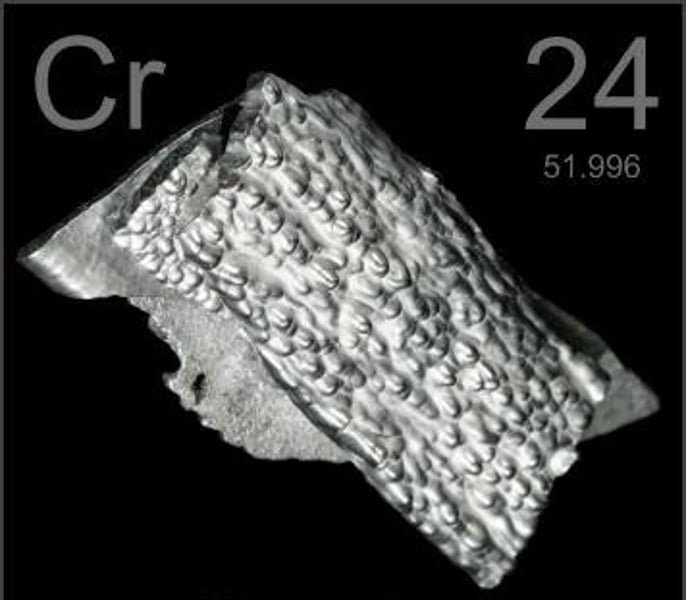
Shiny (Metal)
Their surfaces reflects light
example: chromium (Cr)
Magnetic metals (Metal)
Iron
Cobalt
Nickel
Sonorous (Metal)
Rings when struck
example: tin (Sn)
Ductile (Metal)
Can be drawn out into wire
example: copper
Malleable (Metal)
Can be hammered into shape without cracking
example: gold (rings)
Dense (Metal)
cm^3 =mL
...
Particles packed closely in a small volume
Poor conductors of electricity (Non-Metals)
Exception: graphite (made of carbon)
Poor conductors of heat (Non-Metals)
nothing
Dull (Non-Metals)
Not shiny
exception: iodine, diamond
Brittle (Non-Metals)
hard but liable to break easily
example: carbon (in the form of graphite)
Low melting point (Non-Metals)
Exception: diamond (made of carbon)
Metal element that is liquid
Mercury (Hg)
Non-Metal element that is liquid
Bromine (Br)
Which non-metal conducts electricity?
Graphite (made of carbon)
Which non-metal elements are considered to be shiny?
Iodine, diamond
Which non-metal element is very hard?
Carbon
Name 2 gaseous elements present in the air and are made of diatomic molecules.
Oxygen, Nitrogen
Name 3 metal elements and state their uses in everyday life.
Copper - wires
Iron - forks, spoons
Aluminium - aluminium foil, hand cream
Chorine - pool
Element definition
A substance made up of 1 type of atom
It cannot be broken down into anything simpler (not even chemical reaction)
Each atom in the element has the same number of protons
Compound
A compound consists of two or more elements chemically joined together.
Metals and Non-Metals on the Periodic Table
Metals are found on the left-hand side of the periodic table and non-metals on the right-hand side of it.
Diatomic
Br, I, N, Cl, H, O, F
Monoatomic
The Noble gases (group 0)
 Note
Note  Flashcards (27)