Unit 2 Biology Revision
 Call Kai
 Learn
Learn Practice Test
 Spaced Repetition
 Match
Match Flashcards
 Knowt Play
1/13

There's no tags or description
Looks like no tags are added yet.
Name | Mastery | Learn | Test | Matching | Spaced | Call with Kai | Chat |
|---|
No analytics yet
Send a link to your students to track their progress
14 Terms
Homeostasis
The process by which the body maintains a stable internal environment despite changes in the external environment by detecting stimuli and responding through feedback loops
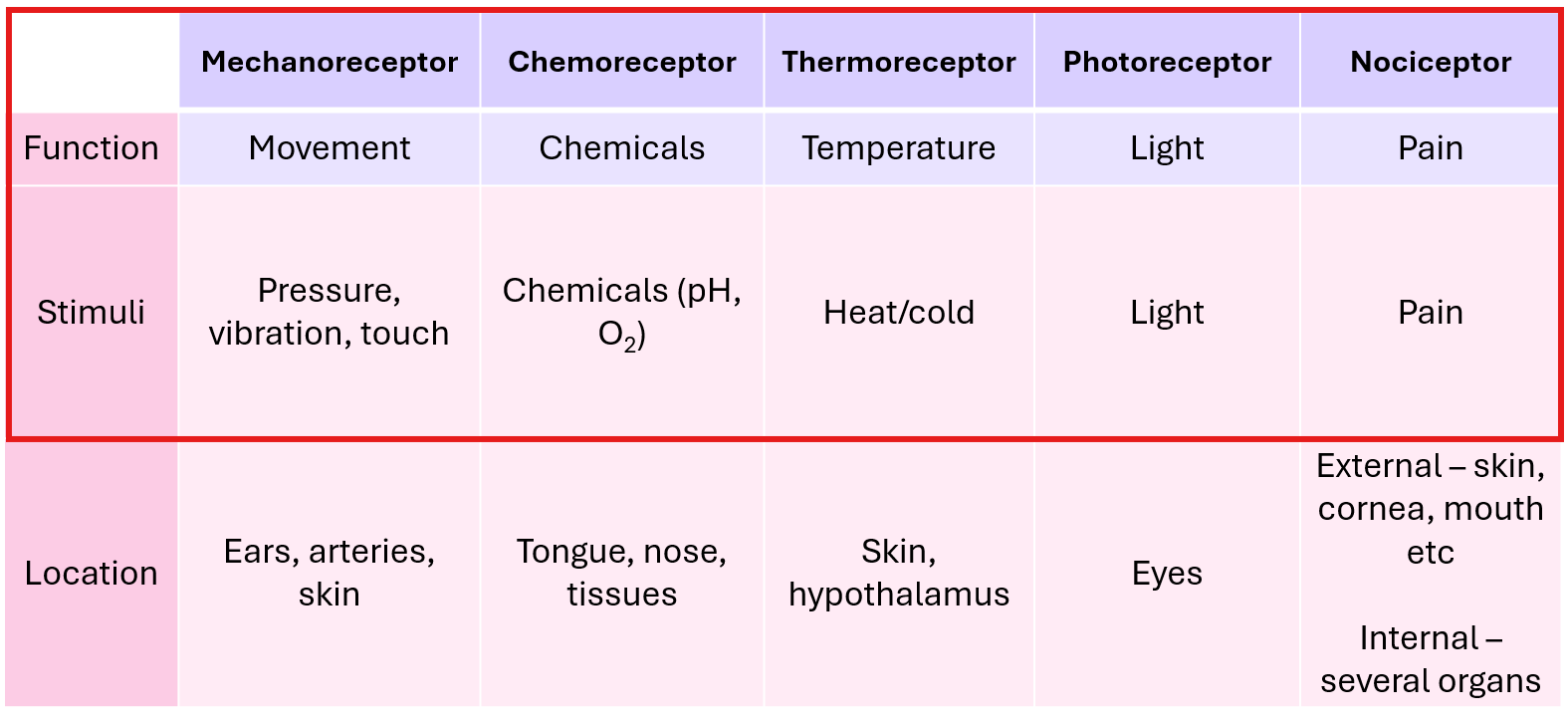
Types of sensory receptors and their function and stimuli
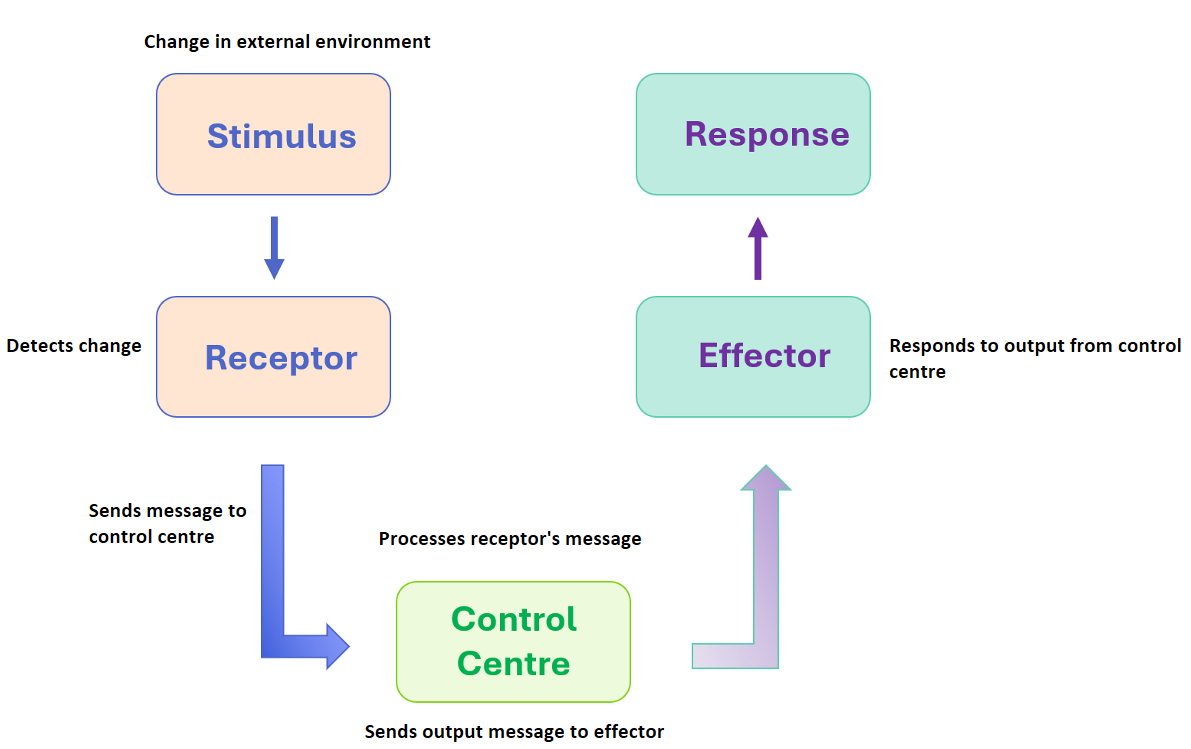
Parts of a stimulus response model
Effectors can be either
Muscles or glands
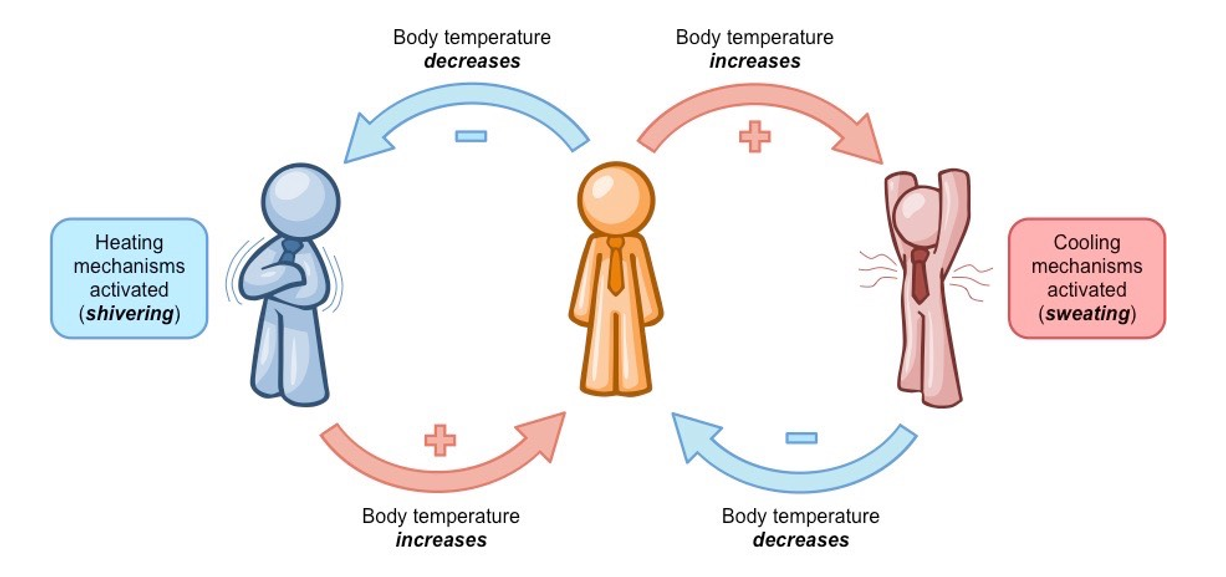
Example of feedback loop
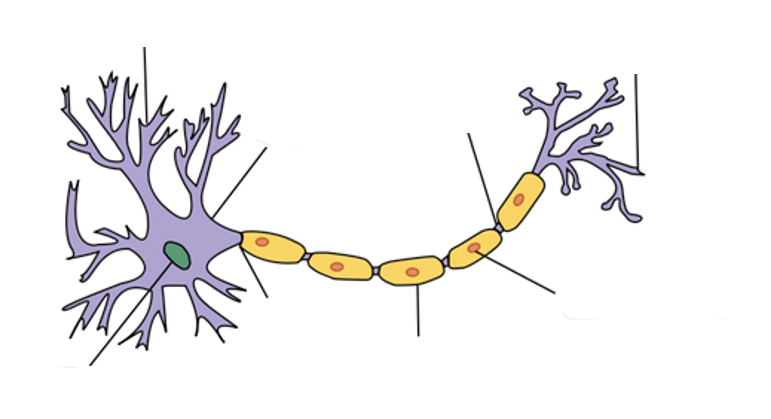
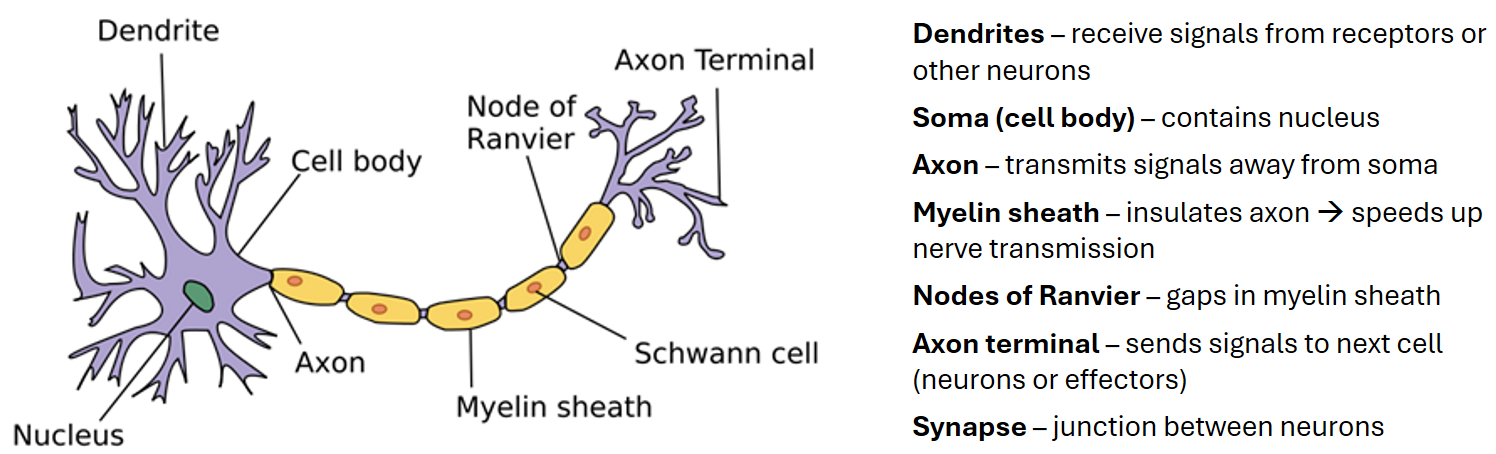
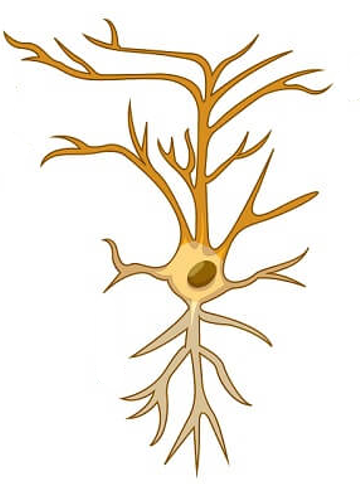
Parts of a neuron and their functions
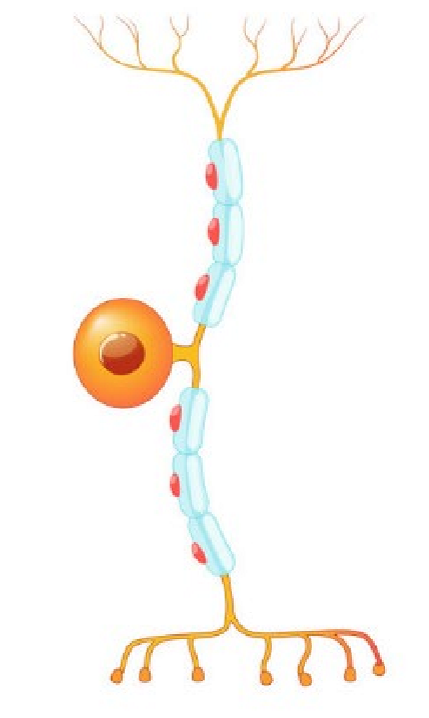
Sensory neuron
Carries signals from sensory receptors to the central nervous system (brain and spinal cord)
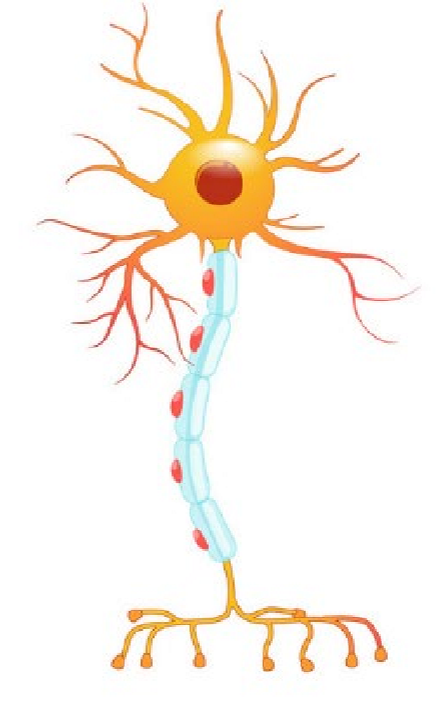
Motor neuron
Carries signals from the central nervous system to effectors
Interneuron
Links sensory and motor neurons
Resting membrane potential of a neuron
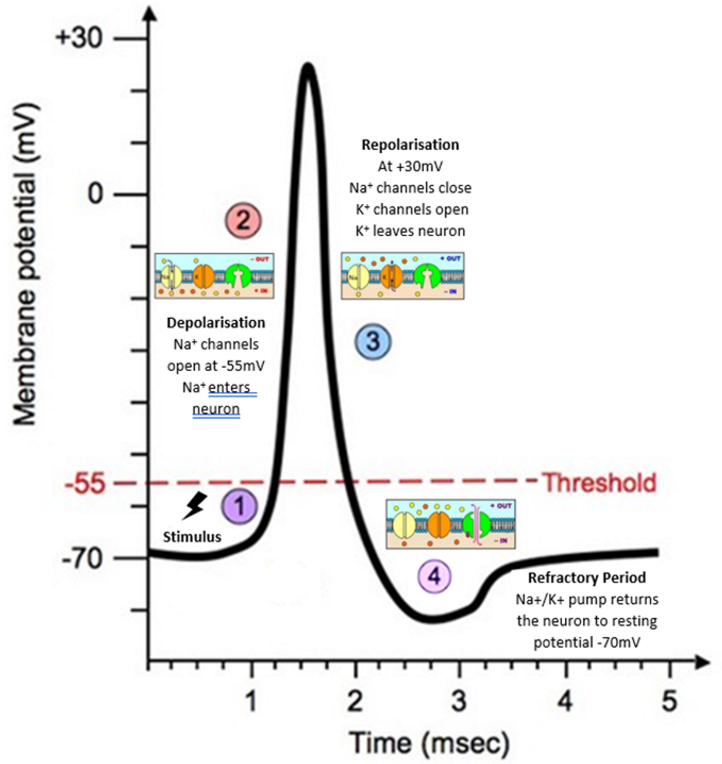
-70 mV, more Na+ ions inside the neuron, more K+ ions outside the neuron
Action potential process
To start: Neuron is at resting potential -70 mV
Neuron stimulated, Na+ receptor channels open, Na+ rushes in
Depolarisation - At threshold potential (-55 mV) voltage gated Na+ channels open, Na+ enters neuron
Repolarisation - At +30 mV, Na+ channels close, K+ channels open, K+ diffuses out of neuron
Refractory period - Na+/K+ pump returns neuron to resting potential
Synapse
A junction between two neurons OR a junction between a neuron and a target cell (muscle or gland)
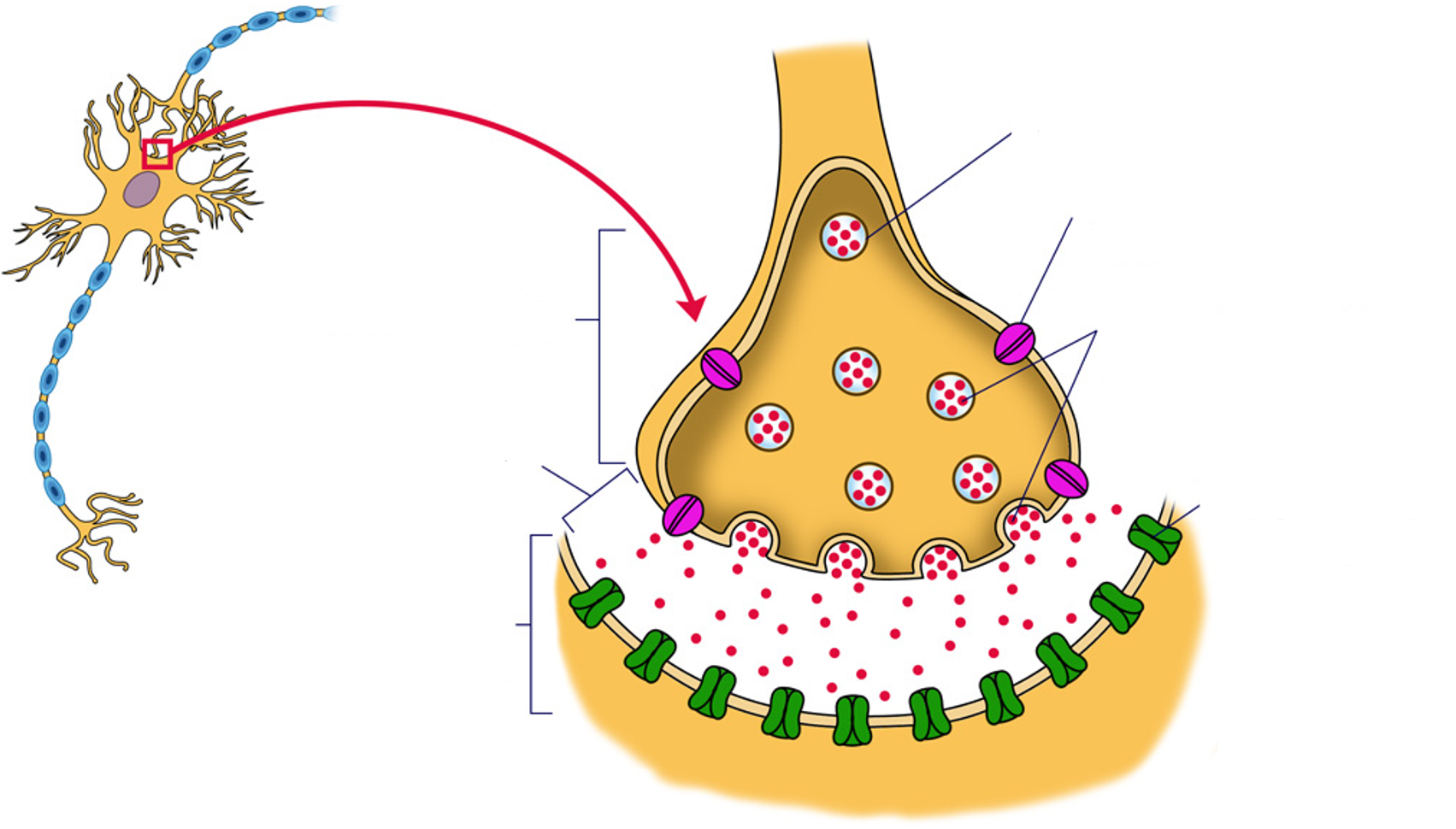
Parts of a synapse
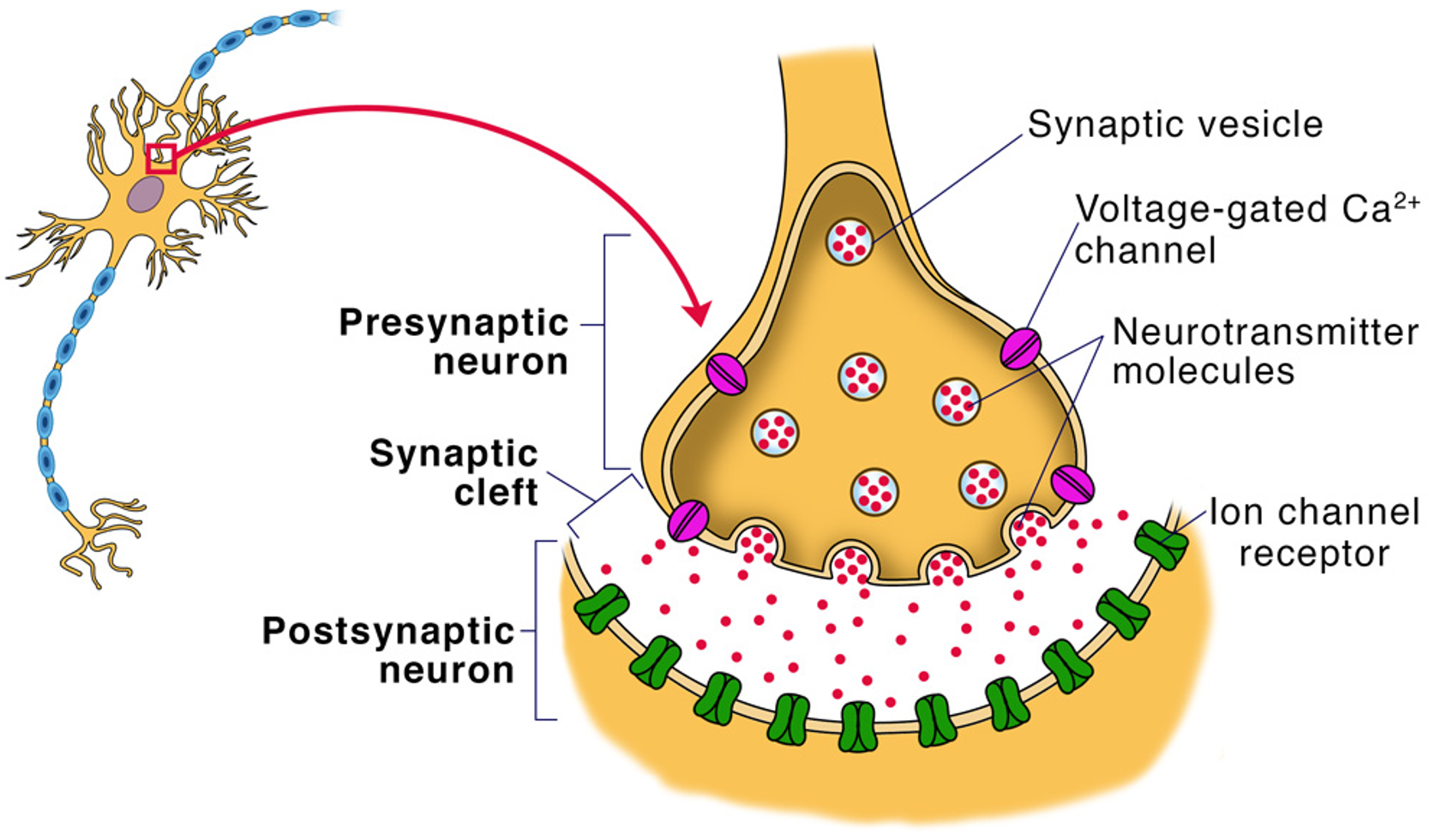
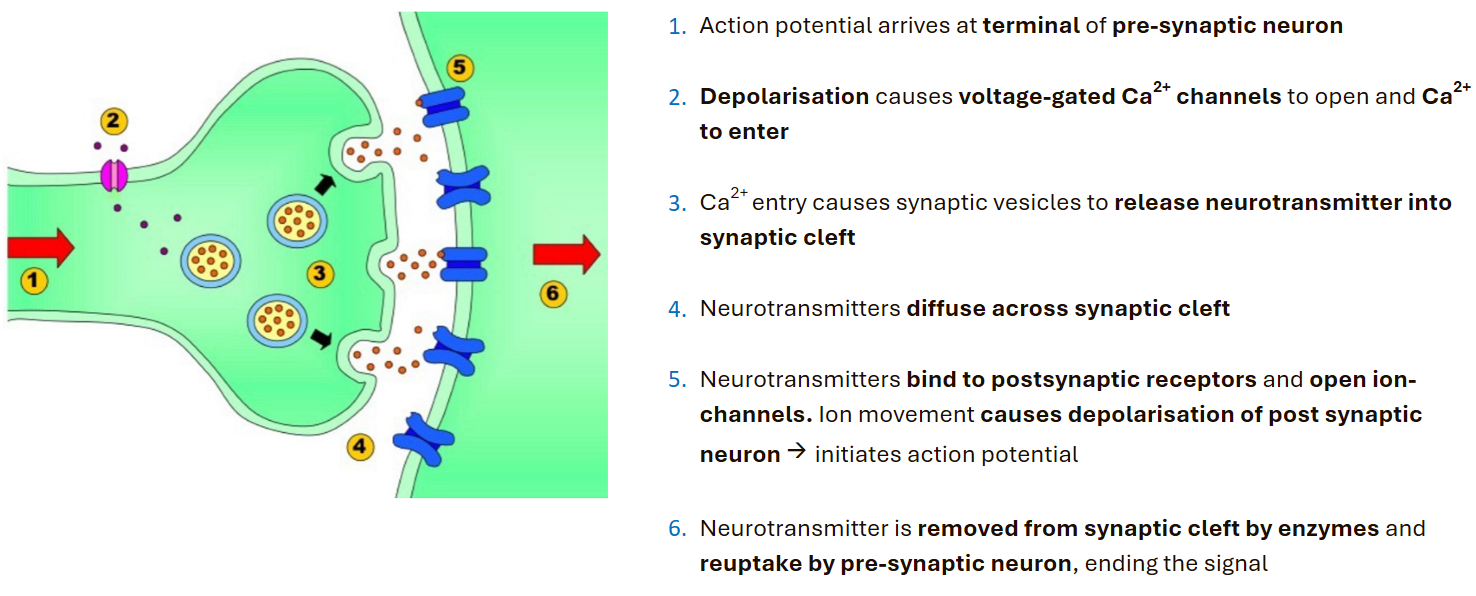
Synaptic transmission process